Ioulia Chante
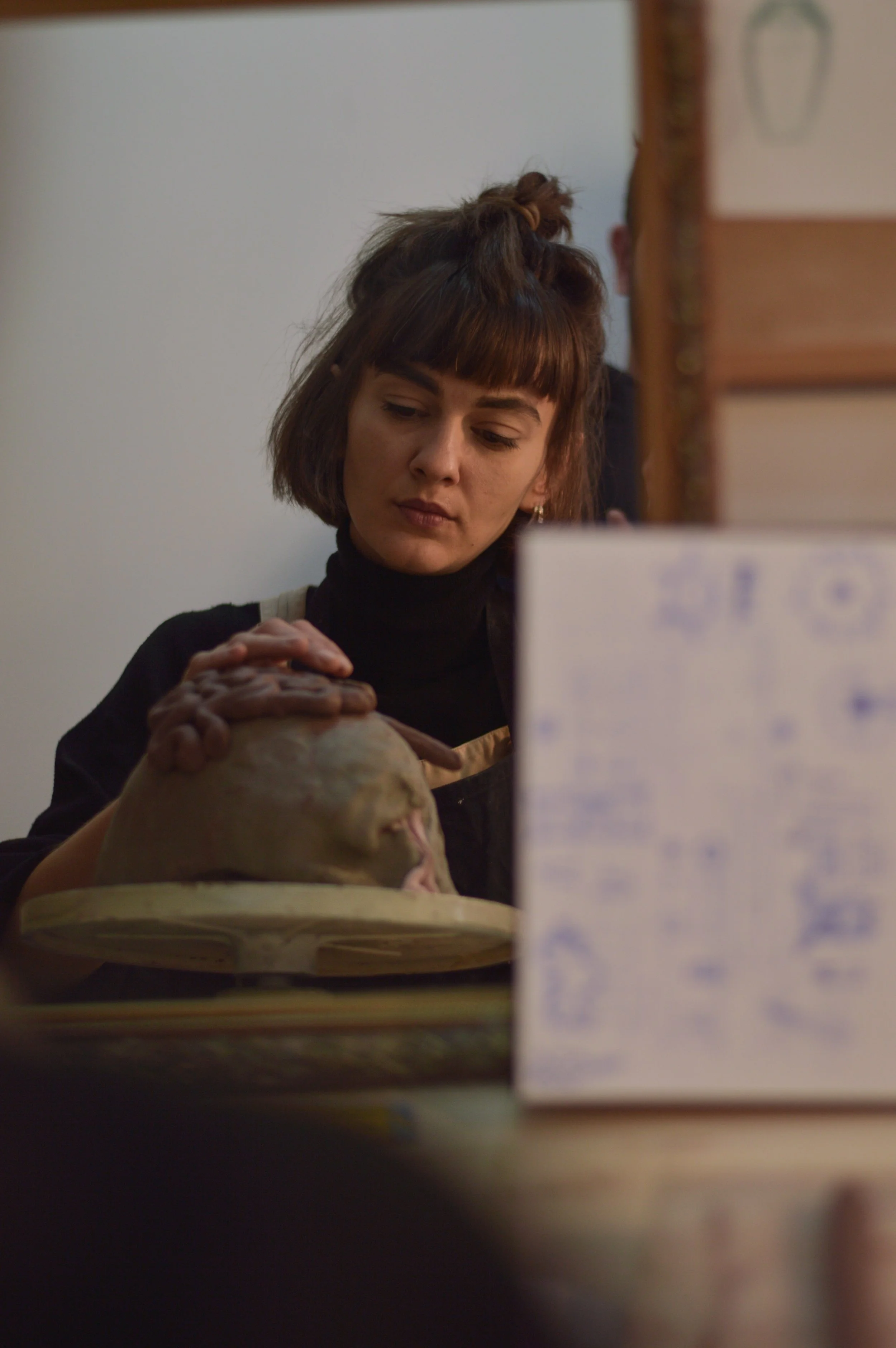
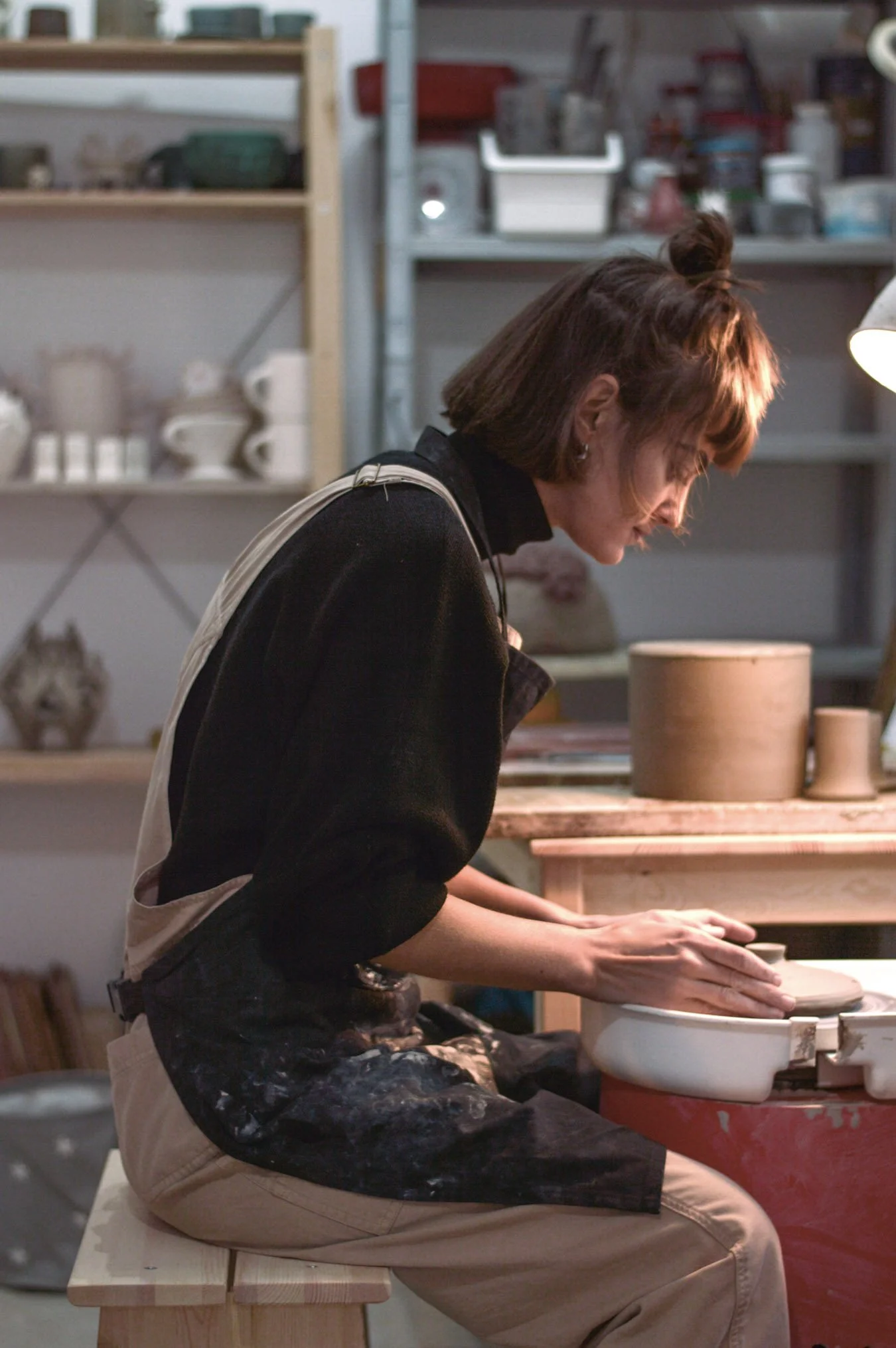
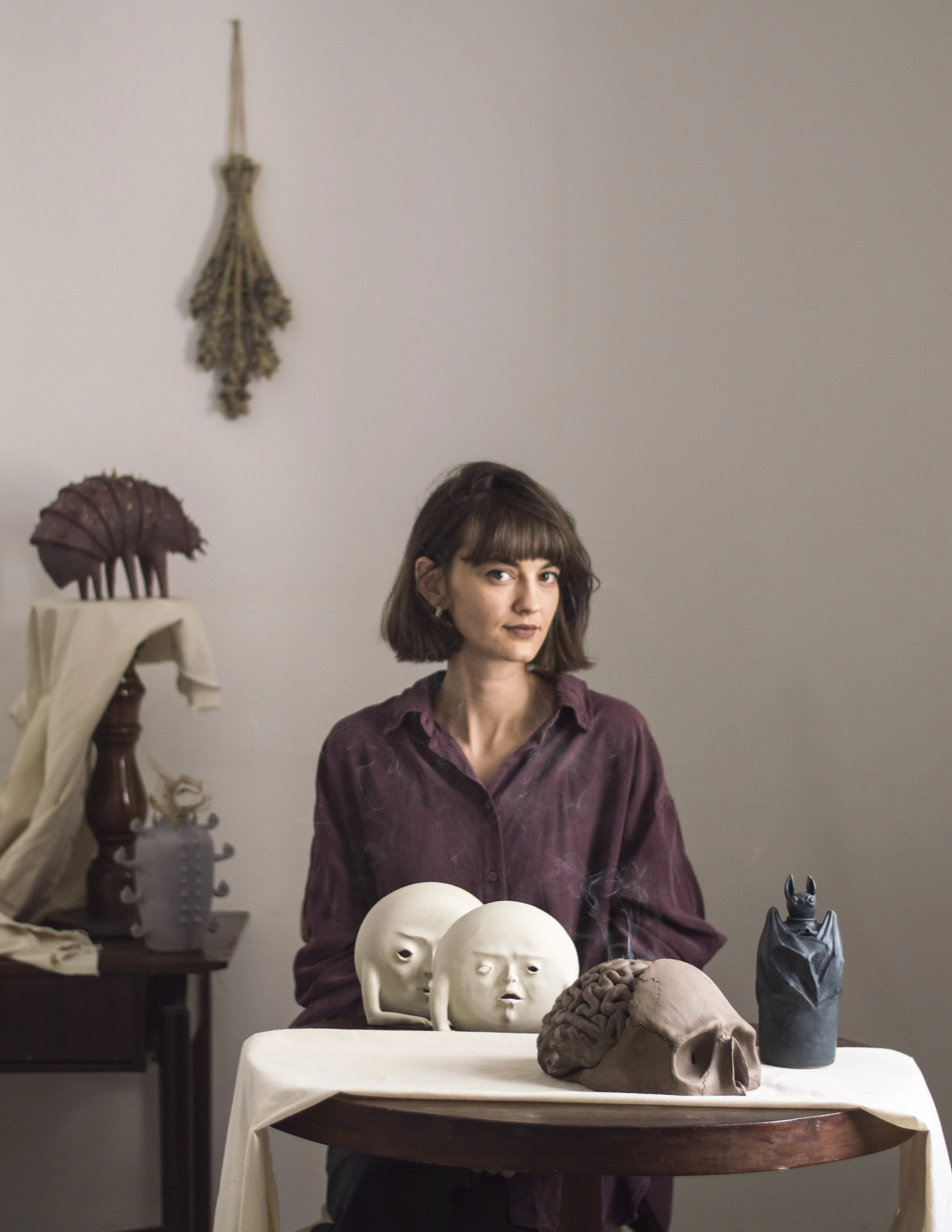
Please share a bit about yourself and your background.
I grew up in a small town in northern Greece, where handcrafting was always part of my childhood. From cooking and crochet to painting, assembling scraps in my father’s workshop, and making jewelry, I was constantly creating.
In 2010, I entered the Faculty of Architectural Engineering in northeastern Greece. The master’s program placed great value on the handmade process, especially through sketching and physical model making. During that time, I practiced jewelry making extensively and also became interested in origami for a while.
In 2018, I moved to Malta to pursue my architectural career. The island’s rich craftsmanship inspired me to study materials more deeply, helping me make better use of my time while improving my physical skills and architectural perception.
I had always wanted to experiment with clay, so in 2019, a few months after moving there, I started attending wheel-throwing courses. Since then, clay has become second nature to me. It has helped me unlock many hidden aspects of myself and opened up a new path for creative expression.
What drew you specifically to ceramics as your primary medium?
Ceramic forms have always fascinated me, from the structures you can create with such a humble yet flexible material to the unique textures that each clay body can reveal. I am inspired both by the freedom and the challenges that the ceramic process offers. On one hand, it allows you to mimic natural elements; on the other, it can lead to extremely polished and refined results, depending on the properties of the material and the technique in use.
From the early stages of experimenting with clay, I was driven by curiosity about how the specific results I envisioned would take shape. Ceramics offer endless variations, diverse material qualities, and unlimited possibilities for combination. At the same time, they create a constant urge to explore and try new things.
Ultimately, it was this curiosity and sense of freedom, a need for playful and expressive design beyond the limitations of a full-time job, that drew me deeper into working with clay.
How does your background in architecture inform the way you approach your ceramics
Although my ceramic practice differs completely in style from my architectural work, I believe that my studies play a significant role in how I approach the proportions and details of each piece. When working on more challenging forms, I often return to structural solutions, using sketching and model-making as key references and processes. This helps me plan more effectively and minimise the risks involved in creating such pieces.
Can you walk us through your process? What part of working with clay feels most essential to you?
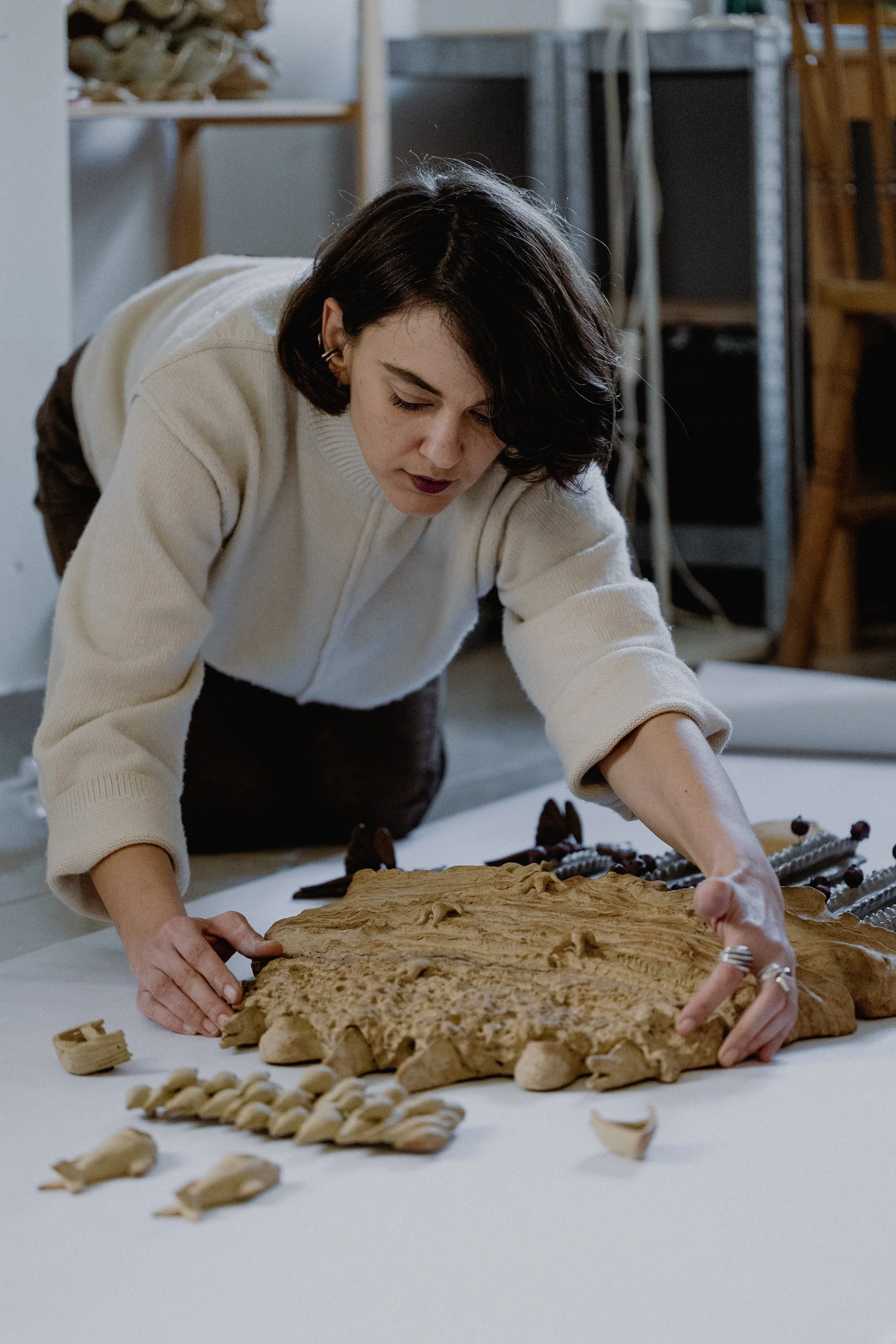
My practice began at the wheel, and it remains one of the most essential processes for me. Although my sculptural skills are often what attract the most attention - and I deeply enjoy creating miniatures and miniature worlds - I always try to incorporate wheel-throwing techniques into my work. It is an extremely grounding and calming process that requires repetition to develop a sense of scale and form. To me, it feels like a silent dance; it is both rhythmic and meditative.
When I focus on entirely sculptural pieces, I find that my body instinctively seeks time at the wheel as a way to decompress. I take pleasure in making simple forms again and again. Yet, at times, these forms can feel unfinished, like blank canvases. This is when the surreal element intervenes unexpectedly, creating a sense of duality between a humble object and a monster in disguise.
In what ways have the landscapes, traditions, or cultural heritage of your upbringing shaped your work?
In countless ways. I spent all my summers immersed in nature, in a field close to both the mountains and the sea. These memories remain deeply rooted in me, and I hold on to them in everyday life as well as in my creative process.
The cityscapes I lived in were often layered with traces of Roman, Greek, Byzantine, and Ottoman artefacts, alongside folk patterns found in painting and textiles. I also grew up in a home filled with religious imagery. My mother is an Orthodox icon painter, and I vividly remember watching her render tiny details and intricate compositions. I believe her discipline has profoundly inspired me and shaped my work.
Now, working within the Maltese landscape, I experience a sense of both familiarity and uniqueness. The environment, marked by sculptures, grotesques, and stone artefacts, provides immediate sources of inspiration. At the same time, all this past and present of database visual and cultural landscape seems to merge and resurface through my practice, gradually forming a personal visual language.
When it comes to the tactile aspect of your work and its connection with your body, how does the hands-on nature impact your overall happiness and well-being?
It all depends on the work I am creating. In general, when I am working, time seems to stop and I enter a complete state of focus. This leaves me with a deep sense of joy and fulfilment. Through the process, I release the tension my body holds, as if I am gently massaging myself or caring for someone else. There are also times when creating a piece to fit within a specific context can lead to the opposite result.
Looking at contemporary ceramics today, where do you see opportunities to bring more meaning or awareness to the way we work with materials?
What I’ve realised throughout my journey with ceramics is that small communities, collective artistic spaces, and community workshops offer some of the greatest opportunities to raise awareness about craft. When you create a welcoming place and atmosphere for people to visit, meet you, learn about your process, share their ideas, and interact with the materials, it becomes deeply rewarding. It opens up multiple dialogues and new perspectives — not only for the viewer, but also for the artist. Ultimately, this is how I first learned, and how I continue to learn.
Are there any new projects, themes, or directions you are currently exploring that feel particularly connected to your practice?
Over the past two years, my work has focused on creating objects that highlight sociopolitical issues, often expressed through a grotesque and unsettling visual language. At this stage, I feel a growing need to shift towards more joyful or abstract directions within my practice. I am also interested in further developing my technical skills, particularly in creating larger-scale works, and in researching how different materials can be combined with clay to expand the possibilities of my work.
How can people engage more closely with your work, whether through exhibitions, commissions, or your online presence?
Exhibitions have recently been the primary way people engage closely with my work. I find that when visiting an exhibition, people have the time to really observe each piece, appreciate its qualities, explore the concepts behind it, and take a moment to reflect. The space and atmosphere of an exhibition create the right setting for this kind of engagement.
In addition, I try to maintain an online presence and provide small-batch objects through local shops. However, balancing this with my regular job can make it challenging to keep all platforms consistently up to date.
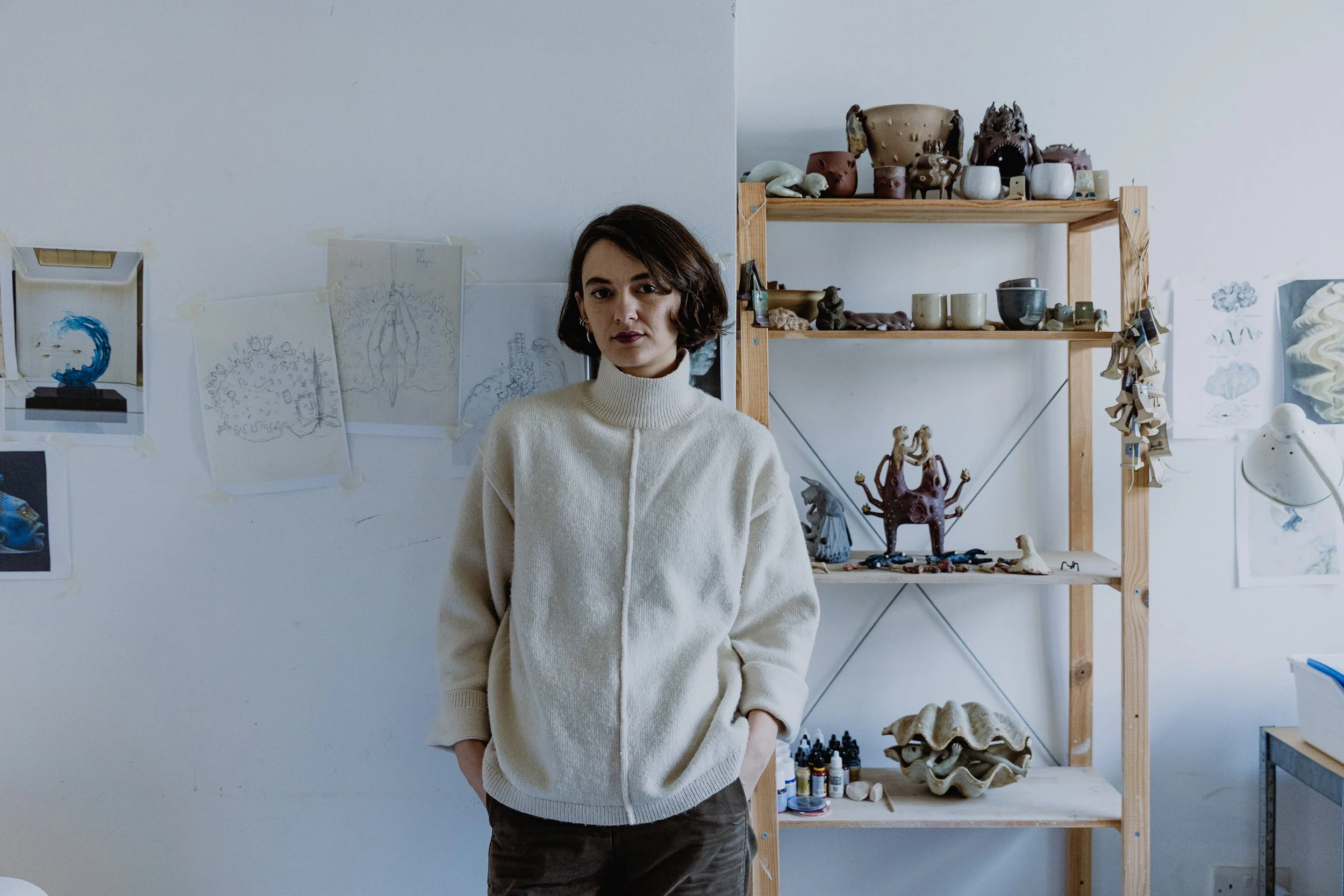
Photo [8, 12] by Lisa Attard, the rest belong to Ioulia.
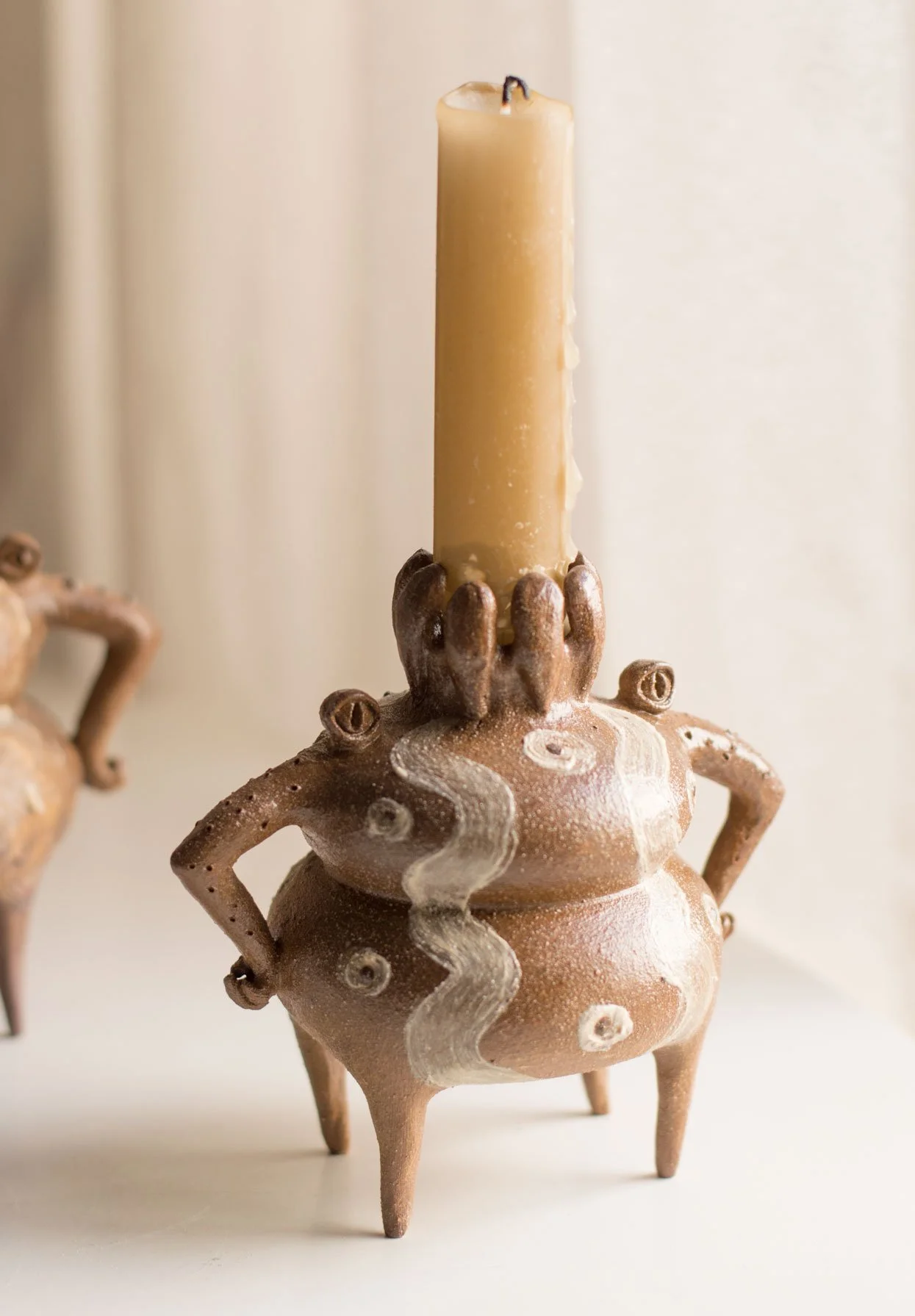
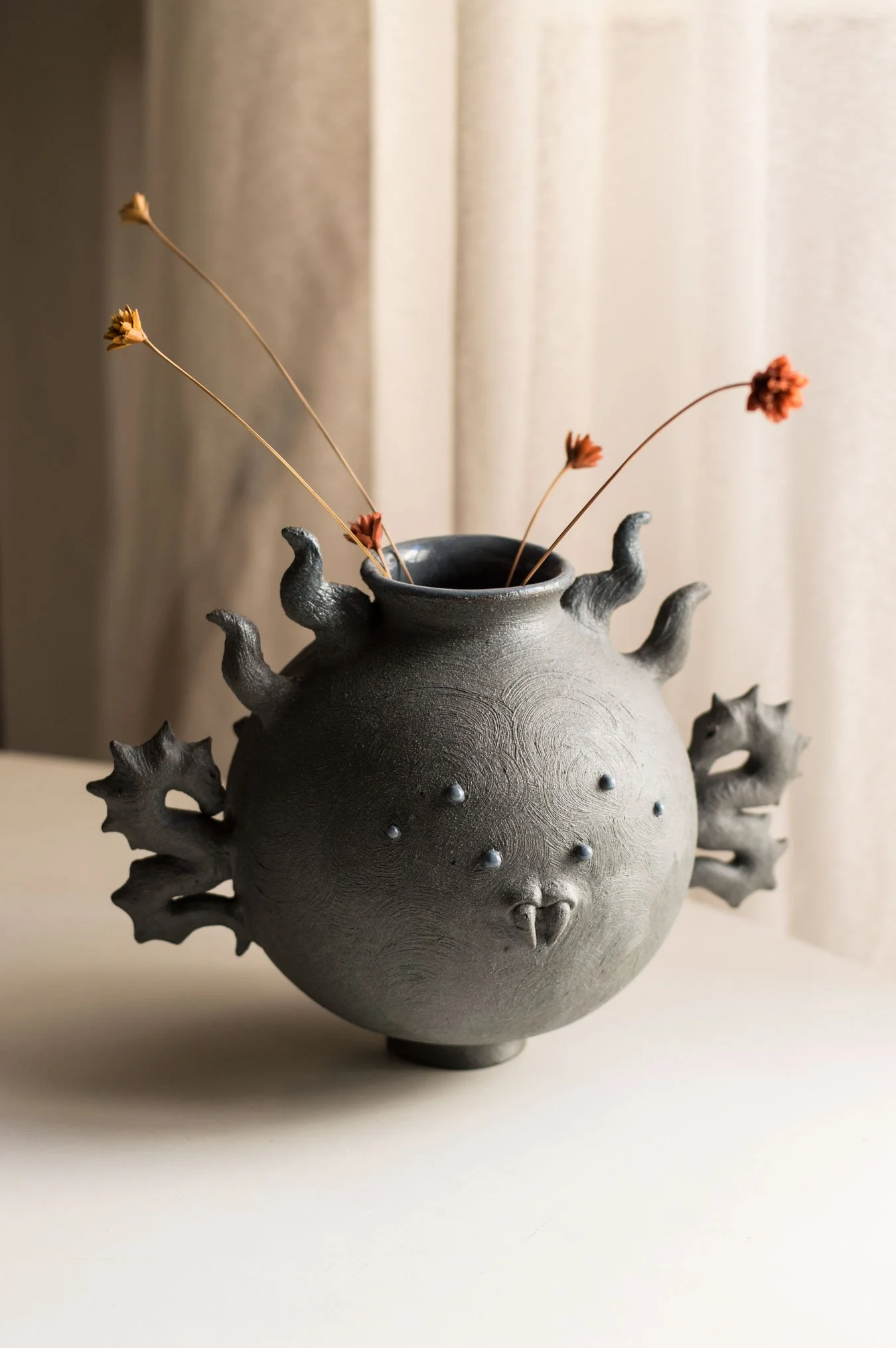
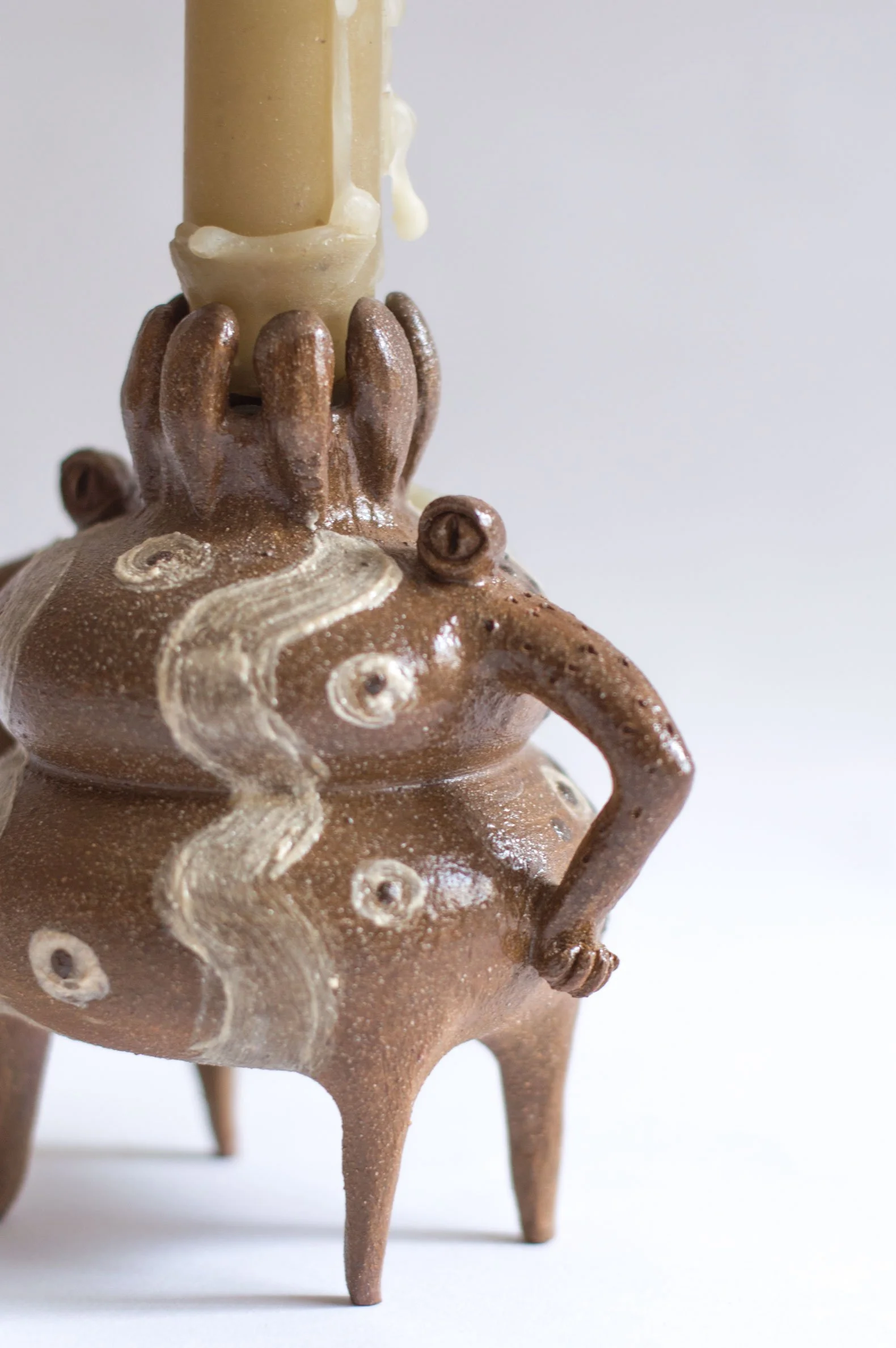
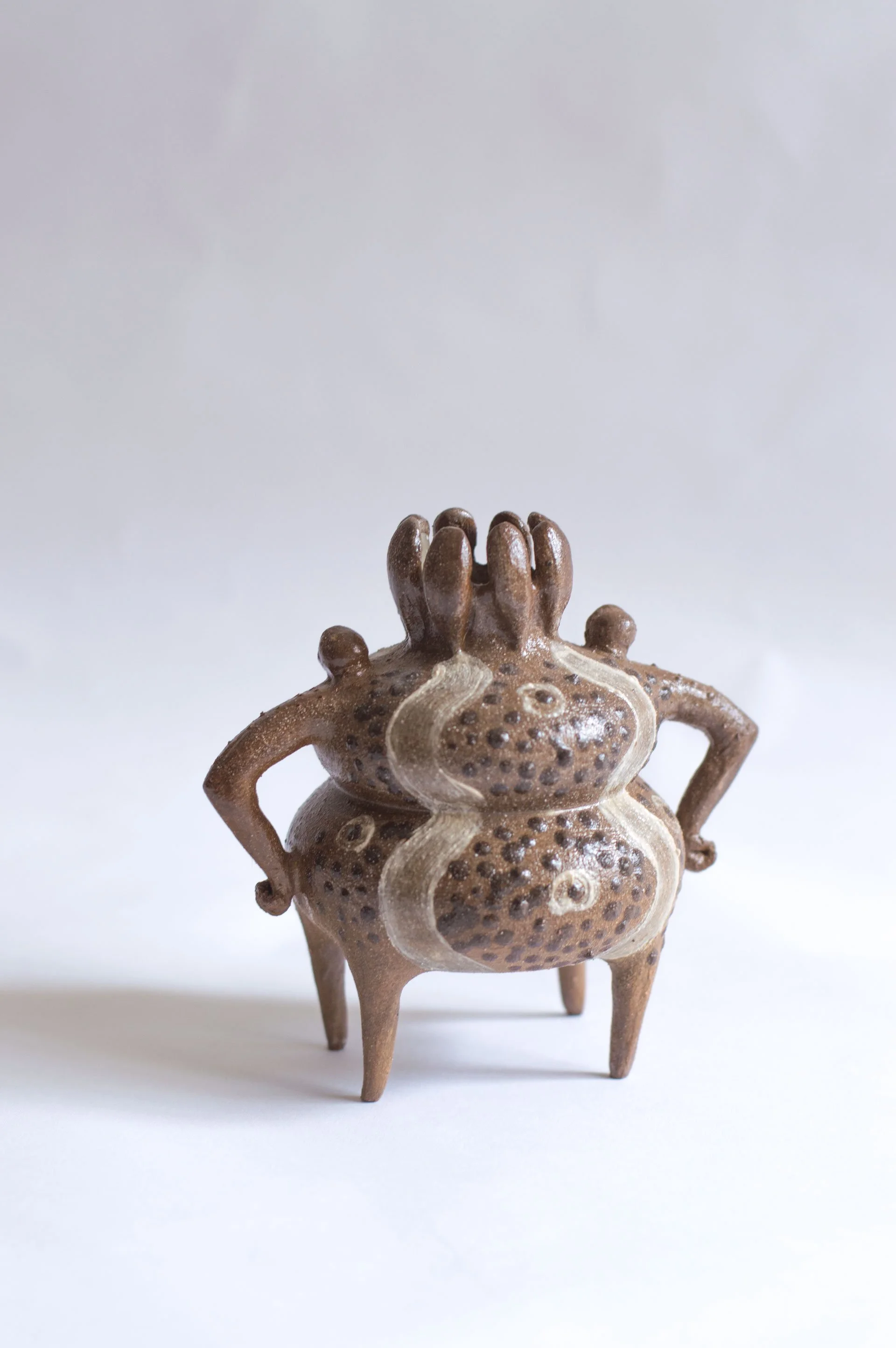
Wheel thrown and hand sculpted in stoneware pigmented with iron oxide, Ranunculus is made by Ioulia Chante in Malta. Blending frog and plant forms, the piece takes on a surreal presence while functioning as a candle holder. Hand painted with pigmented slips and subtly spray glazed in a glossy transparent finish, it is fired at 1260ºC, creating a surface where form, colour, and imagination come together.
Each singular work carries its own provenance and the distinct voice of the crafter.
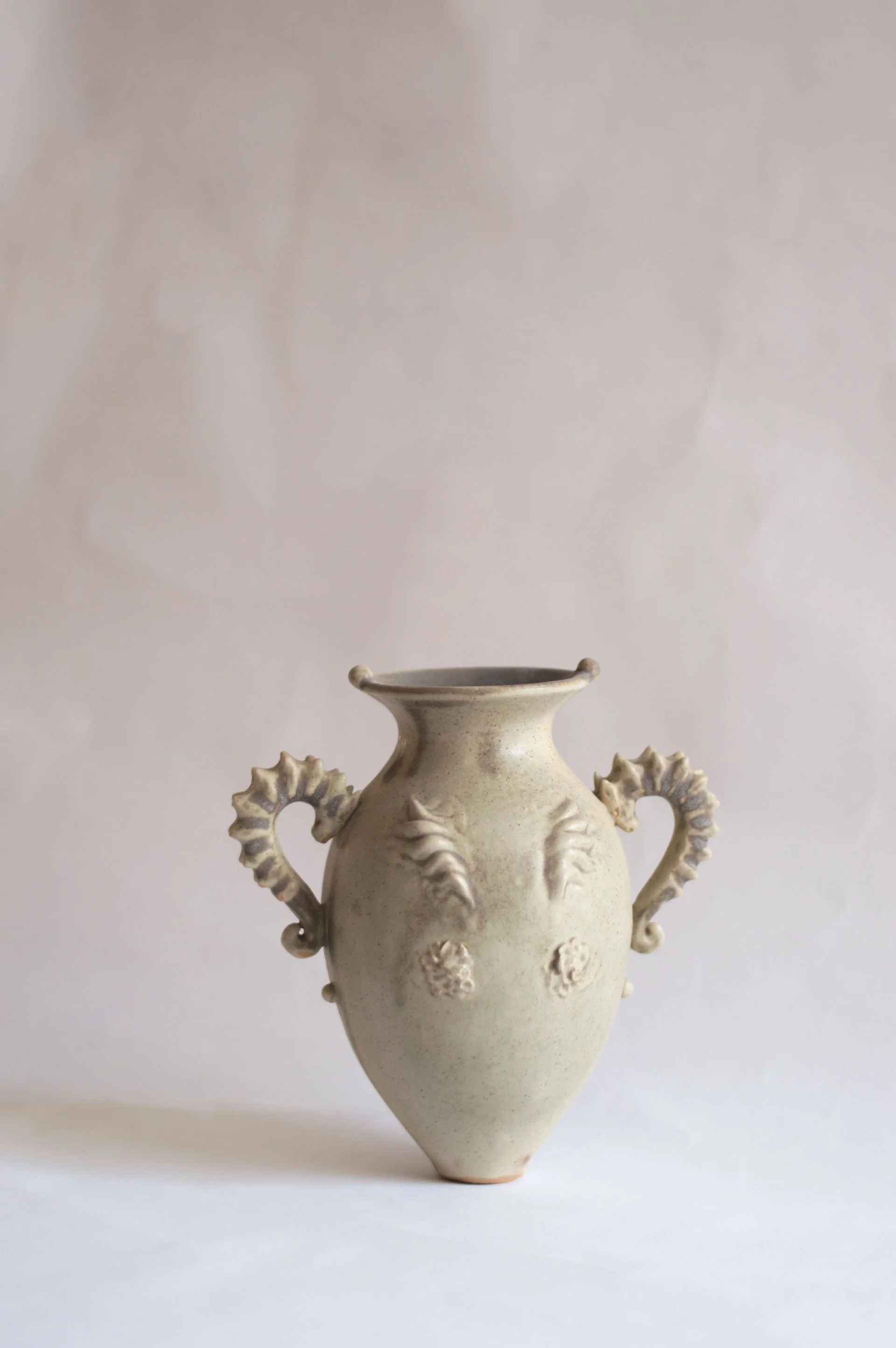
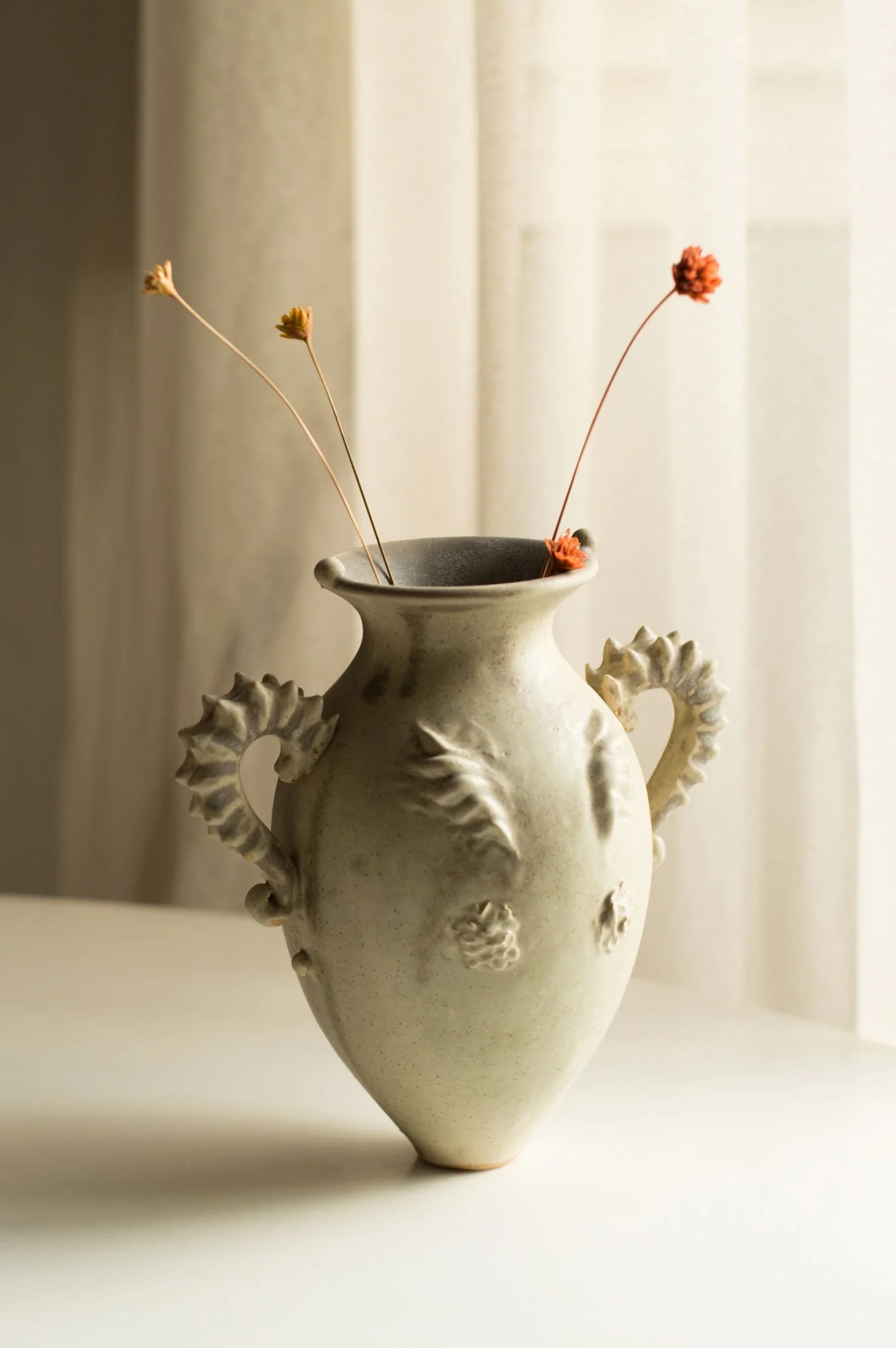
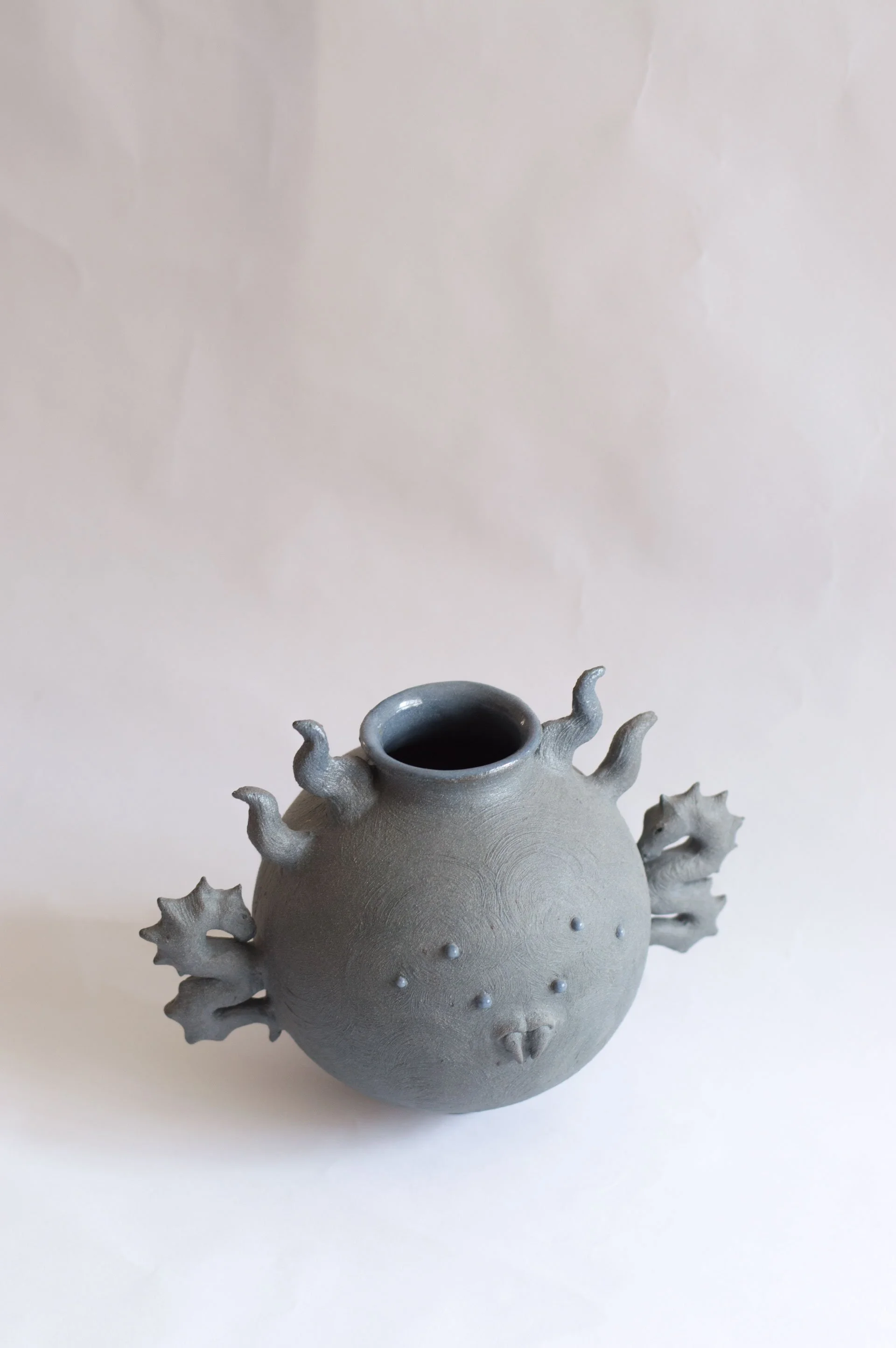
Wheel thrown and hand sculpted in white stoneware, Estuary is made by Ioulia Chante in Malta. The amphora form is complemented by handles shaped as seahorses, drawing on the flowing elements and creatures of reefs and rivers. Finished in a matte pale green grey glaze and fired at 1260ºC, the piece carries a quiet balance between playfulness and natural form.
Each singular work carries its own provenance and the distinct voice of the crafter.
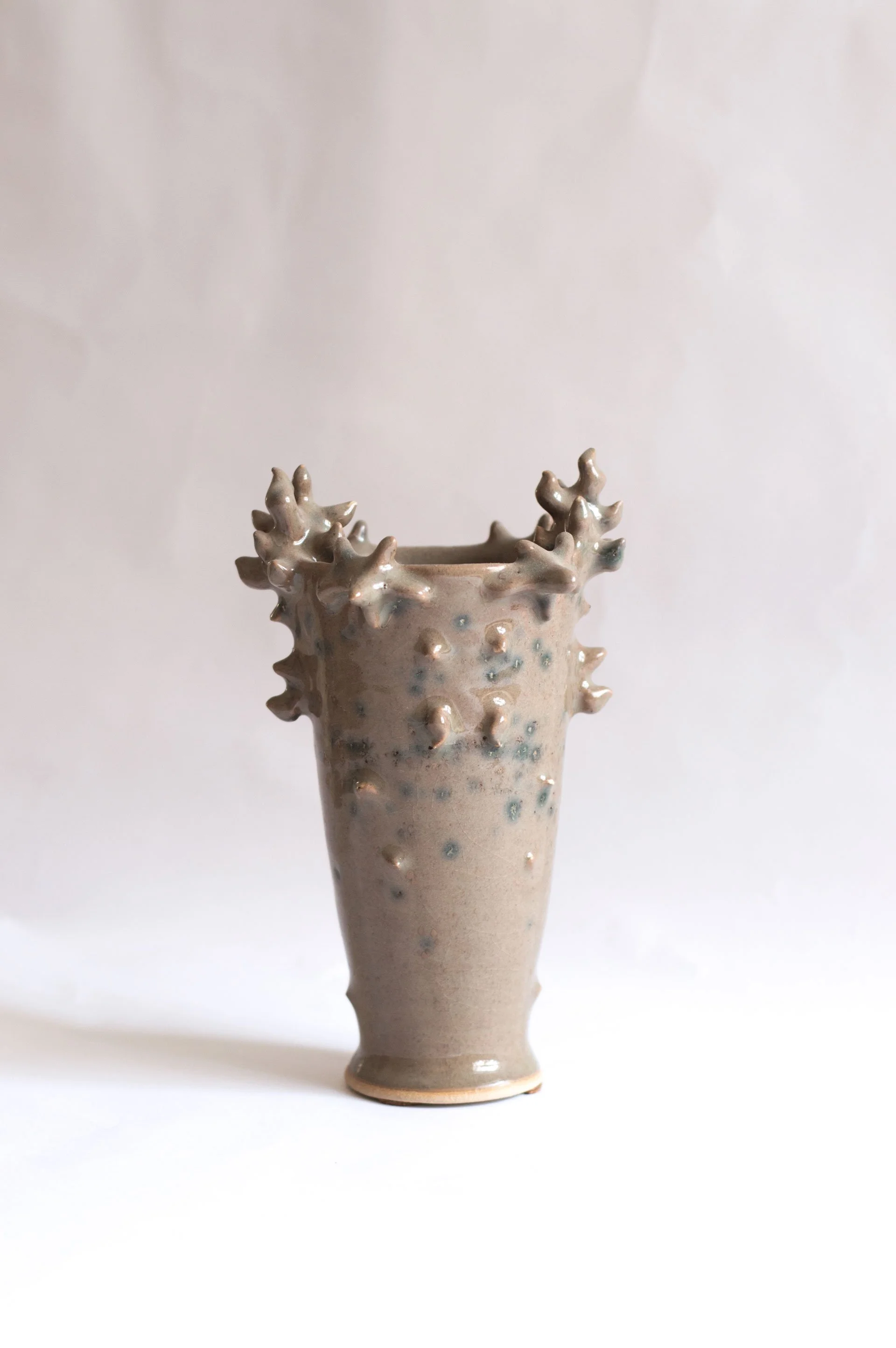
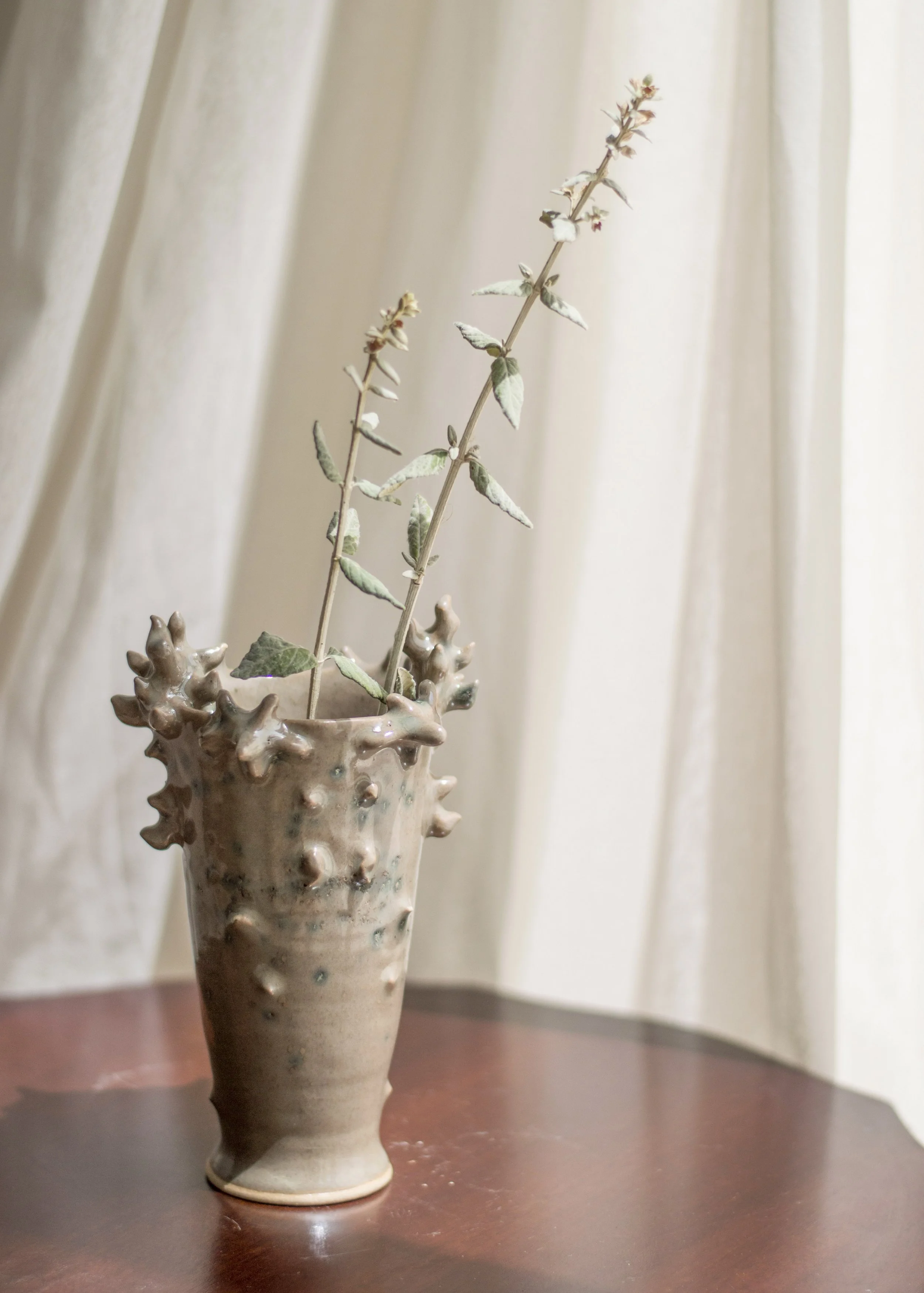
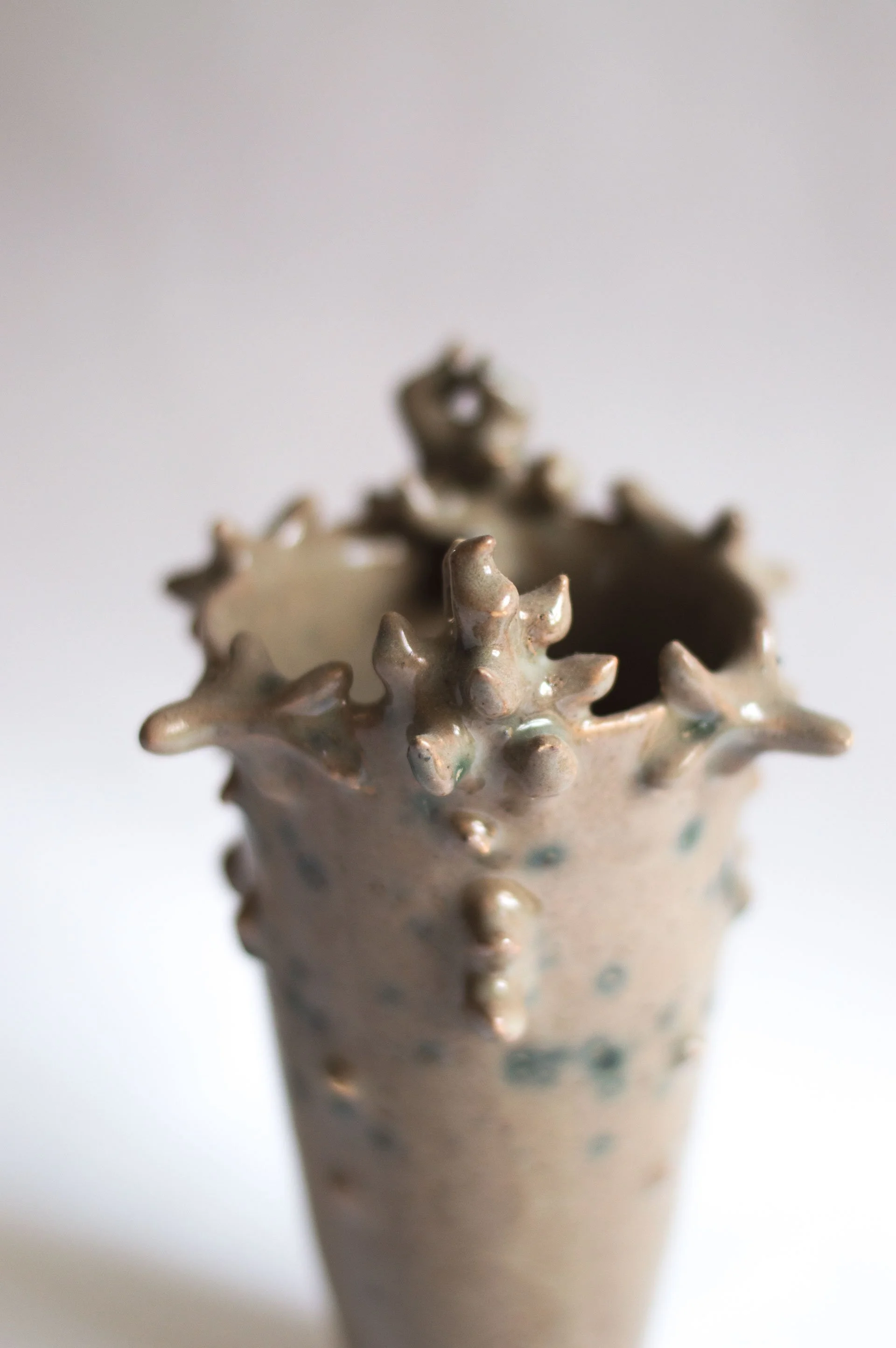
Wheel thrown and hand sculpted in white stoneware mixed with stainless steel residue flakes, Ramaria is made by Ioulia Chante in Malta. Inspired by fungal forms, the piece develops an organic, branching presence through its sculptural surface. Finished with a double layer of matte chrome and transparent glaze and fired at 1260ºC, it carries a subtle interplay between texture, light, and material transformation.
Each singular work carries its own provenance and the distinct voice of the crafter.
