Estela Díez
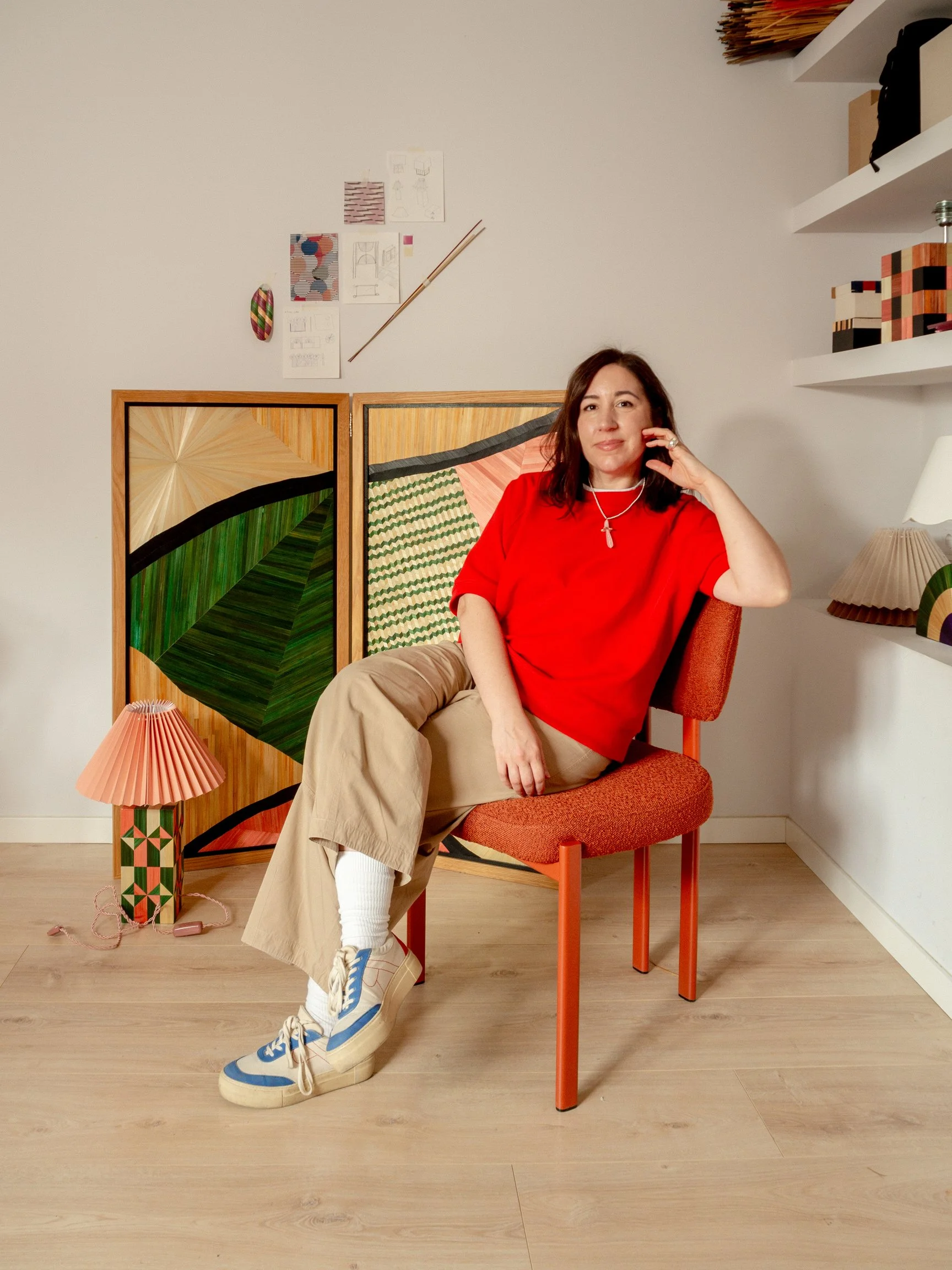
Please share a bit about yourself and your background.
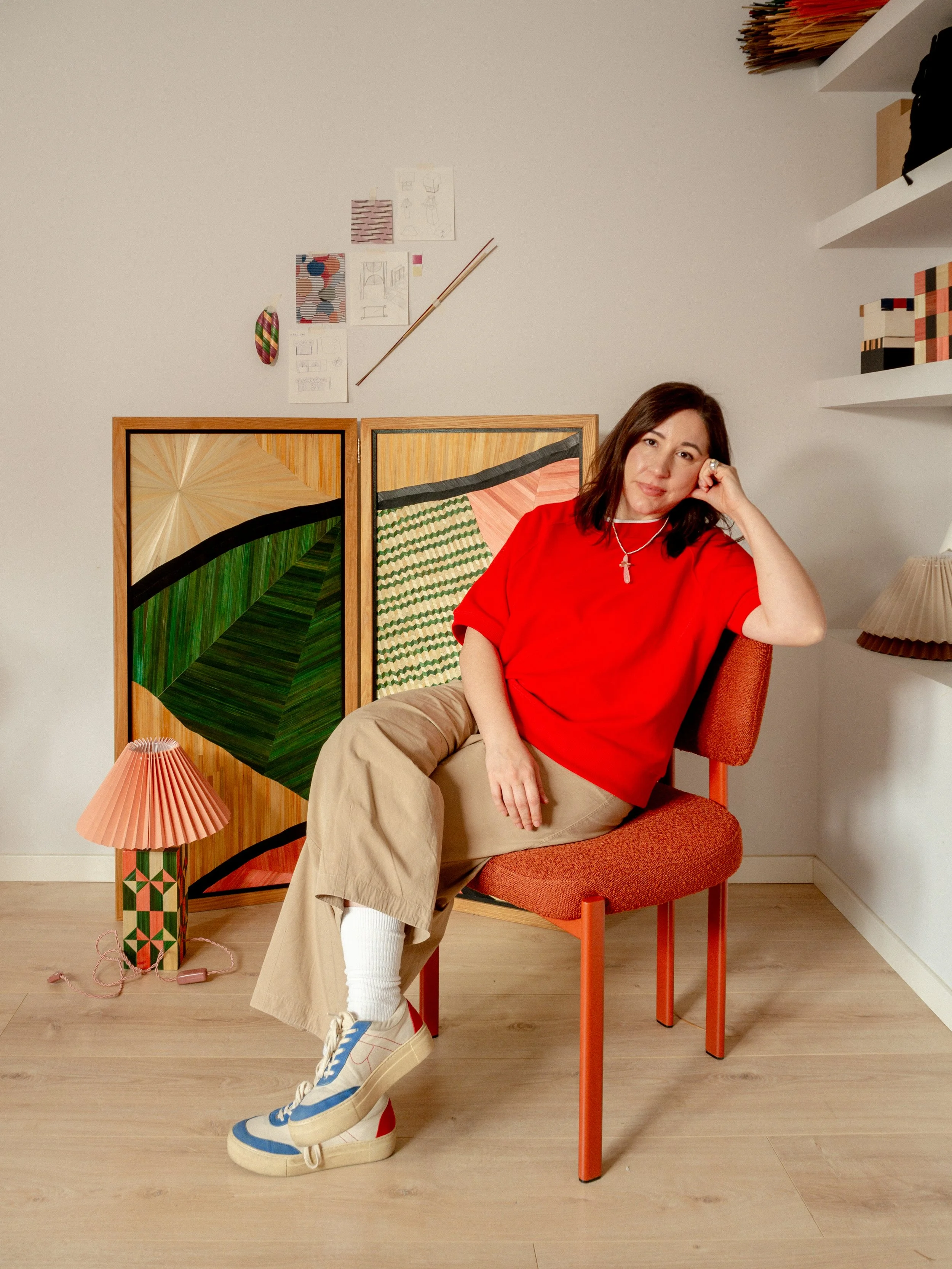
My name is Estela. I grew up in Asturias, in the north of Spain, but I have been living in Madrid for many years.
I studied interior design and scenography, but my passion for fashion led me to build most of my professional career working with fashion brands. My work focused on designing the environments where the product lives: window displays, showrooms, pop-ups, and retail spaces.
I have always enjoyed working with my hands, and I especially fell in love with window display design, where nothing is accidental and composition is everything. That attention to detail, balance, and visual storytelling still shapes the way I approach my work today.
What first drew you to rye straw marquetry, and how did this traditional technique become central to your creative expression?
I discovered straw marquetry through my work. I used to visit many interior design and decoration fairs, and I first came across this technique at a fair in Paris, where it has a strong tradition.
I immediately fell in love with it. What fascinated me most was how such a humble material could be transformed into something so refined and elegant, often used in high-end decorative pieces. I also had the feeling that the material had a lot to say.
The straw itself is very special. It has warmth, a subtle shine, and reflects light differently depending on how it is cut and placed.
Coming from a background where composition and visual balance are essential, I quickly realised that straw could be used almost like a surface to build patterns, rhythms, and colour compositions. From that moment on, I felt a strong connection with the technique and started exploring it through my own work.
How did Boombo Studio come about?
Straw came into my life at a moment of deep personal change. I became almost obsessed with how such a humble, almost invisible material could be transformed into surfaces full of colour, with that very distinctive play of light and shine.
At that moment, I realised I wanted to change the way I worked. I left my corporate career and started learning the technique, trying to find my own way of building something with it. I was also looking for a more human rhythm of life, one that allowed me to reconnect with slower, more hands-on processes.
I also knew I wanted to connect it with another of my obsessions: colour, and the importance of surrounding ourselves with beautiful, lasting objects that have character. I wanted to take this very old technique and give it a more contemporary expression, while preserving the value of the handmade.
That was the beginning of Boombo Studio. From the start, I felt that the material had so much to say.
Your pieces reflect patience, repetition, and precision. Can you walk us through your process, from preparing the straw to composing a finished work?
For me, the process is almost a form of mindfulness. It requires patience, repetition, and a lot of attention to very small details.
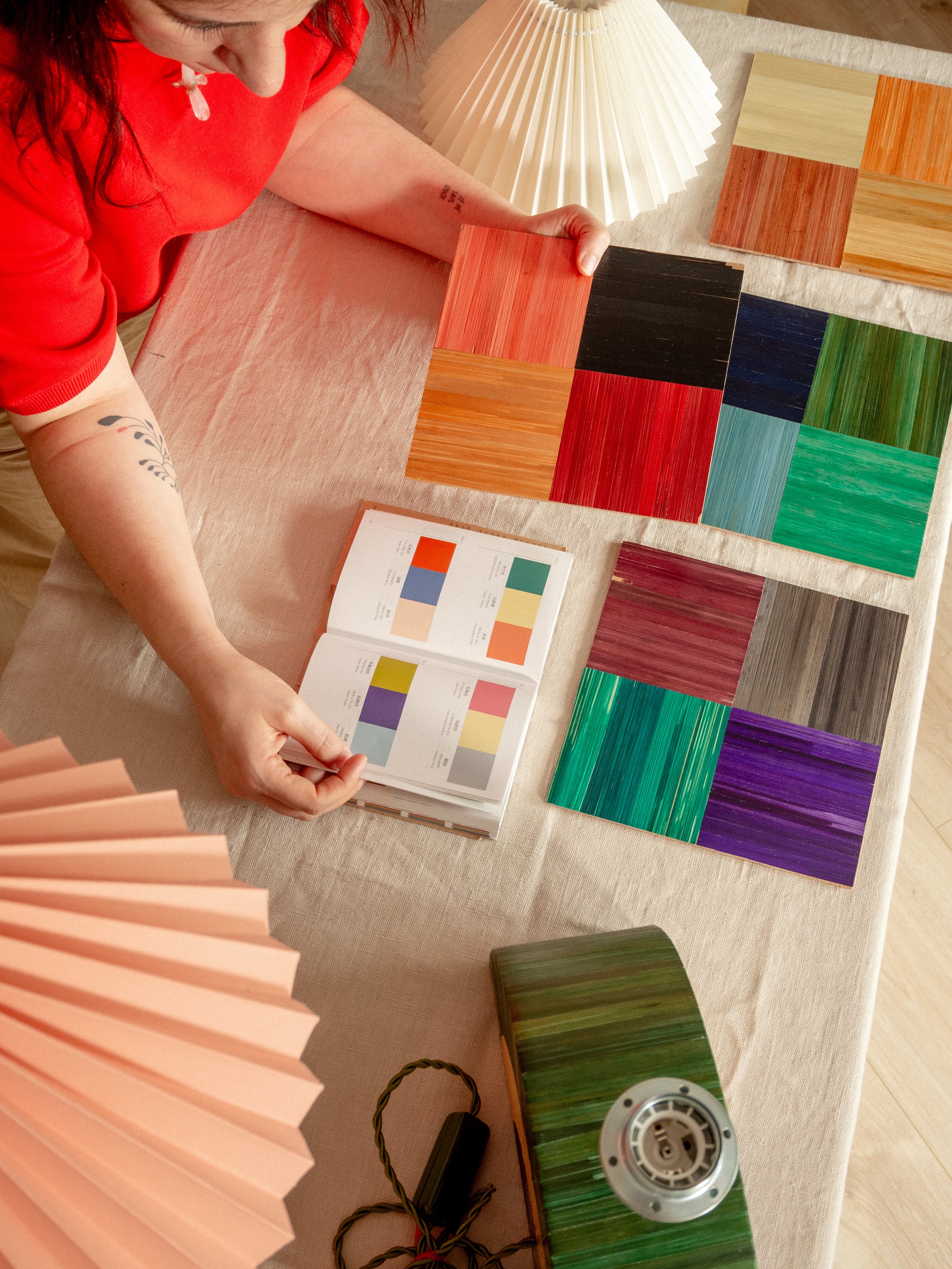
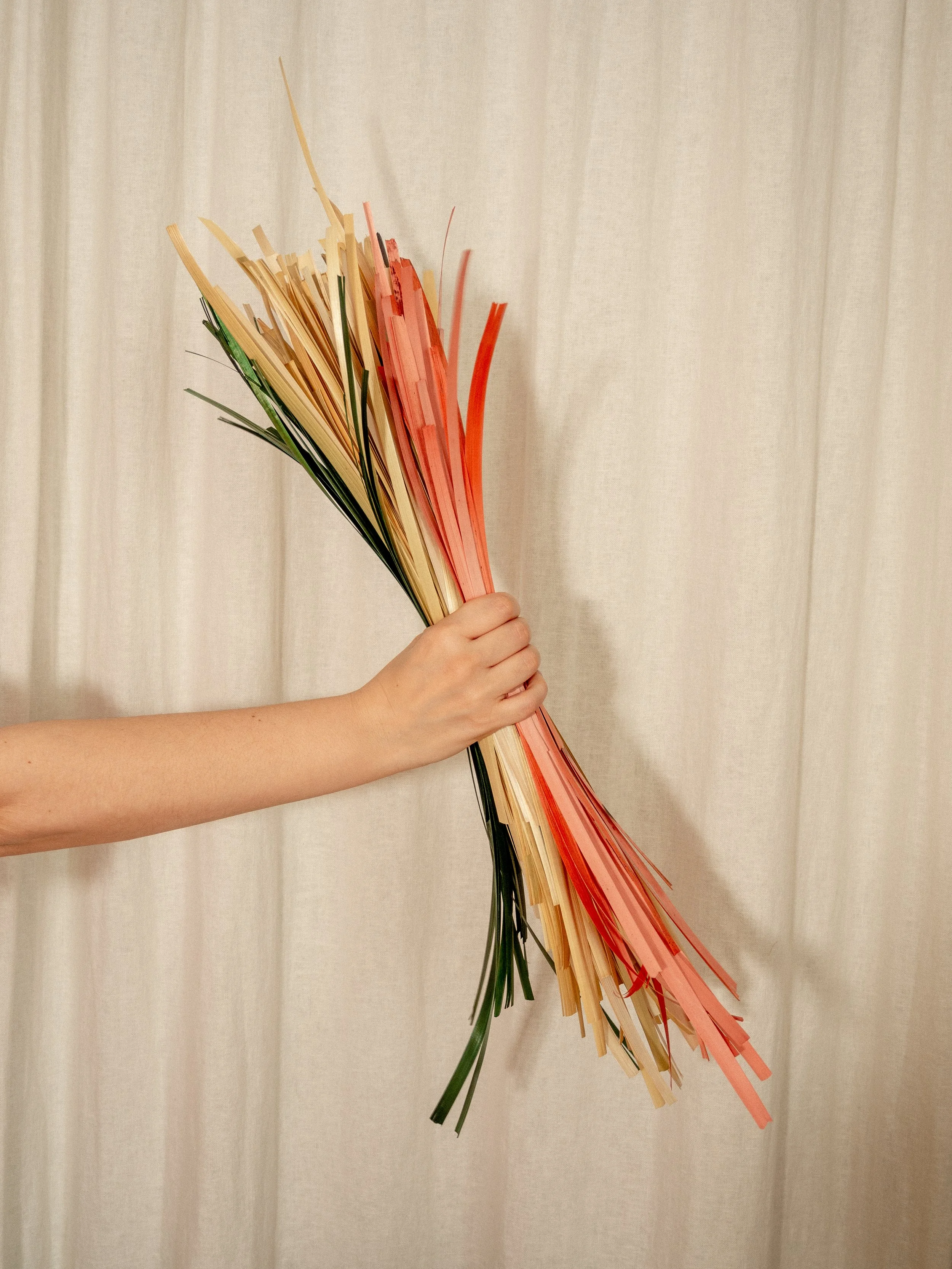
Straw can be used in its natural colour, which has a beautiful buttery tone, or it can be dyed. Because it is such a natural material, each straw reacts differently to the dye, so the colours are never completely uniform. For me, this gives the pieces a lot of character, because no two surfaces ever turn out exactly the same.
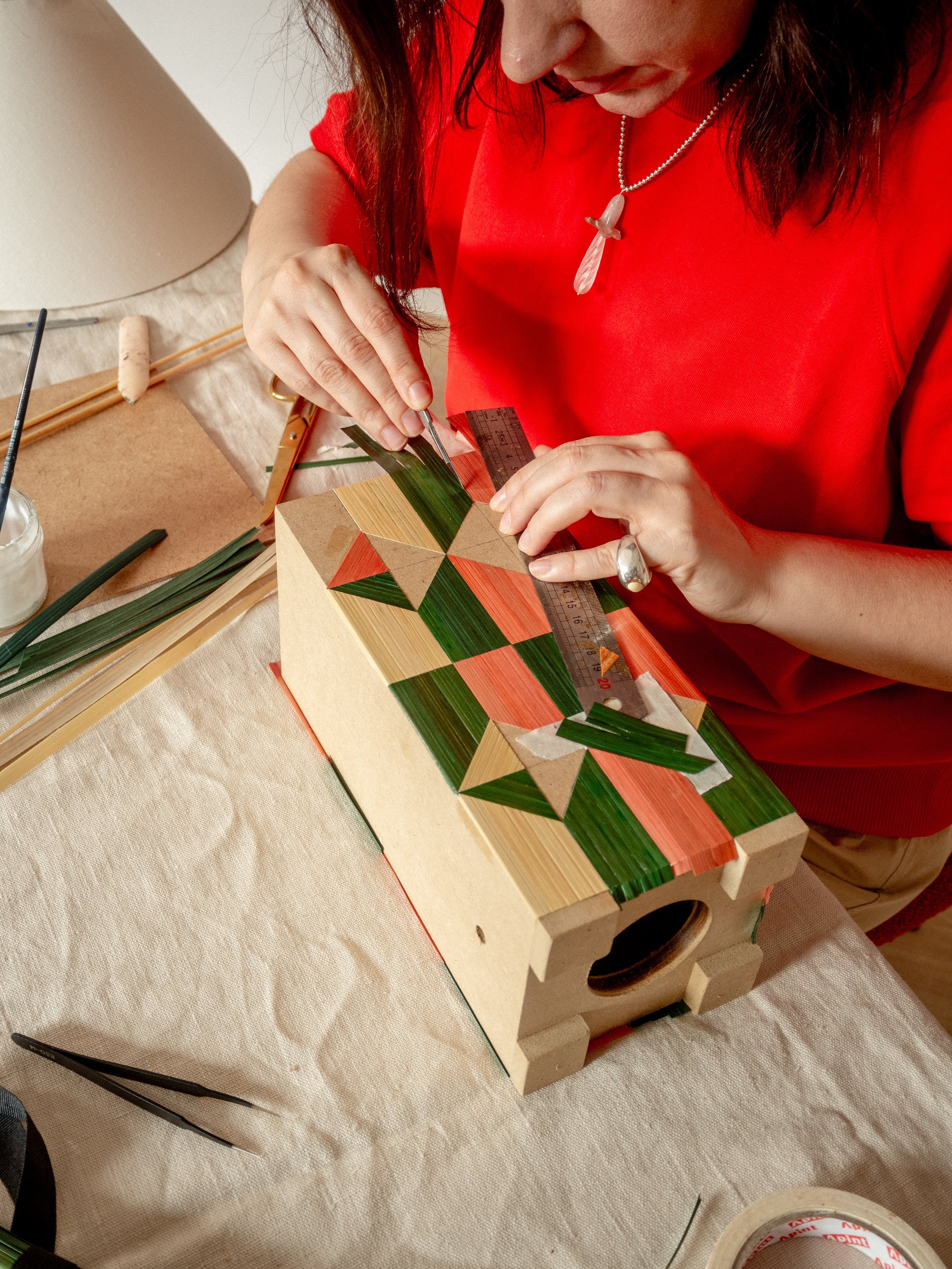
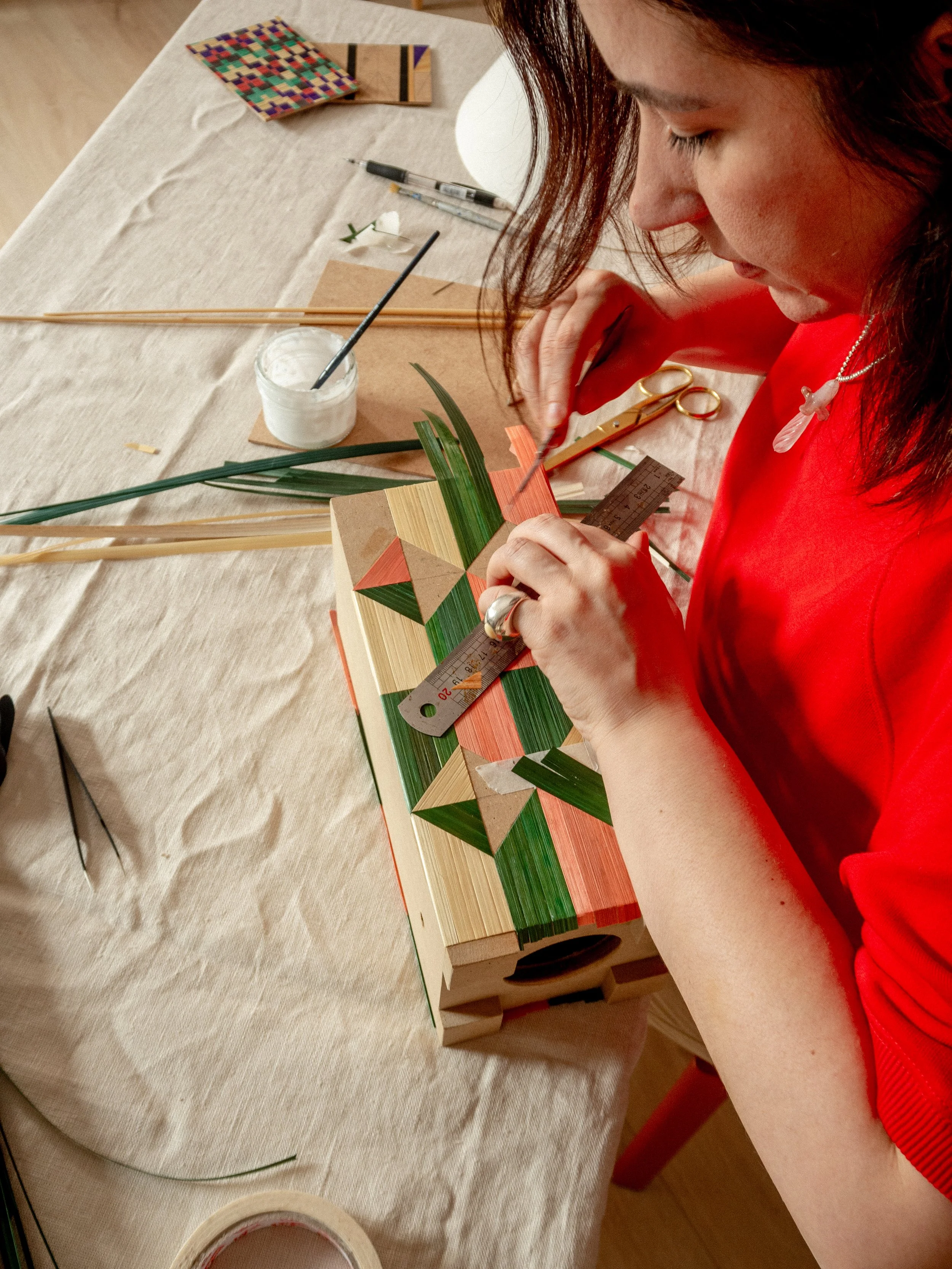
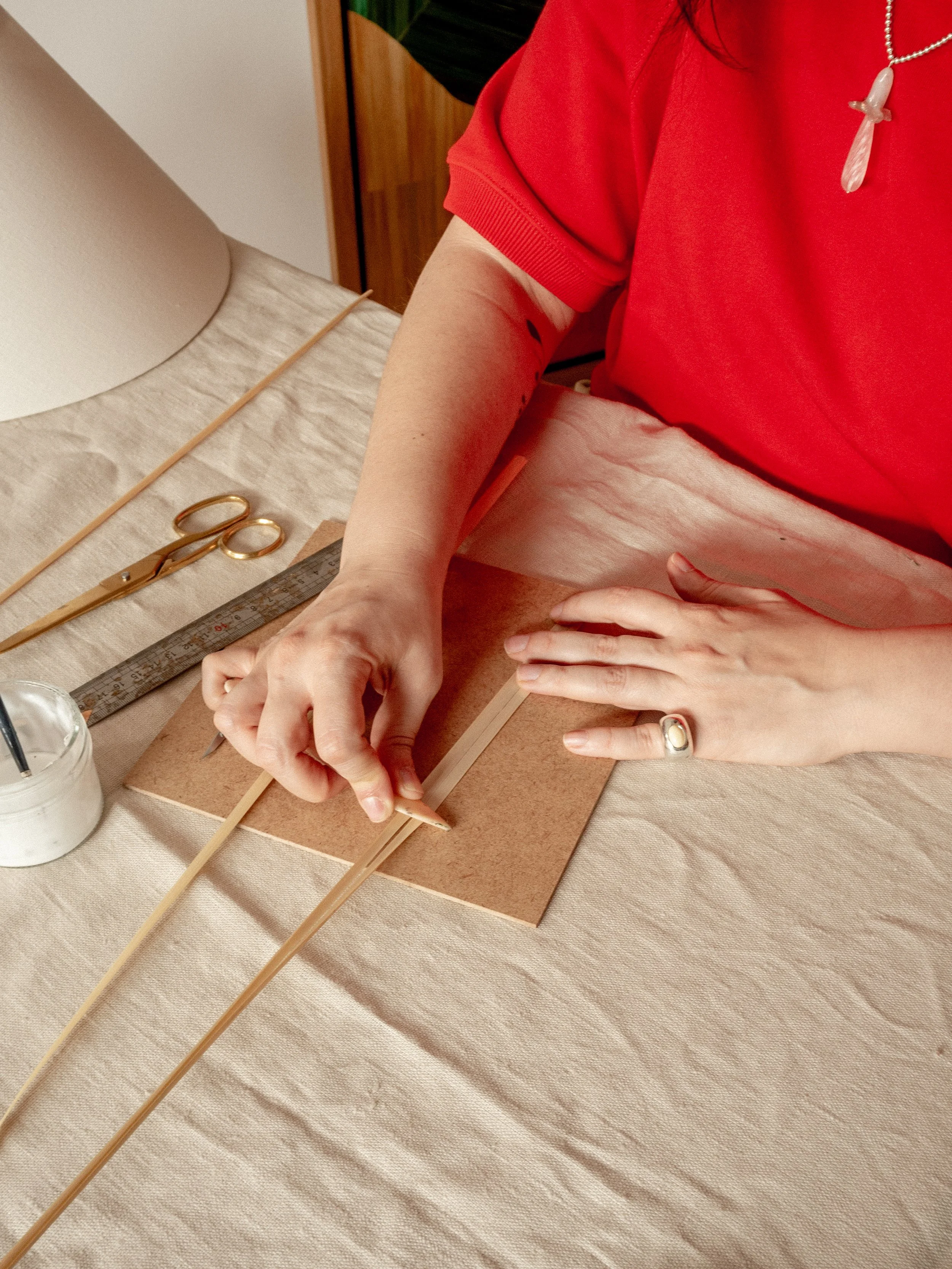
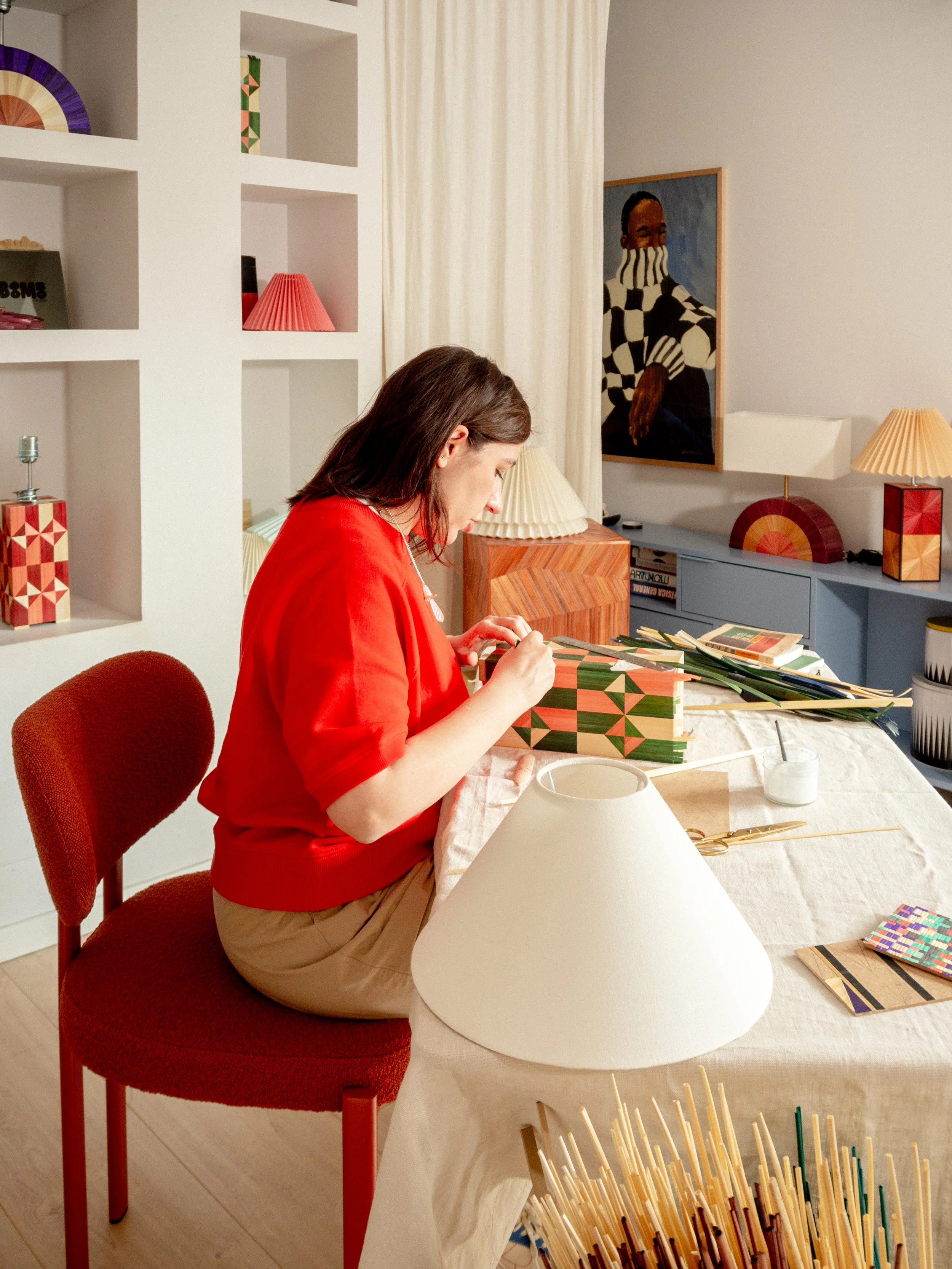
Each straw stem is opened and carefully flattened until it becomes completely smooth. Then it is glued, cut, and placed one by one, adapting it to the surface until the composition gradually takes shape.
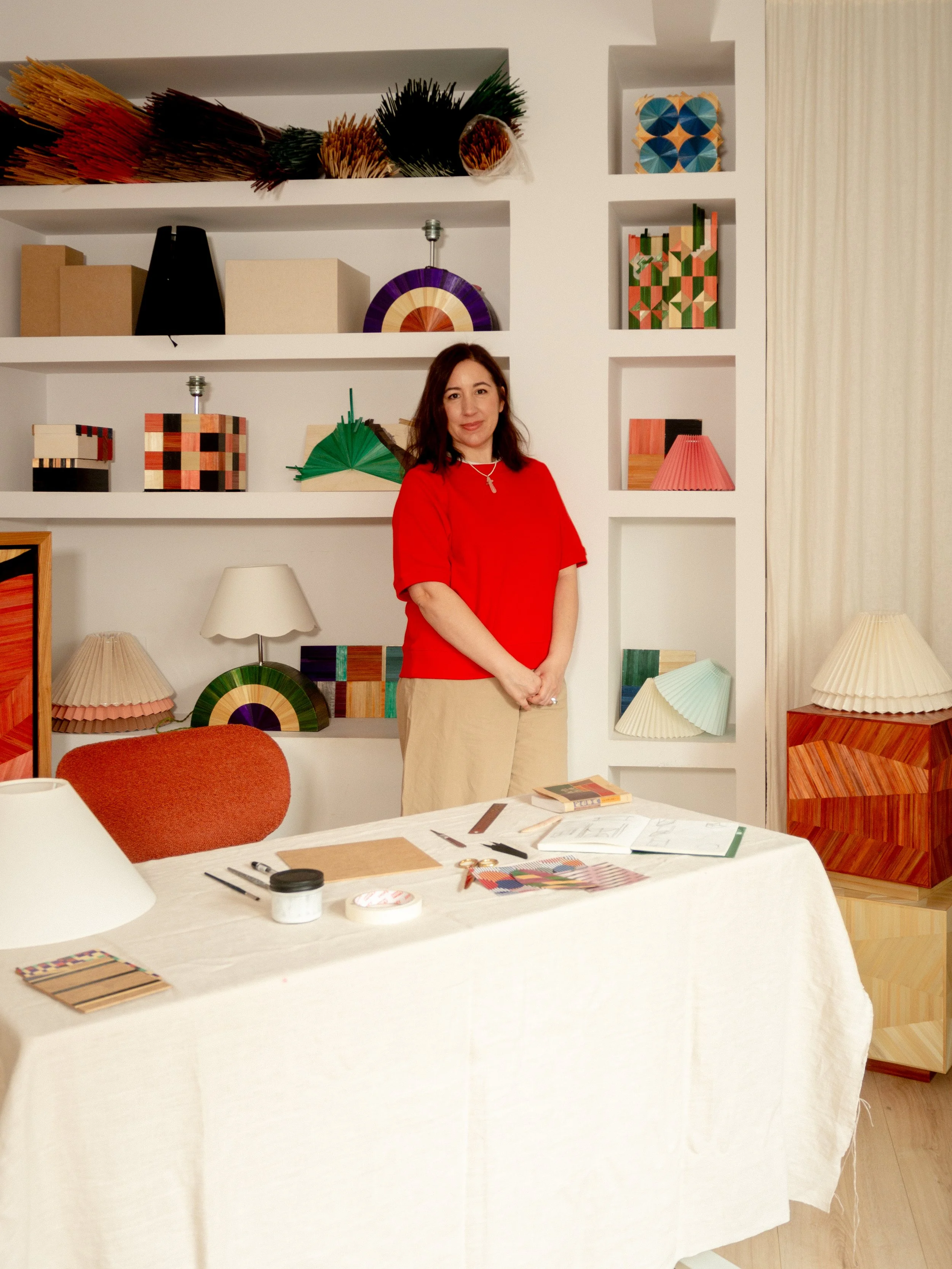
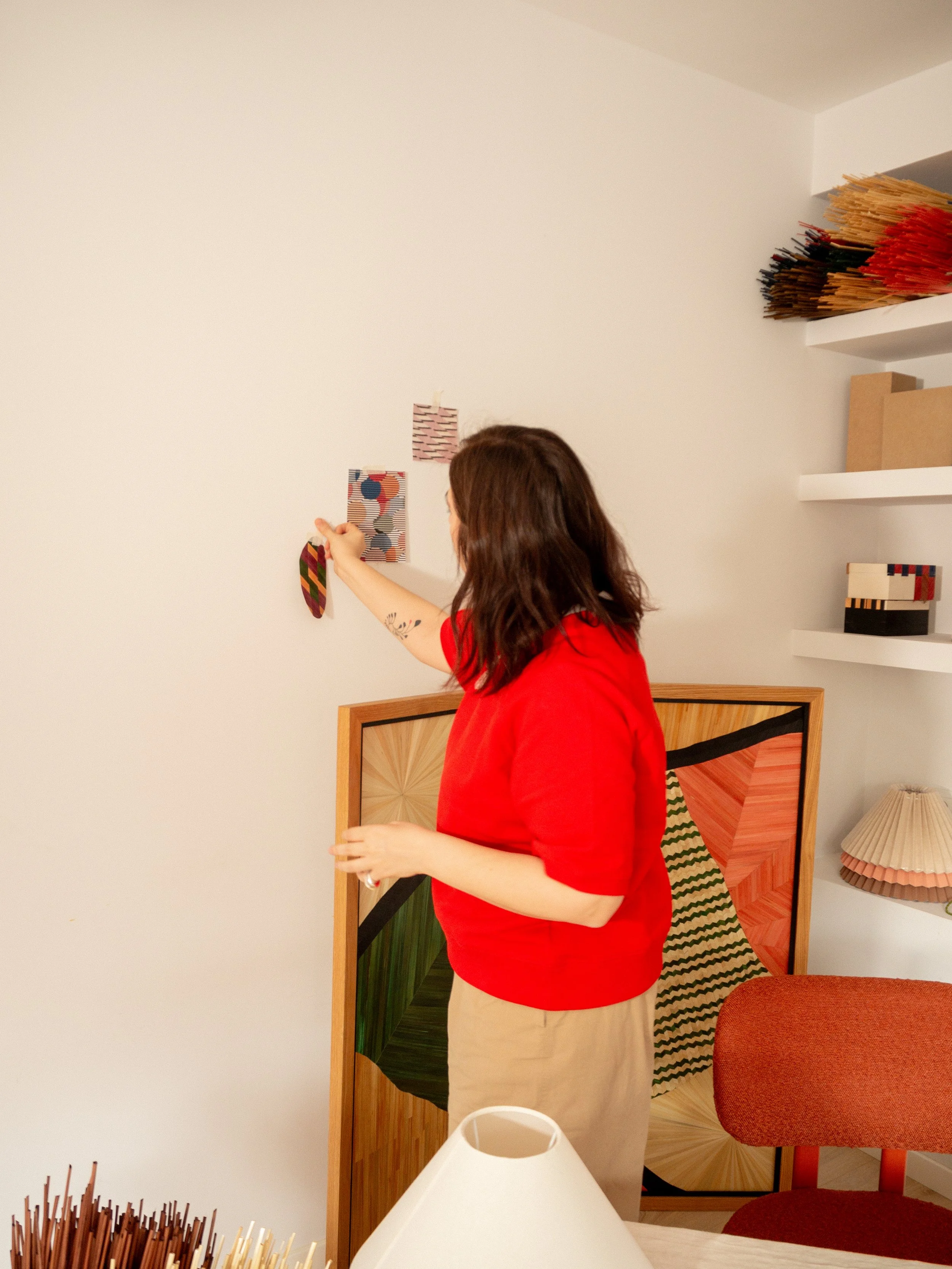
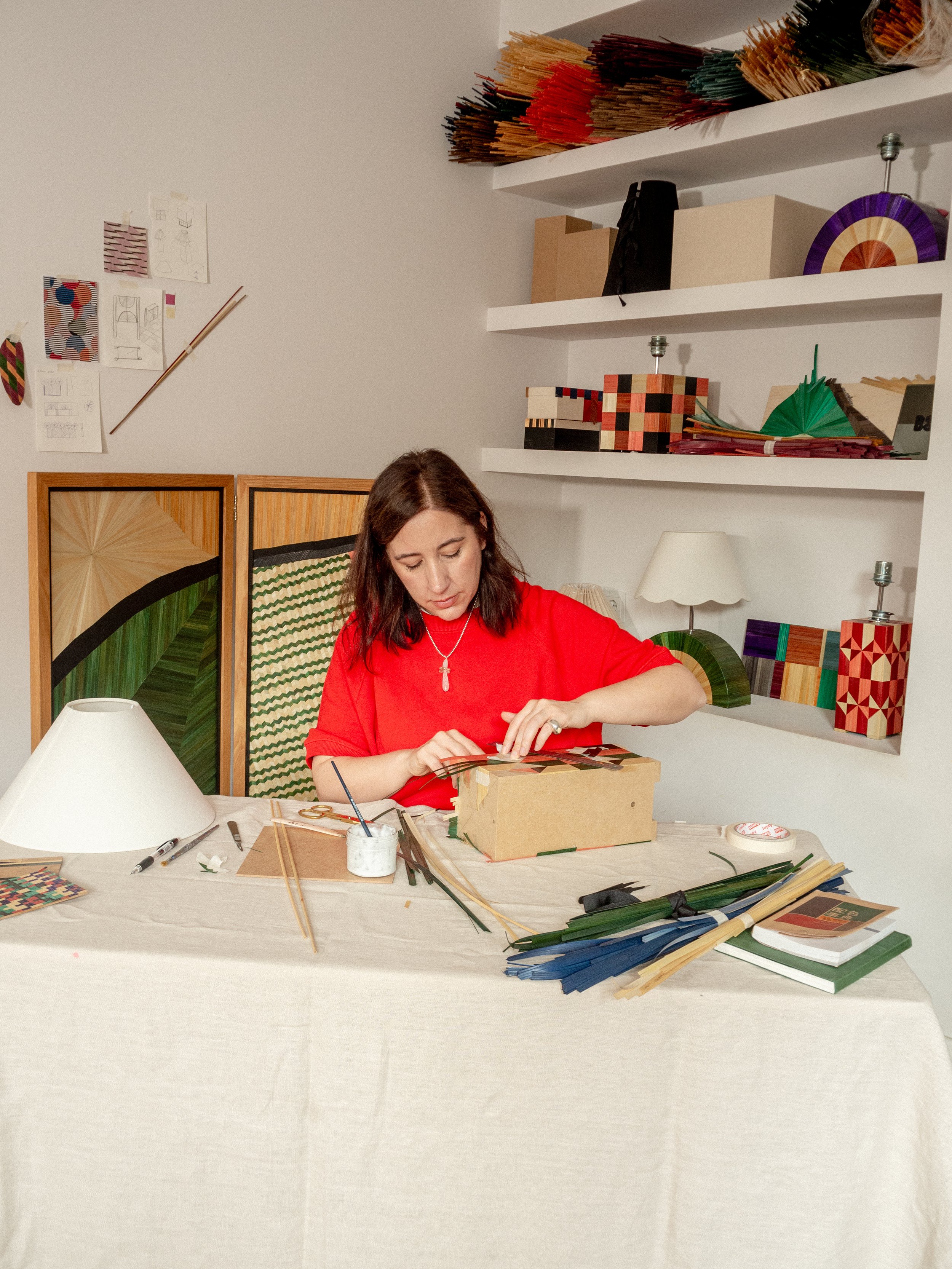
When it comes to the pieces themselves, I usually start by sketching the design. The base structure is designed by me and manufactured by a carpenter, and afterwards I create this “skin” of straw marquetry over it. The patterns are often inspired by geometric compositions, aerial views, or graphic rhythms. It really depends on the piece.
When it comes to the tactile aspect of your work and its connection with your body, how does the hands-on nature impact your overall happiness and well-being?
For me, working at a human rhythm means accepting that things take the time they need. Not everything can or should happen fast. Slowness is not a limitation; it is part of the value of each piece. In a way, I even find it almost disruptive today that someone has to wait for an object.
It may sound exaggerated, but I truly feel that I now live from a very different place. I can spend hundreds of hours working on a single piece, sometimes around 250 hours for larger works, often in silence, repeating the same gestures. That constant focus keeps me in the present moment.
Even though I still work many hours, the way I experience that time is completely different. When I left my previous career, I felt quite disconnected from my body and my emotions. Now I feel deeply connected to my body, my mind, and my surroundings.
Straw marquetry carries a strong historical lineage. How do you balance preservation of tradition with your contemporary, geometric language?
For me, it starts with being very faithful to the technique itself. I work with the traditional materials, straw, glue, and beeswax, respecting the essence of the craft.
A big part of the richness of straw marquetry comes from the way the fibres reflect light depending on their direction. I always try to play as much as possible with the orientation of each piece of straw to achieve that iridescent effect that makes the material so alive. I love how the piece almost moves with you as the light hits it from different angles.
Where I move away from the more traditional approach is mainly through the compositions. I work with geometric patterns, playing with scale and especially with colour. I am often drawn to colour combinations that might seem unlikely at first, but that somehow end up creating something very magnetic.
At the heart of Boombo Studio is an ode to imperfection and the handmade. What does craftsmanship mean to you in today’s fast-paced design culture?
For me, craftsmanship is closely connected to time and to understanding the value of processes. We live in a culture where everything is expected to be immediate, so the idea that an object takes time to make, and that someone might have to wait for it, almost feels disruptive today.
But that slowness is not a limitation; it is part of the value of each piece. When you understand the time, the gestures, and the care behind an object, you relate to it differently.
I often think about those objects that stay with us for generations, the piece that was always in your grandmother’s living room, for example. Objects that gather memories over time and become part of a family story.
Craft also means that things can be repaired, maintained, and continue to live with us instead of simply being replaced.
And finally, I love the idea that neither the material nor I are perfect. That imperfection remains in the pieces and gives them something difficult to define, a kind of character that allows people to connect with them almost immediately.
Are there any new projects, themes, or directions you are currently exploring that feel particularly connected to your practice?
Yes, I am currently exploring new types of objects and formats for the work. I am especially interested in developing more wall pieces, as well as functional objects such as tables and mirrors.
I am also starting to present the work at a few fairs, which feels like a very exciting step for the studio.
All of these new directions are keeping me very engaged and energised at the moment, and I am really enjoying seeing how the material can adapt to different scales and objects.
How can people engage more closely with your work, whether through exhibitions, commissions, or your online presence?
The best way to follow my work is through Boombo Studio’s online presence, where I share new pieces, projects, and upcoming exhibitions. I will also be launching the Boombo Studio website soon, which will be another place where people can explore the work more closely.
I also present the work through fairs and exhibitions, and I am always open to commissions, especially for site-specific pieces or special projects.
I really enjoy creating pieces that become part of someone’s space and daily life, so I am always happy to start conversations around new ideas or collaborations.
Photos by flordelisruiz__.
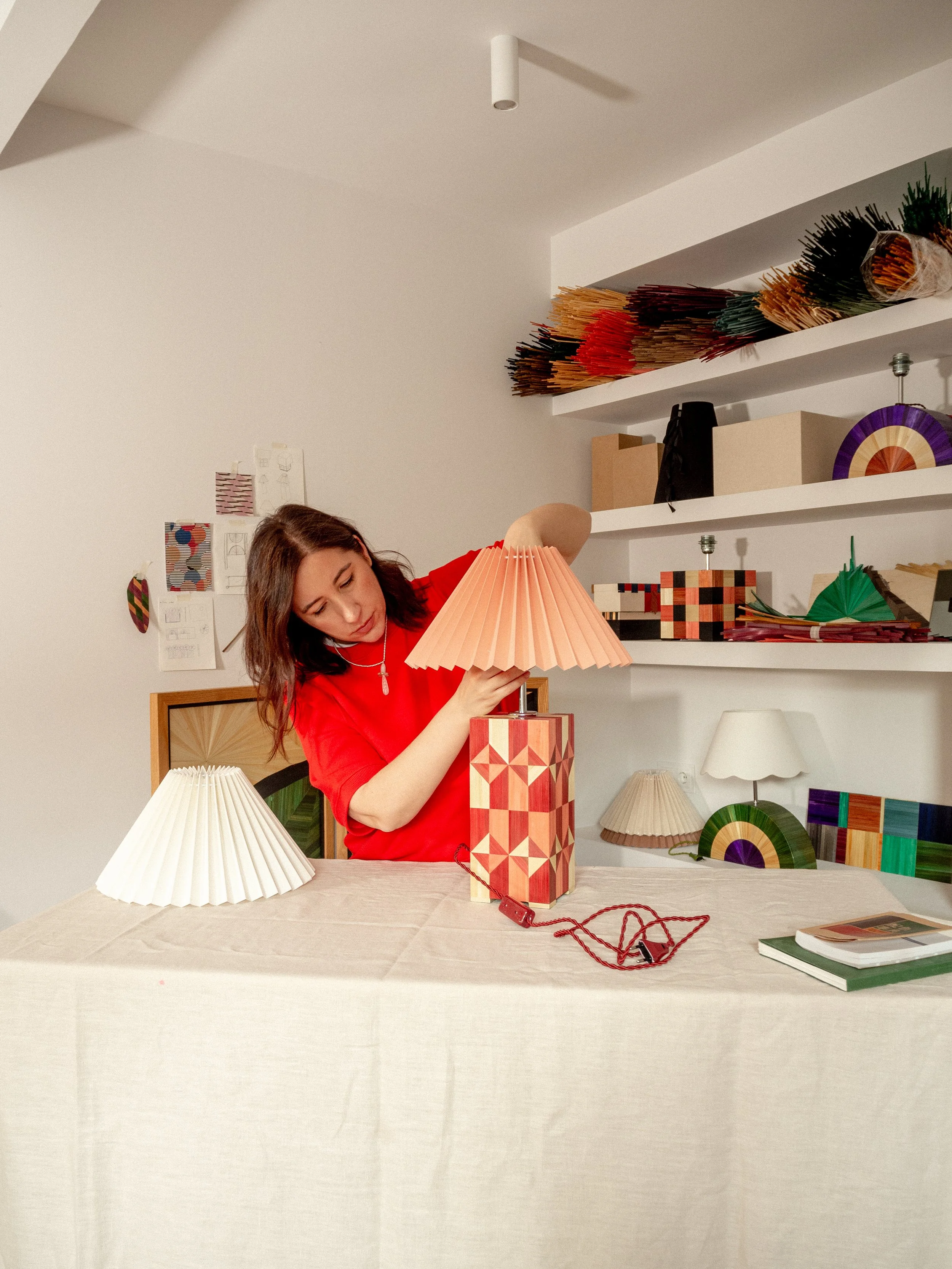
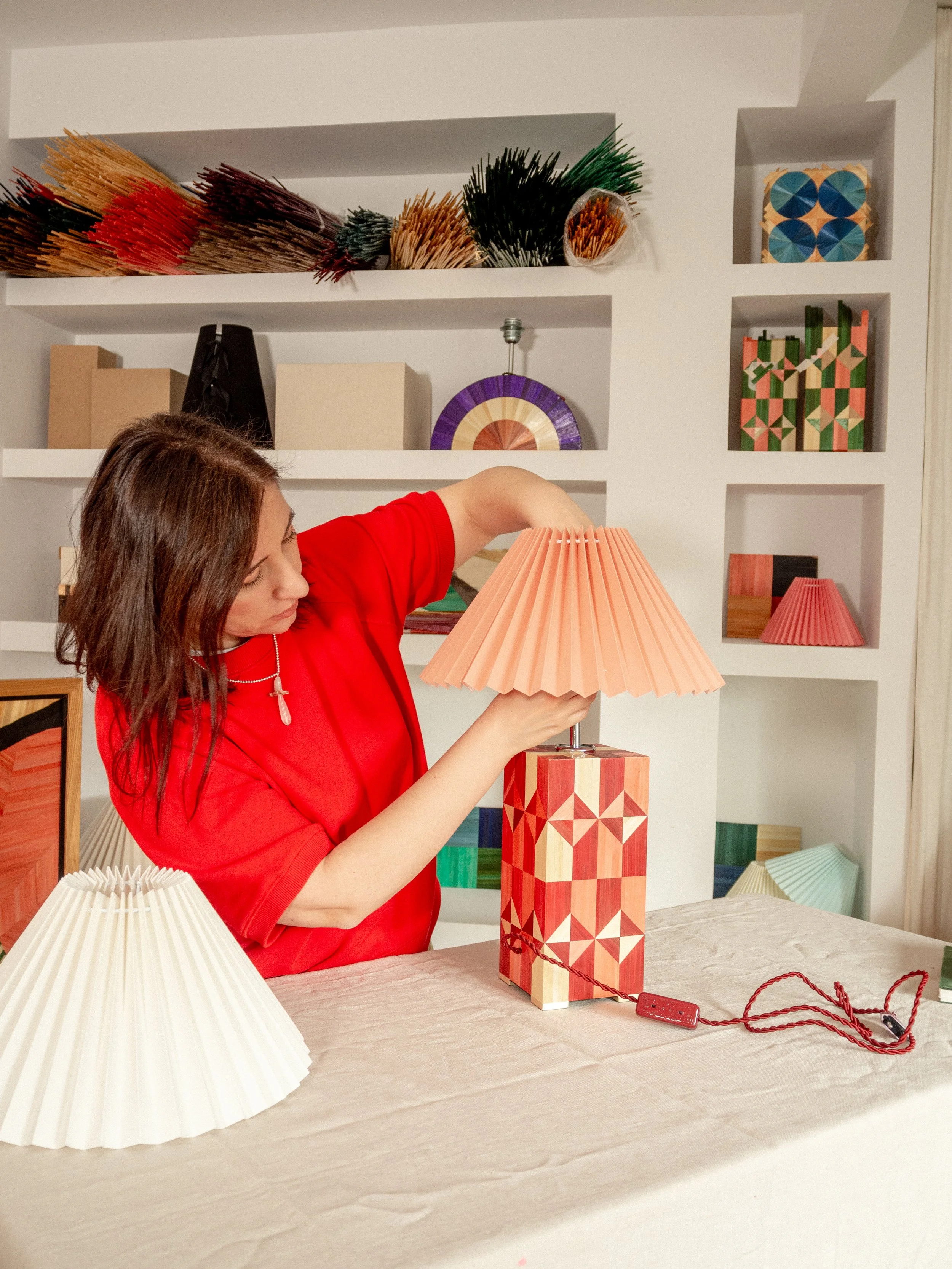
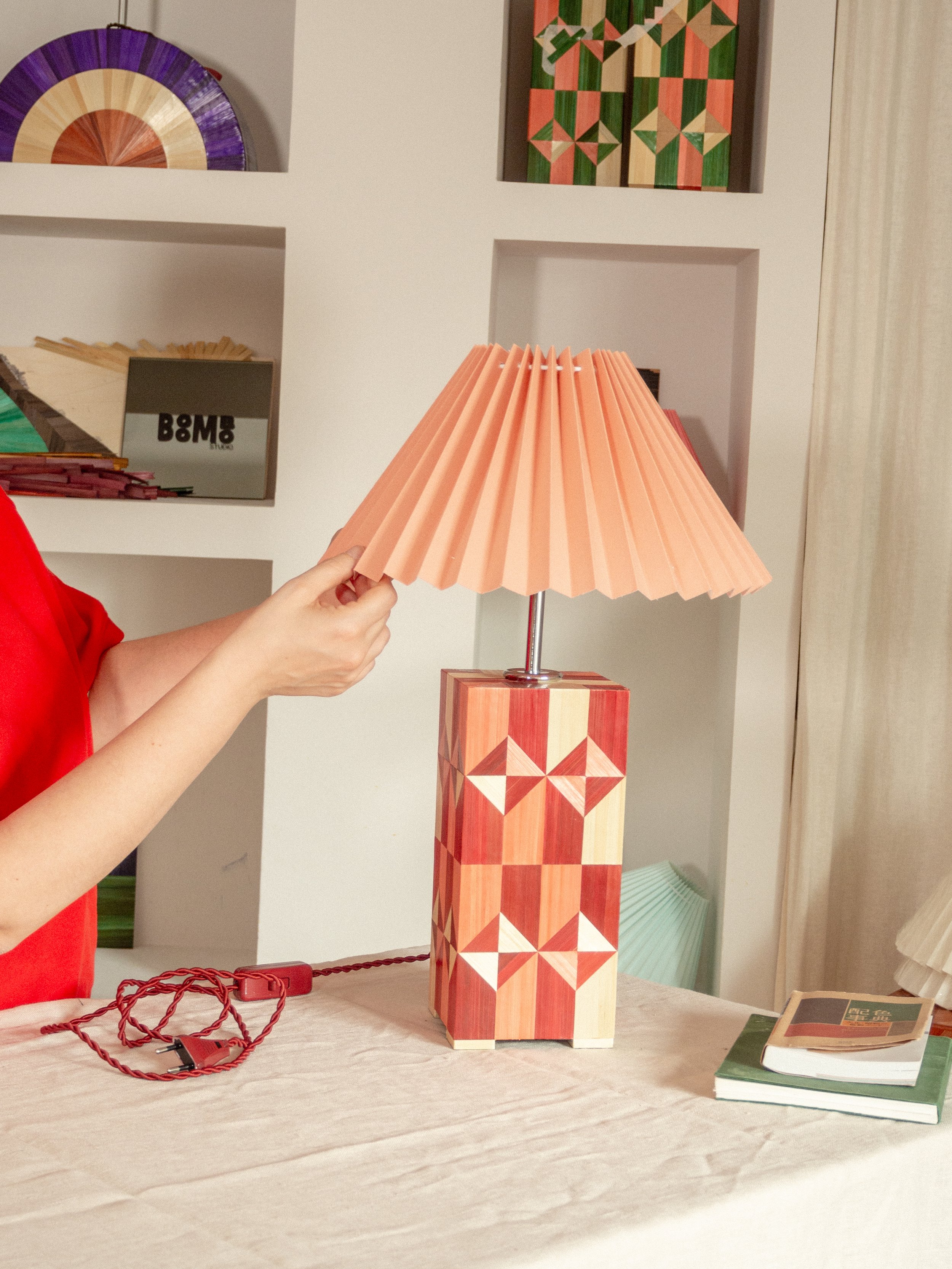
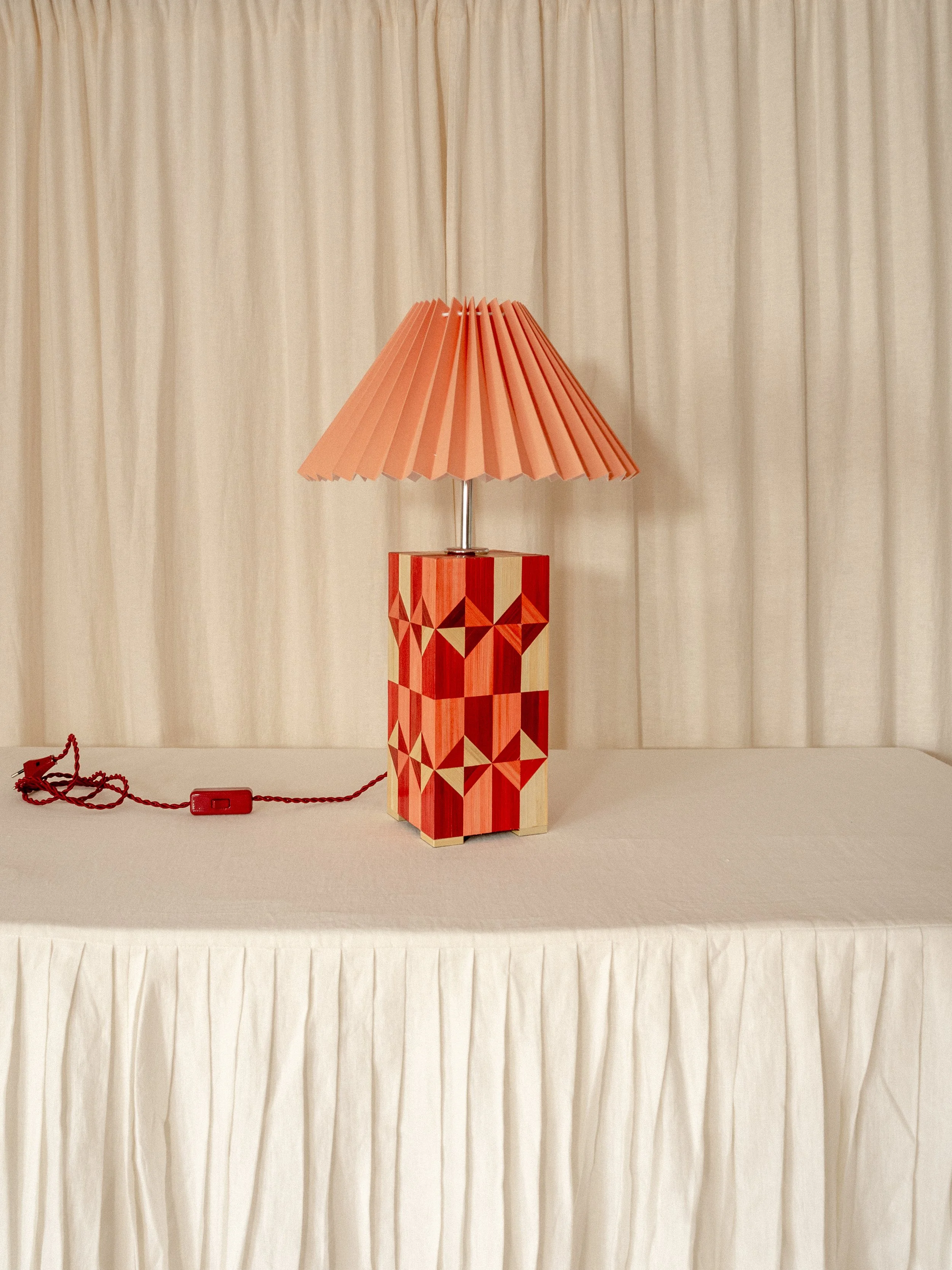
Handcrafted by Estela in Madrid, founder of Boombo Studio, the Lamp 01 Pink Red Butter transforms humble rye straw into a vibrant surface of light and colour. Using the technique of straw marquetry, the material is carefully composed into a refined and expressive form.
Each piece is cut and placed by hand, allowing subtle variations in fibre and tone to create a surface that feels alive and gently shifting. When illuminated, the light activates the material, revealing its depth, texture, and natural sheen.
Balancing craftsmanship with contemporary exploration, the lamp offers a new reading of straw, elevating it into a distinctive and expressive object.
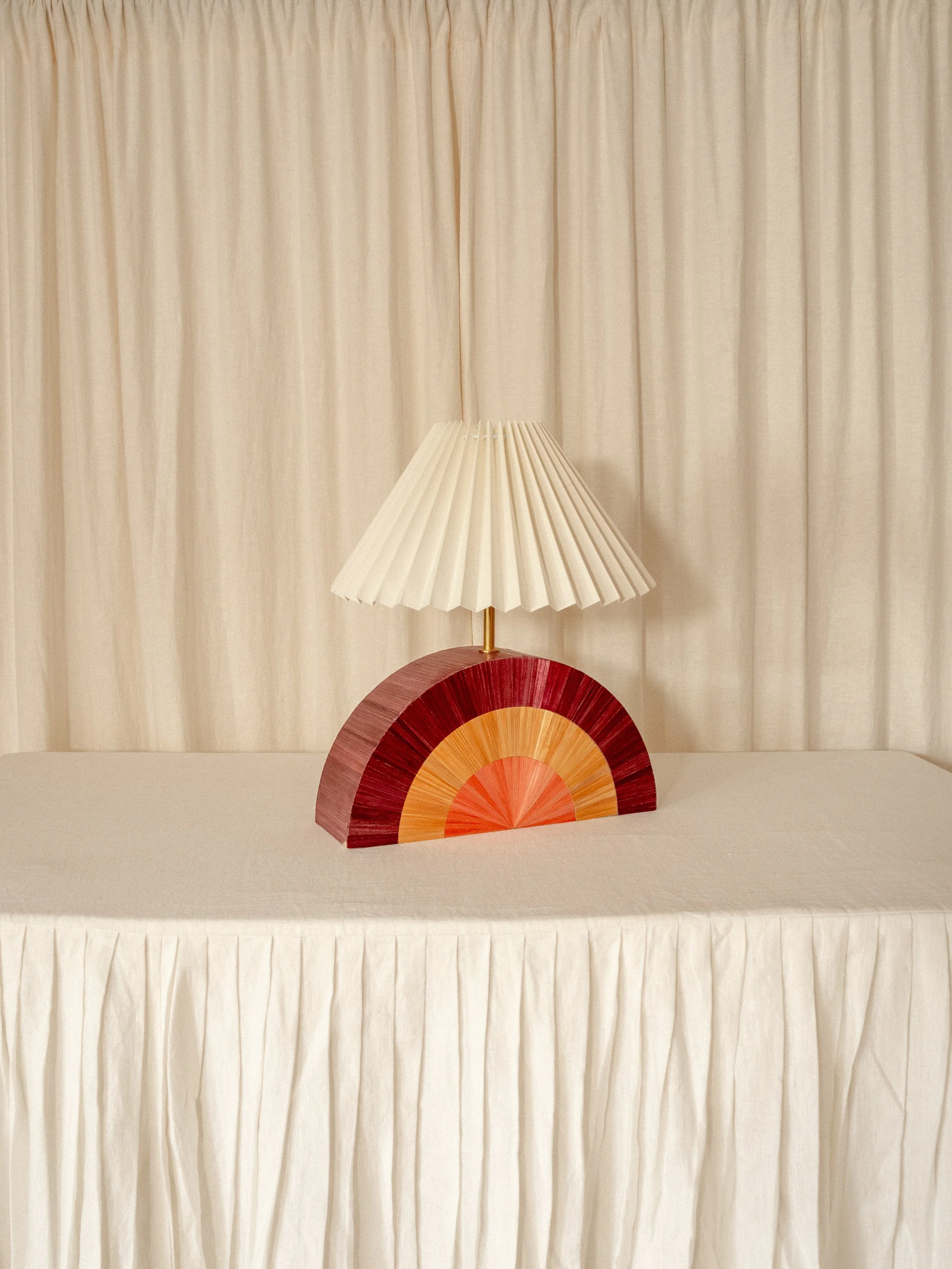
Handcrafted by Estela in Madrid, founder of Boombo Studio, the Lamp 02 Burdeos Pink Orange transforms humble rye straw into a vibrant surface of light and colour. Using the technique of straw marquetry, the material is carefully composed into a refined and expressive form.
Each piece is cut and placed by hand, allowing subtle variations in fibre and tone to create a surface that feels alive and gently shifting. When illuminated, the light activates the material, revealing its depth, texture, and natural sheen.
Balancing craftsmanship with contemporary exploration, the lamp offers a new reading of straw, elevating it into a distinctive and expressive object.
