Raphaëlle Doineau
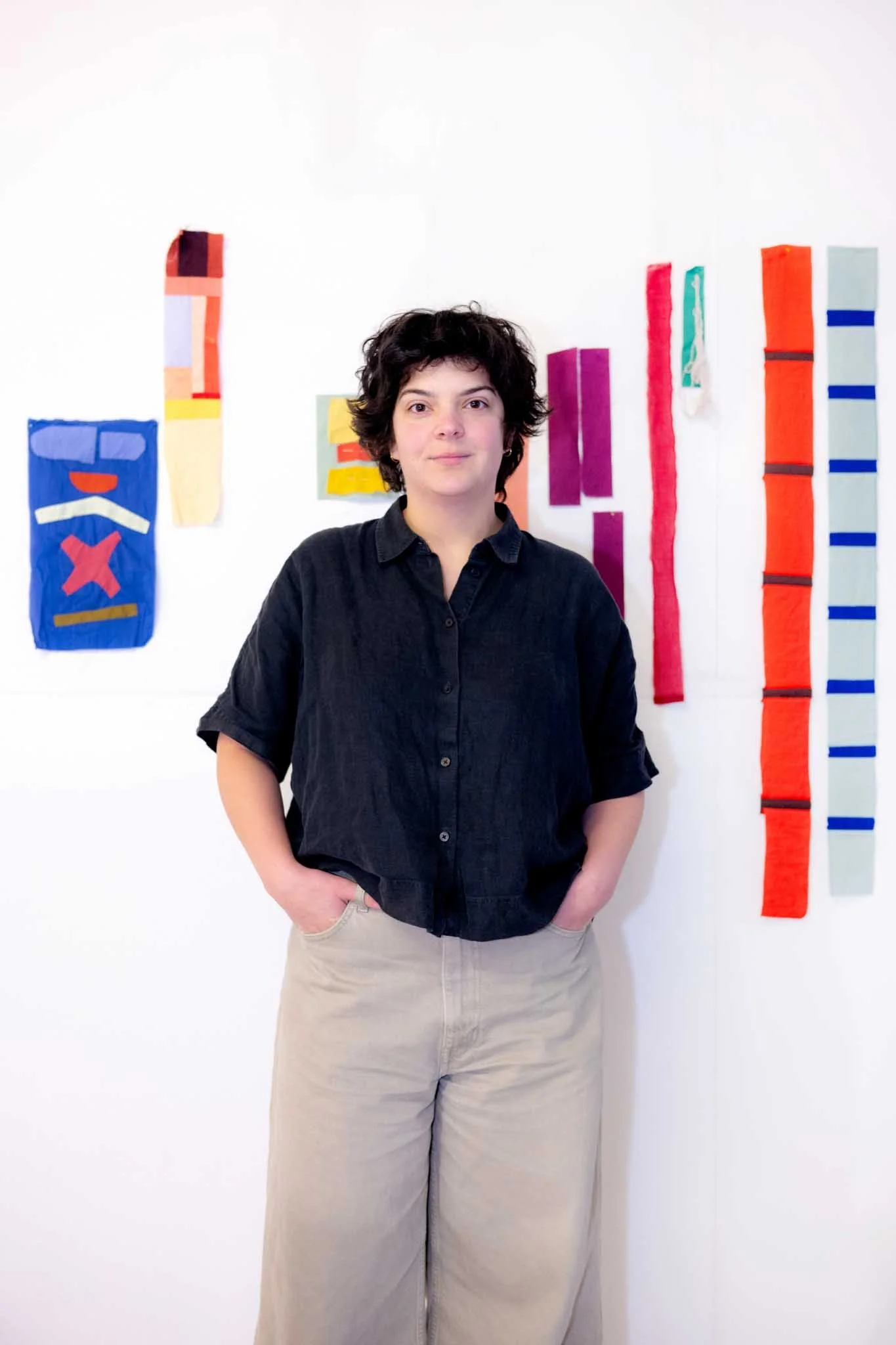
Please share a bit about yourself and your background.
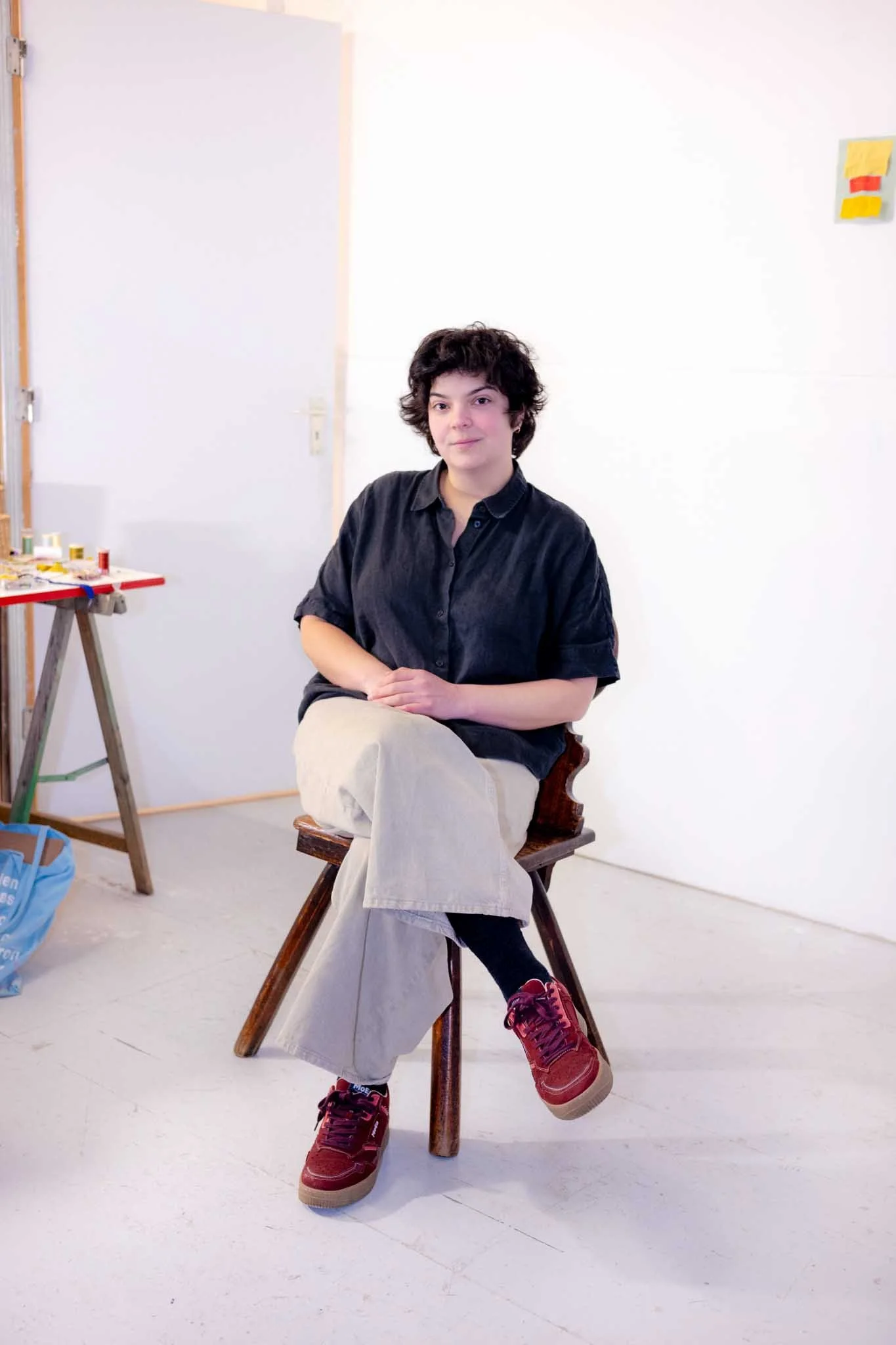
My name is Raphaëlle, I’m 29 years old. I was born in Paris and I've been living in Brussels for 7 years now. As a child I wanted to be a painter and then a pattern designer. I studied fine arts in Mulhouse and Brussels. My family has always been supportive of my art practice. They took me to museums, concerts, ballets, and my grandfather, who was an architect and a poet, taught me how to draw and how to observe the world that surrounds me.
I’ve been making quilts for 5 years now and I also draw and write on a daily basis.
What first drew you to patchwork, and how did it become central to your creative expression?
In 2020 I was in my fourth year of art school and I was questioning the utility and the functionality of the art I was making. I used to make very large drawings but I couldn’t see where they were going. I wanted to create something useful, though I did not want to choose between art and design.
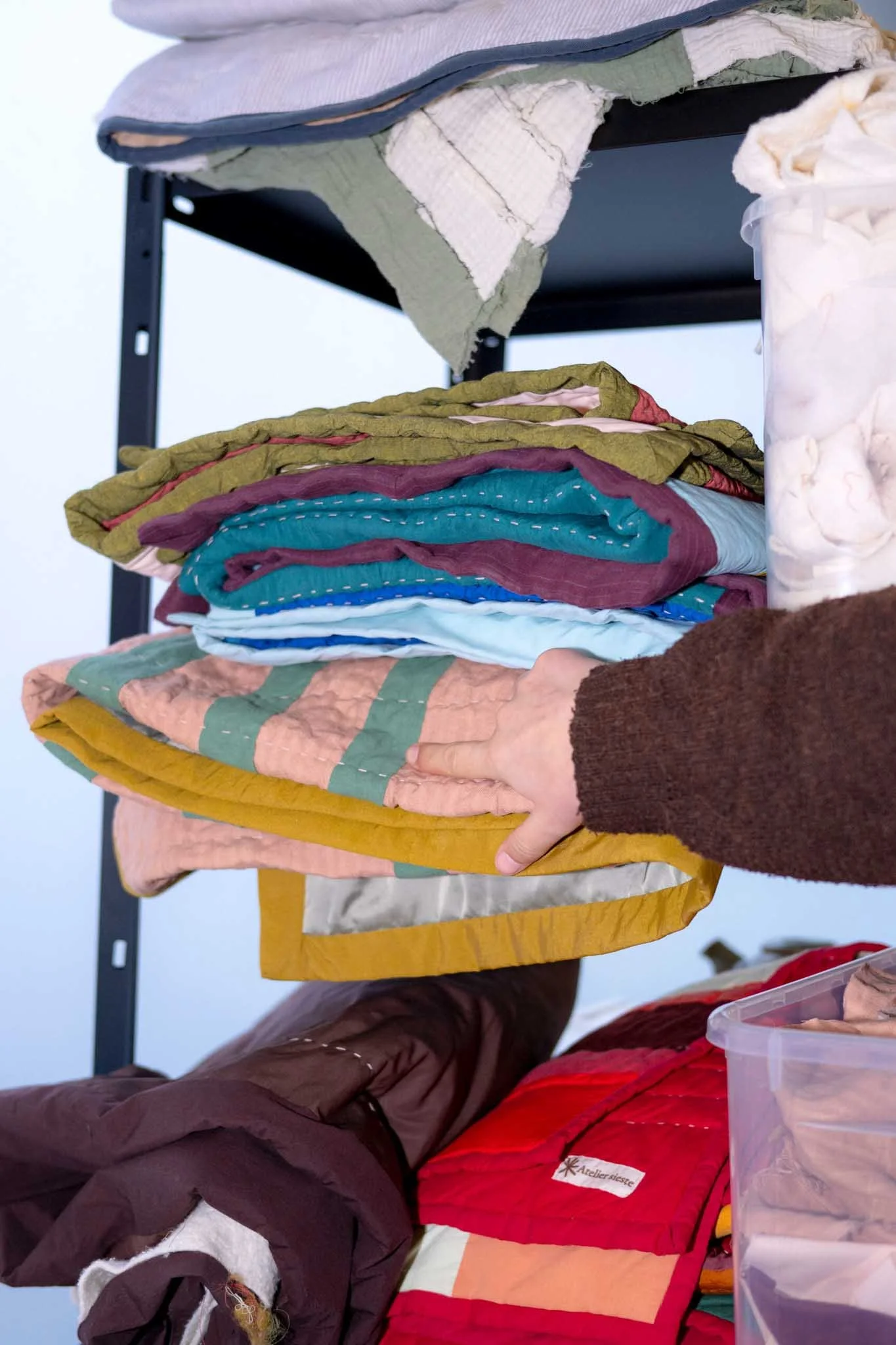
I remember a specific red quilt that was in a house where I spent a lot of time as a child. I wanted to understand how I could obtain a padded aspect, because I thought it was so nice to touch, so I made a small quilt sample with fabric scraps. I had to understand the quilting technique with my hands.
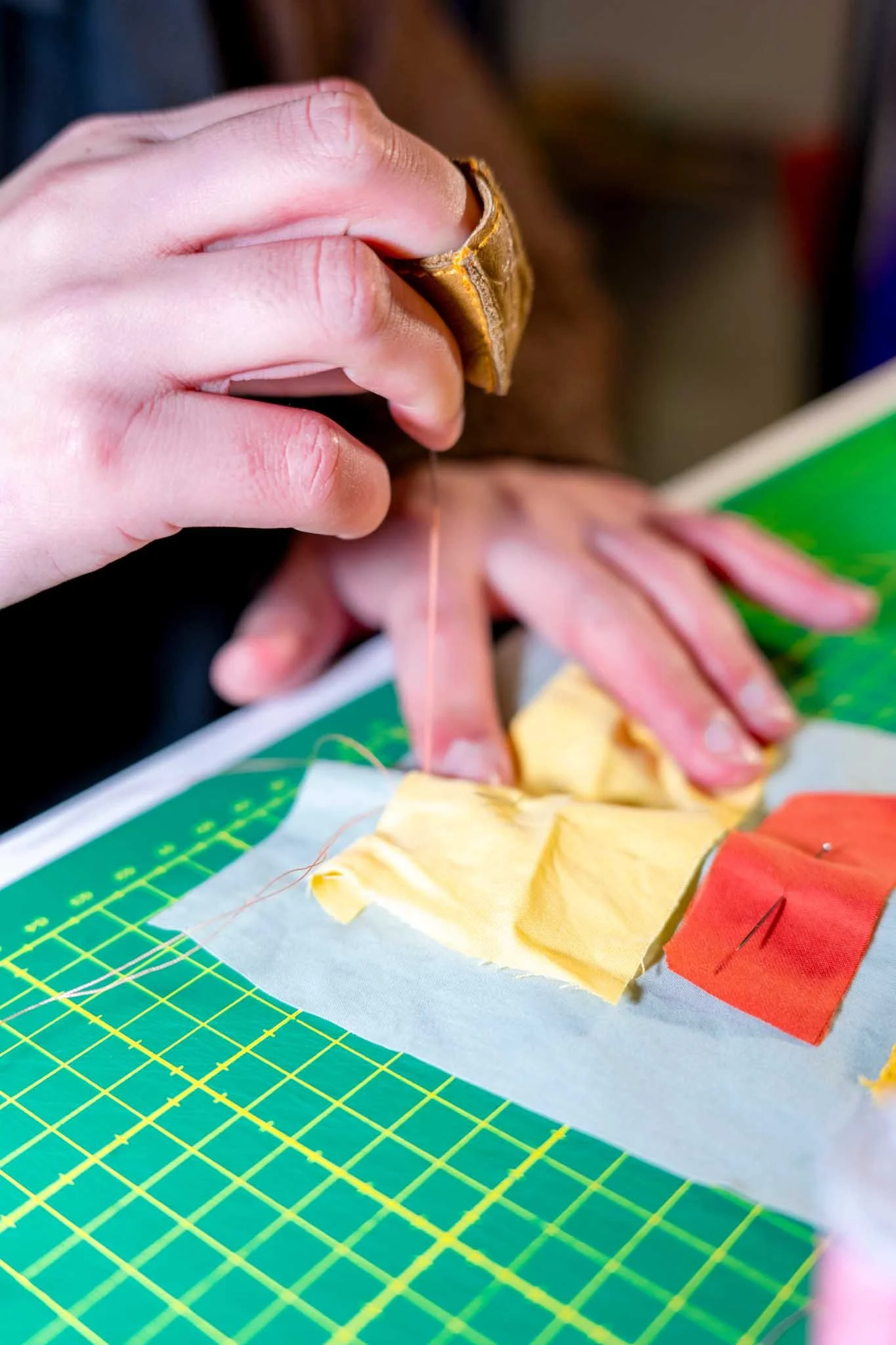
I didn’t feel the need to learn how to sew. I made my first three patchwork quilts without a sewing machine, they were entirely hand sewn. One thing I like about patchwork is that it is a very widely used technique. Every region of the world has its own style of patchwork, and it doesn’t require many tools. Thread, needles, and some vintage fabric are enough to start working on a new piece.
During my studies I was researching shapes and colors through drawings and paintings, and I believe quilts are a great way to explore that. To me, patchwork is a collage with textile.
Can you walk us through your process?
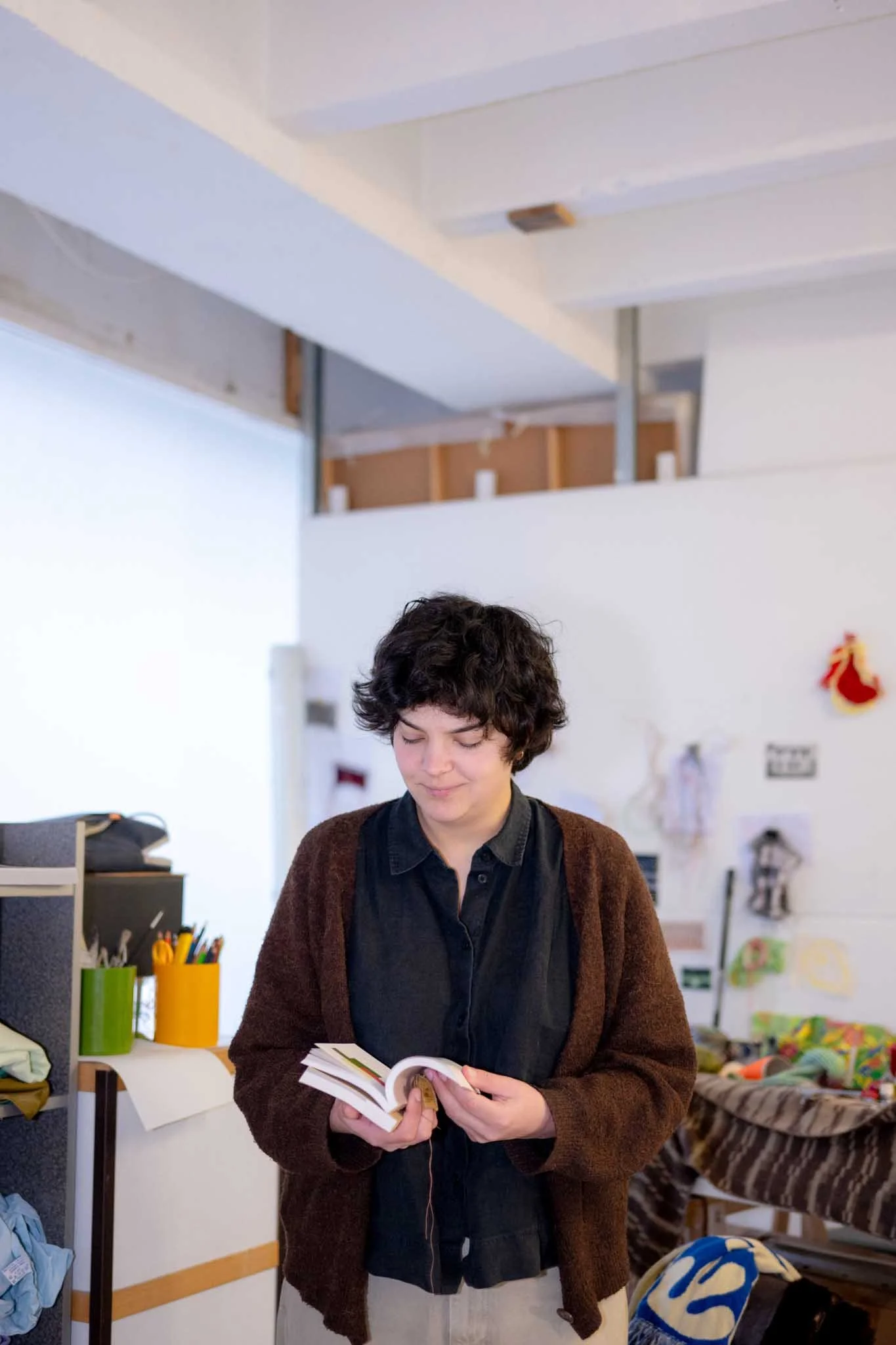
Drawing and sewing are two parallel practices for me. I have many sketchbooks and I draw almost every day. Some drawings are figurative but most are abstract, just like patterns.
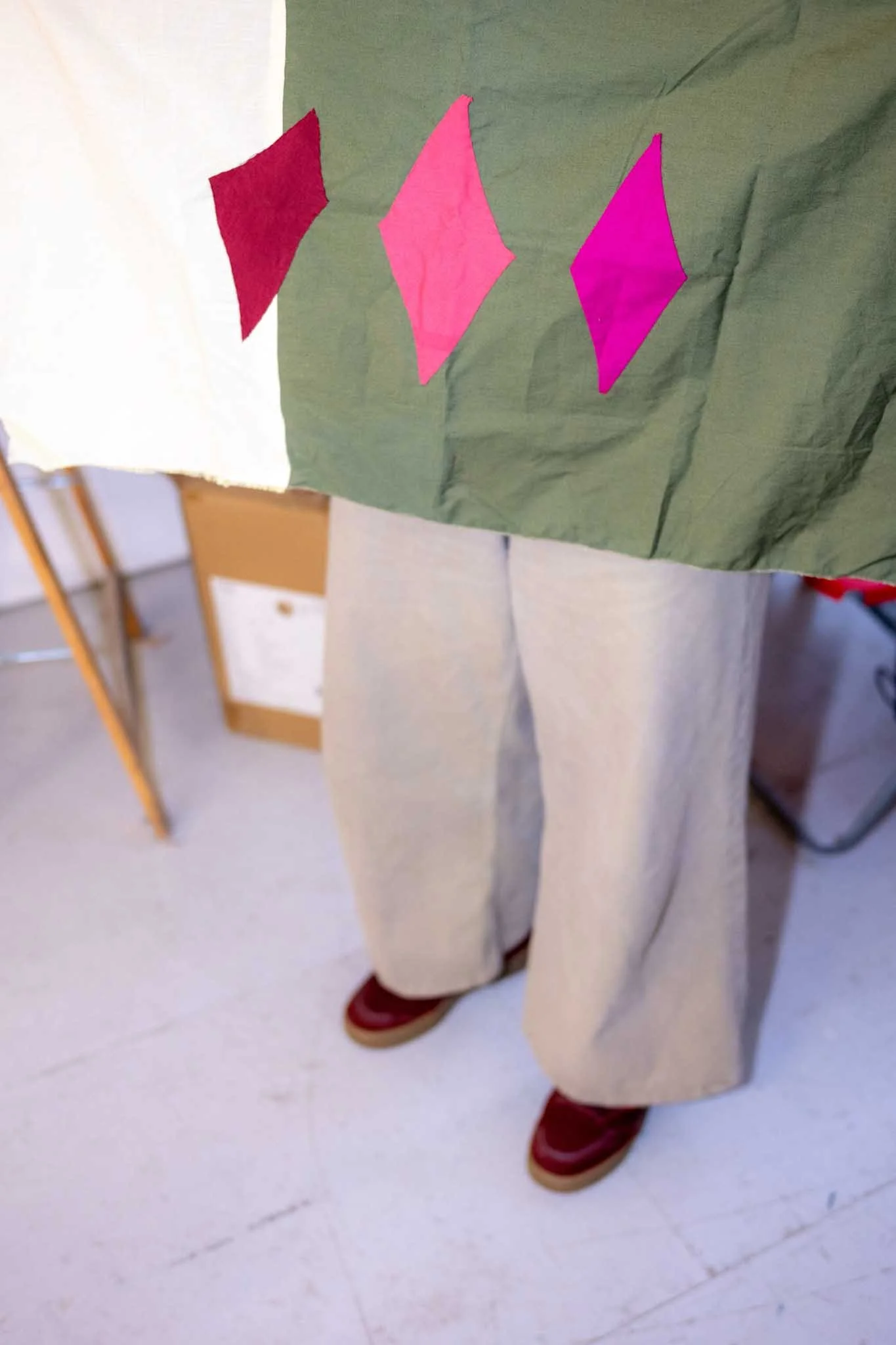
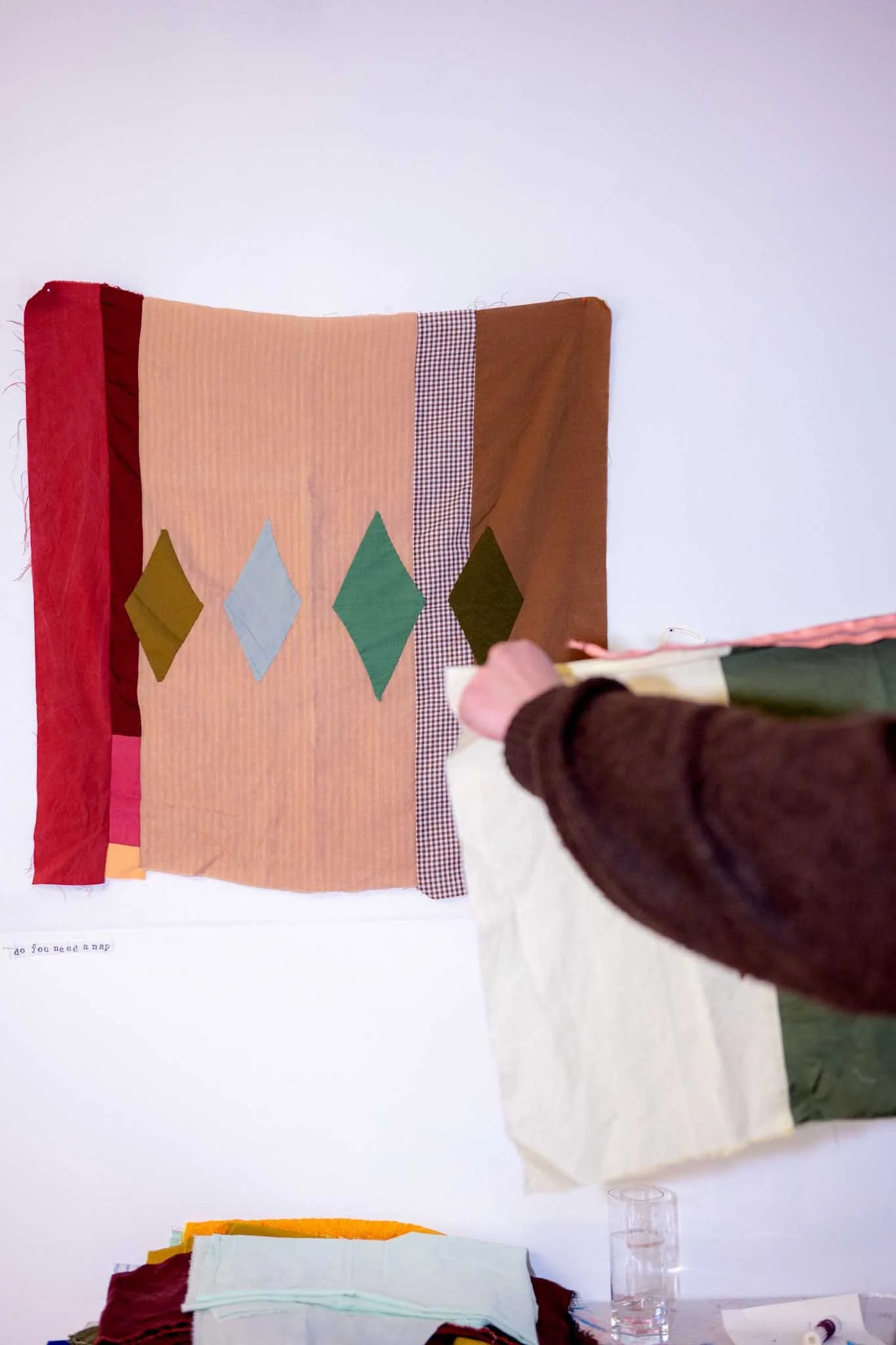
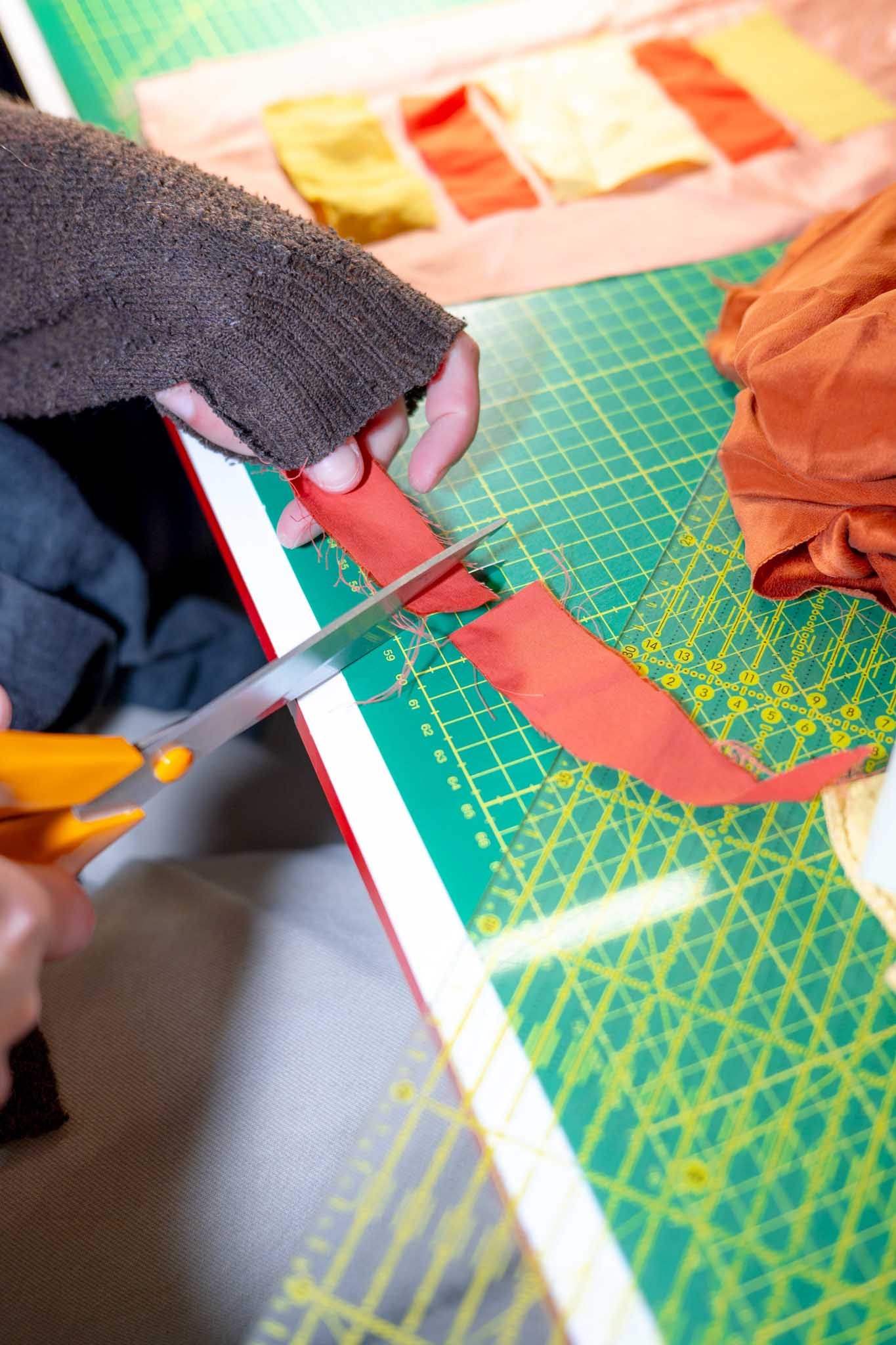
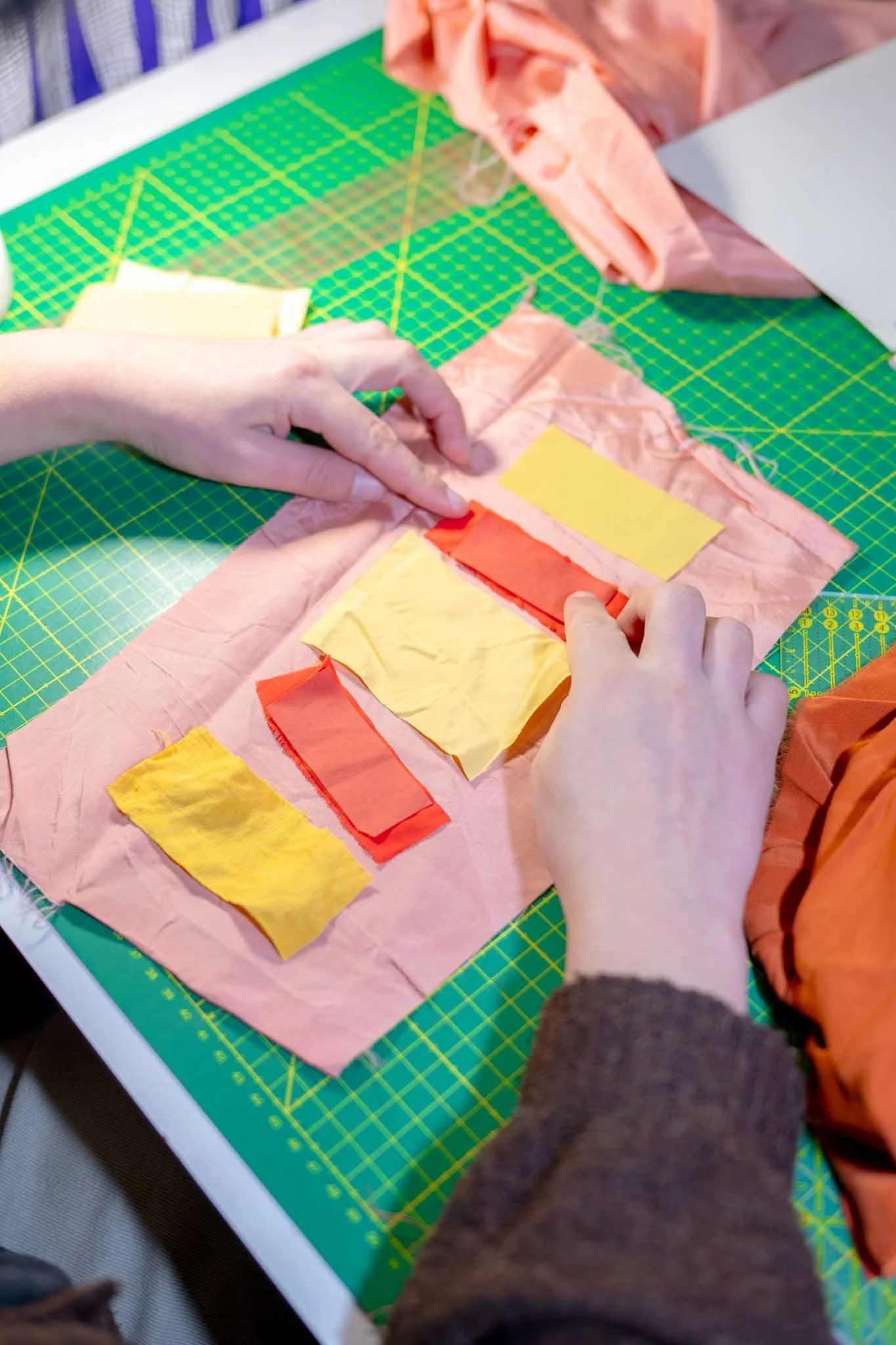
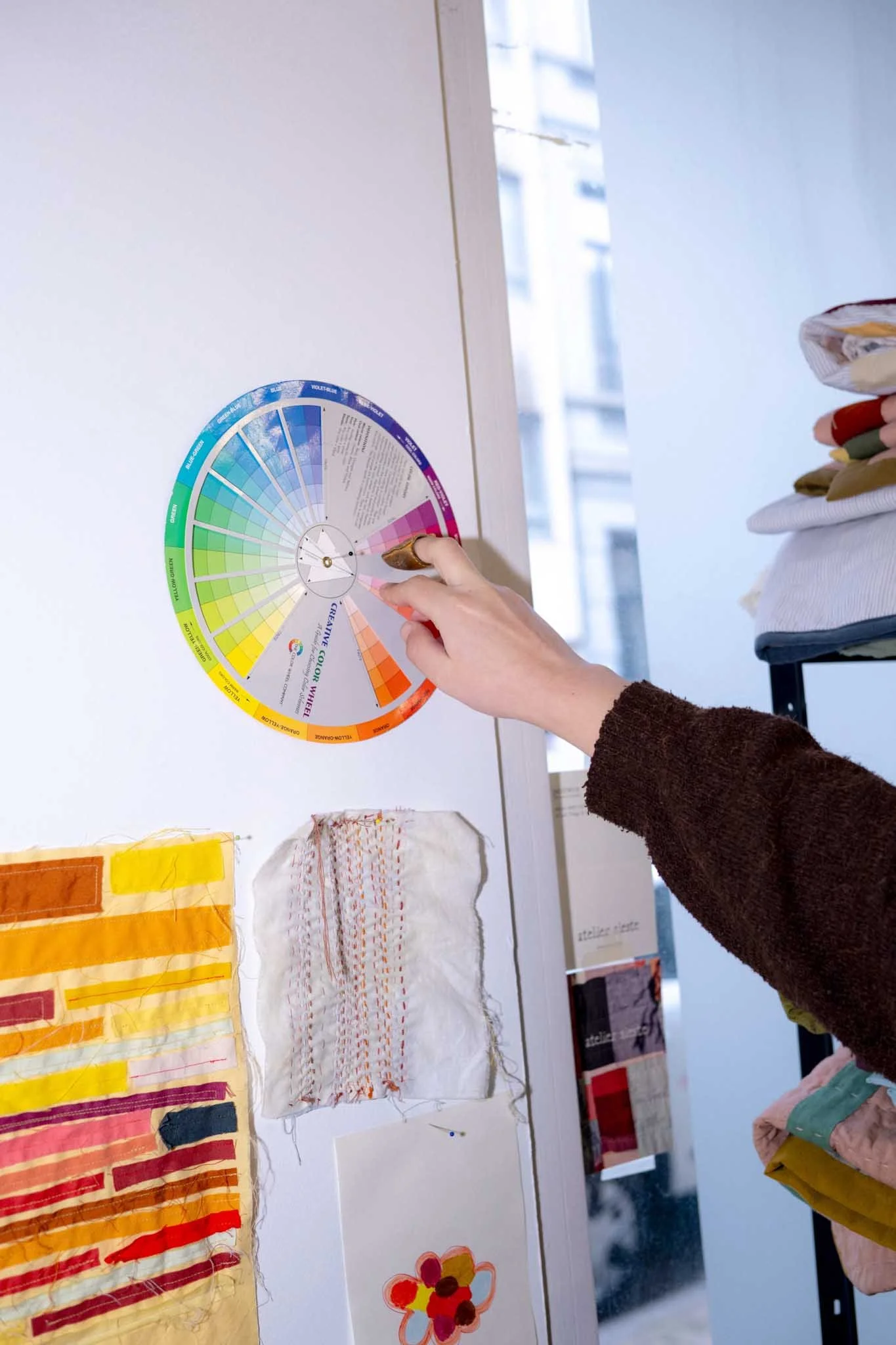
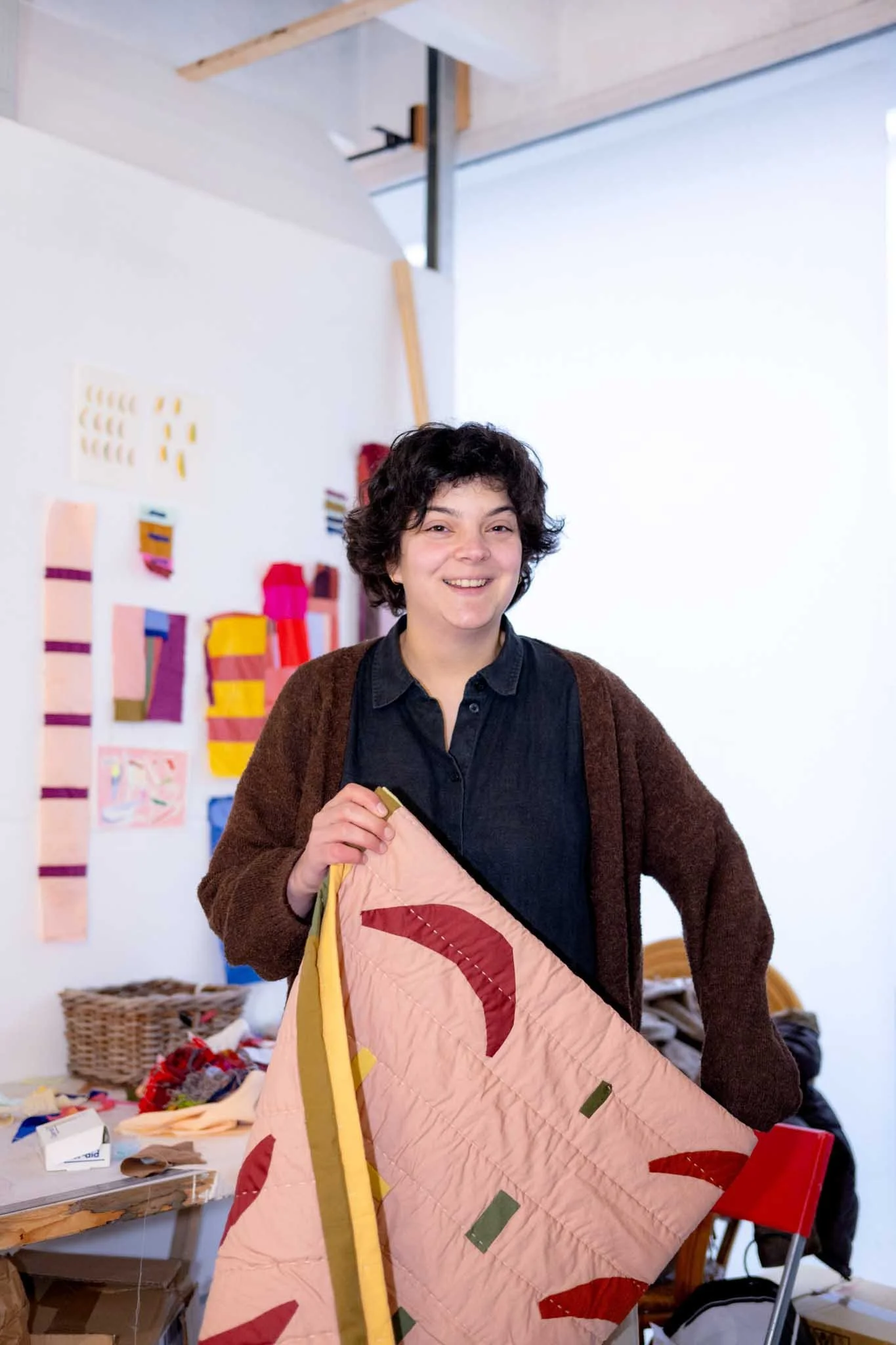
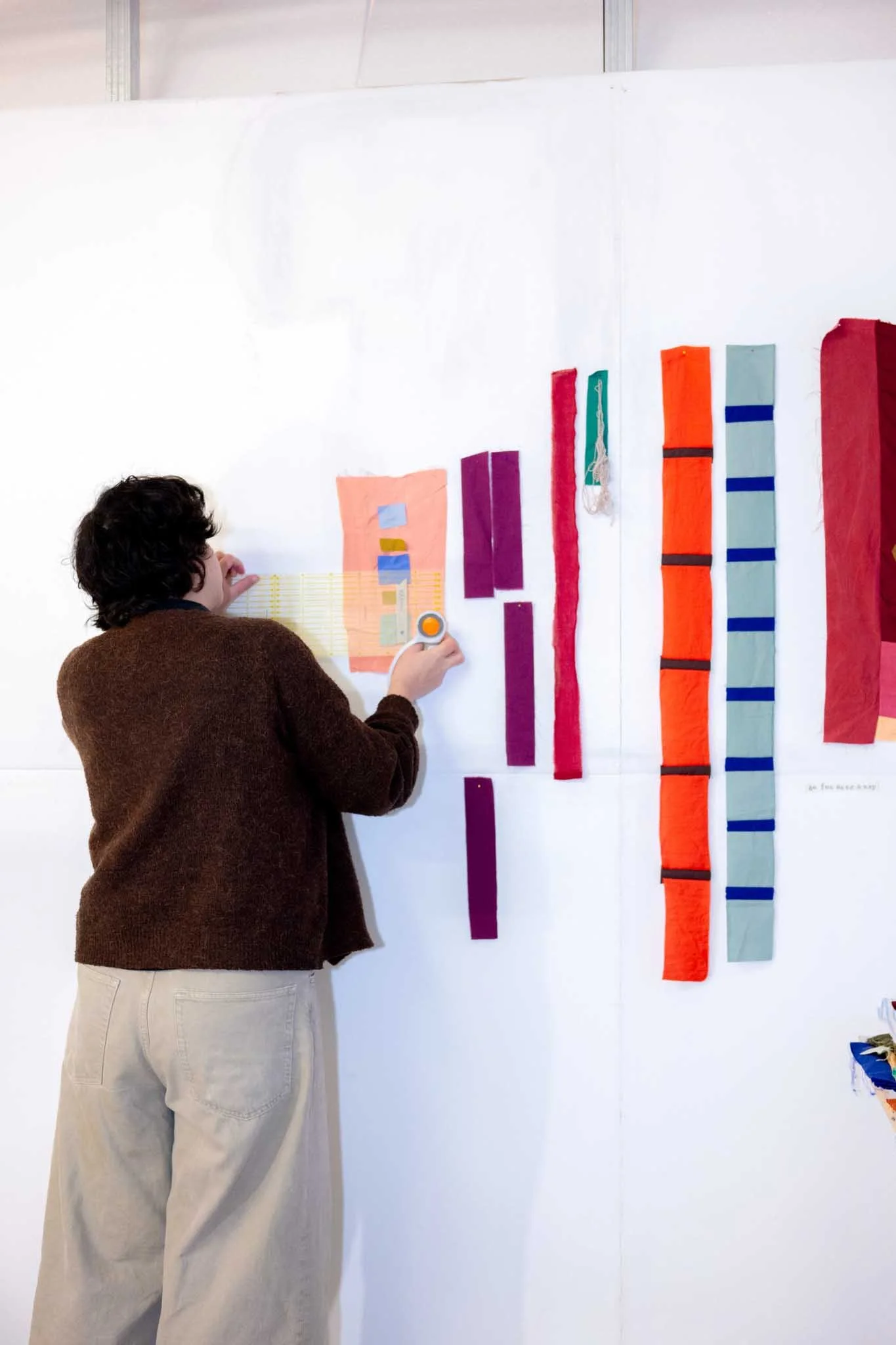
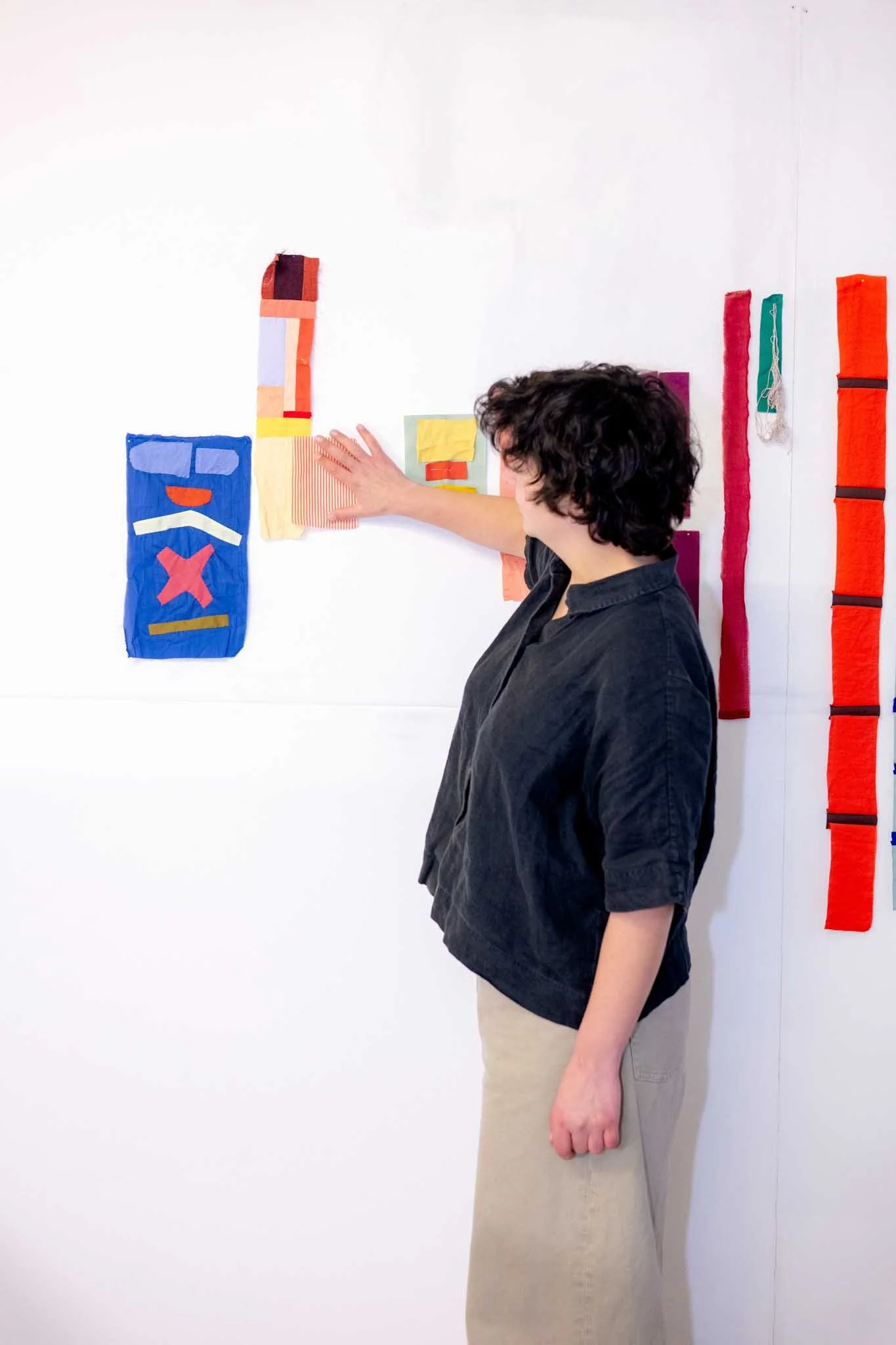
A quilt starts with color. I never know what the quilt is going to look like beforehand. I choose many different fabrics and I pin them on the wall to see what goes well together. I take pictures of the process. I let some time go by. I cut different shapes into the fabric, inspired by the previous drawings. I pin the shapes on other bits of fabric. Then I start sewing. Some parts will make it into the final piece, some won’t. I change my mind during the process because it is the process itself that brings new ideas. I used to mainly make patchwork quilts, but for these four new quilts I used the appliqué technique. The shapes are hand sewn onto the fabric. It gives infinite possibilities, it’s like drawing on fabric.
For four years I used to work at home, but I now have a studio in Brussels and that completely changes the way I work. Having a space dedicated to my practice is very stimulating and motivating. I can work on several pieces at the same time and see my patchworks as a global project rather than independent pieces.
Colour plays a central role in your practice, with a clear affinity for purple and coral over primary tones. How do you approach colour as both an emotional and structural element within your work?
Yes, colours are a real obsession for me! I often say that my favorite colours are the ones that cannot be named, meaning when it’s between red and orange for example, but it’s not really red and it’s not orange either.
I had the chance to study with several colour teachers. I'm still genuinely fascinated by everything they taught me but I like to use my intuition rather than theory when choosing colours.
I like to combine many different colours together and to create combinations that don’t seem obvious. I see it as a challenge. I feel that primary colours are very difficult to mix with others. They always become the main character, that’s why I avoid them. I also avoid black, white and greys because they don’t play with the other colours.
Colours, just like smells, are very connected to memories and the past. I once made a piece that consisted of fifty shades of the same colour, trying to recreate the exact colour of a piece of clothing that is linked to a very special memory for me.
When it comes to the tactile aspects of your work and their connection to your body, how does the hands-on nature impact your overall happiness and well-being?
People are often quite surprised when I say that I prefer hand sewing over machine sewing, because it’s such a time consuming practice. But I really like to take the time to sew and to be conscious of the gestures of hand sewing. I don’t like following rules or tutorials. I like to improvise and to learn by myself. I feel like I have way more freedom when I’m using my hands than when I’m using complex tools or machines. I can create exactly what I have in mind. Hand sewing is like meditating, it makes me feel calm. Drawing makes me feel the same way.
Patchworks are used in beds or on couches, and I spend a lot of time in my bed. To sleep, of course, but also to work, to read, to write, to draw, to listen to music or to simply dream. With my quilts I want to encourage people to spend time in bed and take a nap, alone or with other people.
Having studied at both HEAR (Mulhouse) and ERG (Brussels), how does your academic background in these specific creative environments inform your current practice?
The HEAR taught me a lot about shapes and colors. There was a textile studio there where students were learning how to weave, how to knit and how to use natural dyes among other things. I didn’t follow these courses but I was very influenced and inspired by them. While studying at ERG I had a job on the side, and this period of my life taught me more about being a citizen and being part of a society, which is a big part of the life of an artist. We eventually have side occupations and we must find the time and space to keep working on our art. Also, I’m very grateful for all the people I met in both art schools. Many of them are still part of my life today. We need each other to find our way in this complex world.
Looking at the contemporary craft landscape, where do you see the greatest opportunities for redefining the value of your medium today?
I believe that in a global degrowth idea, we better understand the value of craftsmanship. I think people are becoming more aware of the fast fashion problem and overconsumption, whether it’s in the textile field or in general.
Making patchworks is a way of repairing and taking care of fabrics and making them last longer. It’s important to upcycle what can be, which is just a logical way to use all the existing fabric.
Also, screens take almost all of our time these days. Manual activities are a way to get away from screens.
Are there any new directions, research areas (perhaps inspired by your interests like folk music), or projects you are currently exploring that feel particularly connected to your evolving practice?
I visited Portugal last summer and I was in awe of the azulejos there. I am more and more inspired by ornamentation in everyday life, which can be found in very simple elements like fences, masonry, cutlery, etc. I really want to learn more about the Arts and Crafts movement.
One thing that touches me in folk music are the lyrics, and as a writer myself I would love to find a way to integrate text or poetry into my quilts. I have many ideas for sewing words together but I didn’t have the chance to do it yet. I saw Tracey Emin’s quilts in an exhibition in Amsterdam one year ago and I liked their authenticity and the freedom she took while making them.
Also, I have been performing on stage in cabarets for a few months now and I use my textile skills to create my own costumes, so that’s very exciting and it opens up a whole new world for me.
How can people engage more closely with your work through exhibitions, collaborations, or upcoming projects?
I will be taking part in an event in August in Brussels that is yet to be announced. From April onwards, I will dedicate all my time to my practice, so I plan to work on more ambitious projects. I can’t wait to see what comes.
All photos are by Adèle Violette.
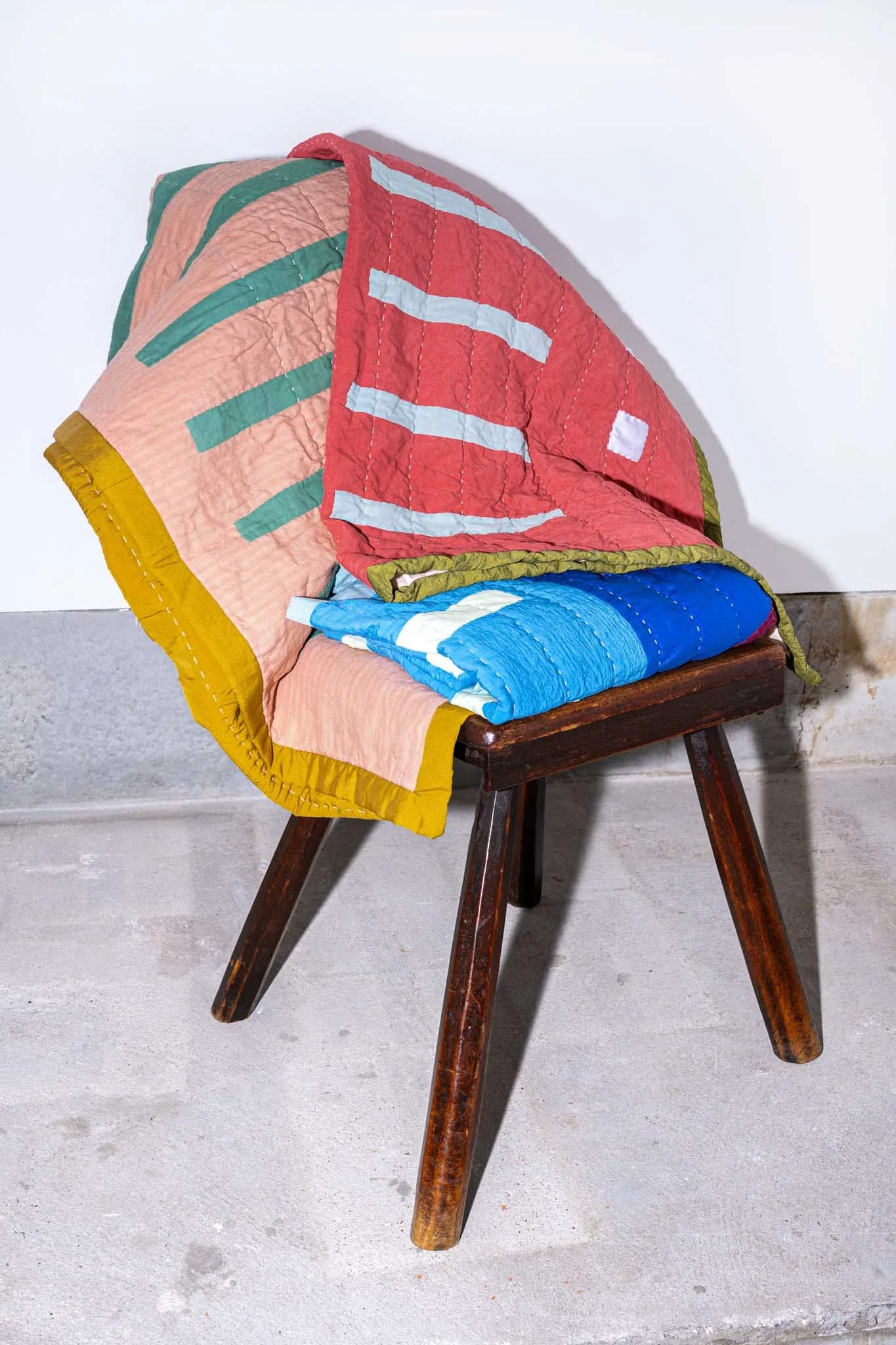
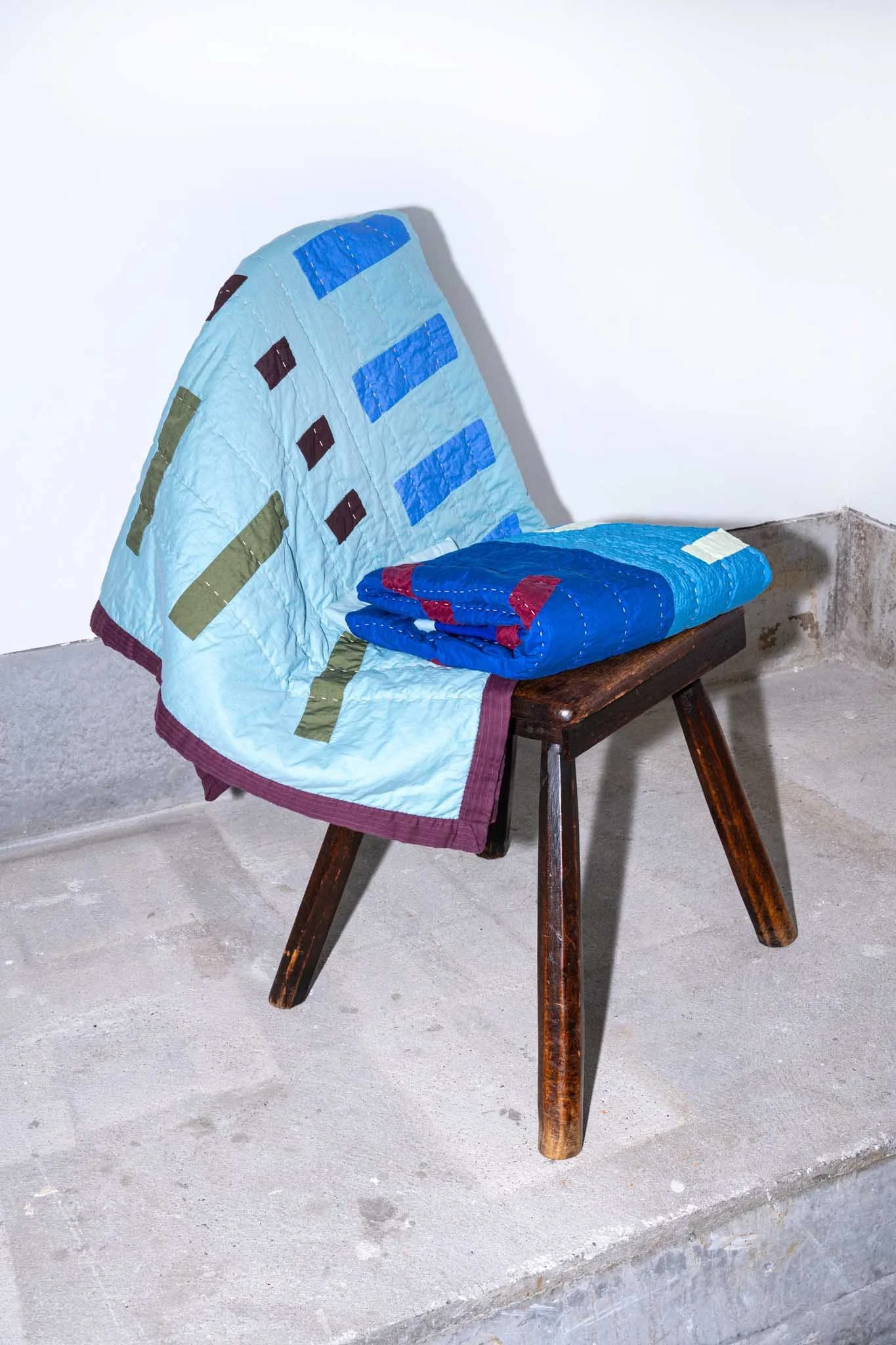
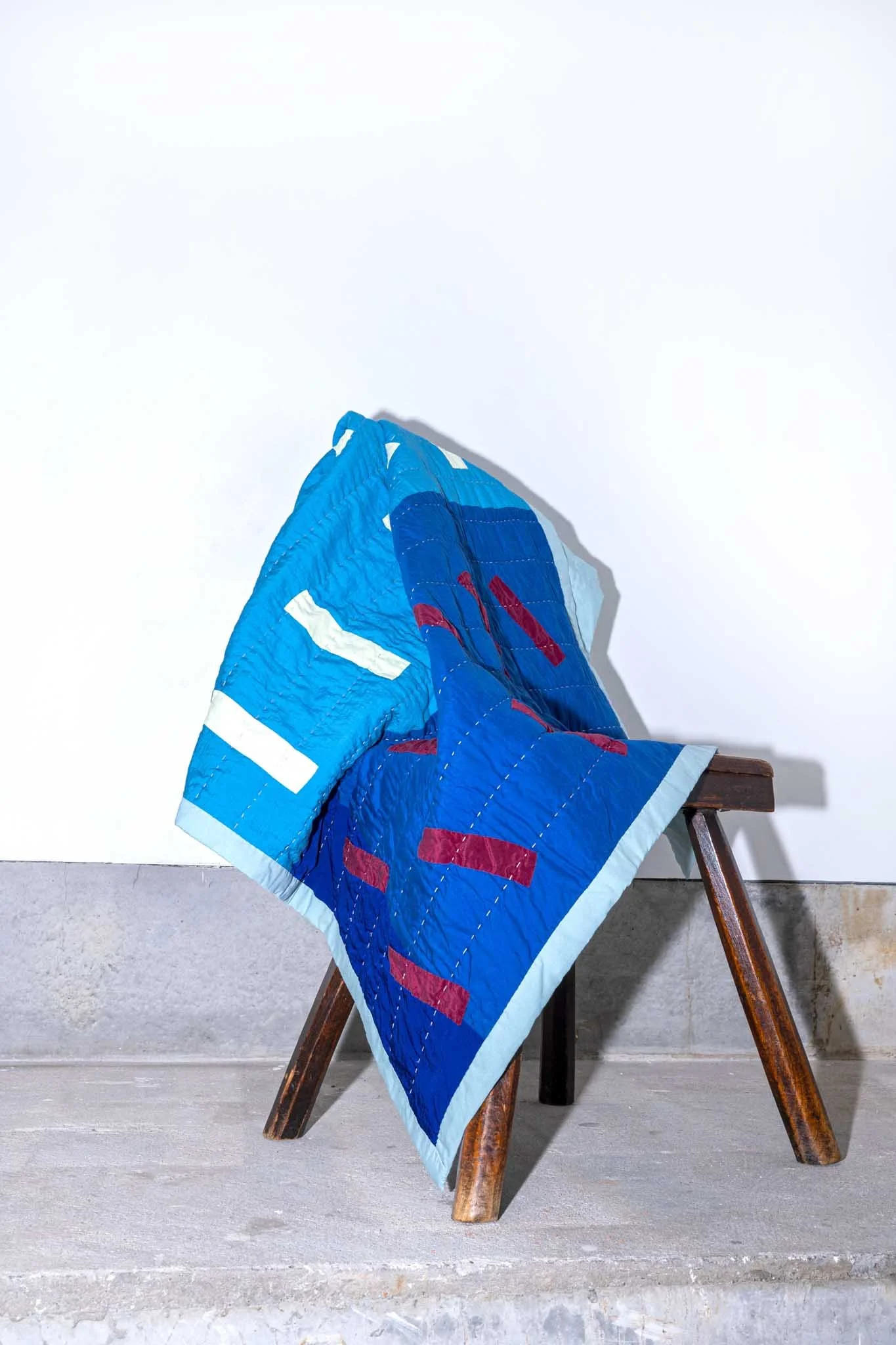
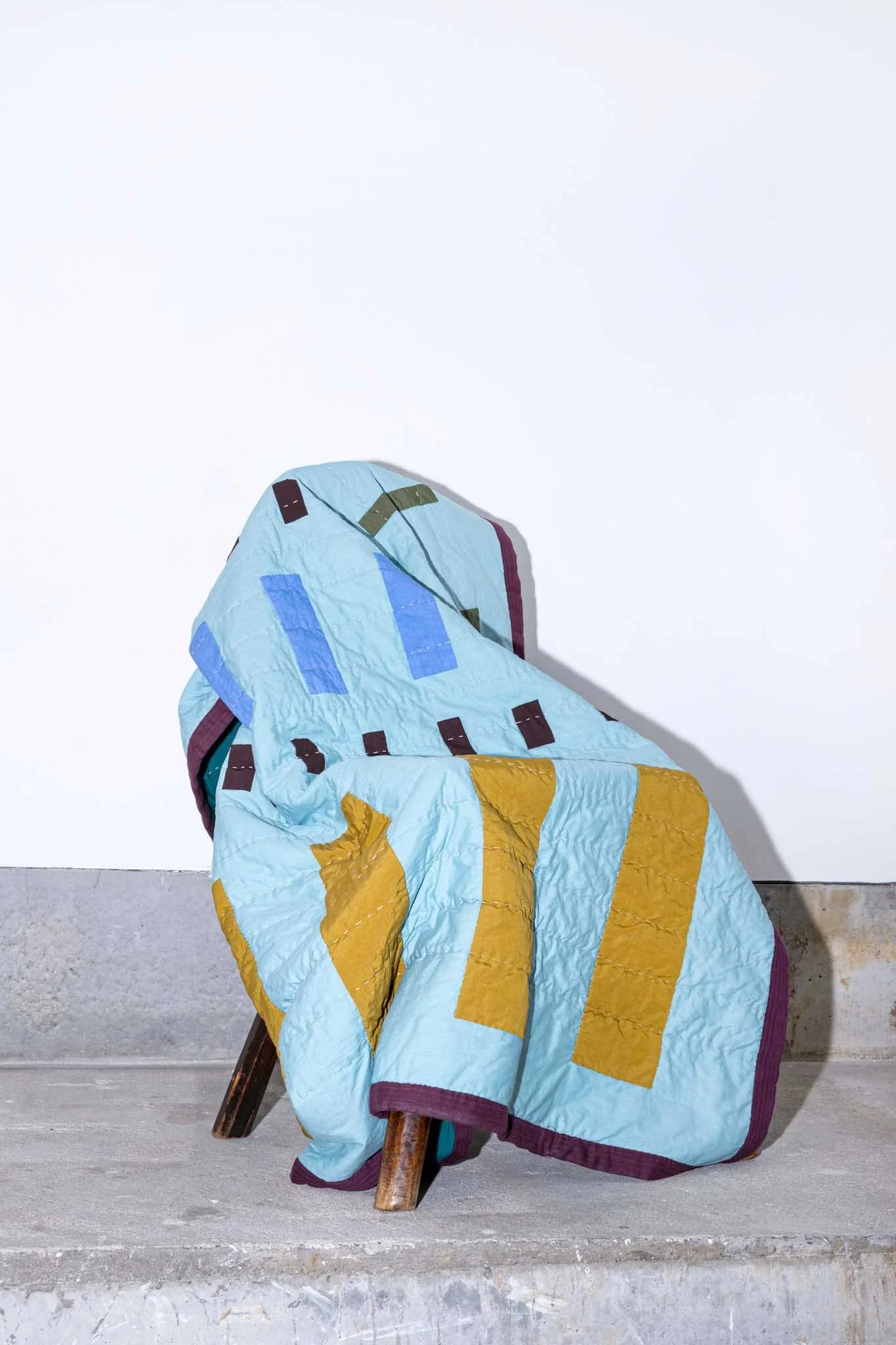
Hand sewn by Raphaëlle Doineau in Brussels. Composed through an intuitive patchwork process, the quilt unfolds like a textile drawing, where pieces of fabric come together to form a quiet, organic composition. Layers of light blue, dark blue, burgundy, light green back light blue create gentle colour relationships across the surface. It reflects Raphaëlle’s thoughtful approach to colour, composition, and the expressive possibilities of cloth. A standalone original.
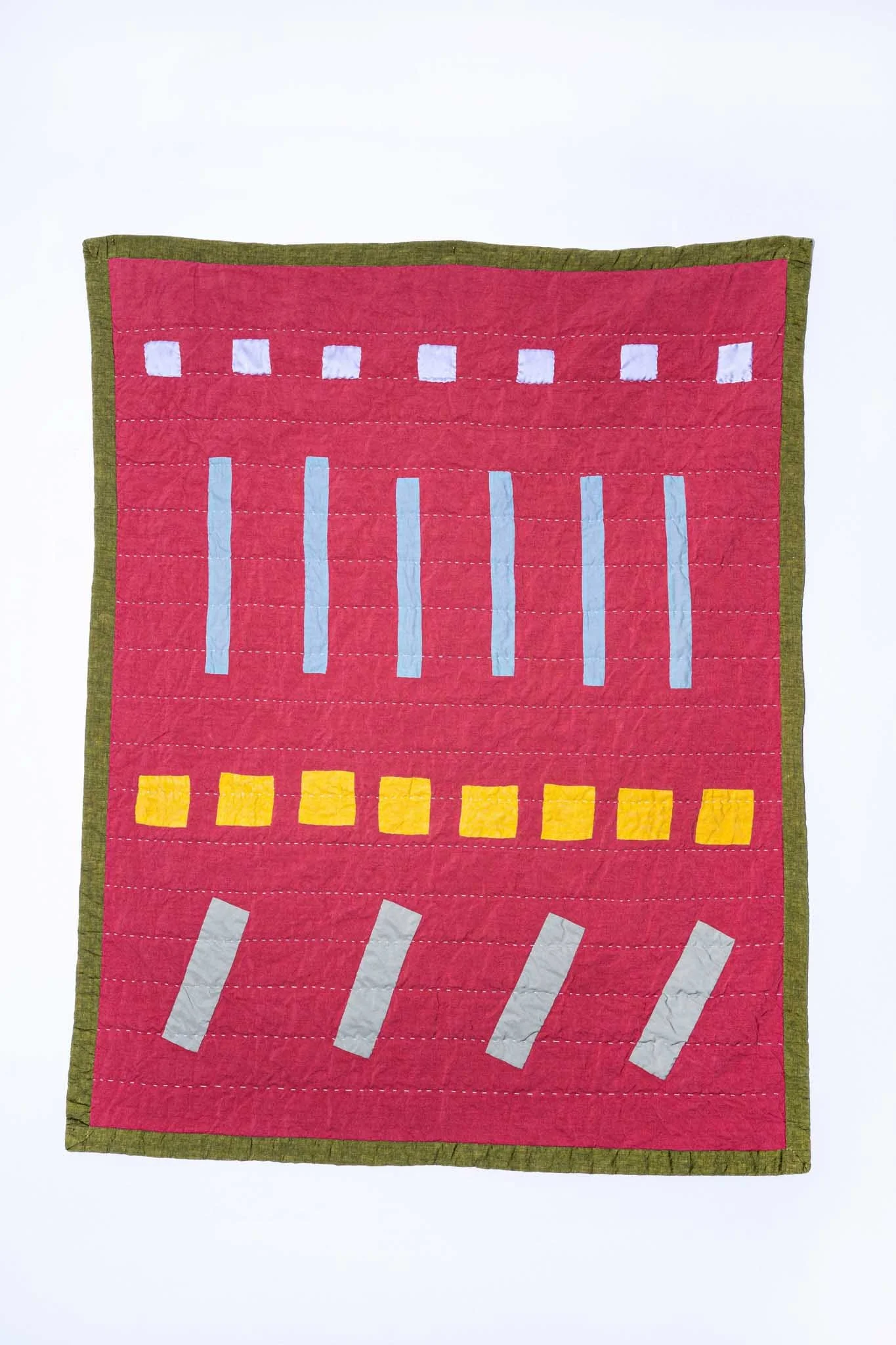
Hand sewn by Raphaëlle Doineau in Brussels. Composed through an intuitive patchwork process, the quilt unfolds like a textile drawing, where pieces of fabric come together to form a quiet, organic composition. Layers of pink, green, yellow, and purple create gentle colour relationships across the surface. It reflects Raphaëlle’s thoughtful approach to colour, composition, and the expressive possibilities of cloth. A standalone original.
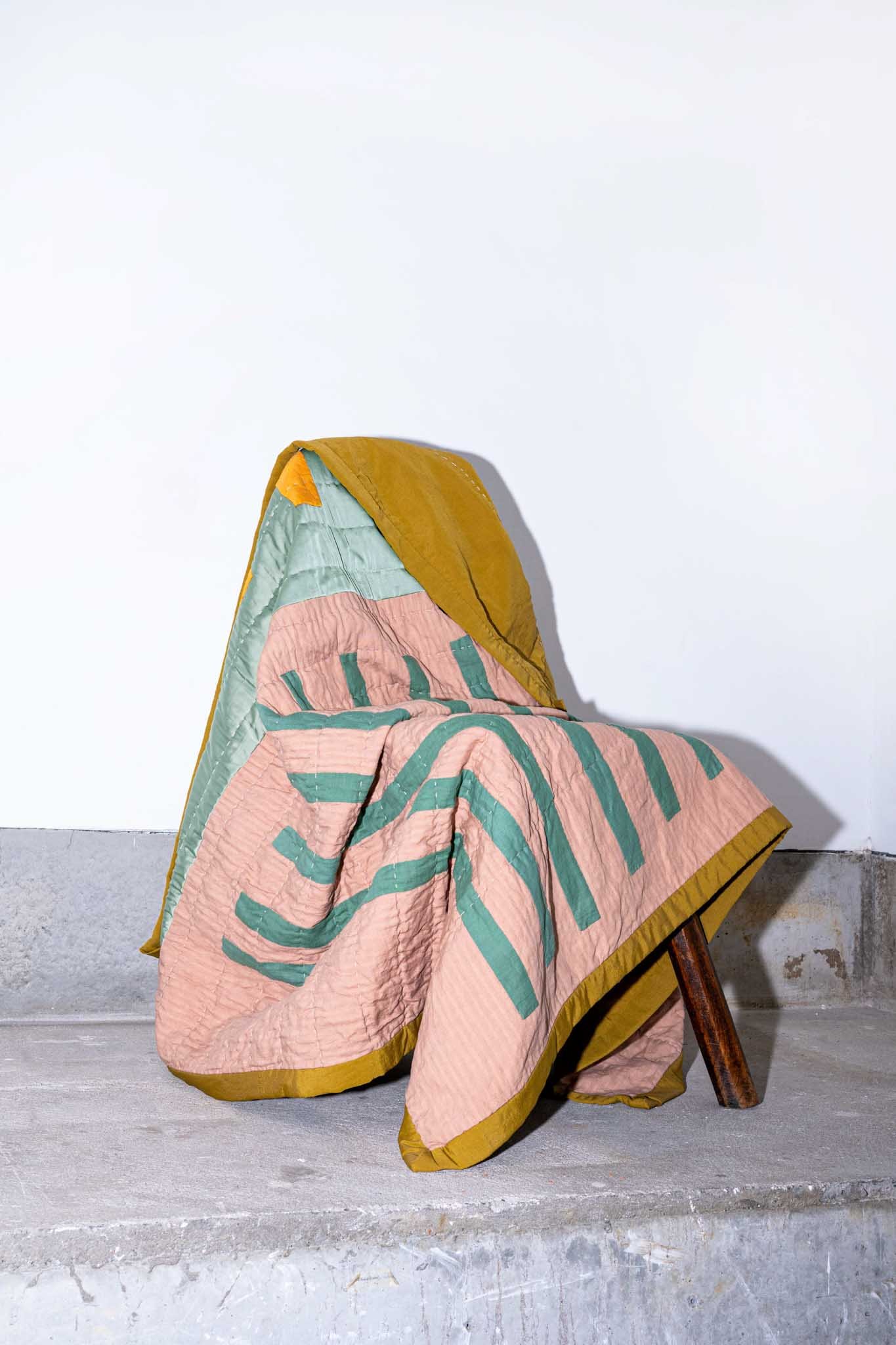
Hand sewn by Raphaëlle Doineau in Brussels. Composed through an intuitive patchwork process, the quilt unfolds like a textile drawing, where pieces of fabric come together to form a quiet, organic composition. Layers of pink, green, orange, and ochre create gentle colour relationships across the surface. It reflects Raphaëlle’s thoughtful approach to colour, composition, and the expressive possibilities of cloth. A standalone original.
