Maria Elisa Vale
Please share a bit about yourself and your background.
I’m an artist from Porto, Portugal, where I live and work. From an early age, I was drawn to artistic expression and felt a strong affinity with natural fibres and textures. It was through drawing that I first fell in love with art, finding in it a way to communicate and to understand the world around me.
Later, after specialising in Textile Artistic Production in high school, I felt the need to broaden my perspective and decided to study Sculpture in Lisbon. I became fascinated by how objects could influence emotions.
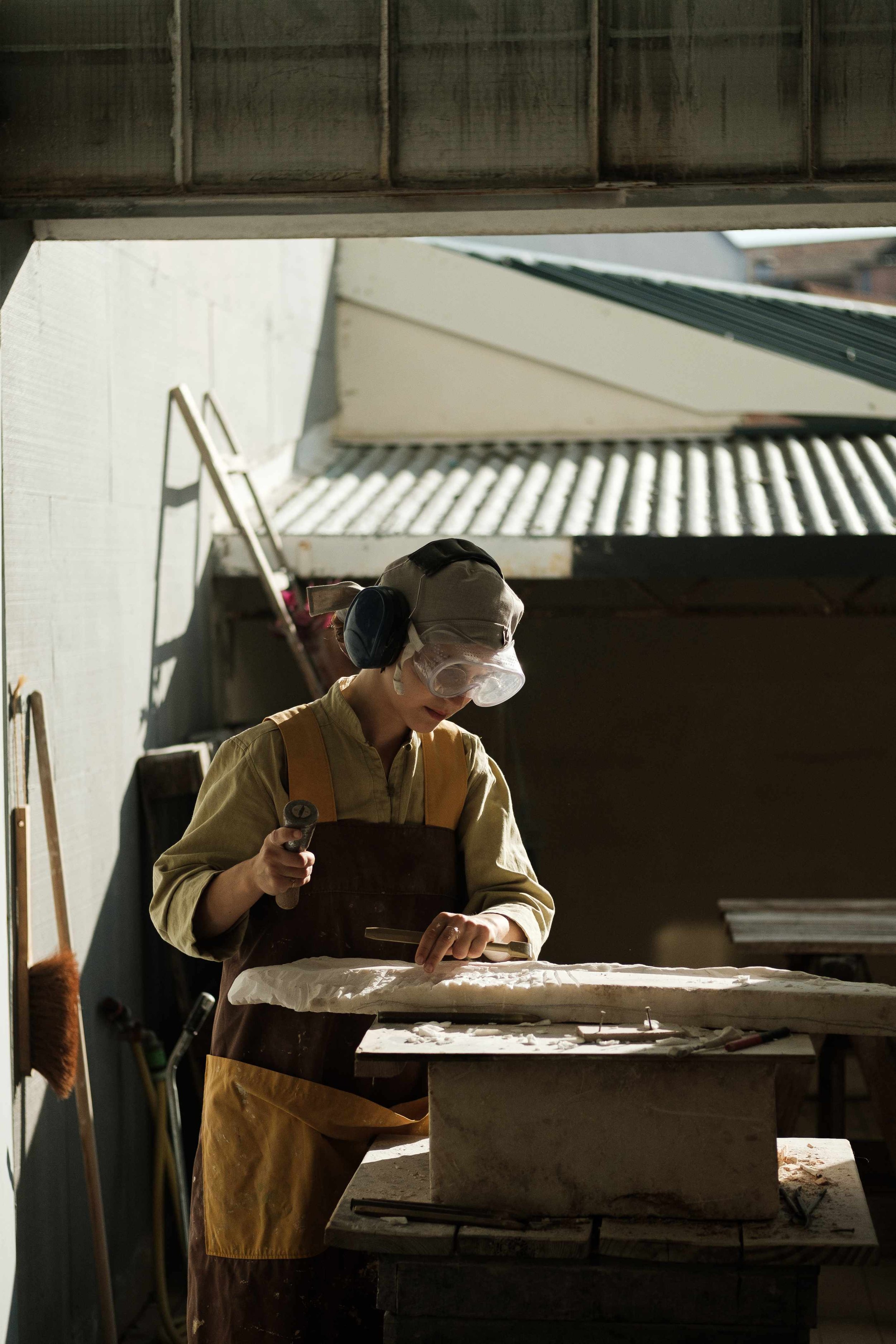
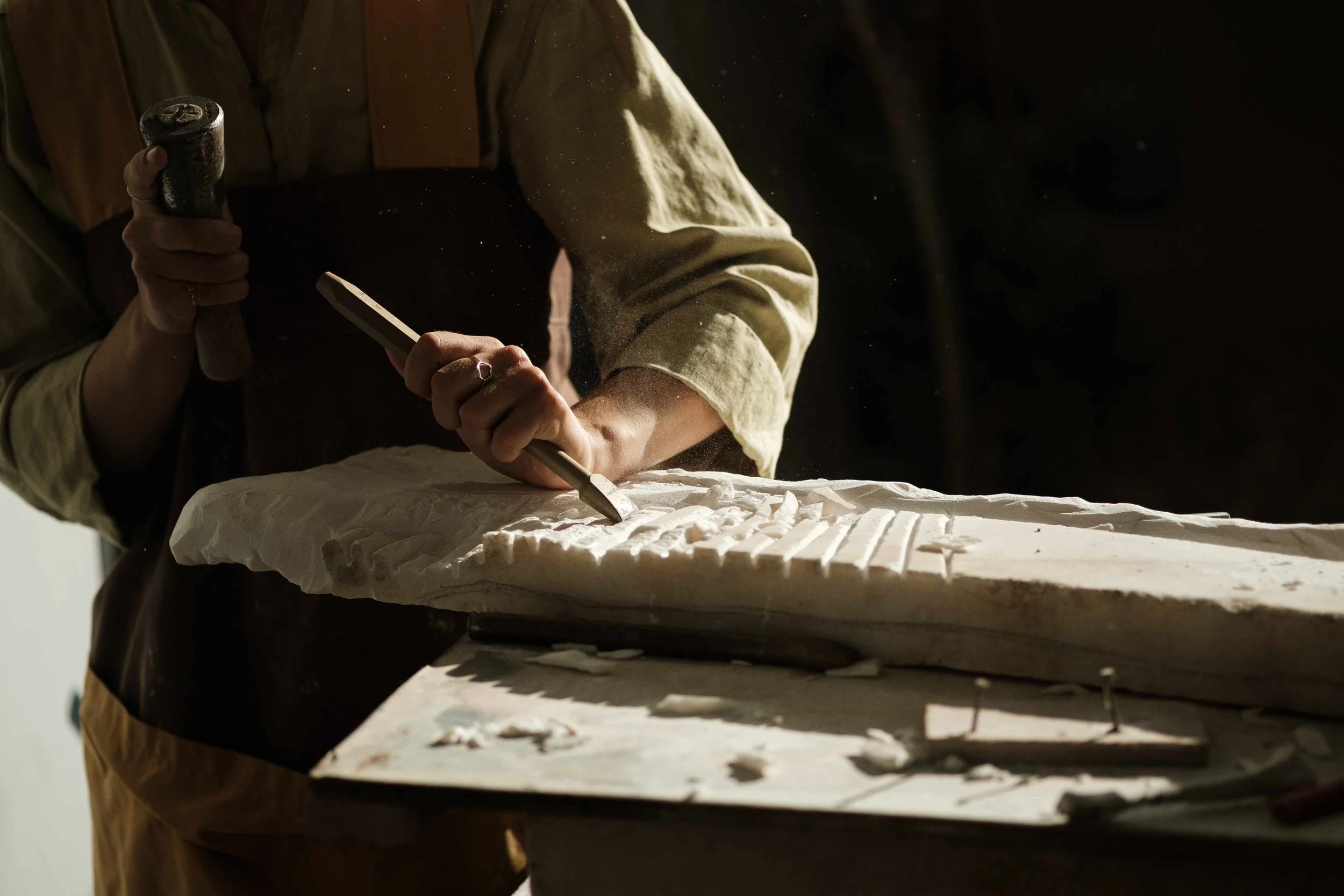
At Fine Art School, I specialised in stone sculpting, but the textile bug never left me. Over the years, my practice has grown to move between textile art, papermaking, and stone sculpture, exploring materiality and the dialogue between traditional techniques and contemporary approaches.
What first drew you to weaving, and how did it become the foundation of your artistic practice?
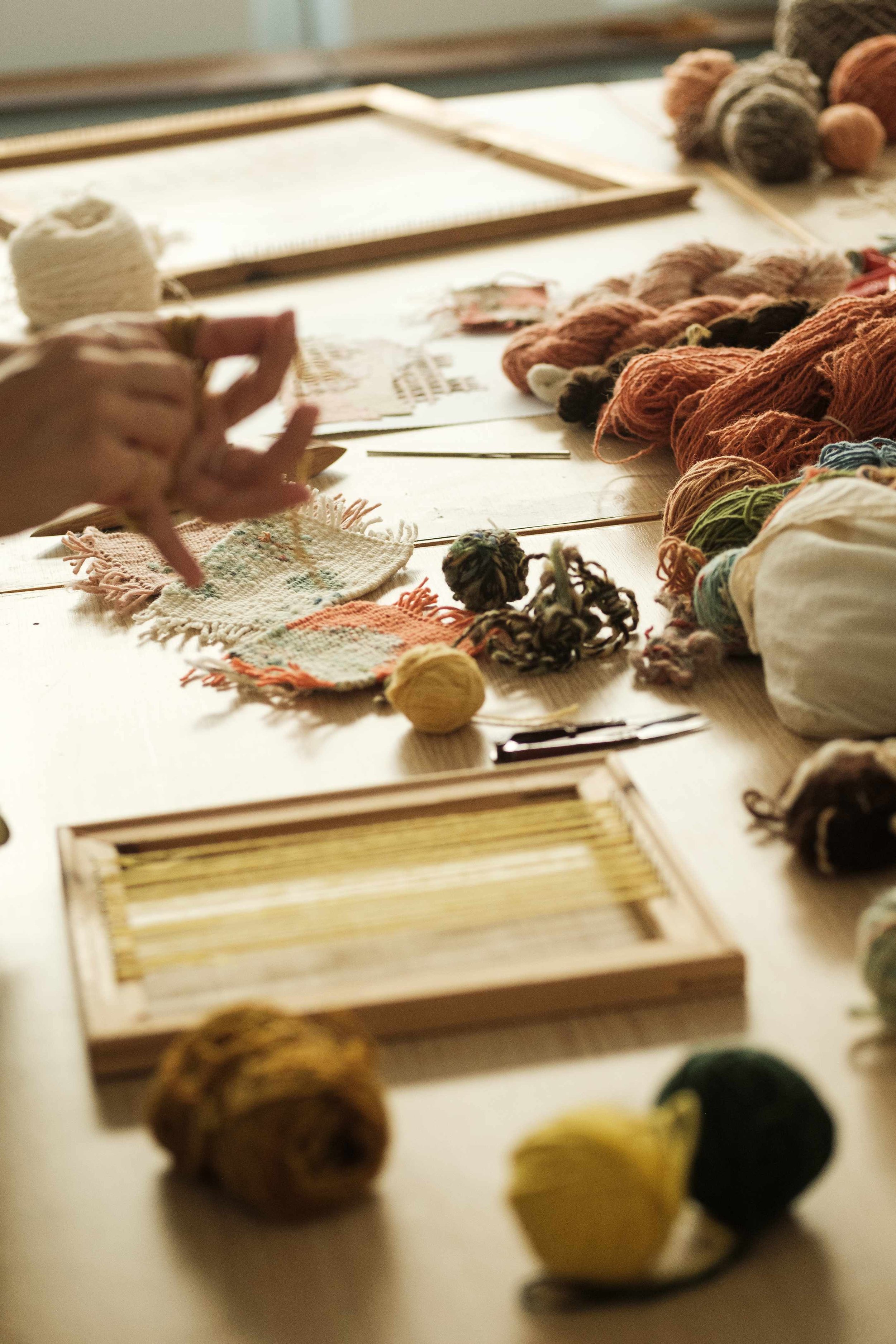
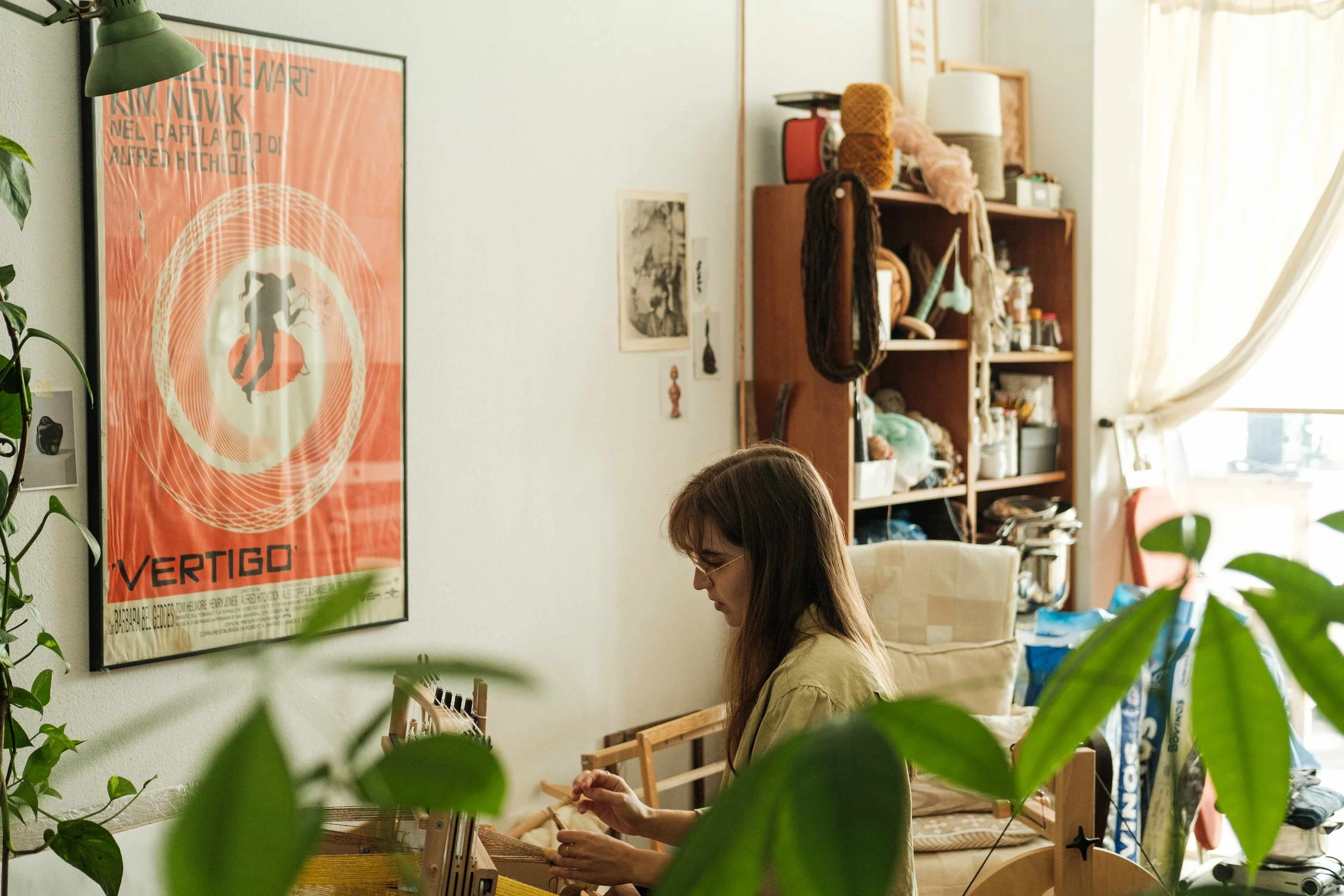
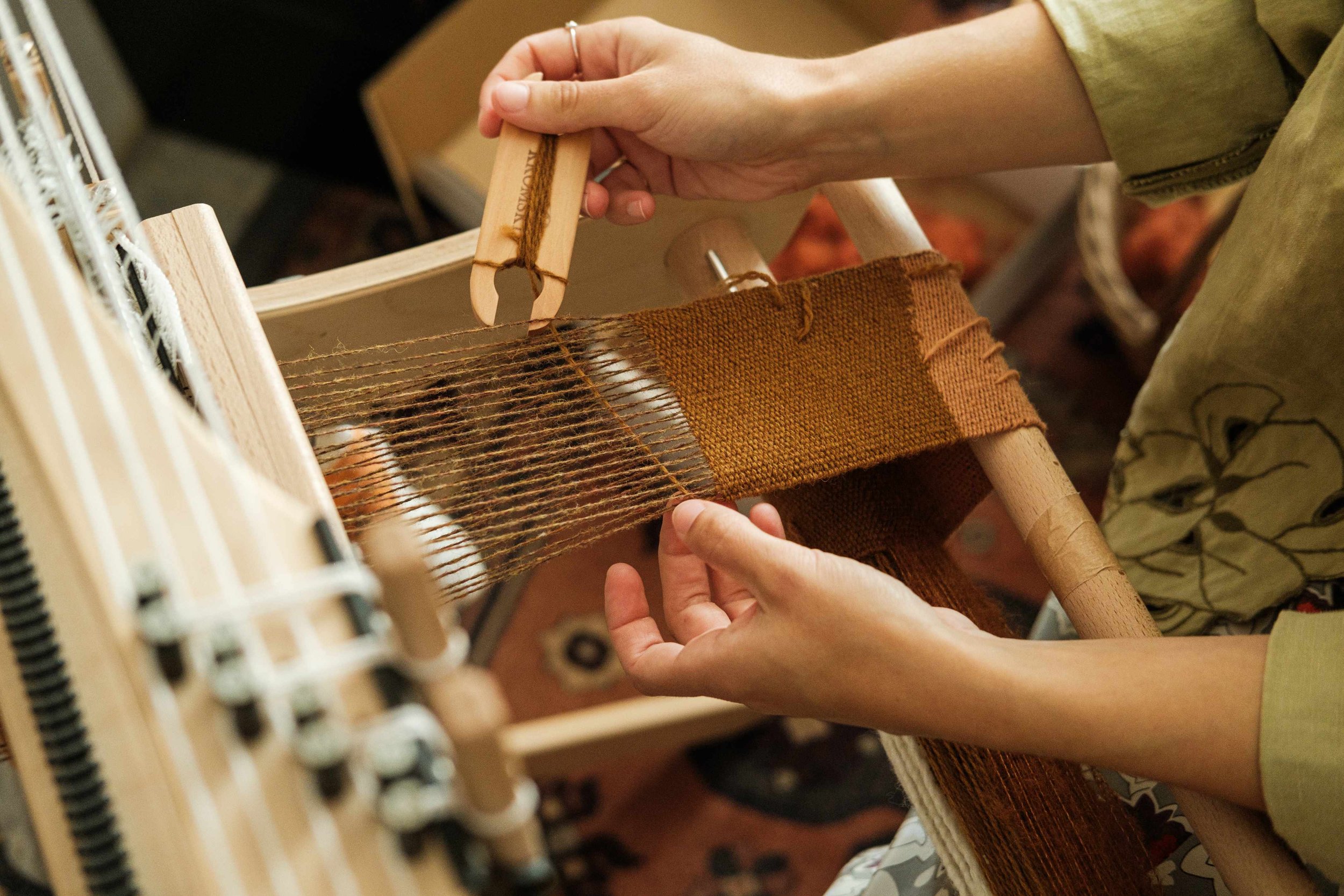
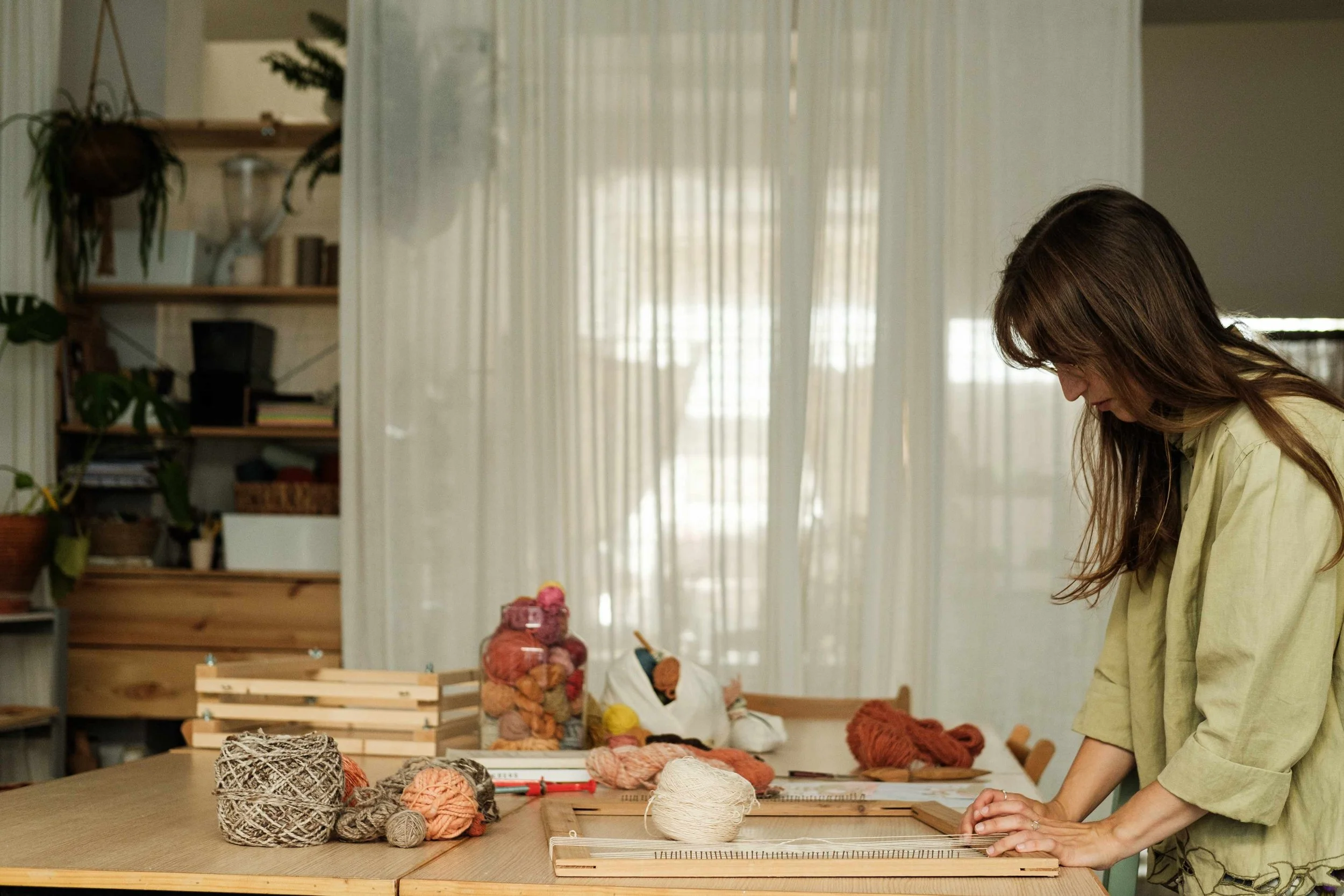
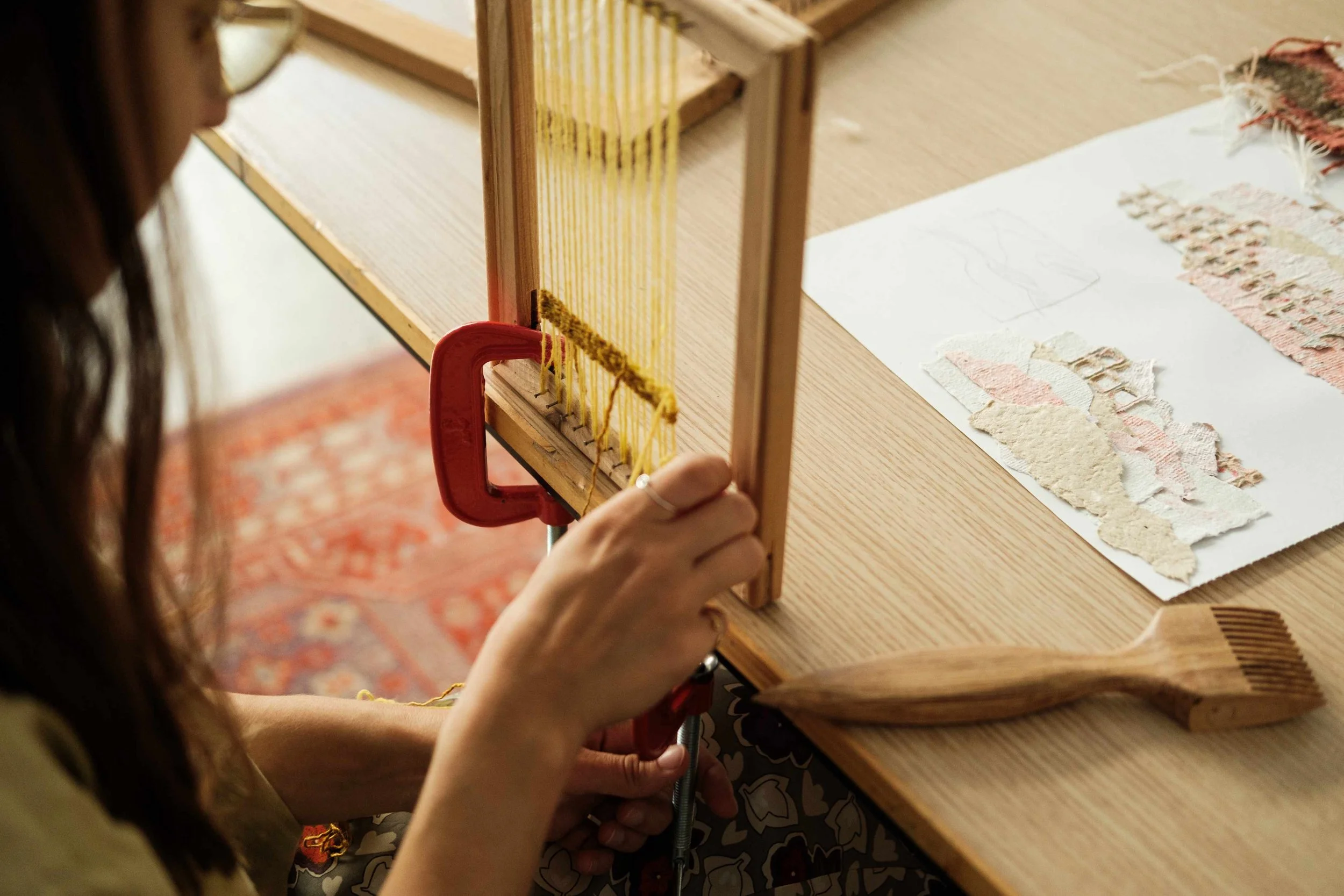
I learned how to weave when I was around fourteen, at the Soares dos Reis Art School in Porto. I remember being fascinated by the rhythm of the loom. The repetition, the tension, the quiet focus it demands. Later, weaving became a way for me to explore the intersections between sculpture and textile. Those early experiences taught me patience and attentiveness, values that now guide every aspect of my practice.
Over time, weaving became central to my practice because it offers a way of thinking through material rather than just shaping it. It’s both structured and open to variation: the warp and weft provide form, yet the hands and the material bring life and unpredictability.
In practical terms, it’s also much easier to present and transport a wall hanging than a stone sculpture. The art market can be unforgiving to sculptors, but with weaving, even though textile art is still often perceived as a lesser craft, I’ve found it lighter, both physically and mentally, to work with. Perhaps because a woven piece stays on the wall, while sculpture insists on taking up space.
You’ve worked with sculpture, paper, and textiles. How do you see these different mediums connecting and informing each other in your practice?
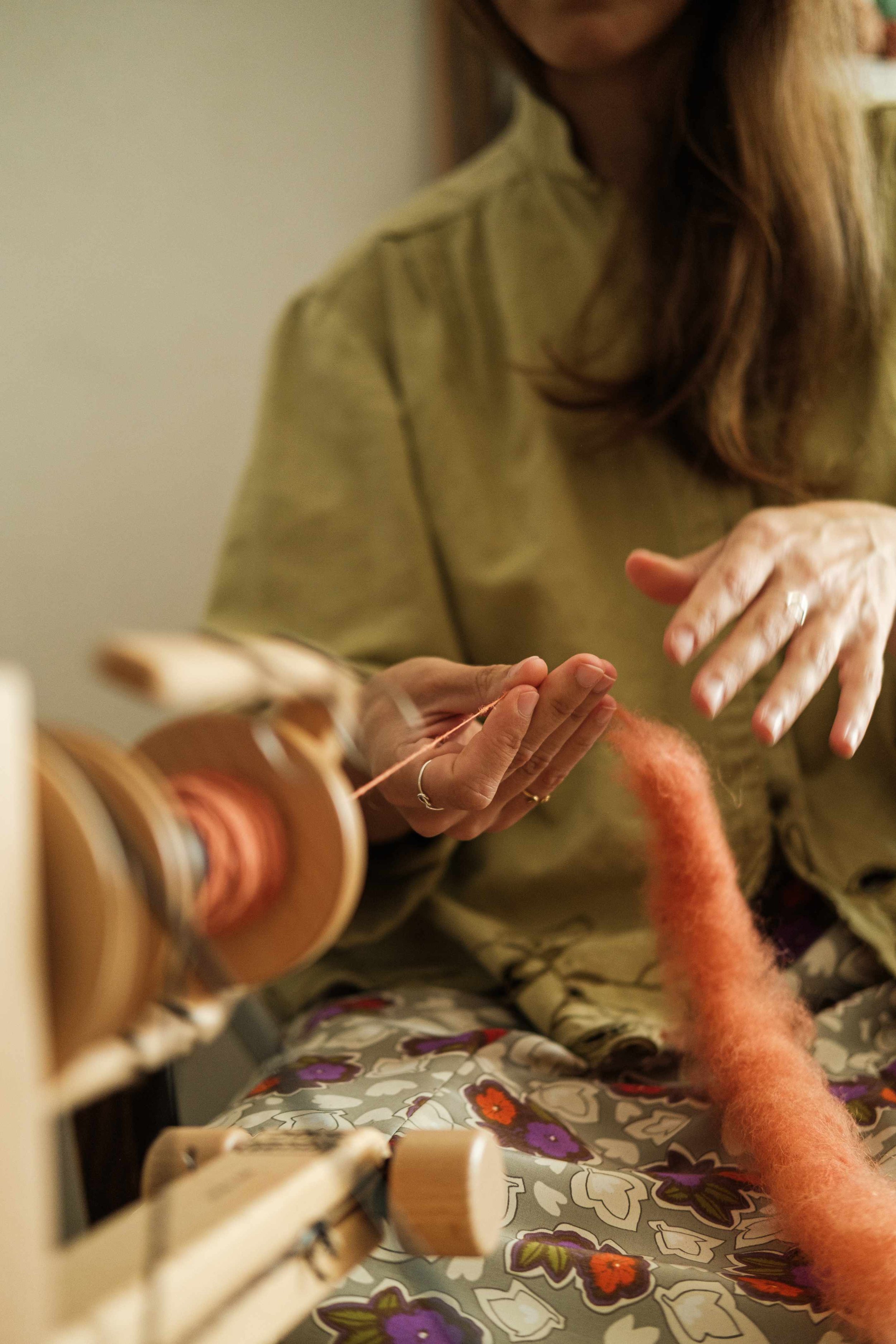
For me, all materials are part of the same language. Whatever material I use, I am working with matter, with texture, rhythm, and transformation. Whether I’m carving stone, spinning wool, or working with paper pulp, I’m always looking for their memory and movement.
I move between them intuitively, weaving with the same care I bring to shaping a stone, or layering paper as if I were building a textile.
Each medium carries its own logic, yet they share the same impulse: to slow down, to listen, to allow the material to guide the work. In weaving I find rhythm, in stone permanence, and in paper a sense of fragility. Together they form a coherent language, a quiet dialogue between hand and matter.
How have the landscapes, traditions, and cultural heritage of your upbringing influenced your work?
Growing up in northern Portugal, I was always surrounded by craft, handmade things, and textile tradition. Even though no one in my family was deeply connected to any artistic technique, apart from some women who sewed and knitted, I was always curious about learning different techniques and processes. That curiosity became my way of understanding the world through touch.
The heritage I carry is less about explicit motifs and more about a way of being: attentiveness, respect for the material, and the belief that making is a form of connecting to the past while continuing the tradition into the future.
The landscape, and the natural world in general, has always been very present in my practice. I observe and collect the landscape’s textures: water shaped stones, weathered surfaces, natural fibres, etc. I’m deeply drawn to the textures of natural erosion, constantly searching for the marks of time and the beauty of imperfection. My pieces often carry something of that: a balance between control and decay, growth and stillness.
In many ways, these influences shape not only the materials, colours, and techniques I choose, but also the rhythm of my process.
Tell us more about Numvale and how it came to be.
Numvale began organically. Over time, as I worked across sculpture, weaving, handspinning, and papermaking, I began to see how these different practices could speak to each other and form one continuous body of work.
The name of the project is a play on my surname. In Portuguese, it can mean both “in a valley” (num vale) and “not worth it” (não vale). Today, Numvale exists as both a personal archive of past projects and an open space for experimentation, where materials meet through slow processes and observation of the natural world.
Could you walk us through your creative process, from the first spark of inspiration to the making of a piece, and share what part of it excites you the most?
My process rarely begins with a clear idea or sudden inspiration. I don’t really believe in that kind of impulse that appears out of nowhere. Instead, it starts with curiosity: a texture, a fragment, a colour, or a form I find in nature. Sometimes it begins with a book I’ve read or a place I’ve visited.
Essentially, I like to connect with images, symbols, and materials, exploring their possibilities. I often collect small elements from nature, like stones, seeds, and pieces of fibre, and let them rest in the studio until they start to suggest something new.
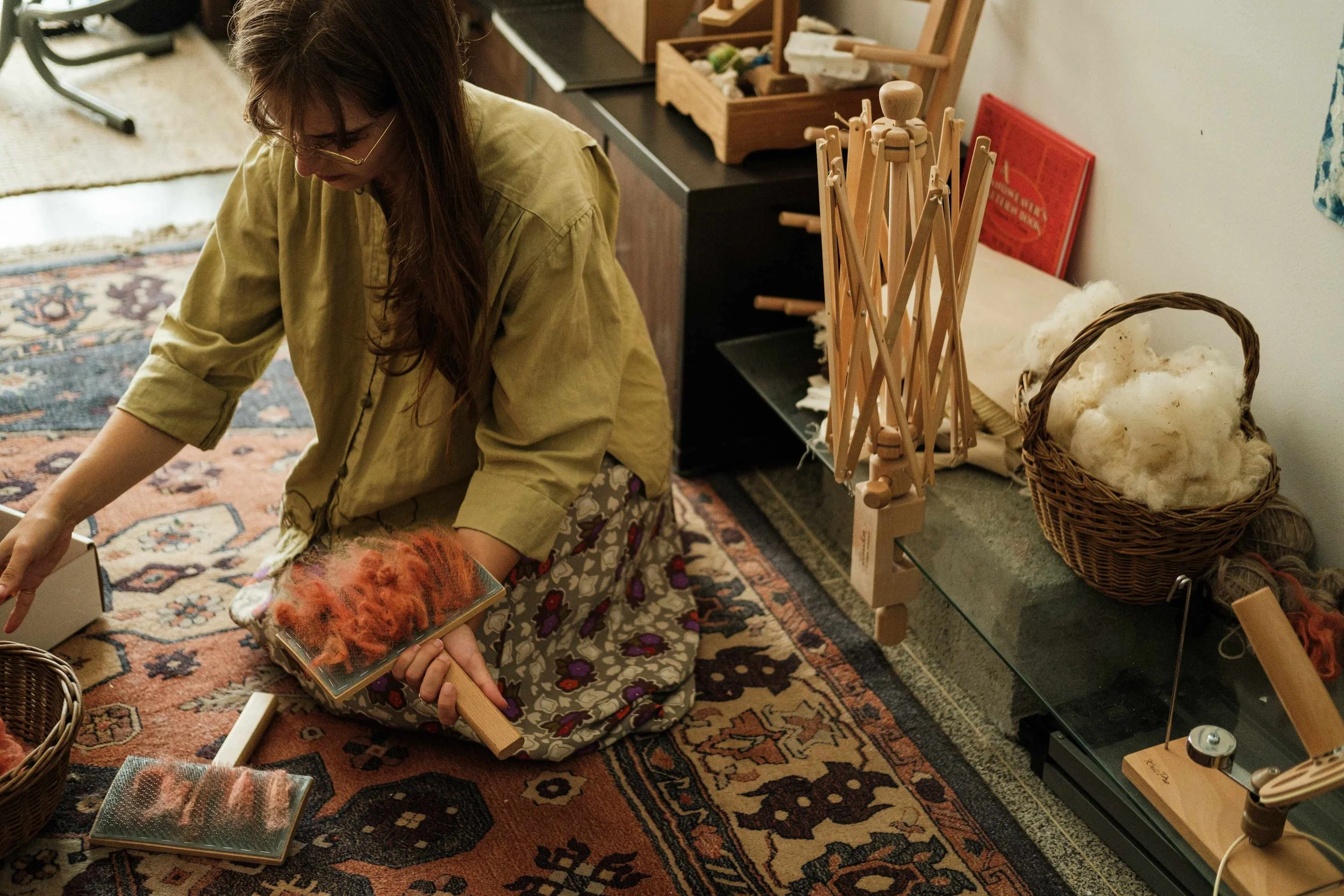
From there, the process unfolds slowly, through observation and dialogue between different stages: spinning wool, dyeing, weaving, layering, and collaging. Each step becomes a way of thinking through material. What excites me the most is when the material begins to lead the way, when control softens and something unexpected takes shape.
Working with your hands calls for time and presence. How do you experience slowness and attentiveness in your practice, especially within today’s fast-paced world?
I see slowness as a form of resistance and also as a way of listening to each material and technique. When I spin wool, weave, or carve stone, I am present to the material, to its pace and its posture.
Working with our hands calls for attention and depth. Repetitive actions, so common in textile processes, have the ability to slow down and stretch time in a way that makes observation part of the process itself. Repetition allows things to unfold at their own rhythm.
However, even though I work with my hands and should, in theory, feel more connected to the passage of time, I often find it difficult to focus deeply on projects. It’s getting harder each day not to be constantly alert, waiting for a new notification or dwelling on the feeling that you’re missing out on something.
I try to focus on repetitive work that gives me the mental space to let my ideas expand. The kind of work that sometimes even makes me feel bored. Because boredom, to me, is one of the best ways to feel creative.
Where do you see the greatest potential for preserving and honouring traditional local crafts in today’s world?
I believe in bringing traditional crafts into contemporary contexts not as acts of nostalgia, but as forms of living knowledge. When craft is reimagined through new materials, collaborations, and ideas, it continues to evolve. The greatest potential lies in building bridges between old and new.
Education plays a fundamental role in this process. That’s why I dedicate part of my work to organising classes and collaborating with museums in the sharing of traditional craft techniques.
By teaching younger generations about these crafts, we are not only preserving priceless knowledge, but also helping them understand the time, care, and complexity behind each piece, which, in turn, fosters deeper appreciation and respect for handmade work.
Are there any new projects or directions you’re currently exploring that you feel especially connected to?
This year I’ve been deeply focused on my teaching journey. I’ve just completed a full year teaching Textiles at the Soares dos Reis Art School, which has been both rewarding and transformative. Because of that, my personal projects have been somewhat on hold, although I find it really hard to keep my hands still. I create things almost every day, even if it’s just a piece of clothing or a knitted gift for a loved one.
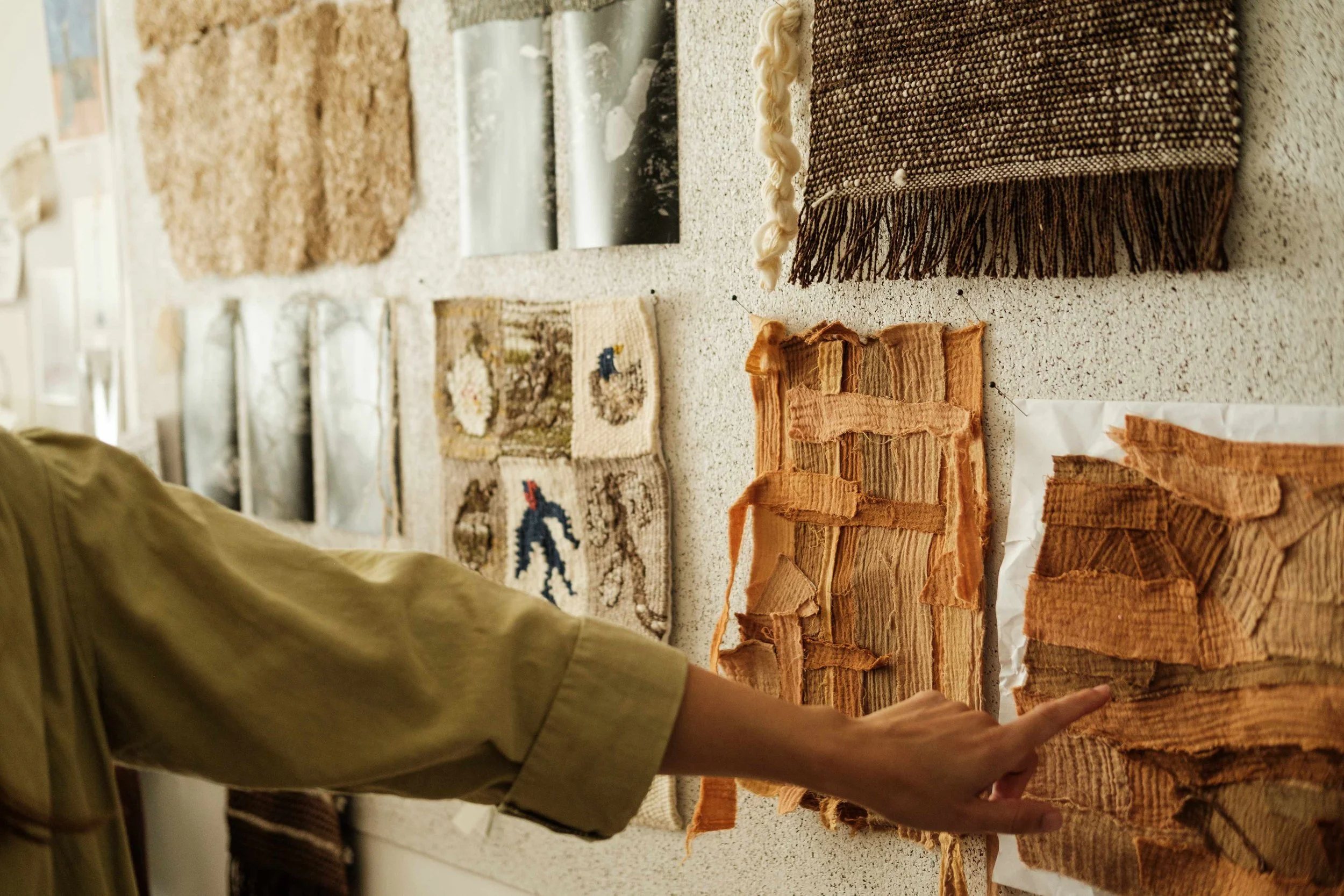
Lately, I’ve been feeling more drawn to weaving again and to experimenting with natural dyes, exploring their unpredictability and the subtle variations they offer.
I’m also interested in producing smaller pieces, fragments that can exist on their own but, when placed together, create a sense of rhythm and coherence, much like a visual conversation between textures. It’s an idea I’ve explored in sculpture before, but only now am I beginning to approach it through textiles.
I want to continue exploring texture and material dialogue, merging my love for stone sculpture and textiles, maybe creating tapestries that suggest rock surfaces.
Where and how can people engage more deeply with your work?
You can explore my portfolio and learn more about my work at numvale.com.
In Porto, I run Atelier Sem Forma, my studio and creative space. It’s where I develop my own work, but it’s also where I teach workshops and private classes in tapestry weaving, papermaking, and other crafts.
The atelier has been active for a few years and is home to several artists working across different mediums. It’s a space where people can visit, see the work in progress, and get a glimpse into my creative process. Beyond being a studio, it’s also an educational project where I dedicate much of my time to organising classes and developing learning materials.
Photos by Pedro Sadio.