Blue Firth
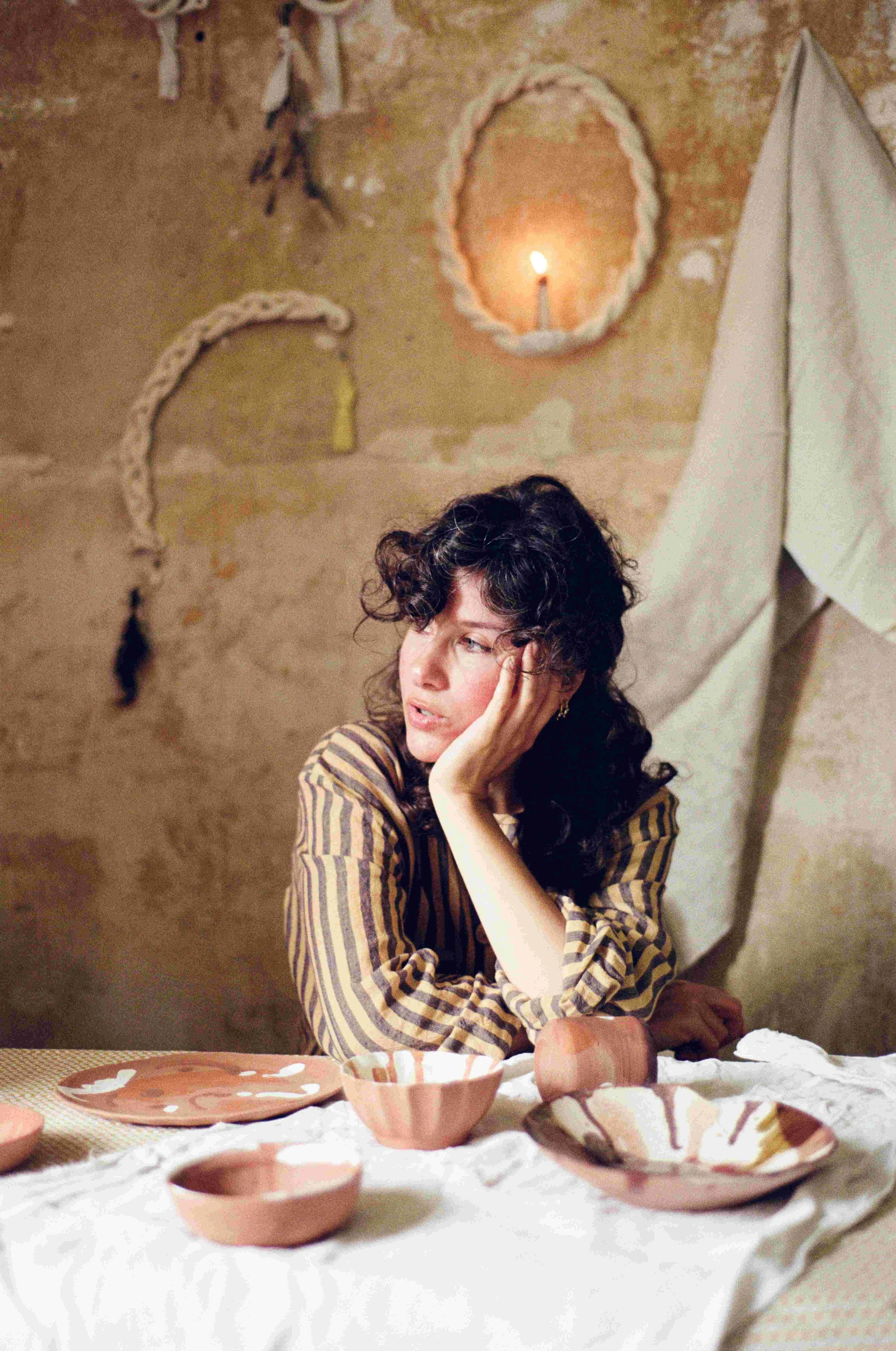
Please share a bit about yourself and your background.
I have a fine art background. I studied fine art from school through to postgraduate level, and I was always really interested in folklore, mysticism, spiritualism, and occult knowledge. Those worlds were always the pool from which I made work, but very much within a contemporary art context.
Over the years, that way of working began to feel less genuine and less sustainable, both in terms of materials and my personal creative interests. I was building large scale installations and collaborative projects, things that were often temporary and time based. Something would happen, and then there was no real legacy afterwards because the work would be dismantled or thrown away.
After my postgraduate studies in London, I realised that my personal spiritual development and my creative practice were actually becoming the same thing. I had always been interested in the archetype of the witch since I was a child, but it had never really occurred to me that this could become a genuine driving force within my work. At the time, making work from your own belief system was not really encouraged in education.
I eventually experienced burnout and moved out of London into the countryside. I had always lived in cities, so suddenly being surrounded by quietness and nature felt quite terrifying at times. Around then, I found a pottery class. It was honestly just something to do on a Tuesday evening.
Very quickly, I realised clay was the material I had been waiting for. I found this lovely man, a graphic designer in his sixties, who had a pottery studio and ran these very open classes. He didn’t really teach formally, he simply gave people clay and access to the space. I remember touching the clay and immediately feeling something shift. I could lose hours there. I had always wanted a studio practice where I could shut the door and completely lose time, and suddenly I had found it.
At the same time, I was also becoming more open about my spiritual practice and my relationship to witchcraft, paganism, and ancestral traditions. Both journeys seemed to grow alongside one another and continue to feed each other. Over time, all the stories and narratives I had gathered over the years slowly began to emerge through the clay itself.
Your work moves between ceramics and stoneware, shaped by references to magic, myth, and ancestral knowledge. What first drew you toward these themes?
I think those worlds have always been my knowledge base. What interested me was the possibility of taking something intangible, like a myth, an archetype, or a historical figure, and making something physical that could somehow hold the essence of that story.
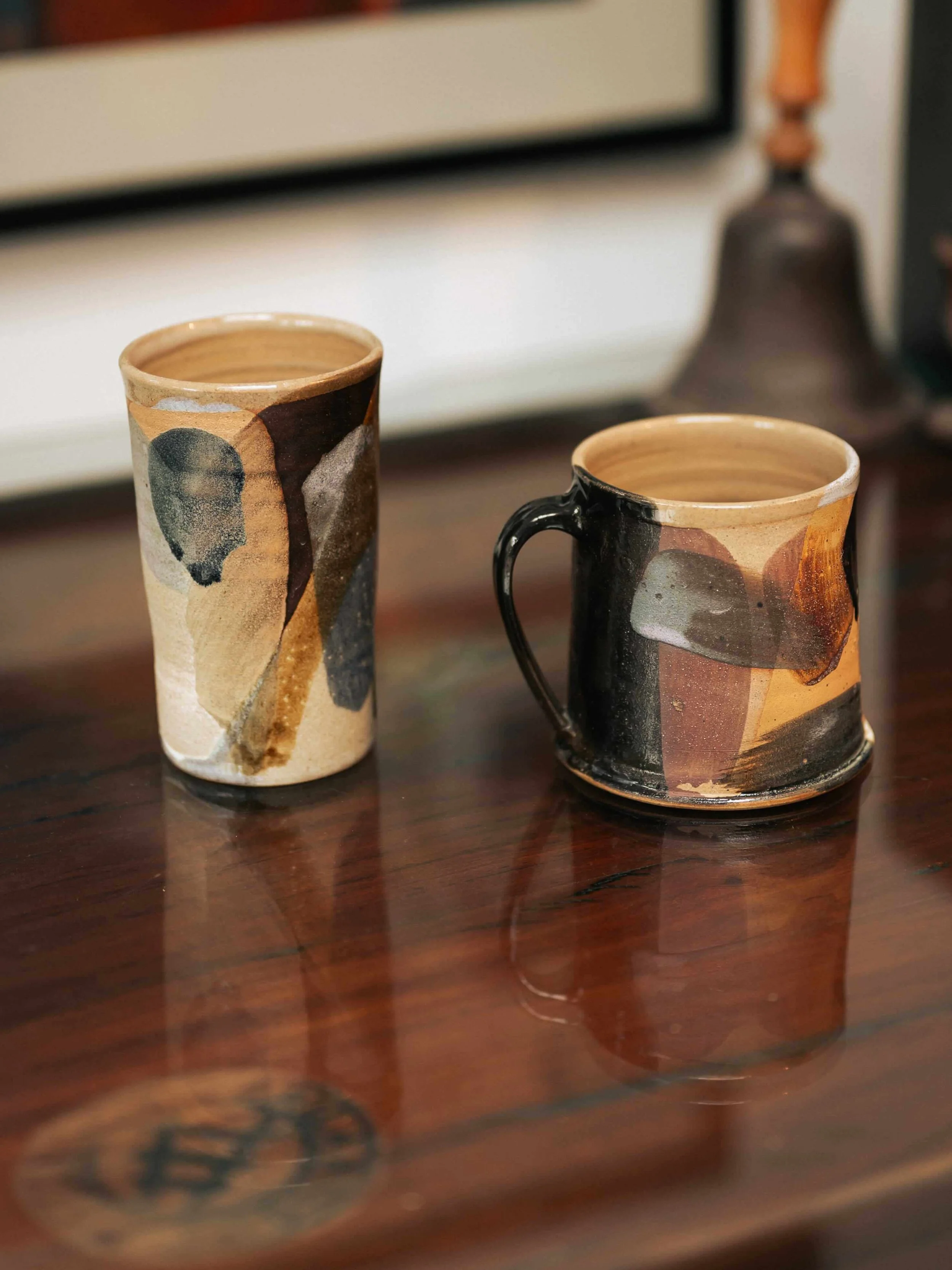
Every object I make carries a narrative, even if it isn’t always obvious from the outside. Sometimes I’m making a mug and sometimes I’m making a much more sculptural object, but they still come from the same pool of knowledge and references. Some narratives are more explicit, while others remain quieter and more personal.
Travel and residencies also shaped this part of my practice quite deeply. Whenever I found myself in a new place, I became fascinated by the local myths, legends, and folk stories connected to that landscape. I would collect those stories instinctively and slowly begin drawing them together with narratives from my own heritage and experiences.
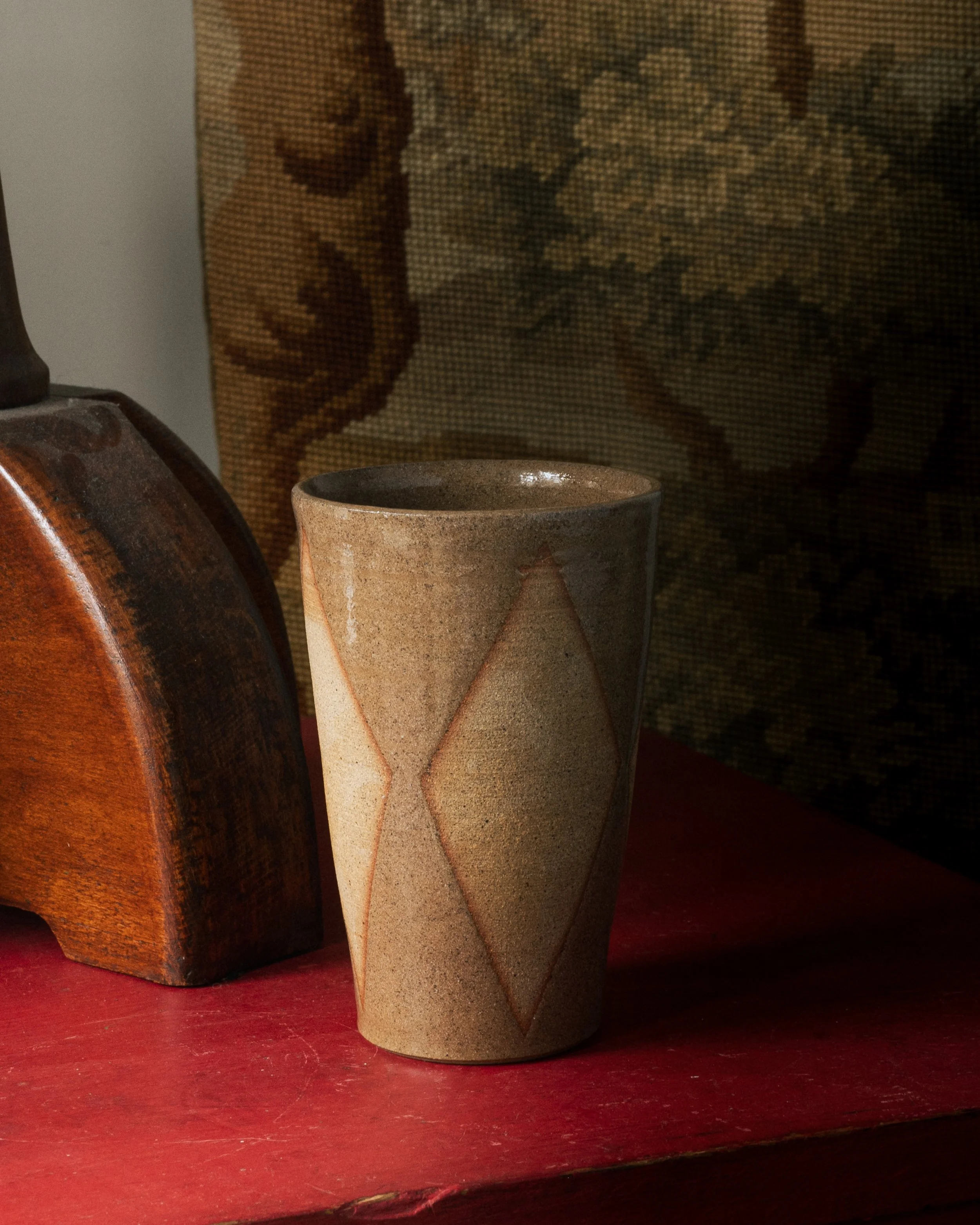
France became particularly important because of my fascination with the medieval period. During a residency there, I discovered Eleanor of Aquitaine, and eventually an entire body of work emerged in response to her story. Some of the references are subtle. For example, there are cups with ruff-like forms inspired by her, even if someone looking at them might never know the connection.
For me, the object becomes a container for narrative and memory, even if that story remains partially hidden.
Can you walk us through your creative process? Are there any rituals or moments that help you enter a state of focus?
Usually, everything begins with a story or narrative. There is often a long period of research before any making starts. I describe it as a kind of pilgrimage because I feel like I am travelling through histories, places, and stories, slowly building my own understanding of them.
Sometimes that research becomes very physical. For example, when I was researching Saint Winifred, I travelled to places connected to her story, stayed there, collected water from the site, and spent time sitting with the atmosphere of the place itself. That experience eventually informed the forms I was making in clay.
After that, the process becomes much more practical and grounded. Ceramics teaches you humility very quickly. You make things repeatedly, they crack, the kiln behaves unpredictably, surfaces change unexpectedly. The process moves between imagination and very earthy pragmatism.
When I return to making a certain form, it often feels like returning to a conversation with that story again. If I’m making one of the portal pieces, for example, I feel like I’m reconnecting with that narrative while working through repetition and touch.
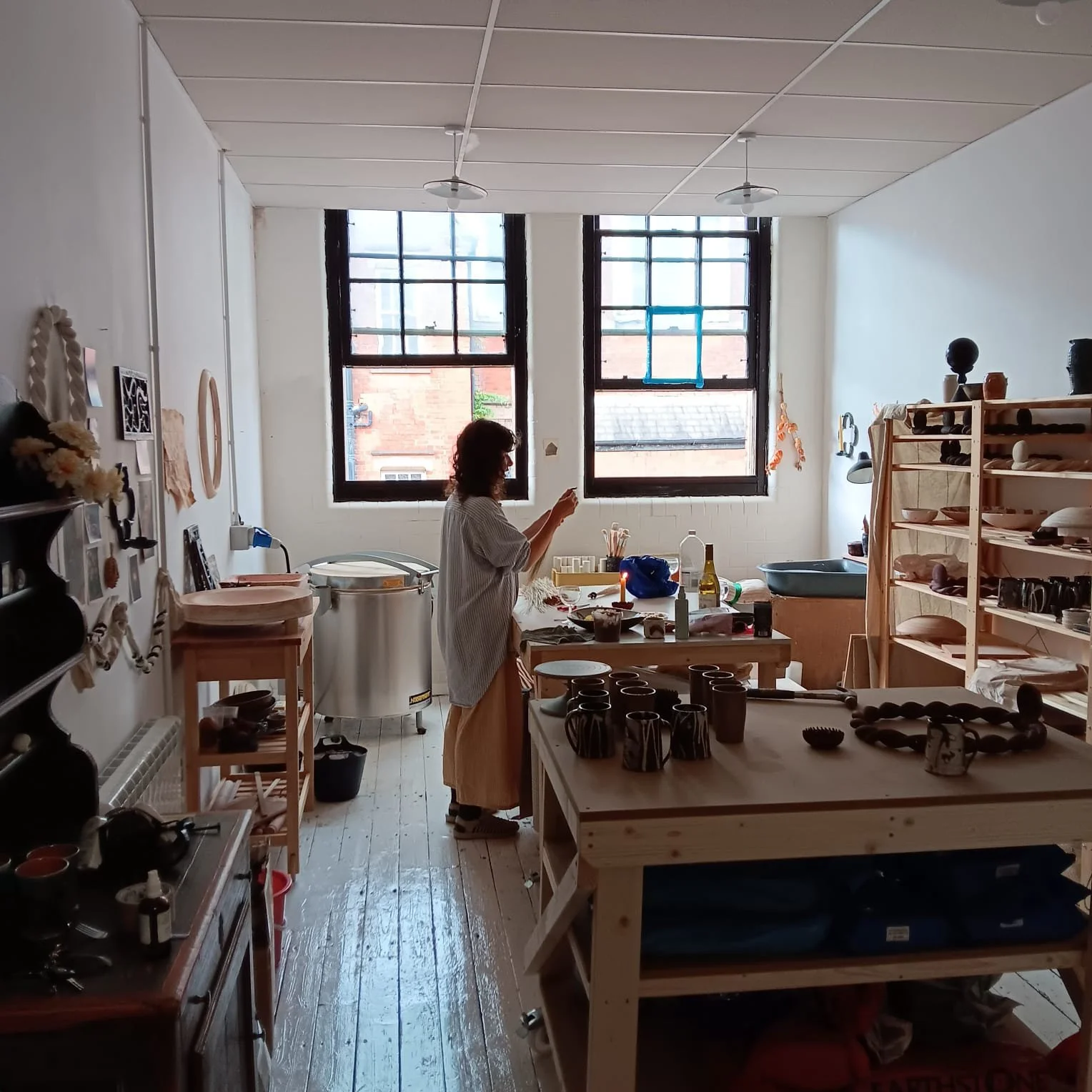
I don’t follow strict rituals in the studio, but atmosphere matters to me. I burn incense, light candles, and try to create a space that feels settled and calm.
I also became interested over time in smaller, quieter rituals that feel manageable within everyday life. I think there can sometimes be a romanticised idea of spiritual practice, but for me it often exists in simple gestures, lighting a candle, leaving water by the window, or taking a quiet moment to pause and reflect.
Your work carries a strong tactile presence. How does working with your hands influence your sense of balance and well being?
Massively. Around the time I began working seriously with clay, I was struggling with severe anxiety and poor mental health. Someone commissioned me to make tableware for a café, and even though I initially felt incapable of doing it, the repetition of making cups every day became transformative for me.
There is something profoundly grounding about repetitive tactile movement. Working with clay brings you back into the body and out of constant mental noise. That haptic connection feels fundamental.
For me, ceramics became a form of processing and understanding. Even when I cannot intellectually explain what I’m feeling, there is something about working physically with the material that allows things to move through me differently.
Clay is also deeply humbling. You cannot rush it. You are constantly working alongside unpredictability, whether something dries too quickly, cracks, or changes unexpectedly in the kiln. It slows you down and teaches patience.
I honestly cannot imagine my life without that connection now. I think it will always remain essential to how I understand myself and move through the world.
You also hold workshops around creative practice. What led you to open this space for others, and how do you approach sharing your knowledge?
When I first had my pottery studio, it felt very natural to fill the space with people. I started something called Clay Coven, which was a weekly gathering where people could come and make together quite freely.
Over time, I realised I preferred more focused workshops connected to specific processes or ideas, like raku firing or workshops exploring ritual and storytelling through clay. At the same time, I was also teaching graphic design and visual communication at university, so those two worlds naturally began influencing one another.
What interests me most is not simply teaching technical skills, but creating spaces where people can explore material, symbolism, storytelling, and personal connection through making.
I think teaching has changed for me over time as well. When I was younger, I often doubted whether I had enough authority to speak about certain subjects. But getting older has brought more confidence and clarity. I care less now about needing to position myself as an expert, and more about opening conversations and sharing knowledge generously.
In today’s context, where do you see possibilities for preserving and honouring local craft traditions?
I think visibility and conscious support are incredibly important. Supporting independent makers and choosing to buy objects made with care and longevity in mind matters deeply.
Craft traditions survive when knowledge continues being shared between people and generations. They survive when we value the time, labour, and sensitivity behind handmade work.
In such a fast paced world, I think objects made slowly and thoughtfully become even more meaningful. There is so much noise and disposability around us, so finding and supporting work that carries care feels increasingly important.
Are there any new directions, materials, or ideas you are currently exploring that feel meaningful to you?
I’ve always been very drawn to candlelight and objects made for light and shadow. Lately, I’ve been wanting to create larger sculptural wall pieces that explore the relationship between darkness, illumination, and atmosphere more fully.
What excites me most is how these objects transform once they are lit. They almost become performative. The challenge now is learning how to properly document that experience because so much of their presence exists through activation rather than static form.
I’m also preparing to move into a new home studio, which feels incredibly significant. Having a stable space to fully immerse myself in these ideas feels like the beginning of a new chapter creatively.
For those who feel connected to your work, how can they engage more deeply with it, whether through your pieces, exhibitions, or online presence?
People can follow my work through Instagram, my website, and my newsletter, Haptic Magic, where I occasionally share writings, rituals, updates, and upcoming projects.
I’m also beginning to focus more on talks and lectures that explore the wider pool of knowledge surrounding folklore, ritual, storytelling, and material practice.
Photo [1] by Maison Salvadore, and the rest belong to Blue.
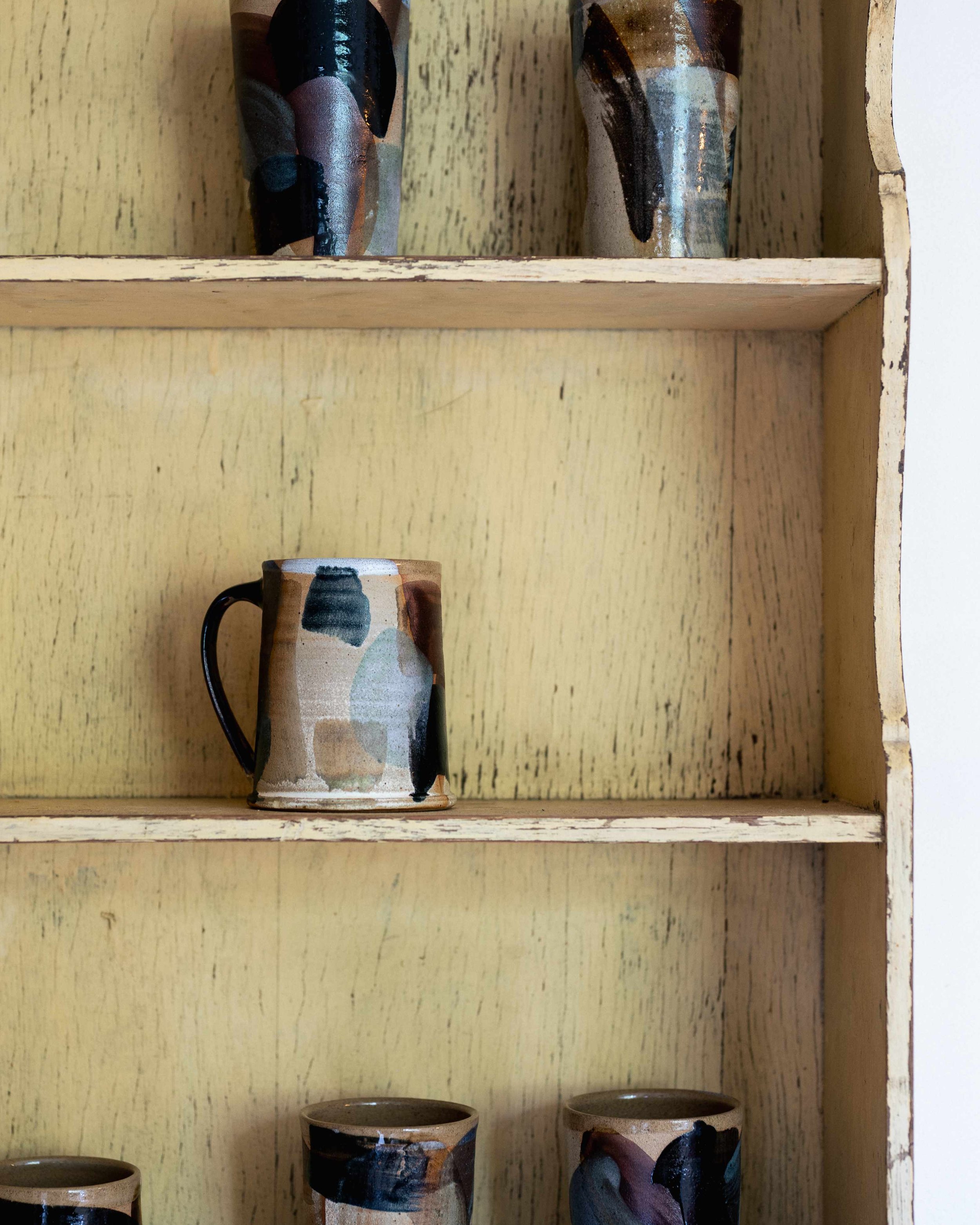
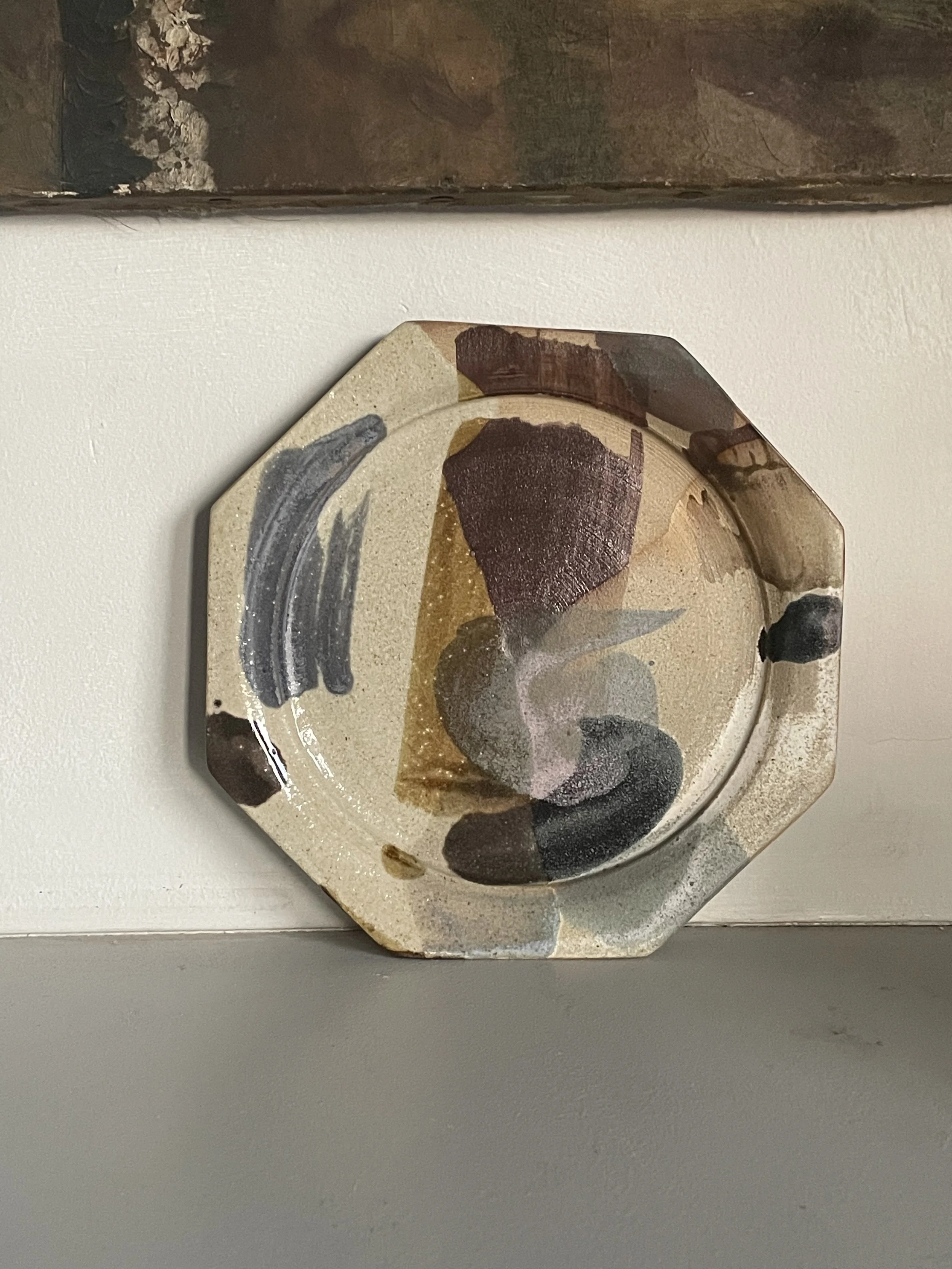
Hand thrown in buff stoneware by Blue Firth in Nottingham, UK, the Kingfisher Plate features a mix of exterior glazes reminiscent of a kingfisher. Available in two forms, with cut outs or as an octagon, it highlights the relationship between glaze, form, and the natural warmth of buff stoneware.
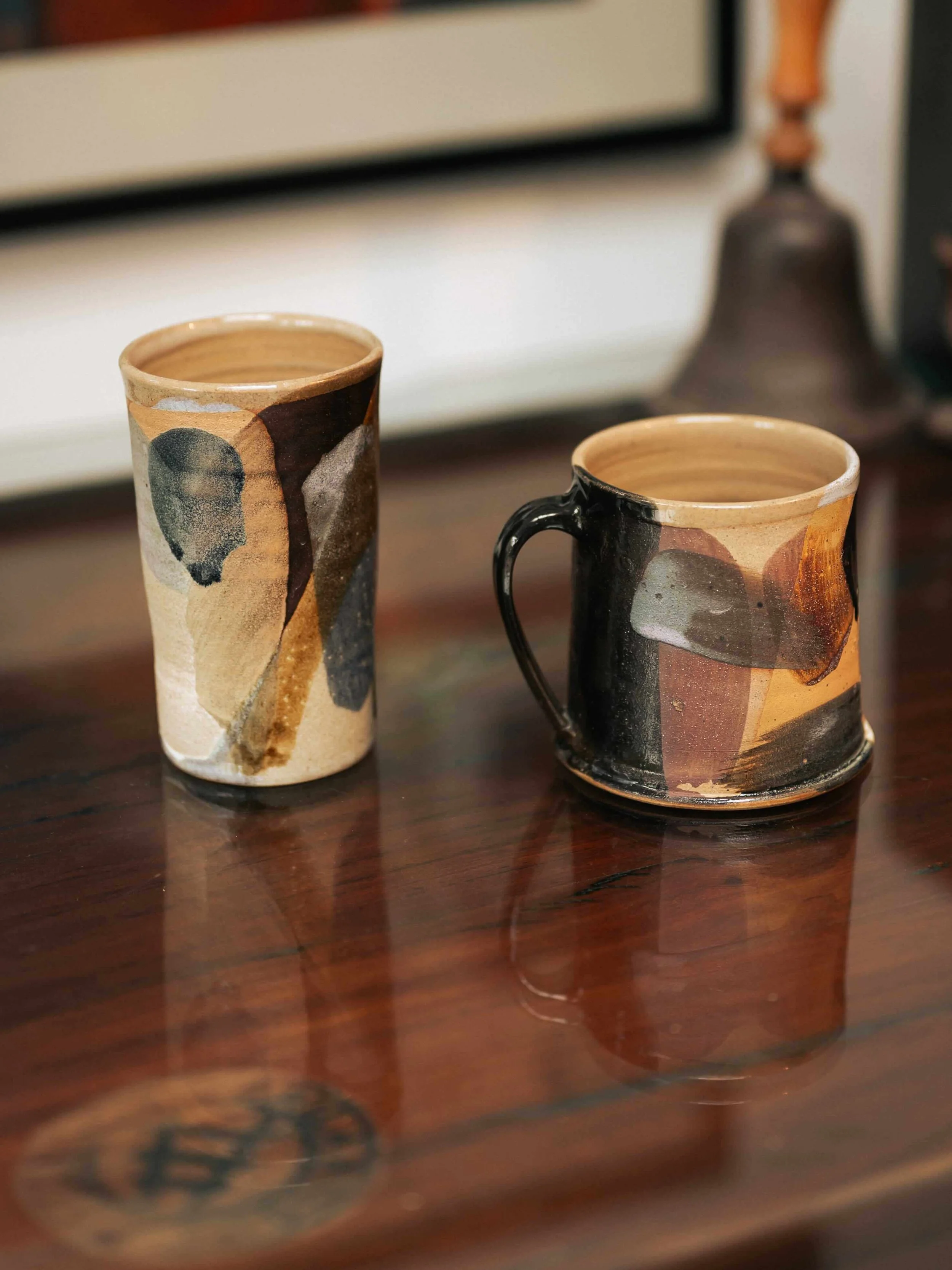
Hand thrown in buff stoneware by Blue Firth in Nottingham, UK, the Kingfisher Mug features a mix of exterior glazes reminiscent of a kingfisher. Finished with a clear liner glaze inside, it explores colour and surface through layered glazes that shift subtly across the clay body.
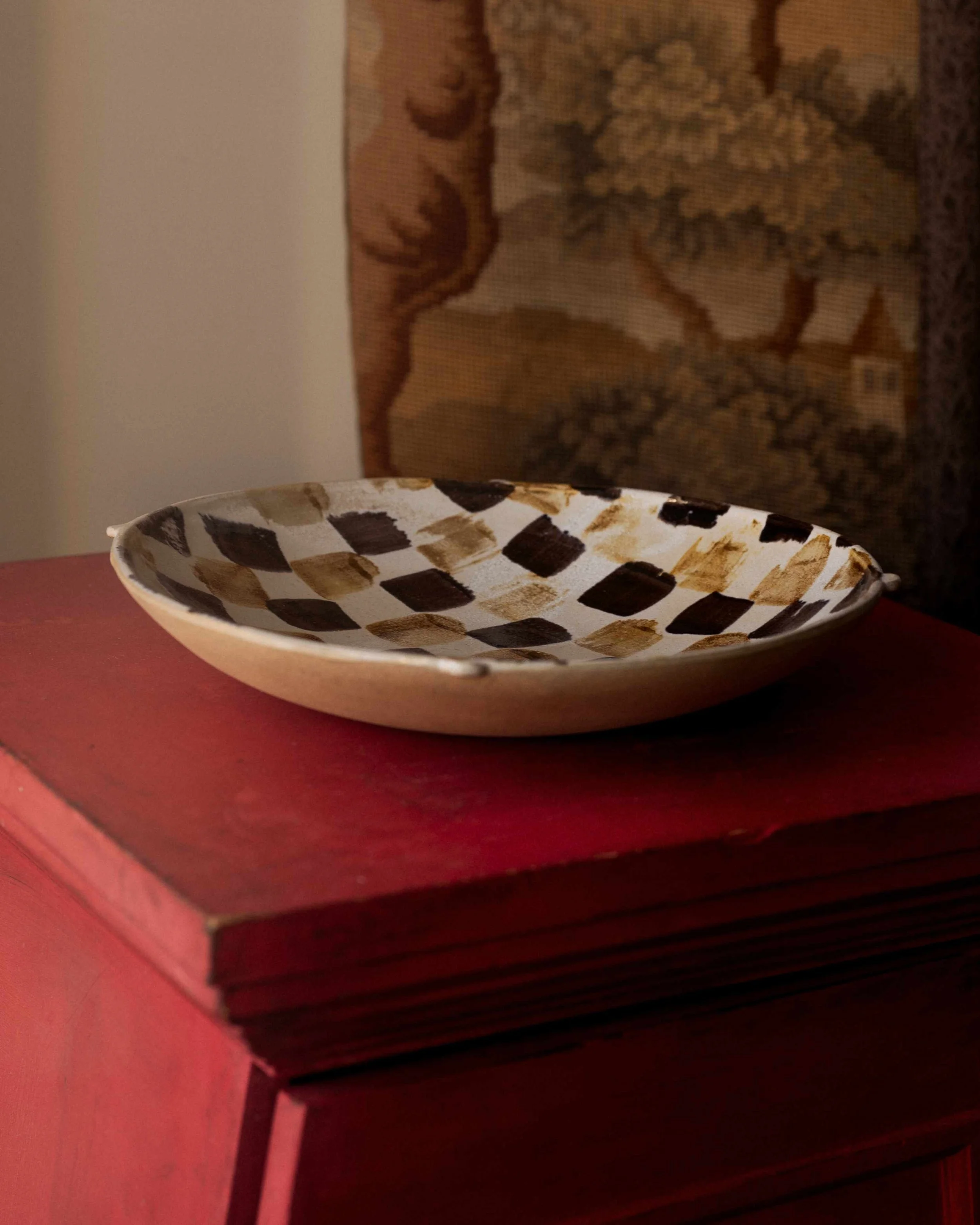
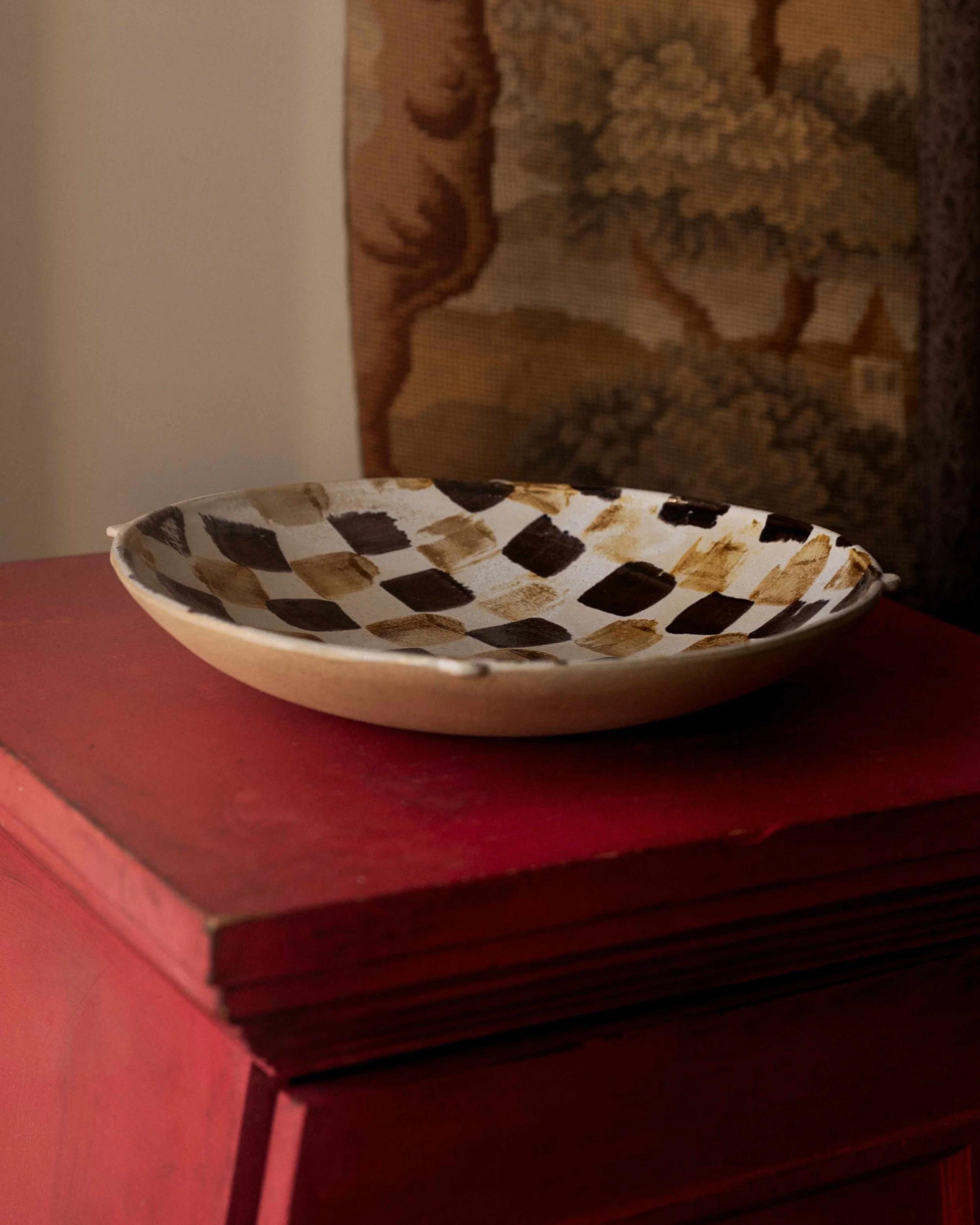
Hand thrown in buff stoneware by Blue Firth in Nottingham, UK, the Cawley Dish features a distinctive chequered pattern glaze. The interplay of colour and repetition creates a surface that draws attention to the handmade nature of the piece.
