Elsa Claesen
Please share a bit about yourself and your background.
I was born into a creative family, with my father being a furniture maker and my mother a ceramist. From an early age, my mother introduced me to the world of ceramics, and ever since, my passion for working with clay has only grown.
I studied Lifestyle & Design at the art academy in Rotterdam. During my studies, I explored different directions, but soon my attention was drawn to product design and the craft of making. My graduation project from art school focused on the craft of brickmaking, inspired by a long abandoned brick factory that once belonged to my grandfather. I was deeply fascinated by this traditional craft and the entire process, from raw clay to the final building material. I relived this process by harvesting wild clay, building a wood fired kiln, and shaping bricks by hand.
My passion for ceramics deepened and continued to grow over time. After completing my studies at the Art Academy in Rotterdam, I spent nearly five years working as a product designer for a well known Amsterdam based home accessories brand called &k amsterdam.
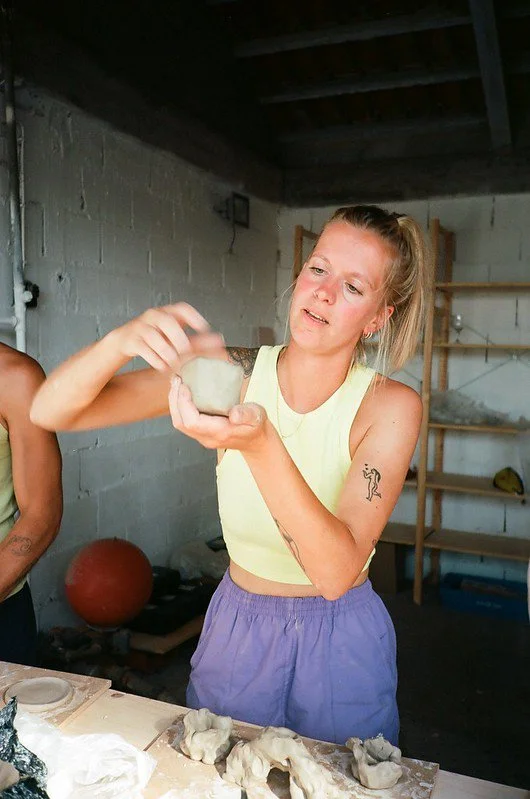
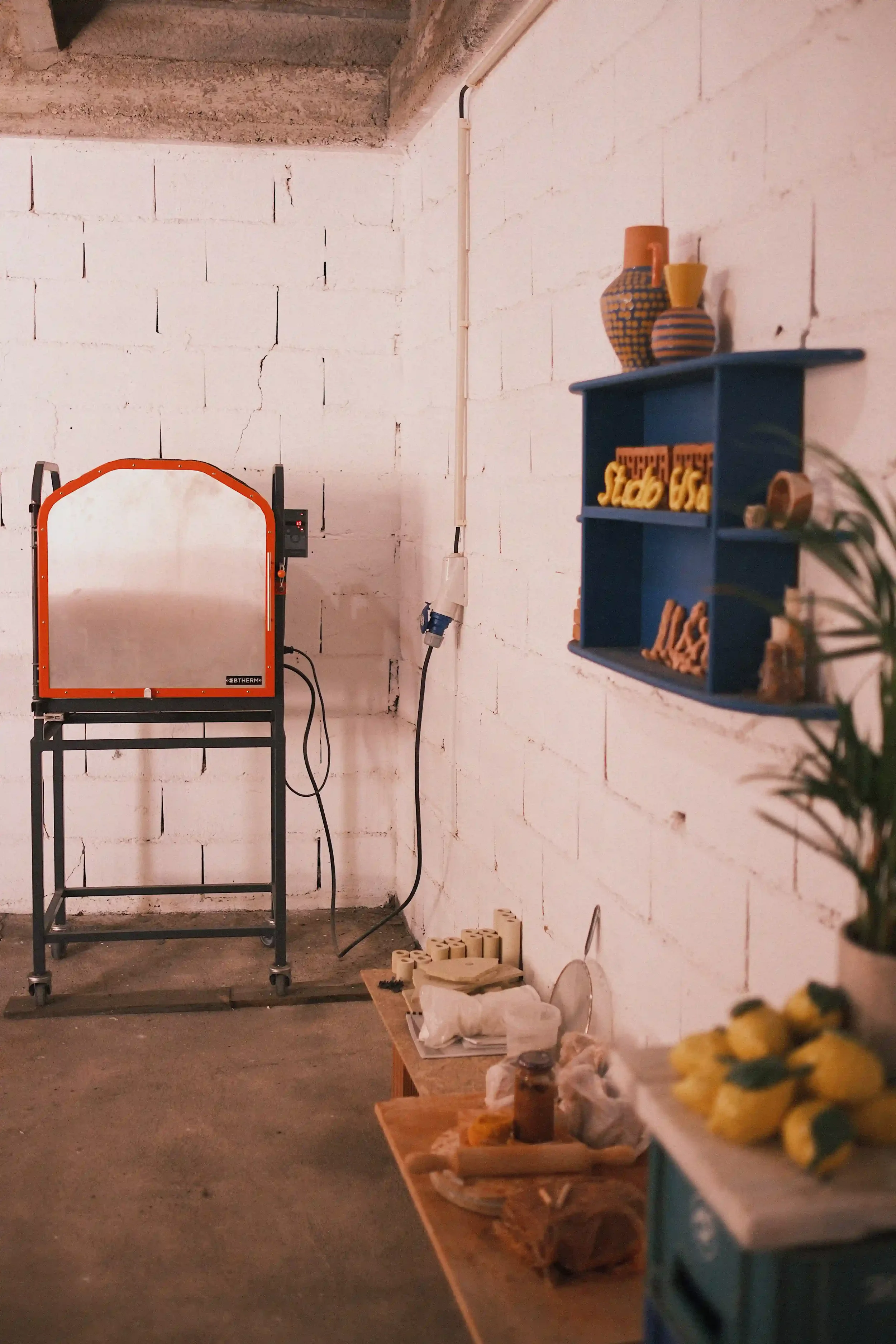
Since moving to Portugal two years ago, ceramics has become my main focus. I transformed an old hay barn next to our house into my studio, where I create and share my practice and passion for this medium through hand building classes and workshops.
What first drew you to working with clay, and how did ceramics become central to your creative expression over time?
Growing up in a home where making was part of everyday life, I had the freedom to create, experiment, and explore clay freely whenever I wanted. I learned the basics from my mother, and over the years continued to develop my skills through curiosity, practice, and trial and error.
During my years working as a product designer, I found myself shifting away from the screen, searching for a more hands on approach. I began bringing clay and my tools into the office, shaping ideas directly in clay. Clay became my way of thinking through form.
I quickly developed a strong connection to clay, and over time it became the material I wanted to dive deeper into. Ceramics has endless possibilities to offer, which keeps me curious and constantly learning. At the greenware stage, forms can still be adjusted, reshaped, and refined. And when it comes to glazing, I am still in an ongoing process of research, testing, and exploration.
Can you walk us through your process? What does your making process look like, and how do hand building techniques guide the way each piece takes form?
I rarely begin with a fixed shape in mind. At times, I make loose sketches to explore ideas on paper. However, it often happens that these shapes become something entirely different once I start working with the clay.
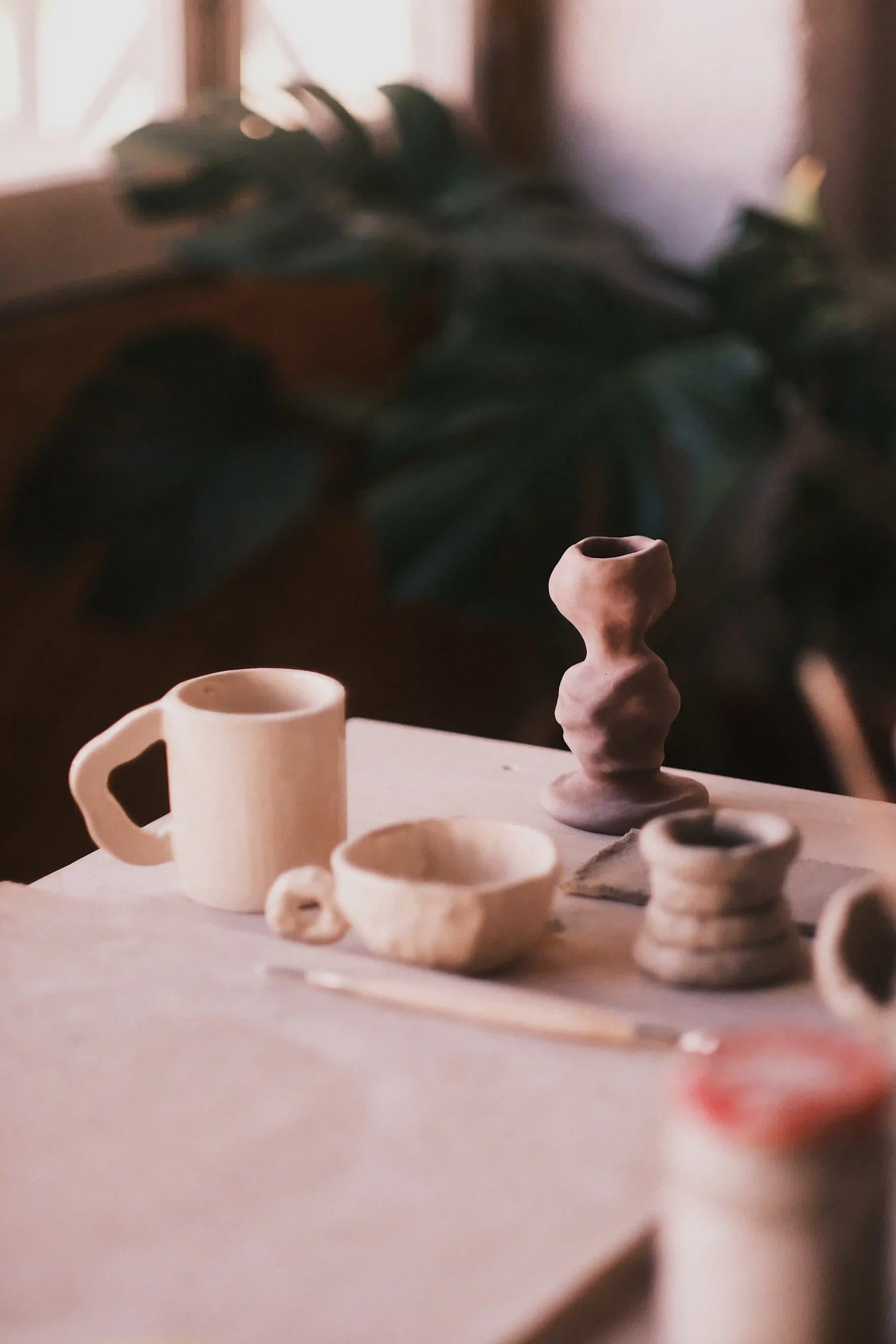
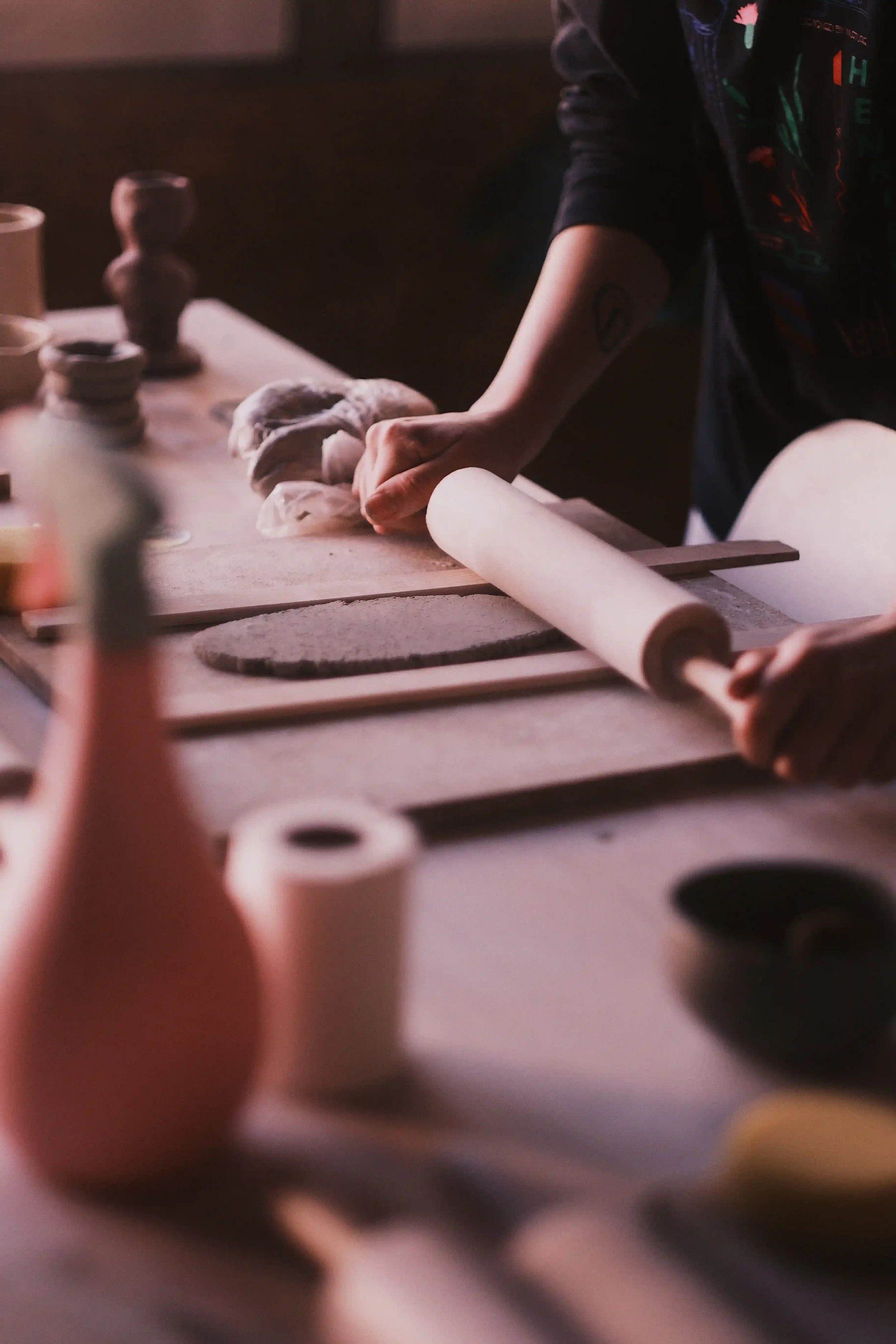
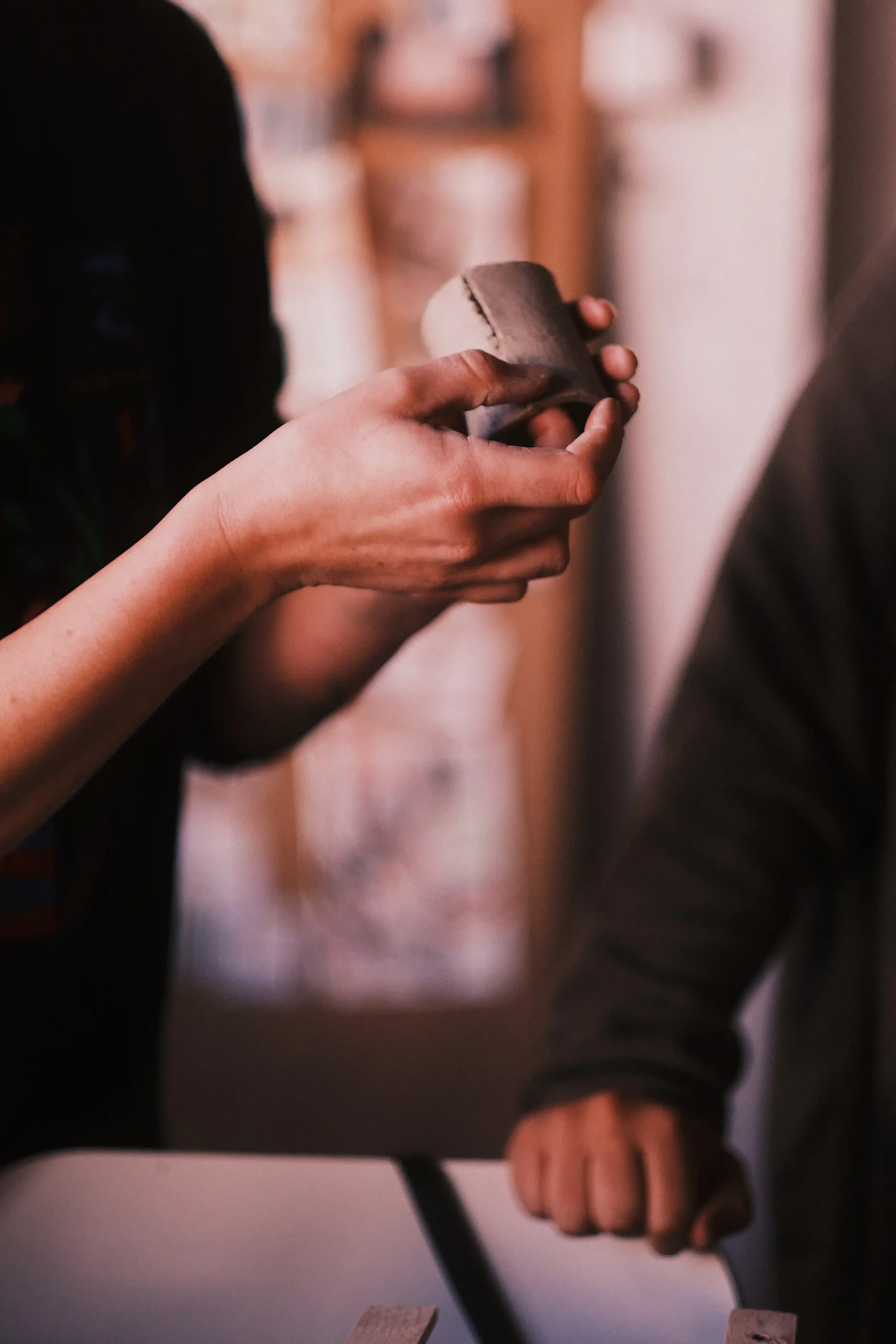
What I like most about the material is that it allows you to play, experiment, and follow its natural movement. I mainly work with the coil technique, building each piece slowly by hand. It is mostly my hands that shape the clay throughout the process, supported by only a few simple hand building tools. This hands on approach keeps me closely connected to the material.
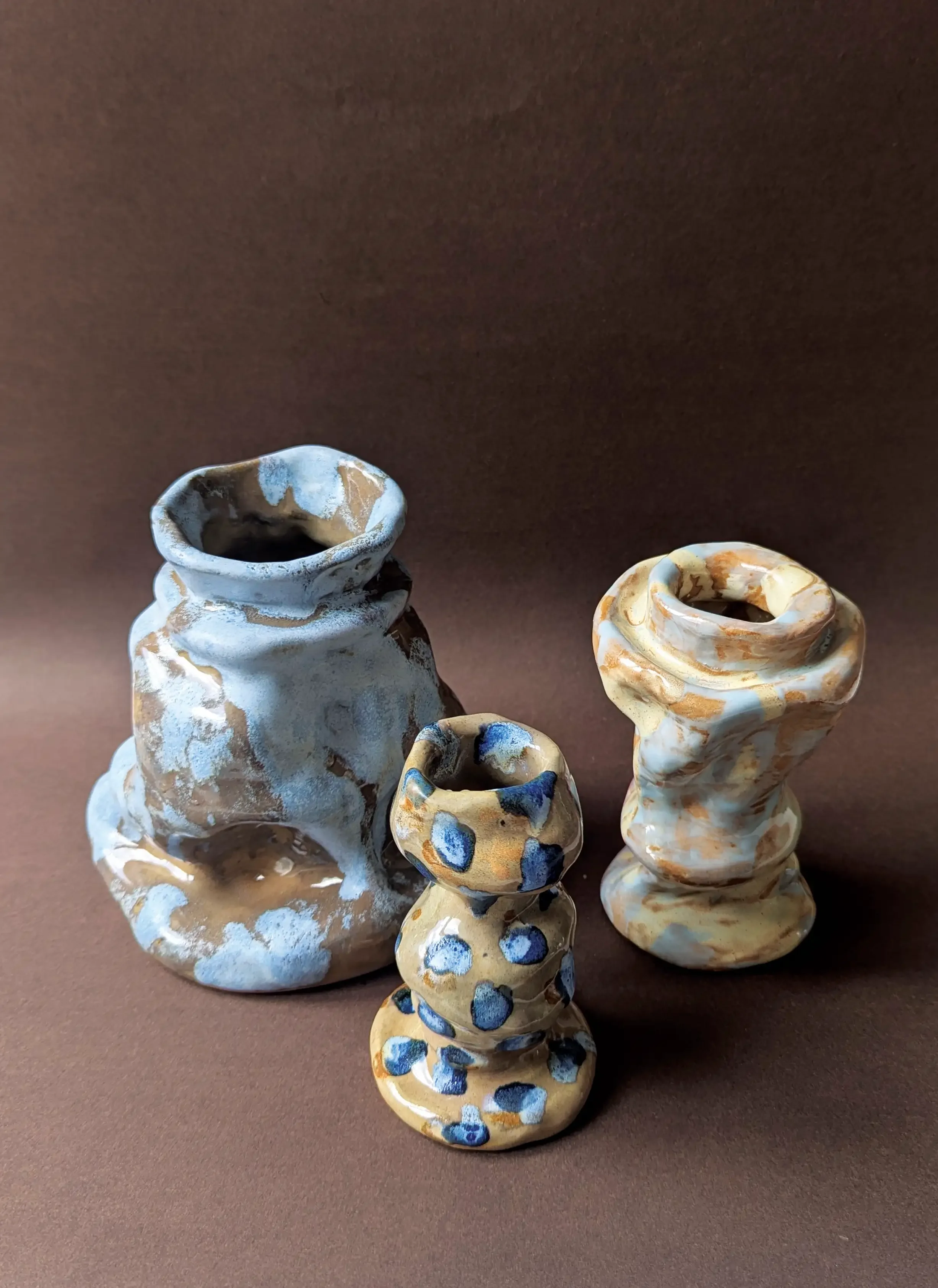
Between steps, I allow the clay to rest to support its structure and stability. But to be honest, I don’t always have the patience to wait, so sometimes the clay slumps, resulting in bulbous, organic forms and unexpected shapes that can often be seen in my vases. These unexpected outcomes have become an important part of my process, and are often the ones I enjoy most.
Your work is defined by vibrant colours and playful, organic shapes. How do these elements emerge while you are working, and what draws you to this visual language?
I mainly work with the earthy tones of clay, such as terracotta and warm browns, embracing their rustic and organic character. After finishing a piece, I often imagine leaving it in its natural colour, yet it usually feels like something is missing.
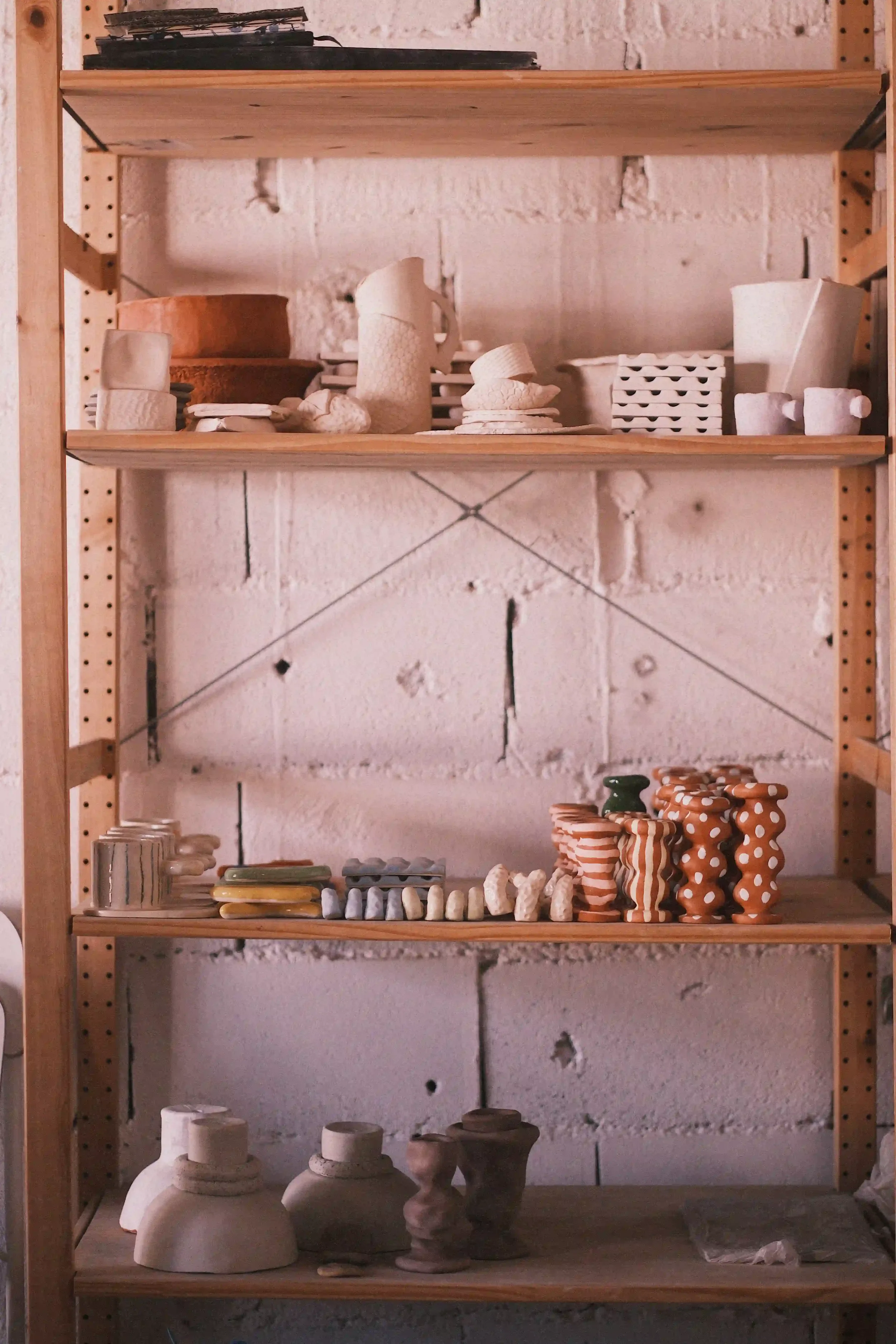
I simply cannot do without colour in my life. It brings me joy. This is why I combine the raw surface of the clay with vibrant glazes, adding a playful layer to each piece. Some works are hand painted one by one with patterns such as imperfect stripes and dots, giving each object its own unique character. In my work, I find it important to maintain human touch and keep small imperfections visible.
Having worked as a product designer before focusing fully on your studio, how has that experience shaped the way you think about objects, function, and daily use?
Working as a product designer for almost five years has strongly shaped the way I think about objects today. It taught me to look at colour differently and to understand how colour can influence the feeling and presence of an object.
I rarely see a piece as something that stands entirely on its own. I often think about how it will exist next to other objects and how different forms, colours, and textures can work together. Although my pieces vary in shape and character, I use colour palettes to create a sense of balance and connection between them.
Function also plays an important role in my process. When creating a vase, I imagine how flowers will look in it. When making candle holders, I think about compositions of varying heights. My background in design definitely taught me to pay close attention to detail, while still leaving space for spontaneity and play within the making process.
Working from the Silver Coast in Portugal, how does your environment influence your process, your palette, or the forms you create?
Organic forms and the combination of natural tones with contrasting, vibrant colours have always been present in my work. My hands simply do not like making perfectly straight forms. I prefer to follow the movement of the clay and allow the material to guide the process.
I am not sure whether a change of environment has directly influenced my work, but I spent most of my years, from studying at the art academy until two years ago, living in the city. Since moving to the Portuguese countryside, I find myself drawing even more inspiration from nature, the beach, and the wild coastal landscapes around me. Patterns, textures, and soft irregular shapes from the natural environment often find their way back into my pieces.
Looking at the contemporary landscape, where do you think lies the biggest potential to preserve and redefine the value of craft, particularly in material based practices like ceramics?
Ceramics is a craft that, in my opinion, will always continue to exist. However, we live in a world where we have forgotten how ceramic products are made and consumed, often without any awareness of the time, labour, and human touch behind them.
In a time dominated by mass production and fast consumption, craft has the potential to remind people of the value of care, slowness, and human involvement in the making process. I think it is important to bring attention back to this connection between maker, material, and object.
As your practice continues to evolve, are there new forms, techniques, or ideas you feel drawn to explore more deeply?
I’m full of new ideas. Currently, I am slowly shifting towards creating larger and more one of a kind pieces. Each work is shaped by intuition, imperfection, and experimentation. No two pieces are the same.
Rather than working in series, I prefer to create singular objects, each with its own character. At the moment, I am working on larger vases, all completely different from one another, which allows me to explore different techniques, shapes, and patterns. I would also like to explore creating larger, more sculptural candle holders designed to hold multiple candles.
How can people engage more closely with your work, whether through your pieces, your studio, or upcoming projects?
You can find me on Instagram and through my website. On Instagram, I regularly share my work, behind the scenes moments, and parts of the making process.
I also teach classes regularly, so if you are in Portugal, feel free to visit my studio or join a workshop.
Instagram: @elsa.ceramics
Website: studio-elsa.com
Photo [1] @hollygable.photography, Photo [3-7] @dasha_noted, Photo [2] belongs to Elsa.
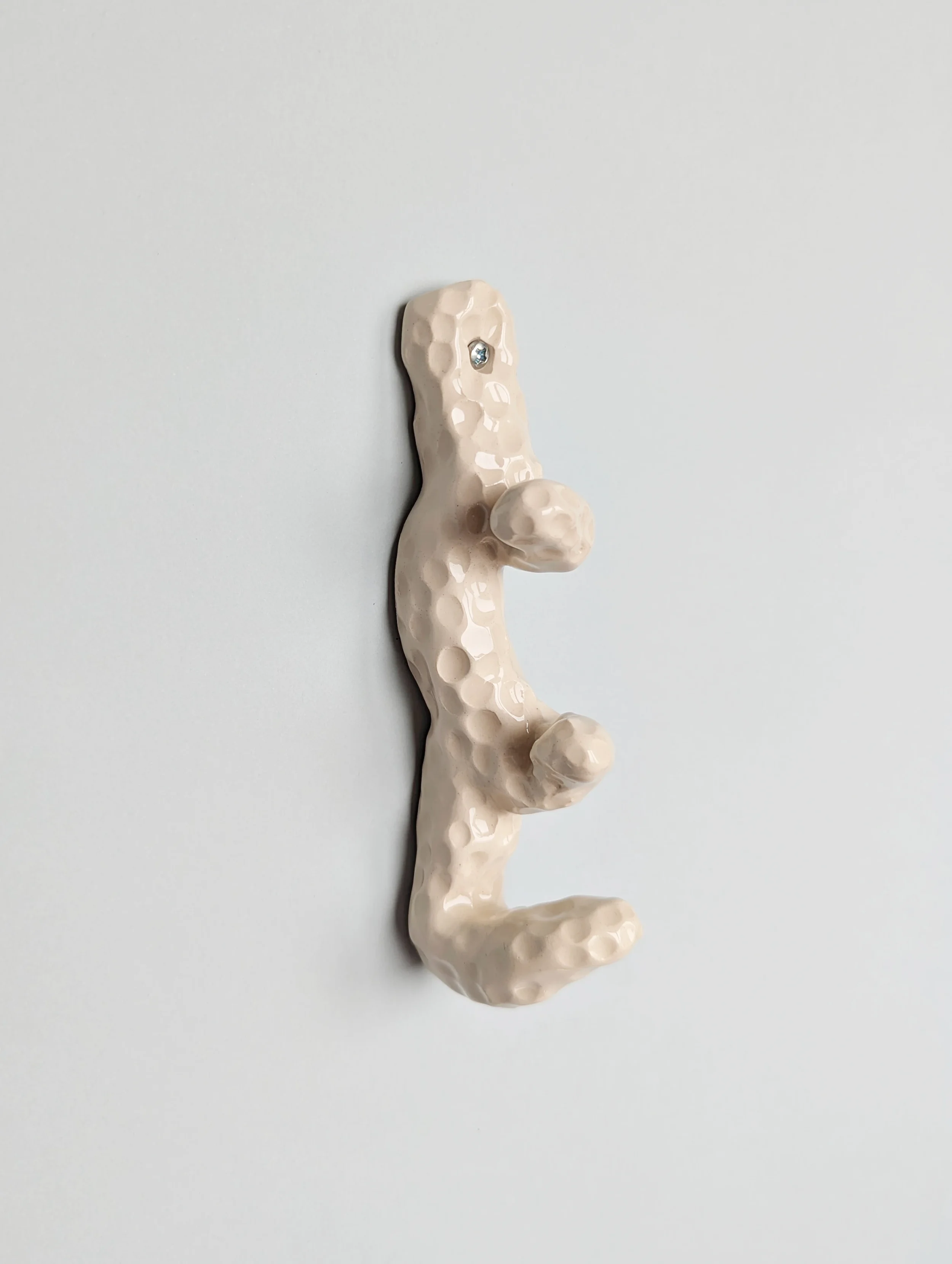
Hand built in stoneware by Elsa Claesen in Santa Catarina, Portugal, the Wall Hook Freeform · 3 Hooks combines functionality with sculptural form through its irregular shape and warm nude finish. Designed for everyday use, whether hanging bags, textiles, or other objects, or simply standing alone as a piece of wall art, the piece reflects Elsa’s playful approach to ceramics and interest in creating handmade forms for daily spaces.
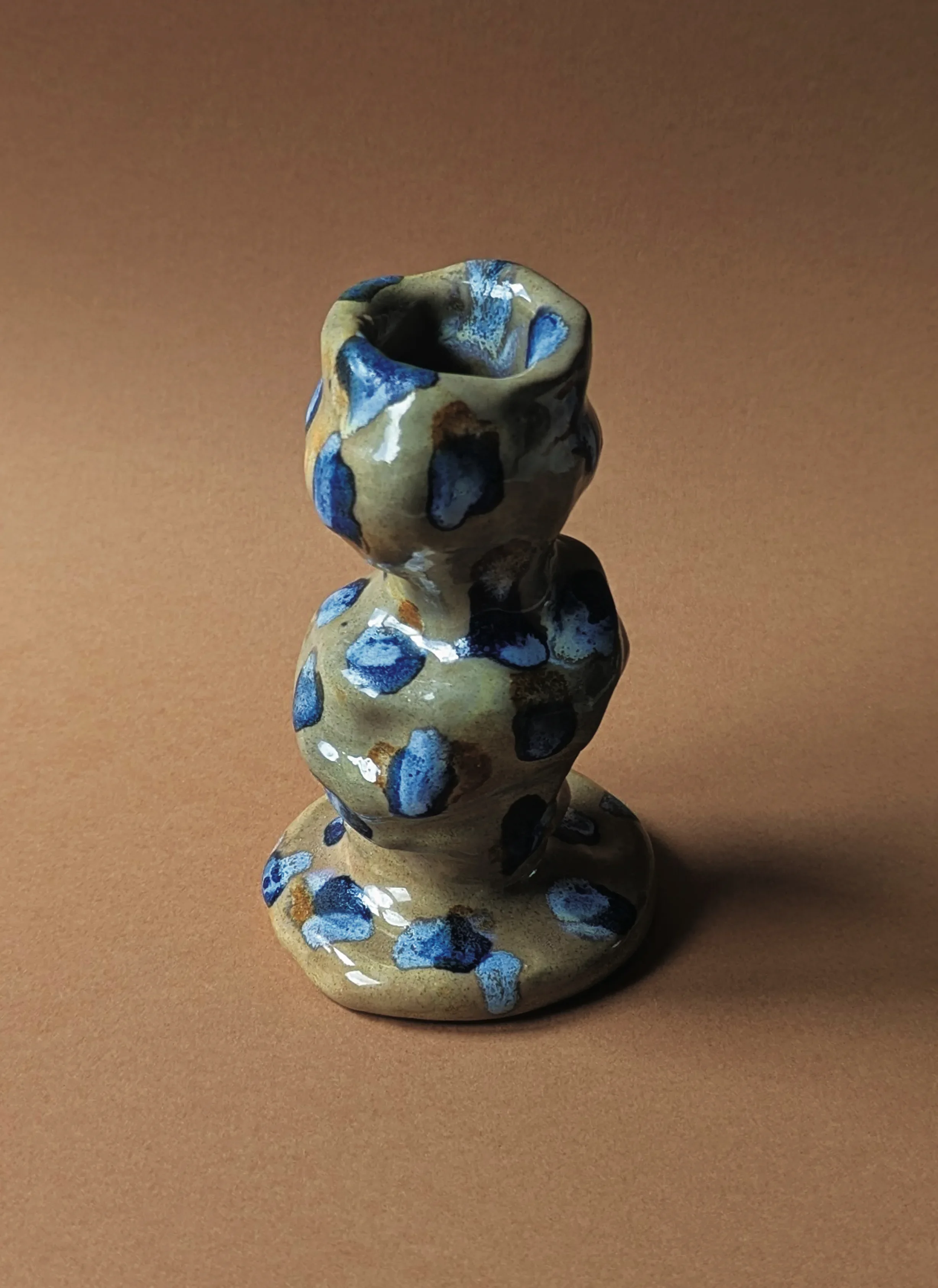
Hand built in dark brown stoneware using the coil technique by Elsa Claesen in Santa Catarina, Portugal, Vase No. 2 Pebble embraces sculptural form through its organic silhouette and hand shaped surface. Finished with bold splashes of cobalt blue glaze that bring contrast to its earthy clay base, the piece reflects Elsa’s interest in colour, irregular forms, and the traces left through hand building.
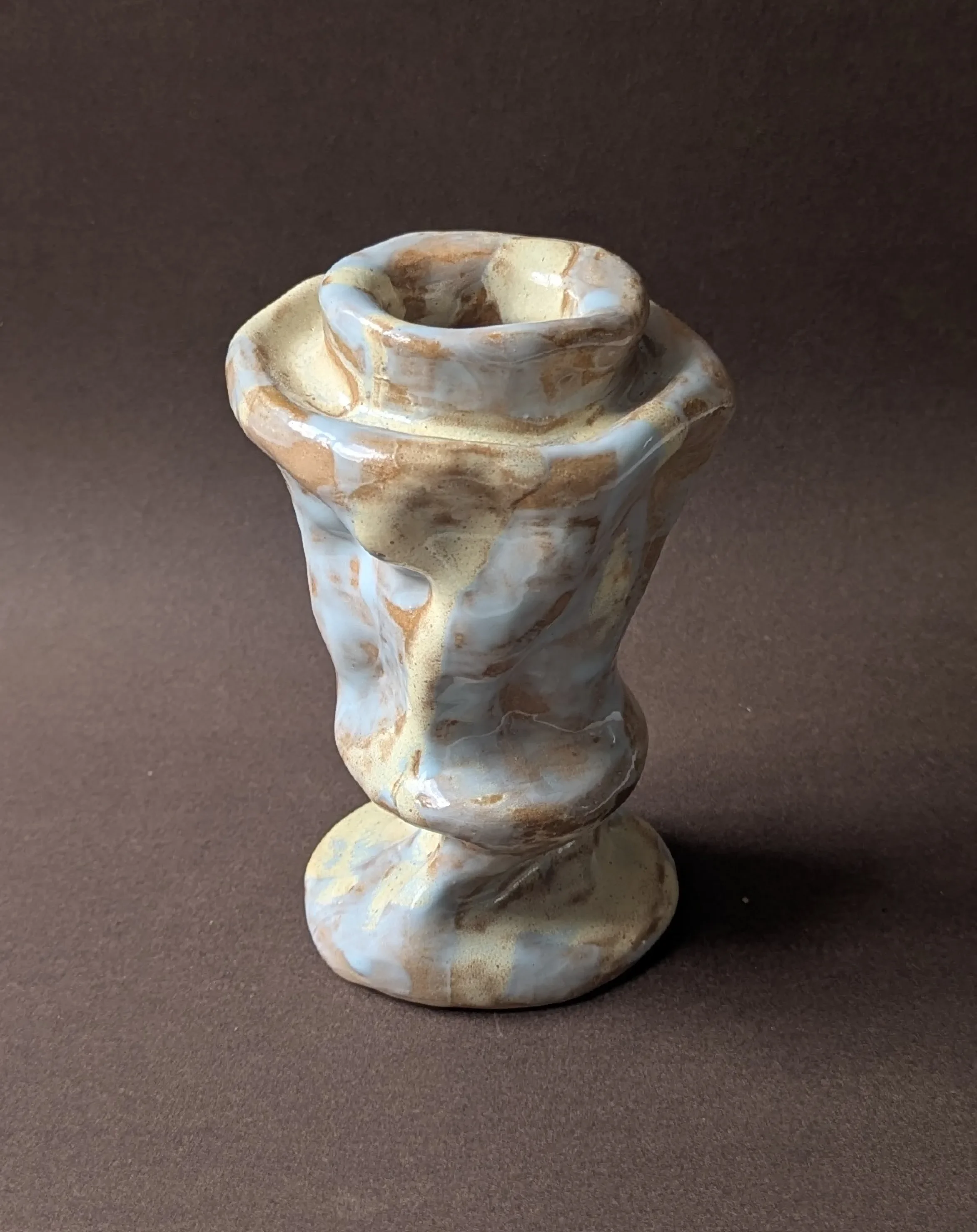
Hand built in warm brown stoneware using the coil technique by Elsa Claesen in Santa Catarina, Portugal, Vase No. 3 Crater embraces sculptural form through its fluid, twisted silhouette, shaped by the natural movement of the hand building process. Finished with a marbled glaze of soft sky blue and butter yellow, the piece reflects Elsa’s interest in colour, organic forms, and the traces left through making.
