Bianca Tschaikner
Please share a bit about yourself and your background.
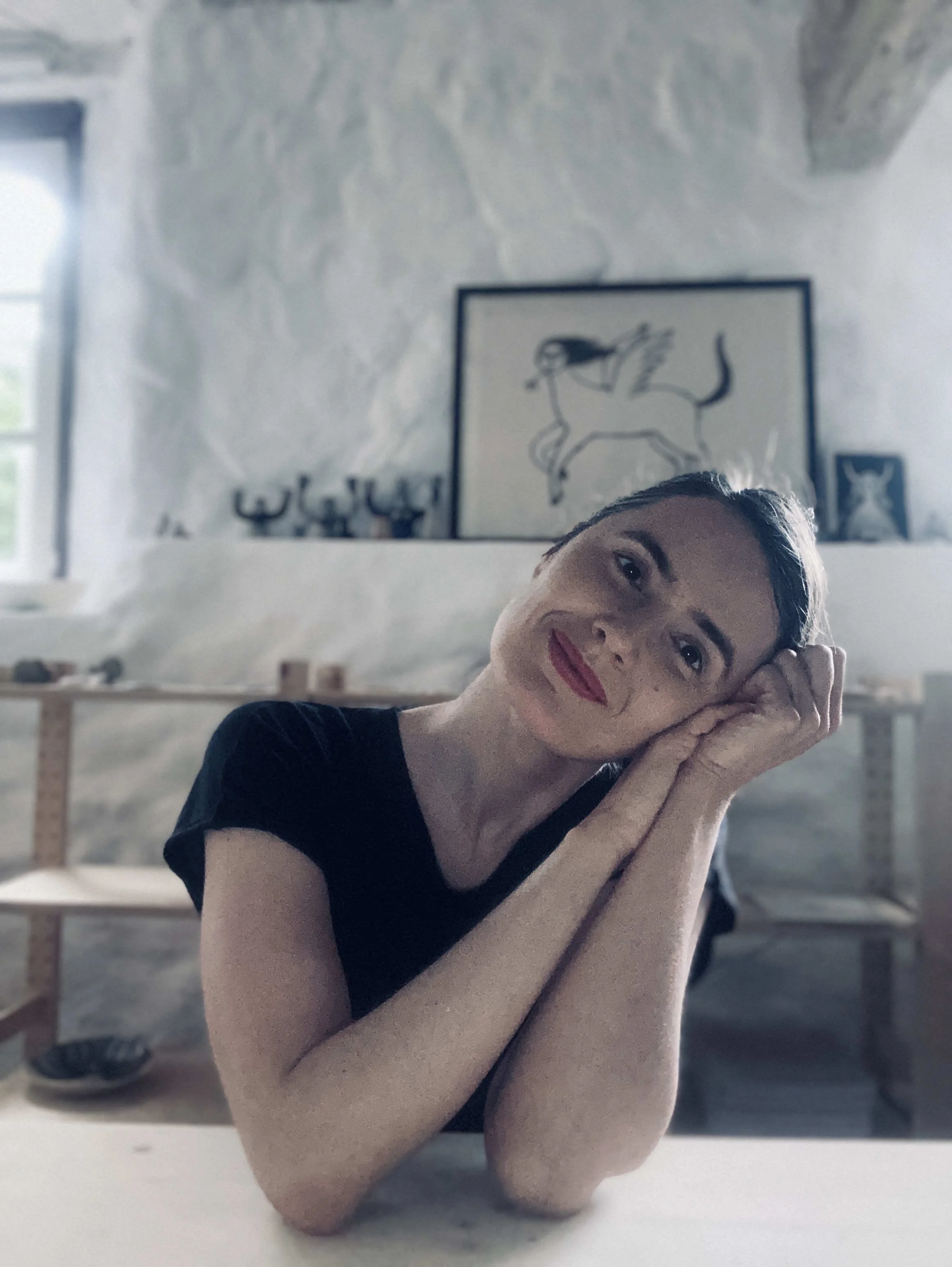
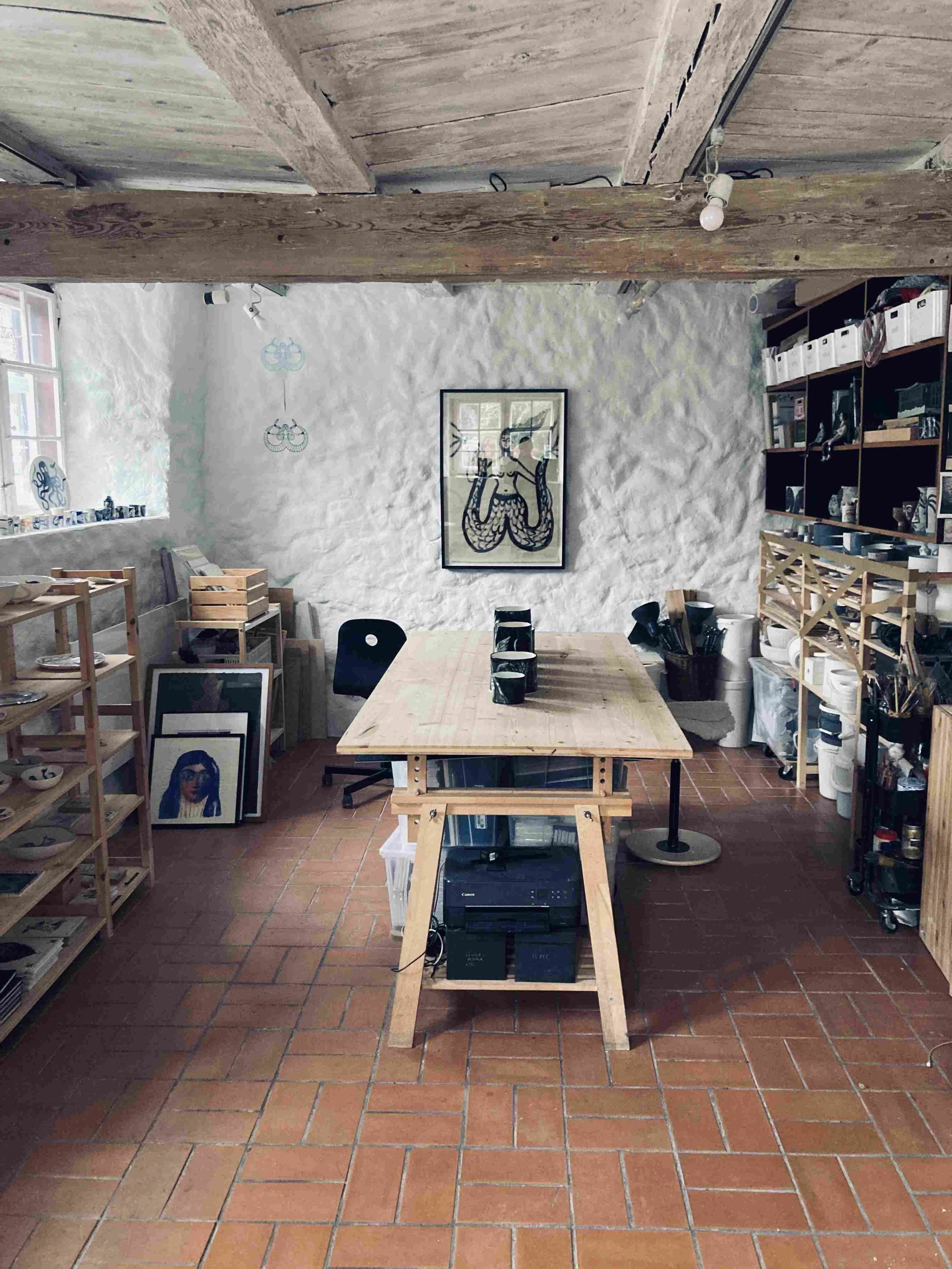
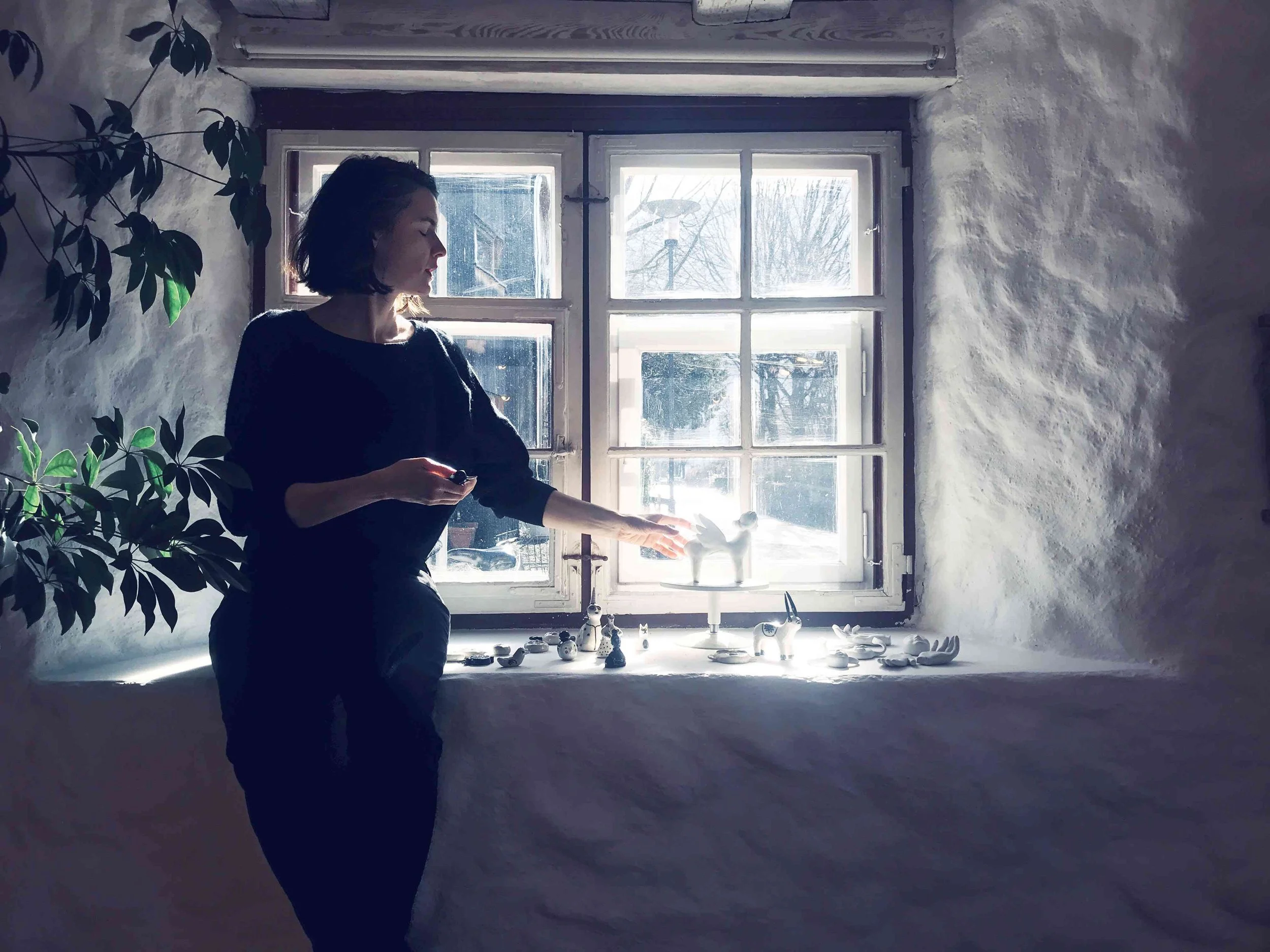
I’m an artist from Austria, currently living and working in my studio there, but I also spend a lot of time abroad for my work – for example, I’m currently on an artist residency on Awaji Island, Japan. I have a background in illustration and printmaking, and five years ago, I also started working with ceramics.
What first drew you to printmaking, illustration, and ceramics, and how did these mediums become central to your creative expression?
I started working as an illustrator when I moved to Morocco after finishing my studies. At that time, I was mainly creating maps and other illustrations for magazines and newspaper articles, which was fun and allowed me to make a living while travelling the world, but soon I realised that illustrating alone did not fulfil me. At that time, I studied a lot of art history, which brought me to Florence, where I discovered Il Bisonte, a printmaking school where I eventually spent one year doing my printmaking training, which I later continued at the Fundación CIEC in Spain.
I discovered ceramics a few years later in India, and adding a third dimension to my work fascinated me. I always knew that one day I would get into it, but it was the pandemic, years later, that gave me the space to start working with ceramics, and I’ve been working with it ever since. It’s kind of addictive.
Also, in the last couple of years, I kind of grew out of illustrating and now concentrate a lot on my personal work, so today I mainly work in painting, ceramics, and printmaking.
Printmaking and ceramics have some similarities – both involve complex work processes which you have to be able to control, you have to master the material completely – you have to do your best, but in the end, you have to let go and submit to the process, to a higher force which is outside of your control – to the etching acid in the case of printmaking, and to the fire in the case of ceramics. I see it as some kind of collaboration, and it’s endlessly fascinating.
Can you walk us through your process? What does your creative process look like, and do you have any rituals that help you get into the flow?
I don’t really have routines; I have a very spontaneous approach to work. My best work is born out of experimentation, play, and trial and error, but of course, this is not always possible. As for rituals, what really boosts my creativity is to tune into the world around me. I find a lot of inspiration just walking around in places, with my eyes and my mind open. It’s all there. My approach to my work, and also to life, to some degree, is a serendipitous one. And so, I am happy every time I get the chance to work at a new place where I can discover a new, fascinating world around me, like this artist residency in a small fishing village where I’m currently staying.
Creativity for me is a form of communication, of collaboration, an interplay with the world, with what’s happening around me, or what I already carry inside of me. I discovered early that my work is best when I approach it like play. It takes some time to get there, but when I reach the point where I am able to draw freely, without thinking too much, images start appearing almost by themselves.
Your time in places like India, Iran, and Indonesia seems to hold deep meaning. The layers of microhistory, mythology, and the quiet stories of everyday life carry a certain weight and presence. How do these stories stay with you on a personal level, and how do they find their way into your work?
My life and my work are closely intertwined. The artworks created during my journeys are based on themes I explore on my journeys, but with a very personal approach, so they are also a reflection of what I experience there. I’m always interested in stories of places and people, and many of these stories find their way into my work.
These journeys have shaped me as an artist as a person. I have learnt a lot on these journeys, from places as well as from people, and I’m very grateful for that.
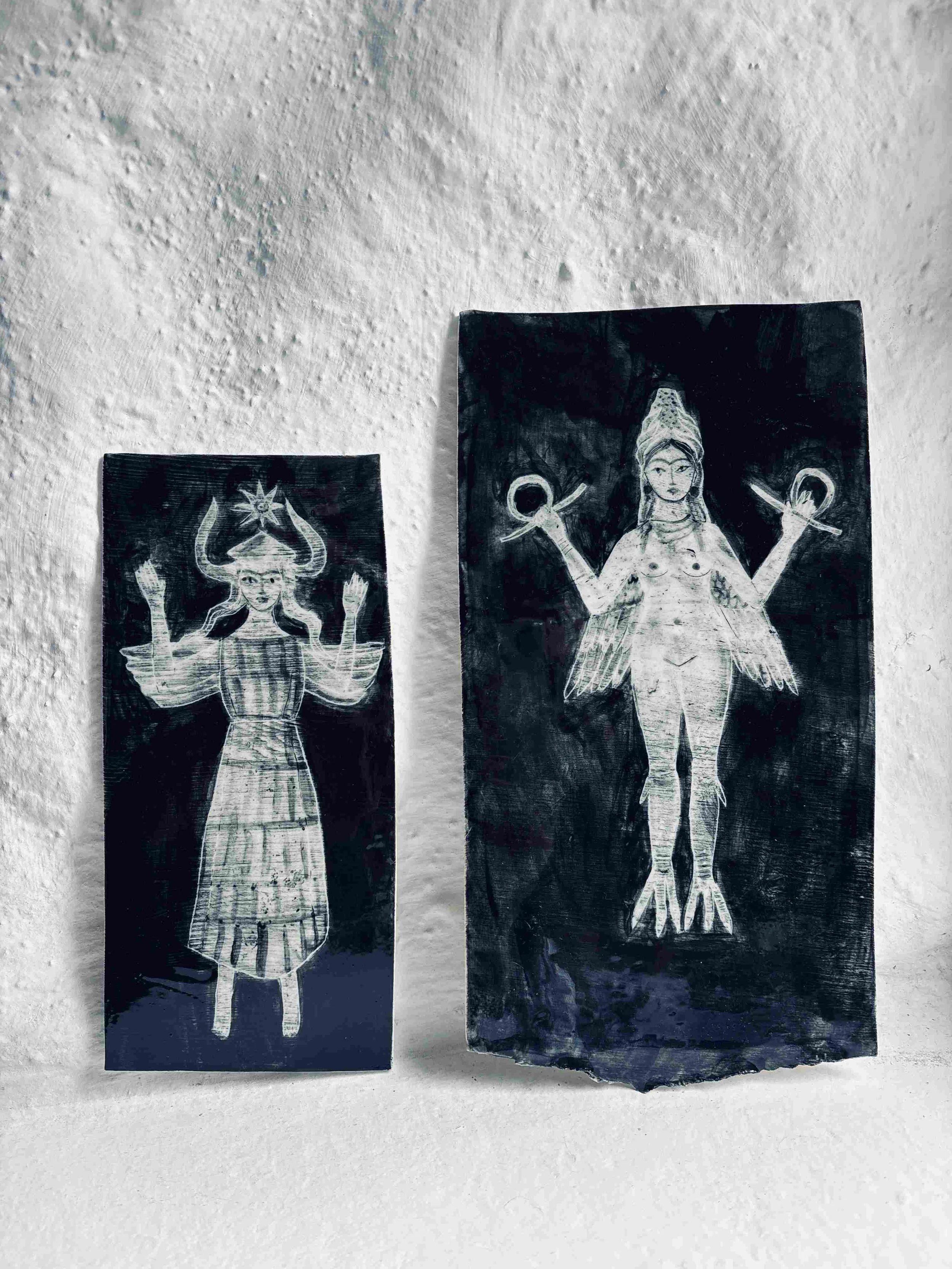
Sometimes, I go to a place with a specific goal, like when I visited matriarchal societies in India and Indonesia, or when I explored the Dappa poetry of local tribe women in the Hindukush, but often enough, I also just find images and stories, or they find me. Like last year in Bombay, when I started drawing people in the women’s carriage in the local train, or when I – more or less accidentally – ended up in a little Ashram in the South Indian Jungle, where I found the inspiration for my monotype series of the 32 names of Durga, an Indian goddess. For me, the greatest joy of working lies in the interaction with a place, of not knowing where it leads me, and what I discover there.
When it comes to the tactile aspects of your work and their connection to your body, how does the hands-on nature impact your overall happiness and well-being?
It is very important to me. I need to do things with my hands. I first studied comparative literature, but I switched fields because I wanted to do something more hands-on and creative. I really love reading, but I don’t like to be in my head all the time, and I really wanted to learn to do something with my hands for a living.
Even neuroscientific research shows that doing things with our hands makes us happy – it is good for the brain, and for mental health – and that using something made by hand, whether by ourselves or someone else, makes us happier than using something made by a machine.
Making something with our hands is just a very human thing to do. But above all, it’s just deeply satisfying. Creating things with my own hands makes me happy.
We're aware that you run creative workshops and residencies. Could you tell us more about your approach and what inspired you to share such unique knowledge?
On my journeys and artist residencies, I’ve always been a guest, and I have been given so much, and I always thought that one day, when I have my own studio, I’d also like to invite people and create a special creative experience for others – to close the circle, in a way.
I like to share the things I’ve learned and things I’m excited about. I know that many people would love to be more creative, but they are afraid and blocked, and I help them to reconnect with their playful creativity, to enjoy the process. I try to take away pressure, so they can gain more creative freedom and trust in the process.
Also, I really enjoy working in the studio alongside other people. I’m not someone who likes to paint alone in my studio all day; that’s why I also open my studio every Friday for a creative evening for friends and new guests, where everyone can bring their projects and work on them, and we have food and tea, and chat. These evenings can be magic – I really enjoy the concentrated atmosphere of a group of people creating together – it’s something very human, and we should do it much more.
That’s also something I love about the printmaking and ceramics communities, by the way: It’s all about learning from each other and exchanging tips and recipes.
Looking at the contemporary landscape, where do you think lies the biggest potential to preserve and redefine the value of local crafts—such as ceramics and printmaking—today?
To preserve crafts, it’s crucial that people understand – and feel – the value of crafts.
These days, crafts are not very valued anymore. And because they are not part of everyday life anymore, people have no real connection to them, no understanding of them, and their importance. How would they?
I try to make people understand how special and beautiful something handmade is, how much time and effort it takes to create a unique piece.
Last year, I hosted a poet in residence, and she told me that before staying with me, she thought all ceramics were basically more or less the same as an IKEA cup, but after drinking tea with cups from my collection of Japanese tea cups, and hearing the story behind them, she started to see it differently. It’s actually not very difficult to make people see the beauty of the handmade.
I have also created a ceramic workshop with children where we work with porcelain. Before I let them create their own porcelain pieces, I show them porcelain objects from different countries and periods, and I let them hold them and tell them stories about them. I want to give them a space where they can enjoy the beauty of these objects. And they love it!
Are there any new directions, research areas, or projects you are currently exploring that feel particularly connected to your evolving practice?
My stay in Japan last year has inspired my work a lot. I went to Japan to learn about Japanese art materials, papers, brushes, stamps, pigments, but also about aesthetics and poetry – I just wanted to immerse myself in that world.
There is such an appreciation of crafts here, and for me, Japan is a place where I can learn a lot, and where I find a lot of inspiration, and I am sure I will come back here many times.
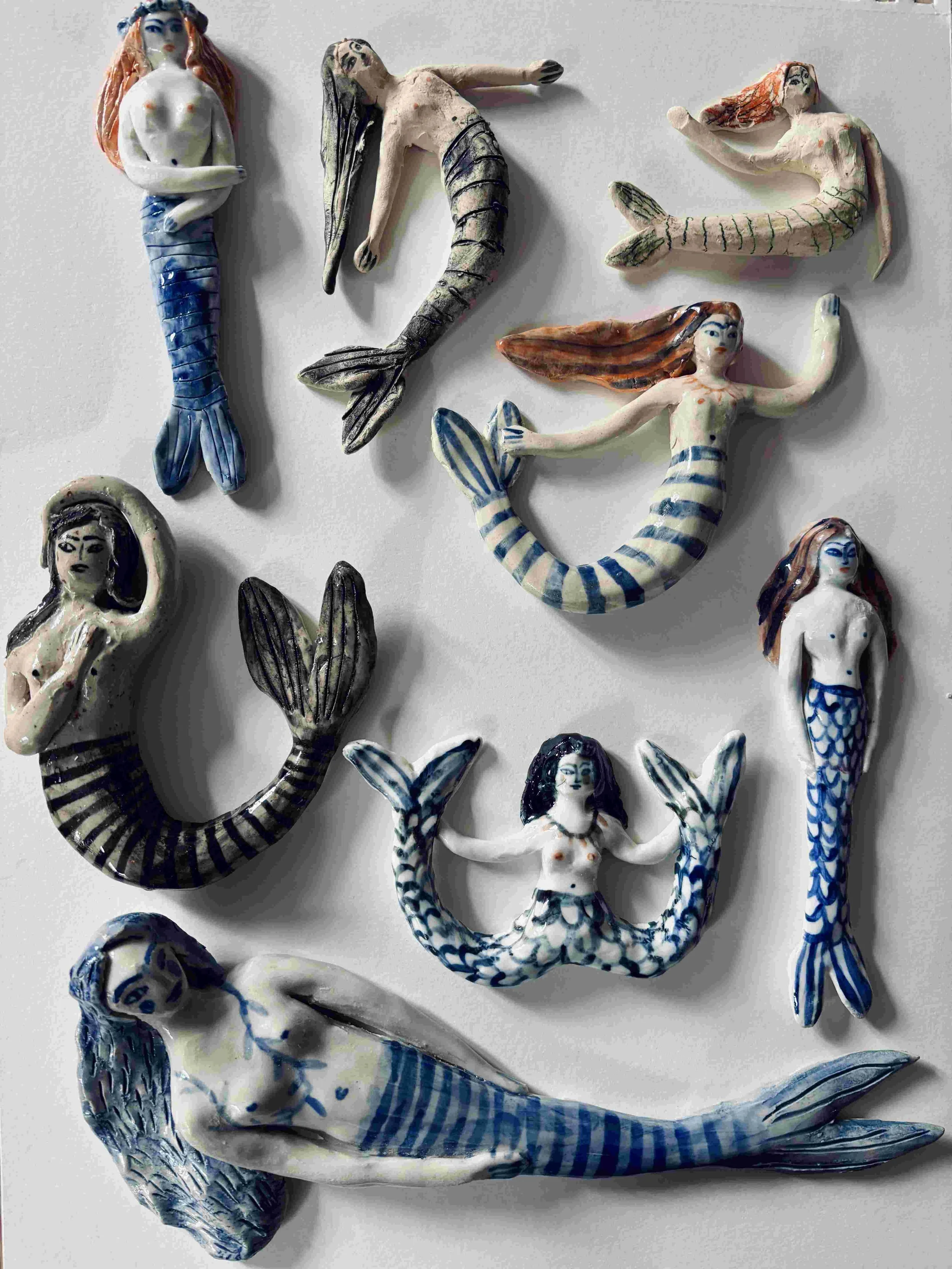
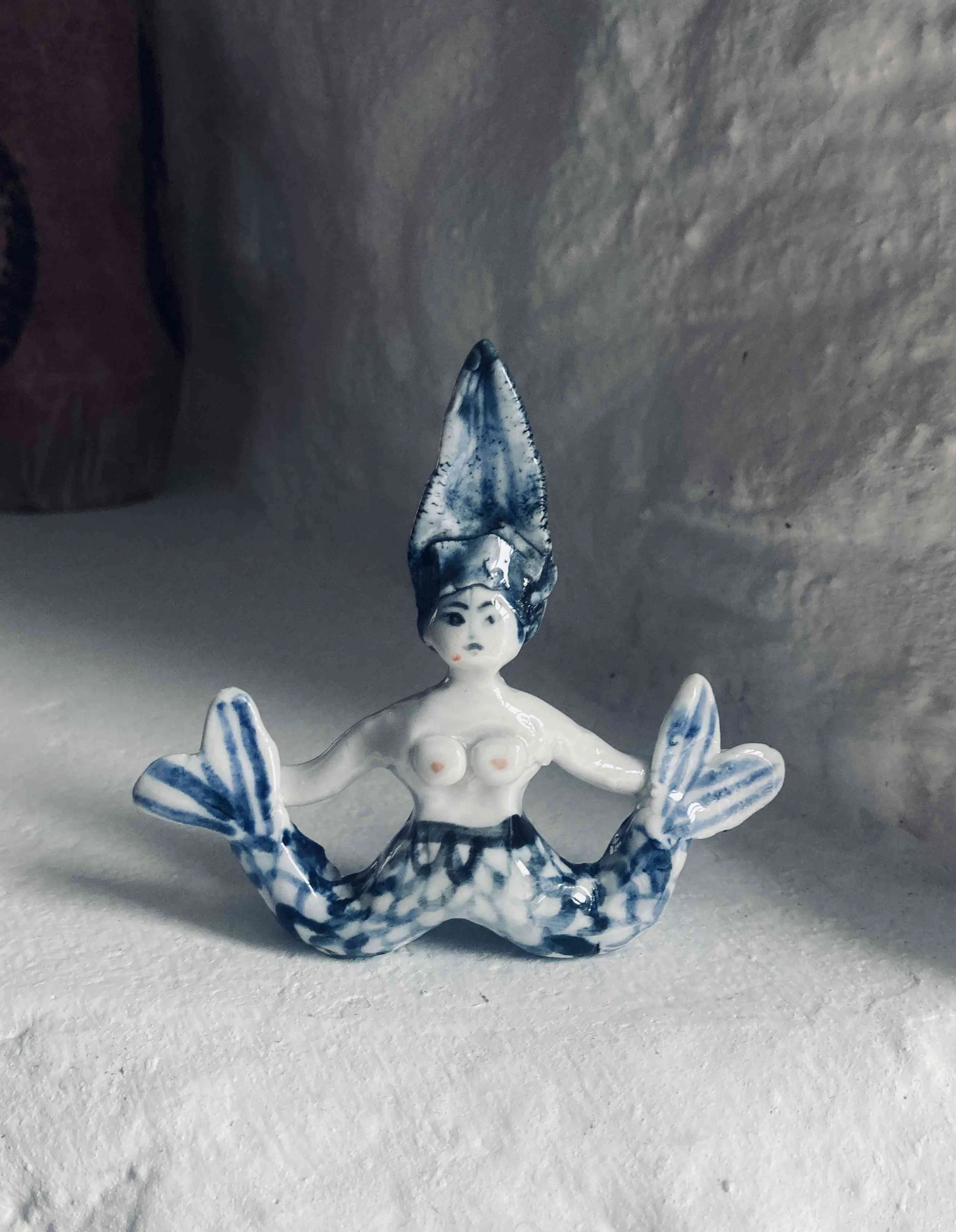
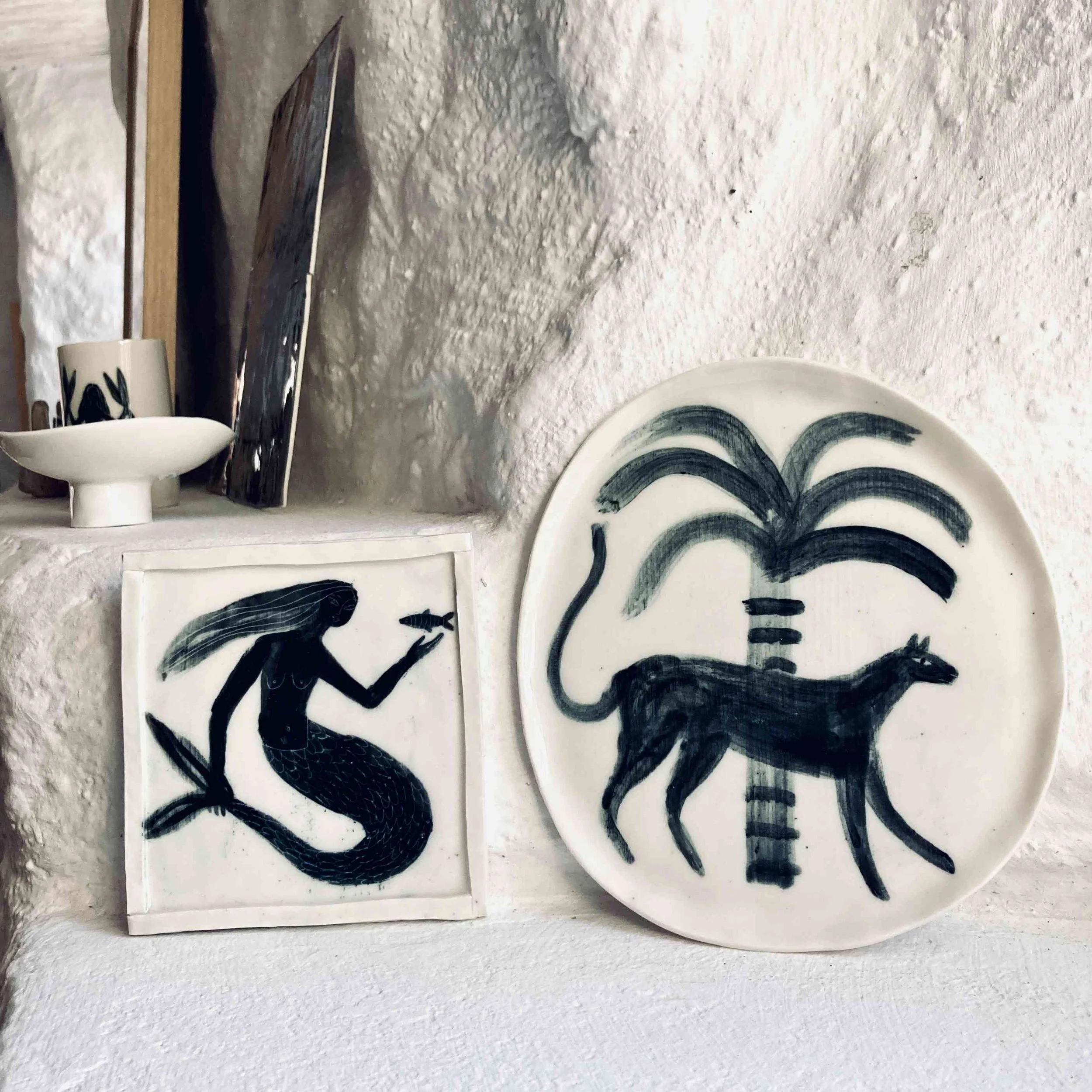
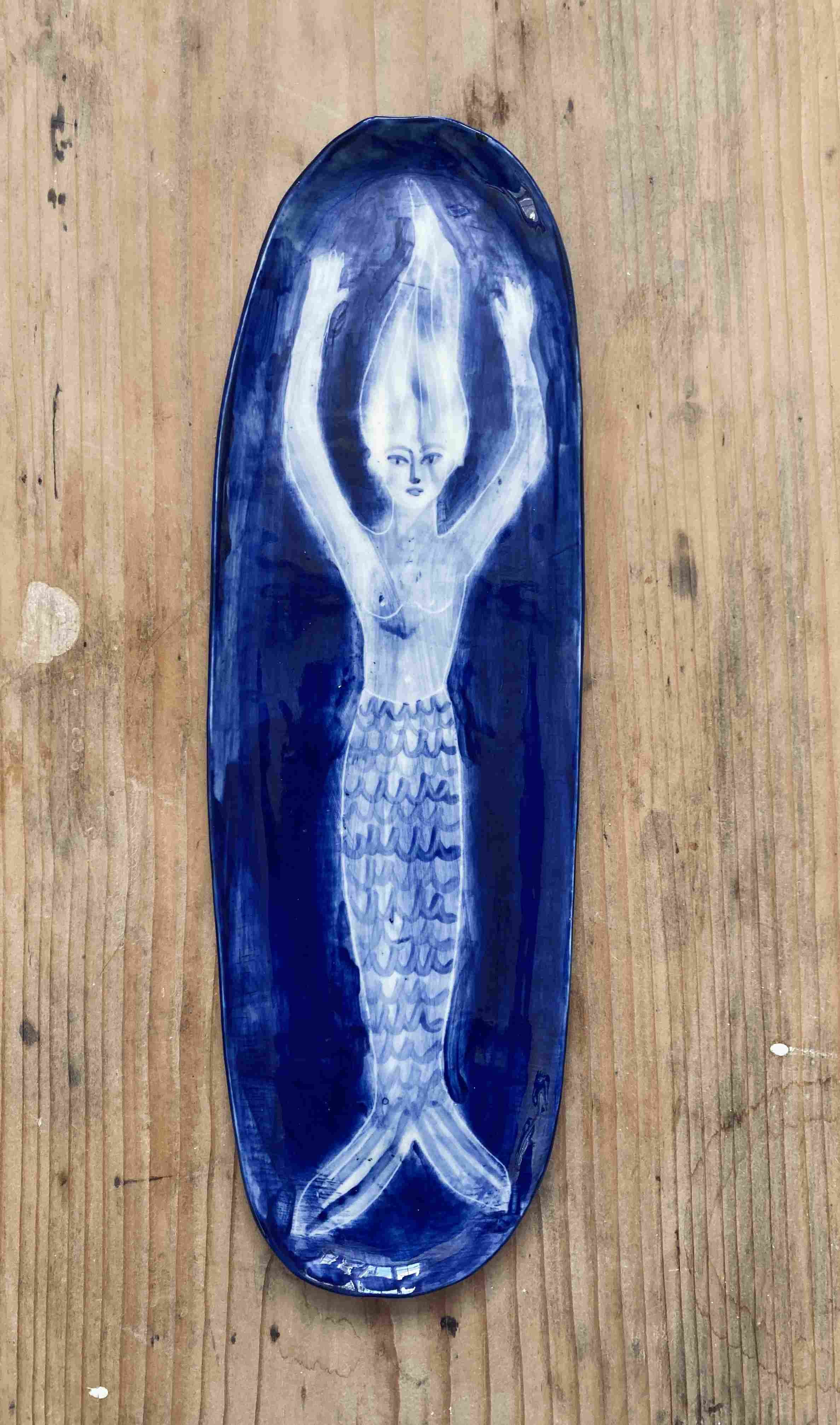
I’m currently also doing a lot of research about imagery of the old goddesses, investigating the spiritual traditions before patriarchal monotheism – it’s a topic that is endlessly fascinating and rewarding for me. Of course, this is also reflected in my work – particularly in the two-tailed mermaid, an image you can still find in medieval churches high up in the Alps, but also elsewhere in Europe – there are many old churches that are full of fascinating imagery which are remnants of pre-Christian spiritual concepts.
Of course, I also want to share this knowledge, and I conduct workshops and lectures about it – I feel there is an enormous interest in this fascinating part of our history and heritage, which has been pretty much kept in the dark.
This summer, I will also do a research trip to Northern Spain, following the trail of the two-tailed mermaid in Roman churches.
How can people engage more closely with your work — through exhibitions, collaborations, or upcoming projects?
If you want to learn more about my artwork or the stories behind it, you can read my illustrated travel books or the texts I publish on my website. I also have a newsletter which goes out a couple of times a year. I will have workshops and exhibitions in various countries this year, so if you want to know if anything happens near you, check it out!
All photos belong to Bianca.
www.biancatschaikner.com
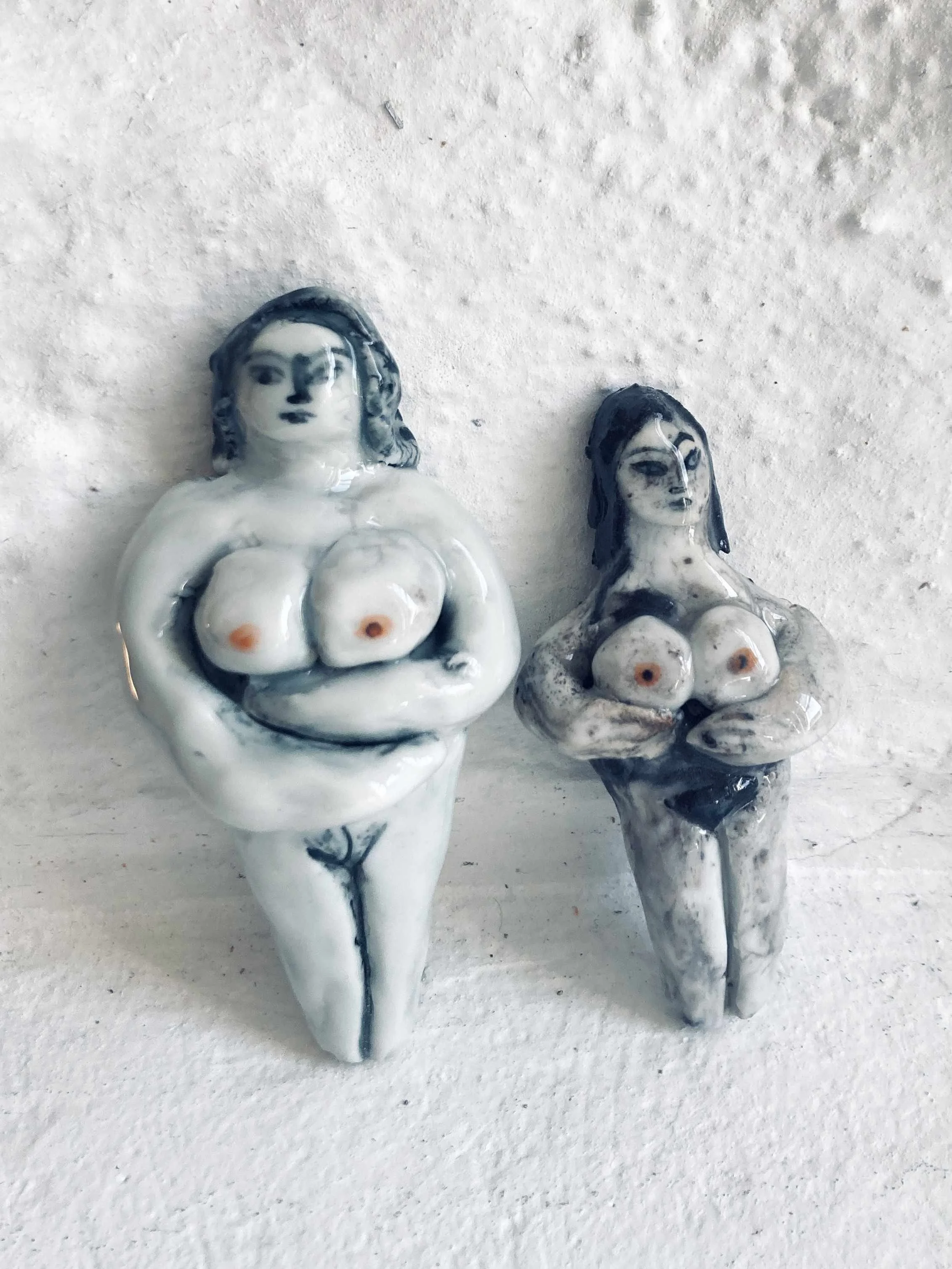
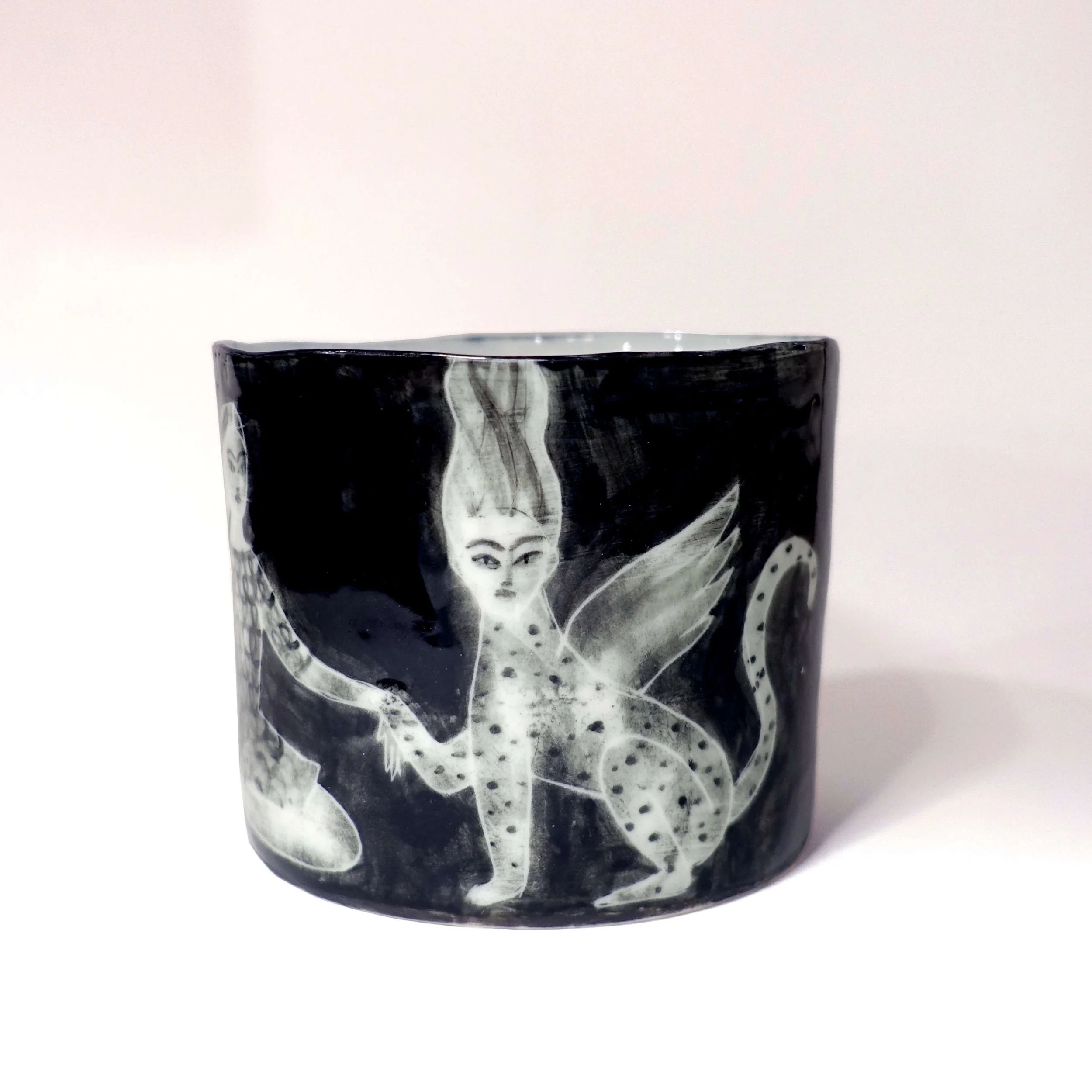
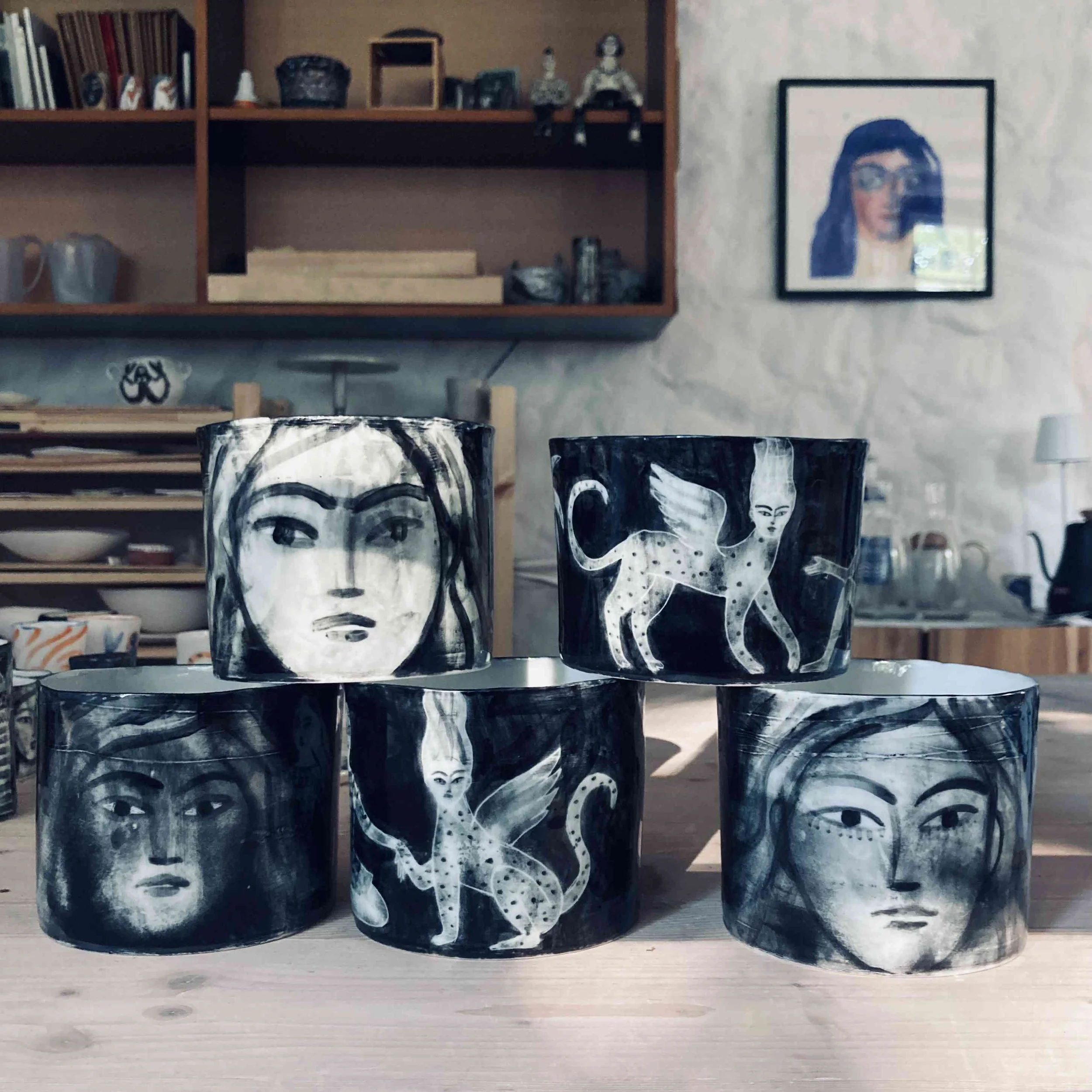
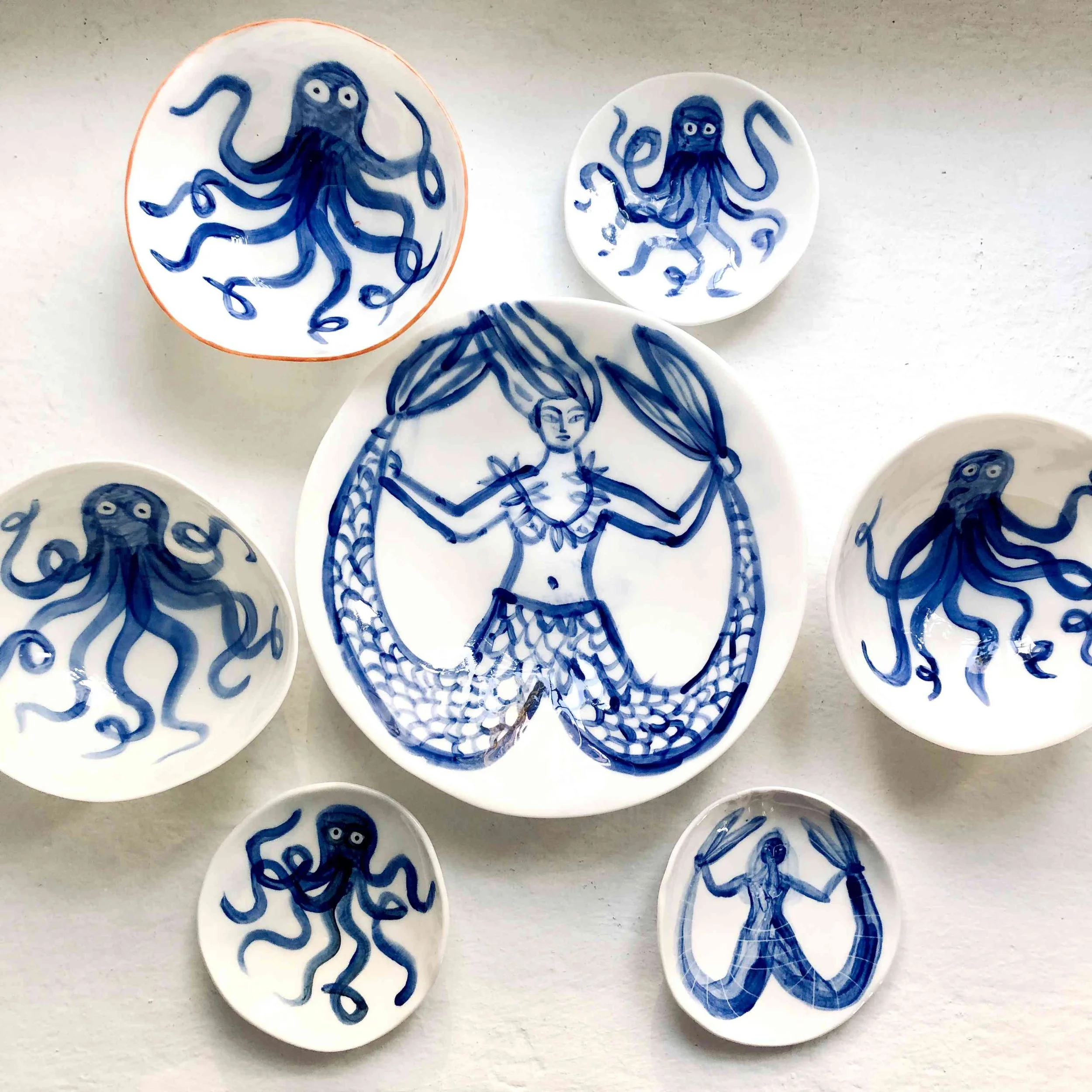
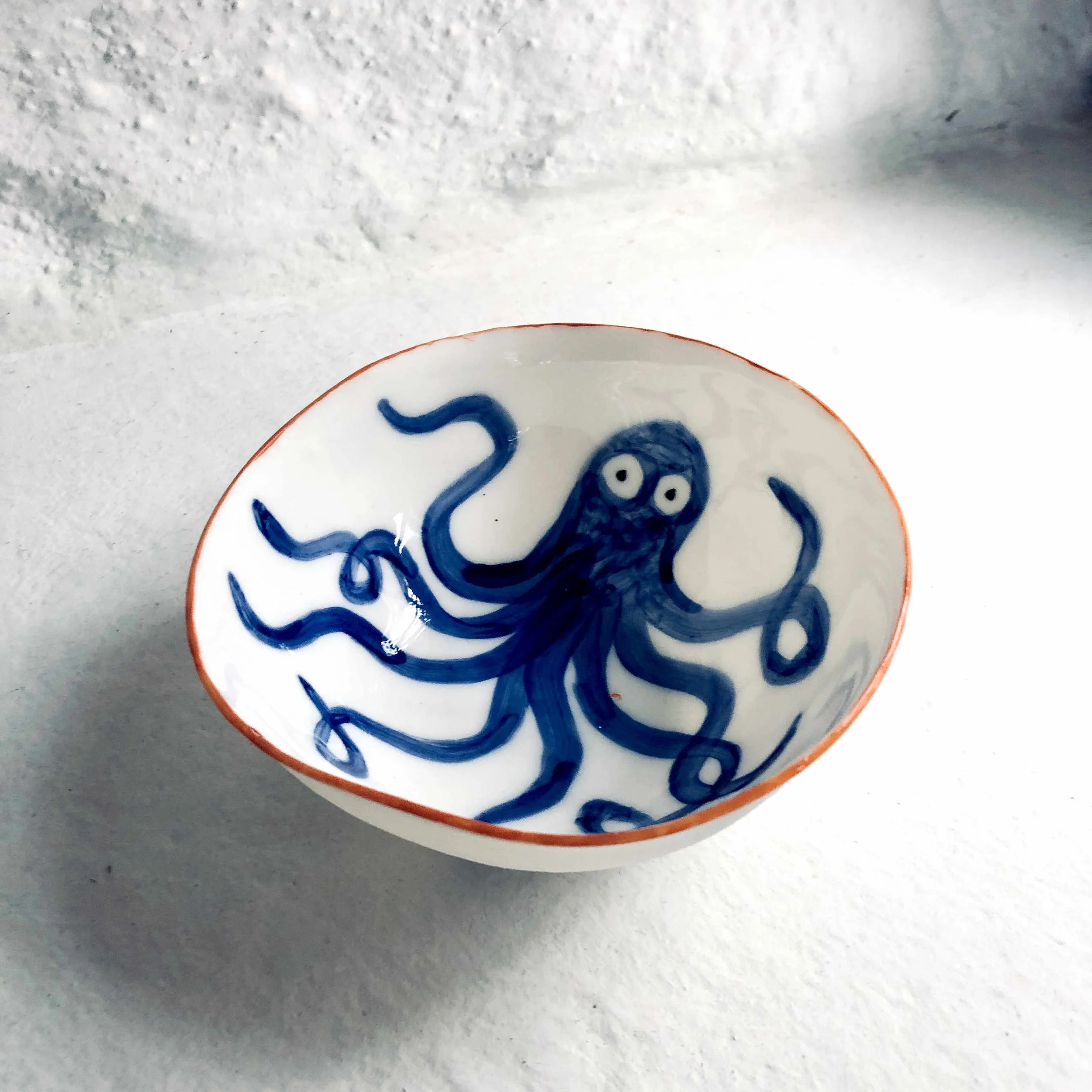
Hand built in porcelain and painted by hand, the Octopus Porcelain Bowl features one of Bianca Tschaikner's characteristic illustrations. Produced as a unique piece, it brings together drawing and ceramics, reflecting the artist's approach to creating functional objects through hand painted narrative imagery.
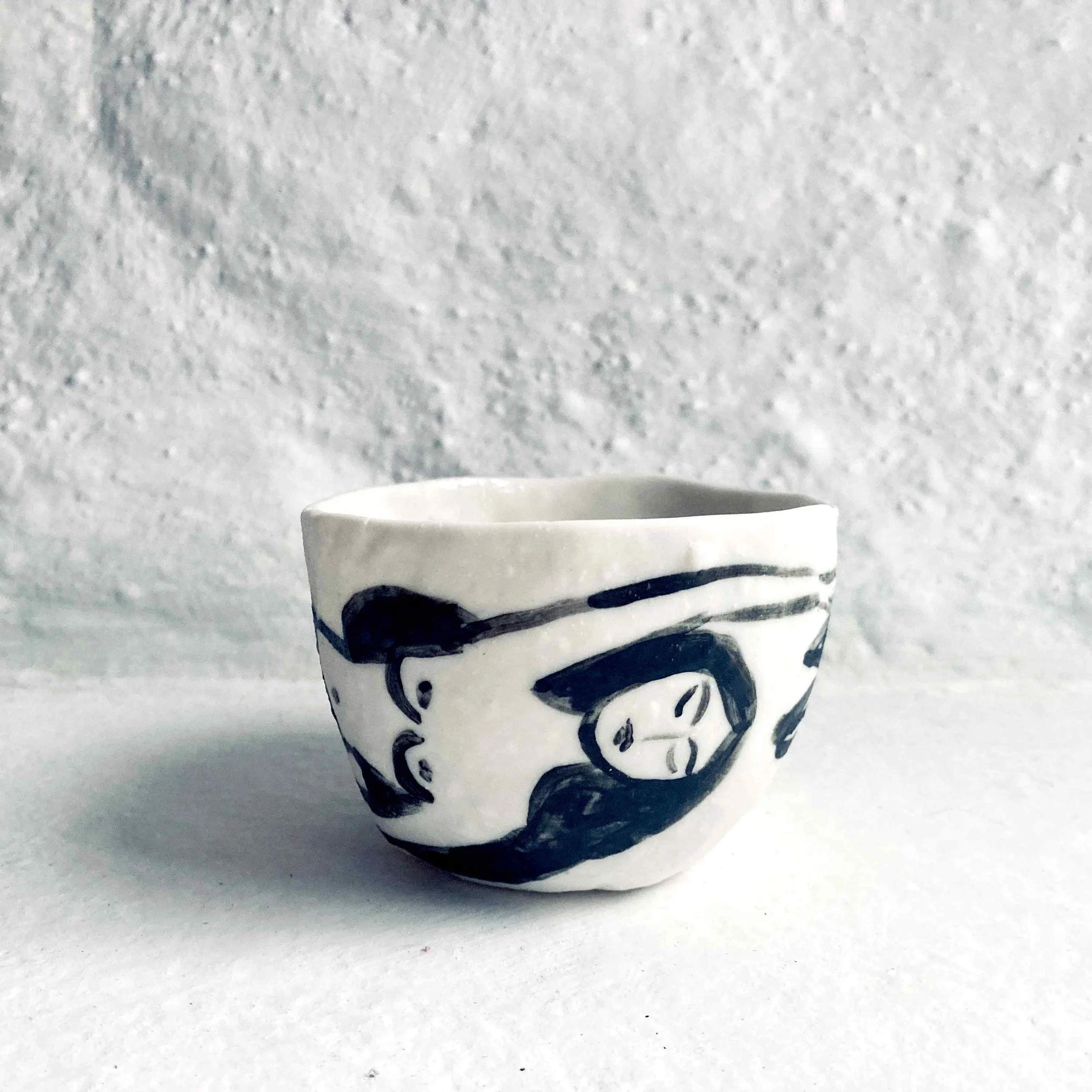
Hand built in porcelain and painted by hand, the Mermaid Porcelain Bowl features one of Bianca Tschaikner’s characteristic illustrations. Produced as a one of a kind piece, it reflects the artist’s interest in folklore, storytelling, and hand painted imagery through functional ceramics.
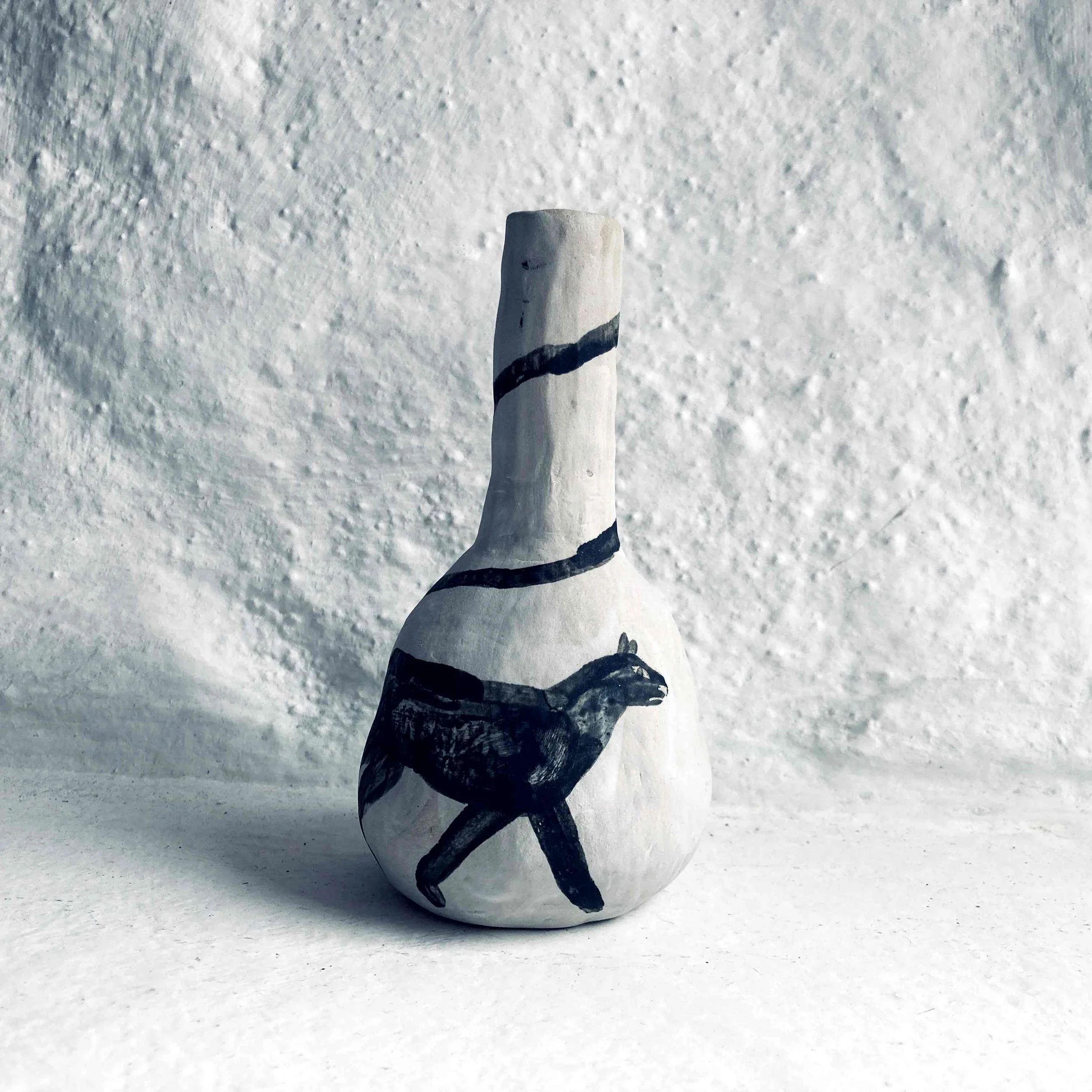
Hand built in porcelain and painted by hand, the Black Panther Vase combines a sculptural vessel with one of Bianca Tschaikner's original illustrations. Produced as a one of a kind piece, it brings together her interest in porcelain as a medium for storytelling and a material for making singular objects.
