Emily Sinclair
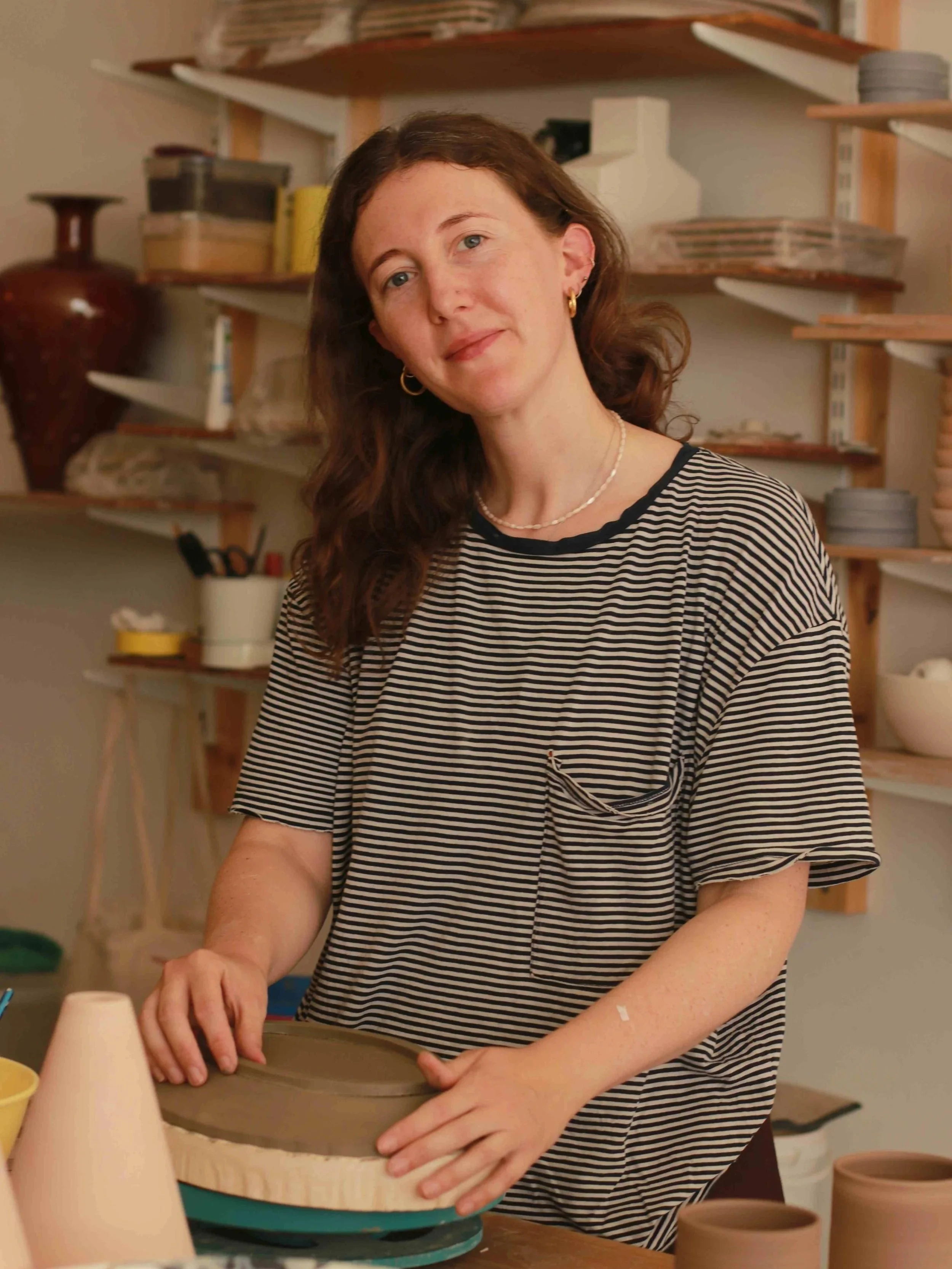
Please share a bit about yourself and your background.
I’m a self taught potter living and working in London. I’ve always enjoyed making things, although it never occurred to me to become an artist. I spent a lot of my childhood tinkering with cardboard boxes and scraps of paper, and then at school I spent a lot of time painting and life drawing. I did a degree in Fine Art where I loved scavenging materials from the side of the road, or from freecycle, and experimenting with them in the wood and metal workshops. After I graduated I was interning and working in offices for creative organisations but feeling pretty miserable. I signed up to an evening ceramics class as a distraction and was instantly absolutely hooked.
Studio ERS began as a one woman ceramics practice. How did the idea come to life, and what inspired you to start your own studio?
There wasn’t one moment where I decided to start my own practice. I was going to evening classes religiously every Monday but working as project manager and feeling uninspired. When the pandemic hit I was very fortunate to be able to continue to use the studio by myself which was amazing in an otherwise very strange time. Ideas were coming to me far faster than I could make them in evenings and weekends, so I began to think about how I could create more time for myself. I ended up getting a job as a production potter, handbuilding tableware for an exciting brand and it was an eye opening experience. I learnt a lot but all I could think about was how much time I was spending on someone else’s business, when I could be building my own. I went back to an office job part-time and worked every other possible minute I could on my own business. It sort of snowballed from there and I’ve now been doing this for 3 years full time.
Your work moves between handbuilding and wheel throwing, often taking inspiration from two of your greatest loves: food and flowers. What first drew you to clay, and how have these themes shaped the objects you create?
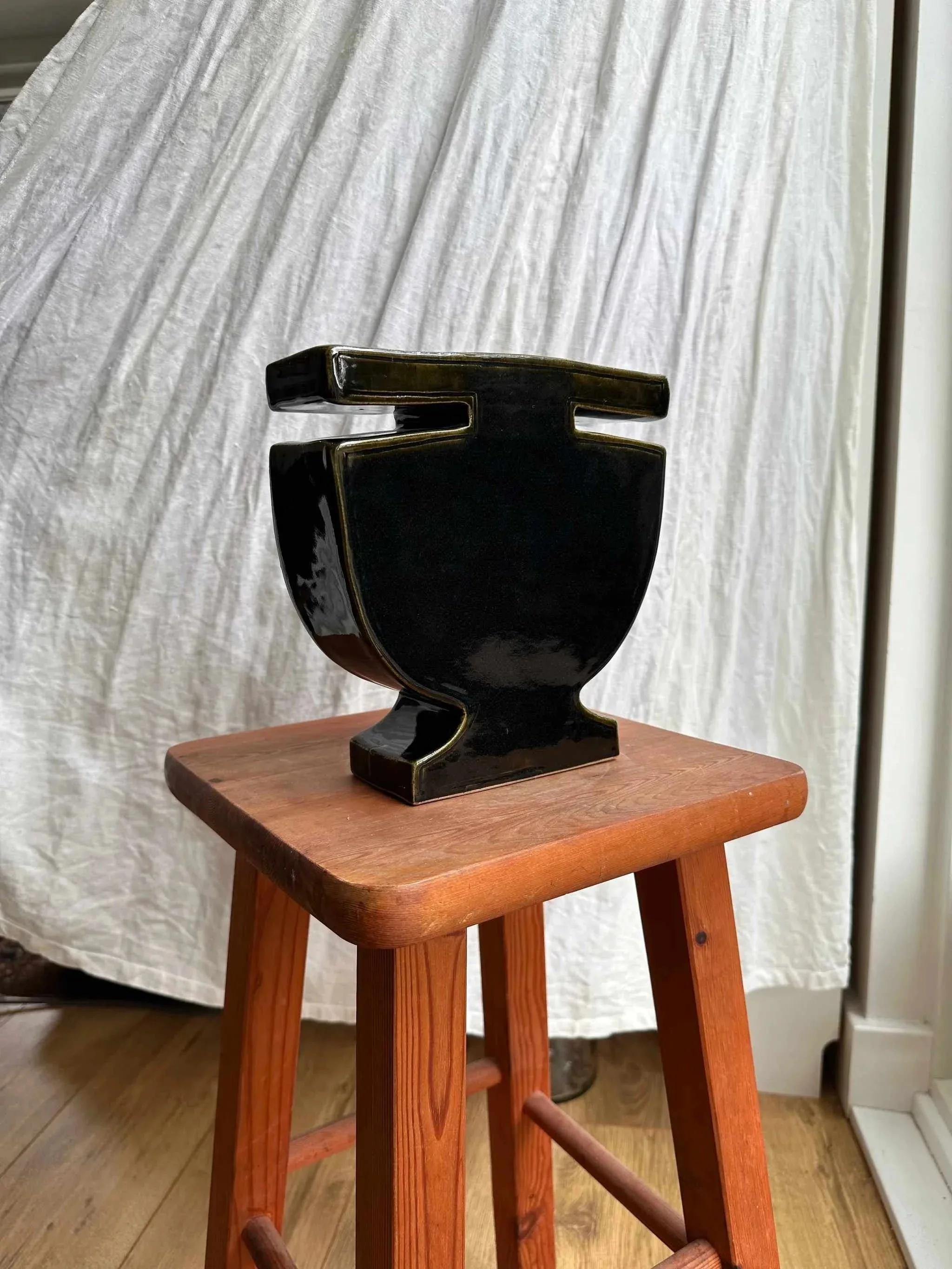
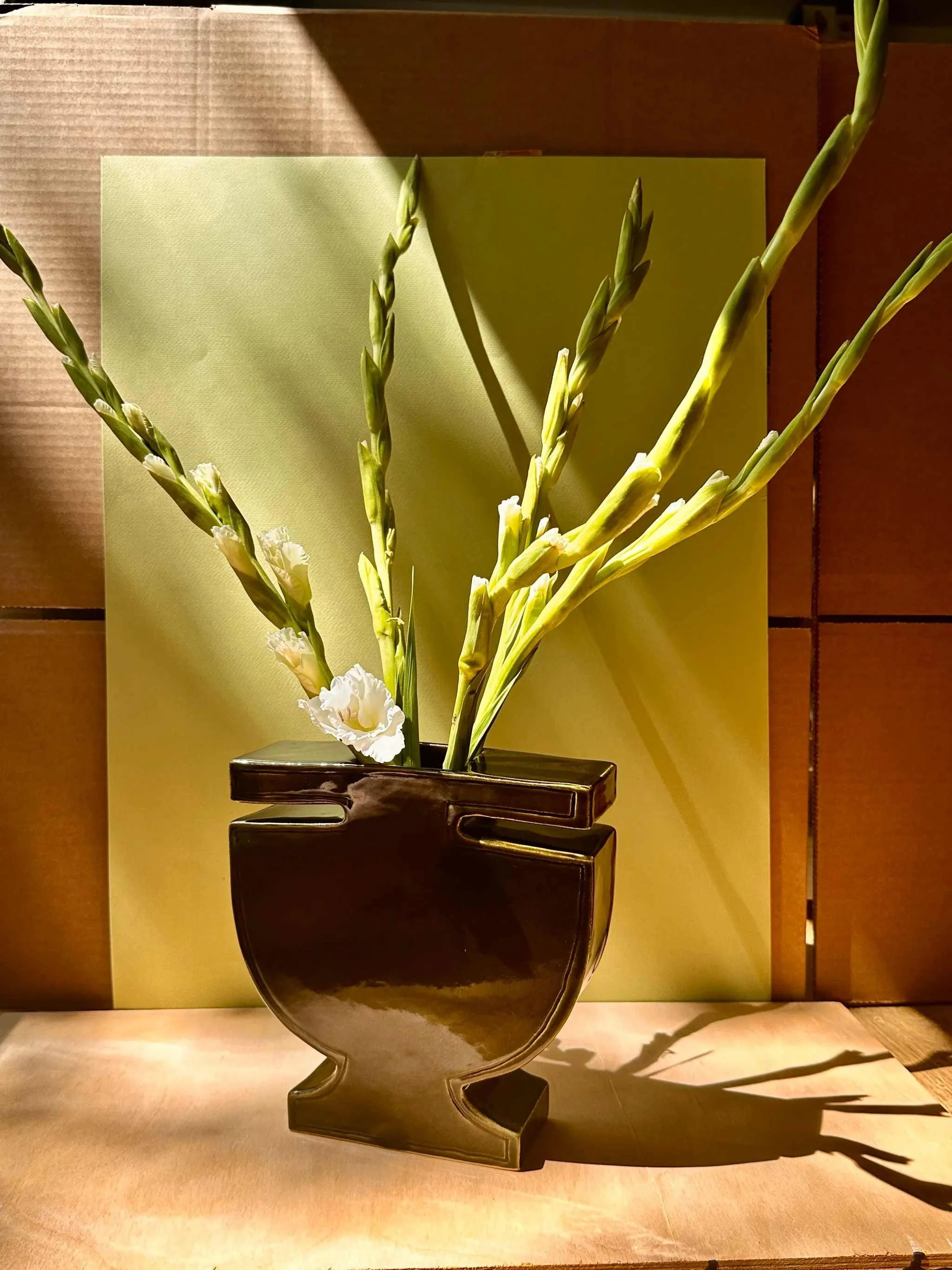
Working with clay is nothing like I imagined before my first class. My vague notion of ceramics was practical tableware so I began making things I wanted in my own home, and since I love to cook, this seemed like a great jumping off point. I became obsessed with the inherently messy process of throwing, trying (and normally failing) to replicate shapes so I could make sets of things. After a while I began to wonder about making something that wasn’t circular, which is the default shape on the wheel. I’m lucky enough to live near Columbia Road flower market and regularly pop down on Sunday mornings so I started drawing templates and making a range of slab-built angular vases to display all my market finds. I found I loved the tidy precision of working this way, it was the perfect antithesis to throwing, and it completely unlocked something in my brain for which I feel incredibly grateful.
Can you walk us through your process? What does your making process look like, and are there any rituals, routines, or moments that help you reconnect with the material?
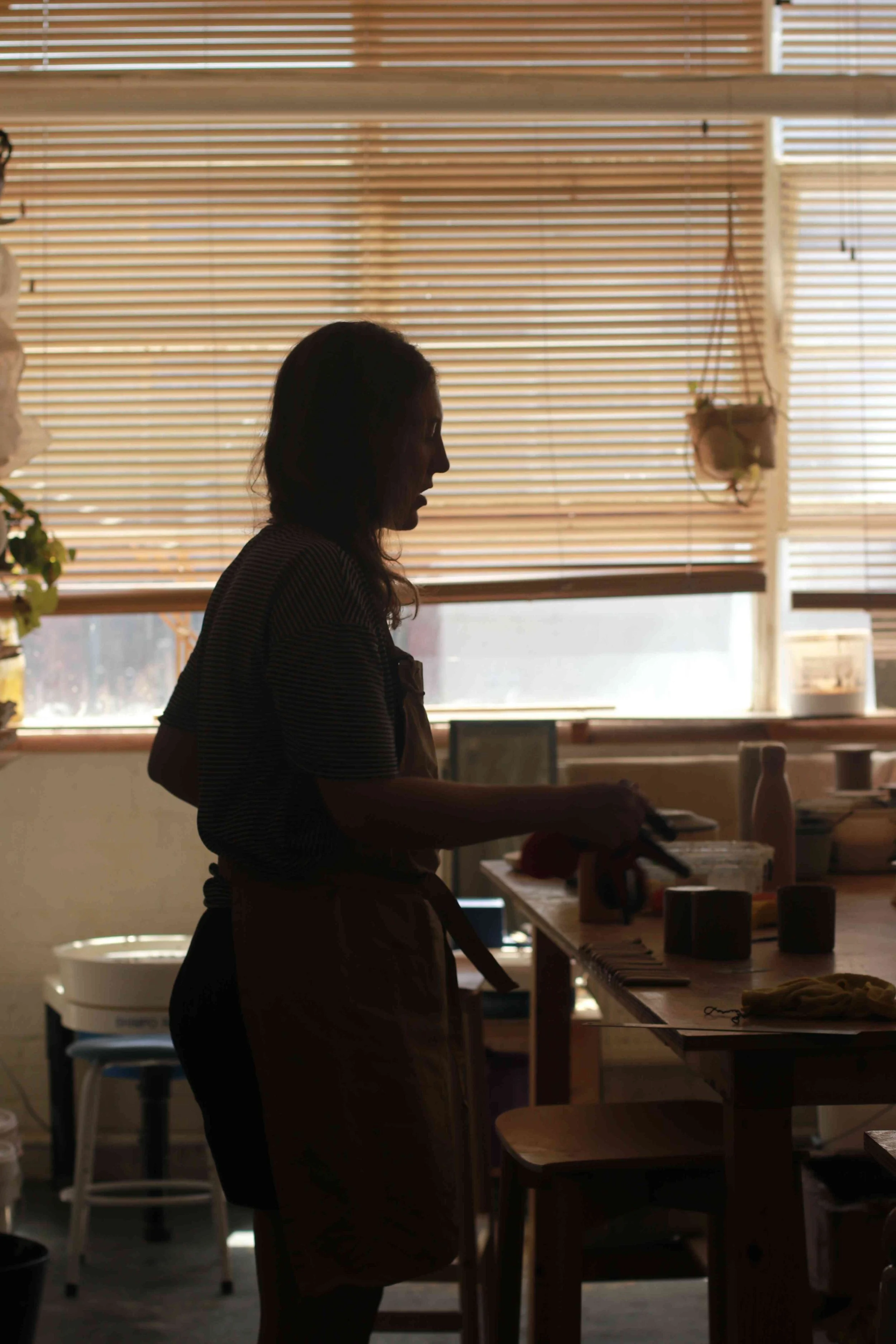
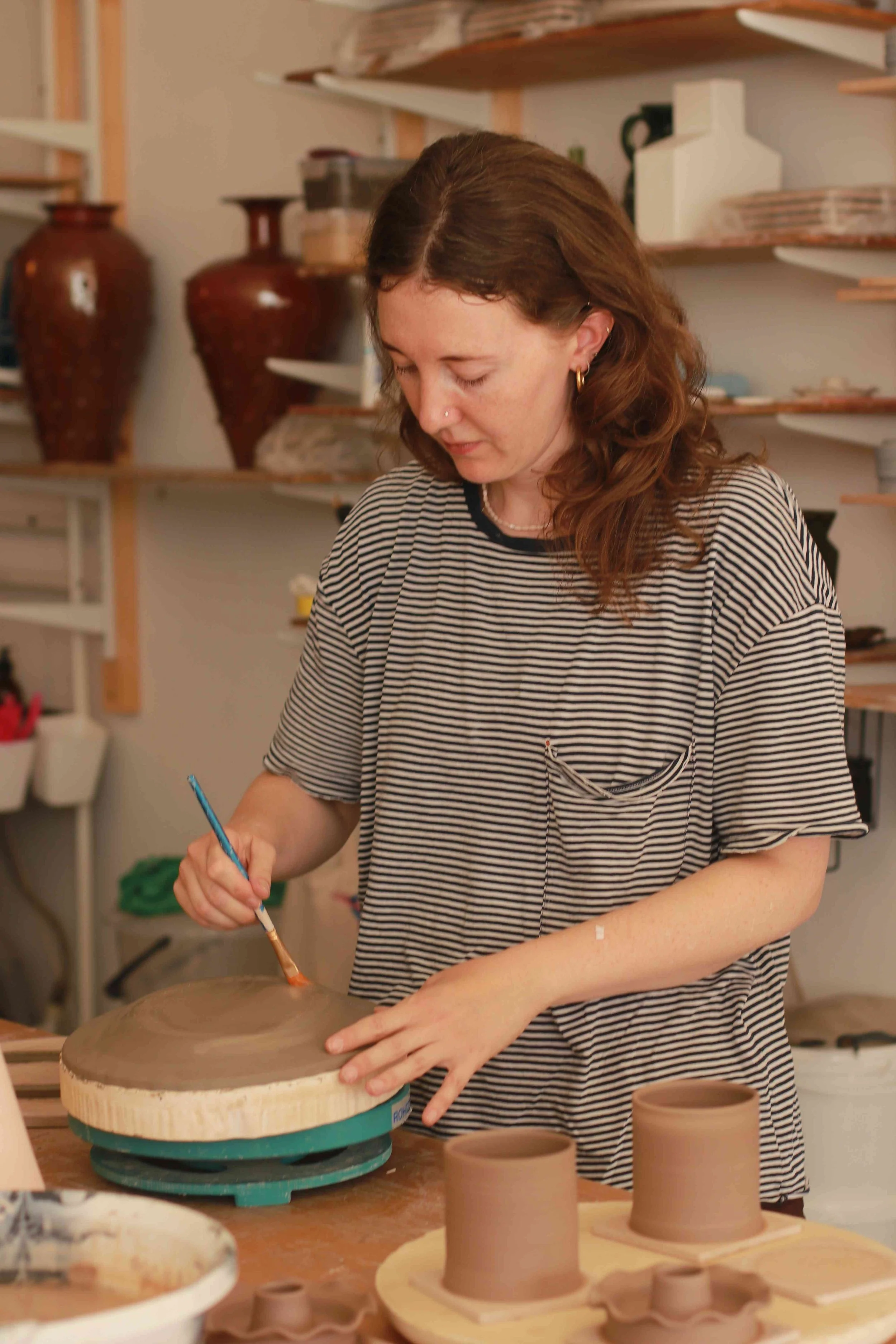
I start most days by setting up the studio - cleaning out water buckets or unloading a kiln before rolling out some slabs. I have a slab roller but for some reason I prefer to do it by hand. I cut each shape out directly onto its own board so I don’t warp it by picking it up whilst it’s still wet. Then I’ll likely tidy up whatever I was making the day before. Working with slabs is a lengthy process and each piece usually takes a little bit of time across multiple days. I’m still learning all the time and feel lucky that as a potter I get the chance to start over easily by recycling my clay. If I’m throwing I’ll normally aim to get all my clay prepped the day before so I can get my head into production throwing with a good playlist or podcast on in the background.
Your collection includes both hand built and wheel thrown pieces. How do these different techniques influence the forms you create, and what do you enjoy about moving between them?
I love the contrast of handbuilding and throwing. Throwing is hypnotic and quick, it can be over in seconds, especially if you haven’t wedged properly, and it’s the thing that got me truly obsessed with clay. Handbuilding is a more considered and lengthy process. I can spend hours meddling with one piece and I love constructing a new shape, learning all the unique ways it likes to be built. I can’t imagine doing one technique without the other.
You choose to produce your work in small batches and offer pre orders rather than making large quantities. What led you to embrace this slower and more intentional approach to production?
After working as a production potter for a year I learnt the hard way what that can do to your body and mind. I loved getting to know a shape intimately, but I didn’t love making hundreds of them in a week and hated the waste that was generated by producing things on a larger scale. Pre-orders mean someone has chosen my work and I get to make it intentionally, just for them. Small batches mean I can work efficiently, I can order the exact amount of clay, recycle all my reclaim, pack the kiln tightly with uniform shapes, all reducing my environmental impact wherever I can.
Looking at the contemporary landscape, where do you think lies the greatest potential to preserve and redefine the value of craft and material based practices today?
Accessibility is everything. Better funding would allow more people to learn, experience and understand how meaningful and complex different craft practices can be. It wasn’t until I got on a wheel myself that I realised how difficult it was to learn. A good teacher makes it look so easy! Plus it’s hard to ignore the impending doom of a world rapidly filling with data centres and forest fires. I hope that handmade craft can continue to be championed and serve as a reminder of the importance and necessity of time away from screens and human connection.
Are there any new materials, techniques, or directions you are currently exploring that feel especially connected to the evolution of your practice?
I’m very slowly working towards making pieces which are more sculptural whilst retaining their functionality. I’ve had mirrors and bookends on my to-do list forever and I love the idea of making small one-off pieces which are affordable and practical. At the moment I’m working on a project where I use up all my leftover bags of clay. They’re mostly unlabelled so each piece coming out of the kiln will be a bit of a surprise. I’ll be making lots of one off pieces as part of the process, something I’ve always resisted slightly. It will be good for me to let go of the fear of not being able to recreate something with a template and careful measurements.
How can people engage more closely with your work, whether through your collections, commissions, markets, or upcoming projects?
I’m normally working towards a market or pop up, usually in London. I’ll always post about it on instagram and I write a bi-monthly newsletter with news from the studio: what I’m working on; what I’m feeling inspired by - it’s often not ceramics, but books, podcasts and exhibitions. I have a few stockists too. All details are on my instagram bio but please do get in touch via email if you’d like to discuss any work or new projects, I’d love to chat.
All photos belong to Emily.
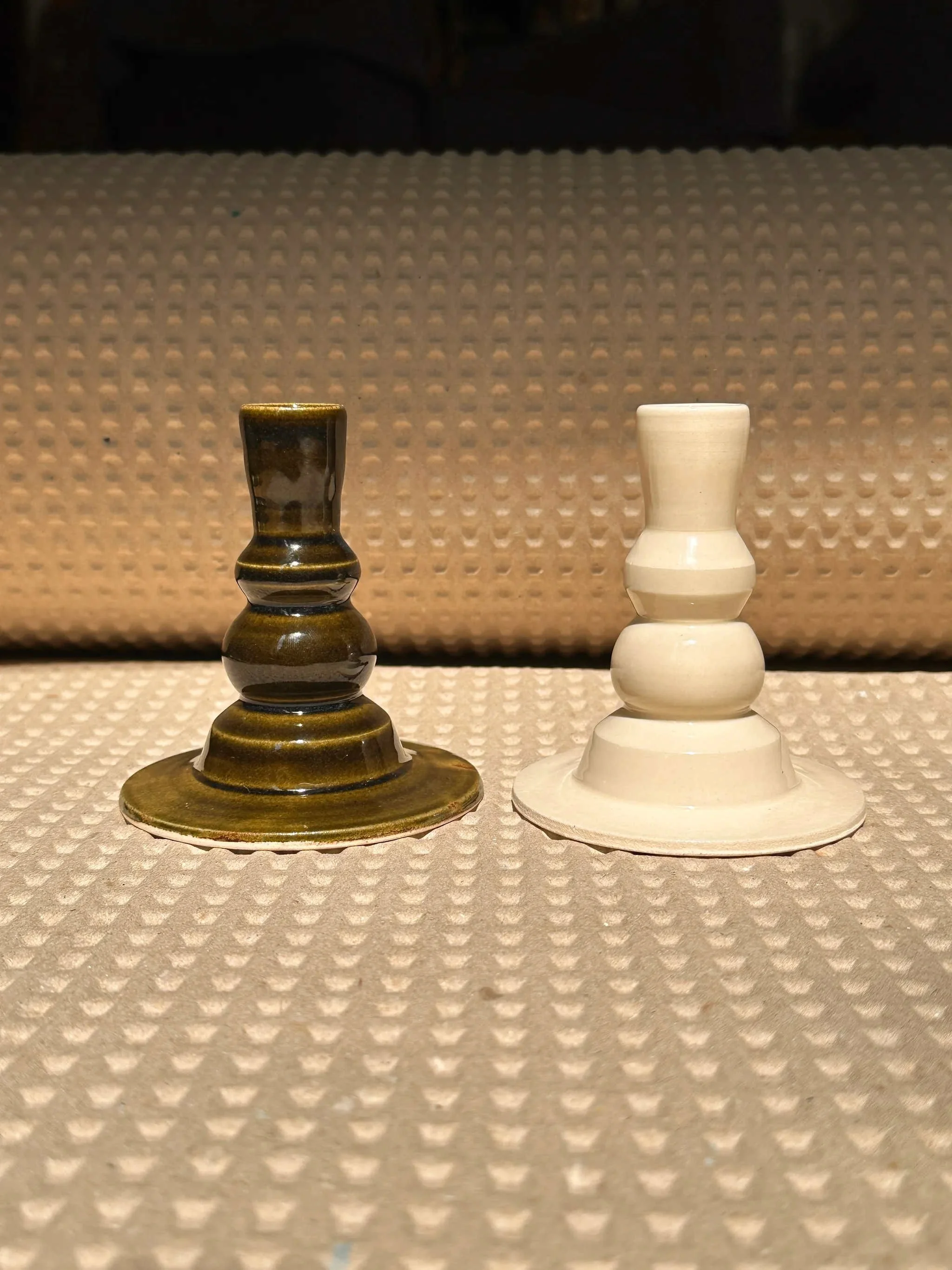
Handcrafted by Emily Sinclair in London, the Candlestick Holder is wheel thrown in white stoneware and trimmed into three tiers, inspired by the forms of chess pieces. Finished with a transparent and Noriko glaze, it is designed to hold a 2cm candle.
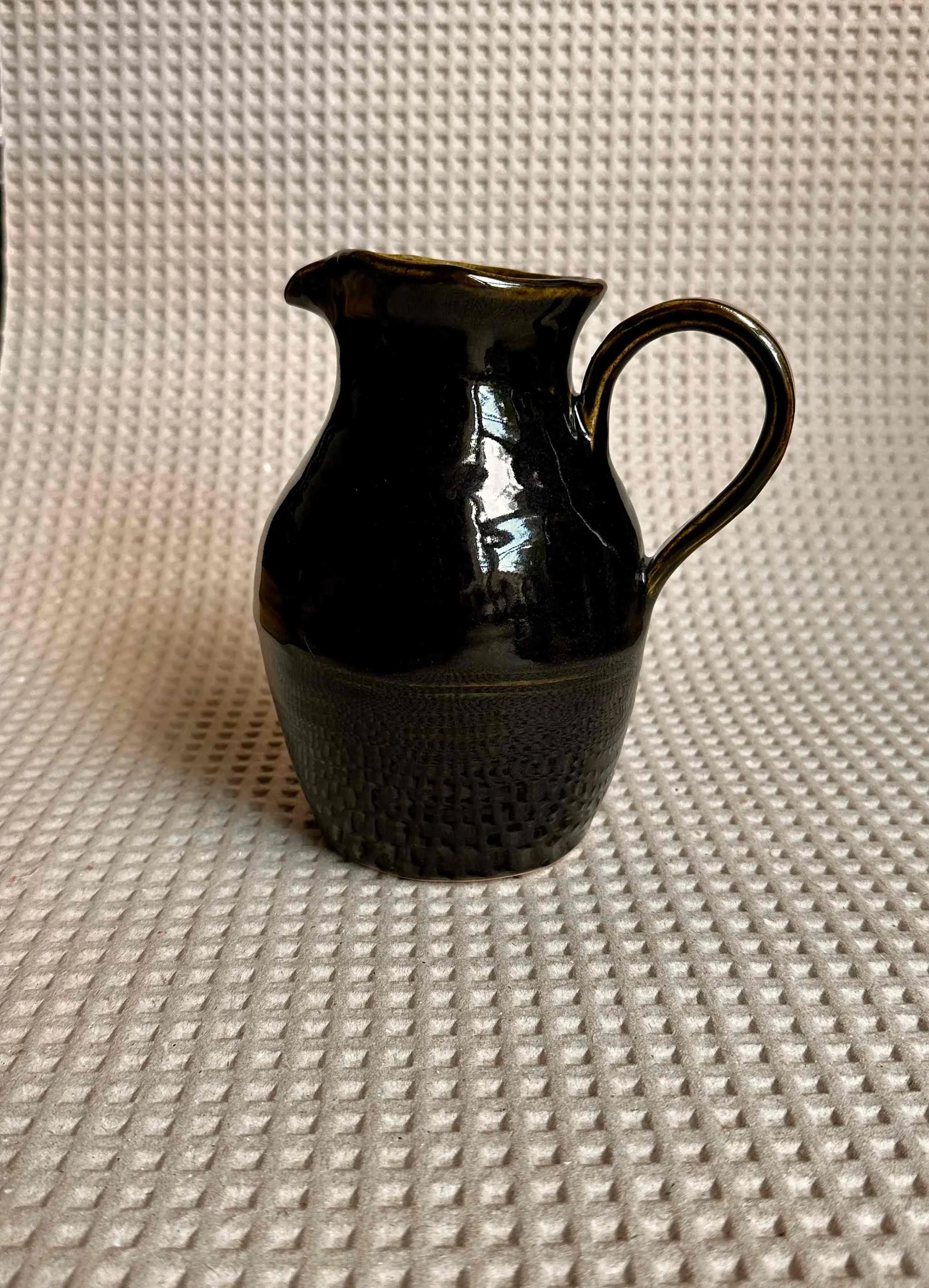
Handcrafted by Emily Sinclair in London, the Jug Vase is coiled in white stoneware and finished with a Noriko glaze. Designed for flowers, its sculptural form also makes it a versatile piece for serving wine.
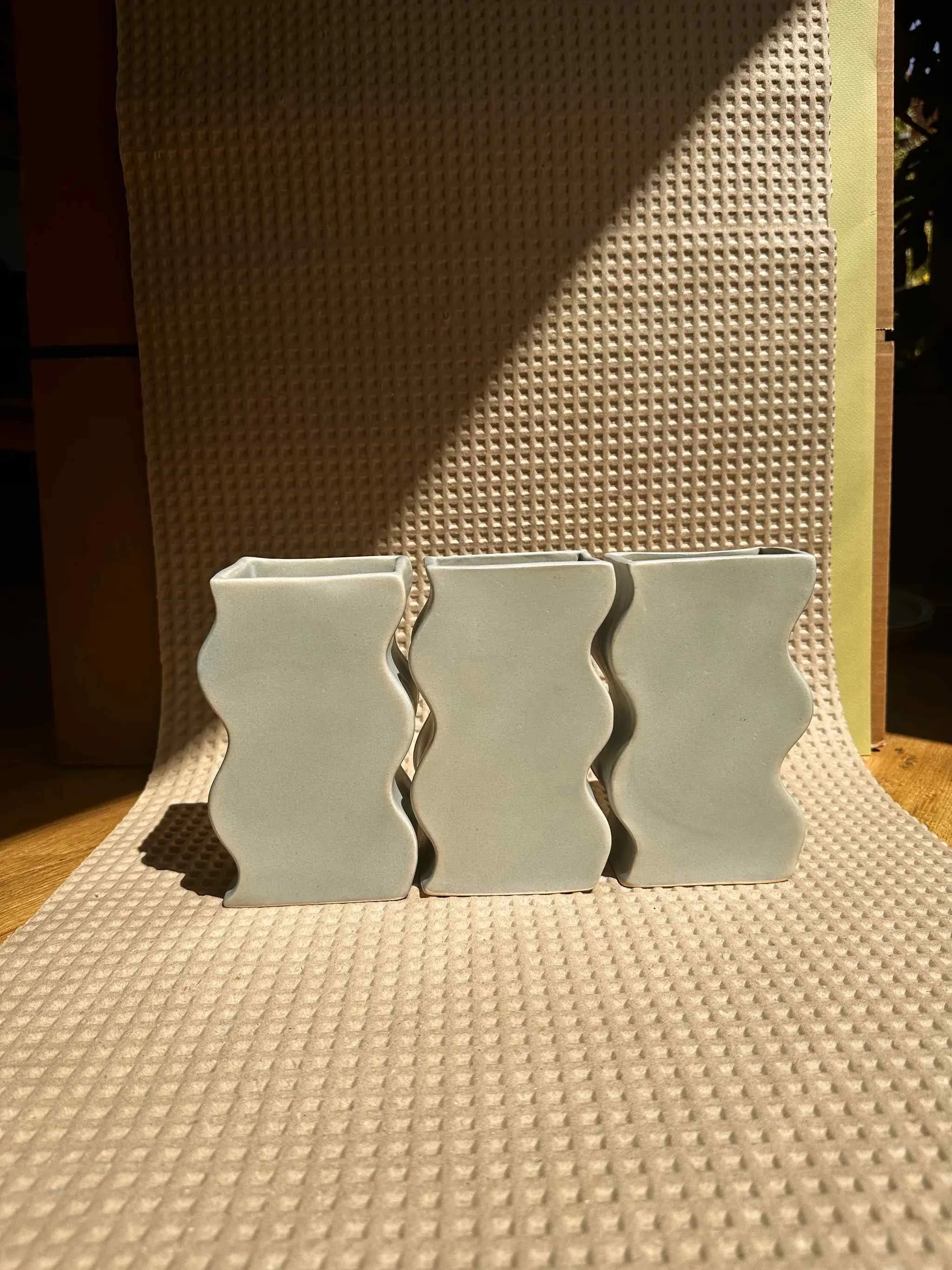
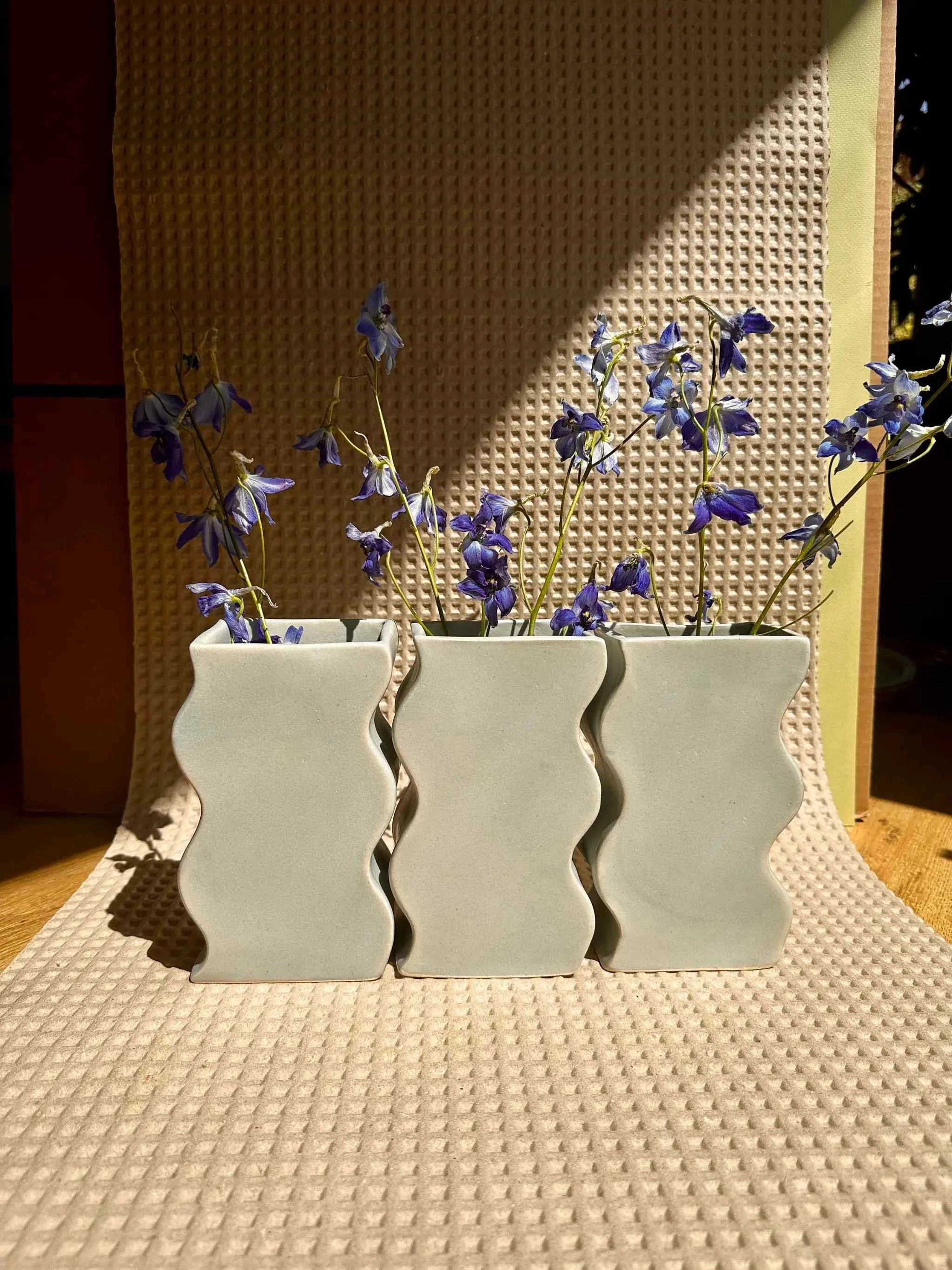
Handcrafted by Emily Sinclair in London, the Wavy Vase is handbuilt in white stoneware and finished with a matt pale blue glaze. Its wavy form can be displayed individually or stacked alongside other vases, creating different arrangements.
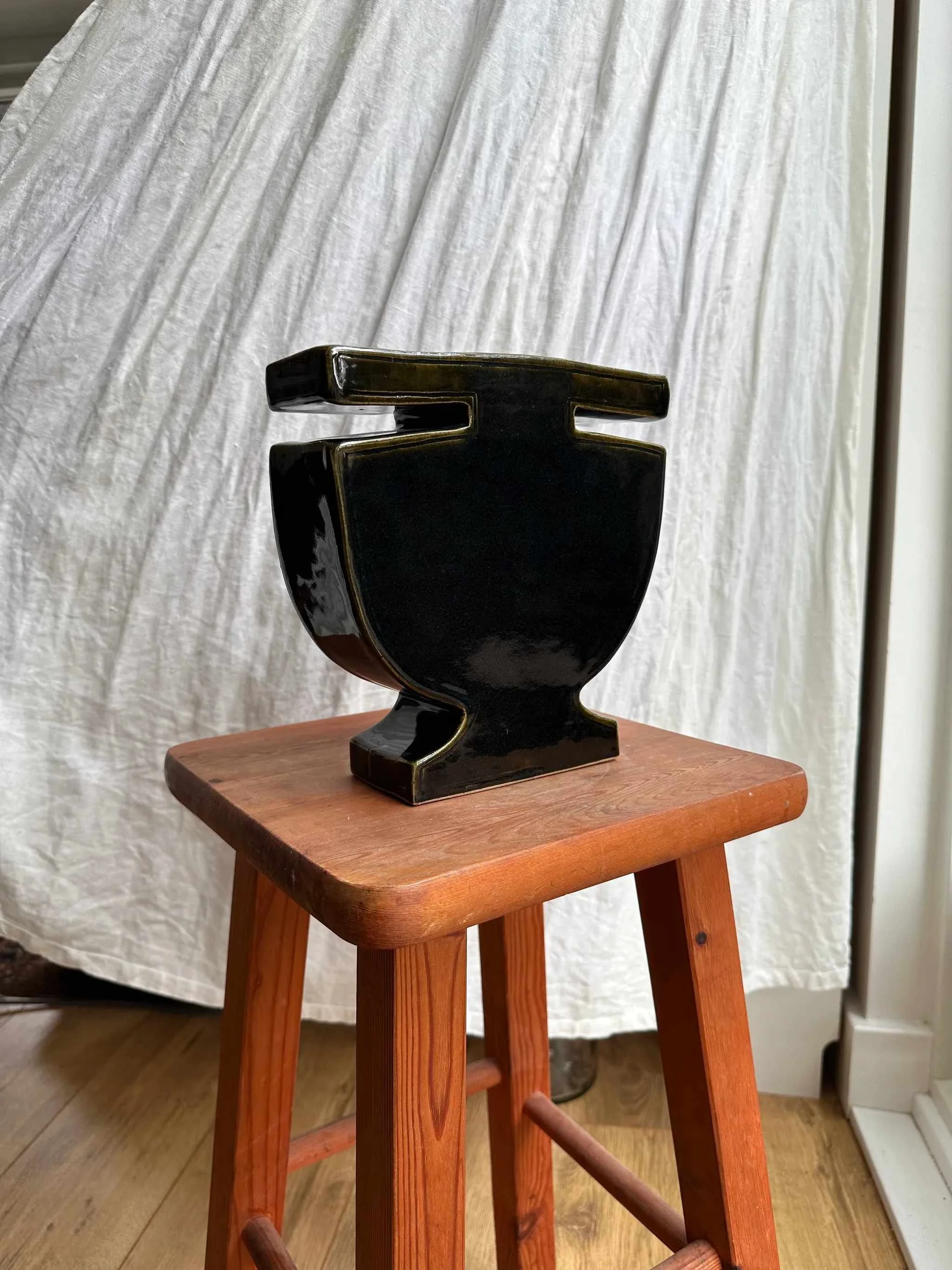
Handcrafted by Emily Sinclair in London, the Soup Vase is handbuilt in white stoneware with a hand carved outline. Inspired by her grandmother’s vintage ceramic soup tureen, it is finished with a Noriko glaze.
