Elin Hughes
Please share a bit about yourself and your background.
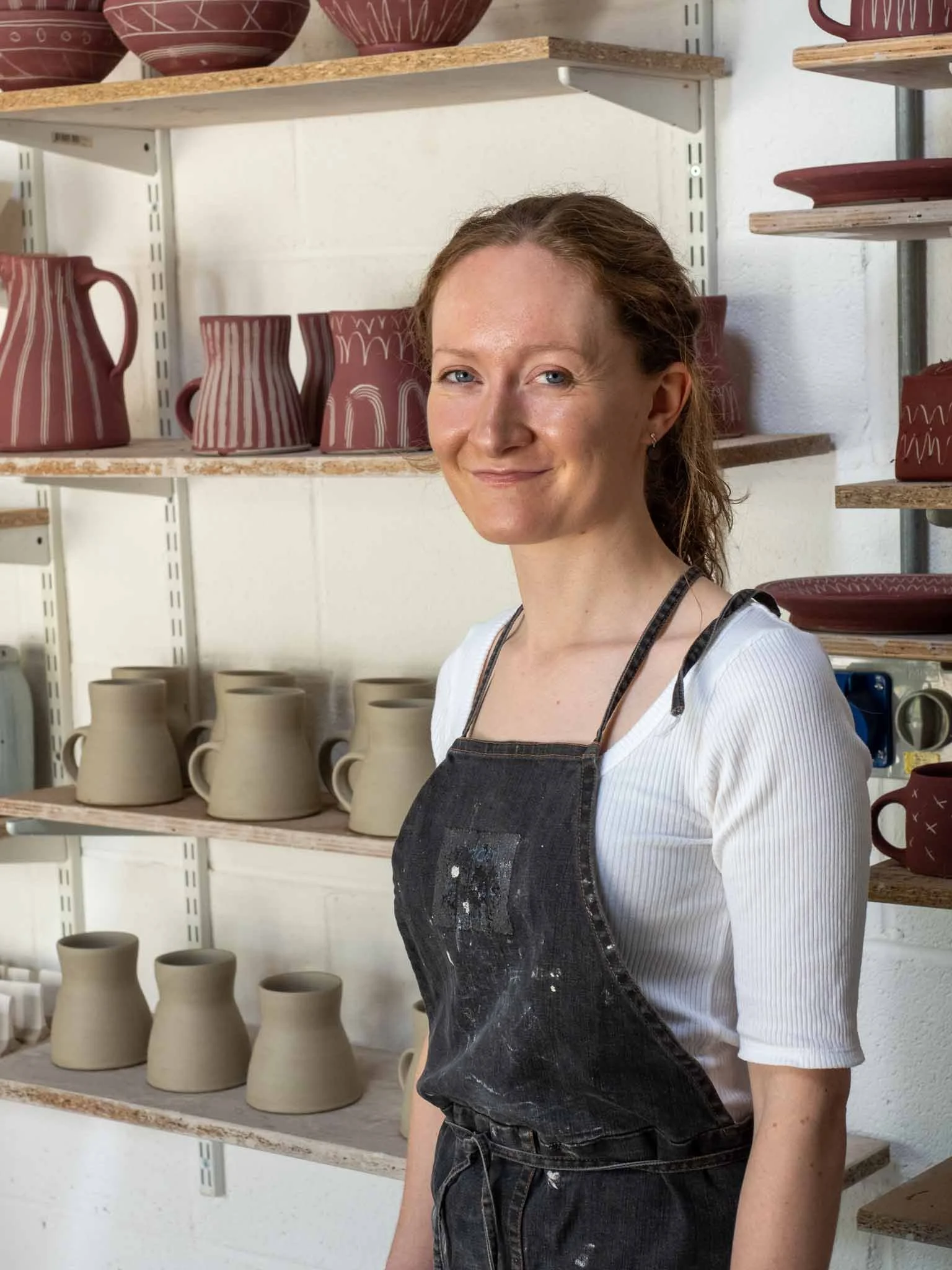
Originally from Dolgellau in the foothills of North Wales, UK, I now make functional porcelain and stoneware pottery at Kigbeare Studios on the edge of Dartmoor in South West England. My curiosity for atmospheric firing was first ignited as an exchange student at the University of Gothenburg, Sweden in 2018. Soon after, I began assisting wood firings at the Oxford University Kilns project and later spent three months as a wood-firing intern at Guldagergaard the International Ceramics Research Centre in Denmark. I moved here to Devon in September 2024 after an 18 month woodfiring apprenticeship with potter Simon Levin in Illinois, United States, funded by the Welsh Arts Council.
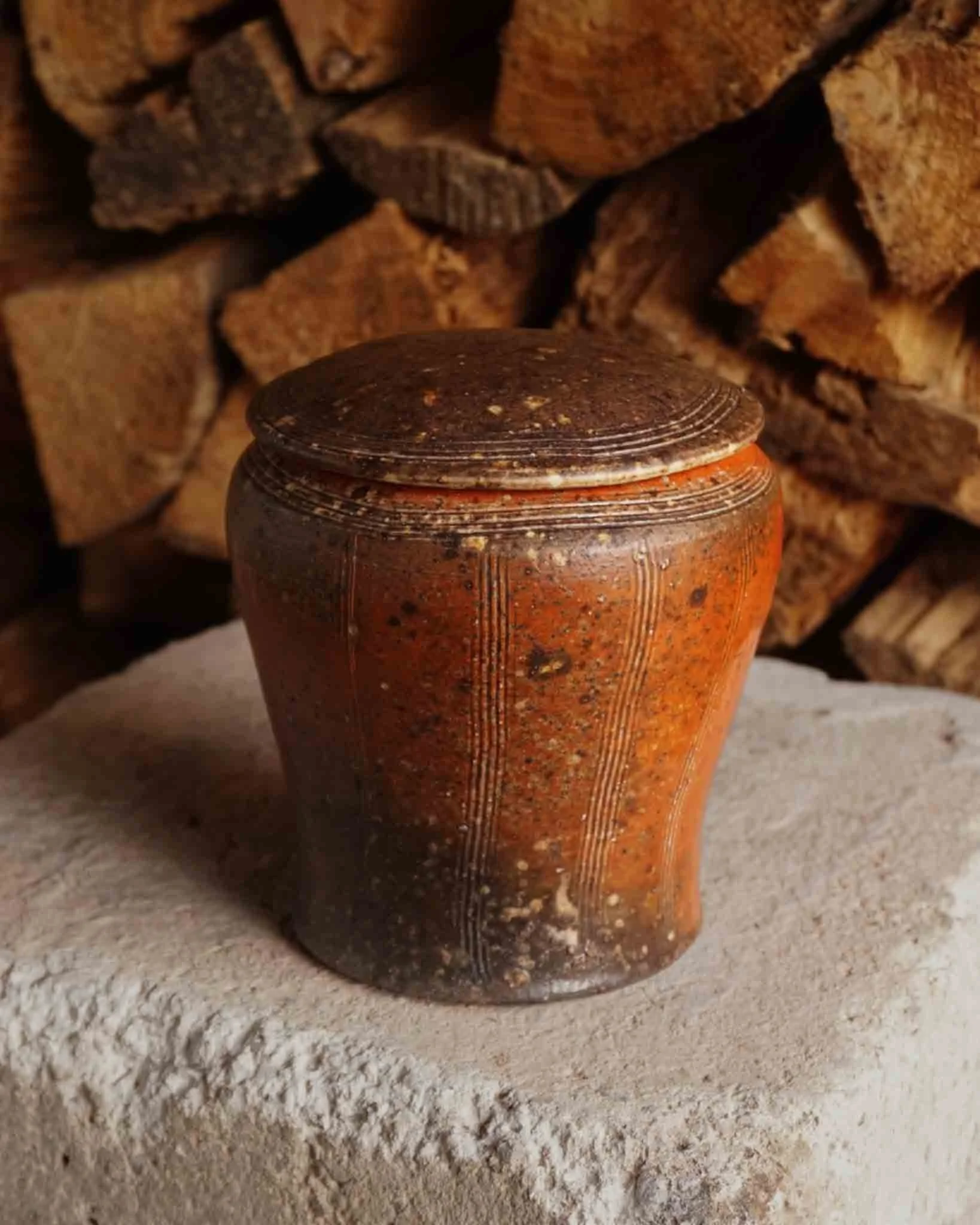
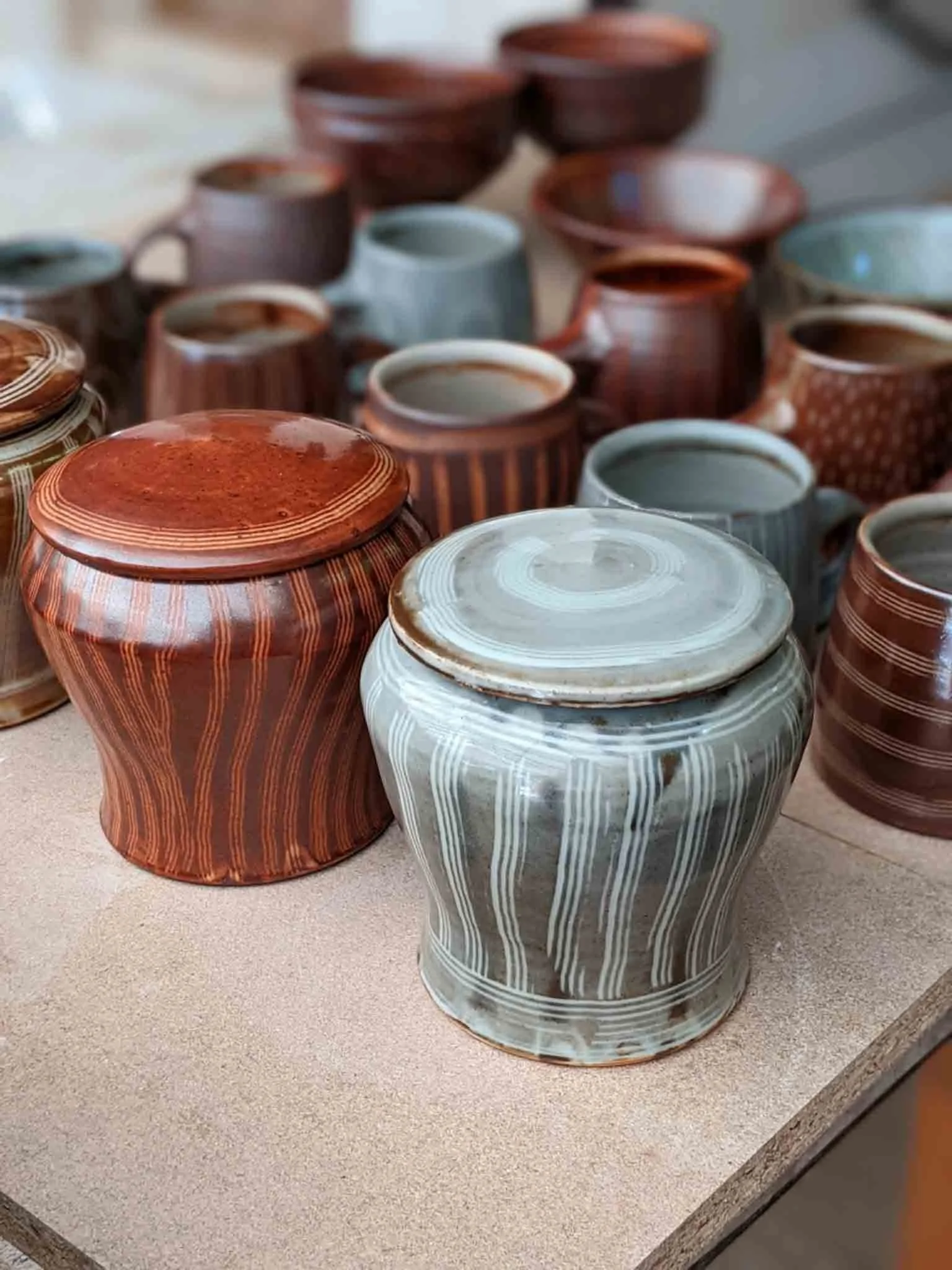
My wheel thrown work explores traces and mark making, be it through directing flame paths in woodfiring, or scratching through slip to create layered surfaces in the gas kiln. Subtle brush and finger marks speak to the process of decorating with traditional shino and chun glazes over a high iron slip, revealing gentle variations and depth of surface. Combining soft forms with repetitive patterns I aim for these pots to impart a sense of warmth, groundedness and intimacy.
You studied ceramics at Cardiff School of Art and Design. Can you share how your early experiences and education shaped your approach to pottery today?
I graduated from Cardiff School of Art and Design in 2019 and my three years there were invaluable. Prior to university I was handbuilding, but suddenly being surrounded by peers who were skilled at throwing on the wheel was so inspiring. There was a great social atmosphere to all being together in the pottery room, even on weekends, and I threw myself into practicing as much as I could. Encouraged by my tutors, I started volunteering at craft fairs and this was where I first came across woodfired pots.
The oldest methods of firing clay into ceramic were pit fires and bonfires. Today we have other means of firing clay including, most commonly, electric and gas. However, much like microwave ovens and electric stoves in the kitchen, these methods are limited. In the same way that char-grilling food over a wood fire imparts irresistibly nuanced and unique flavours, the technique of wood-firing clay opens up a whole new palette for artistic expression.
During my six months as an exchange student at the University of Gothenburg I had the opportunity to take part in my first firing of a wood kiln. The school of art had an anagama climbing kiln on the city’s outskirts and with a team of students, we fired it up in the spring of 2018. The patience demanded of this process and early morning shifts in the beautiful surroundings, opened my eyes to a different sense of time in relation to making. Flames moved through the kiln in such a way that ash was deposited irregularly on the pots, creating crystal growths and beautiful, unexpected flashes of rich colour and texture. Moreover the process was so physically laborious that it required a team of us to carry out. There was great satisfaction in cooperating towards a larger shared goal.
How do you think the landscapes, traditions, and cultural heritage of your upbringing have influenced your work?
I grew up in the beautiful and rugged landscape of the Eryri (Snowdonia) National Park in North Wales. On both my parents’ sides of the family, relatives have always shown a love for the outdoors, from mountaineering and hillwalking to birdwatching. Throughout my life my father has worked in environmental protection of Welsh National Parks and as a result of my upbringing, I spent a large amount of time outdoors. The wild landscape where I’m from and the wilderness of Dartmoor National Park where I now find myself situated share a changeable, unpredictable nature. It often rains and the weather can shift suddenly and dramatically which results in magical fluctuating light and colours. Over time these influences have appeared to have infiltrated my ceramic practice more and more as I continually gravitate towards methods of making that lack uniformity and celebrate serendipity.
Your work involves both wood and gas firing. How do these different methods influence your thoughts on form, texture, and material?
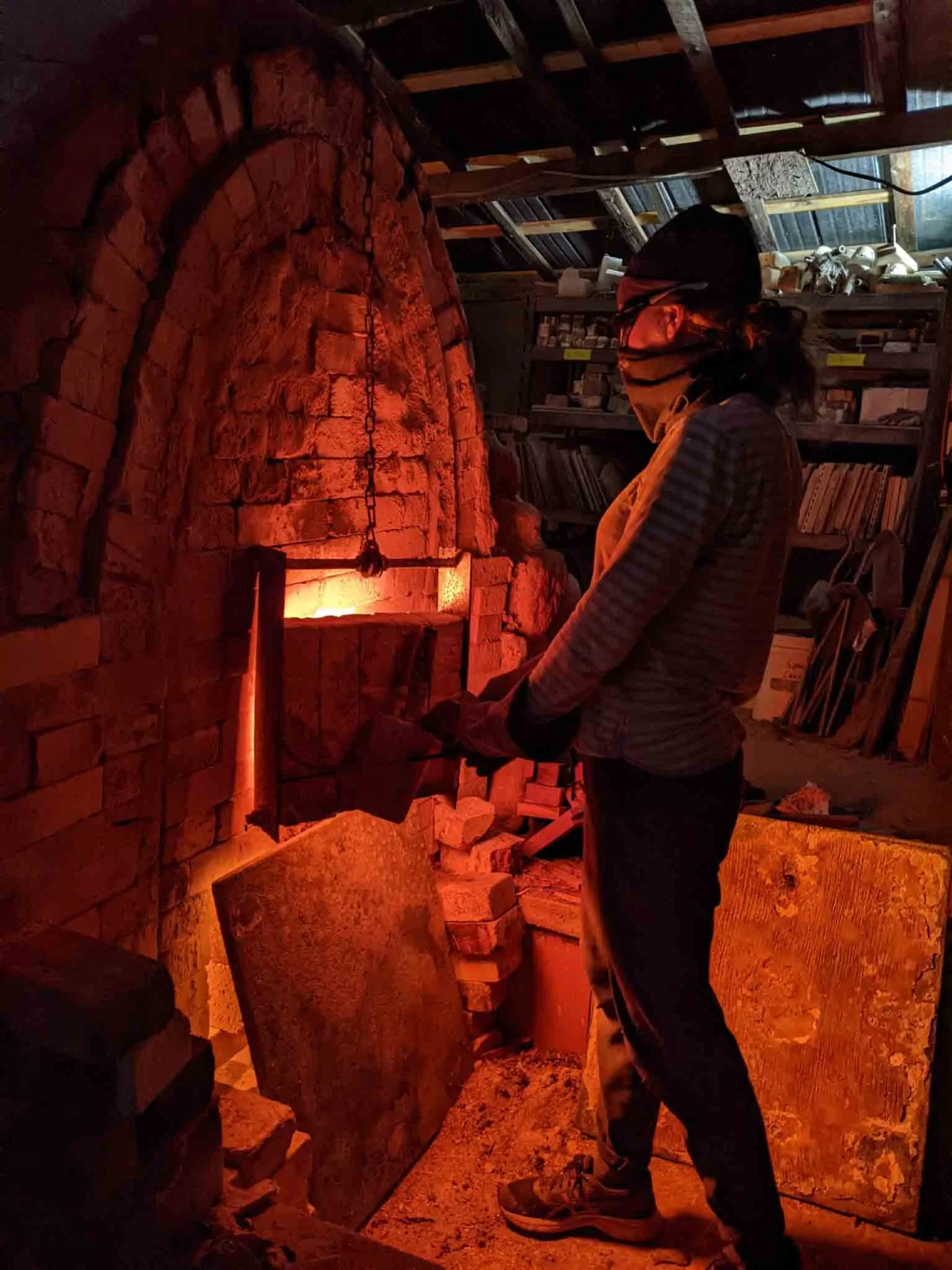
Woodfiring gives me the exciting opportunity to work with the raw, unglazed surfaces of the pots in a way that offers a bit more complexity than gas firing. It feels more like a collaboration with the kiln as the outside surface of the clay reacts with volatilized mineral components in the wood. I have to consider the placement of pots during packing with much more care than in the gas kiln because this can dramatically affect surface results. Pots placed on the kiln floor need to be tall since heat rises and we want to encourage the flame along the bottom of the kiln. They will also get buried in ash from the side stoking aisles. This can result in dramatic ashy surfaces but can also make the surfaces very dry. A team of six or more of us fire the anagama wood kiln here at Kigbeare for approximately five days which involves an intense amount of heat work and physically pushing logs into the fire. As a result, pieces can warp much more easily, so pots need to be sturdy and stable.
It was once described to me that flames through the wood kiln move very much like water, wanting to find the easiest route towards the chimney. With this in mind, I like for my pots to have a softness to them, a bit like sea glass or pebbles. Unmelted wood ash can leave a slightly rough surface so I sand everything post firing. I mainly use a porcelain that I mix myself and a couple of fine grained stonewares.
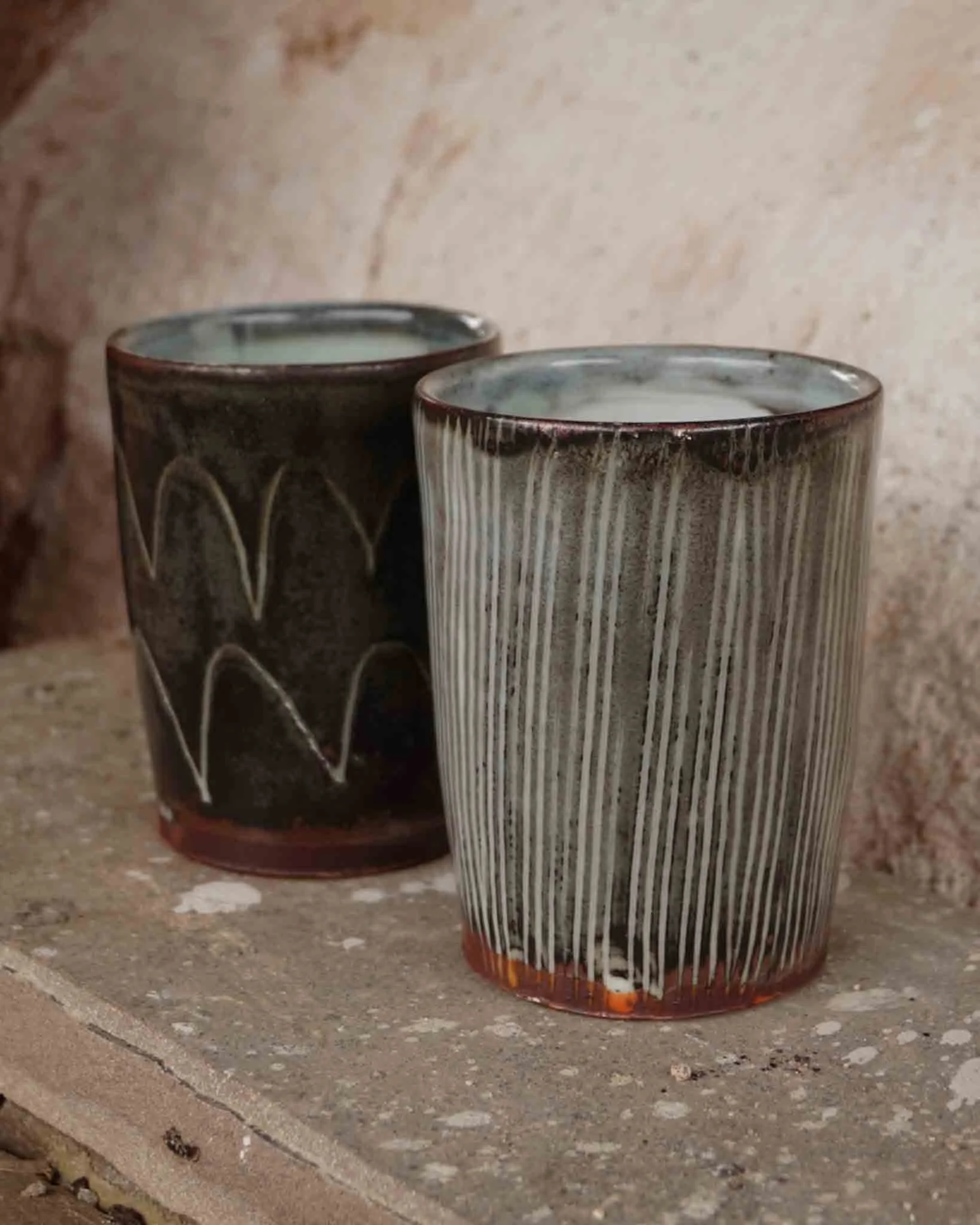
Gas firing gives me the chance to experiment with much more predictability and regularity. Results in the wood kiln can vary drastically from front to back, top to bottom in each firing, but with the gas kiln I can be confident the whole kiln will reach the correct temperature. The gas kiln gives me a lot more freedom to play with patterns using the high iron slip I like under the glazes, a technique which tends to flake in the wood. There is still a beautiful richness to the surfaces from the reduction process (starving the gas kiln of oxygen from 850c until the end of the firing).
Many of your pieces seem to emerge organically rather than from a strict plan. Can you describe how a piece develops from an initial idea to the finished work, and what your creative process looks like?
My forms tend to take on many iterations as I refine them in response to the results of the firings. The time between wakefulness and sleep can sometimes be a good space for kindling new ideas, and many of my pieces are iterations on pots I’ve come across on my travels. My tapering lidded jars have evolved over the past couple of years as the more I made, the more I honed in on the exact proportions that I found most pleasing. When I have an idea for something but don’t yet know how to make it, I’ll often begin with a rough sketch on paper. I’ll make a series of that form in clay in different sizes and proportions and try not to get too caught up in things being just right at the beginning.
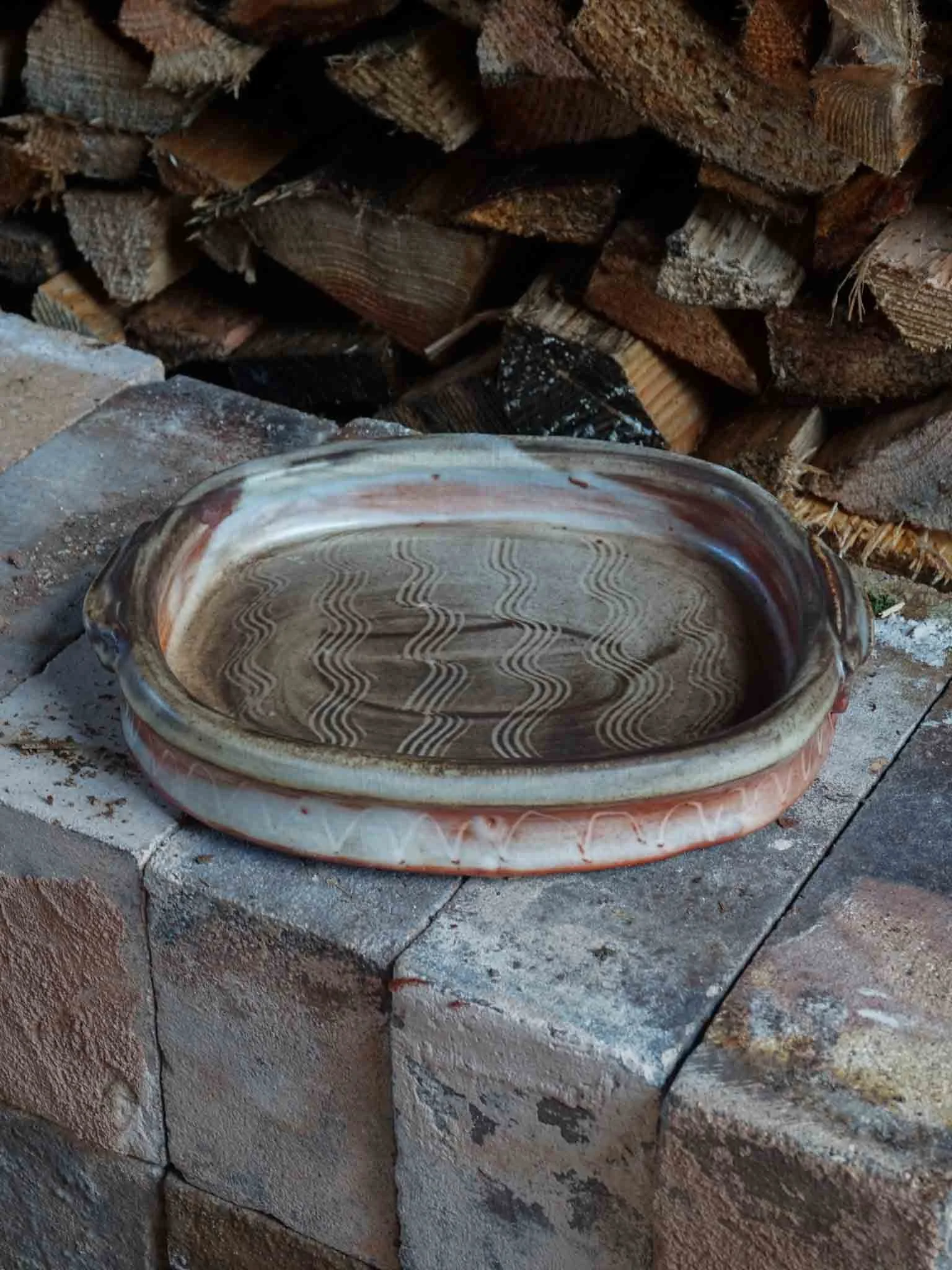
Because of the amount of work it takes to fill the kilns (we only fired the Kigbeare wood kiln twice in 2025), the making process is very long and it can take months for me to see the finished results. Quite a few of my pots are decorated with slips - clays in their liquid form which are dipped or painted onto the surface when the clay has hardened somewhat. Sometimes I like to improvise patterns, taking queues from the pot’s form to highlight verticality or roundness by scratching through the slip. The pots go through a preliminary bisque firing to 950c in the electric kiln before I glaze and gas or woodfire them.
Working with your hands and materials demands time and presence. How does the physical act of developing a shape influence your emotional state and your sense of connection to self, ancestry, and memory?
Developing a form is an exercise in problem solving and can come with all the emotions of that process - the frustration when things are not progressing as you hoped, as well as the joy when a piece emerges from the kiln better than you imagined. The gentle attention required in the process of throwing on the wheel definitely helps ground me in the present. Clay can be as stubborn as it can be forgiving so the material has taught me a lot about being patient and accepting when things don't go to plan.
Over the past six years since graduating from university I’m lucky to have had almost continuous access to studio spaces. In that time though, I’ve also been required to take on various part time jobs working for others which haven’t involved making. As a result, I feel a lot of gratitude for the creative freedom that studio time enables. Working on my pots, and the solitude and self sufficiency that brings as a self employed person, help me to connect to a vital part of myself that highly values the independence to live on my own terms.
My creative process also helps me to connect with my younger self. I was a very shy child, and struggled with mental health in my early teens. I like to think that by giving myself the permission to play, experiment without pressure and take up space with my work, I am addressing those past selves with compassion.
Where do you see the greatest potential for preserving and honoring traditional local crafts in today’s world?
Apprenticeship programmes do hold a huge potential for preserving and honouring traditional local crafts since there’s nothing quite like learning day after day from professionals in the craft surrounding you. There’s a great quote attributed to composer Gustav Mahler ‘Tradition is not the worship of ashes but the preservation of fire’. During my apprenticeship in the US with Simon, he was using a traditional method of firing with wood and throwing on a kick wheel. However his focus was very much on innovation within the field of woodfiring and on a global community rather than solely a local one. It’s this kind of balance between embracing new technology and evolution on one side, and an honoring of your traditional craft on the other which is important to keep crafts alive and meaningful.
There are still wonderful places in the UK where traditional production pottery apprentice programmes are alive and well like Whichford and the Leach pottery. But I’m well aware that apprenticeship positions are very difficult to come by, and my own apprenticeship experience was no better or worse than my university education, just extremely different. Art and craft at the end of the day are all about communication, and art schools are also extraordinary places where you can learn the skills to find a voice to express your own truth in clay. They educate students about the traditions in the first palace, which is vital in order to honour them. Museums also hold a huge potential for preserving traditional local crafts - the Burton at Bideford up the road from me holds an excellent collection of North Devon slipware. It has been a useful resource for me to learn about the historic pottery traditions of my new home.
Are there any new projects or directions you’re currently exploring that you feel especially connected to?
Getting to know the ins and out of the Kigbeare wood kiln is a project in and of itself! The kiln was designed and built by Svend Bayer and helpers about eight years ago and is the largest kiln I’ve ever worked with. I’ve started to build up a picture over the last couple of firings of how my clay, slips and glazes behave in the different stacks but there is still so much more to learn and experiment with. I’m particularly keen to play a bit more with combustibles in the saggars at the back and to explore some larger pieces to be buried in the ashes of the firebox.
Where and how can people engage more deeply with your work?
You can sign up to my newsletter at my website www.elinhughes.co.uk to get updates about exhibitions, workshops and sales. I also post regularly about my work on Instagram @elinhughesceramics
All photos belong to Elin.
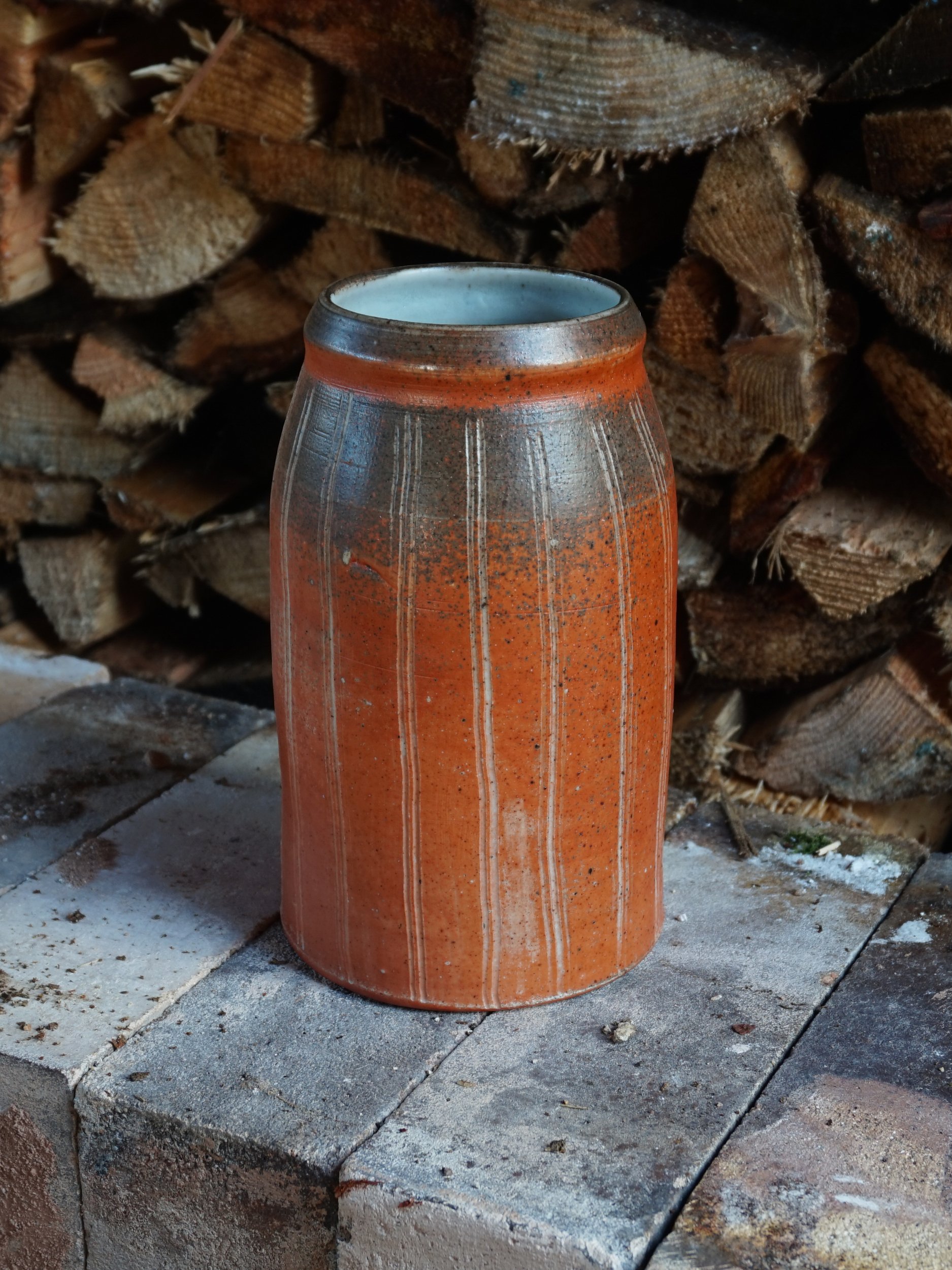
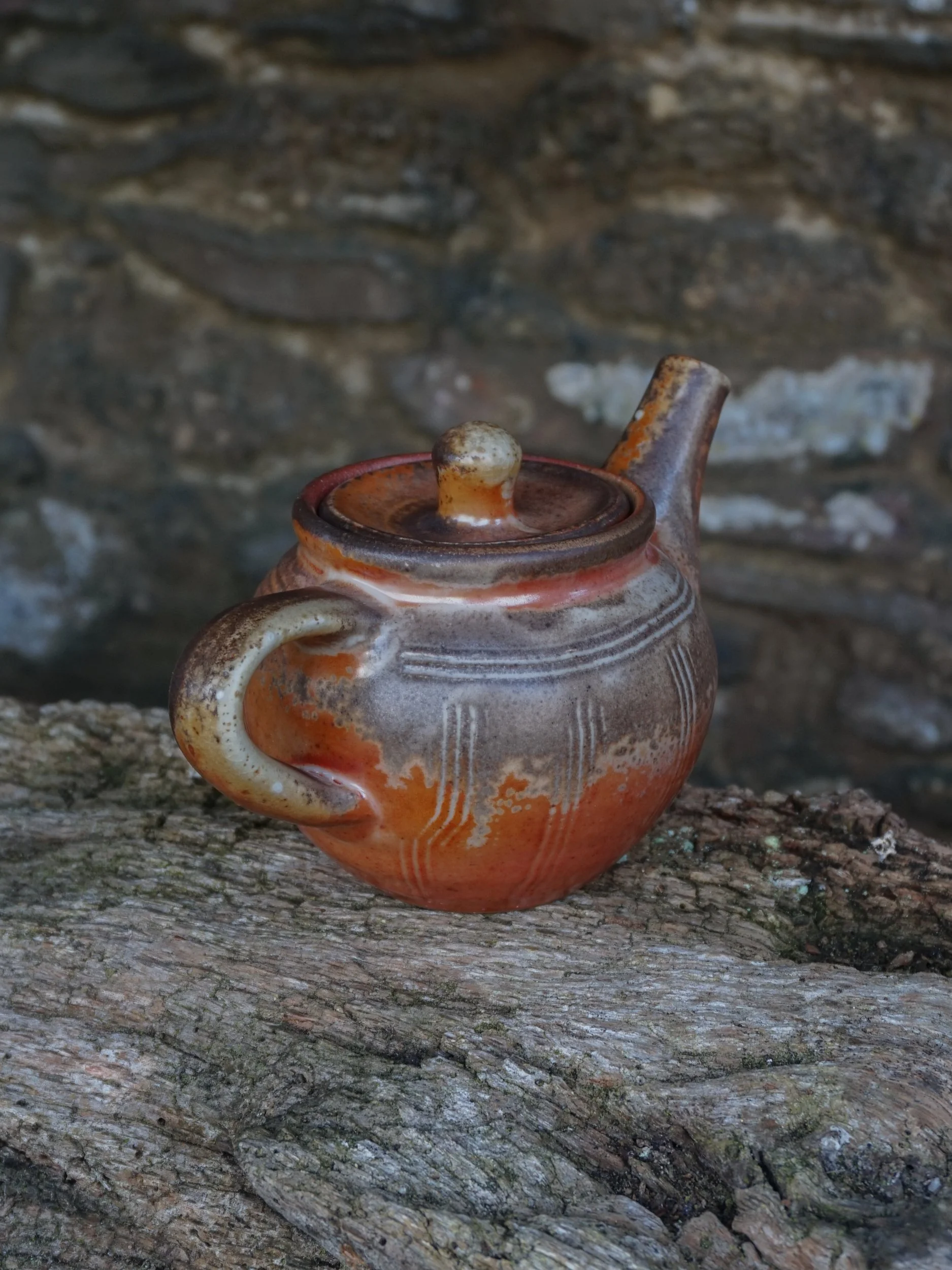
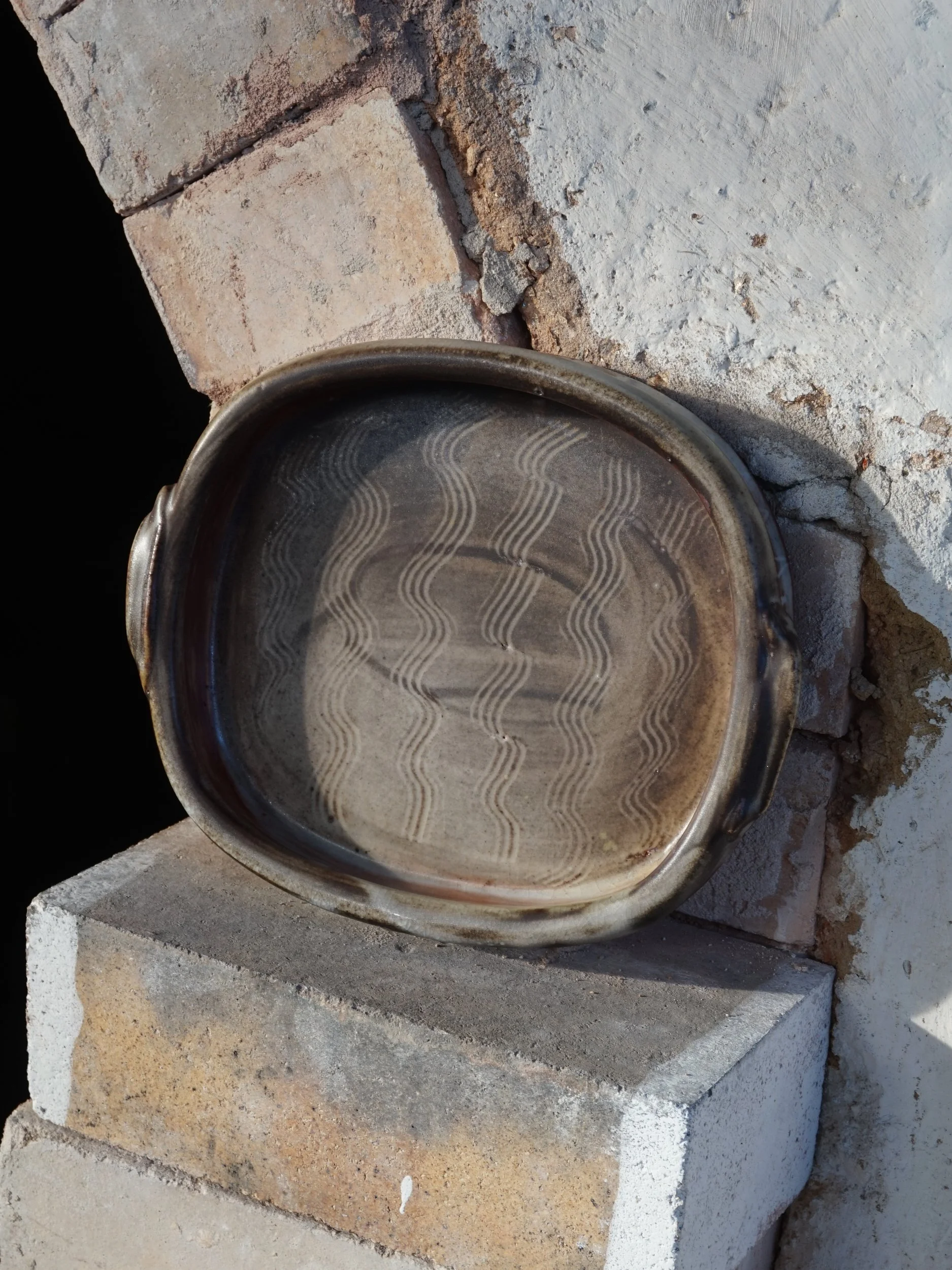
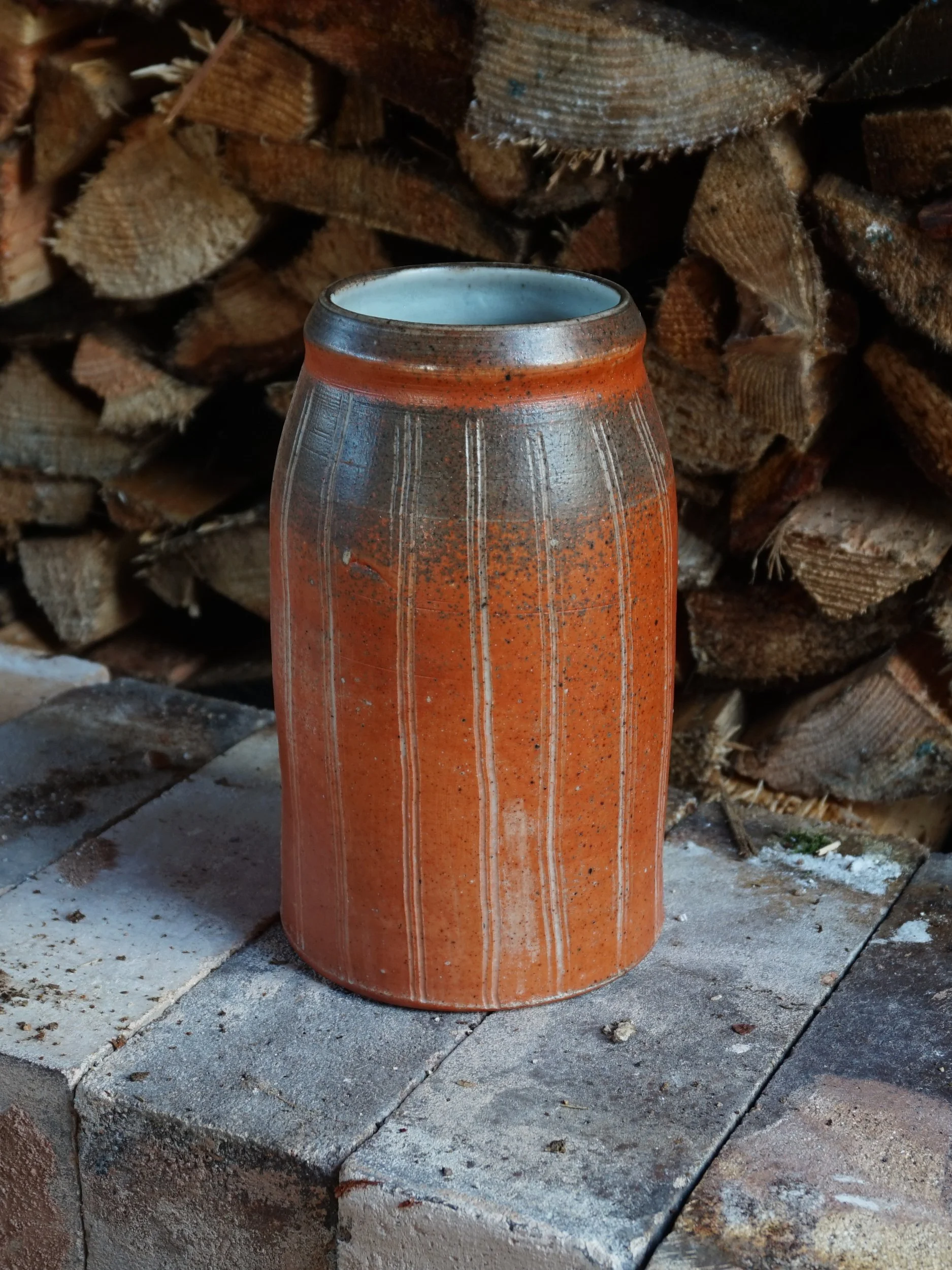
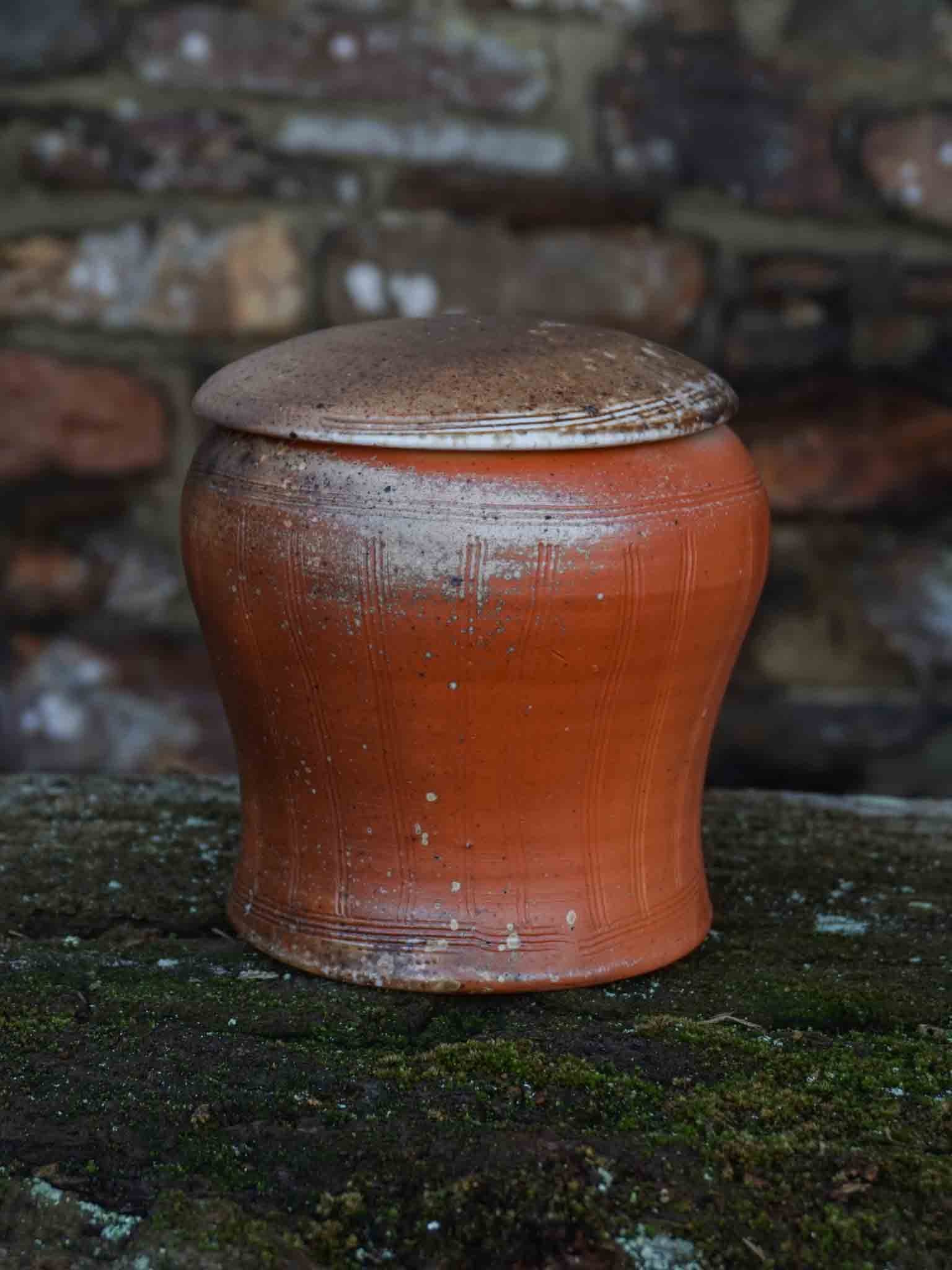
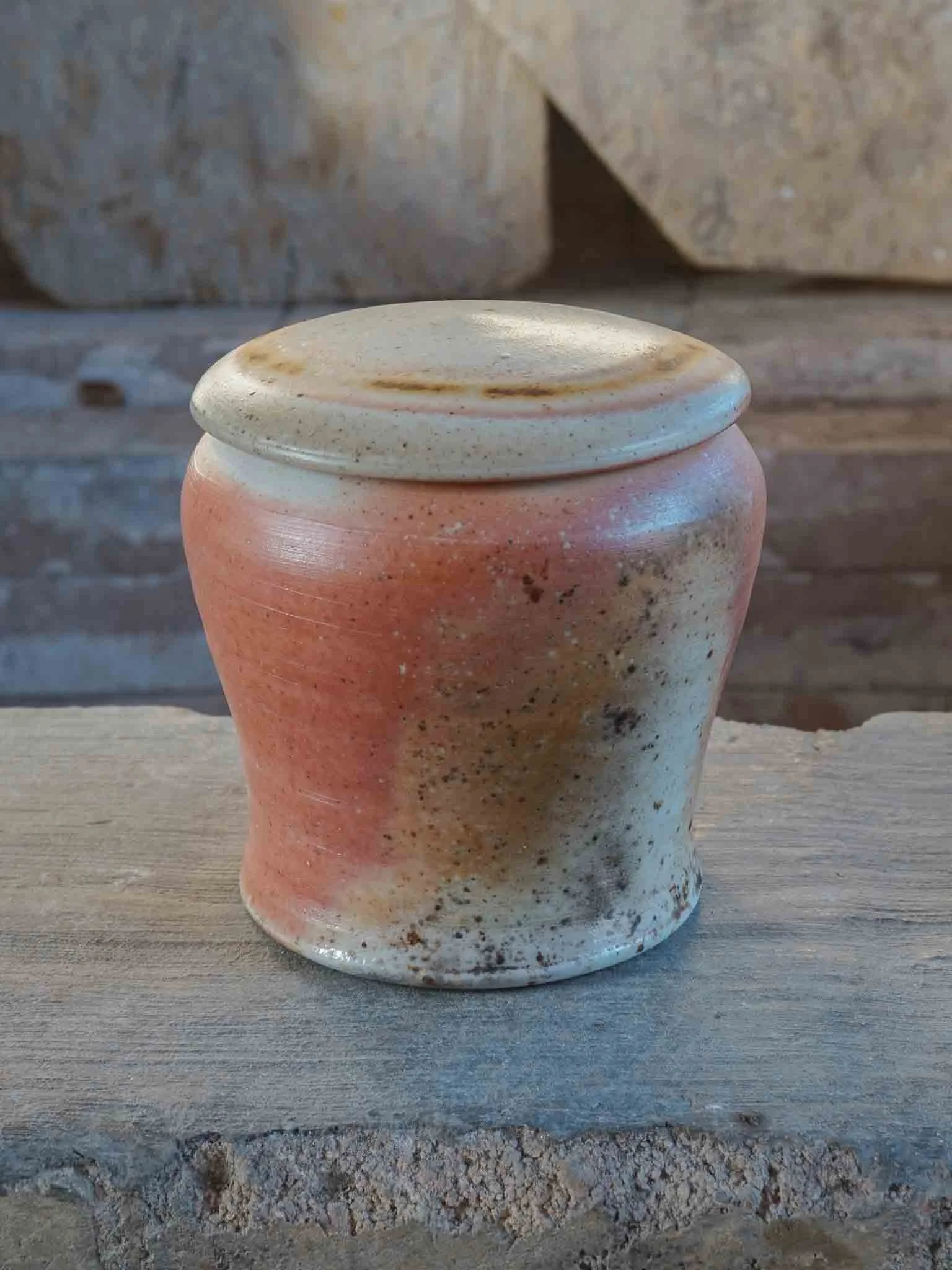
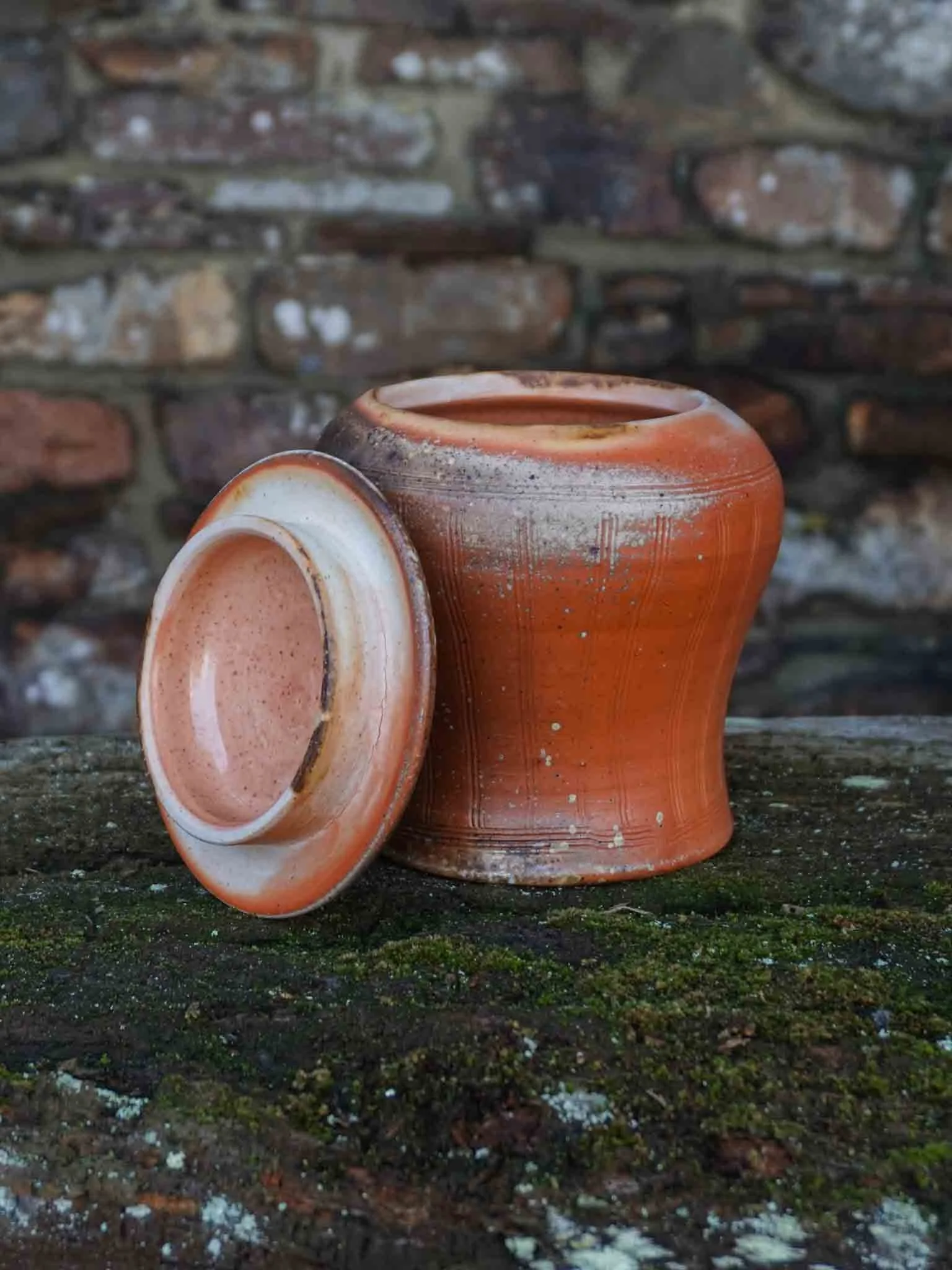
Hand thrown in porcelain, the Orange Lidded Jar is made by Elin in Dartmoor, South West England. Wood fired with flashing slip and a shino liner glaze, the piece is fired in reduction to 1300C, allowing flame paths and surface markings to emerge naturally through the firing process. Its soft, functional form carries subtle variations in tone and texture, reflecting Elin’s attentive approach to material, atmosphere, and the quiet presence of objects shaped by fire and time.
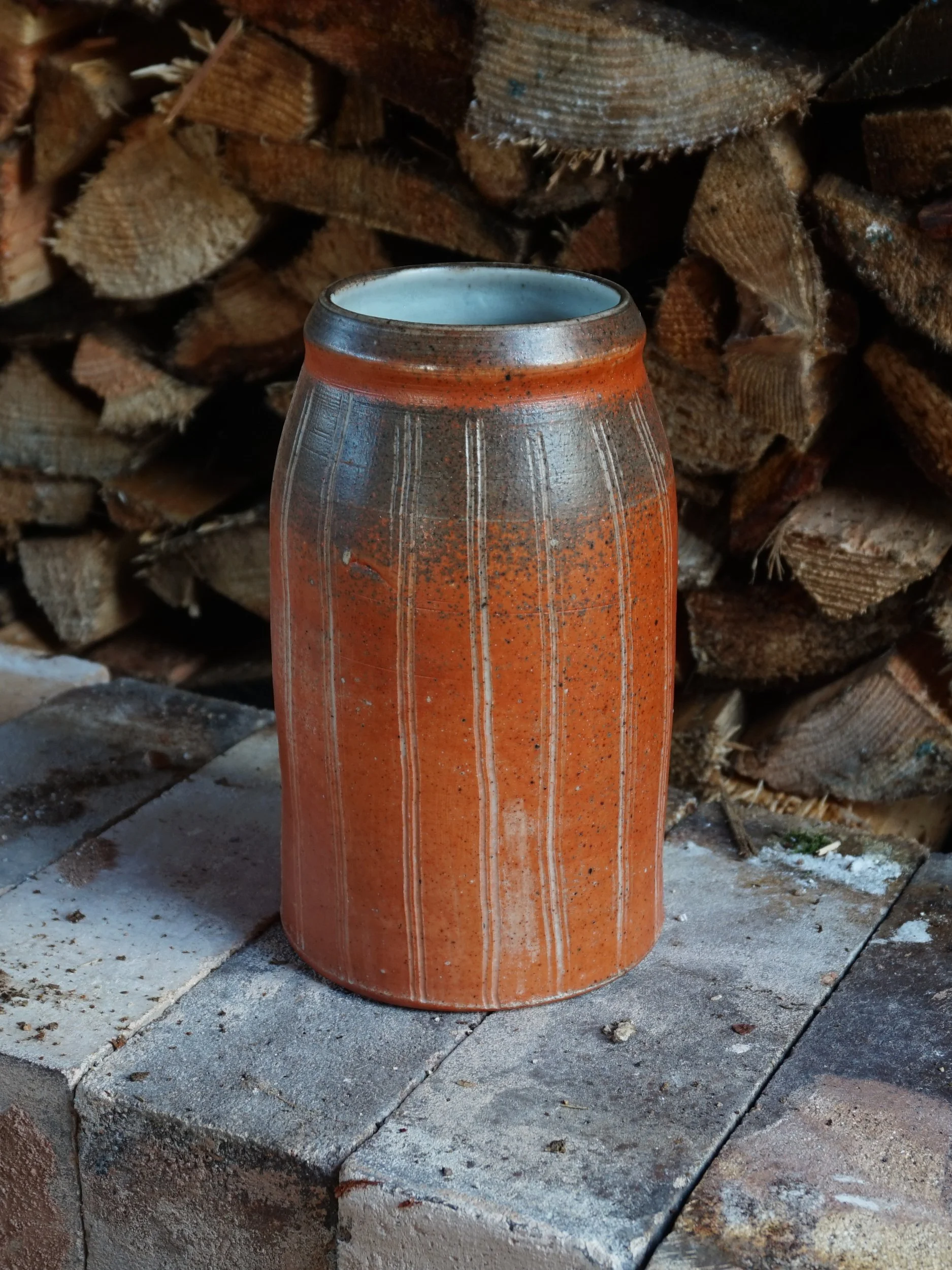
Hand thrown in porcelain, the Orange Vase is made by Elin in Dartmoor, South West England. Wood fired with flashing slip and a chun liner glaze, and fired in reduction to 1300C, the surface carries soft tonal shifts shaped by flame and atmosphere. The gentle form and layered markings reflect Elin’s sensitivity to process and material.
