Candice Crotet
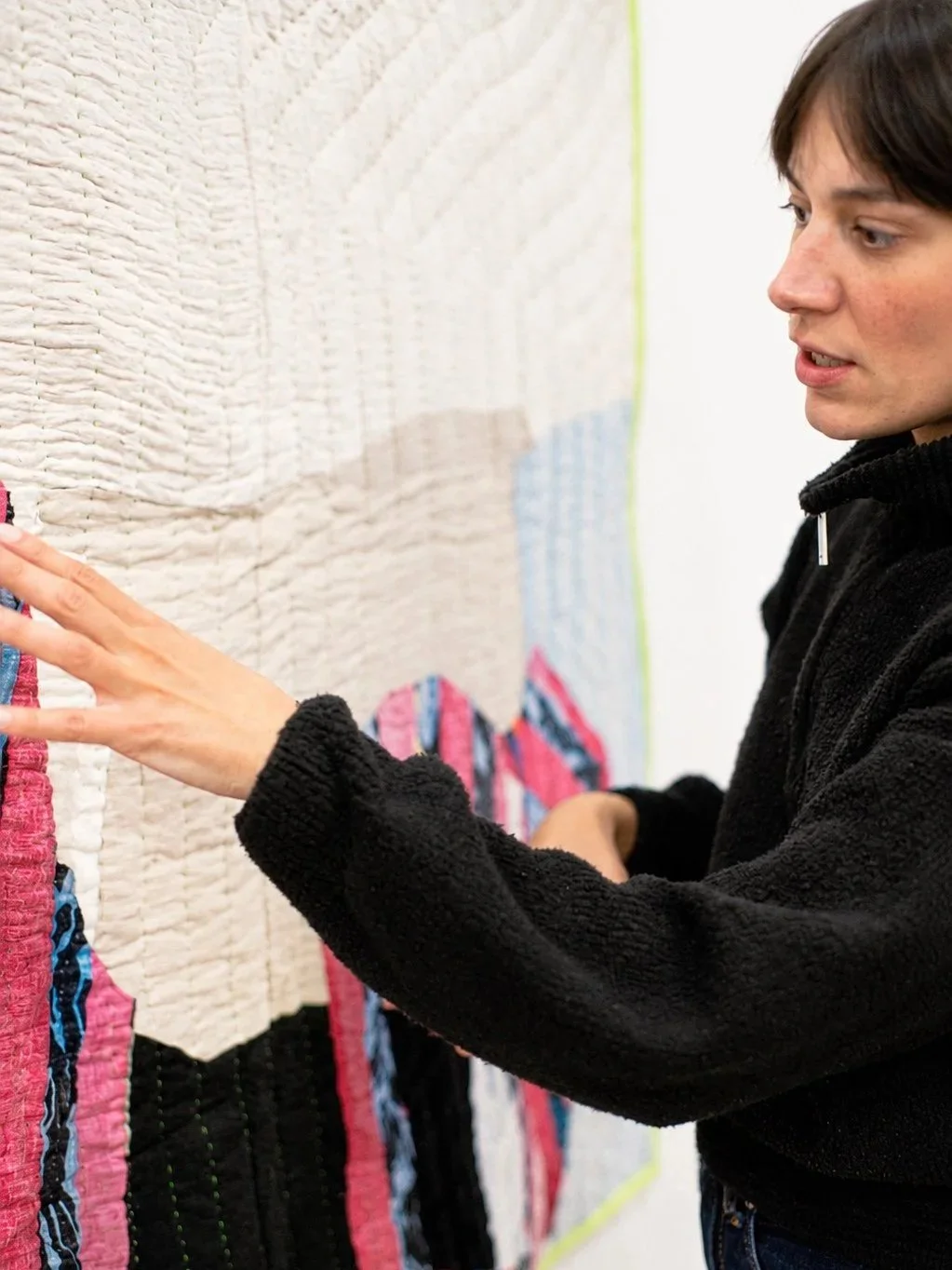
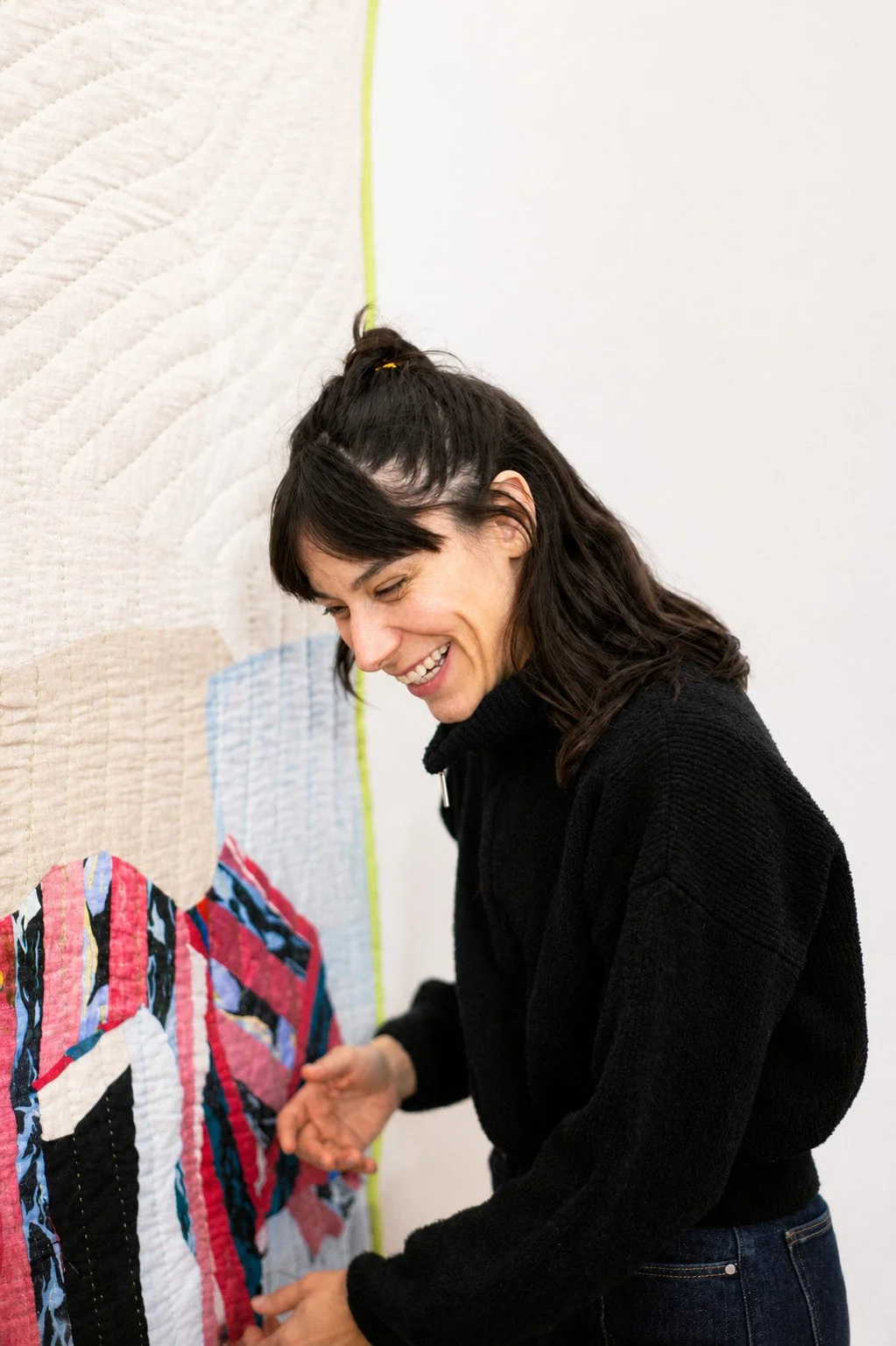
Please share a bit about yourself and your background.
I am Candice Crotet. I was born in 1991 in the French countryside, where I still live today. I studied art history and exhibition practices, and for some time I worked organising gigs. During that period, I also practised photography, experimented with abstract painting, and wrote.
With the rise of social media, the multiplication of images, and constant access to information, I abandoned all of these practices. During this period of pause, I reconnected with the outdoors and reading, and discovered radio and dance. This search for meaning led me back to university to study psychology. At the same time, I discovered quilting, and my practice began to resonate with what I was learning about psychic envelopes, defence mechanisms, and the skin.
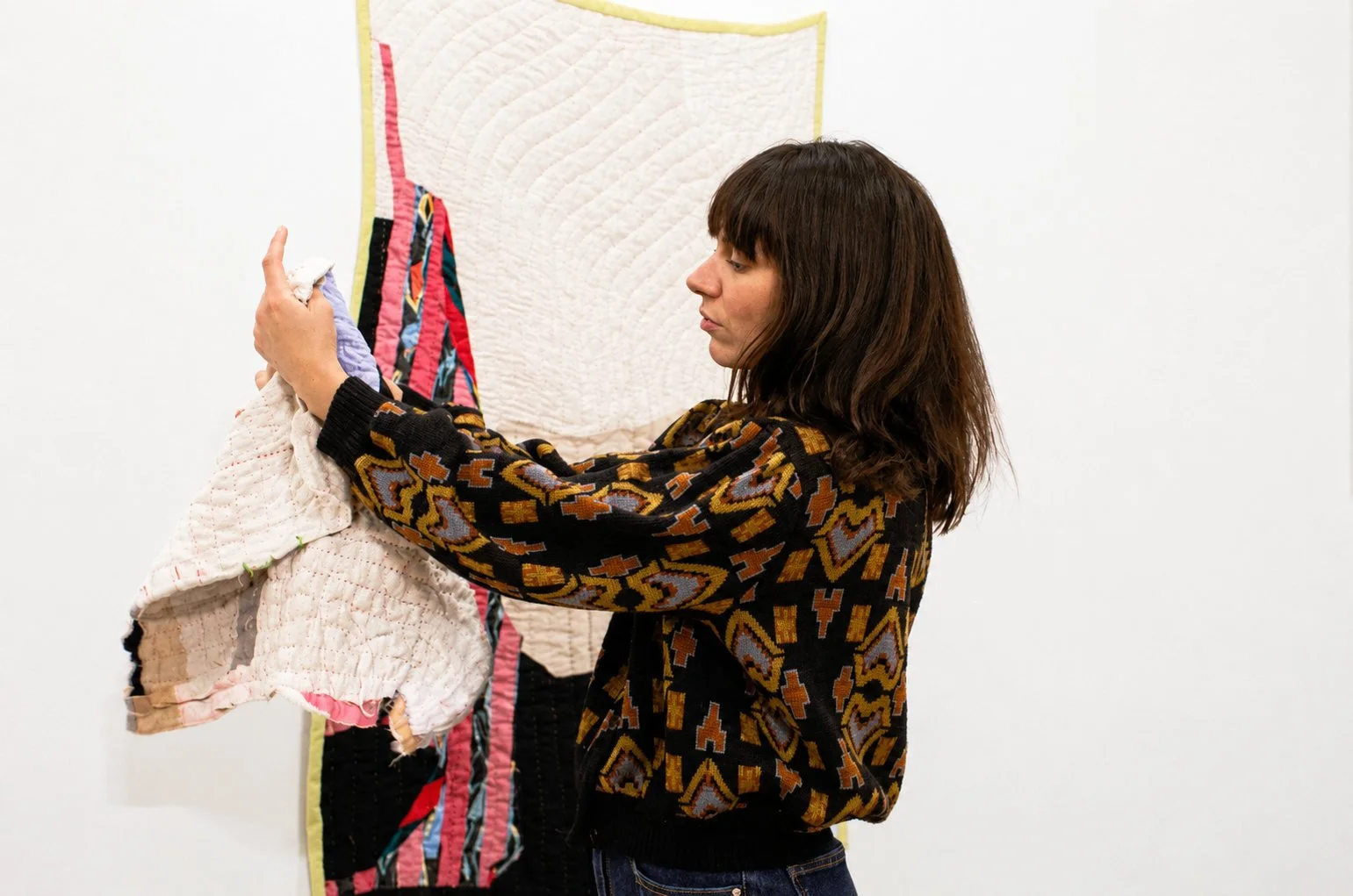
Since 2022, I have been a quilter, and for the past year I have been working as a professional artist. Self taught, I create quilted blankets and colourful, textured textile pieces, favouring reused materials and physical engagement through hand stitching. I enjoy revisiting traditional codes by blending them with pop culture and my feminist and political commitments.
What first drew you to quilting, and how did this medium become central to your creative expression?
On a rainy autumn day, my mother showed me how to use a sewing machine. Until then, I had never had the necessary patience. It coincided with the joyful discovery of Amanda Nadig’s work on those same social networks that had pulled me away from my practice. That’s how I discovered quilting. It was a revelation.
At first, I sewed clumsy patchworks by machine, then by hand using old sheets or scarves, which I later quilted. In doing so, I rediscovered my love of composition, without the messiness of painting that had frustrated me. Quilting became my main activity; it soothed something in me. The repetition of the gesture encourages that. It helps me gather myself and feel grounded. The practice is meditative. It creates space for care, moments of mental rest, and bodily slowness.
It was the return of an introspective handmade practice that forced me to slow down in a world moving at an ever faster pace. The kindness of the quilting community has also meant a lot. Guided by a desire for collectivity and to weave links between different heritages and continents, they have created a safe space where everyone celebrates and encourages one another.
Your creative journey began in photography and drawing. How does that early experience shape the way you approach textile today?
What I loved about photography was capturing everyday moments. I wanted to leave a trace, to remember all those encounters, to bear witness. It’s the same feeling that leads me to write in my journal every day. I’ve always been fascinated by nostalgia and by the gratitude one can feel when looking back on one’s path, paying tribute to what has been.
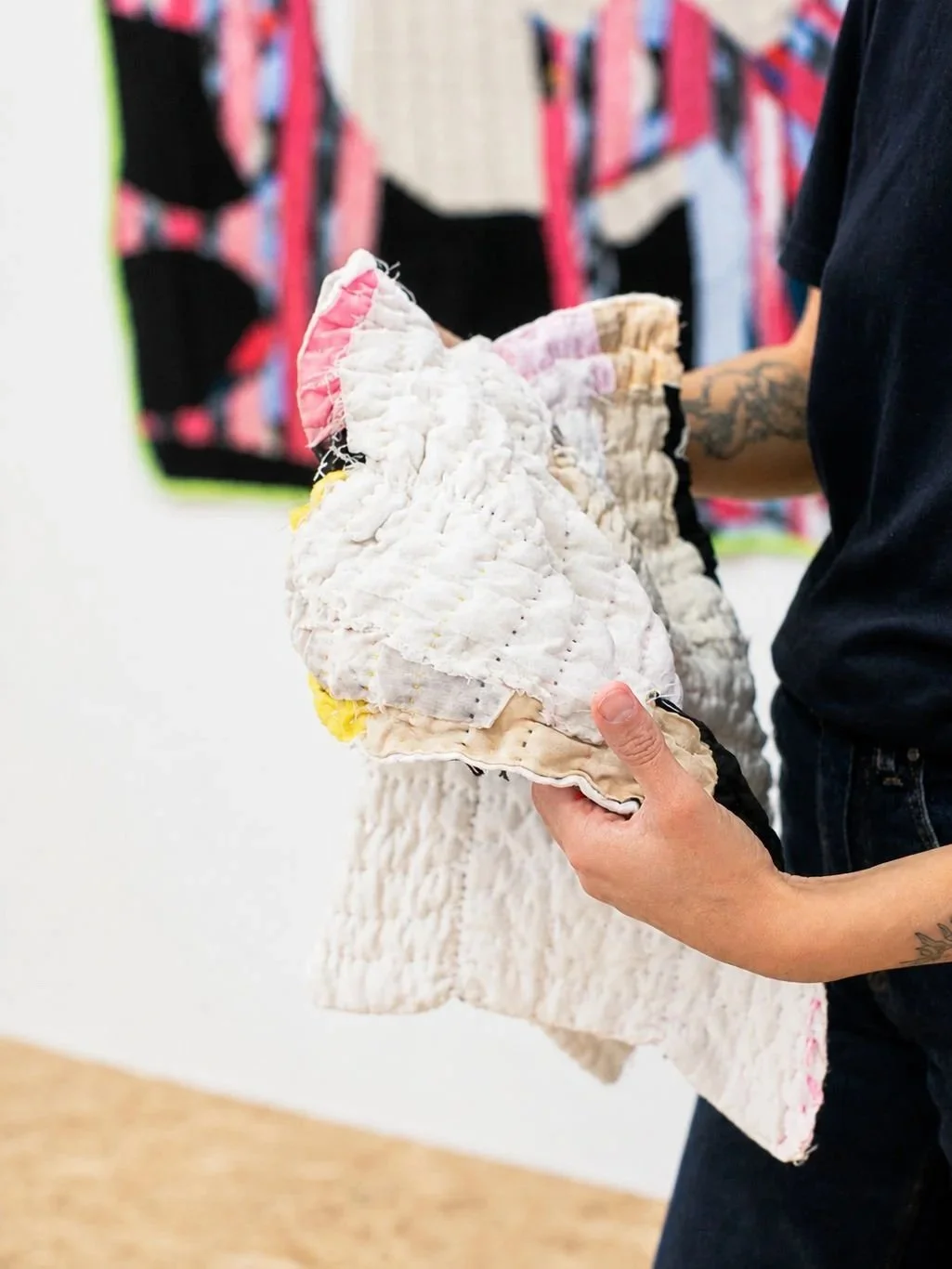
That’s what I find again in textile. I use old clothes, scraps from previous projects, and donations. My wardrobe is full of fabrics that come from everywhere. Textiles carry lived experiences in their fibres. I’m also interested in the object of the blanket, something containing and comforting. The idea of caring for others. Perhaps it’s this relationship with others that connects everything. I still need to reflect on that.
Each of my quilts is another way of bearing witness, documenting what I go through, from fantasy to grief, from anger to joy. As for drawing and painting, I think they gave me a taste for composition. I like to see my quilts as blankets, but also as wall quilts, as artworks.
Can you take us through your process? Do you have a favourite part of the creation process?
I begin with a patchwork composition, mainly by hand using appliqué techniques. Inspiration often comes from the fabrics themselves or from political and personal contexts. Sometimes I make sketches, but not always. The quilt gradually reveals itself. It will become either a wall quilt, a blanket, or a banner.
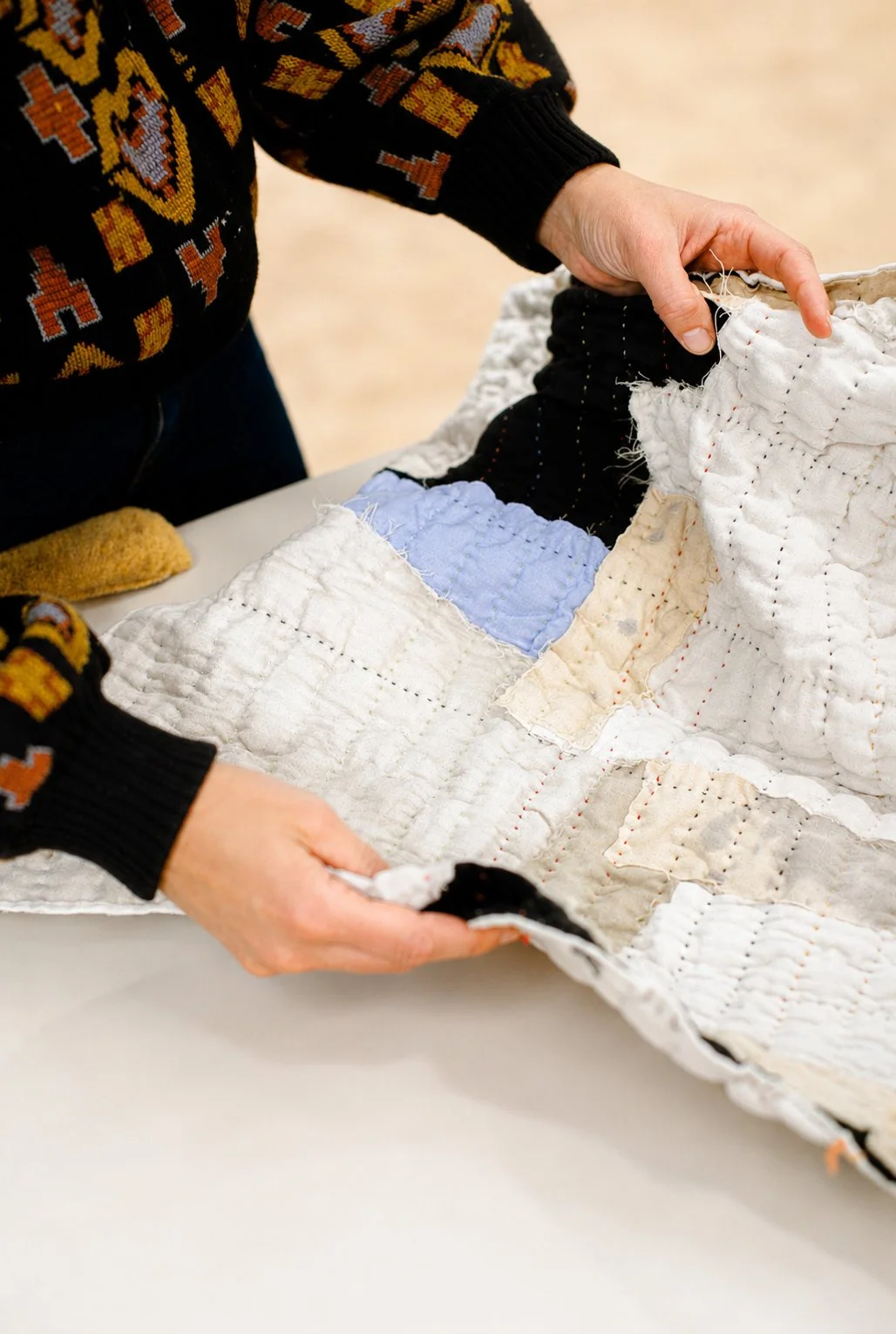
Next comes the “sandwich” stage, where the three layers, top fabric, backing, and batting, are pinned together. I favour cotton or wool. Then the quilting begins using coloured cotton thread. First, I have to decide what I want in terms of texture and movement. How tightly will I pull the thread to twist the fabric? How much space will I leave between the lines?
Finally comes the binding stage. I fold the backing fabric over to the front to close the quilt and sew it by hand with an invisible stitch. This is my favourite step. It’s the moment when all the elements finally come together, when the cycle and the process come to an end. I feel great satisfaction in discovering the finished object after weeks or even months of work, handling it, loving it, and sometimes hating it too.
You work with upcycled fabrics and colours that hold deep personal meaning, especially your reappropriation of pink. Could you share more about this thoughtful choice, and what your relationship with this colour has become over time?
It came very spontaneously. My attraction to pink appeared around the same time I began sewing, quite recently. I became almost obsessed with this colour. It soothes me, it grabs me.
Previously, I hated it, out of internalised misogyny, I think. When I was young, I didn’t wear it. It wasn’t for me. It represented a marketed image of the well behaved “little girl” that I didn’t identify with.
Today, it has become a leitmotif. I use it regularly as a gesture of reappropriation and feminist affirmation. We know how socially and politically charged pink is. For me, it also vibrates with joy.
Looking at the contemporary craft landscape, where do you see the greatest opportunities for preserving and reinterpreting important local traditions?
The most meaningful goal would be to root ourselves in human networks, circles of makers, handmade collectives, and intergenerational spaces where we truly meet around our practices, rather than relying solely on cultural policy. Places where we value these objects by touching them, telling their stories, and even washing them.
But it’s a very complex question. In France, where I’m from, quilting is not a craft that has been preserved as strongly as in other parts of the world. I’m not the best person to speak about textile traditions and heritage. I know that some museums preserve ancient textile works, and that’s very good, as long as they are in the right place.
We also see that contemporary art institutions are currently taking an interest in textiles, opening their doors to practices long associated with the domestic sphere. Of course, there is a sexist and colonial history behind this invisibilisation, and it is still present. Not long ago, the cultural officer in my region refused me a grant because I was making something considered too “decorative”. That experience said a great deal about how this kind of work is still categorised.
On the one hand, today’s crafters may seek recognition from these institutions. On the other, I’m not convinced these places are the most suitable to provide it.
Are there any new projects, themes, or directions you are currently exploring that feel particularly connected to your practice?
I have many desires and ideas. Sometimes it’s hard to choose. Recently, I’ve been experimenting more with texture, creating greater relief and swirling forms through quilting. I would like to explore this further and sew quilts that are puffier and more generous.
I’d also like to step outside my comfort zone by returning to a learning phase. There is still so much to discover about sewing.
But my priority is finally to realise a project I began two years ago. I asked all the women close to me, family and friends, to give me a piece of fabric each. I would like to create a blanket from these pieces, a quilt to comfort myself by wrapping myself in all the people I love.
How can people engage more closely with your work, whether through your pieces, exhibitions, or online presence?
I recently exhibited in London at Peanut Vendor with Felt and at Van Gogh House. Soon I will present my first solo exhibition in a local cultural venue near Dijon, France. I’m doing things in reverse order!
To discover and follow my work, the best way is through Instagram. Unfortunately, it’s still the only showcase I have at the moment. I’m always happy to connect online. I also hope to co create a collective with a fellow quilter this year and, together, develop projects for gatherings, collaborations, and exhibitions.
Photos 1, 2, 3, 4, 6 by Photos by @portmanto_21.
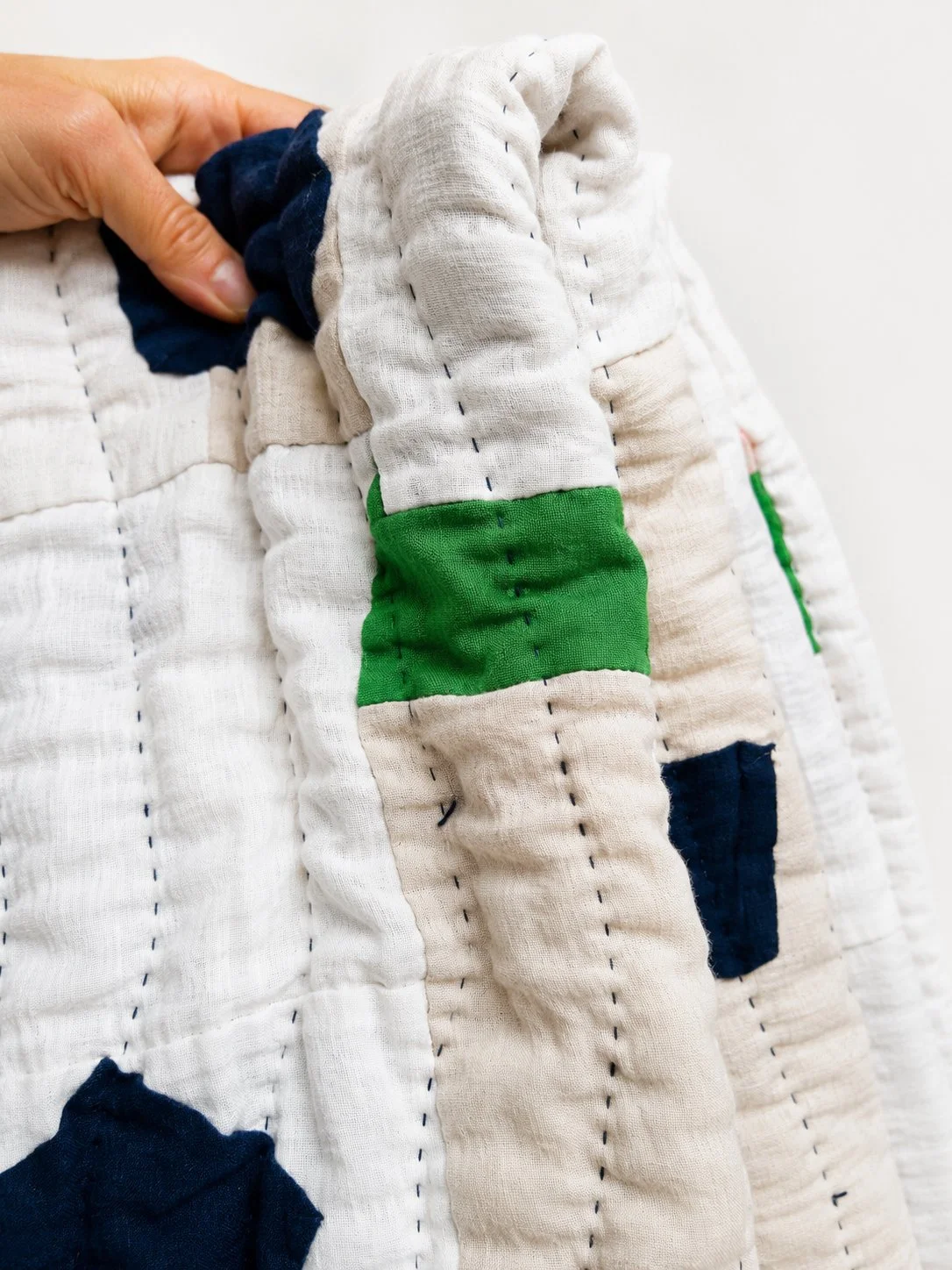
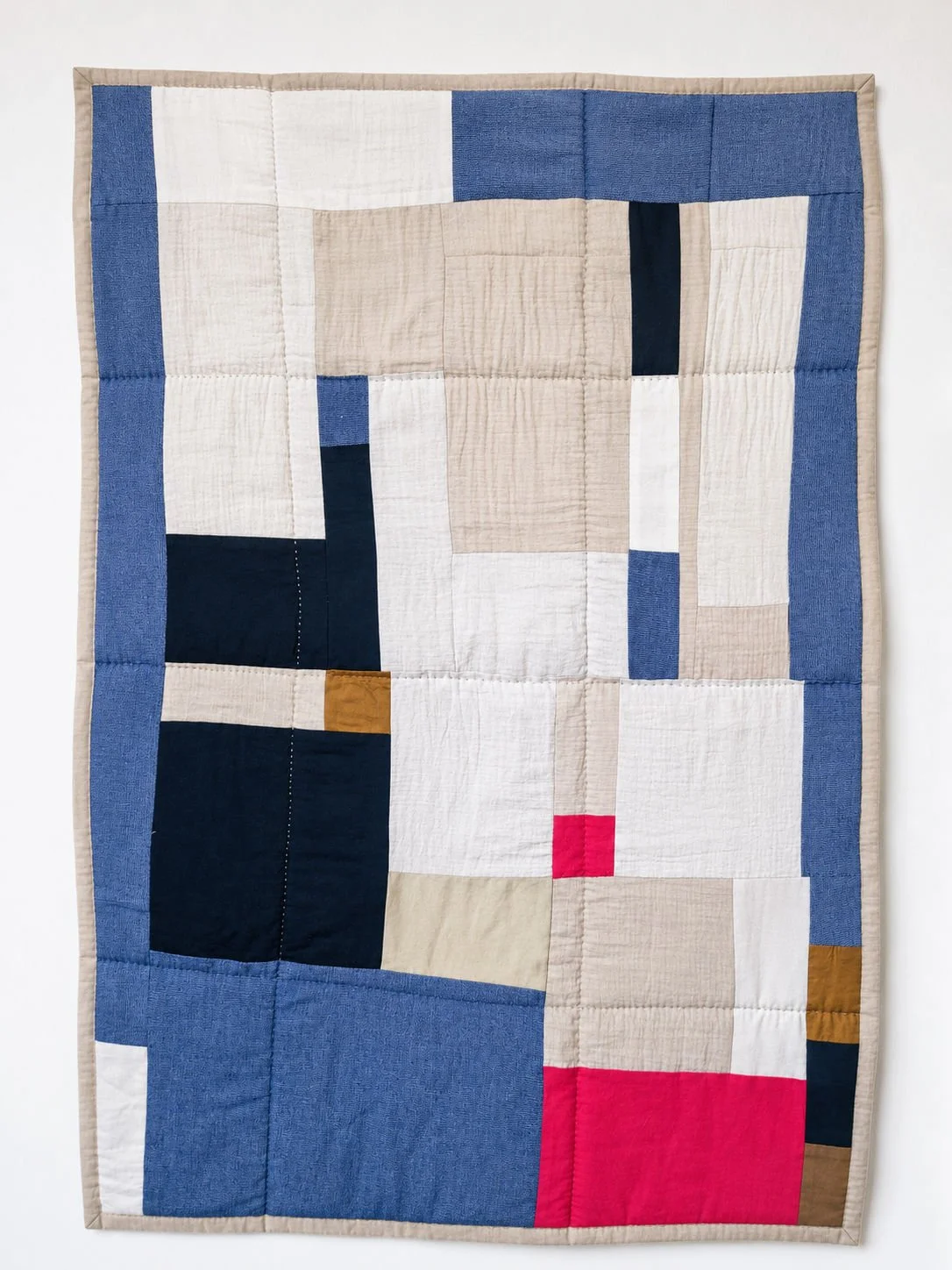
Made in Besançon, France by Candice Crotet, Those That Close and Those That Open is a wall quilt pieced entirely from upcycled fabrics. Blocks of blue, beige, white and black build an architectural grid, with a few accents of pink, brown and gold. Its making was influenced by Japan, and the quilting is pared back to just five straight lines of green thread.
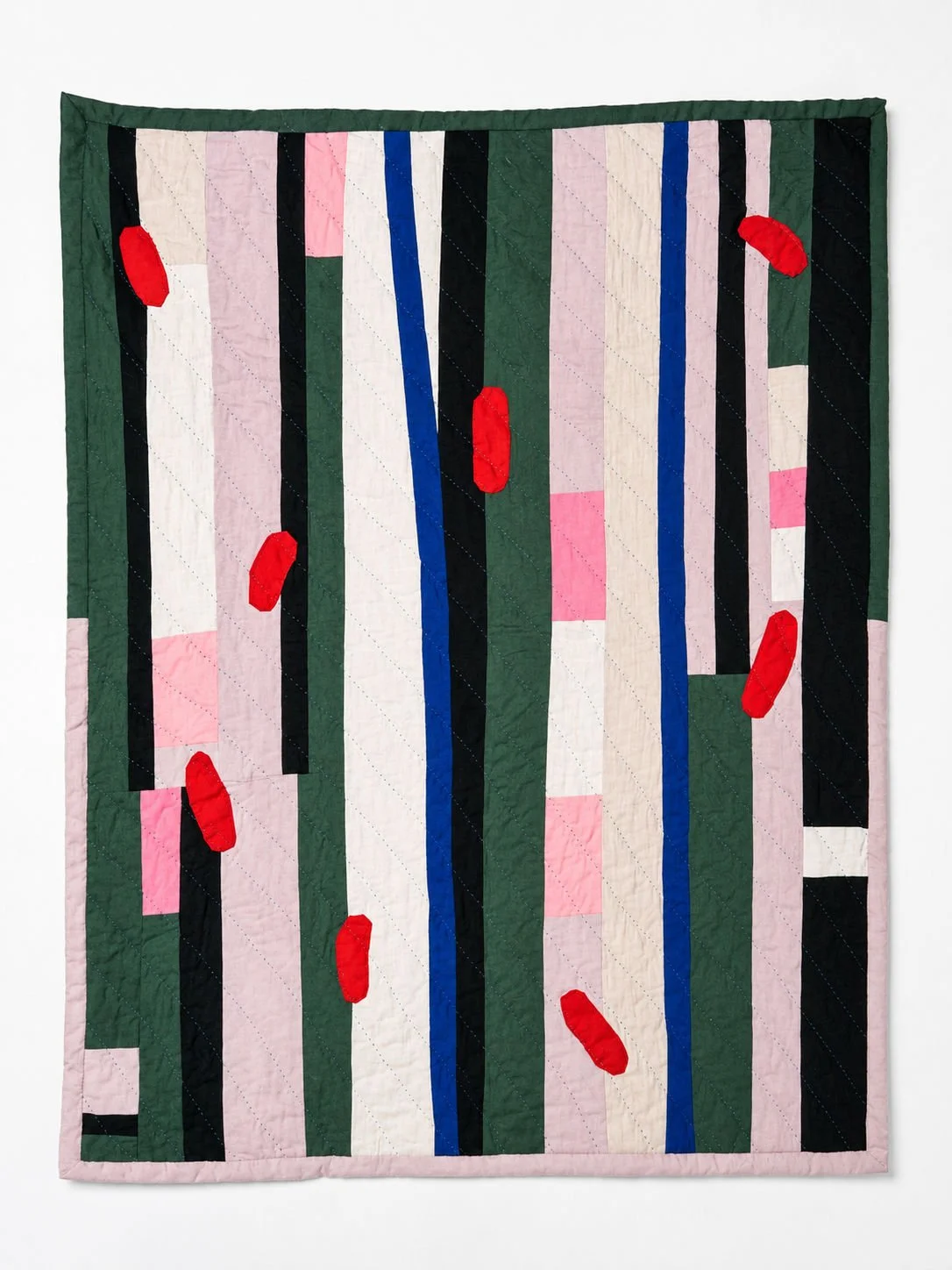
Made in Besançon, France by Candice Crotet, the Baby Quilt belongs to her Stripes and Beans series. Uneven stripes of pink, green, beige, white and black run across the quilt, scattered with red bean shapes appliquéd by hand. It is quilted in blue cotton thread over a cotton padding.
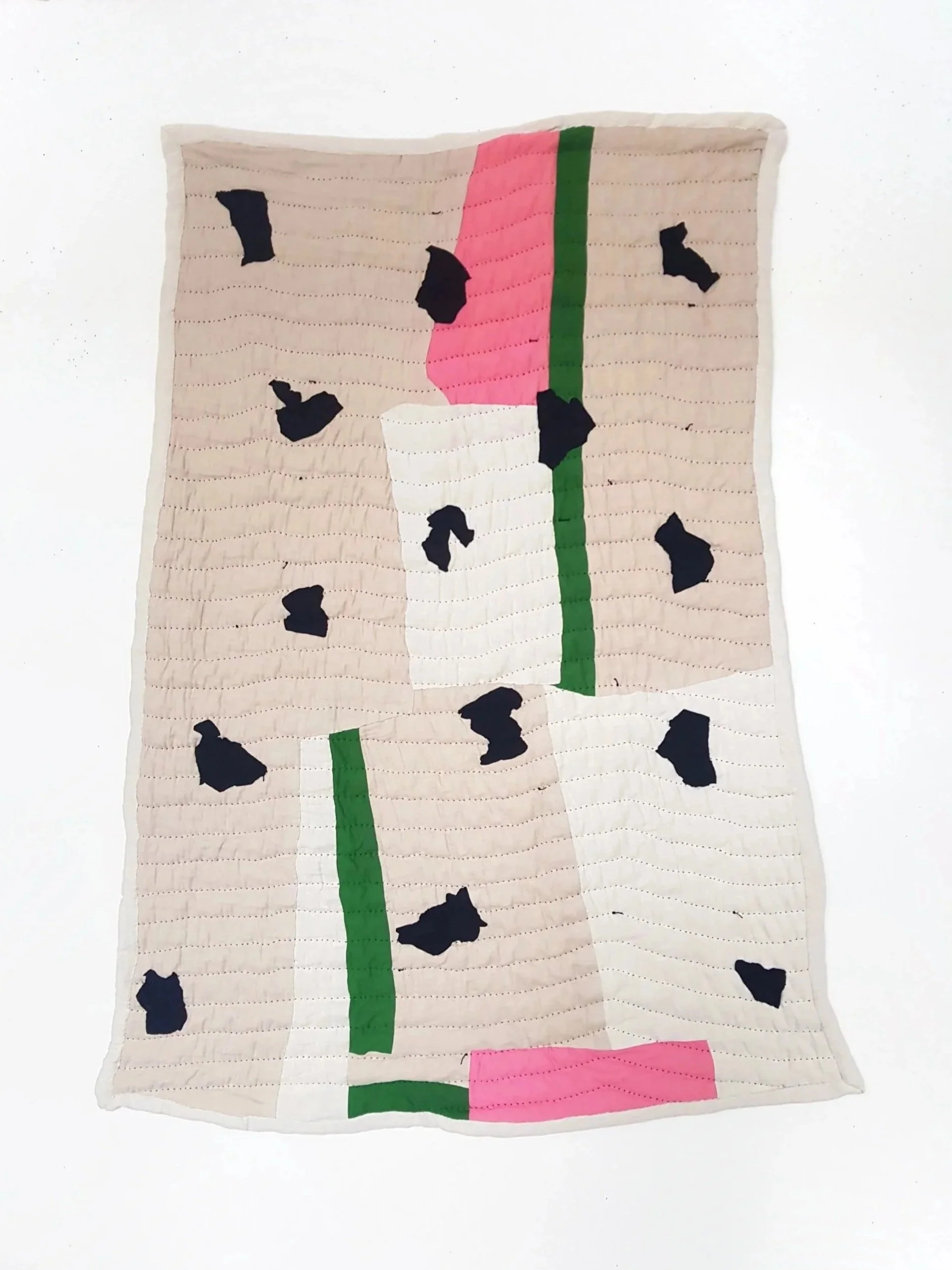
Made in Besançon, France by Candice Crotet, The Pepin Quilt is a hand-quilted wall piece in linen and cotton over a wool padding. On a ground of off-white and beige, two green bands and blocks of pink are scattered with small black shapes, each stitched in by hand. The artist made this quilt about Palestine.
