Beatriz Gómez
Can you tell us a bit about yourself and your background? What paths or experiences led you to where you are today?
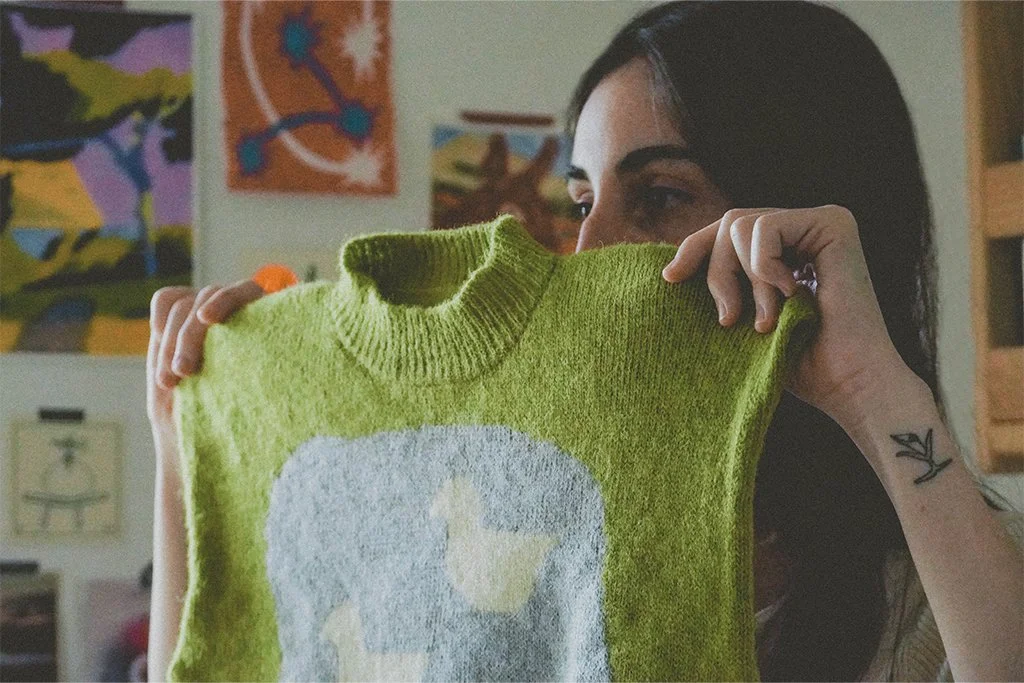
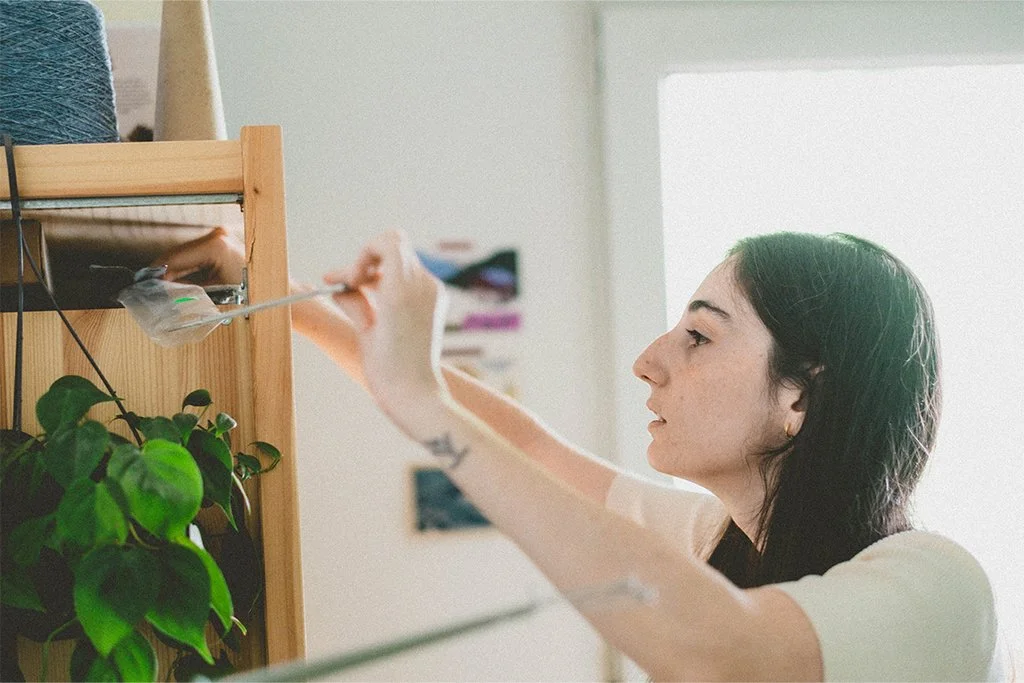
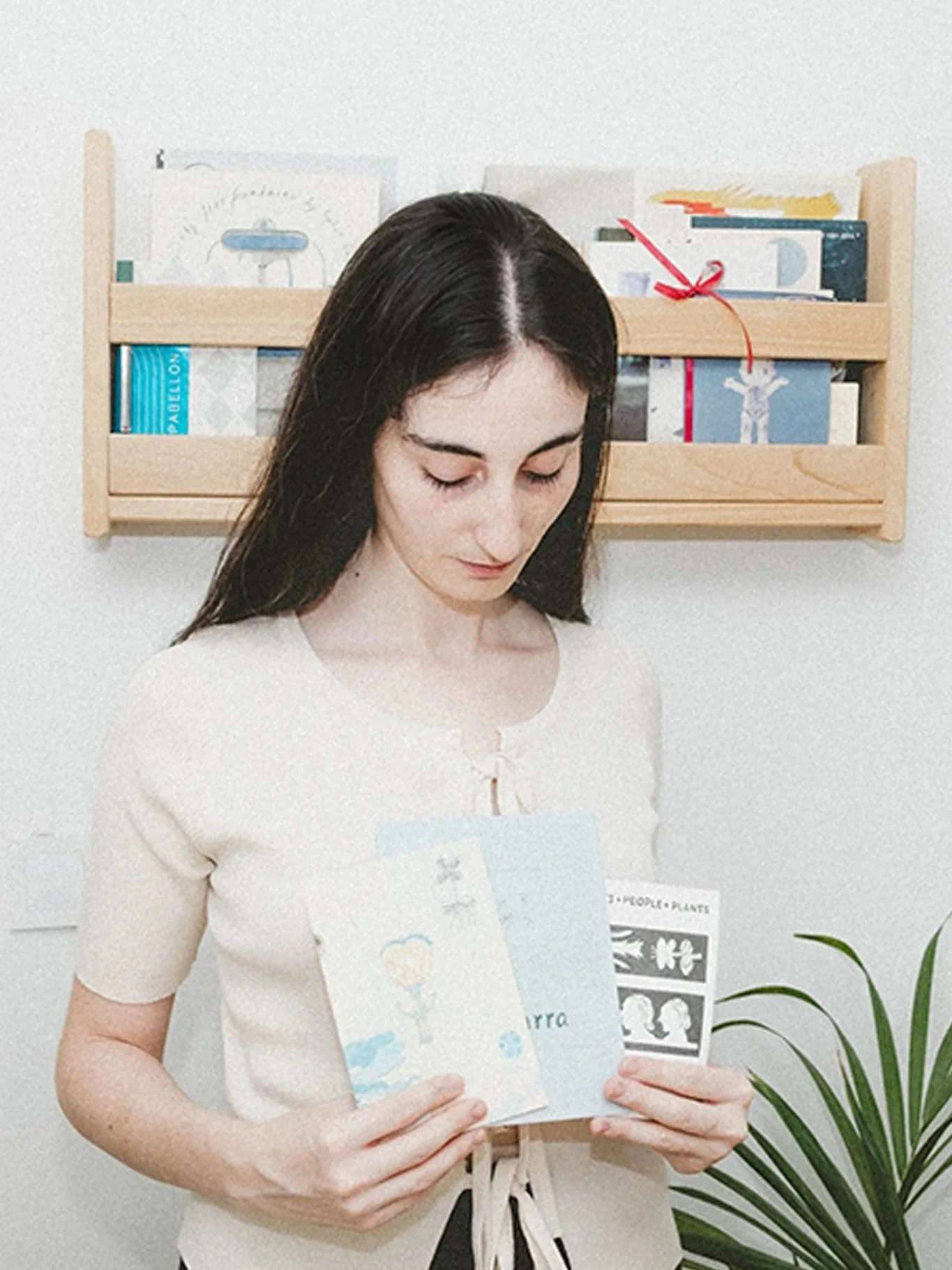
My name is Beatriz Gómez and I’m a visual artist. I was born in Málaga in 1994, but we soon moved to Madrid, where I’m still based. I mostly draw, self-publish zines and knit. I consider myself mostly self-taught—I didn’t receive any formal training. I studied whatever interested me at the time: I took a couple of illustration courses, learned knitting from my grandma and mom, later got into machine knitting, spent a year learning bookbinding, and so on.
I’ve been interested in visual arts for as long as I can remember. My uncle used to give me art supplies and we even painted some pieces together. He also took me to art exhibitions and museums when I was a child. Other loved ones around me are/were also creative—my mom makes amazing textile crafts, my grandma used to as well, and my dad played the guitar. Everyone around me was always making something, so I had to make something too.
How did you begin working with illustration, zines, and textiles? Were there any turning points or early inspirations that guided you toward these mediums?
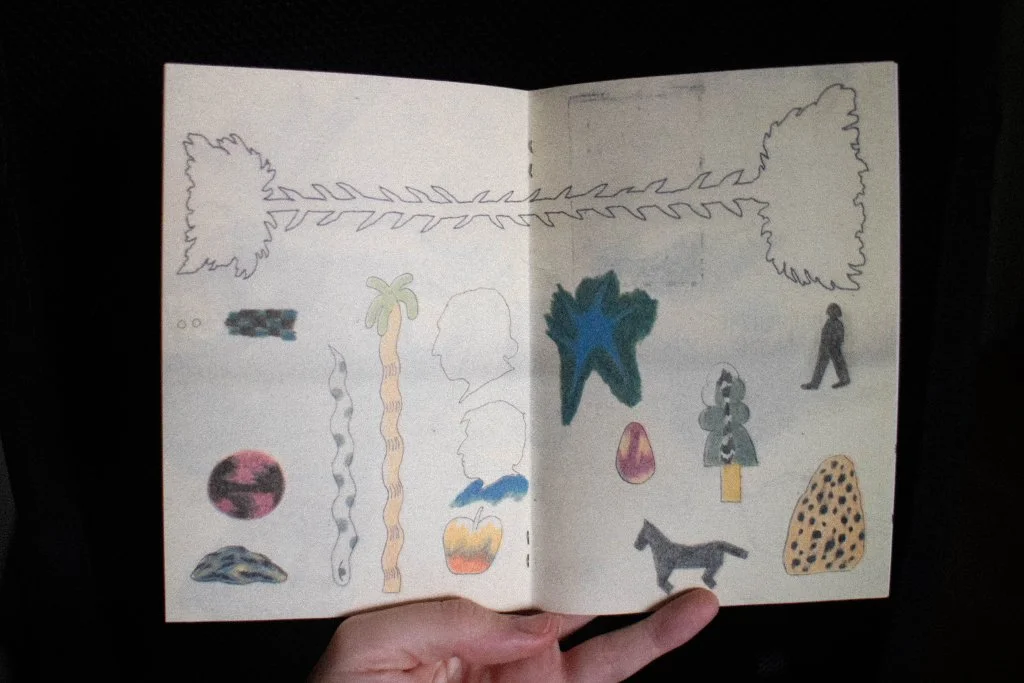
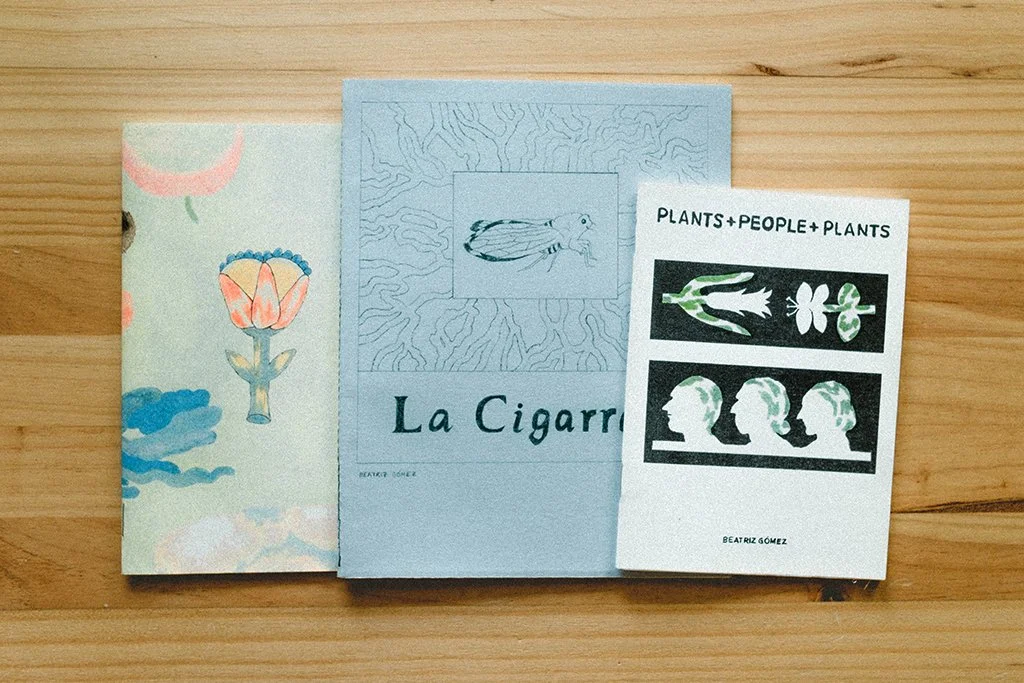
Around the age of 20, the ‘zine scene’ was growing and I found myself more and more drawn to it. In my city, there were barely any zine fairs or bookshops selling them, but I started making zines simply because it seemed fun, and I wanted to use my drawings in a more narrative way. Putting small illustrations together into a collection that could communicate something really appealed to me. Then a major zine fair was announced in my city, I applied with my work, and I’ve been creating zines and illustrated goods ever since—selling them at fairs and in bookshops across Japan, China, Italy, Colombia and Spain. I’ve also taken part in solo and group exhibitions in various galleries in Spain and Portugal.
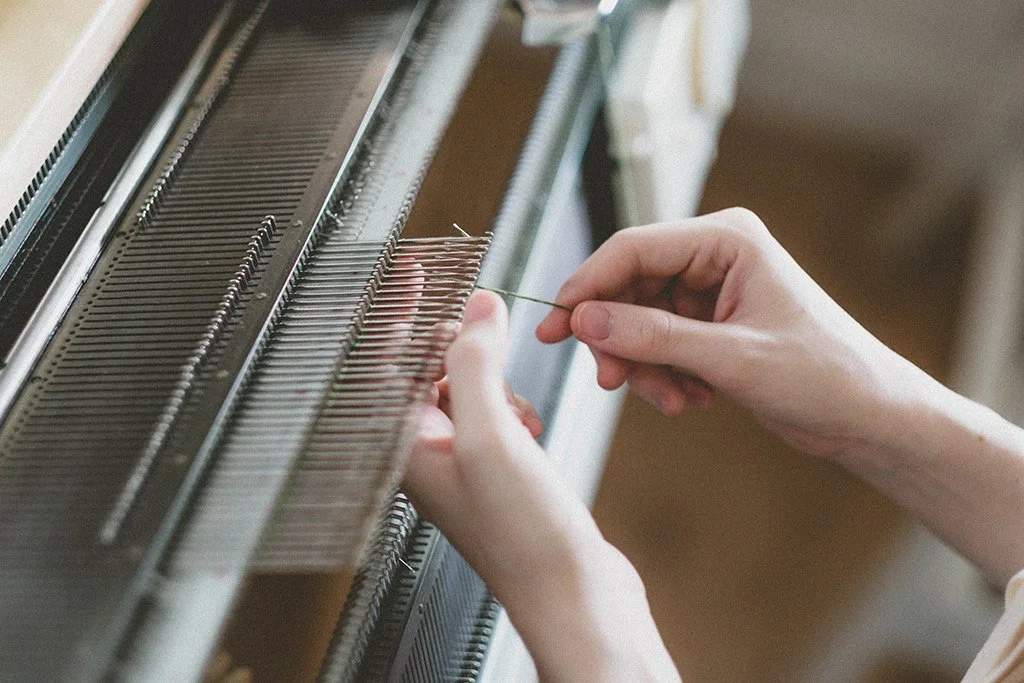
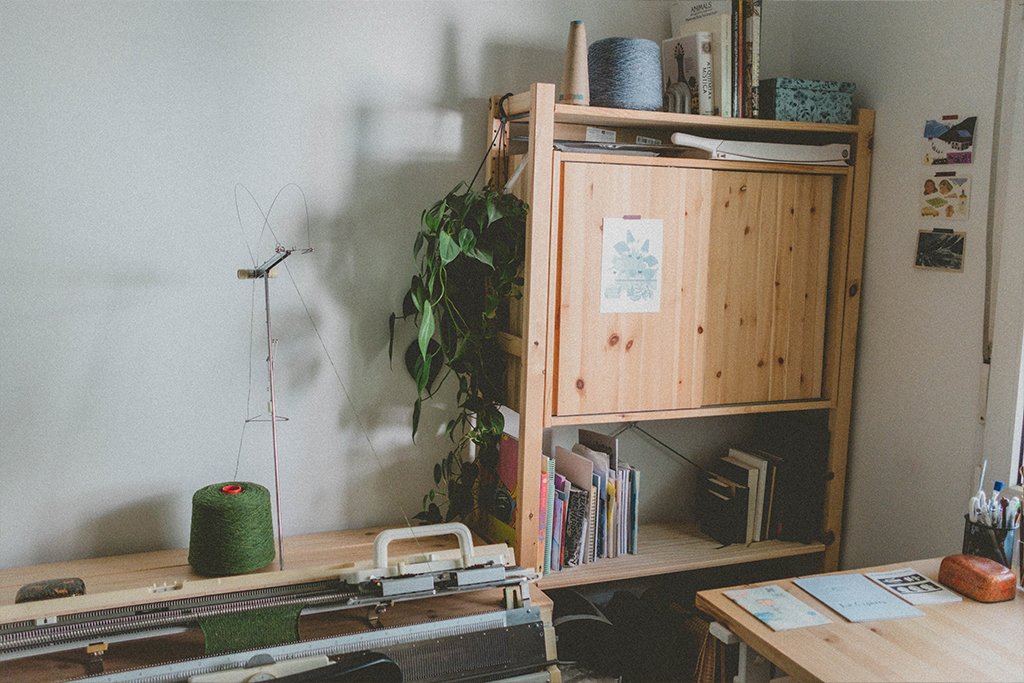
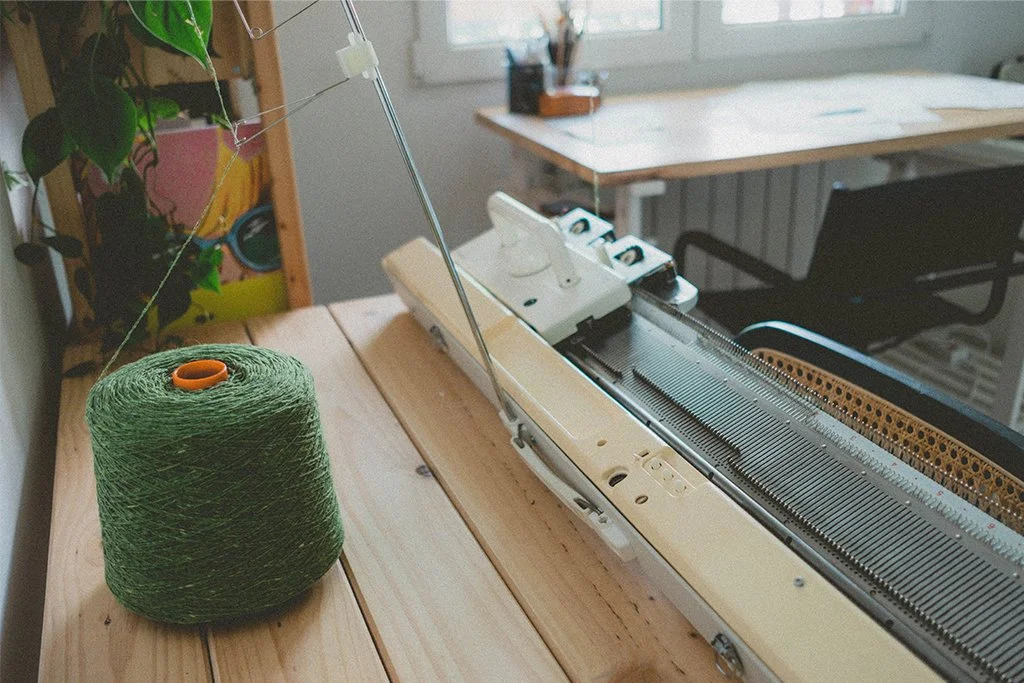
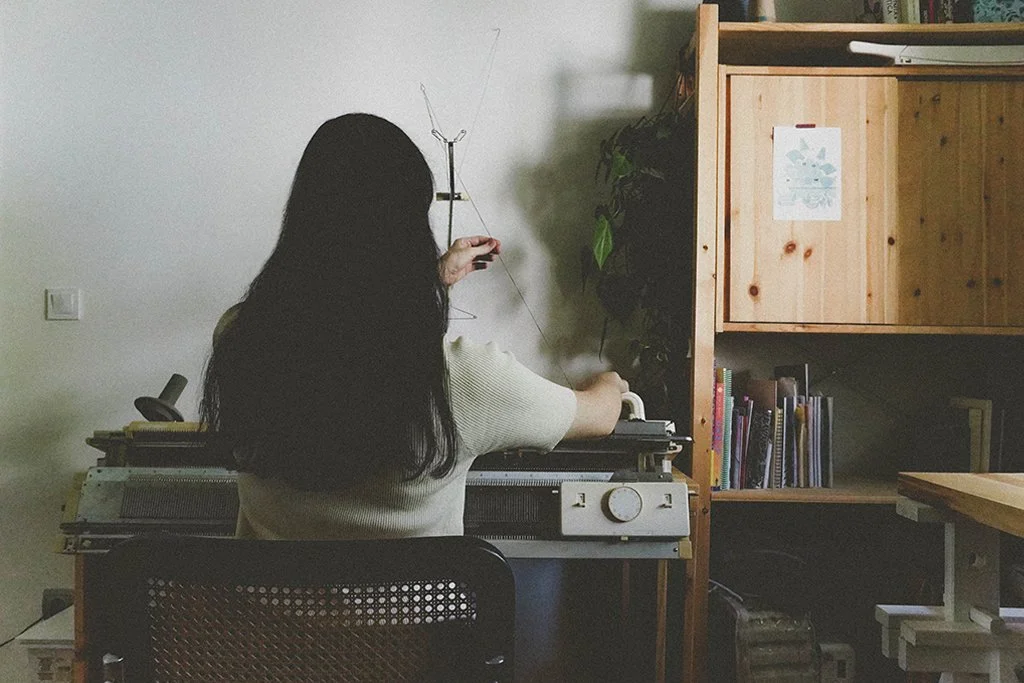
Meanwhile, three years ago, I began learning machine knitting because my grandma Micaela used to do it when she was younger. She had a second-hand knitting machine and used to make garments for her loved ones. Her textile practice included sewing, embroidery, and more. Back in the 50s, she used to sell some of her knitted work to local fashion shops to make some money. She often offered me the last machine she owned (a 70s model). I cleaned it up, but it had been used by her to hold flowerpots for years, and I couldn’t fix it. So I bought a second-hand knitting machine—wanting her discipline and mine to meet.
Can you walk us through your creative process? Do you have any particular rituals that help you dive into it with greater ease and foster a more natural flow?
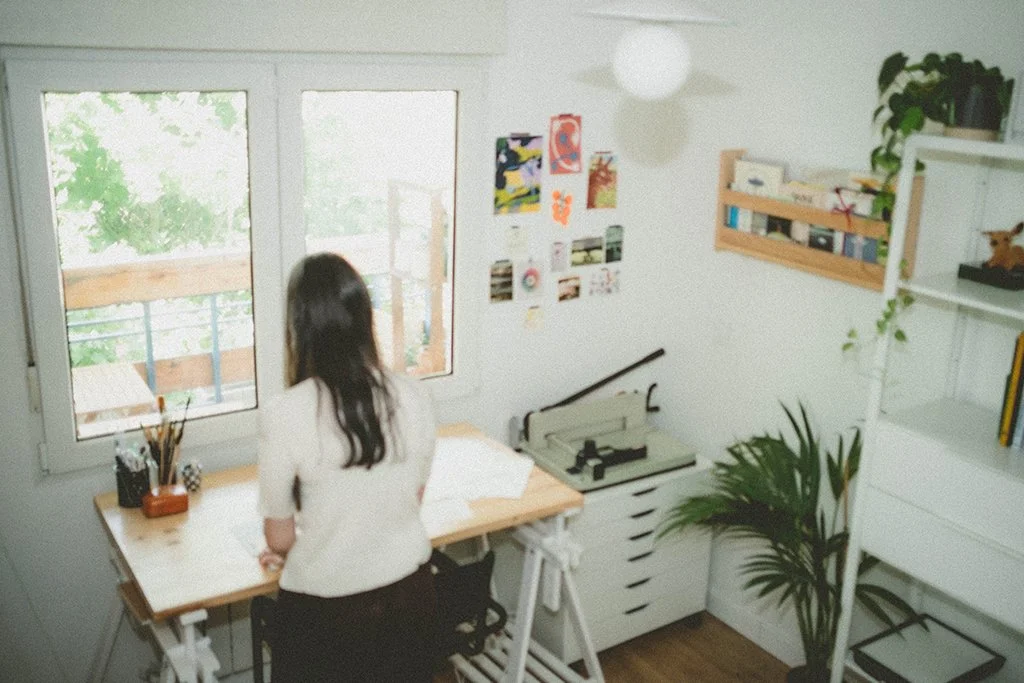
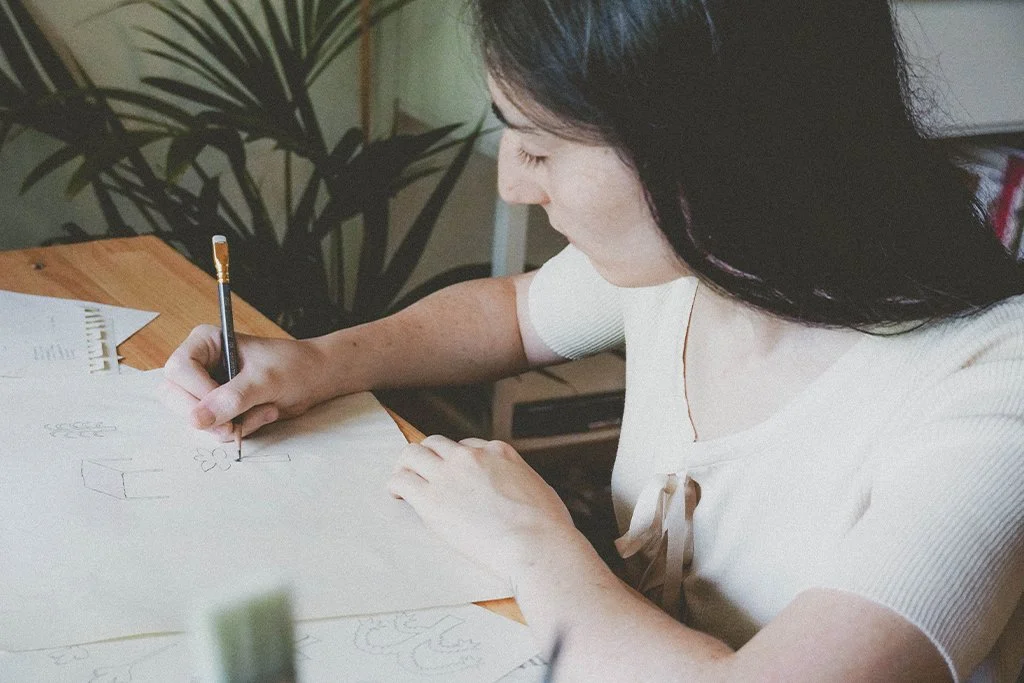
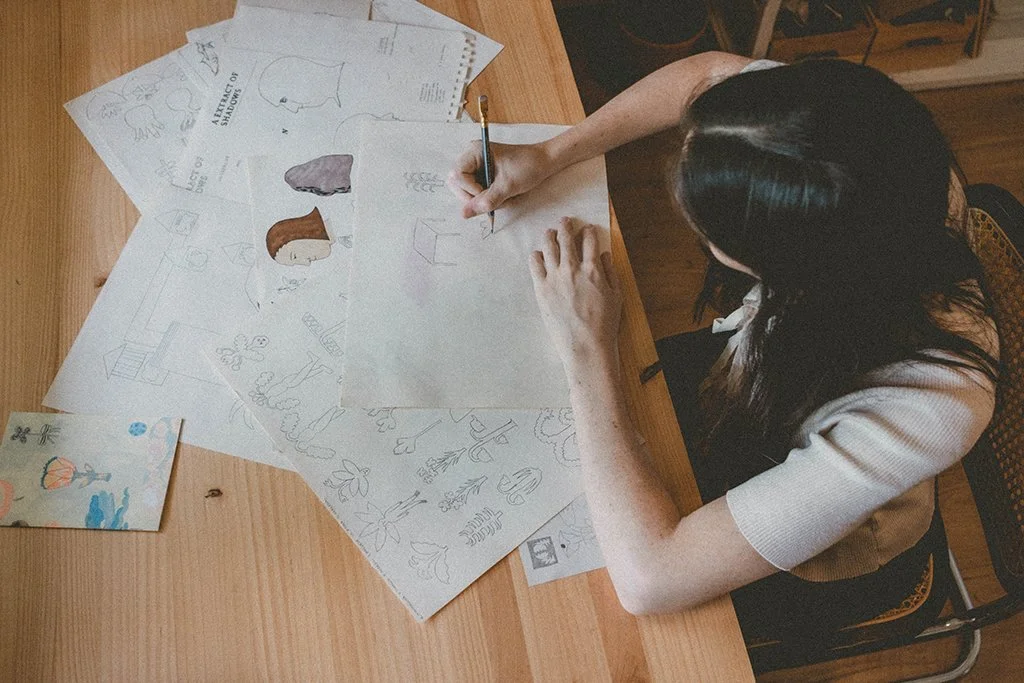
I usually start by doodling because nothing scares me more than a blank page. That’s how I warm up my hands and brain. Most of the drawings I make during that phase end up being the ones I actually use as final work.
When I was starting out, I was worried about having a ‘clean process’, but that’s definitely not for me—at least in drawing (knitting is different, as it requires more structure and planning). I’ve learned to embrace what feels chaotic.
Something that really helps me concentrate and immerse myself is music. I’ve tried podcasts/films/series but they distract me too much.
How did the zine Plants People Plants come to life? What sparked its creation, and what story were you hoping to tell through it?
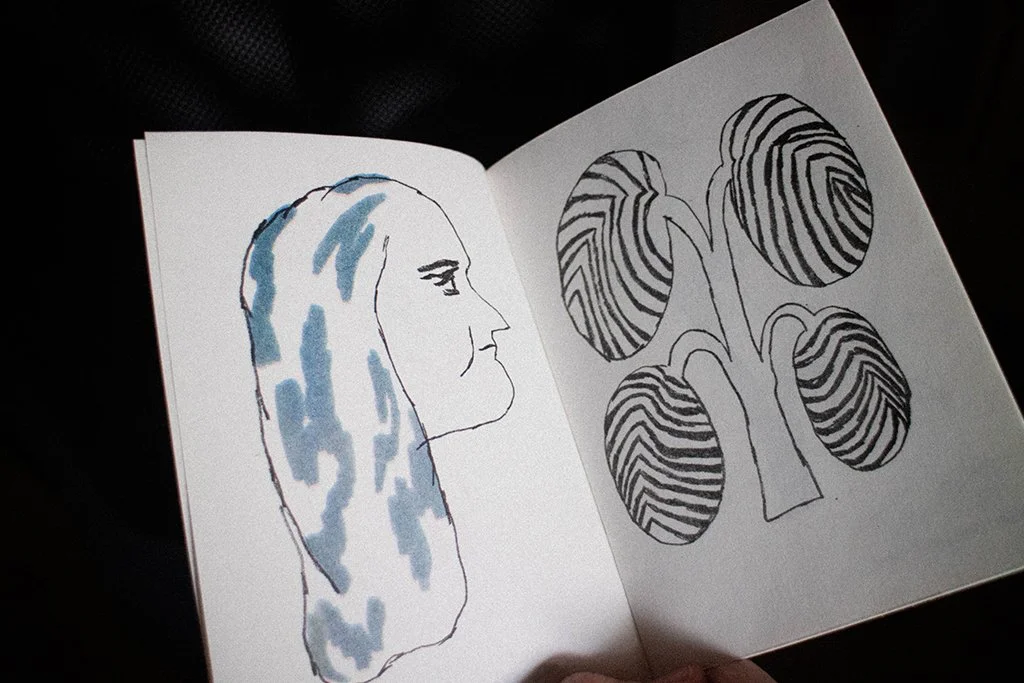
Plants + People + Plants started during a time when I was deeply immersed in both gardening and reflecting on personal (and others’) relationships. I became fascinated by the way plants and people mirror each other—how both require care, space, and patience (they even moisten each other when they need it). The zine became a space to explore that overlap: stories of growth, understanding (or not), and the quiet labor of tending to something or someone.
I created some drawings I really enjoyed, especially because I love inventing plants, and I wrote freely as ideas came to mind. I contacted my great local riso-printer (@larisoguapa), and she helped me a lot with rearranging the files to make the zine beautifully printed.
Much of your work draws from the natural world, human relationships, and everyday objects. What draws you to these sources of inspiration?
I think objects attract me so much because there’s always a story behind them—they’re not just things to me. Even a chair has a story. I’m fascinated by ancient people making objects for others, whether they were useful or not. That’s what humans have always done: create for each other.
What these things have in common- the natural world, human relationships and everyday objects- is that I think they should be observed carefully and without rushing. If you don’t stop to reflect on your own relationships or behavior, it’s hard to understand yourself and others. It’s uncomfortable to live without slowing down-which is quite difficult as the human world encourages that.
I find inspiration easier when I have less stimulation and can walk in nature—which I’m lucky enough to do almost every day.
I’m also so lucky to have a great family, friends and partner. We talk a lot about these topics and always learn from them. Whether we agree or not, we think together and support each other like a little hivemind.
You move fluidly between illustration, zines, and textiles. How do these practices speak to one another in your creative process?
I see them like different dialects of the same language. Each medium brings out a different tempo in me: drawing is immediate, textiles are meditative and zines offer structure. Moving between them keeps things fresh to me.
How does working with your hands—through drawing, knitting, assembling—affect your connection to the work itself? Does the tactile nature of your craft offer something meaningful to your well-being?
I couldn’t say where my mind ends and where my drawings begin—my hands just do what my brain tells them to. Sometimes I like the result, sometimes I don’t, but what fascinates me about creating—especially drawing—is that no doodle is ever exactly the same. Even if you try to replicate someone else’s drawing, you can’t, because your own way of doing it always comes through, and I like that.
Something I really enjoy is hearing the pencil or art material on the paper—I can’t give that up. With textiles, especially knitting, the rhythm becomes almost hypnotic. It lets my mind rest while my hands are active (once I’ve planned the knitted piece).
Whatever I’m working on, these practices make time slip away, and I’m always looking forward to the next day to continue whatever I’m making.
What current projects or collaborations are exciting you the most right now?
Right now, I’ve just released a small collection of sweaters, bandanas and a zine about crafts and everyday objects that I’m presenting in Crafters Of Today.
Also I’m working on a new zine with a small press and preparing an exhibition of knitted pieces that will take place next year.
Photos belong to Beatriz.
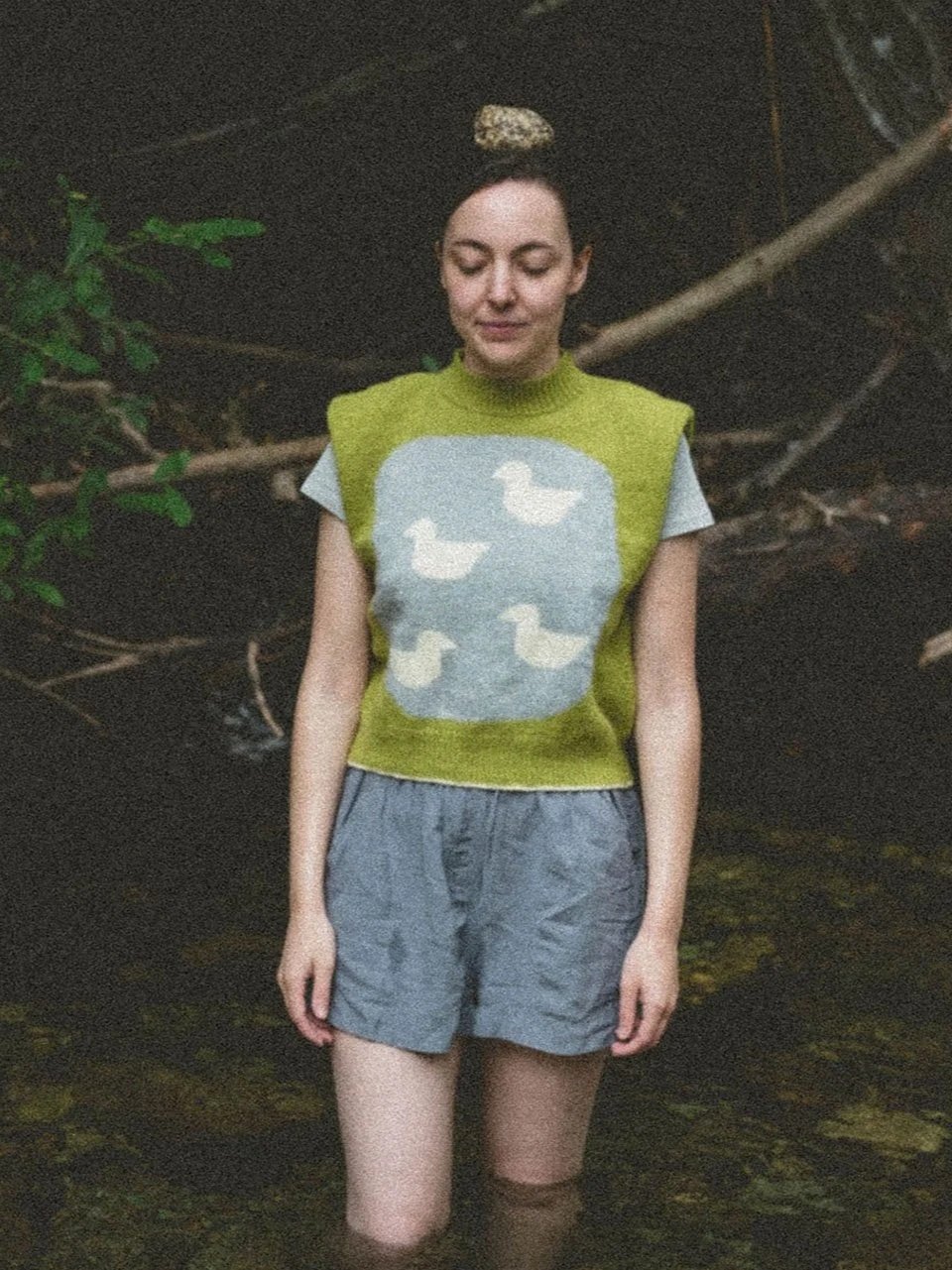
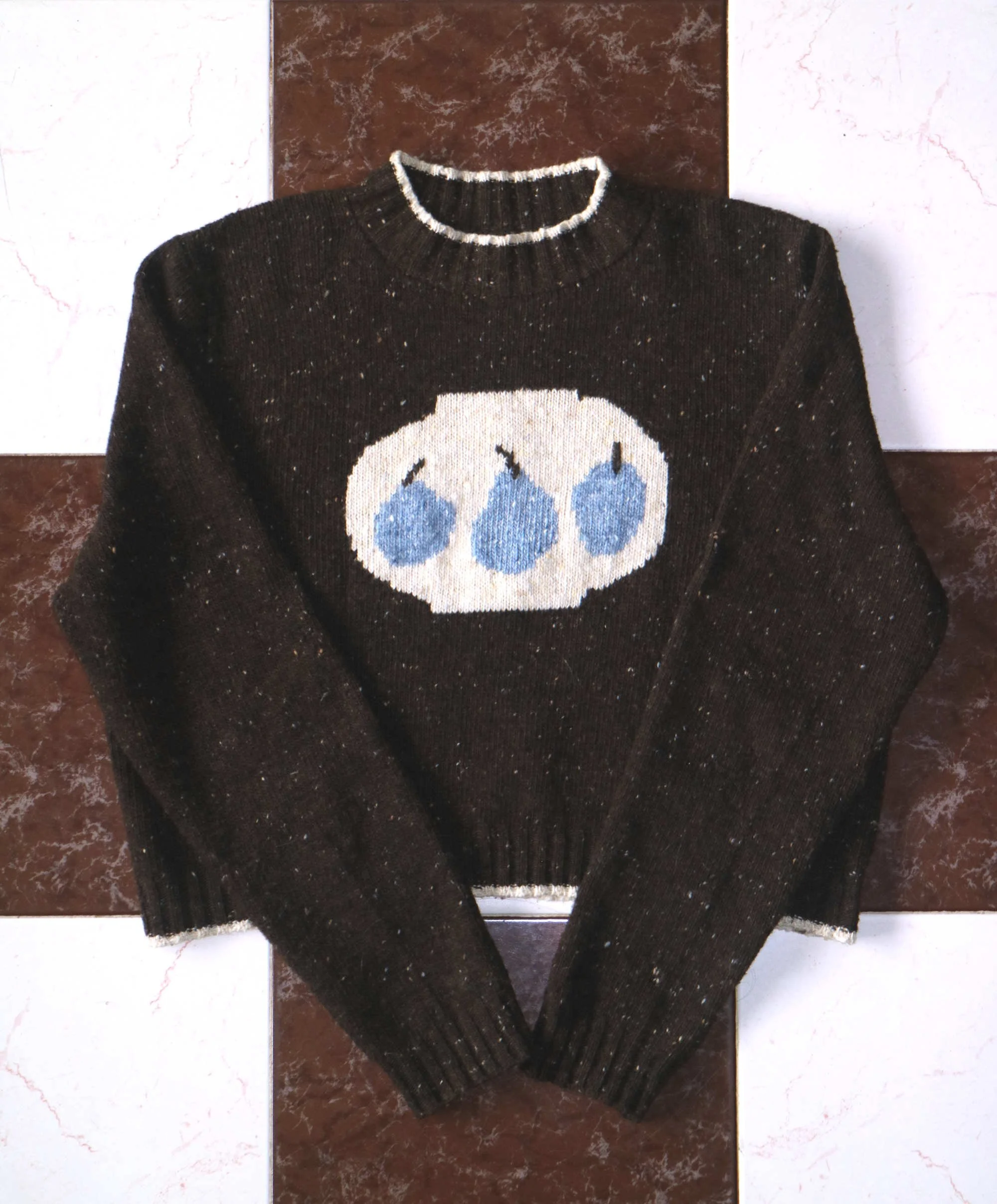
Made in Madrid, Spain by Beatriz Gómez, the Pottery Sweater is a knitted garment made from 100% merino wool on a manual knitting machine using the intarsia technique. Its dropped shoulders and slightly cropped fit create a relaxed silhouette, while contrasting colour along selected bands adds a considered detail. Each sweater is made to order, minimising fabric waste.
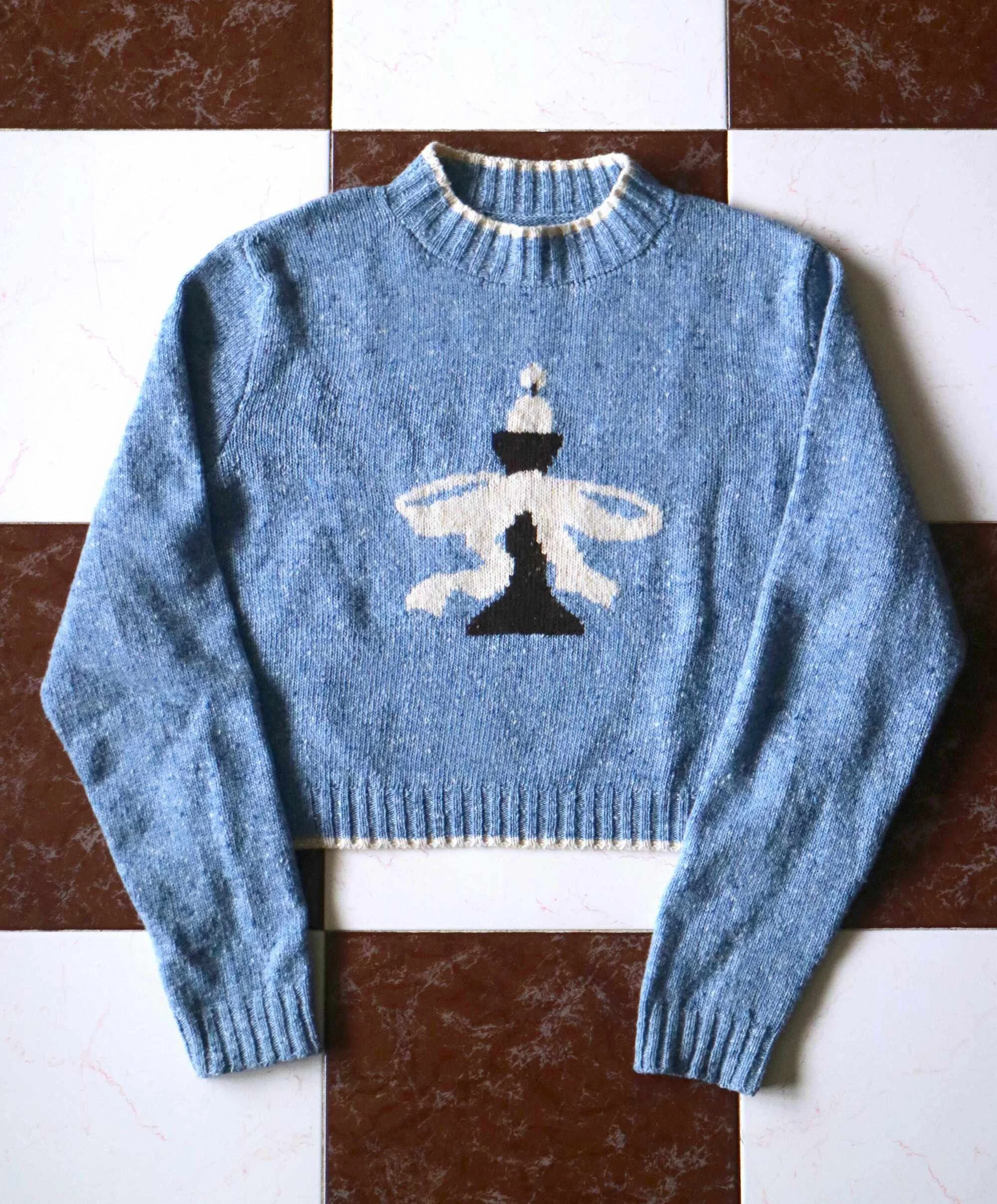
Made in Madrid, Spain by Beatriz Gómez, the Candle Sweater is a knitted garment made from 100% merino wool on a manual knitting machine using the intarsia technique. Its dropped shoulders and slightly cropped fit create a relaxed silhouette, while contrasting colour along selected bands gives the design a graphic rhythm. Each sweater is made to order, minimising fabric waste.
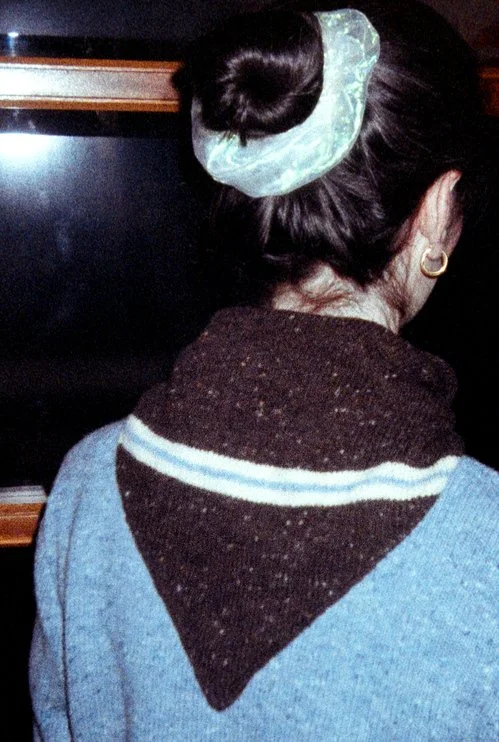
Made in Madrid, Spain by Beatriz Gómez, the Wood Bandana is a triangular accessory knitted from 100% merino wool on a manual knitting machine. Two contrasting colour stripes add a graphic accent to its simple shape. The bandana is shaped directly during the knitting process rather than cut from a larger piece of fabric, helping to avoid unnecessary offcuts, and can be worn around the head or neck, as a top, or tied at the hips.
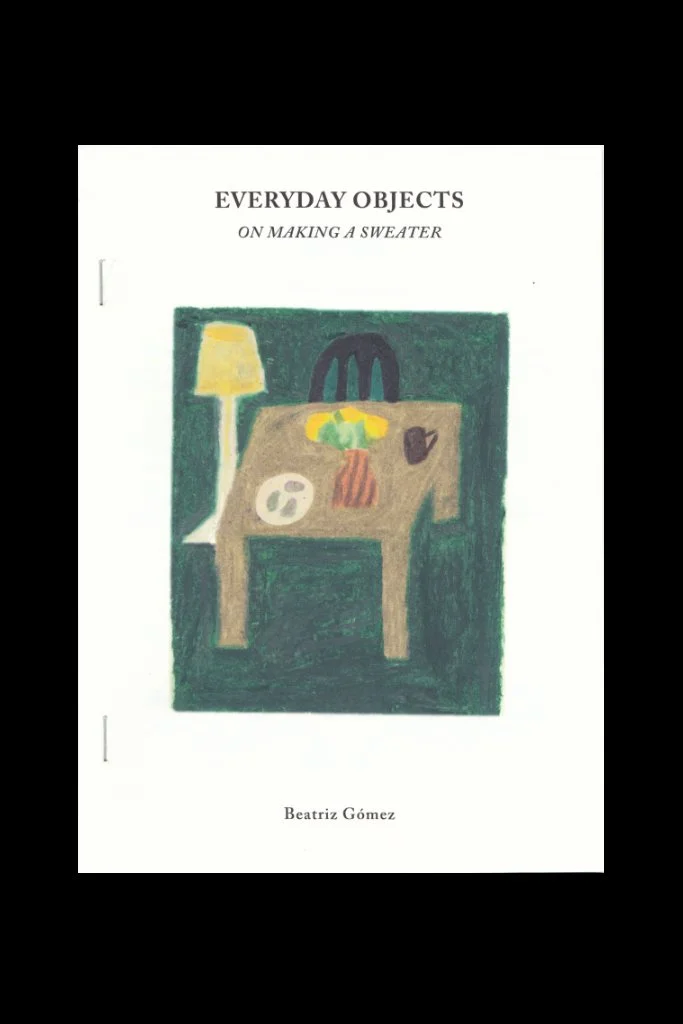
Made in Madrid, Spain by Beatriz Gómez, Everyday Objects is a 32-page zine about craft, following the life of a sweater. It reflects on how handmade objects accumulate time, knowledge and care. Written, illustrated and self-published by Gómez, it is inkjet-printed and finished with staple binding.
