Oleksandra Samokhina
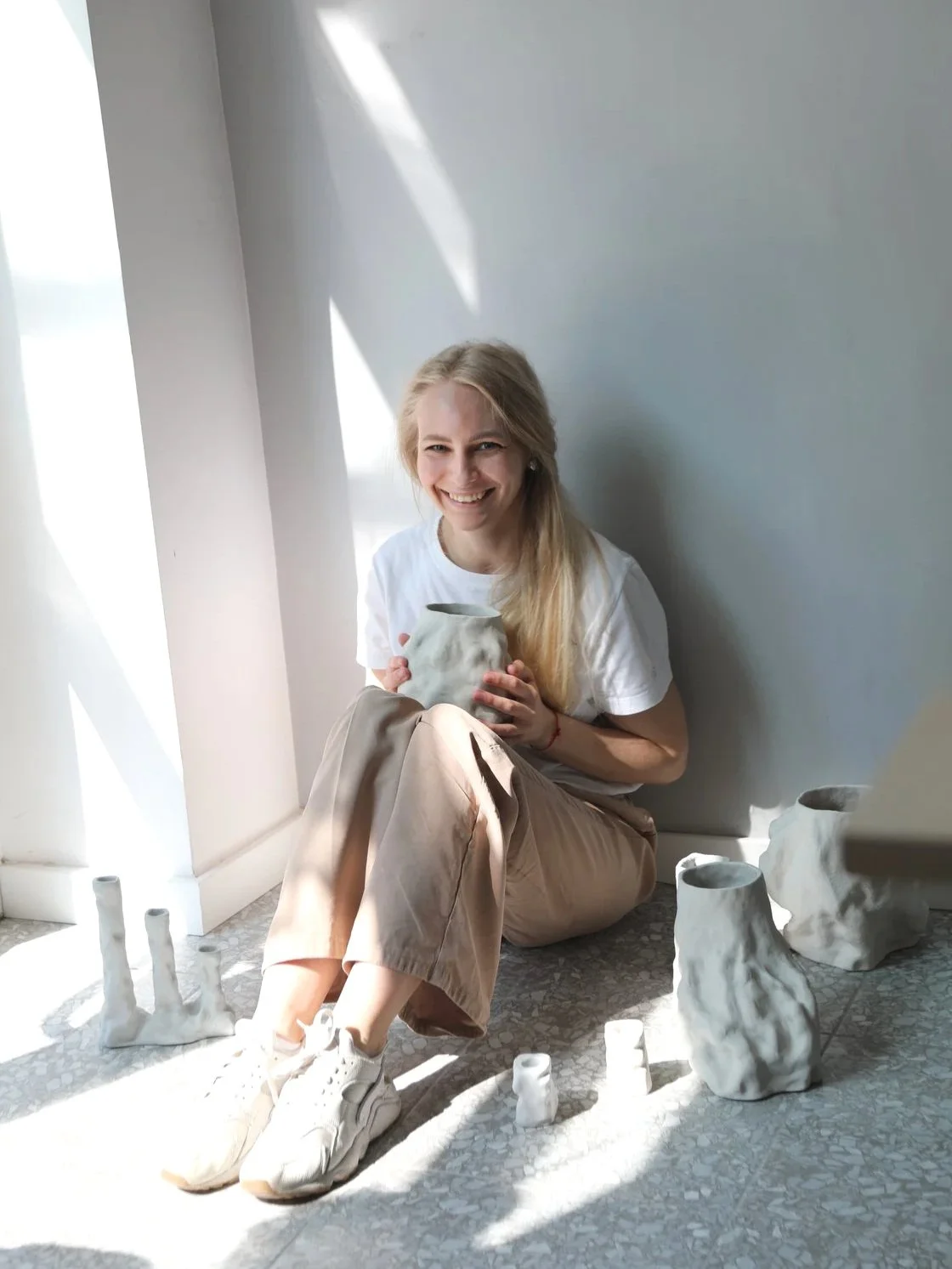
Please share a bit about yourself and your background.
I grew up in a small town in central Ukraine, close to the Moldovan border. Ten years ago, I came to Poland to study New Media Art and Design, and I have lived here ever since. After university, I worked as a graphic and web designer, but over time, I grew increasingly tired of spending so much time in front of a screen.
As a child, I attended a local art school in Ukraine. It wasn’t a traditional art school focused on drawing and painting. Instead, it was a small creative space for children where we explored different local crafts, such as painting Easter eggs, making dolls, and creating Christmas wreaths.
I always enjoyed working with my hands, so eventually I started looking for a new hobby, something that would give me a break from screen time and allow me to create something physical. And I found ceramics.
What first drew you to ceramics, and what made you want to make it such an important part of your practice?
After studying and working in design in Poland, I found myself increasingly tired of spending so much time in front of a screen. I wanted to return to the feeling of making things with my hands.
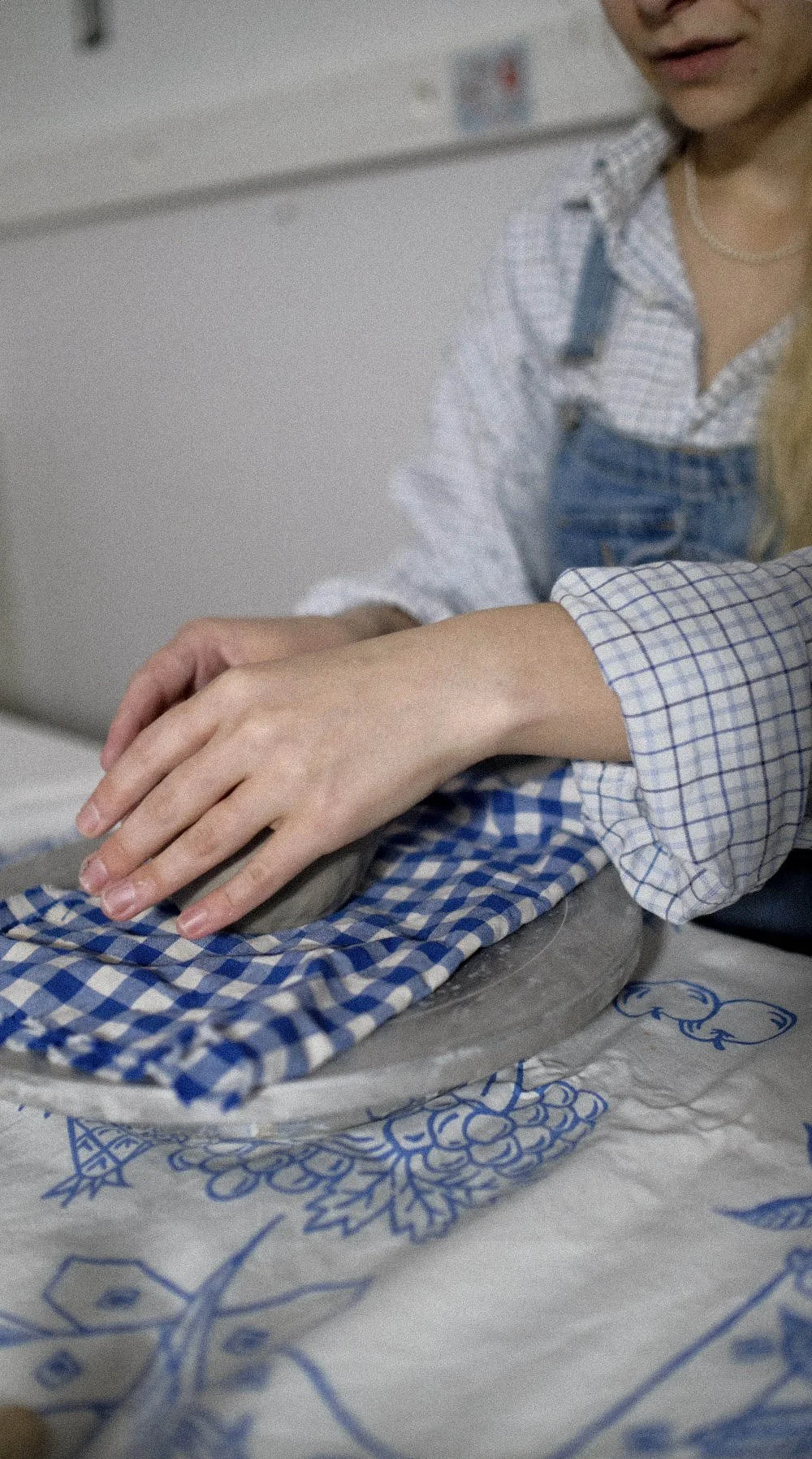
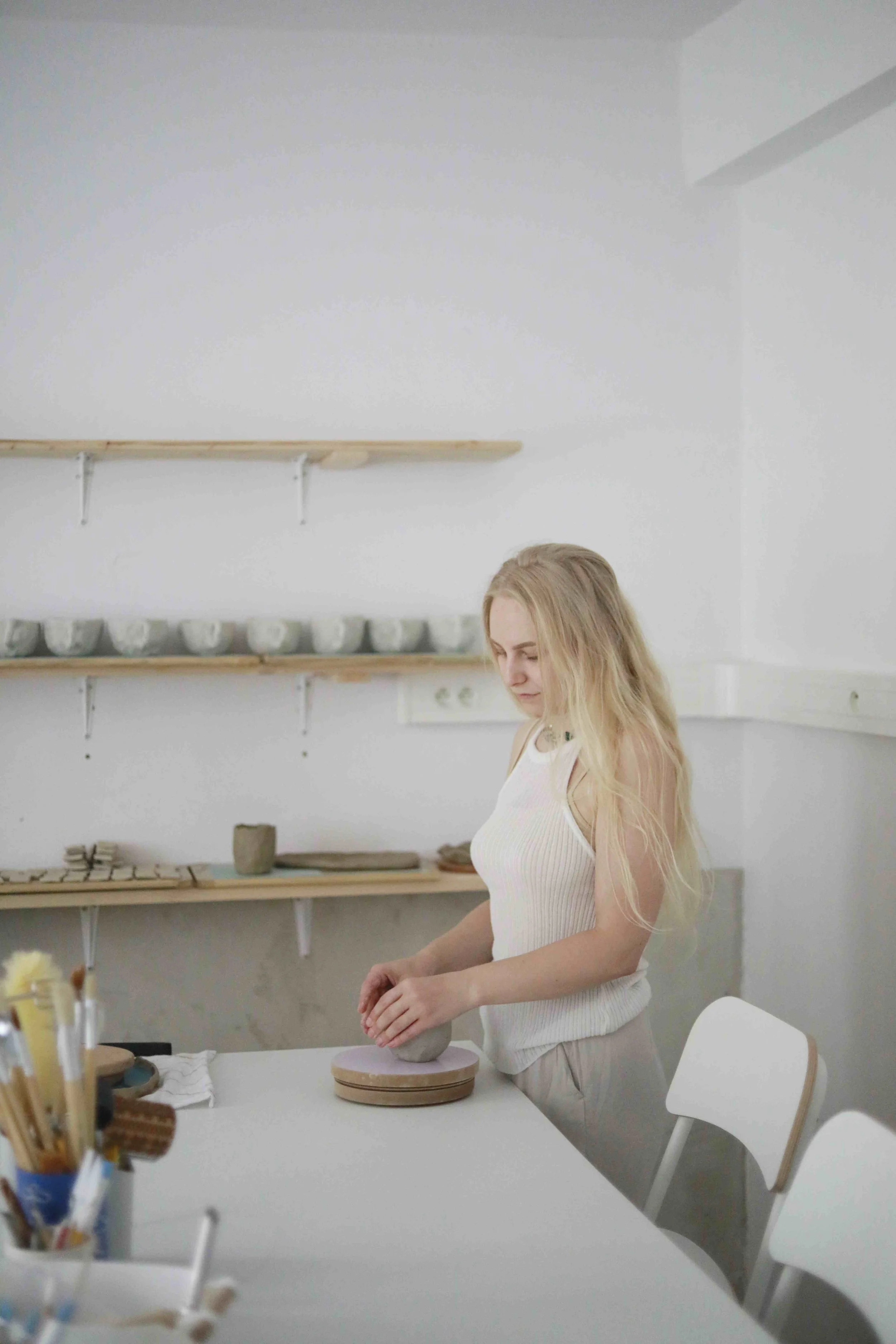
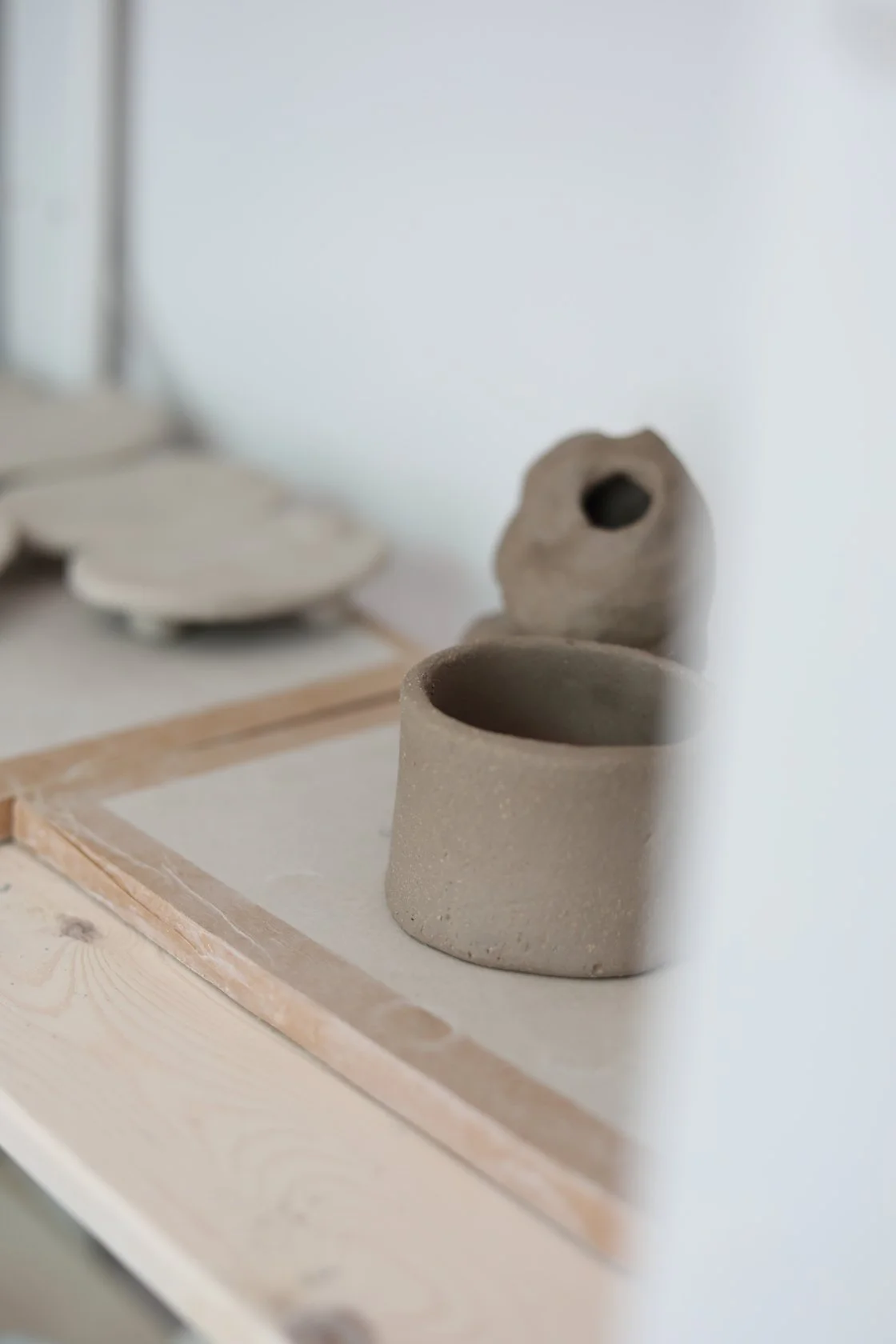
I started making ceramics during COVID. Everything was closed, so I ordered a 10 kilo bag of clay and bought an online course. I’m a very tactile person, and I immediately loved the feeling and texture of the clay.
At first, it seemed quite easy. Obviously, I was very naive! In the beginning, I just felt like a kid playing in the mud, and I think that’s what drew me in. I didn’t expect back then that it would eventually lead to me opening my own studio.
Now, I teach ceramics myself, and I warn people in my classes that it can be addictive.
Could you take us through the development of one of your pieces, from the first idea to the finished object? What tends to guide the process along the way?
I don’t usually plan a piece in great detail. Sometimes I start with a rough idea of a shape or texture, but it can end up going in a completely different direction.
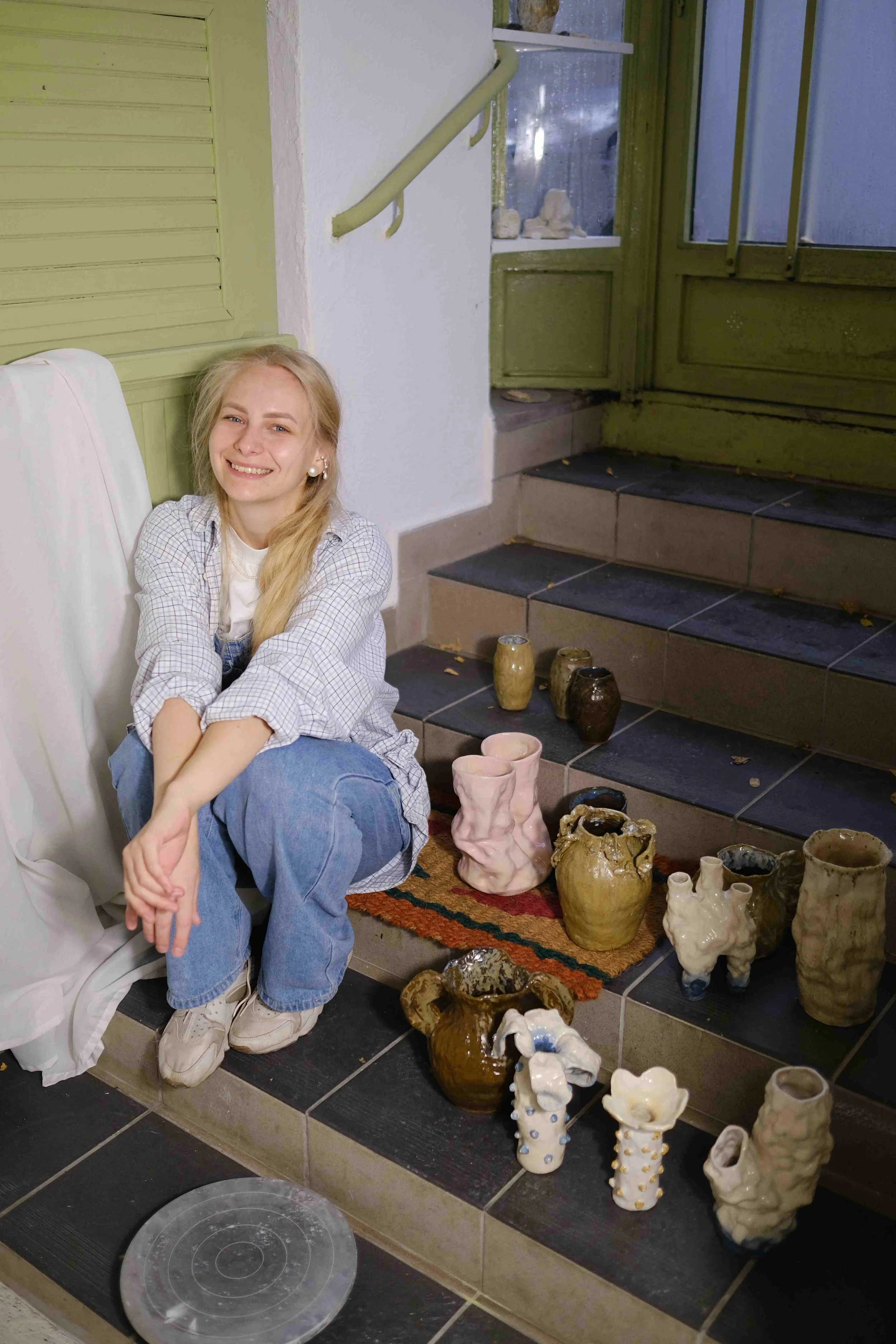
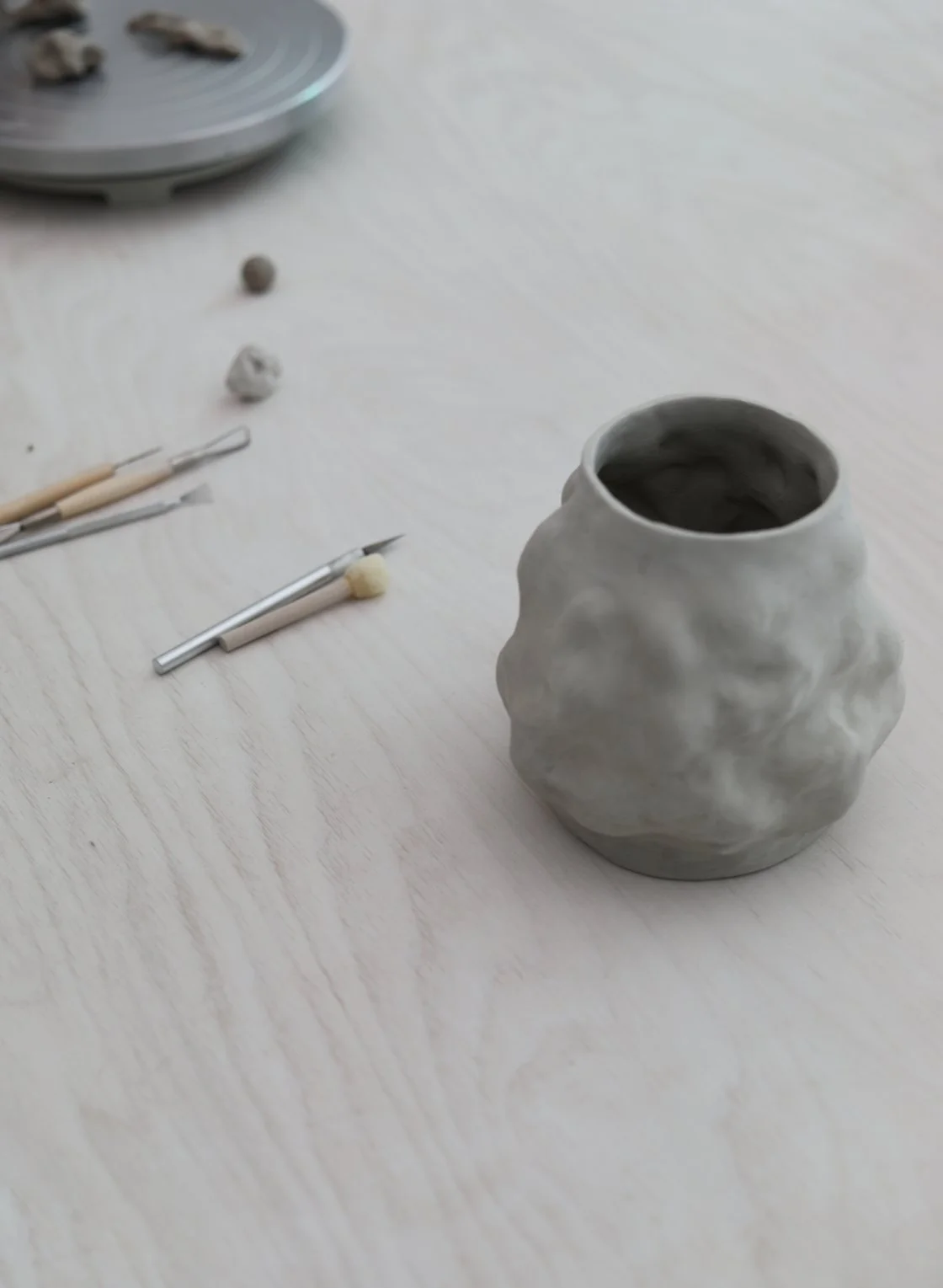
I love clay, and I work with many different types. I know it’s quite unusual for a ceramicist to use different clays, but I can’t imagine choosing just one. Each clay has its own character, texture, and way of behaving. Sometimes I simply cut into a piece of clay, and the surface looks so beautiful to me that it already feels like a finished work.
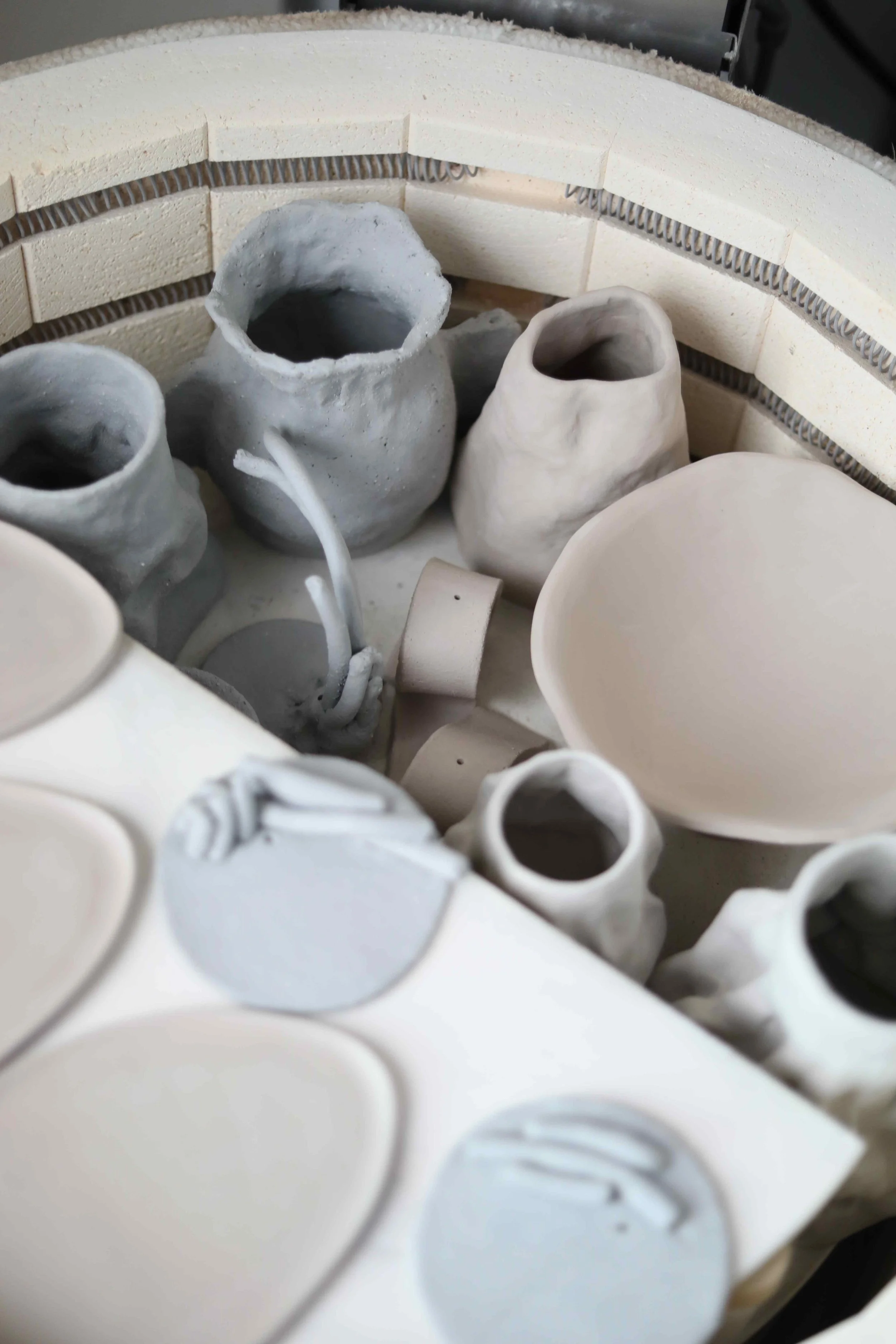
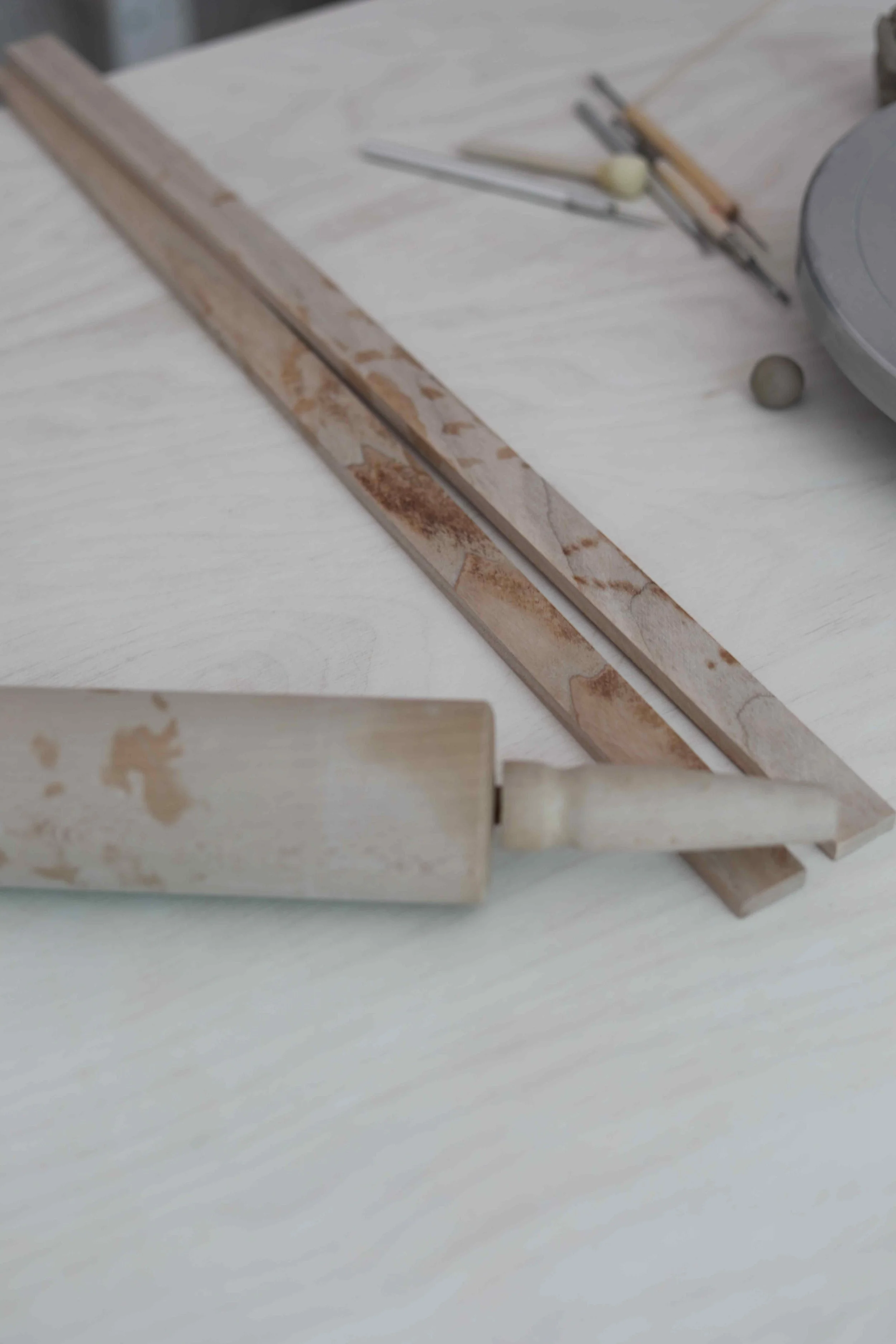
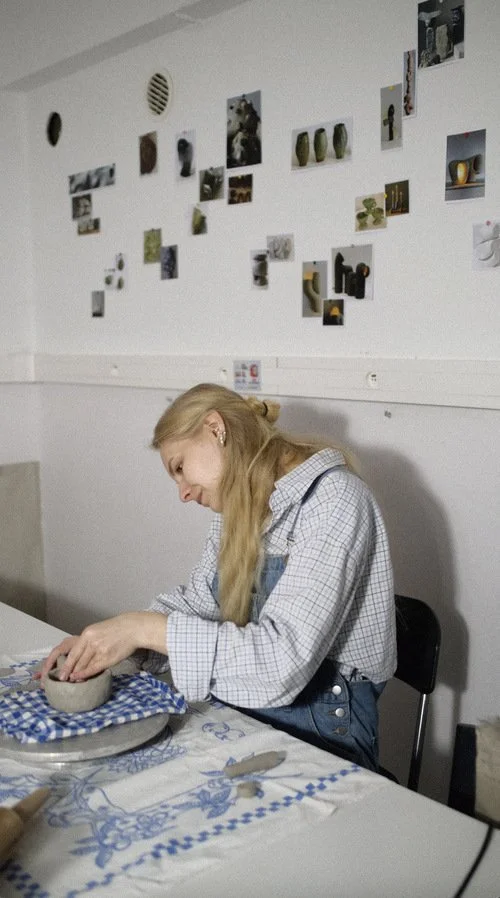
I don’t use a wheel or moulds, so the process is very direct, personal, and intimate. I build each form gradually using coils, allowing the vessel to develop layer by layer through repeated gestures. Sometimes I give the clay time to firm up, and sometimes I’m too impatient, and the pieces start to swell or sag under their own weight. But I love that too.
For me, that unpredictability is an important part of the process. The final object is not simply the result of an idea I had at the beginning. It is shaped by a continuous negotiation between my intentions and the material itself.
How have the landscapes, traditions, and cultural heritage of your upbringing found their way into your work?
I grew up surrounded by two contrasting visual languages: the raw, monumental geometry of Soviet architecture and the softness and richness of the Ukrainian landscape. These two environments, so different in character, have both stayed with me and continue to influence the way I see and make.
Nature is an important point of reference in my practice. I am constantly drawn to surfaces altered by water, wind, pressure, and time, and to forms that exist somewhere between the organic and the accidental.
I often collect visual and tactile impressions from my surroundings: cracks in concrete, weathered stone, softened edges, layers, stains, rough textures, and subtle traces of change. These observations become a kind of visual vocabulary that I translate into my work.
The name of my studio, Niwa, also has a few meanings. It can mean a field, a piece of land intended for growing plants, or a field of human activity. I like that it has the same meaning in Polish and Ukrainian. It also makes me think of a summer sunset over the meadows, a moment full of peace and beauty. I would like to have more moments like that in my life.
You also have a background in graphic design. How does this experience shape the way you approach ceramics, particularly in terms of form, composition, and visual language?
I can’t say that my background in graphic design has influenced my ceramics very much. Of course, when I’m creating a piece, I still think about basic things like composition, balance, proportion, and colour theory. Those ideas are probably somewhere in the back of my mind.
But I think my ceramics are quite far removed from what I would consider graphic design influenced ceramics. In a way, that’s probably intentional. I started working with clay as a way to escape computer screens, deadlines, and the routines of my design work, so I naturally took it in a completely different direction.
You also teach ceramics through workshops. What inspired you to share your experience of working with clay with others, and what do you hope people take away from these encounters?
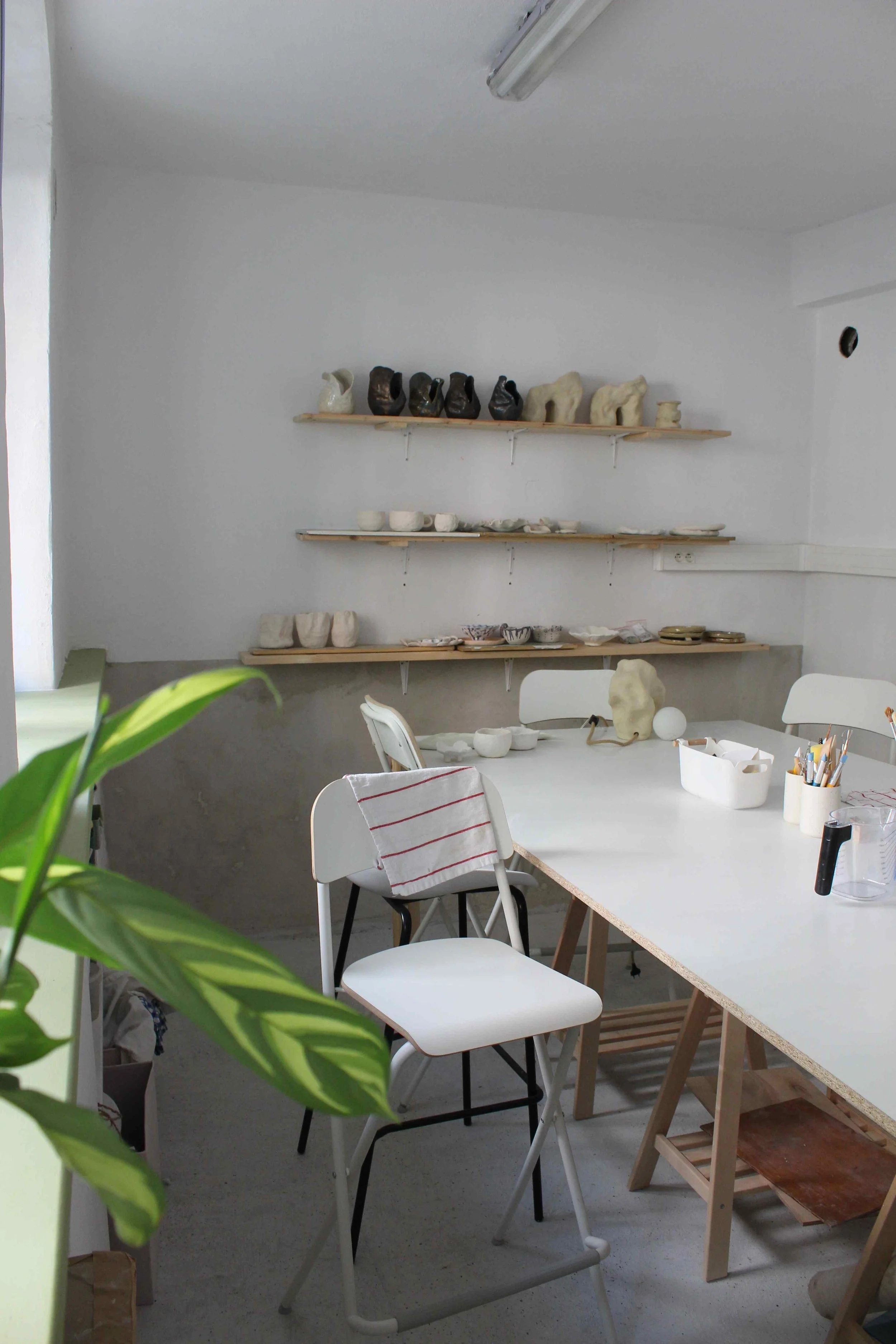
I’m trying to build a small ceramic community around my studio. I have a regular group that gets together every Tuesday, and I joke that it’s part ceramic workshop, part therapy group, and part literature club.
I like giving people the space to be creative, but also to rest, chat, and open up. I think it’s often easier to connect with others when you’re doing something together. The process gives you an opportunity to hide behind your work, to be a little less vulnerable while still being able to connect with people.
I love seeing that happen in my studio. Some of the people I’ve taught have been coming for two years now, and they’ve become dear friends.
I also teach in Polish, English, Ukrainian, and Russian, so I often have groups of people with very different stories and backgrounds. I really enjoy that mix. You never quite know who will end up sitting around the same table, and I think that’s one of the most interesting things about teaching.
Are there any new materials, techniques, or directions you are currently exploring that feel particularly connected to the evolution of your practice?
Recently, I took a course on glaze development because I wanted to understand the process more deeply. I’m particularly interested in creating more texture and variation in my ceramics, so I’m exploring different ways of achieving that.
I’m experimenting with developing special effect glazes, as well as playing with different ways of layering them. I like the idea of breaking some of the usual rules and seeing what happens when you combine materials or techniques in unexpected ways. I’m still exploring, but I feel like this is becoming an interesting new direction for my work.
How can people engage more closely with your work, whether through exhibitions, collaborations, or upcoming projects?
You can find me on Instagram, where I share my work, parts of my creative process, and information about my ceramic classes. I’m also currently working on a new website.
I collaborate with cafés, restaurants, and interior designers, so if you’re looking for unique, handmade ceramics for your business, feel free to get in touch.
I teach regular classes and workshops in my studio, so if you’re in Poznań, Poland, you’re very welcome to come by, try working with clay, and join one of my workshops.
Instagram: @niwa_ceramics
All photos belong to Oleksandra.
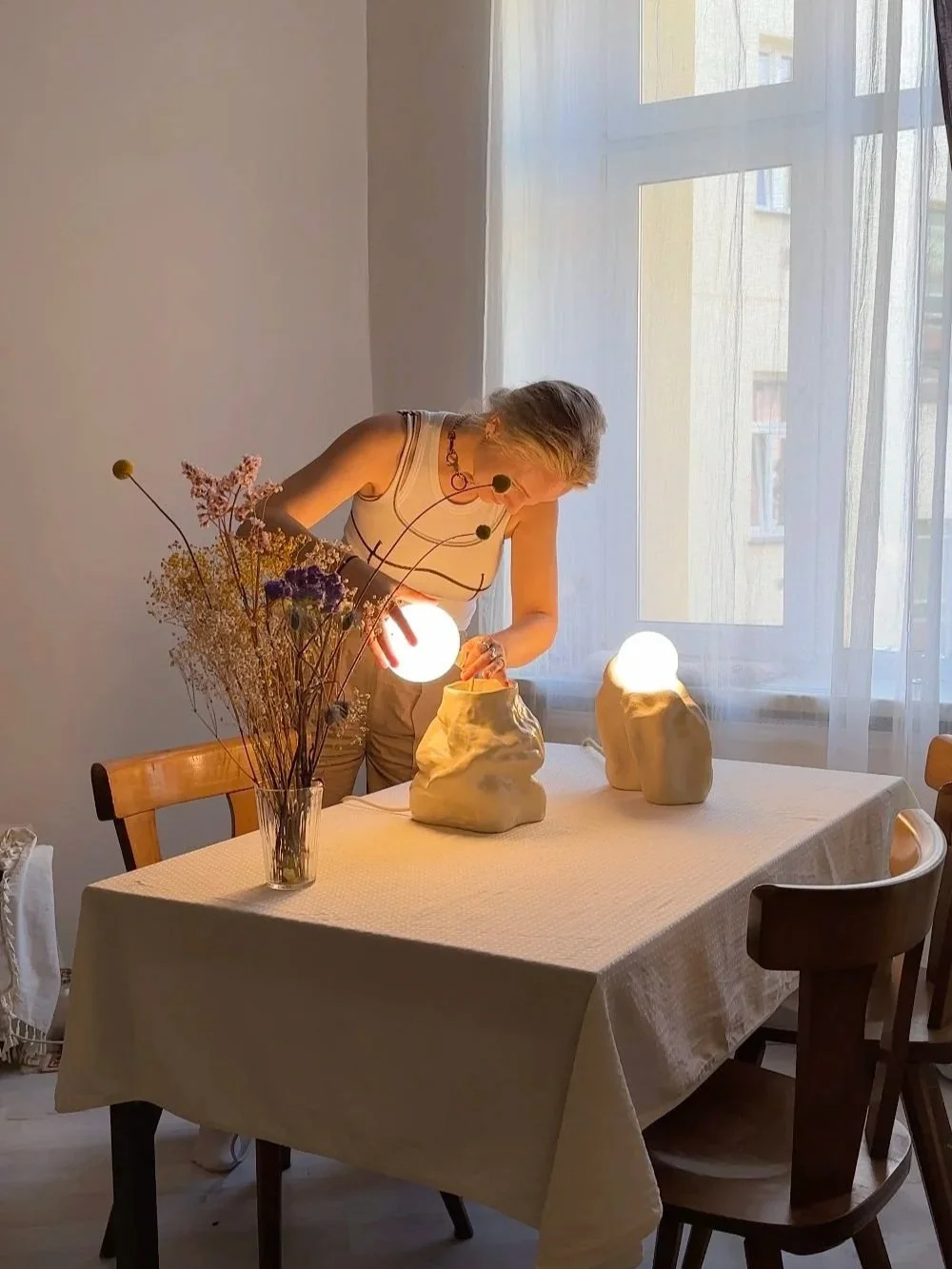
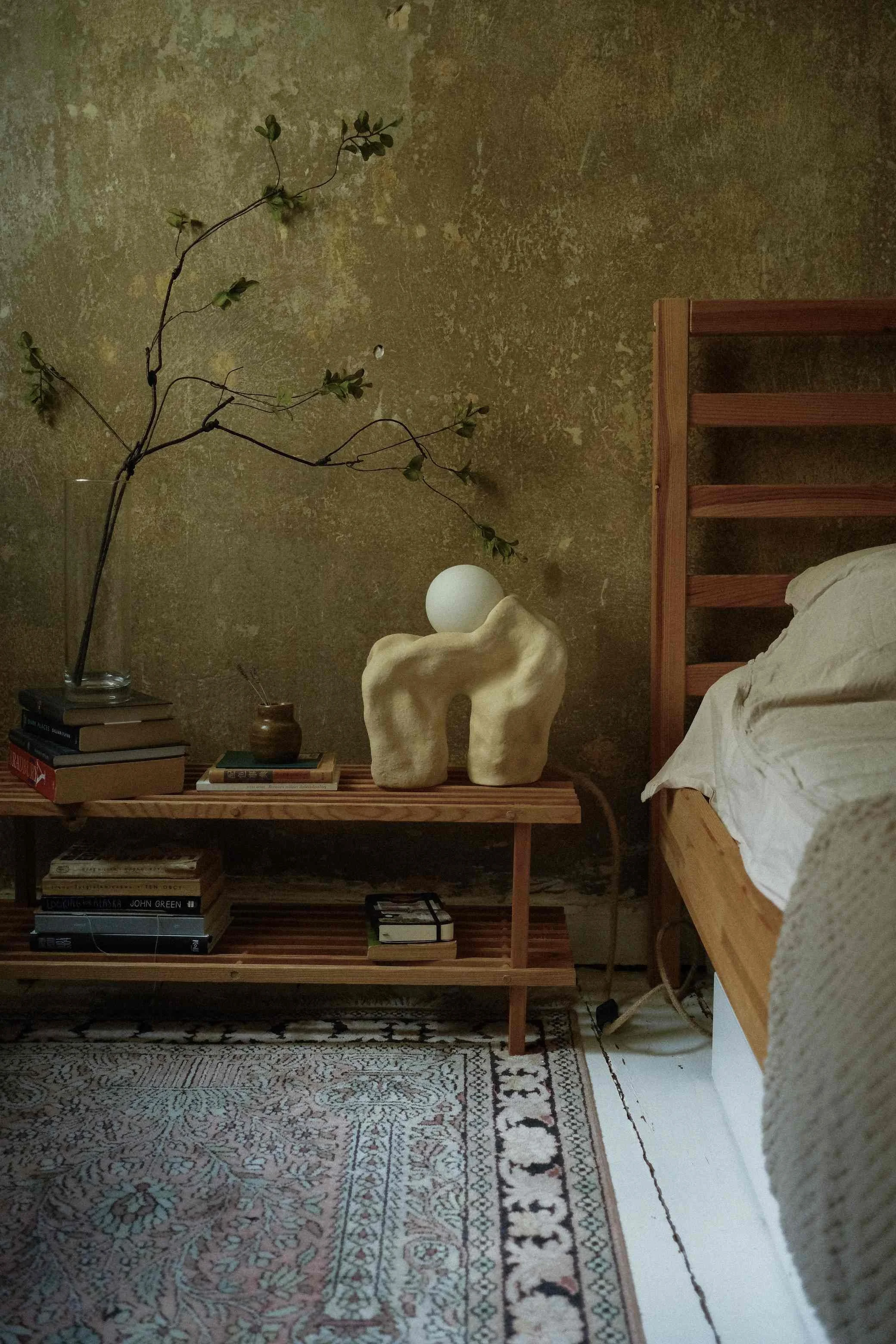
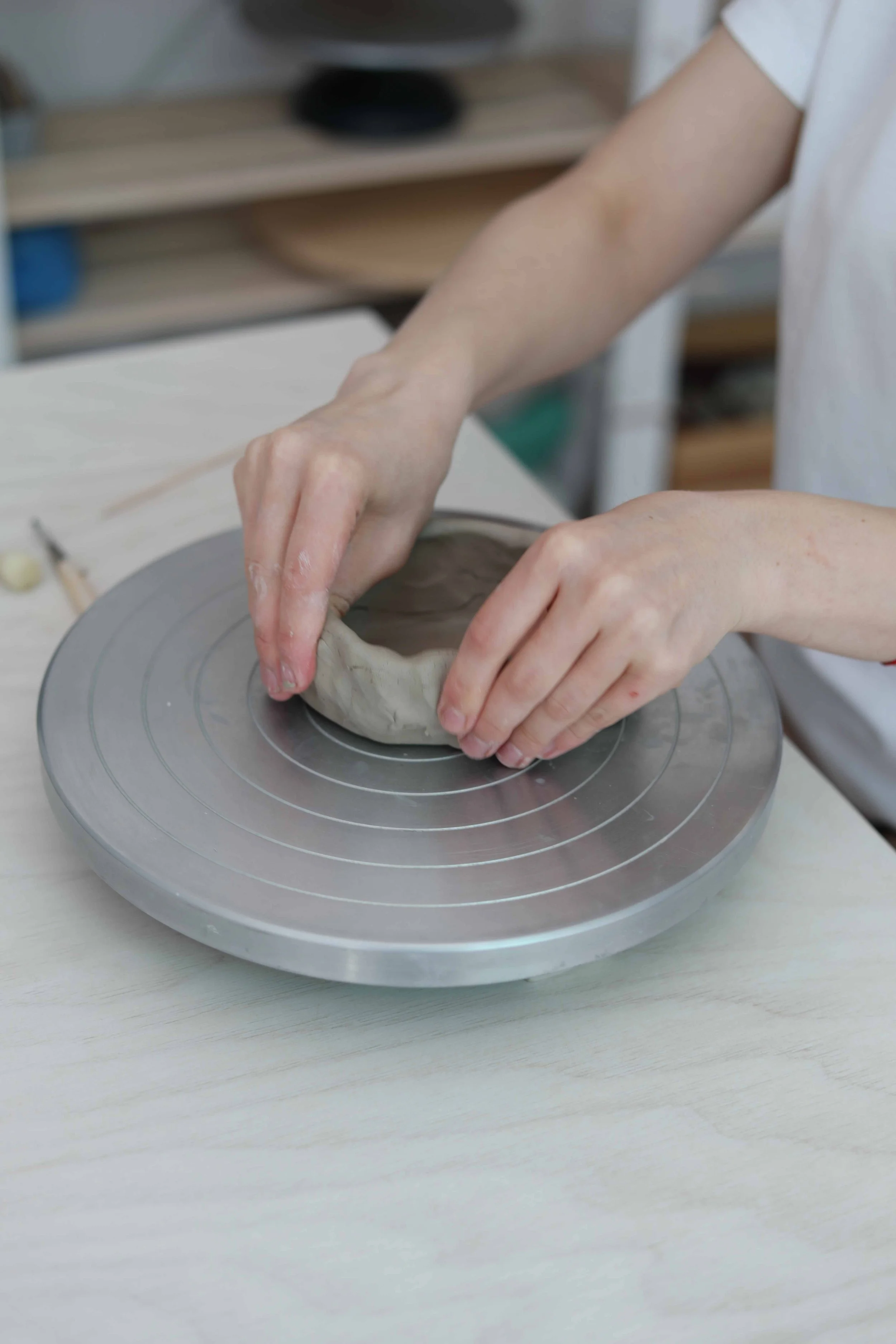
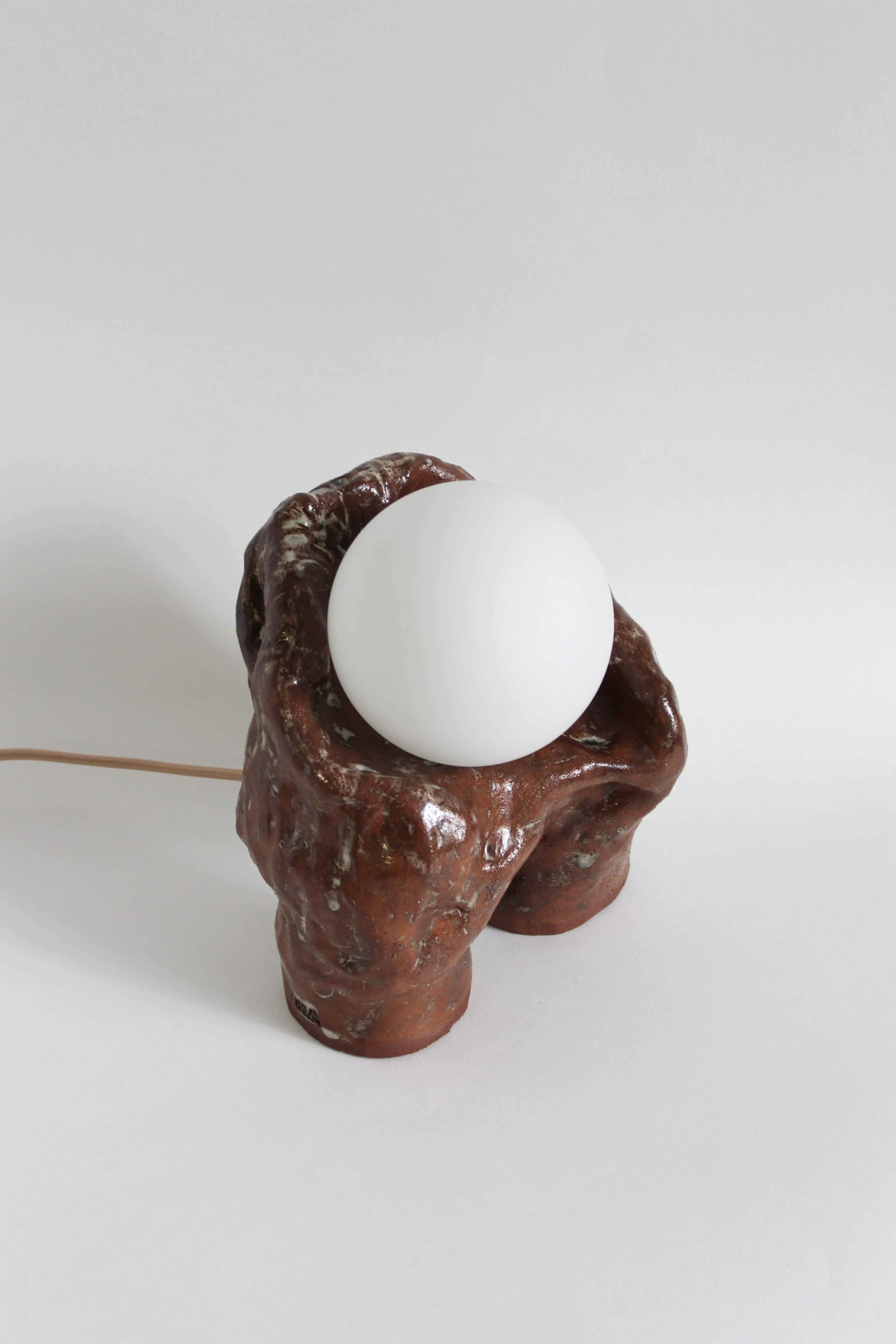
Handmade in Poznan, Poland by Oleksandra Samokhina of Niwa Ceramics, this lamp is made from red stoneware clay and finished with a glossy glaze in deep rust, reddish brown and amber tones. The glaze gathers across the undulating surface, highlighting the irregularities of the hand formed clay. A glass lampshade completes the piece, bringing together its sculptural ceramic body and functional form.
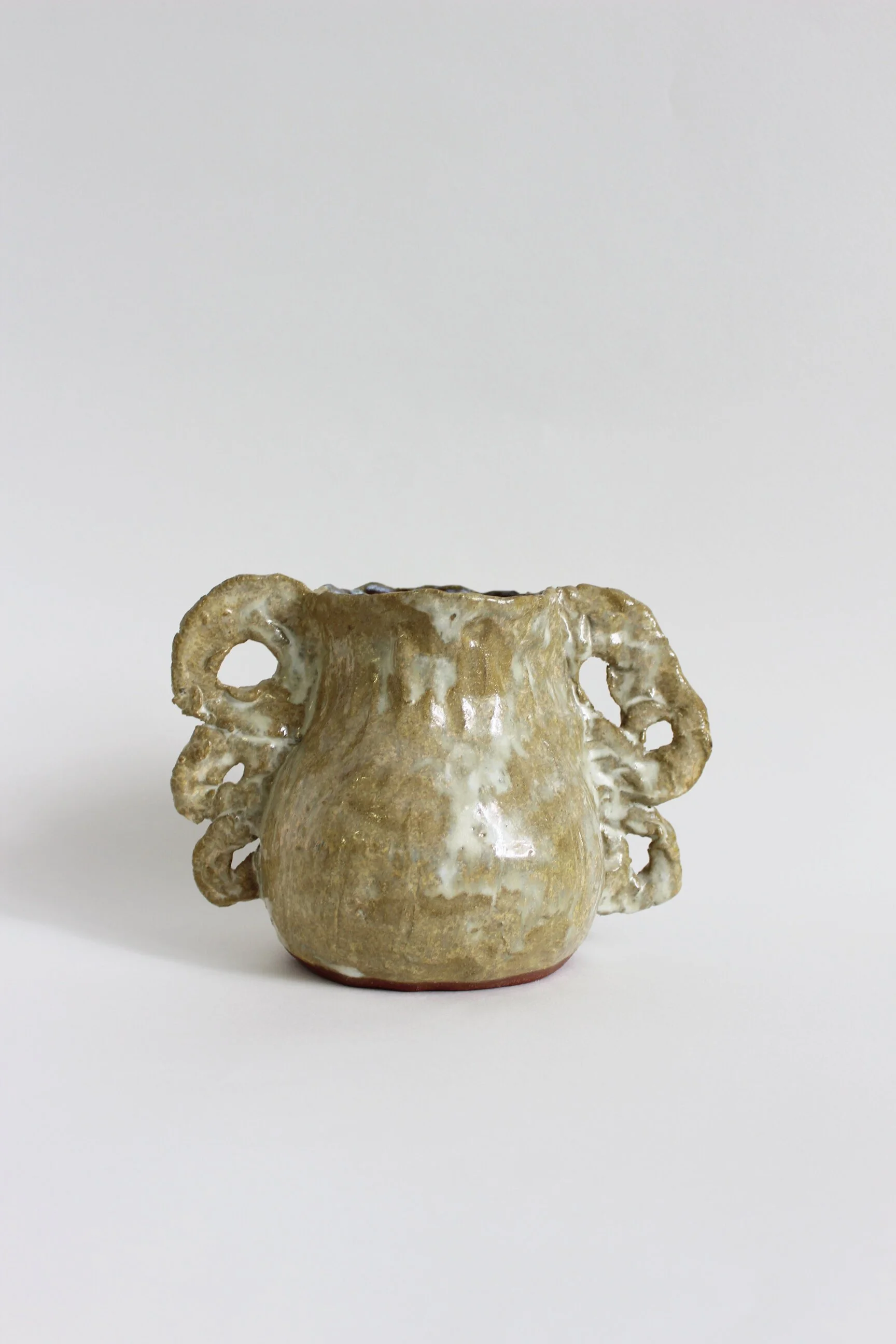
Handmade in Poznan, Poland by Oleksandra Samokhina of Niwa Ceramics, this vase is built by hand using the coiling technique in red stoneware clay. Its rounded form is framed by two textured handles, with details that recall loops and ornamental textile patterns. Layers of crystal glaze in ash green and milky white settle across the surface, following the contours of the hand sculpted clay.
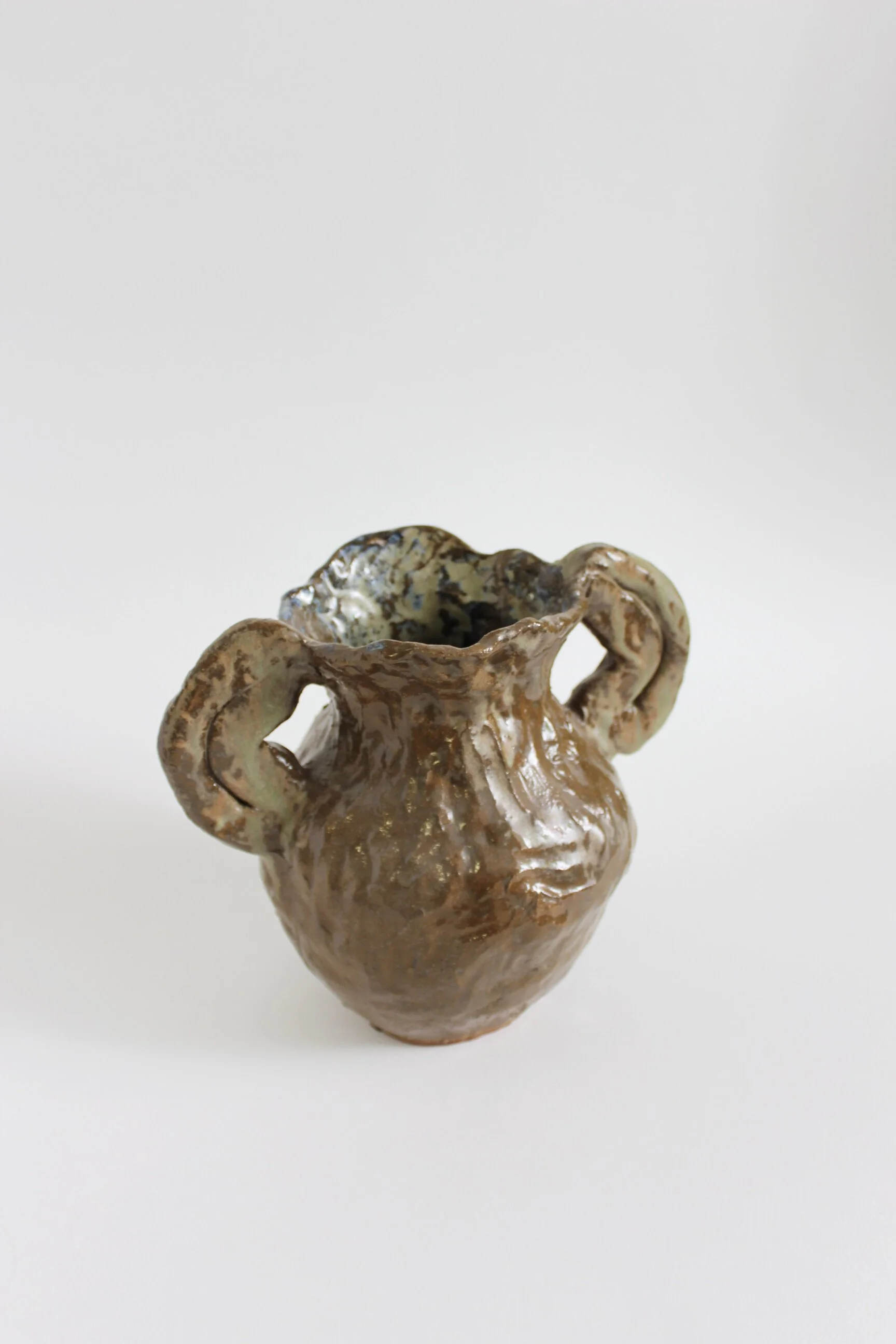
Handmade in Poznan, Poland by Oleksandra Samokhina of Niwa Ceramics, this vase is made from high fire red stoneware clay and finished with layers of glaze in earthy brown, olive and ash tones. Its compact body is framed by two exaggerated looping handles, giving the vase an irregular silhouette. The worked surface and shifting glaze reveal the handmade character of the piece.
