Ceramics
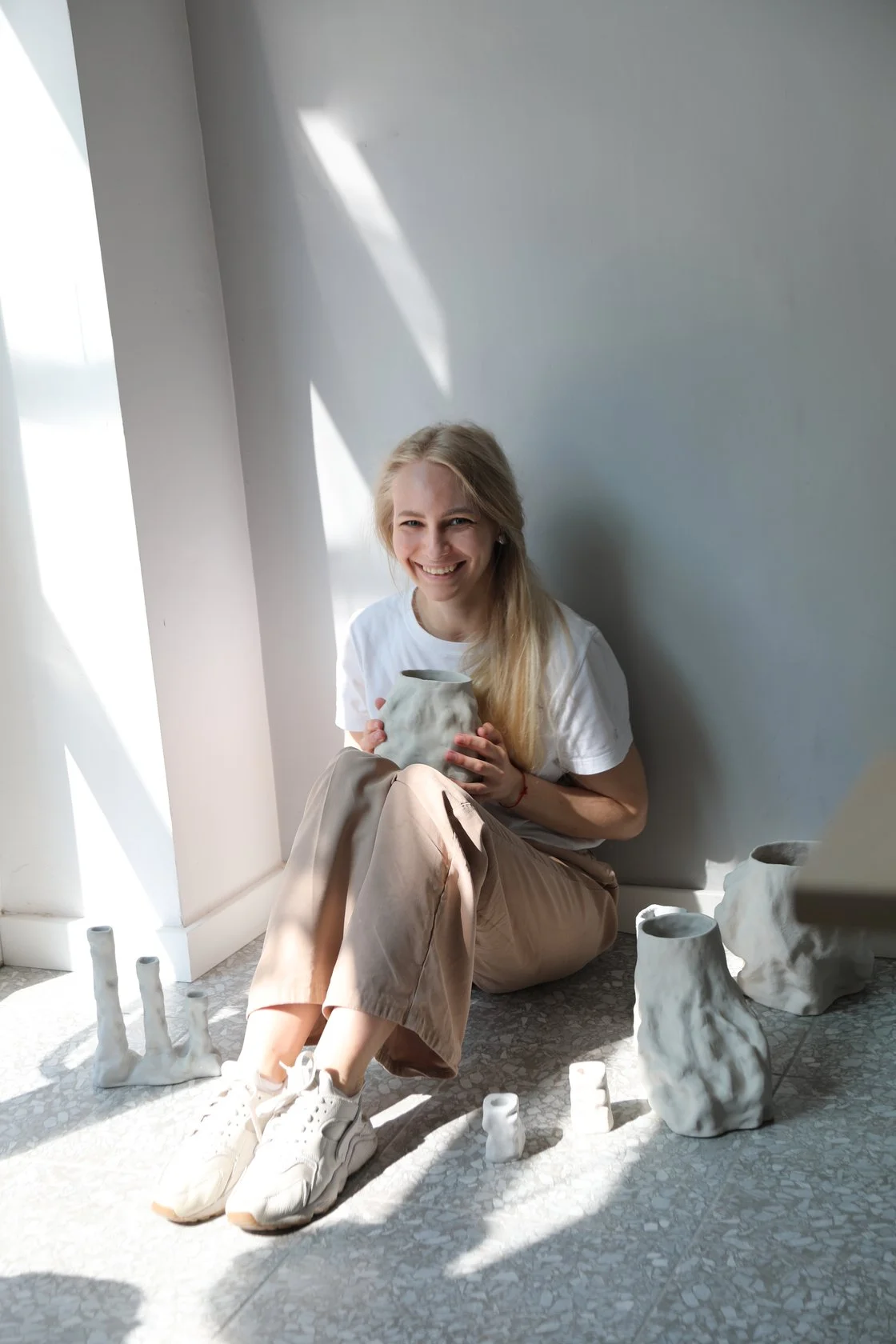
Oleksandra Samokhina is a ceramic artist originally from central Ukraine and the founder of Niwa Ceramics, a studio based in Poznań, Poland.
She works with different types of clay and builds her pieces by hand, without using a wheel or moulds. Using coils, she develops each form gradually, allowing the character of the clay to guide the process. Cracks, swelling, sagging, and other unexpected changes become part of the making, giving each piece its own character.
Her work is influenced by nature and by the surfaces and forms she encounters around her. She is drawn to marks shaped by water, wind, pressure, and time, as well as cracks in concrete, weathered stone, softened edges, layers, stains, and rough textures. These observations become part of the visual language she brings into her ceramics.
Our selection includes Oleksandra’s handmade ceramic lamps and vases, each shaped through this intuitive and tactile process. Their sculptural forms and textured surfaces highlight the natural variations of clay and the traces of the maker’s hand.
Read our interview with her.
Oleksandra Samokhina · Poland
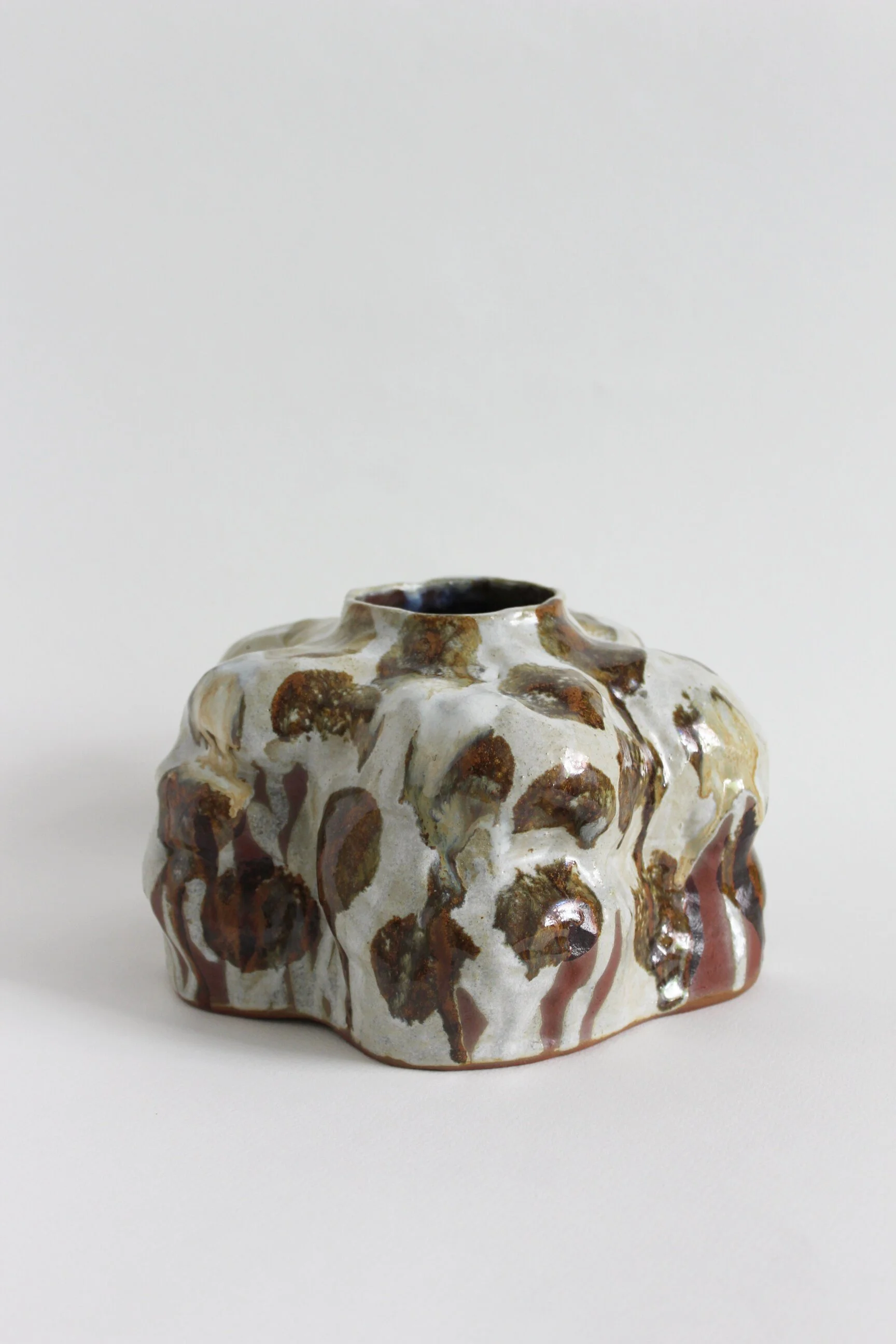
Handmade in Poznan, Poland by Oleksandra Samokhina of Niwa Ceramics, this vase is built using the coiling technique in high fire red stoneware clay. Its surface is covered with layers of milky white glaze marked by earthy brown and rust coloured spots that gather and run across the form. The variation in glaze and the irregular surface make each area of the piece distinct.
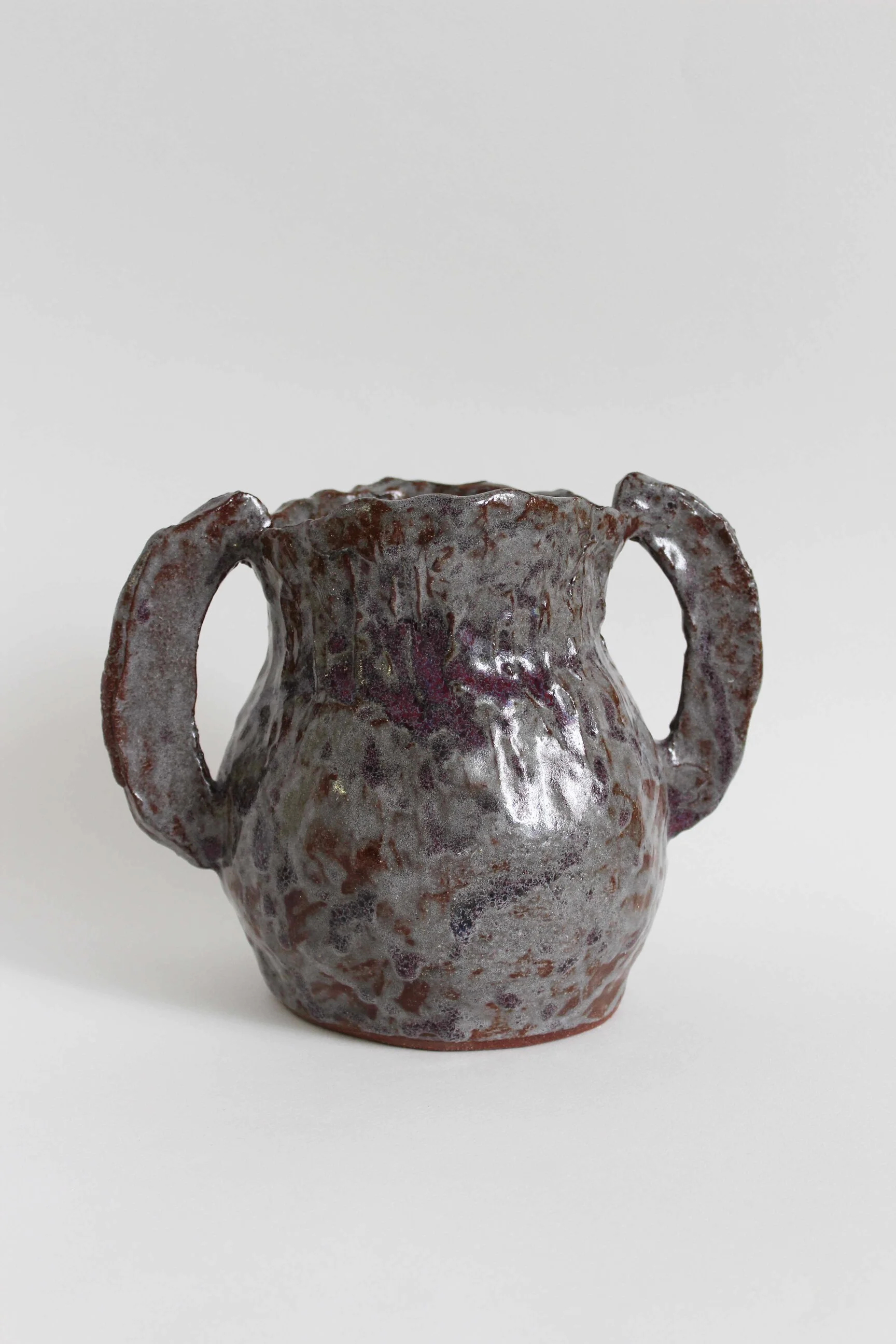
Handmade in Poznan, Poland by Oleksandra Samokhina of Niwa Ceramics, this vase is a hand built vessel made from high fire red stoneware clay and finished with a decorative glaze. Its rounded body and oversized loop handles reference the proportions of traditional amphora forms, while the hammered surface preserves the marks of the making process. Layers of metallic grey, silver and deep purple glaze create variation across the clay.
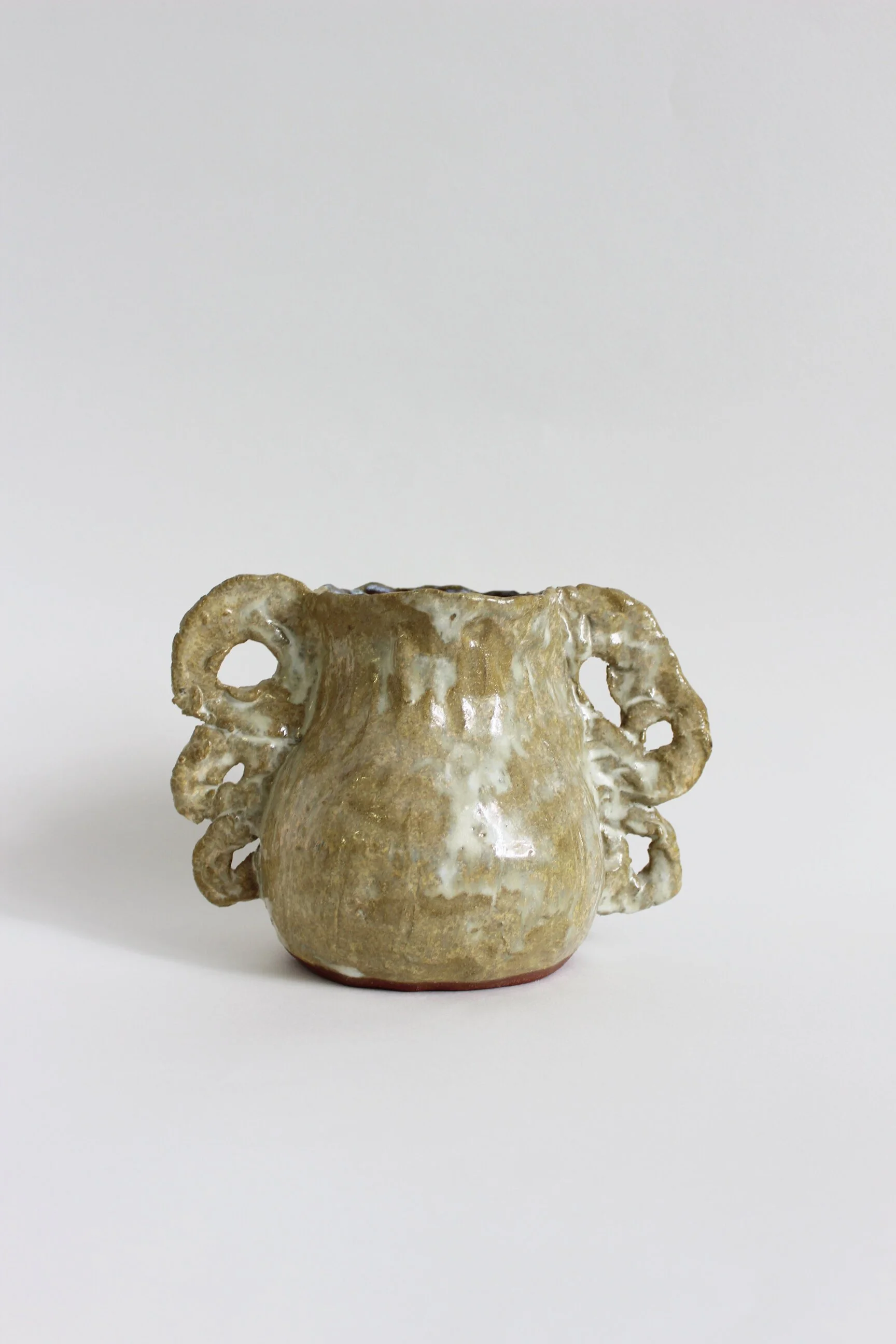
Handmade in Poznan, Poland by Oleksandra Samokhina of Niwa Ceramics, this vase is built by hand using the coiling technique in red stoneware clay. Its rounded form is framed by two textured handles, with details that recall loops and ornamental textile patterns. Layers of crystal glaze in ash green and milky white settle across the surface, following the contours of the hand sculpted clay.
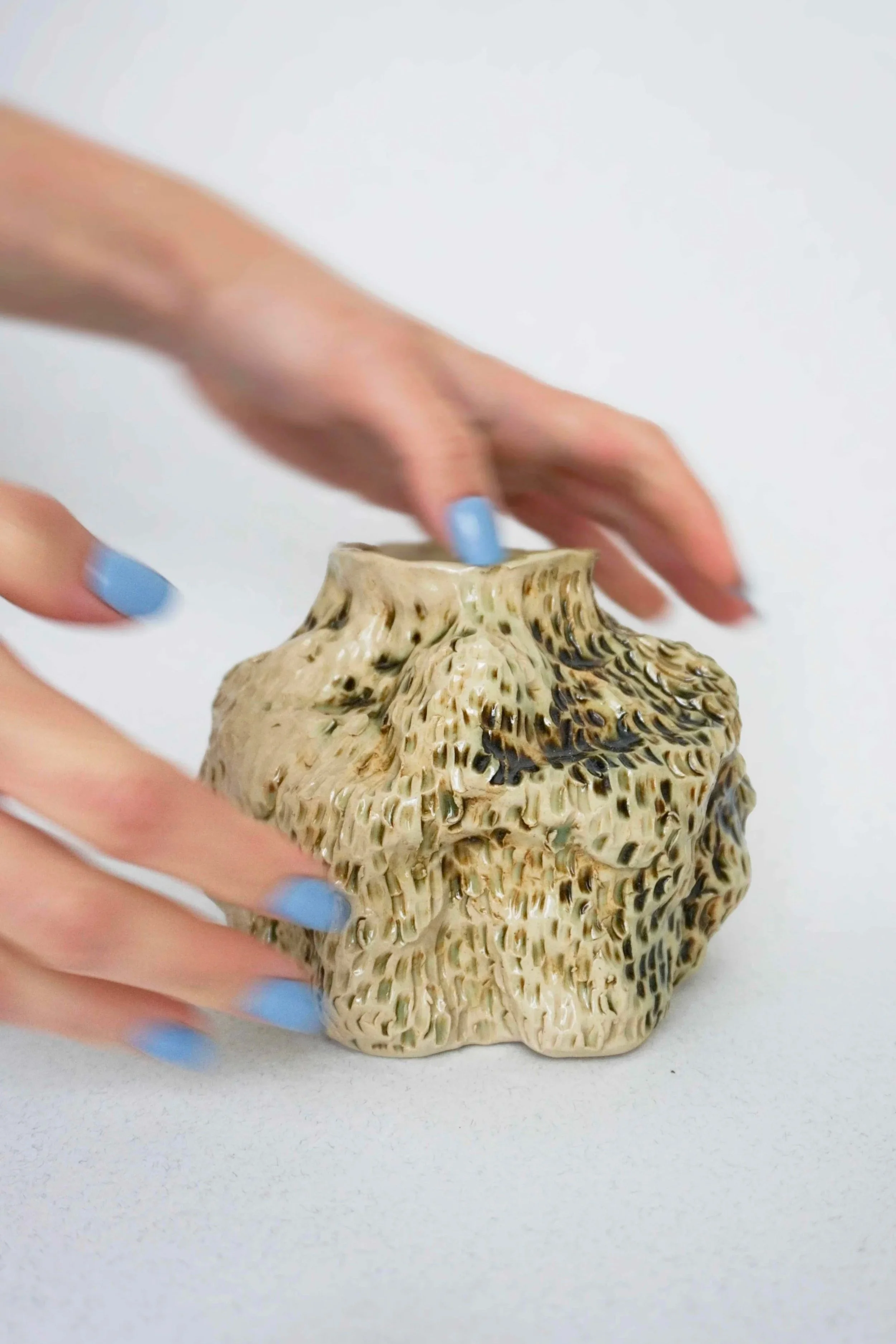
Handmade in Poznan, Poland by Oleksandra Samokhina of Niwa Ceramics, this vase is built using the coiling technique in beige stoneware clay. Its surface is shaped with a repeated pattern of deep indentations, creating an irregular texture across the form. Layers of green and dark brown glaze settle into the recessed areas, bringing out the depth and variation of the handmade surface.
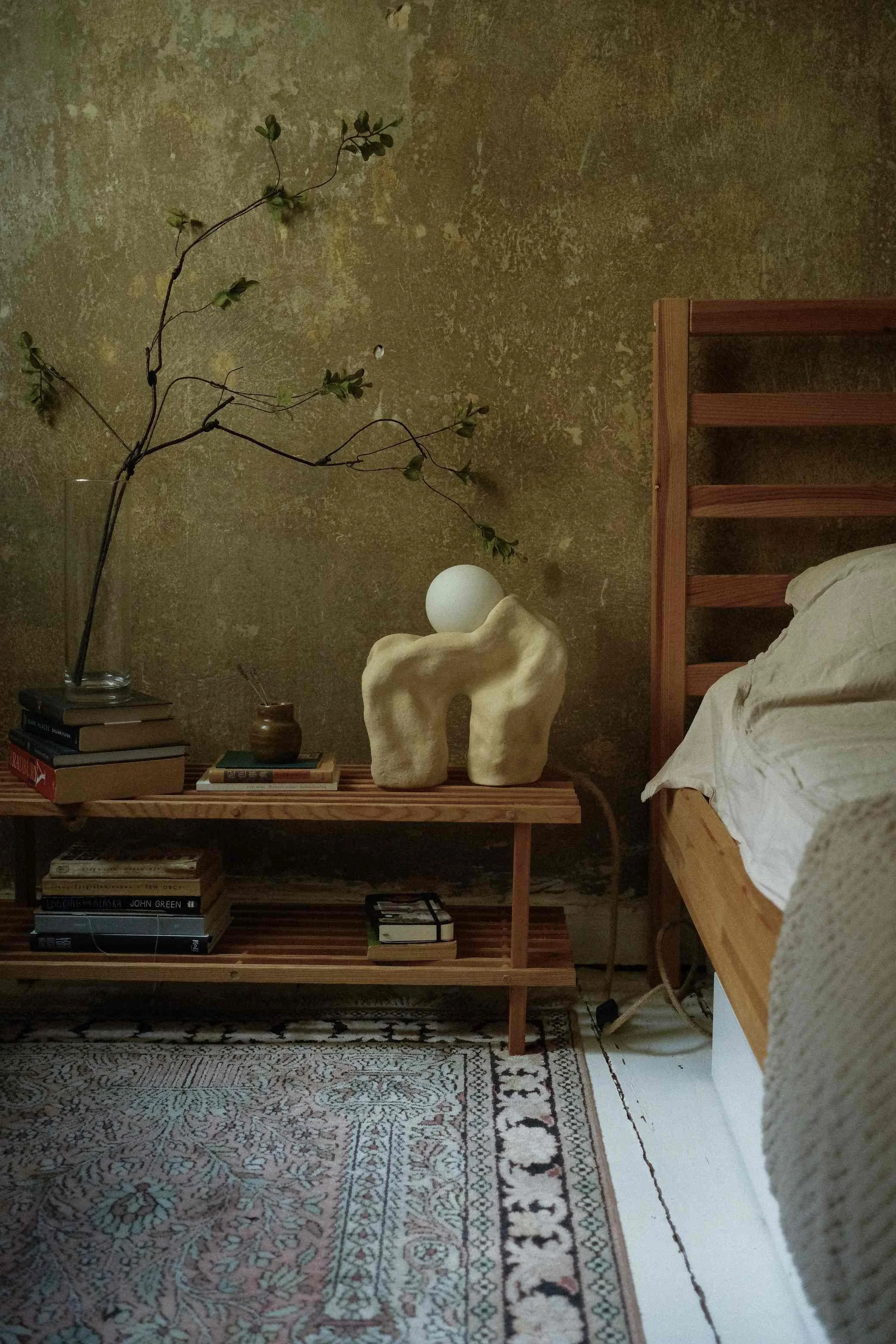
The Limestone Hills Lamp is hand sculpted by Oleksandra Samokhina using high fired stoneware clay. The ceramic body is shaped into a sweeping, arch like form, with the raw surface left unglazed to preserve the texture of the clay. The glass lampshade is placed on top of the sculpted ceramic form, bringing together the solid, irregular quality of the clay with the simple shape of the glass globe.
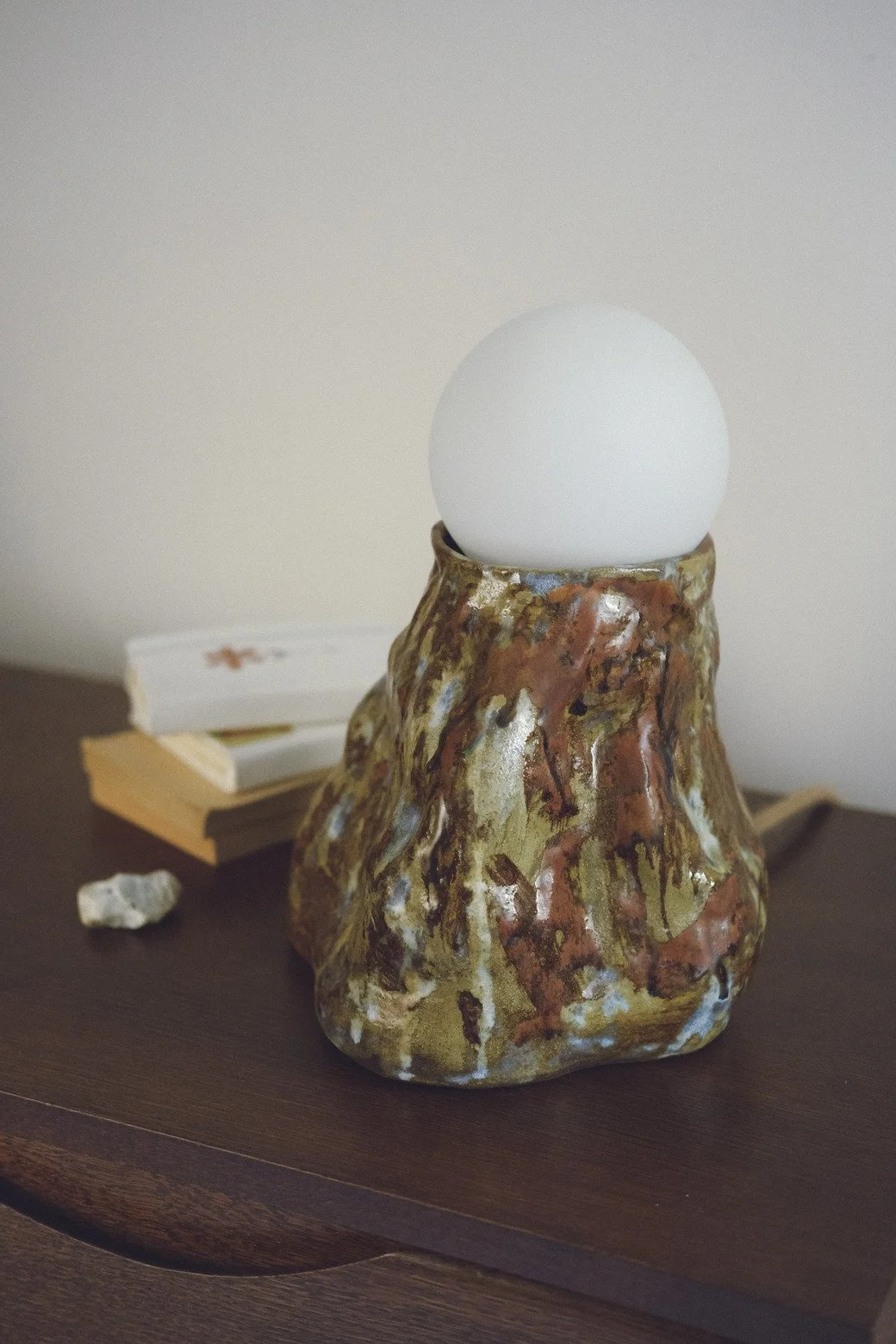
Handmade in Poznan, Poland by Oleksandra Samokhina of Niwa Ceramics, this lamp combines a stoneware base with a frosted glass lampshade. The tapered ceramic form is shaped to resemble a natural, mountainous structure and finished with layers of glaze in metallic gold, ochre and deep earthy brown. The glaze settles into the hand pressed crevices, emphasising the irregular surface and the sculptural quality of the piece.
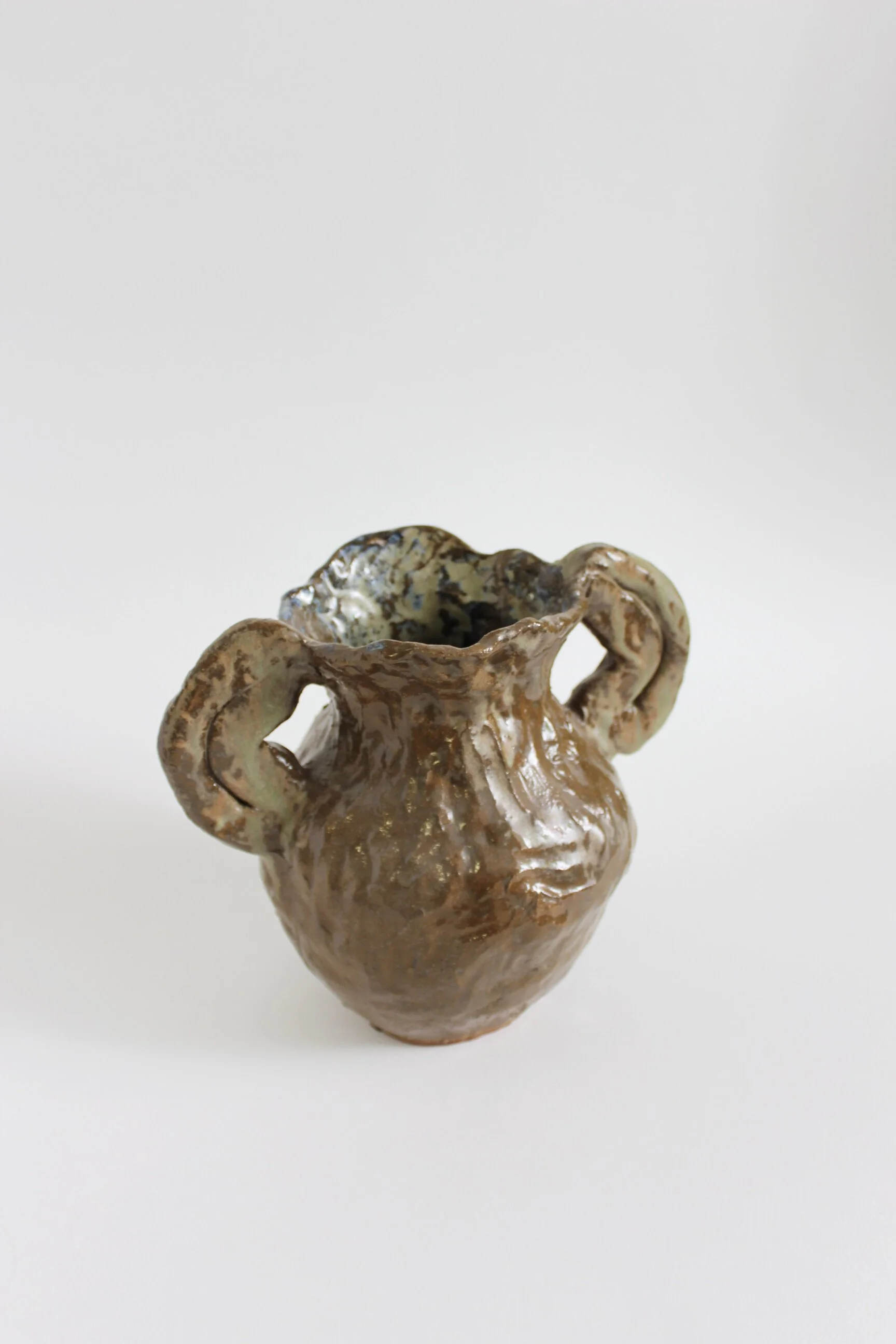
Handmade in Poznan, Poland by Oleksandra Samokhina of Niwa Ceramics, this vase is made from high fire red stoneware clay and finished with layers of glaze in earthy brown, olive and ash tones. Its compact body is framed by two exaggerated looping handles, giving the vase an irregular silhouette. The worked surface and shifting glaze reveal the handmade character of the piece.
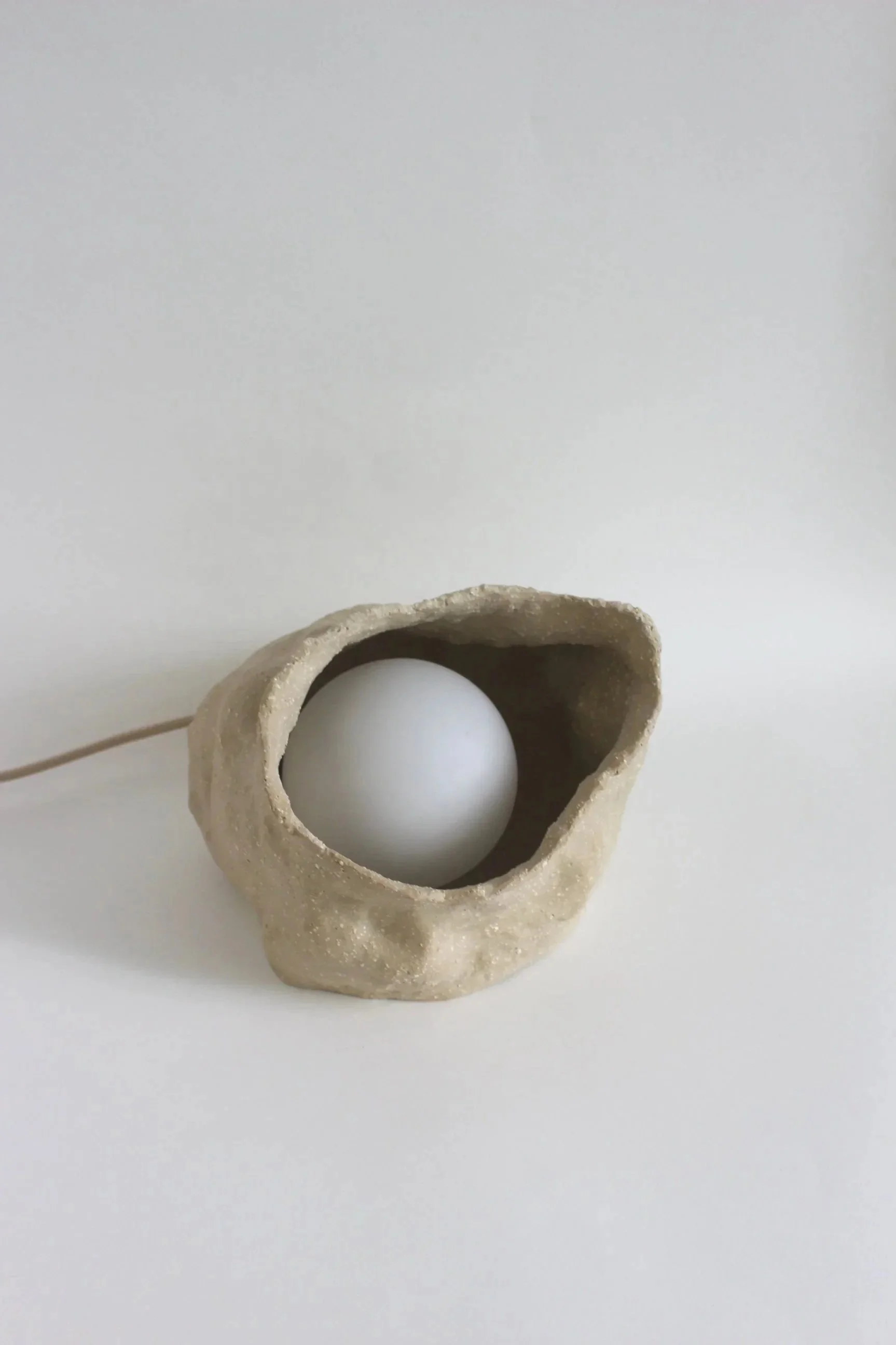
Handmade in Poznan, Poland by Oleksandra Samokhina of Niwa Ceramics, The Cave Lamp is sculpted from unglazed sandy stoneware with grog and paired with a frosted glass lampshade. The clay forms an irregular, cave like structure around the glass globe, creating a relationship between the solid stoneware and the light held within it. Its tactile surface and organic form reveal the marks of the handmade process.
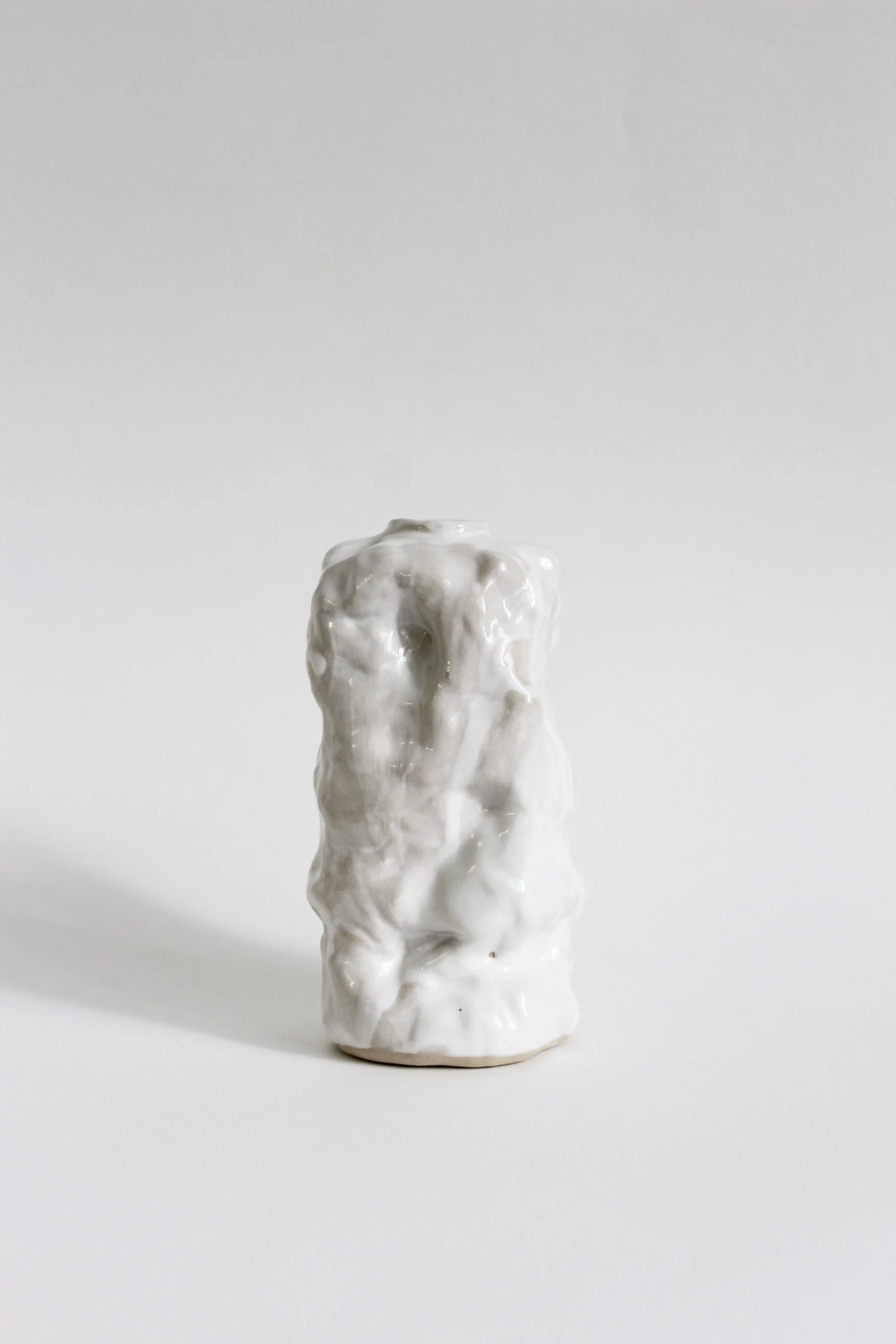
Handmade in Poznań, Poland by Oleksandra Samokhina of Niwa Ceramics, this vase is hand sculpted using the coiling technique. Its columnar form is shaped with deep, finger pressed indentations that create a cascading, stalagmite like structure. A thick, glossy white glaze pools in the crevices, revealing subtle earthy undertones along the ridges.
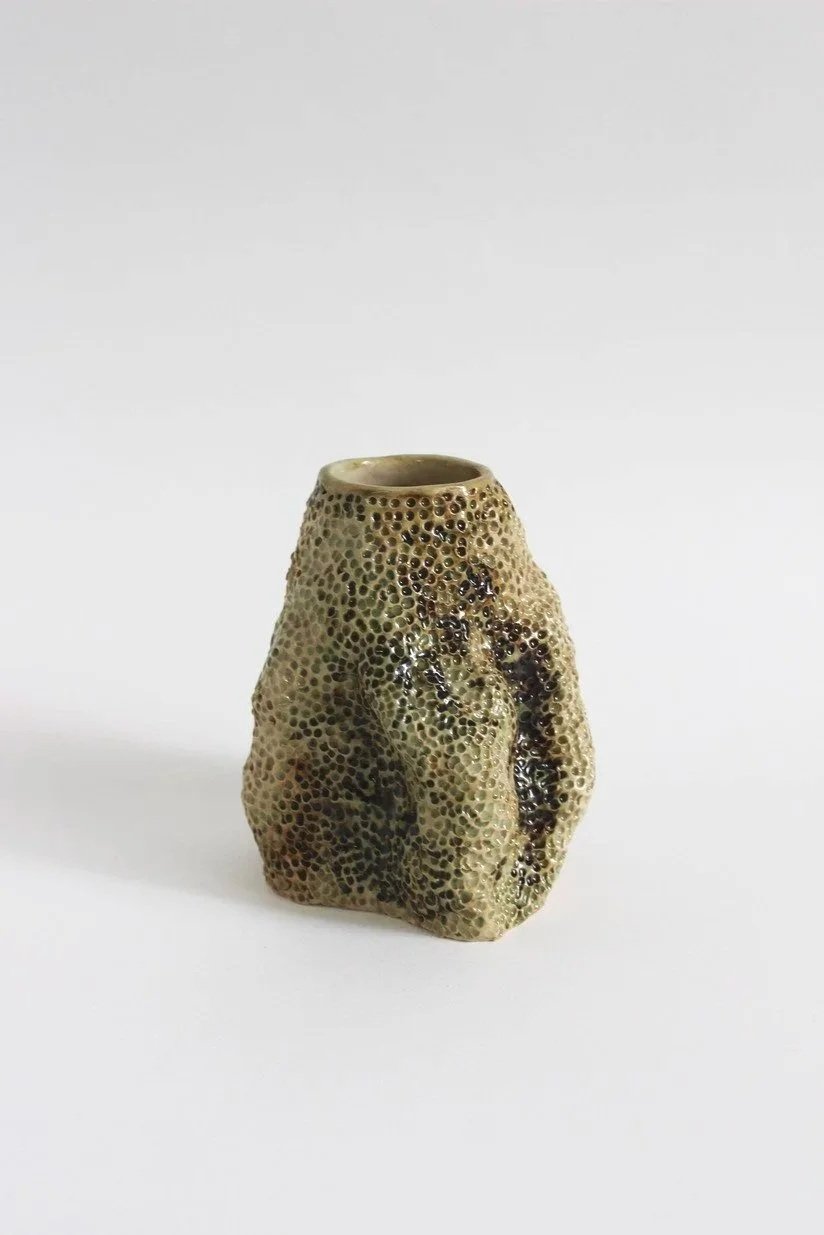
Handmade in Poznan, Poland by Oleksandra Samokhina of Niwa Ceramics, this vase is built using the coiling technique in beige stoneware clay. Its surface is shaped with a repeated pattern of deep indentations, creating an irregular texture across the form. Layers of green and dark brown glaze settle into the recessed areas, bringing out the depth and variation of the handmade surface.
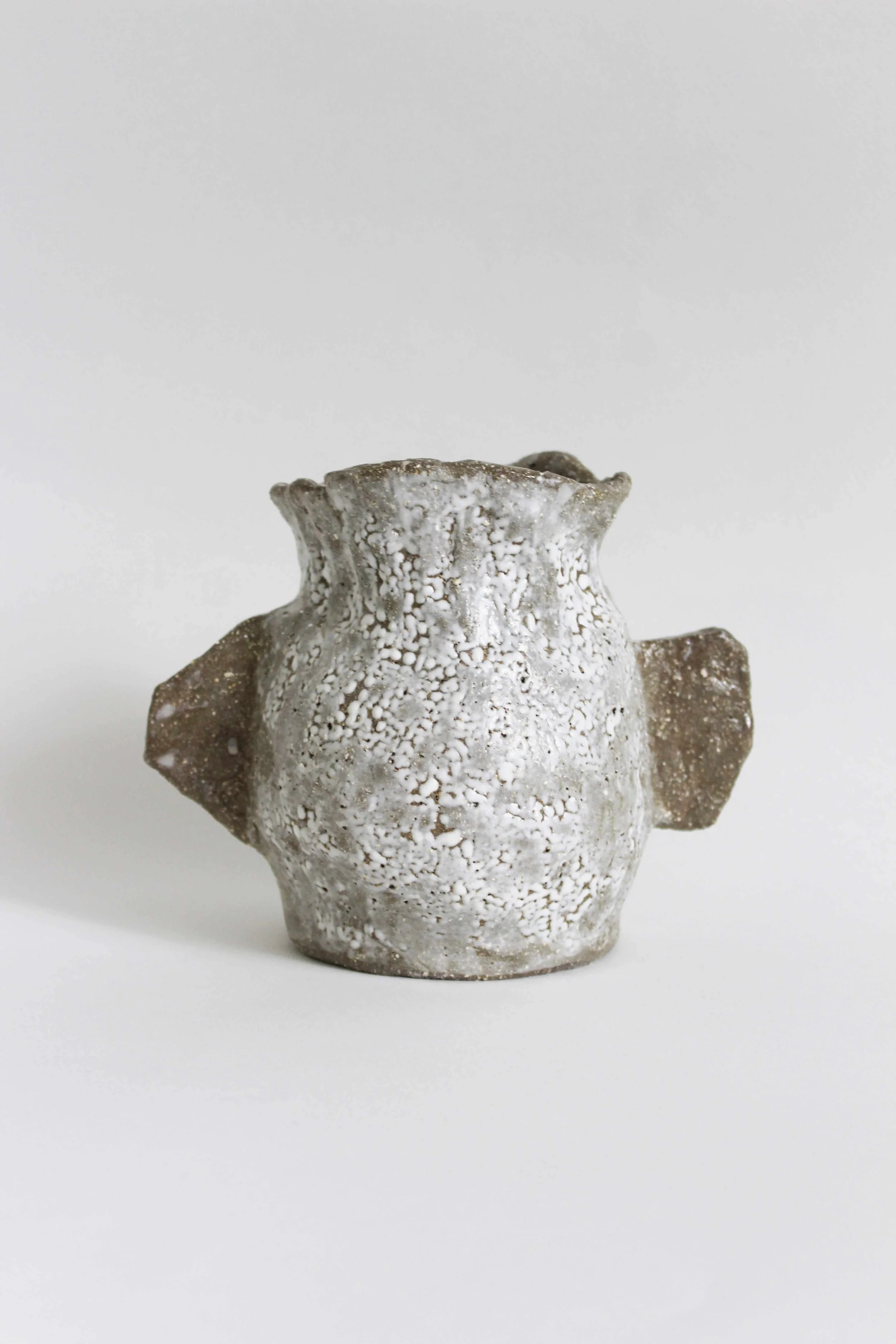
Handmade in Poznan, Poland by Oleksandra Samokhina of Niwa Ceramics, this vessel is built in stoneware clay with a stout, robust silhouette and two solid, angular lug handles. Its surface is covered with a special effect white glaze, creating a heavily encrusted texture across the form. The sculptural shape and irregular surface bring a sense of unearthed antiquity to the contemporary handmade piece.
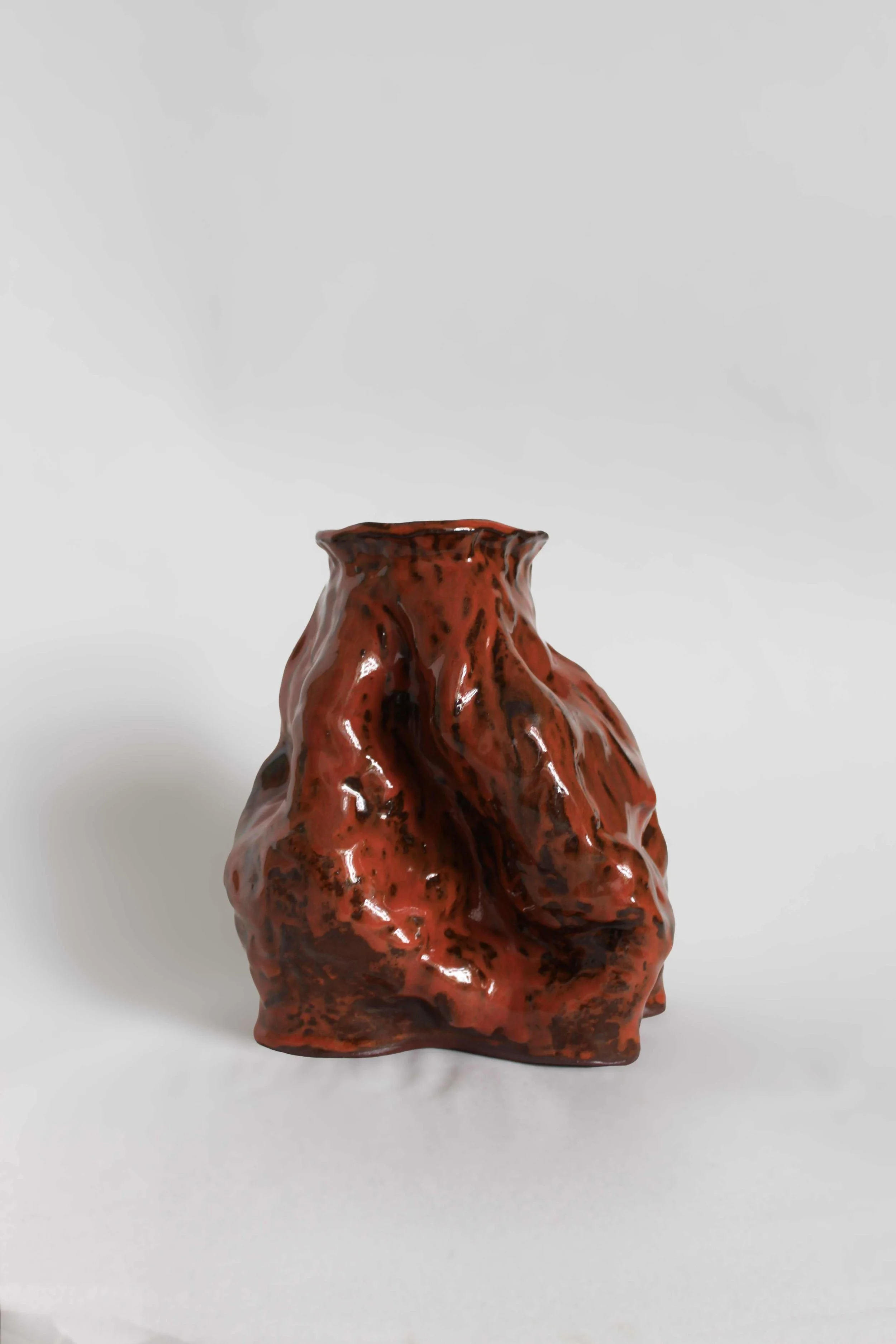
Handmade in Poznan, Poland by Oleksandra Samokhina of Niwa Ceramics, this vase is built using the coiling technique in high fire red stoneware clay. Its uneven, rounded body is shaped with deep folds and compressed surfaces, allowing the clay to retain a sense of movement. Layers of glaze in rich iron red settle into the folds, revealing darker variations across the form.
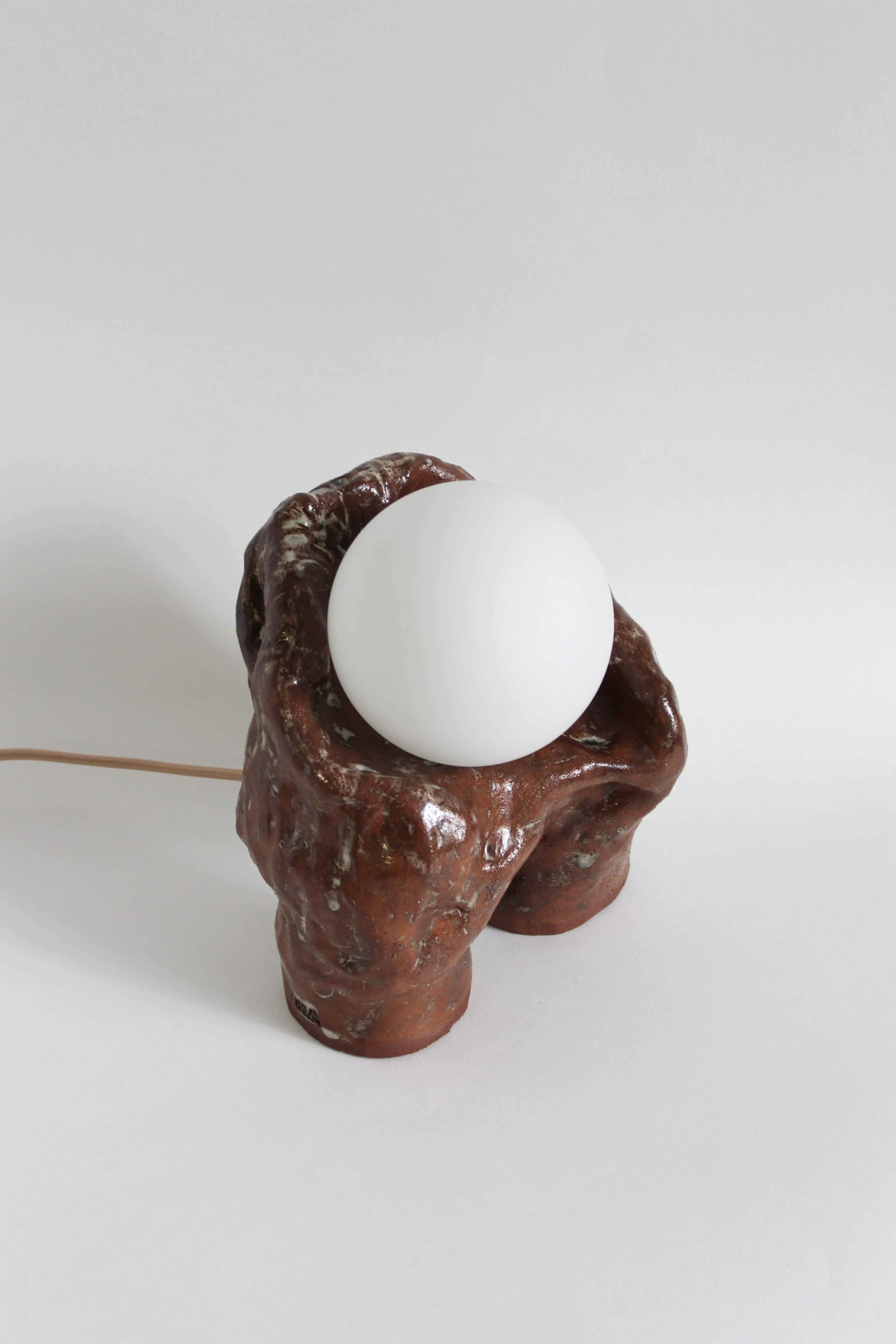
Handmade in Poznan, Poland by Oleksandra Samokhina of Niwa Ceramics, this lamp is made from red stoneware clay and finished with a glossy glaze in deep rust, reddish brown and amber tones. The glaze gathers across the undulating surface, highlighting the irregularities of the hand formed clay. A glass lampshade completes the piece, bringing together its sculptural ceramic body and functional form.