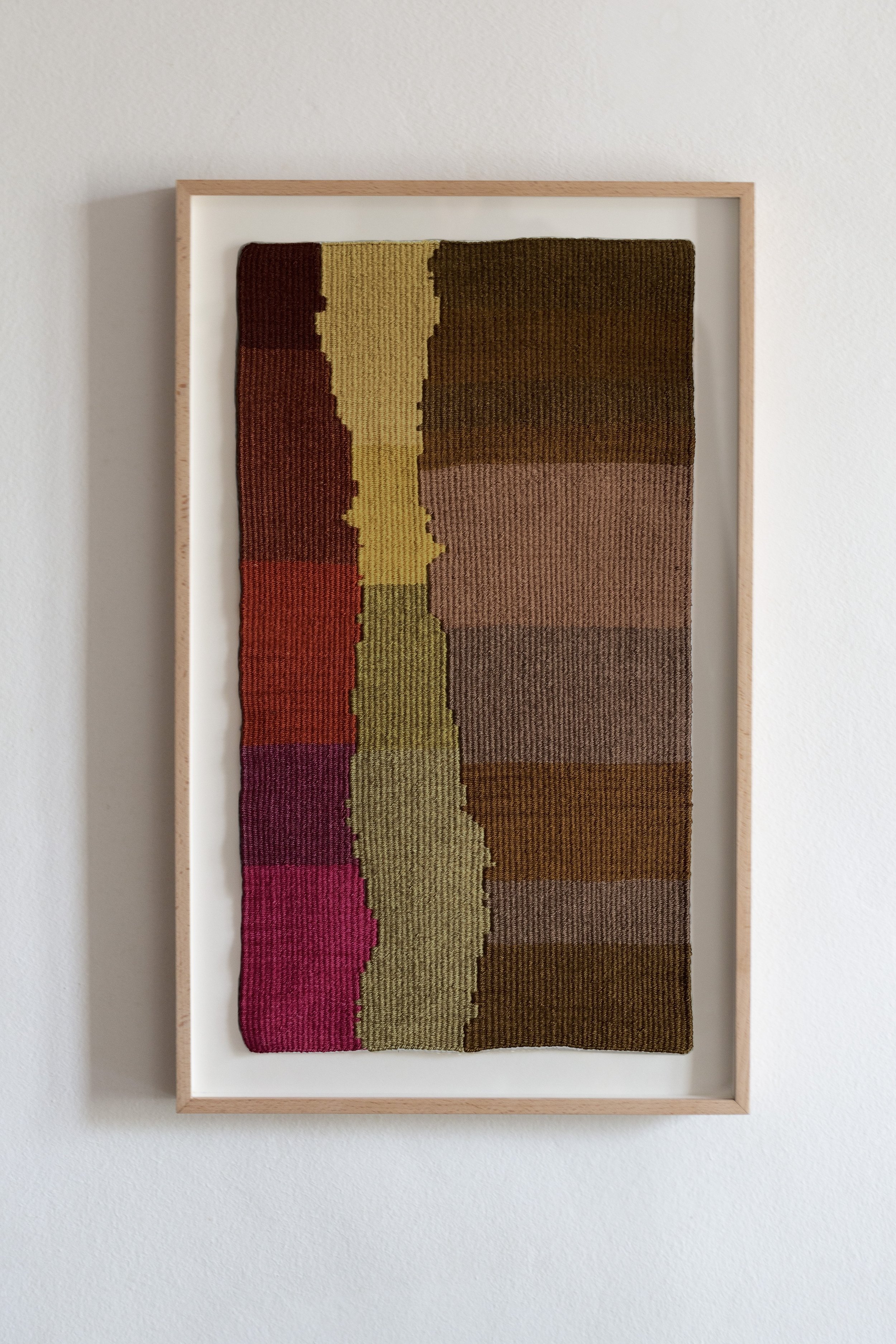
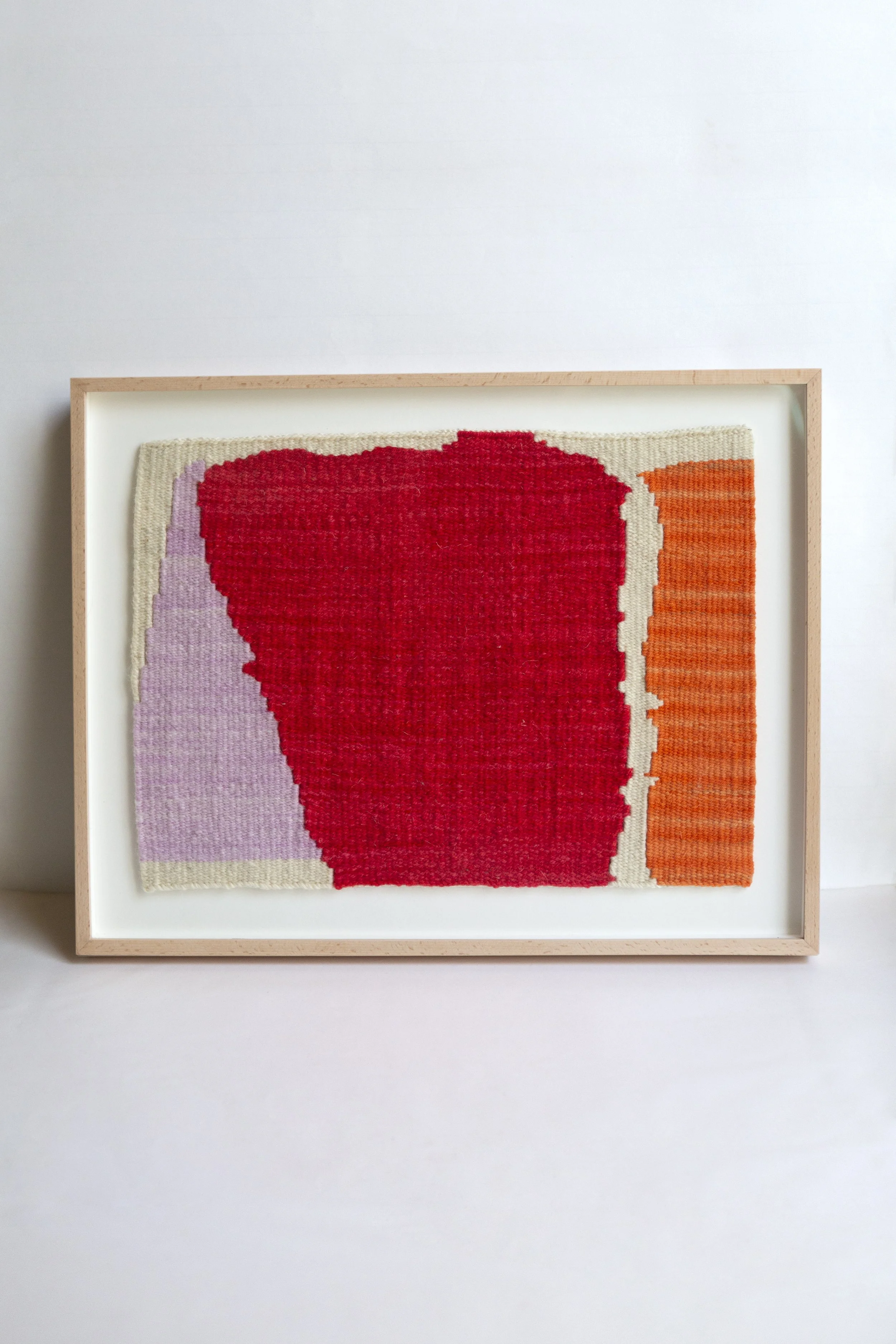
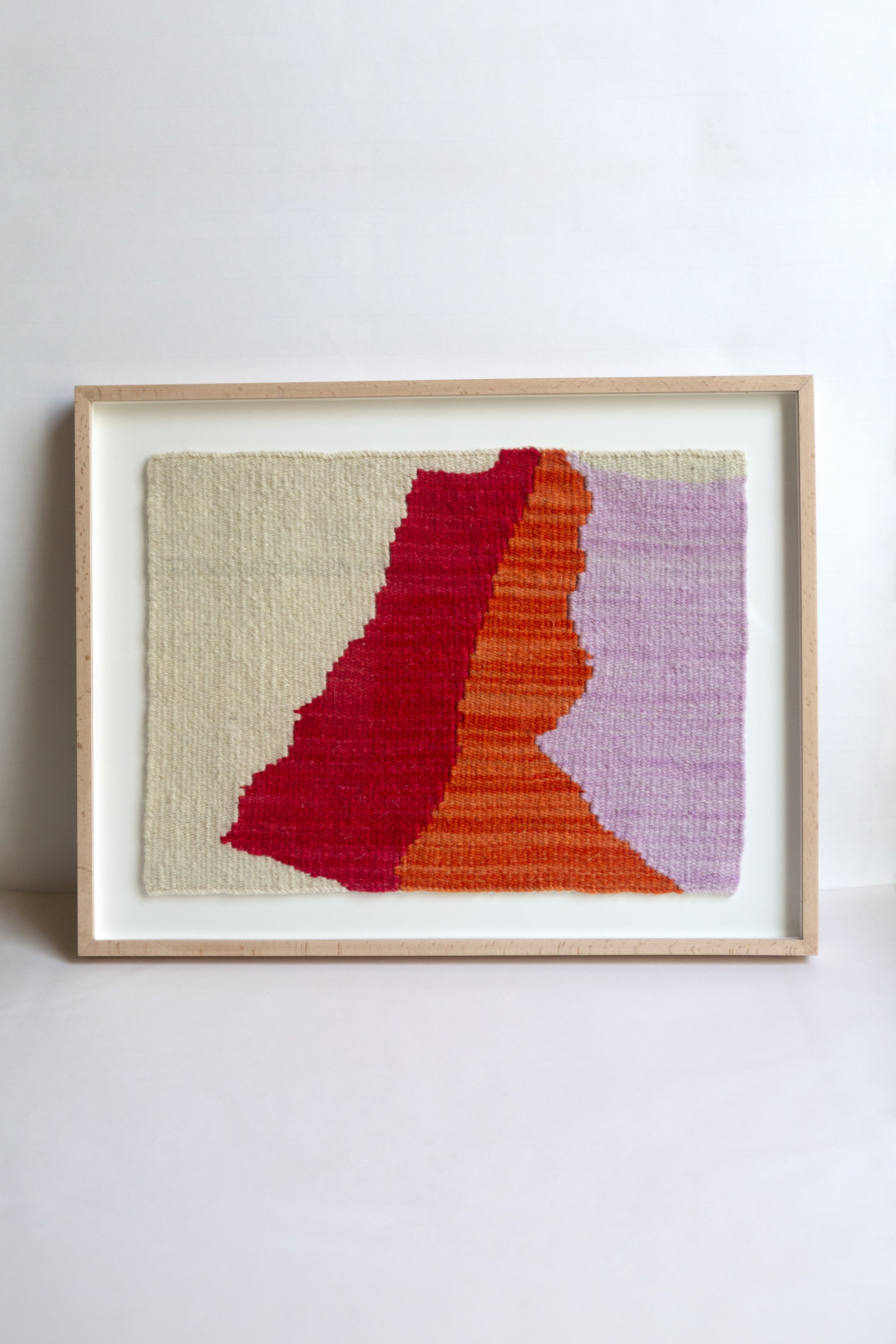
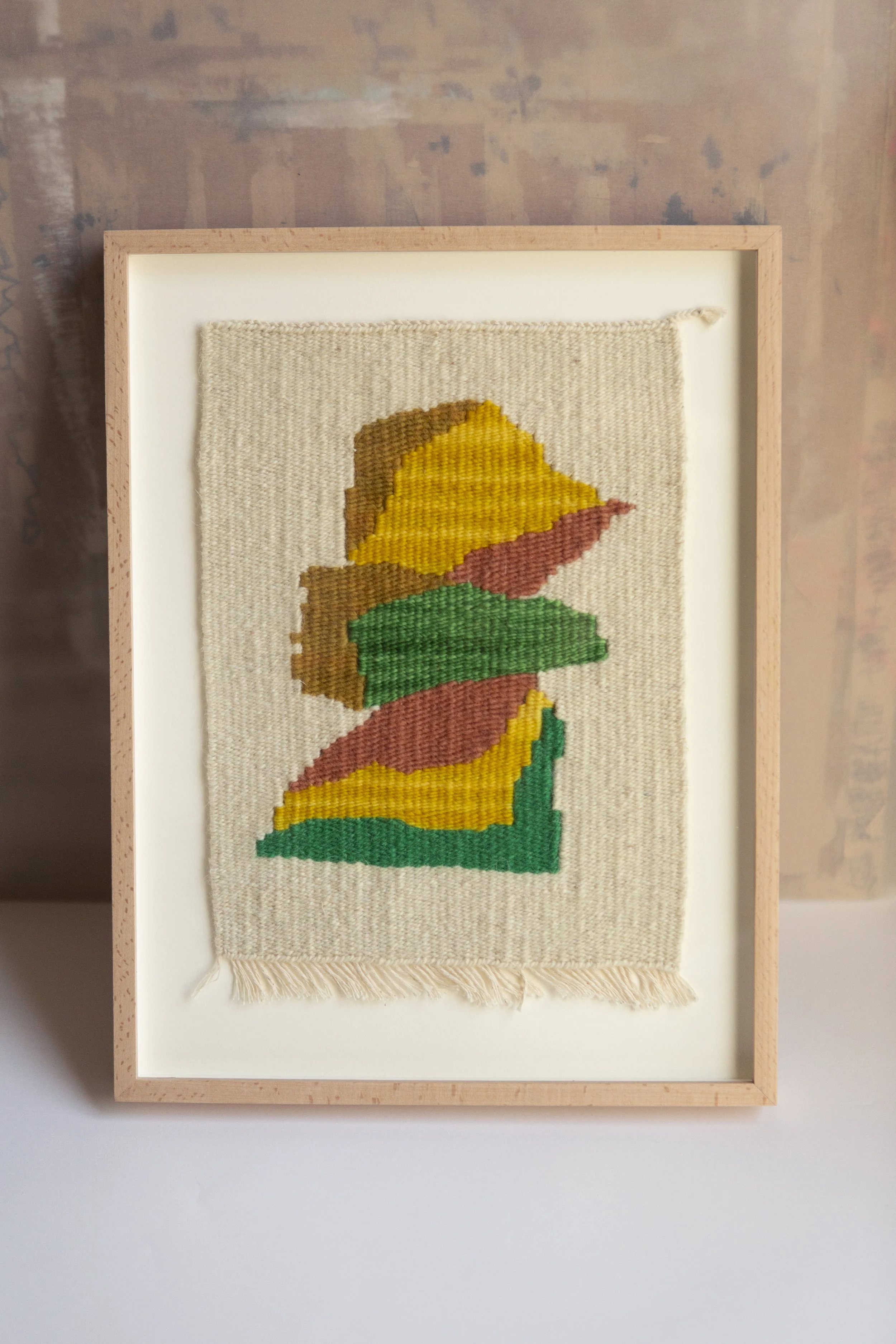
Isabel Rios
Please share a bit about yourself.
I was born and raised in La Paz, Bolivia. At eighteen, I moved to Brussels to study graphic design, and later to Paris, where I worked in the fashion industry. After six years there, I felt the need for a deep change. I wanted to step away from a fast-paced professional life and reconnect with a slower, manual way of working.
I moved to Barcelona to begin again, and it was there that I discovered two practices that would slowly reshape my path: art therapy and weaving. Both became central to the way I understand creation today, not only as an artistic act, but as a space for listening, attention, and transformation.
What first drew you to textiles, and how did this medium become central to your creative expression?
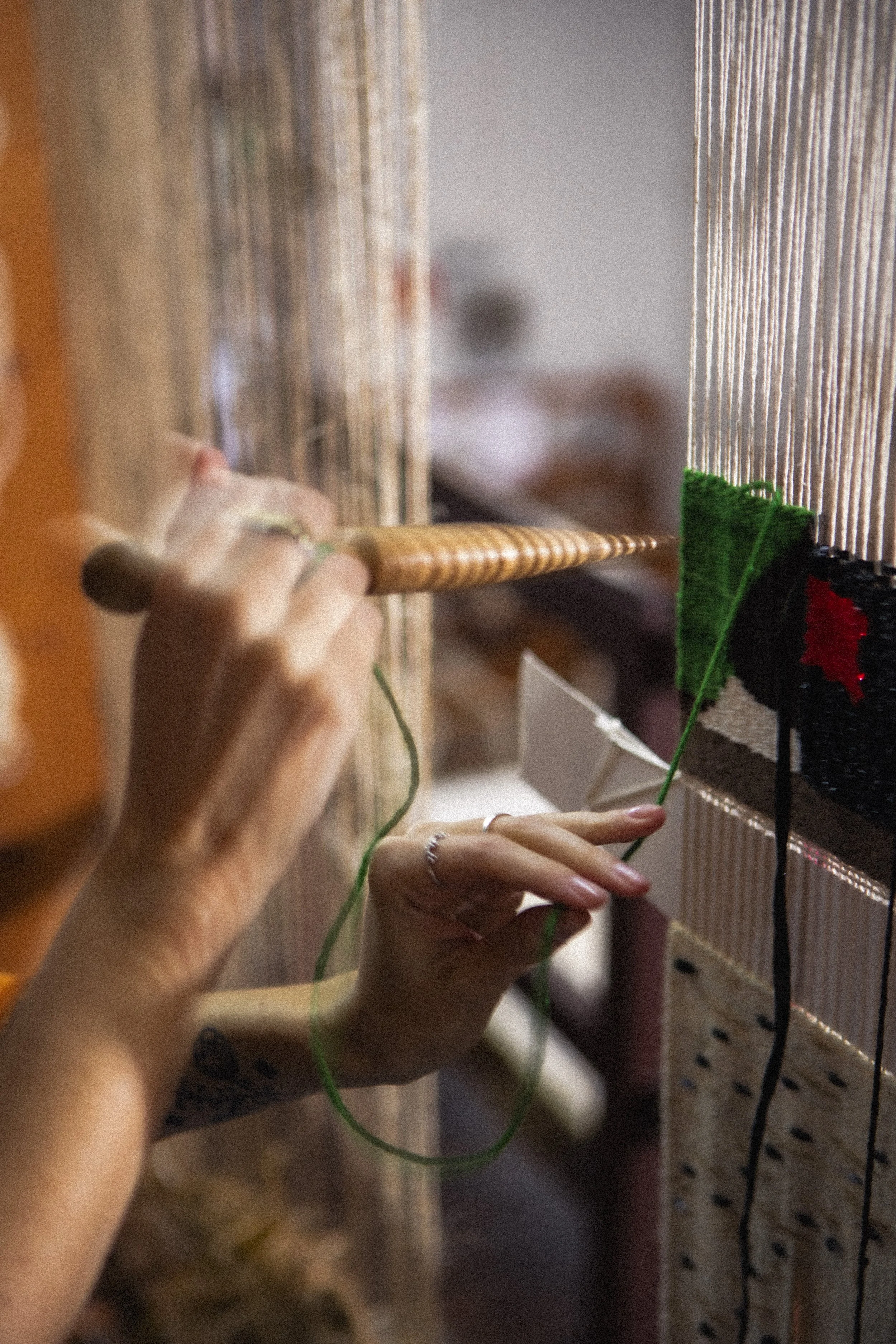
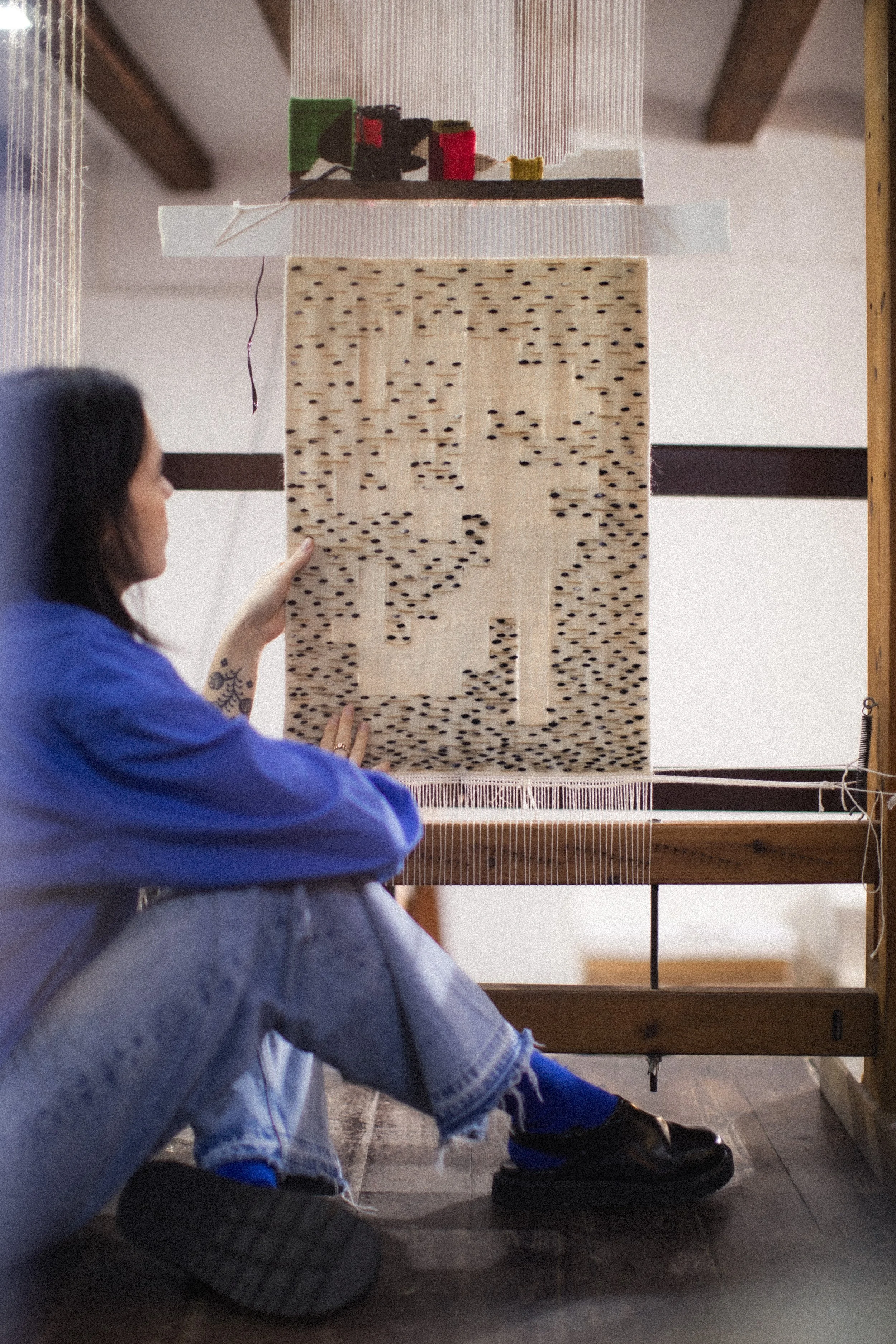
I began weaving in 2019, when I enrolled in an introductory course. By the end of the workshop, I knew I wanted to continue. I spent the following year practicing mostly on my own, learning intuitively and experimenting, before deciding to deepen my knowledge and technique more seriously.
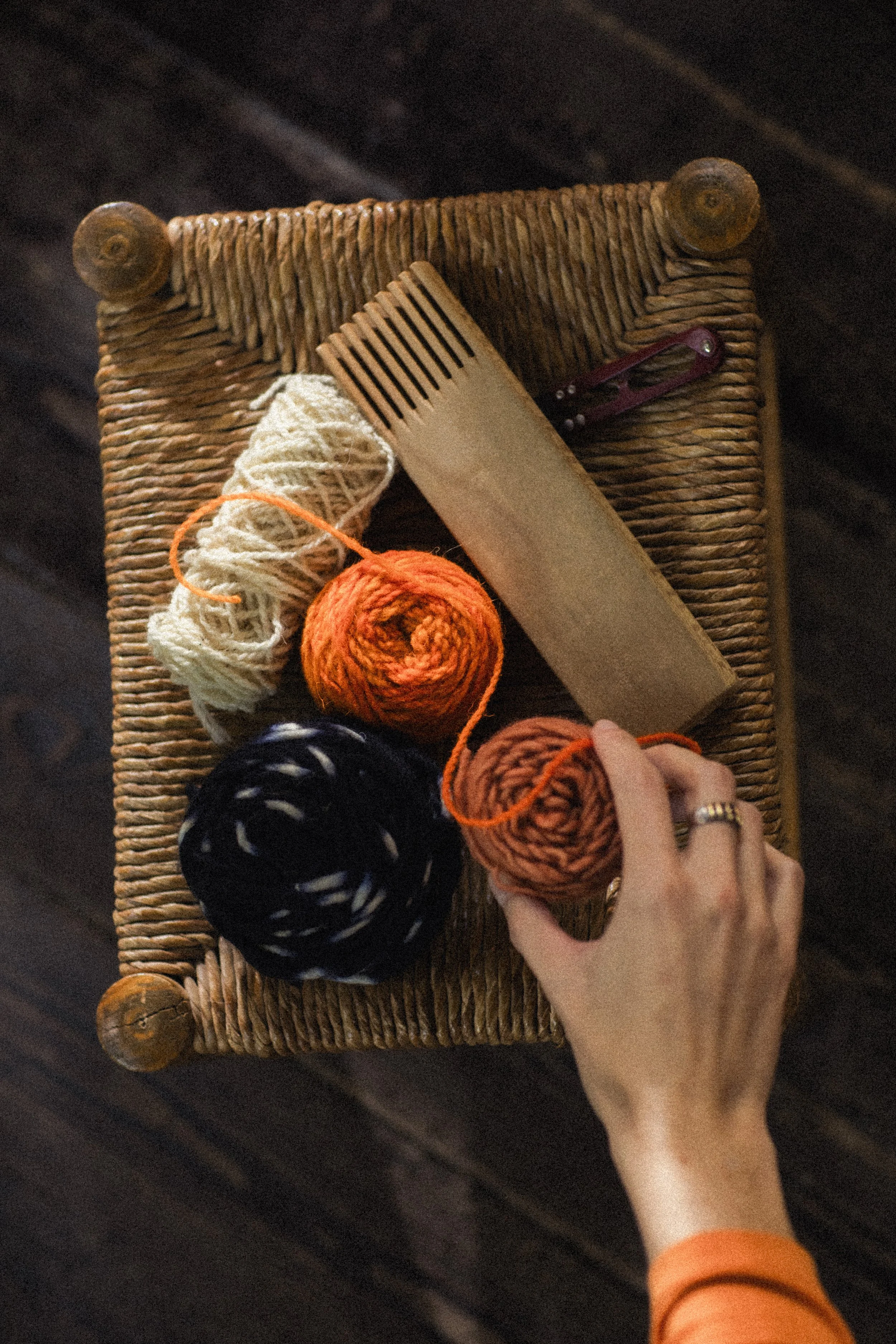
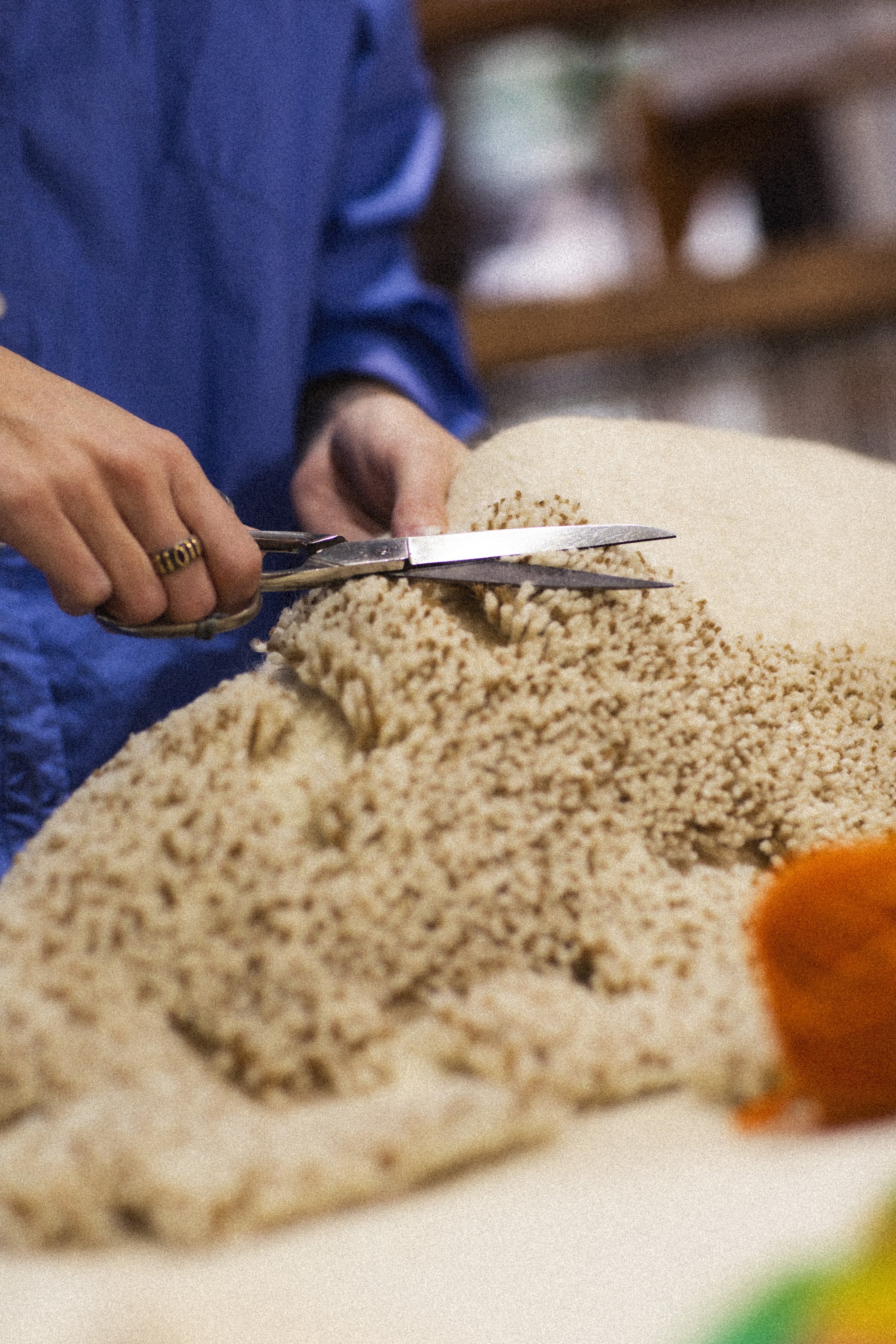
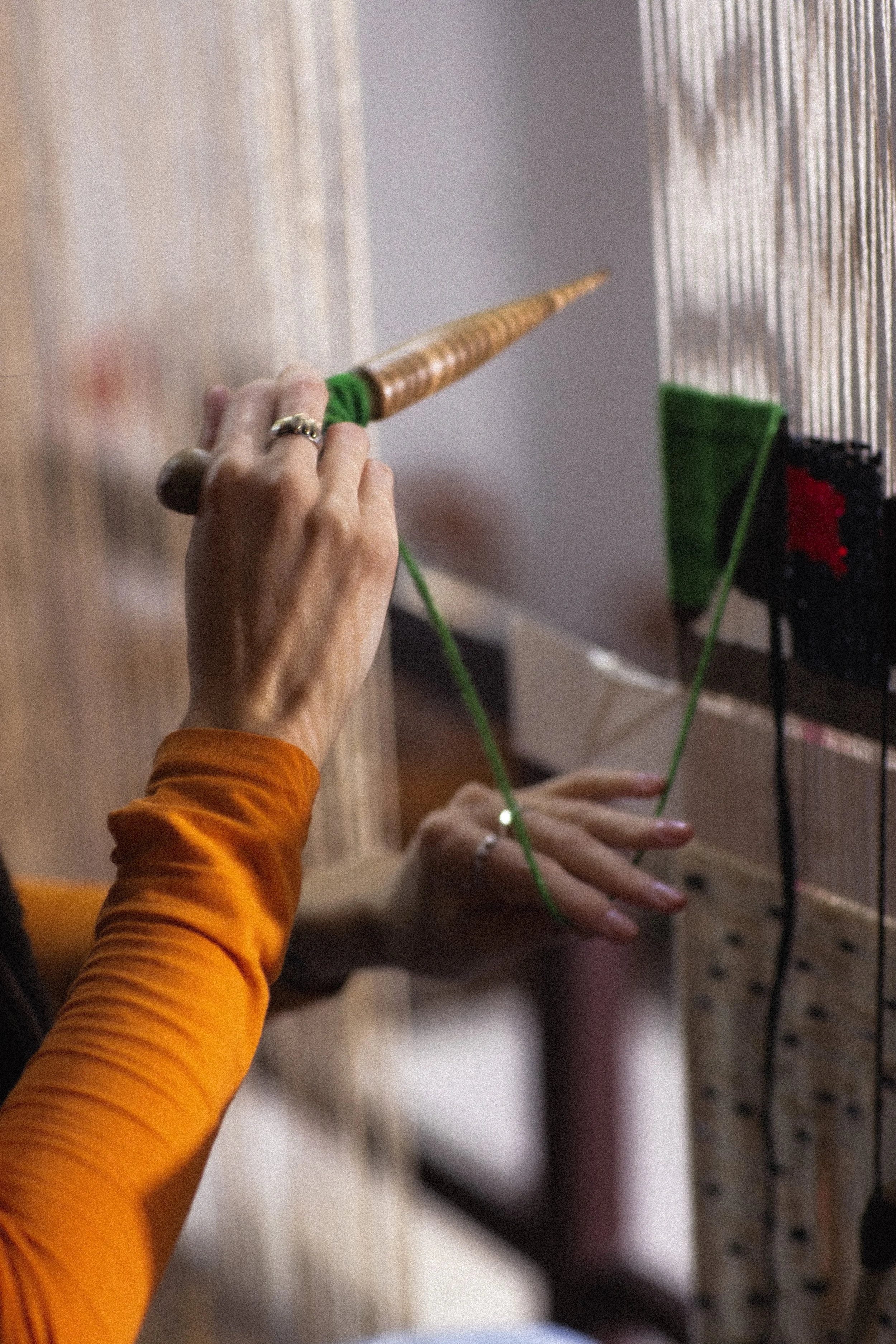
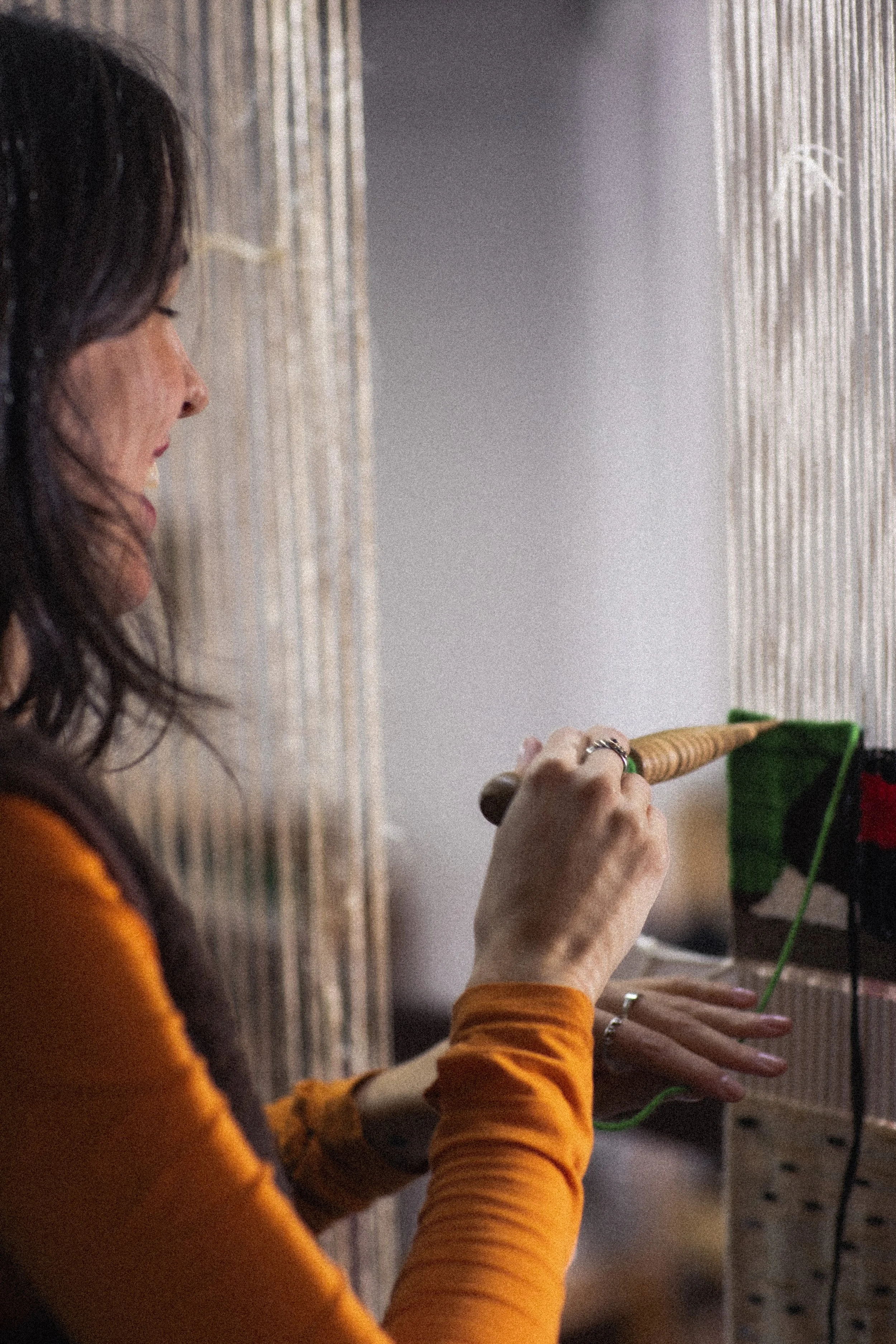
There was something immediately comforting in working with my hands, in repeating gestures and handling natural fibers. Even though I had always worked in creative fields, textiles allowed me to place gesture and physical presence at the center of my practice.
Weaving taught me to trust time and to trust my own hands. It gave me confidence in slowness, repetition, and patience. At the same time, it reconnected me to my Bolivian heritage. Living far away for so many years, that reconnection felt grounding.
How have the landscapes, traditions, and cultural heritage of your upbringing influenced your work?
I grew up in a country where textiles are not decorative objects, but living systems rooted in territory, body, and community. In Bolivia, weaving is a language that travels through generations.
I was deeply inspired by Indigenous weaving communities such as Jalq’a and Tarabuco, and by thinkers and artists like Elvira Espejo, who approach textiles as archives of ancestral knowledge rather than simply as craft.
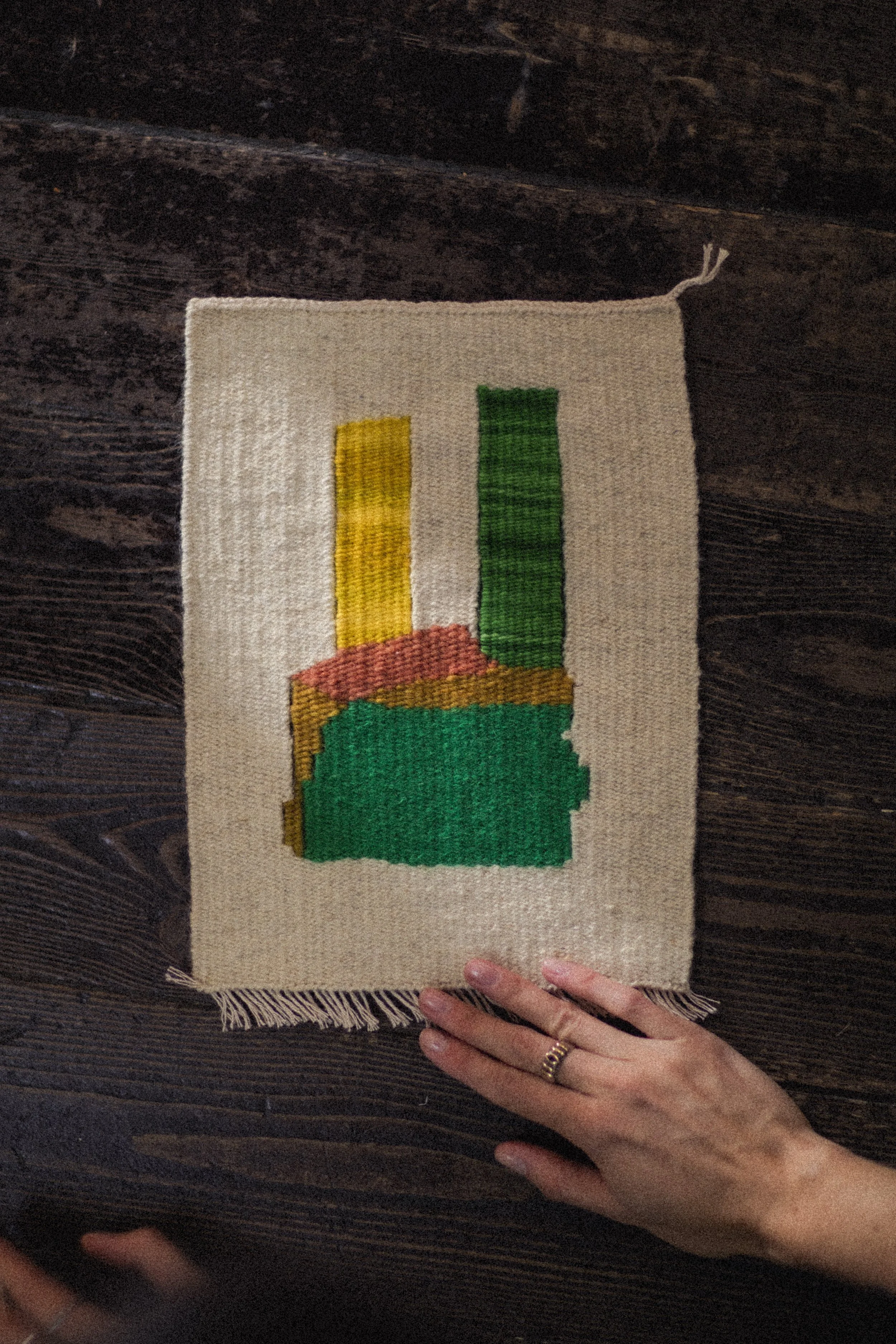
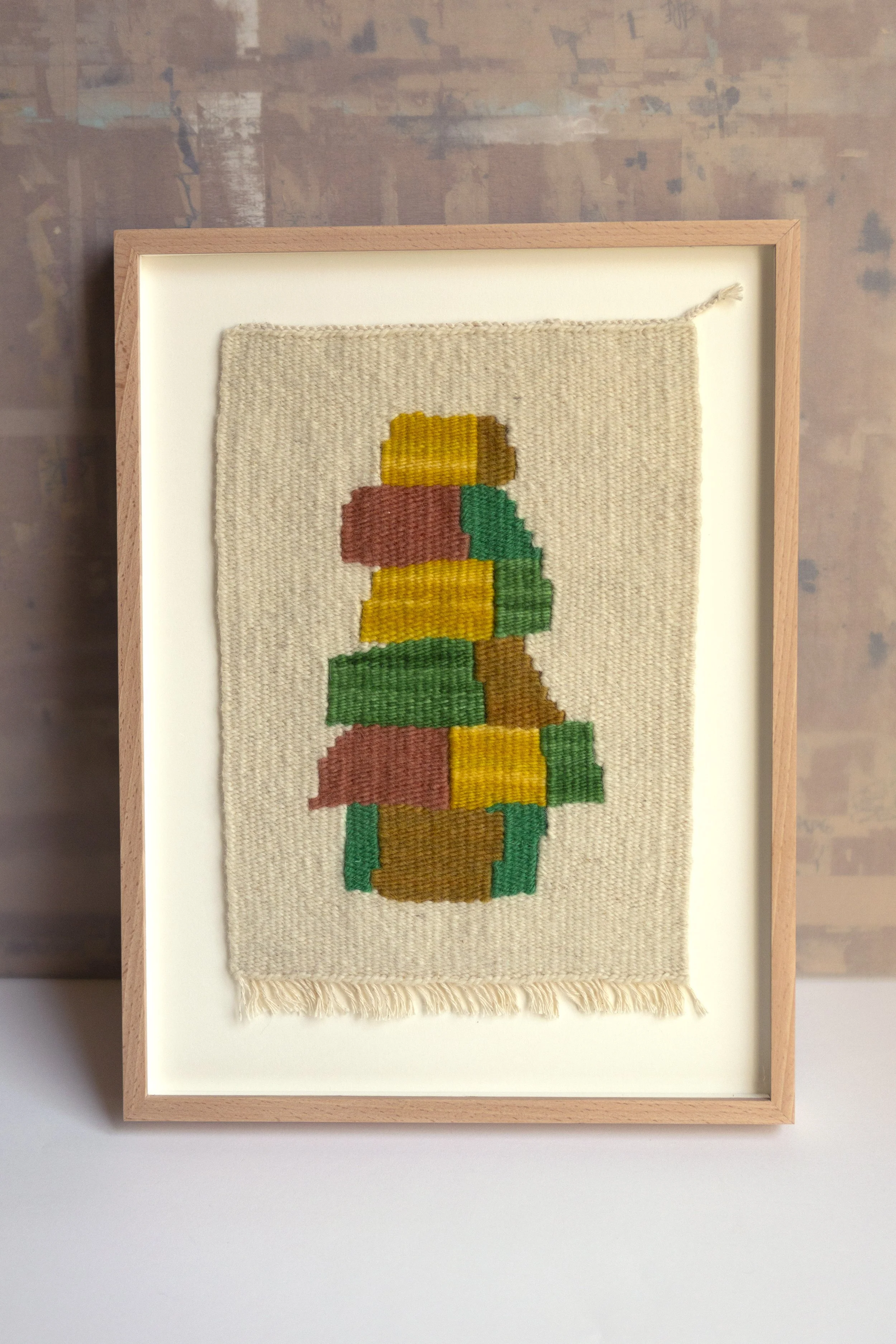
The landscapes, the intense colors, and the symbolic richness of Bolivian textiles marked my sensitivity early on. Even though my work today is more introspective and contemporary, it remains connected to this vision of textile as an embodied practice that links gesture and story.
Can you tell us about your current practice in Barcelona and how you balance your life between textile art and art therapy?
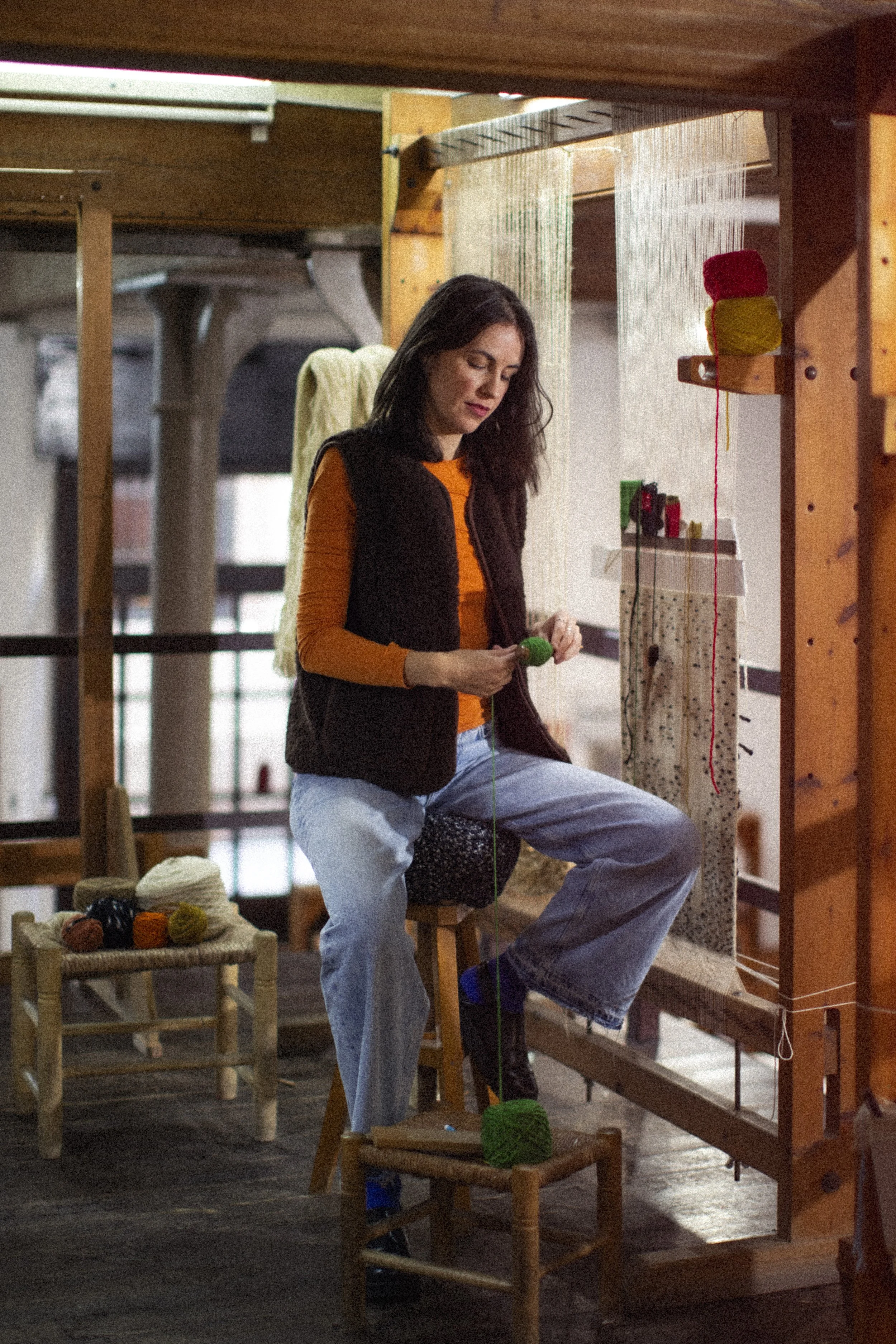
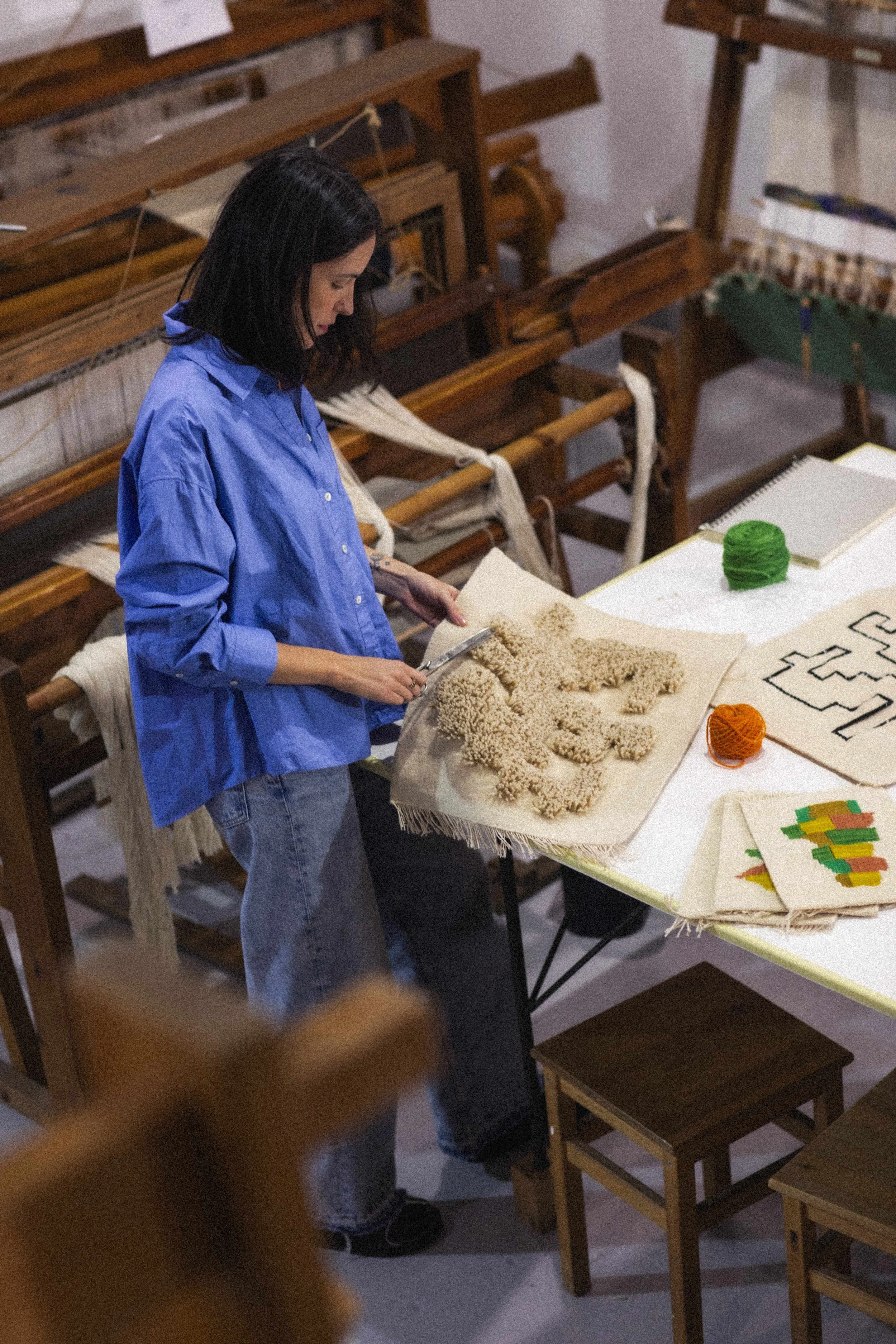
In Barcelona, I am part of Textil Teranyina, a school and atelier founded by artist Teresa Rosa Aguayo. It is an important reference within the local textile scene, but beyond that, it is a rare space of transmission and shared knowledge.
What makes Textil Teranyina special for me is not only the technical level, but the human dimension of the place. It is an international community of women weavers, guided and mentored by Olga Hernández, where learning happens through listening, patience, mutual support, and good laughs now and then. I found there a rhythm that resonates deeply with my own values.
My textile practice and my work in art therapy naturally intertwine. Art therapy taught me to value transformation over outcome, and this changed the way I weave. In return, weaving offers me a meditative space, a quiet dialogue between the body, time, and material. Balancing both practices feels less like a division and more like an ongoing conversation.
Can you take us through your process? Do you have any particular rituals that help you dive into it with greater ease and foster a more natural flow?
I often experience a fear of the blank page. Starting a new project is always a moment of tension for me. To move past it, there is usually a memory, a landscape, or an experience behind the piece. So sometimes I return to old photographs I took, or to drawings and sketches. This gives me a place to start. Having an image or an idea to translate into weaving can help to continue without knowing the outcome.
At the same time, through art therapy, I learned to see creation as a form of play, and this idea stayed with me. It allows me to be less serious and less controlling. Each project becomes a way of testing variations without fixing a result, and that mindset helps me enter more naturally to a state where decisions follow one another without interruption.
You also guide workshops and therapeutic sessions through art. What inspired you to share this knowledge and create spaces for others to explore healing through making?
Because it works!
I was first drawn to creative fields, and later to art therapy, as I experienced for myself that words are sometimes not enough. My training was not only theoretical but deeply experiential and immersive. I went through the process personally, at times in challenging ways, and I witnessed how transformative it can be.
Making allows emotions, memories, and sensations to surface through a different language, one that can feel more direct and sometimes more honest than words.
Creating safe spaces where people can explore, express themselves, and reconnect through art feels deeply meaningful to me. It is a way of sharing what has helped me, and honoring creation not only as an artistic act, but also as a space where people can externalize what is not yet structured in words.
Looking at the contemporary craft landscape, where do you see the greatest opportunities for preserving and reinterpreting important local traditions?
I believe the greatest opportunity lies in transmission and education. Teaching and sharing knowledge is essential if we want these traditions to remain alive rather than frozen in time.
We should return to a moment when techniques like stitching, weaving, or macramé were part of everyday learning. These practices carry patience, care, and embodied knowledge, and they deserve a place within both formal education and informal community spaces. When traditional techniques are practiced and adapted to contemporary contexts, they evolve naturally while keeping their roots.
Are there any new projects, themes, or directions you are currently exploring that feel particularly connected to your practice?
At the moment, what matters most to me is simply to keep creating in an honest way and to stay open to what the process reveals. I try not to force a direction, but to allow the work to guide me and sometimes surprise me.
Motherhood has also become an important transformation in my life, both personally and artistically. It is not always something explicit in my work, but it inevitably shapes the way I create. It has changed my relationship to time, attention, and patience. In many ways, weaving has become a space where these changes can quietly unfold. The work evolves as I do, thread by thread.
Concretely, I continue to participate in exhibitions and I remain open to collaborations. I am interested in working in dialogue with other artists and in shared spaces where exchange feels natural.
How can people engage more closely with your work, whether through your pieces, exhibitions, or online presence?
I am currently part of the exhibition Les Variations textiles XXL 2026 near Paris, which will be open until April 26.
Otherwise, I share parts of my process, inspirations, and current projects on Instagram at @isabelriosl. For inquiries, collaborations, or conversations, I am always happy to connect by email at isabelrioslepage@gmail.com.
Photos by Gabriel Engelke.