Please share a bit about yourself and your background. What first drew you to clay, and how did Zosia Ceramics come to life?
I have a very mixed background, having spent many years working in university libraries full-time, but always being drawn to creative outlets in my spare time. I was searching for something to feel passionate about because it seemed to me that others around me already had something they were deeply engaged with. It took me a while to realise my strong attraction towards ceramics, which must have begun subconsciously when I was a child visiting relatives in Poland, noticing what pottery they had in their cupboards.
My grandma had an assortment of teacup and saucer sets in her glass cabinet, which I was excited to be served tea. My auntie too, has an eclectic mix of cups in her own kitchen.
I eventually realised this might just be the thing I feel passionate about, and after one class I was completely in love with making pottery. I kept wondering, how is it that artists can be so prolific when usually they have a day job, but I’ve learnt it really is just about persistence.
There’s a history of big career changes in my family. My grandmother was studying law when she decided to join the theatre to be an actress for the rest of her life. My mum had a doctorate in the sciences, carrying out research internationally, and after she had my sister and I, she went full-pelt into her senior library assistant work instead. My sister was a physician’s assistant for many years, but she too decided to leave that career and start her own business baking and decorating cakes.
Zosia Ceramics came about after my mum passed away in 2022. Although something was developing before that because I’d started a series of mugs, which I called the Fifi mugs. Fifi being one of my mum’s nicknames for me. After she passed, I found that I wanted to put my happy memories of her into this creative outlet, beginning with the flowers she would doodle in greetings cards.
The Polish Cepelia objects that decorated your childhood home remain an important reference for you. What do you remember about them, and how do they continue to find their way into your work today?
What I love most about these folk art objects, is that you can actually see that they were made with human hands, carved or painted in a loose, expressionistic way. That was something I knew I’d want to do with my own creations, and especially to make sure I leave human imprints all over my work.
There’s an element of making something out of ‘mistakes’ or ‘accidents’. If there’s an imperfection somewhere, my instinct is to protect it and find ways to frame it. Perhaps I get this motivation from my dad who always sees a way through problems. He reliably has an idea somewhere in his mind, and another idea if that one doesn’t work.
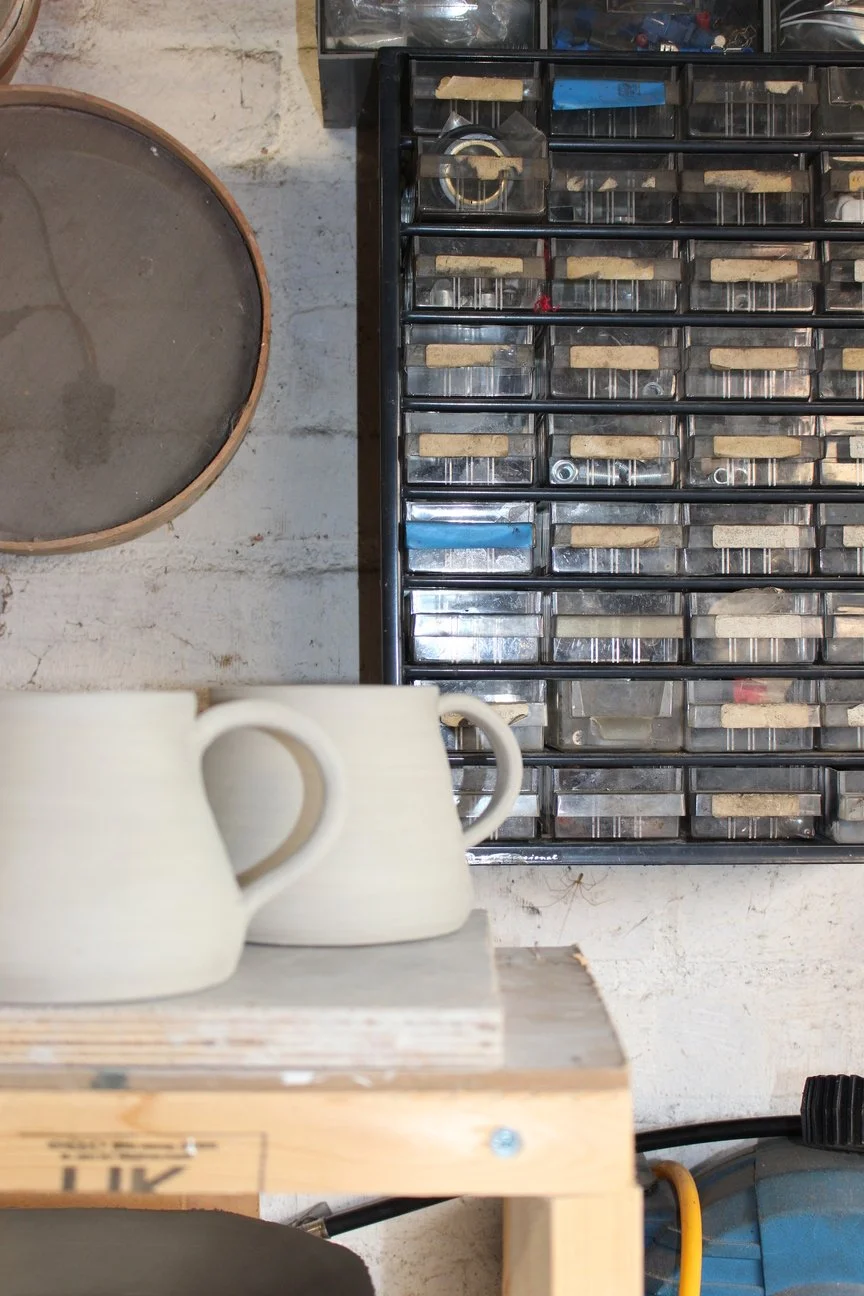
Because I temporarily have my studio in his garage, I’m constantly discussing my work with him; what’s working, what’s not, and he instinctively thinks things out with me in a practical way.
The family home is a real collaboration between my parents, who both seem to have a natural attraction to objects and design. I don’t think my dad realises how good he is at interior design, or maybe he doesn’t want to admit it! Together they created a colourful home with an eclectic mix of objects collected from antique centres, trips to Poland, sentimental family heirlooms, and much more. I never truly appreciated it until I’d passed through my phase of everything being white, modern and super tidy. I look forward to taking inspiration from the house when I have a place of my own.
Can you walk us through your process? How does a piece move from an initial idea to a finished mug, plate, or vase, and are there any rituals that help you settle into the work?
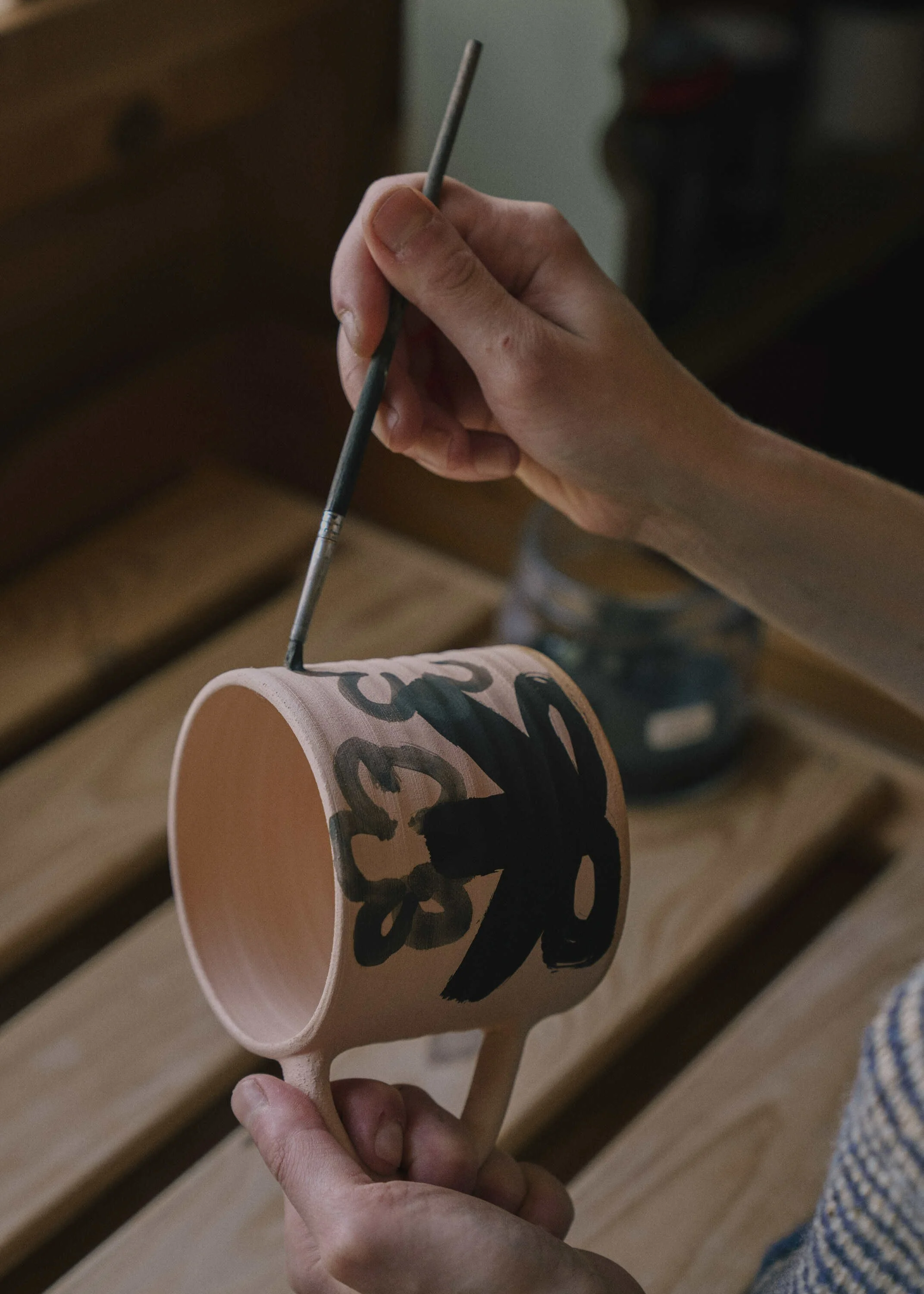
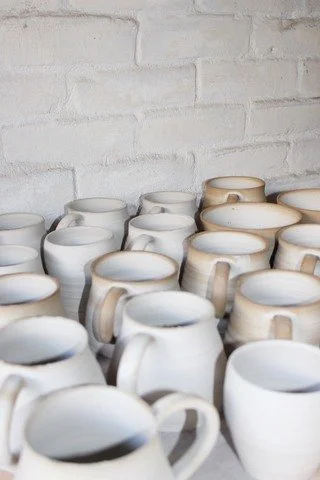
I deliberately restrict my colour palette to the three oxides and the buff stoneware clay because there’s something about it that makes the ideas bounce around in my head. I’m sure in the future I will explore other colours, perhaps introducing one or two into the existing range, but for now I’m enjoying what I have.
A shape will come from an objective I might have, for instance, how can I make this feel good in someone’s hands, how can I make this more stackable, how can I make it more of a centrepiece. I love hidden details too - a unique signature on the base of the pot or a hidden pattern or imprinting my palm in the clay surface. I suppose it’s a more intuitive way of working, very free.
Something I’ve struggled with a lot in the past is when a commission is too specific, I can feel a bit uninspired. I’ve come to realise that, after all, if you’re an artist being commissioned, your work is chosen for a reason. What they’re really asking for is my work. Even if the commission seems very specific, you should lean into what you want to do with it because that’s what people are already responding so positively to.
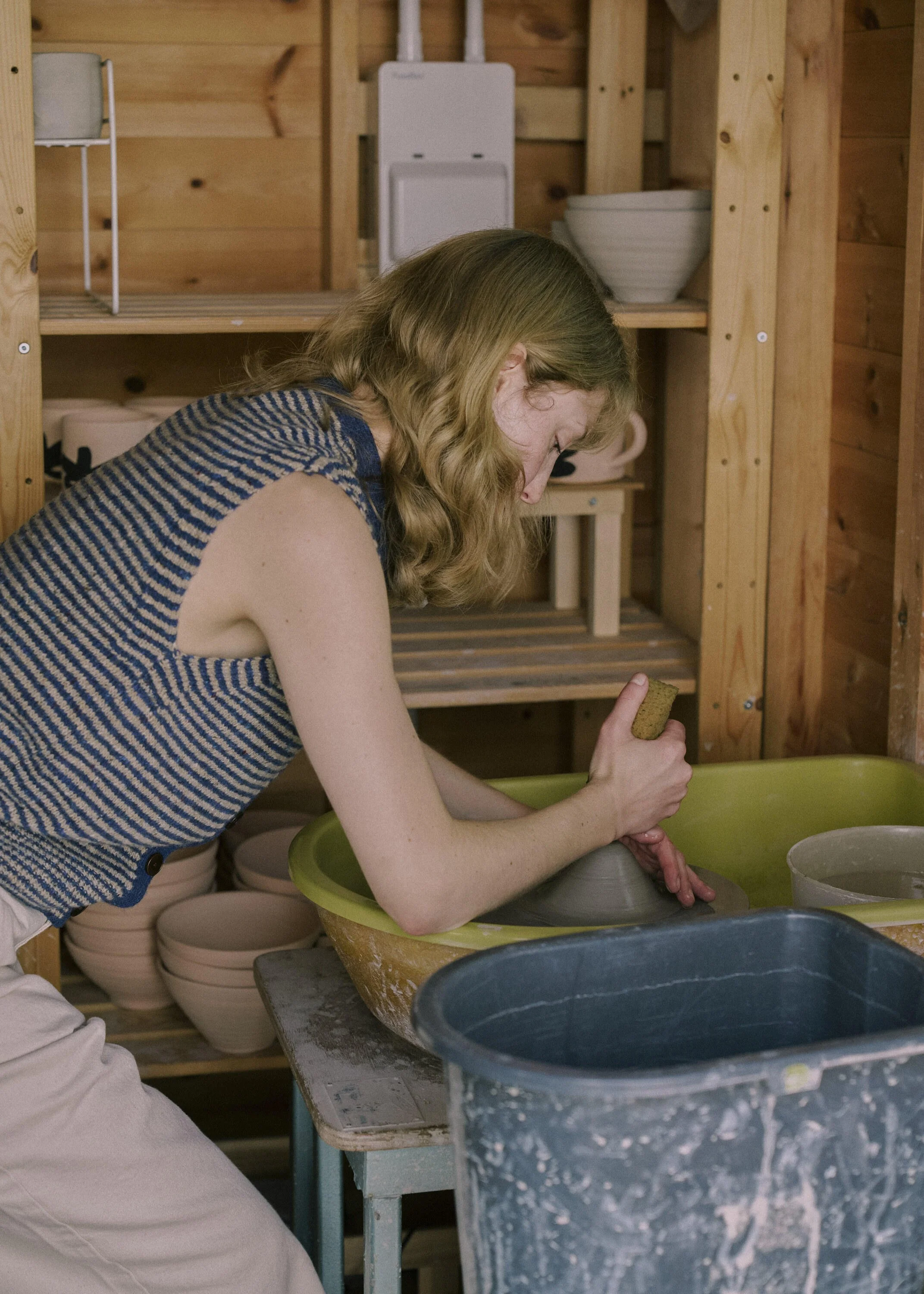
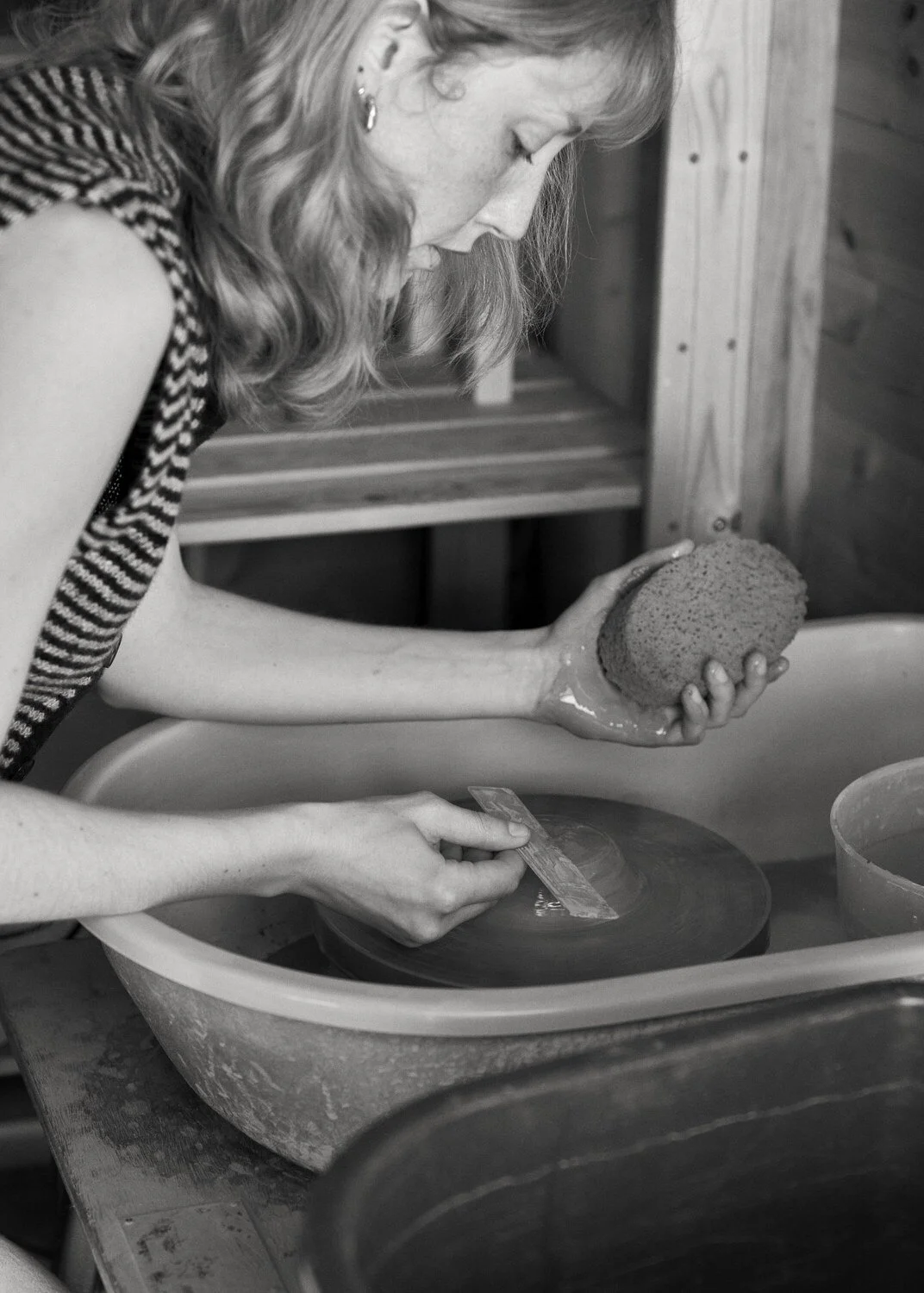
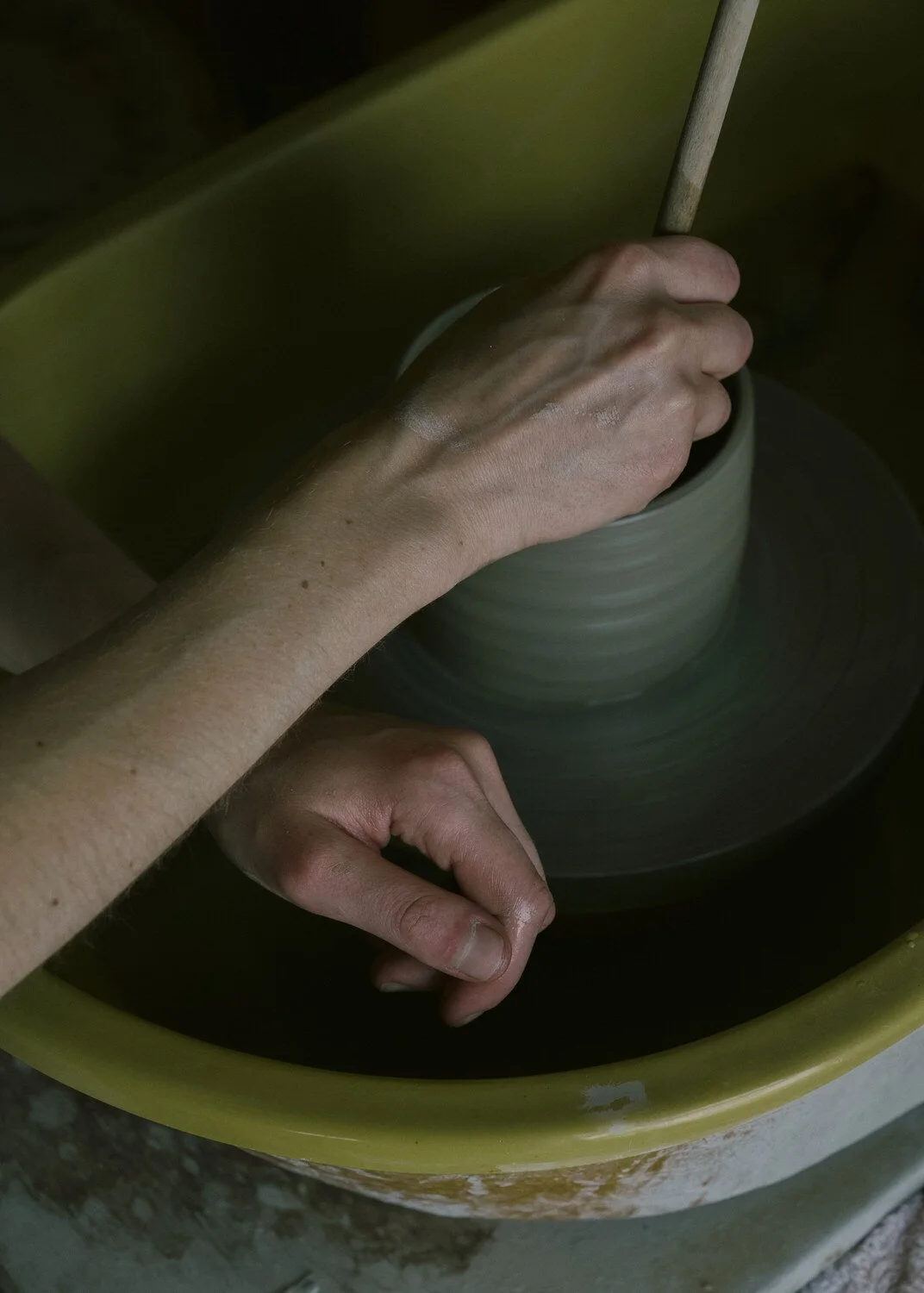
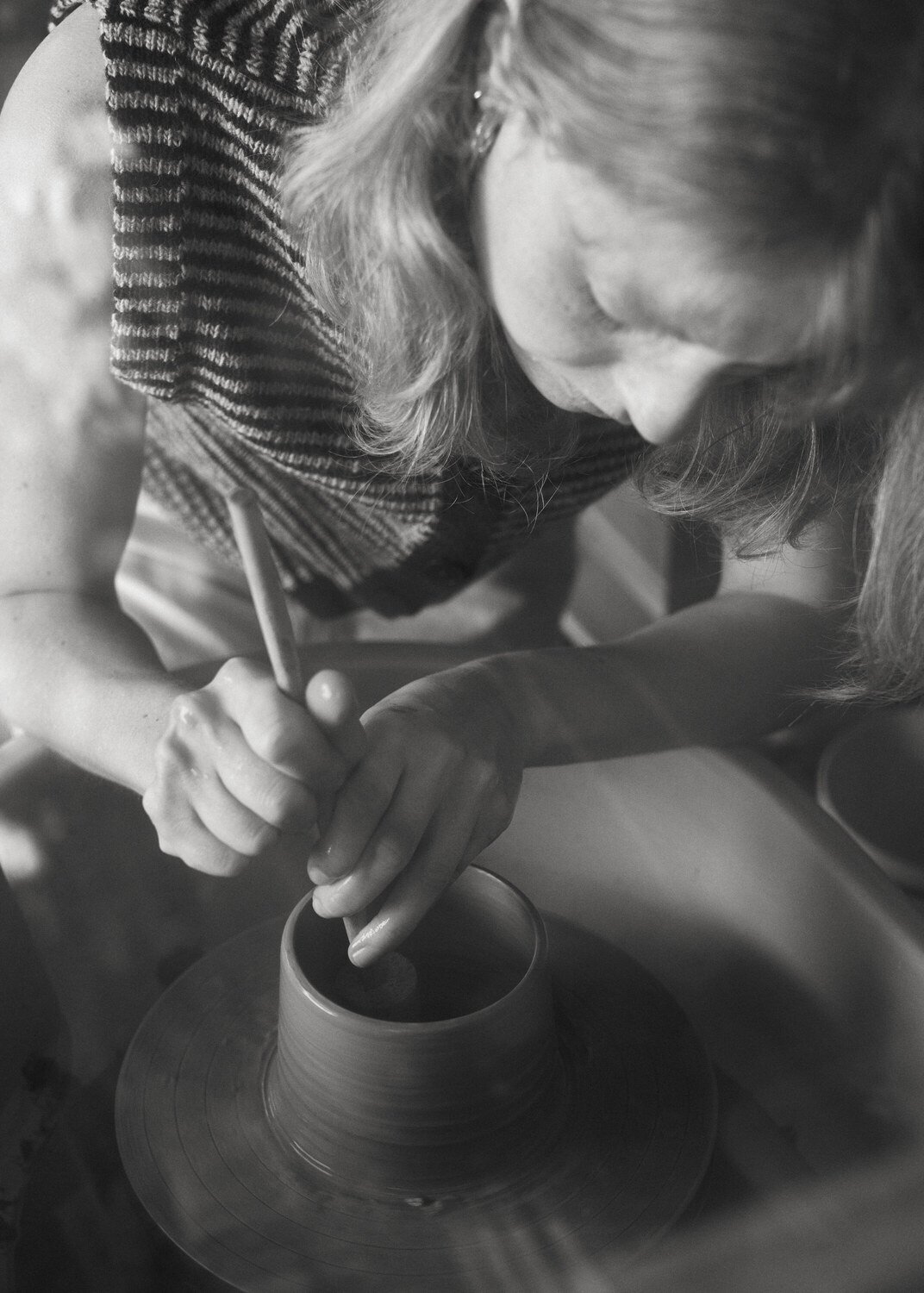
I use a kick wheel, in fact, I’ve never tried an electric wheel. I think I’ve grown too attached to my wheel to change it now. It feels like it has a history so for that reason as well I don’t think I could let it go so easily.
Now that I have to get a train and then bike to my dad’s every day to work, it has given me a solid sense of routine, which has been so helpful for my productivity. I know what train I’m going to get, how many balls of clay I can throw on before my dad calls lunch, when to take a morning and afternoon break to sit and check emails or book postal collections. This has been so useful for juggling multiple wholesale orders and minimising the feeling of overwhelm, though it does hit me sometimes.
Your pieces are designed to be held, filled, washed, and used every day. What role do you hope they will play in people's homes, and how do you think our relationship with an object changes as we live with it over time?
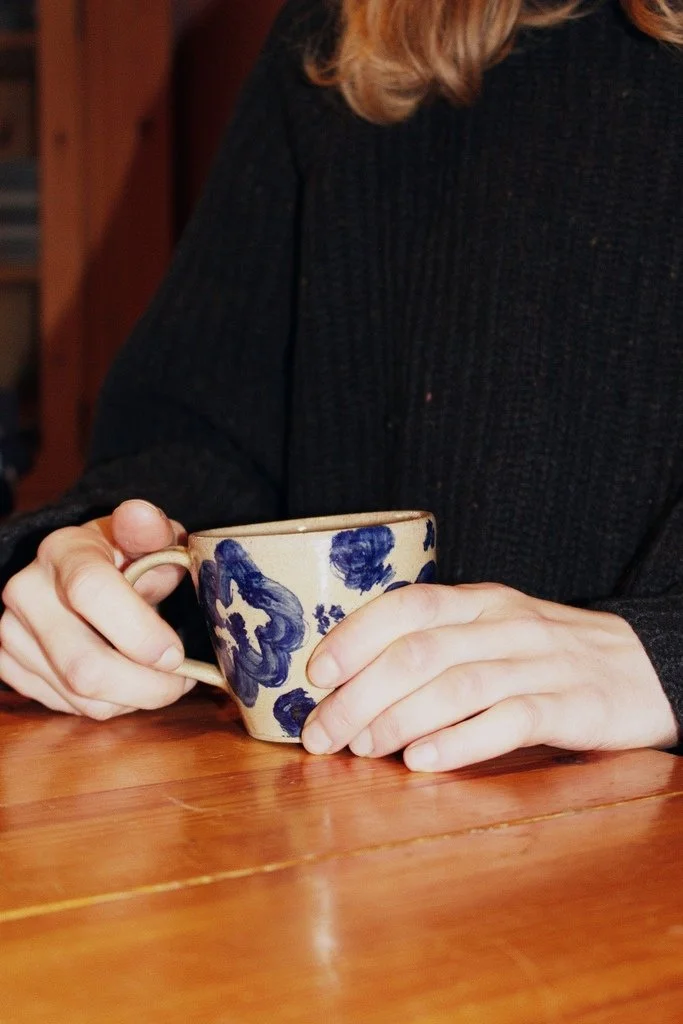
It feels so surreal to imagine that someone is using a piece of ceramic that I’ve made. They might even have a favourite Zosia piece that has accidentally broken, and they commission me to make a replacement. It means so much because I know how I feel about my own collection of handmade pieces at home. I especially enjoy drinking out of those cups, for some reason it adds so much to the experience, knowing that human individuals had something directly to do with its existence.
I bought a cup from Jordan MacDonald many years ago, which was really expensive because of the shipping from the US to the UK, but I’m so grateful that I decided to go for it! Every time I pull it out to make a cup of tea I appreciate the textures and observe the subtle variation in the glaze surface and the unique handle. I dropped it once when I was drying it up and luckily only the handle broke off, so I glued it back together. I wonder if I would’ve felt as compelled to repair it had it been a mass-made cup.
Now that I’m working at my dad’s I catch him using a cracked mug of mine for his tea, or serving salad in one of my reject bowls when I’m there for lunch. He’s a very practical, no frills guy, so I feel like that gives my work a special stamp of approval.
I’d love it if my work appealed to every member of a family - all of my pieces have a neutral colour palette, yet there’s a sense of childlike playfulness in the patterns, and a reflection of femininity in the shapes so maybe it does.
When it comes to the tactile nature of your work and its connection to the body, how does working physically with clay affect your sense of joy and well-being?
It always surprises me how far I can go with the physical side of my work, and that truly gives me a sense of satisfaction at the end of the day when I come home having spent all day using my body. I look forward to rest more so than spending all day sitting in an office staring at a monitor. Of course, the fact that there are also objects to show for the effort I put in adds to that sense of accomplishment.
Sometimes I really struggle to convince myself that I’m capable of achieving a target that I’ve set for myself. Every day that I’m in the studio it reminds me that I’m capable. It’s funny that I need convincing everyday but maybe that says something about human nature, that despite yesterday working out pretty well, our confidence can be so fragile. When I’m in it, I’m so happy, and it seems to bring me to a more emotionally-balanced place.
Where do you see the greatest potential for keeping folk traditions and traditional crafts alive in today's world, and how can contemporary makers help carry them forward?
More often than not, makers are held back by the high costs of their crafts and have to minimise what they do, which means they really have to consider what works for them and what they want to focus in on. They’re already creative thinkers and so there’s a natural ability to think through these boundaries and find solutions for what they need but can’t afford.
For instance, I couldn’t afford a new good quality electric wheel so I found an affordable secondhand kick wheel. The thought of it was intimidating but because I’d already had a go on a kick wheel in my village class I jumped at the opportunity. But even before that, I would hand build everything on my kitchen table and store pieces around the flat I was living in.
I think the world of fashion can and does inform trends, and platforms a handful of traditional crafts in a useful way. But it’s not where folk traditions and crafts will truly thrive because fashion is often high-turnover and purely visual, it’s not necessarily about the slow activity which eventually results in a beautiful object. The craft is for the majority, the craft, not the object.
All artists seem to suffer from their work seemingly never being finished, however much the public decide for themselves when art is complete. For the artist, it most likely is ever-evolving.
I think it’s as simple as just doing it, letting the popularity contest propagate itself, because ultimately, without the contemporary makers there’s little to create content about. The ones who are serious about the crafts, will shout about them from an authentic place, and they’re most likely the makers themselves.
Looking ahead, are there new forms, techniques, or collaborations you are currently exploring that feel like a natural evolution of your practice?
This is so pertinent for me at the moment because I’m so keen to play more. I want to work on meaningful objects with a sentiment or morale behind them, like fairytales or family heirlooms do. I have ideas but haven’t yet decided where to take them, although I know I’d like to work on more one-off creations for gallery spaces at some point.
Something that has been on my mind a lot lately is potentially collaborating with another artist, particularly a metal-worker. I’ve always felt that silver, bronze, brass and gold compliments the buff-tones in my ceramics. I think some kind of metal-ceramic creation might be in my future.
I can’t work as much when it gets cold in the winter because I don’t have heating in my space, so instead I’ll spend time doing things that occupy my mind in other ways, then the ideas will come…
How can people engage more closely with your work, whether through stockists, exhibitions, commissions, or upcoming projects?
I often post progress photos of wholesale work and other projects on my Instagram account, zosiaceramics, so it’s a great place to engage directly with me and my process.
I’d also love for more people to discover my website because I have creative control over that so it’s my chance to showcase everything in my way, and to bring designs of my curation. It means so much to me when people take time to browse my website or buy from my online store.
My stockists plus past and future events are listed on my about page too, www.zosiaceramics.co.uk
Photo [1, 2, 3, 4, 5] by Marco Kesseler, and the rest belong to Sophie.
@marcokesseler, marcokesseler.com
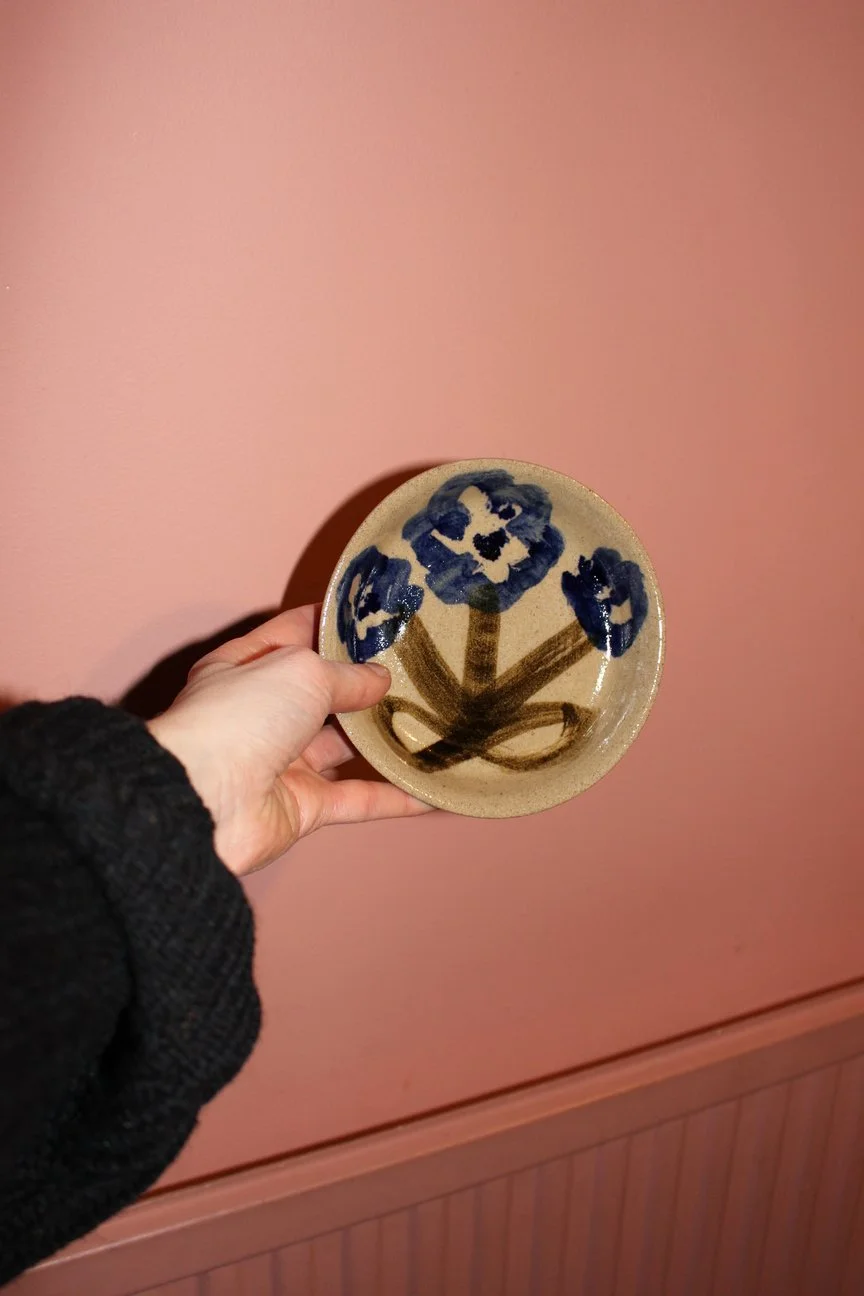
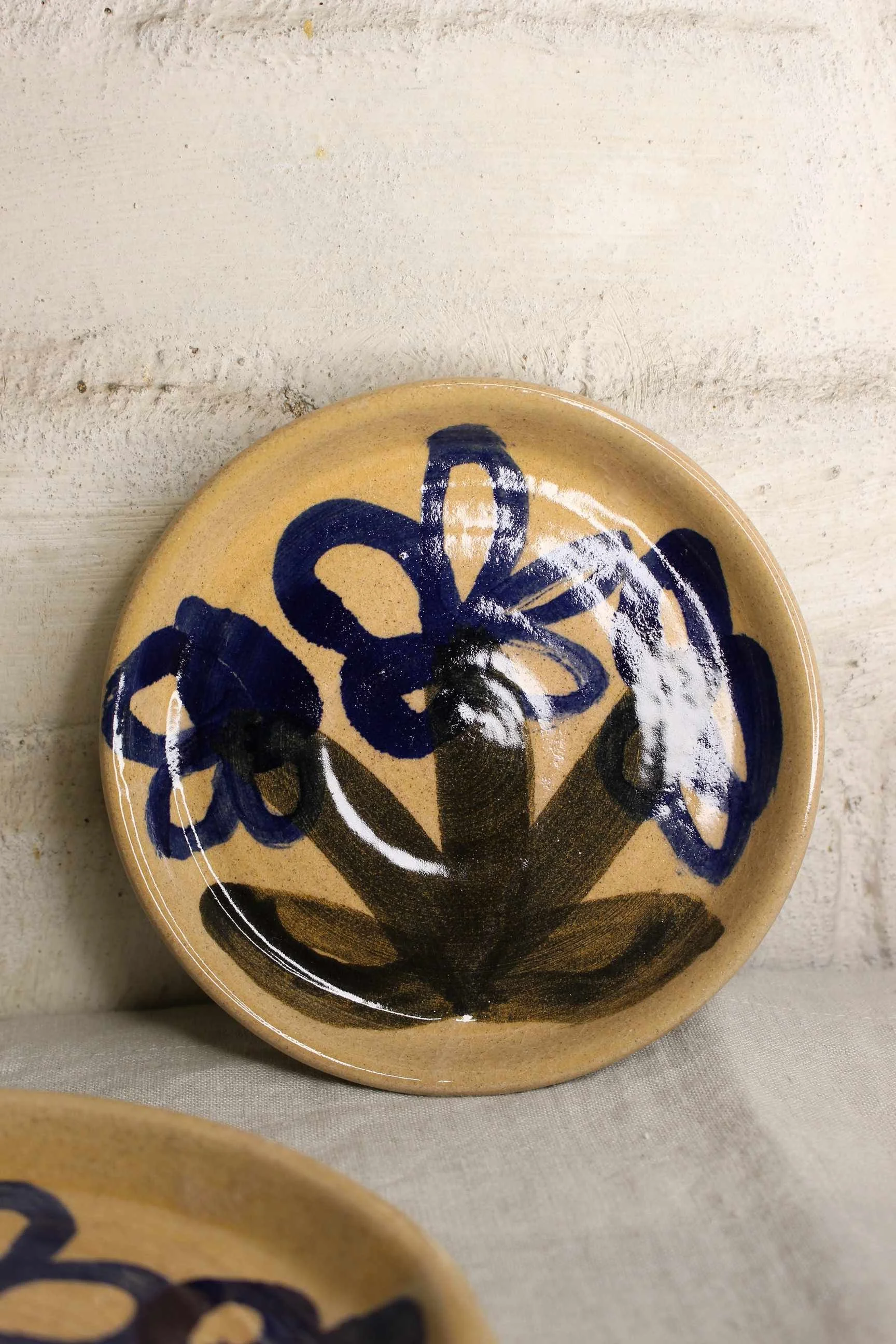
Made in Cambridgeshire, UK, by Sophie Fletcher of Zosia Ceramics, this small stoneware plate is thrown on the wheel and painted by hand with oxides. Its pattern is based on a doodle Sophie’s mother used to draw in cards for family. Finished with a transparent gloss glaze, each plate retains the character of the original drawing.
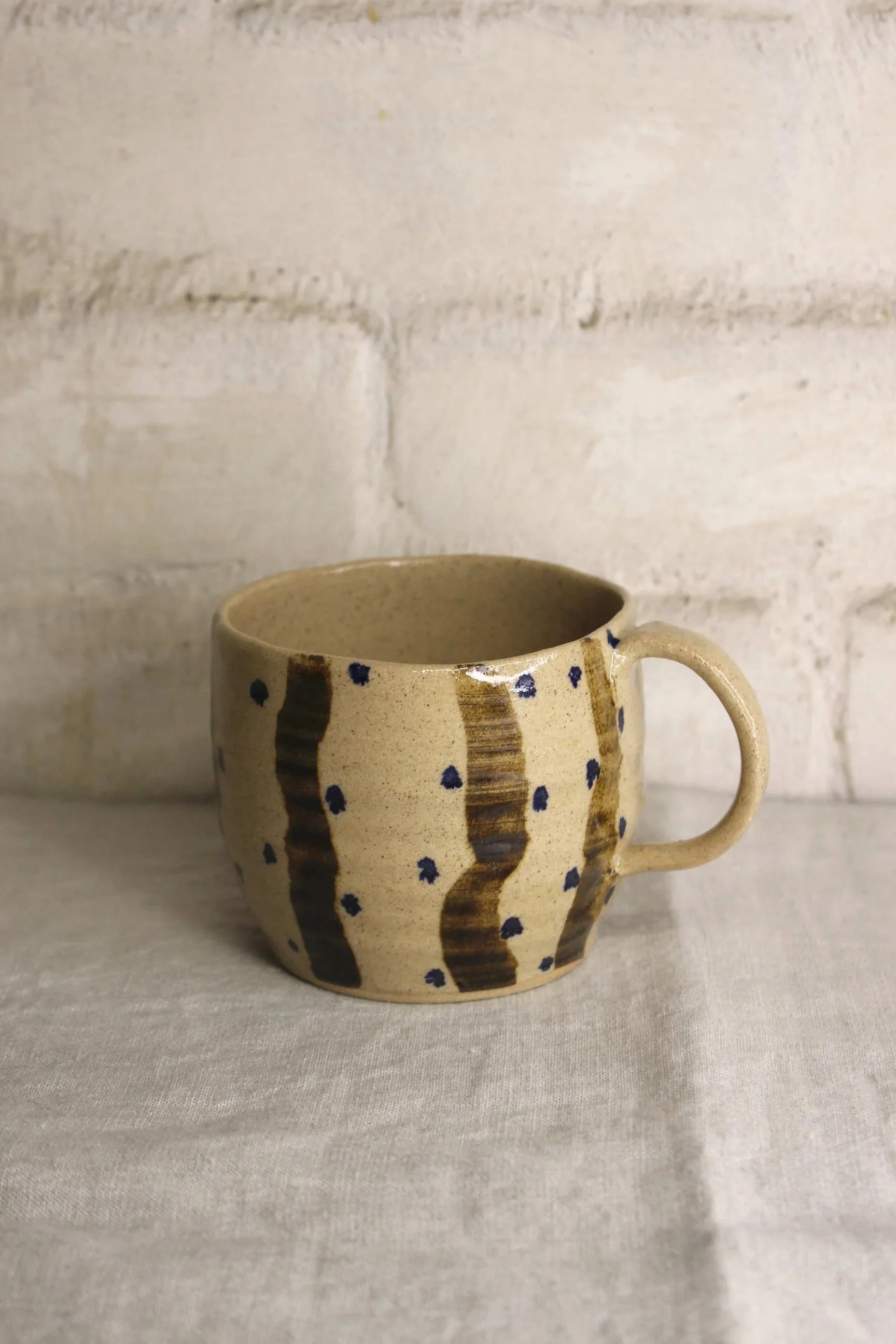
Made in Cambridgeshire, UK, by Sophie Fletcher of Zosia Ceramics, this stoneware mug is wheel-thrown with a pulled handle. Its abstract painted pattern takes inspiration from the branches of pussy willow, applied by hand with oxides and finished with a transparent gloss glaze.
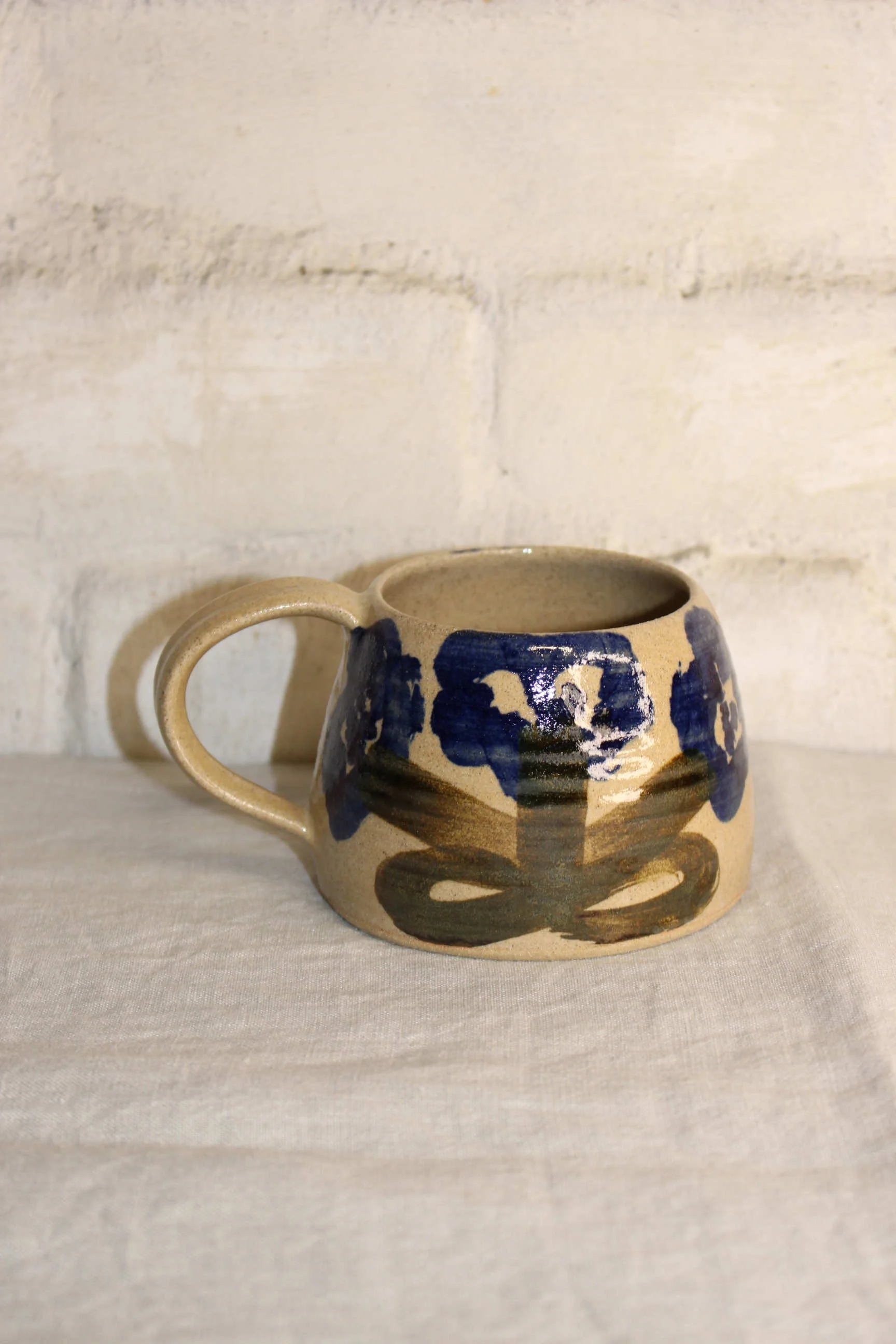
Made in Cambridgeshire, UK, by Sophie Fletcher of Zosia Ceramics, this stoneware mug is wheel-thrown with a pulled handle. Flowers painted by hand with oxides decorate the surface, followed by a transparent gloss glaze. Each mug carries its own variations in the painted pattern.
