Marjorie Broudieu
Please share a bit about yourself and your background.
My name is Marjorie, though most people call me Marjo. I grew up near Paris and stayed there until I was 18, when I left to study industrial design. I loved art from a young age and looked for a path that could hold both creativity and something more applied, somewhere between art and engineering. That search led me to design. I have lived and worked in Amsterdam for more than ten years and it has become home.
What first drew you to ceramics, and how did this medium become part of your creative expression?
It began almost by chance. I invited a friend to dinner and he arrived with a bag of clay. Working with it felt instantly calming. My mind tends to move quickly, and clay offered a different rhythm, one where I could work intuitively. You can change your mind, cut, add and reshape as you go. It felt like thinking through my hands rather than planning everything in advance the way design often requires. In design you draw, refine and only then make. With clay I could create something from beginning to end and it felt private and honest. It does not need to be innovative every time. Sometimes bringing an object into the world is enough.
We are aware that you have a background in industrial design and collage. In what ways do these practices inform the way you approach clay today?
My background in industrial design gave me a strong technical base. I learned to pay attention to drawing, colour, materials and finishing, and that helps me think about ergonomics and how an object rests in different hands. At the same time industrial design is made for production, while clay asks for a slower and more personal approach. I had to unlearn the pressure for constant innovation and the idea that everything must respond to a user's needs. Working with clay taught me to trust what a handmade object can express from within rather than from a market expectation.
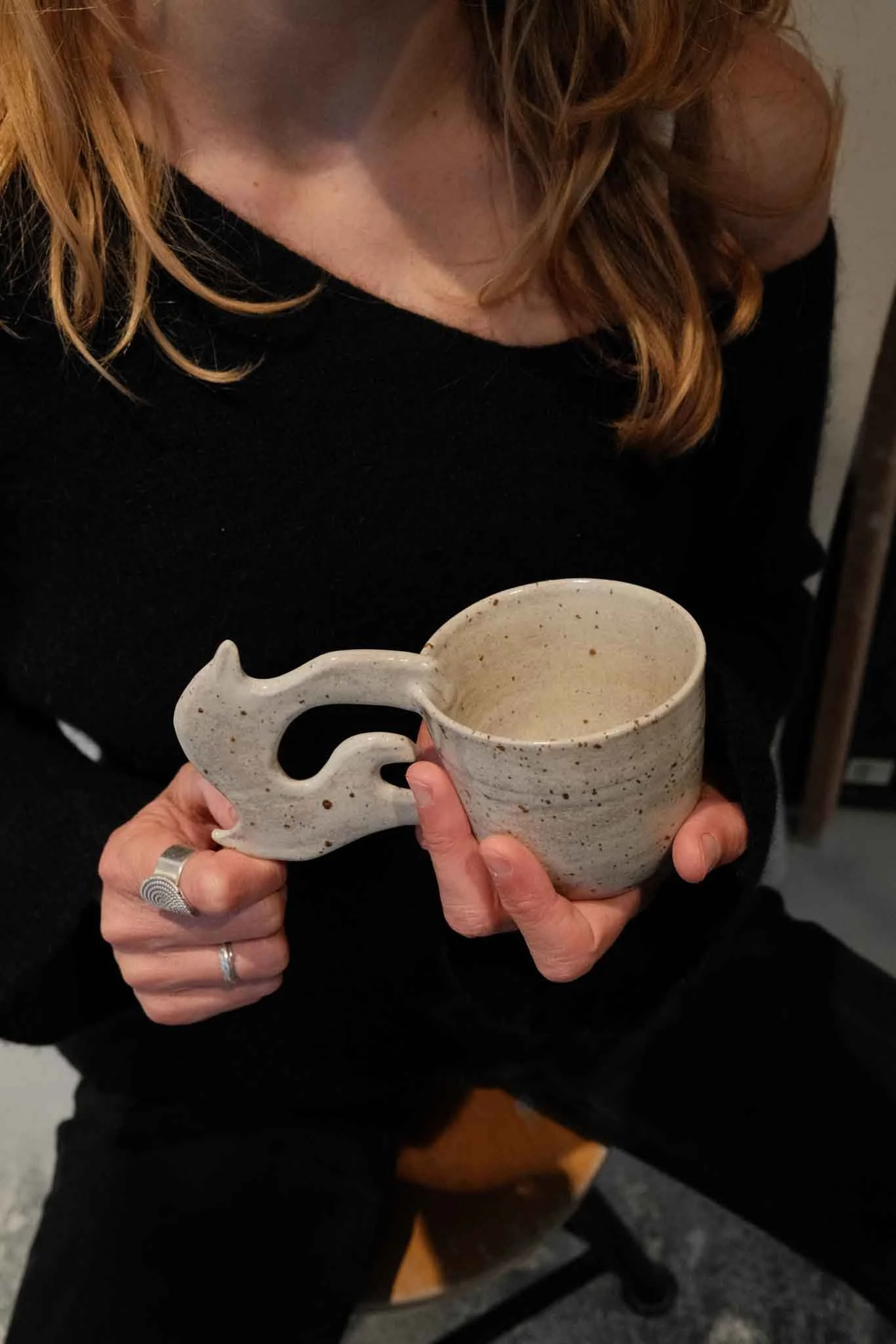
Collage also finds its way into my practice. I have been exploring it more this year, especially through slabs that I cut and assemble for handles or candle holders. The process feels close to collage, where shapes meet and shift. I am interested in how a two dimensional gesture can become a three dimensional form in clay.
Your work draws inspiration from surrealism. What first sparked your interest in these beautiful, imaginative themes?
I have always been drawn to art. Growing up in Paris meant having free access to museums as a teenager, and many of my Saturdays were spent wandering through them. I have long been interested in the subconscious and the sense of a hidden world. Surrealism touched that curiosity. Its symbols feel like a bridge between daily life and a shared dream space. I was also moved by the painters and poets connected to it, and the surrealist manifesto stayed with me. It speaks to those who are awake at night or feel distant from their own dreams. I have struggled with insomnia for many years, so that connection felt immediate and personal.
Can you walk us through your process? Is there a part of creating that you feel especially connected to or enjoy most?
My process has shifted over time and has also brought up moments of imposter syndrome, especially around the distinction people often make between craft and design. Design is usually seen as conceptual and craft as purely functional, and that separation can feel limiting. I try to challenge the idea that craft is only practical because it can hold meaning in its own way. I want craft to remain accessible to everyone. When children or young people have the chance to make something with their hands, it stays with them. It shapes how they see themselves and the world.
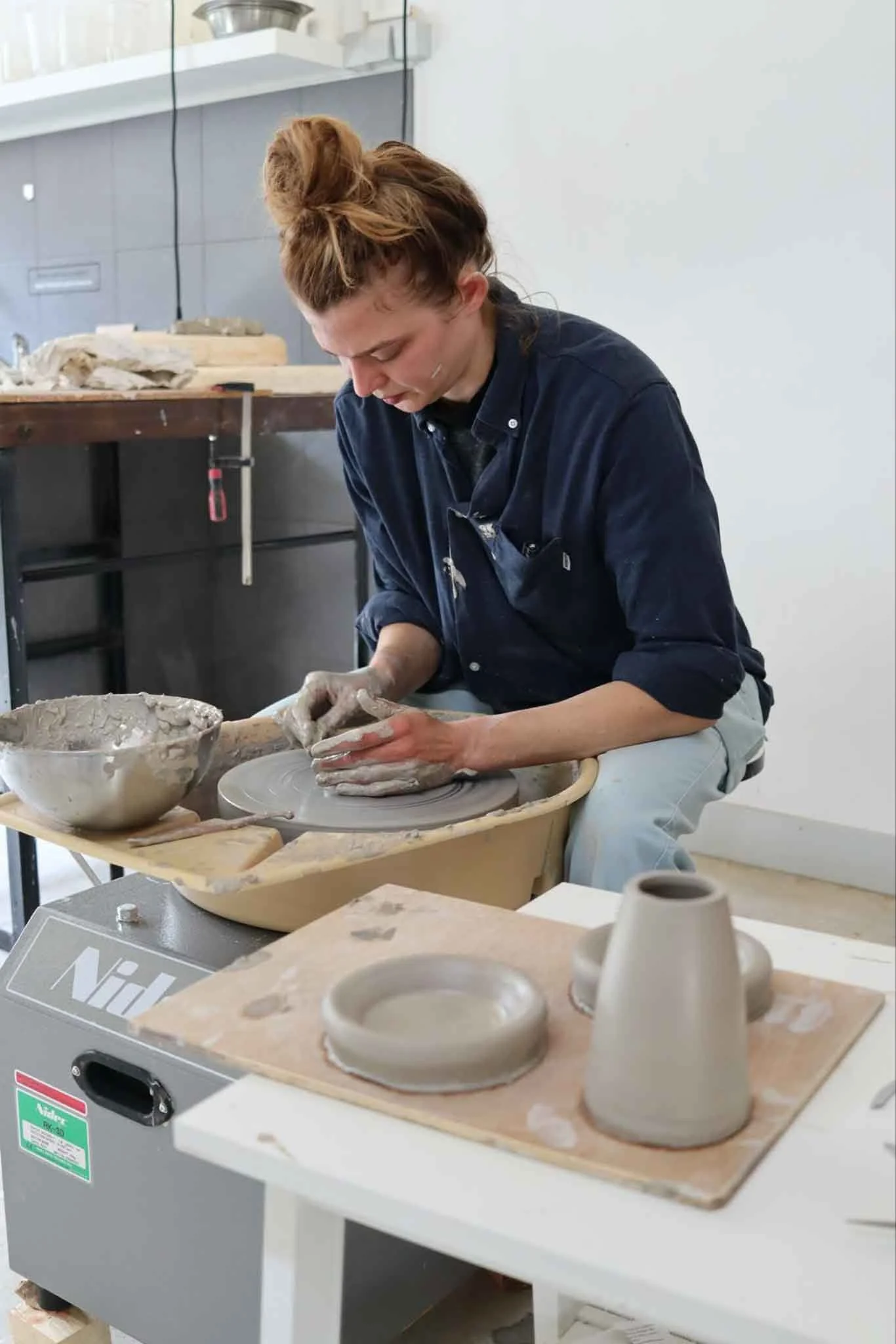
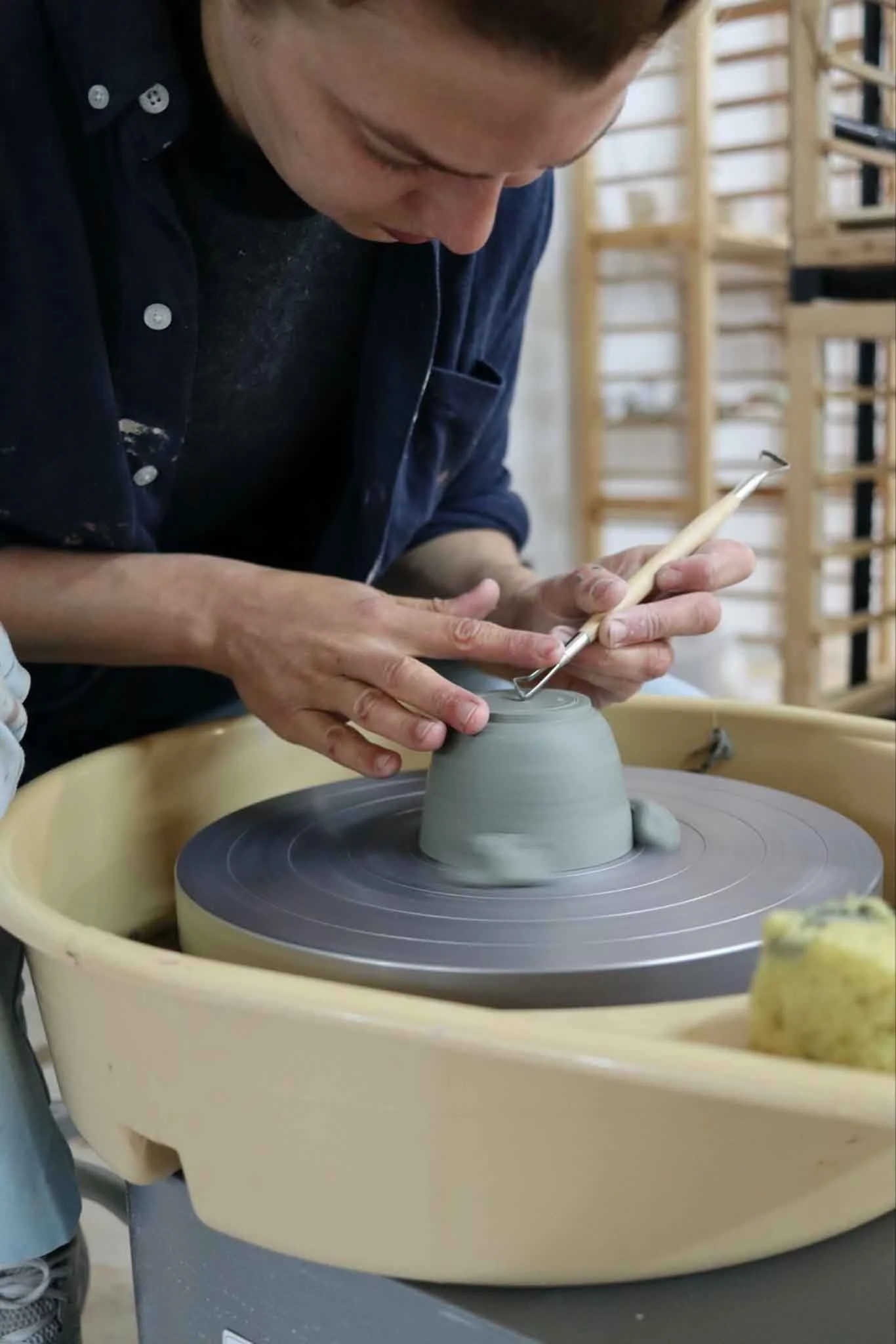
In terms of what I connect to most, the wheel is where I feel most present. It is where everything slows down and becomes a dialogue with the material. It is the part of the process that feels closest to me.
Working with raw materials demands attention, patience, and time. How does shaping an object affect your inner state—your memory, presence, and sense of well-being?
I usually work in small series and begin at the wheel. It is the part of the process that affects my inner state the most. For many potters the wheel becomes a kind of moving meditation and I feel the same. It shows immediately whether I am present. If I rush, the clay pushes back. If I am centred, the clay follows. It is a practice that quietly asks for attention, patience and honesty.
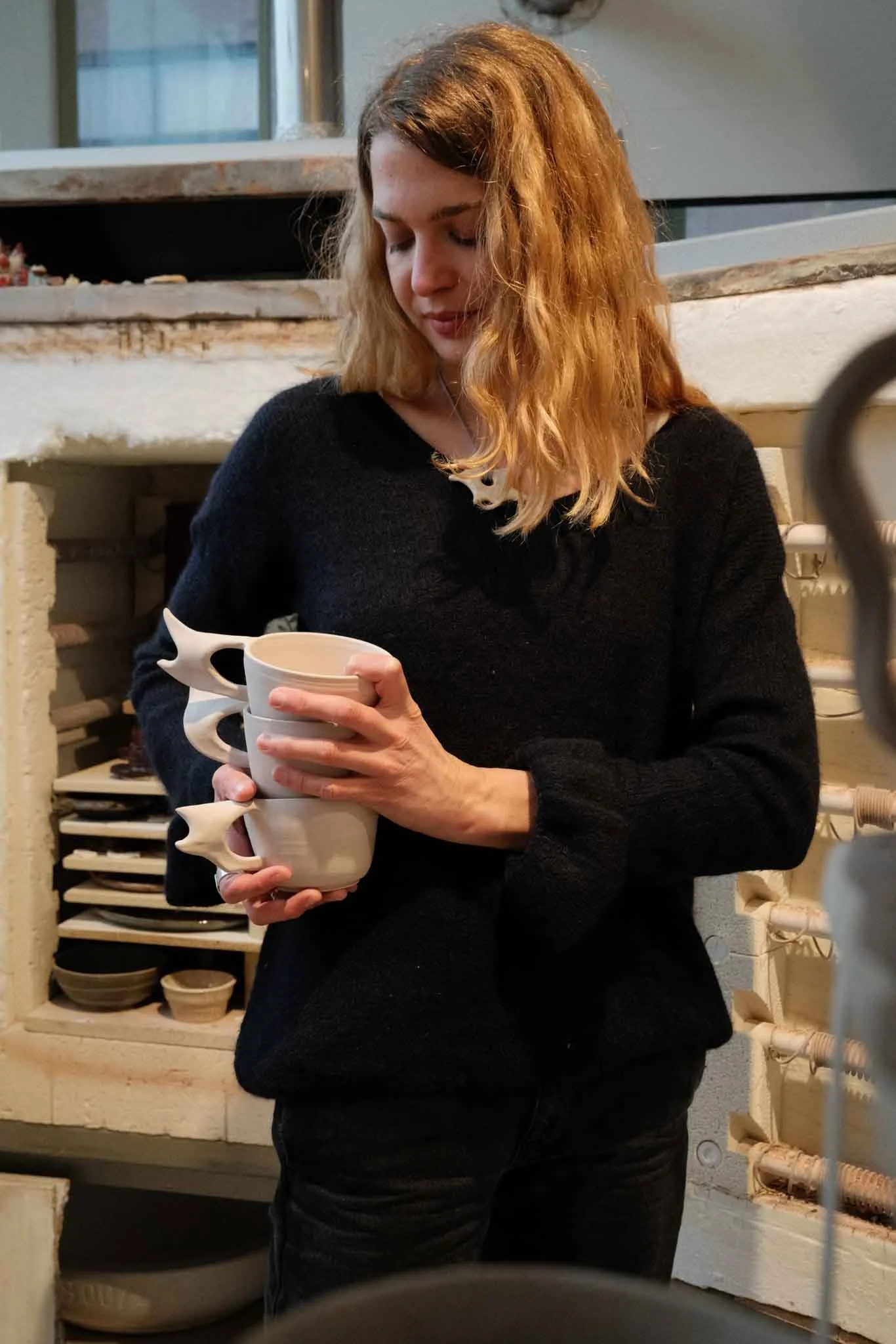
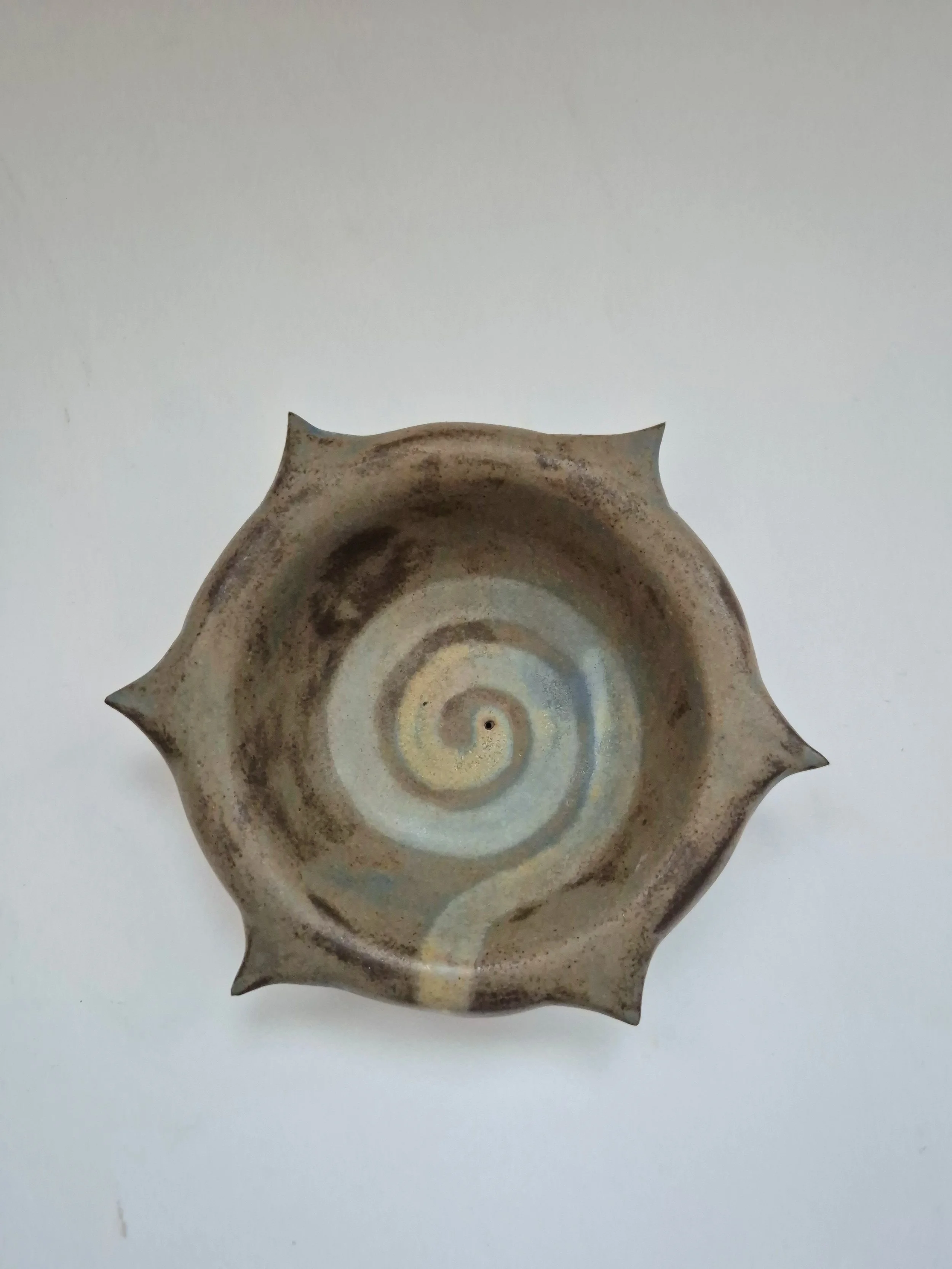
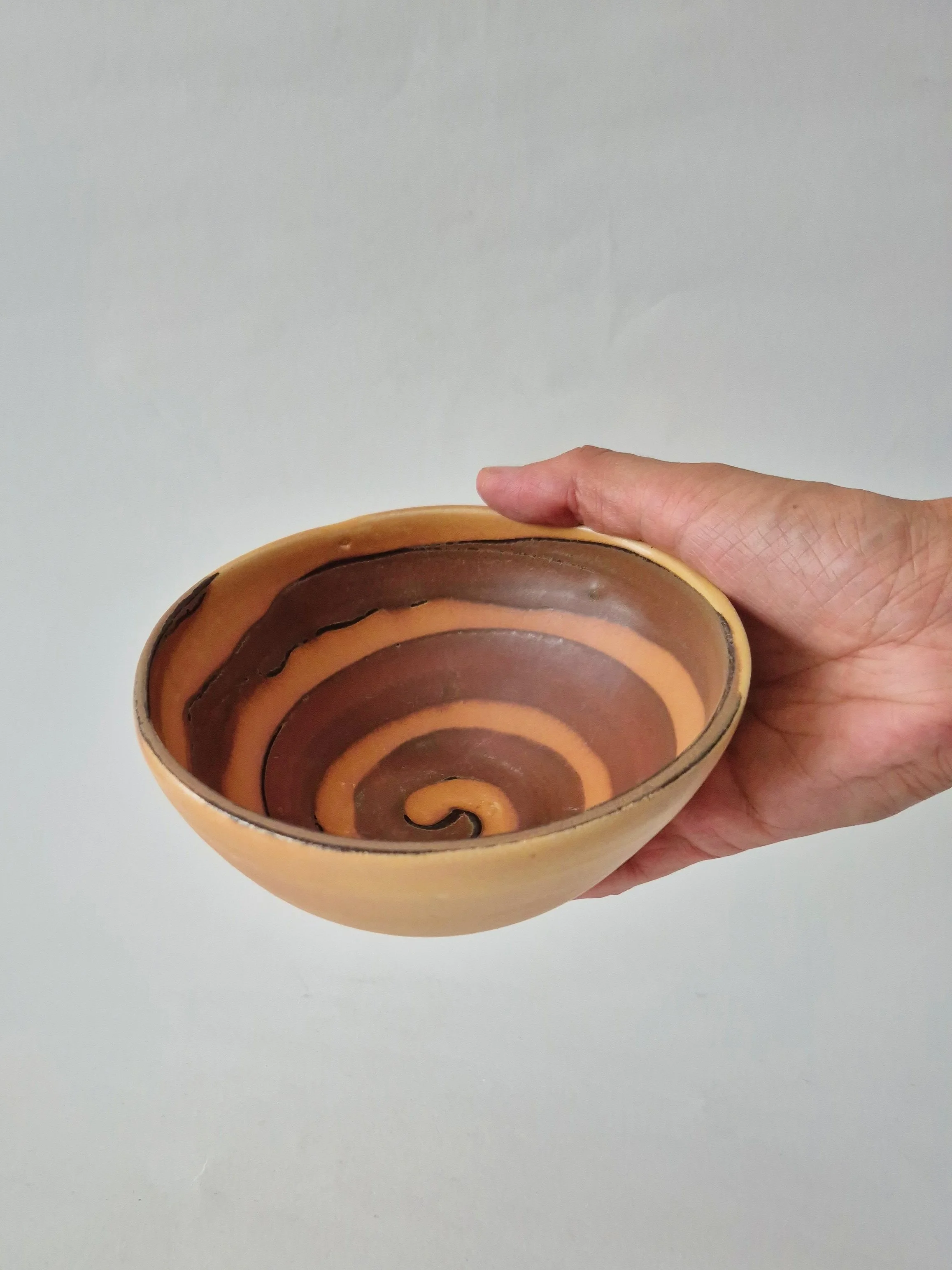
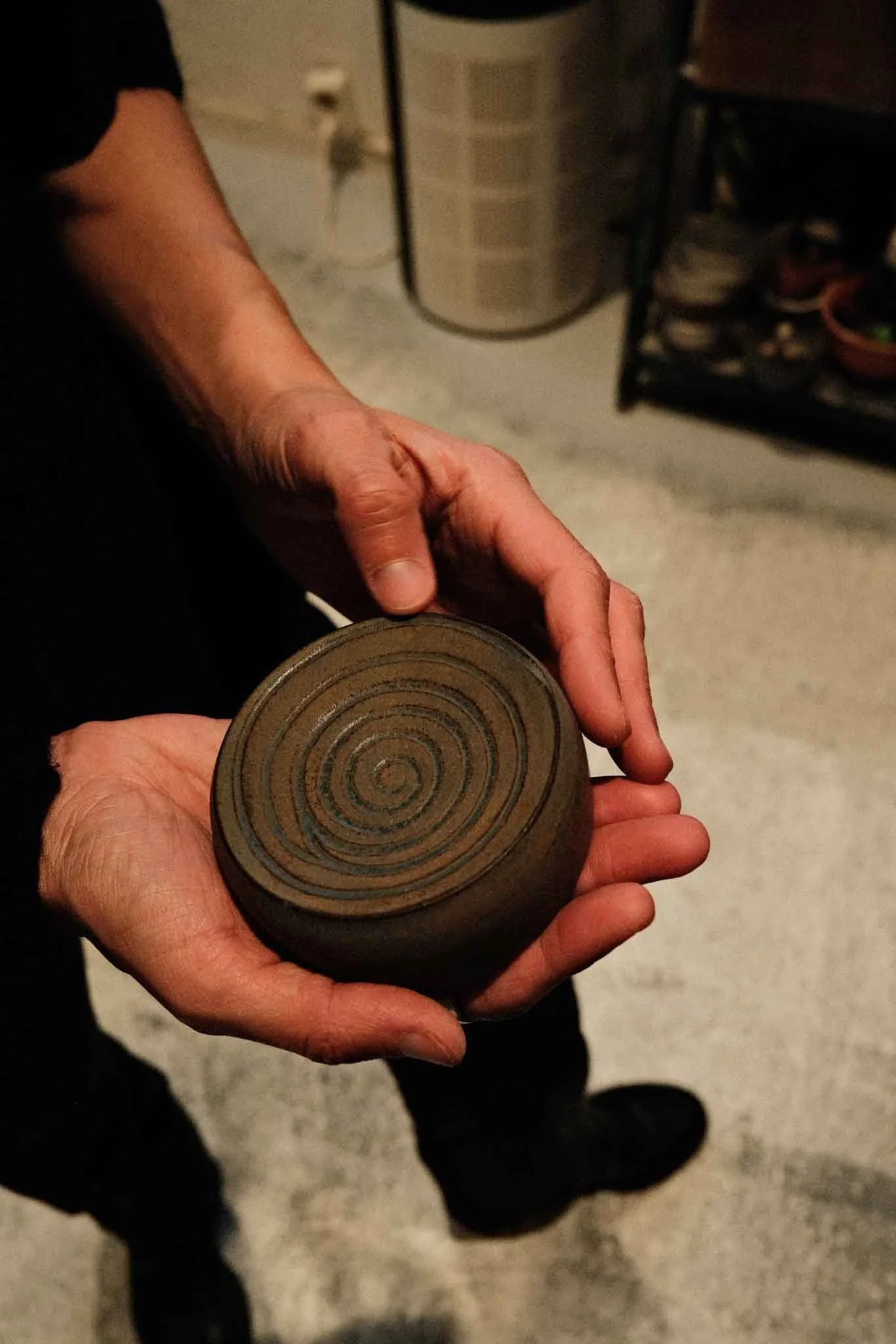
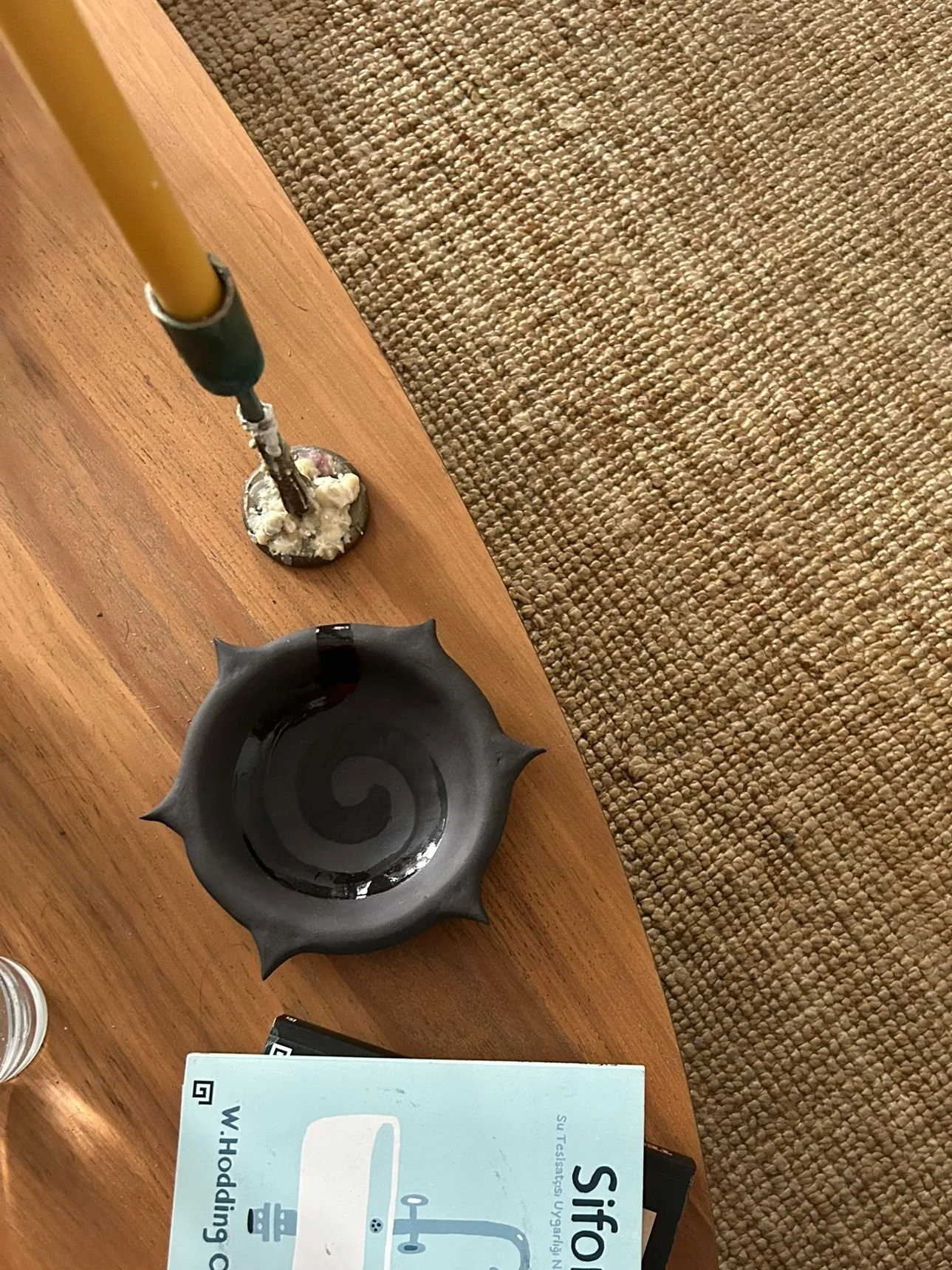
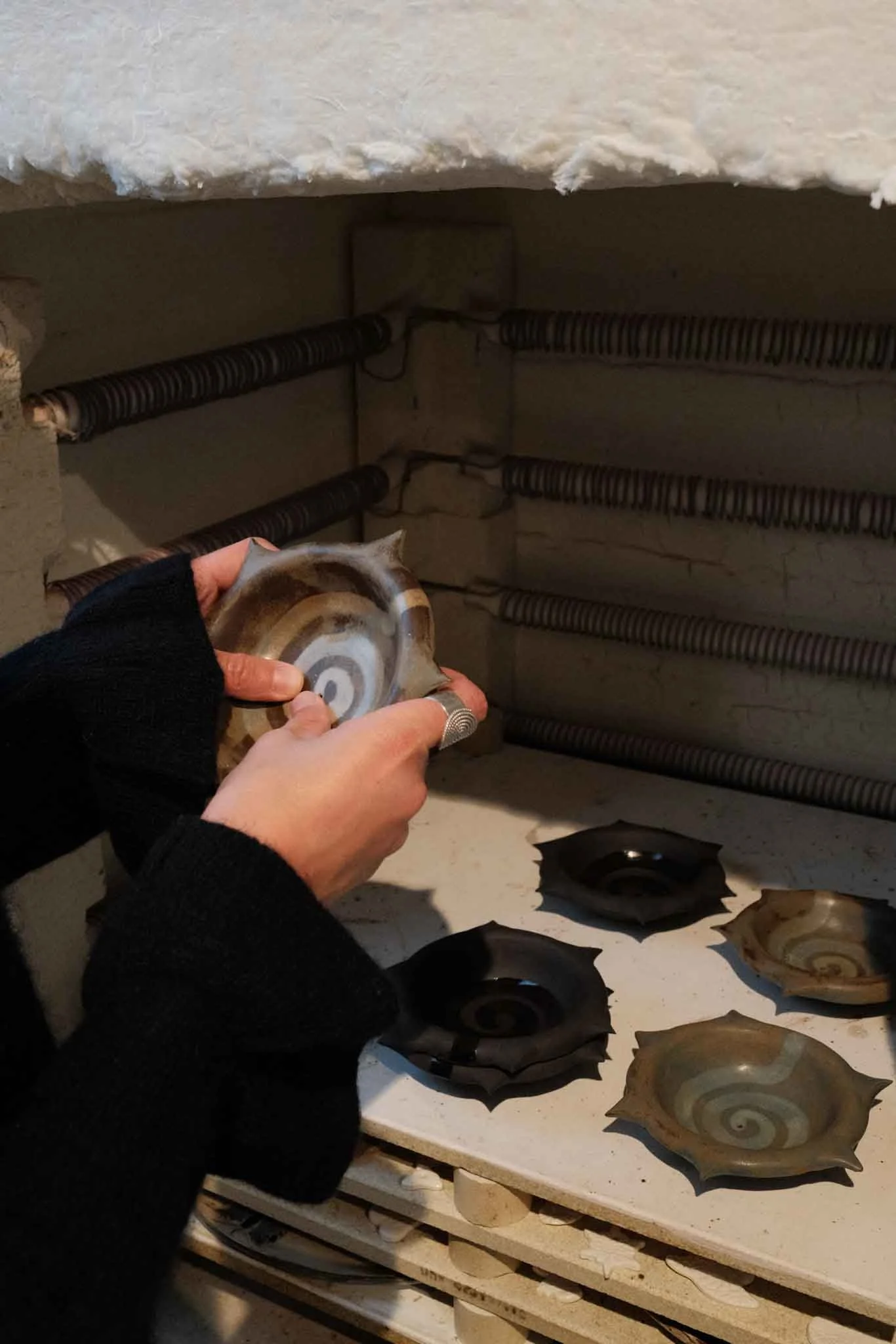
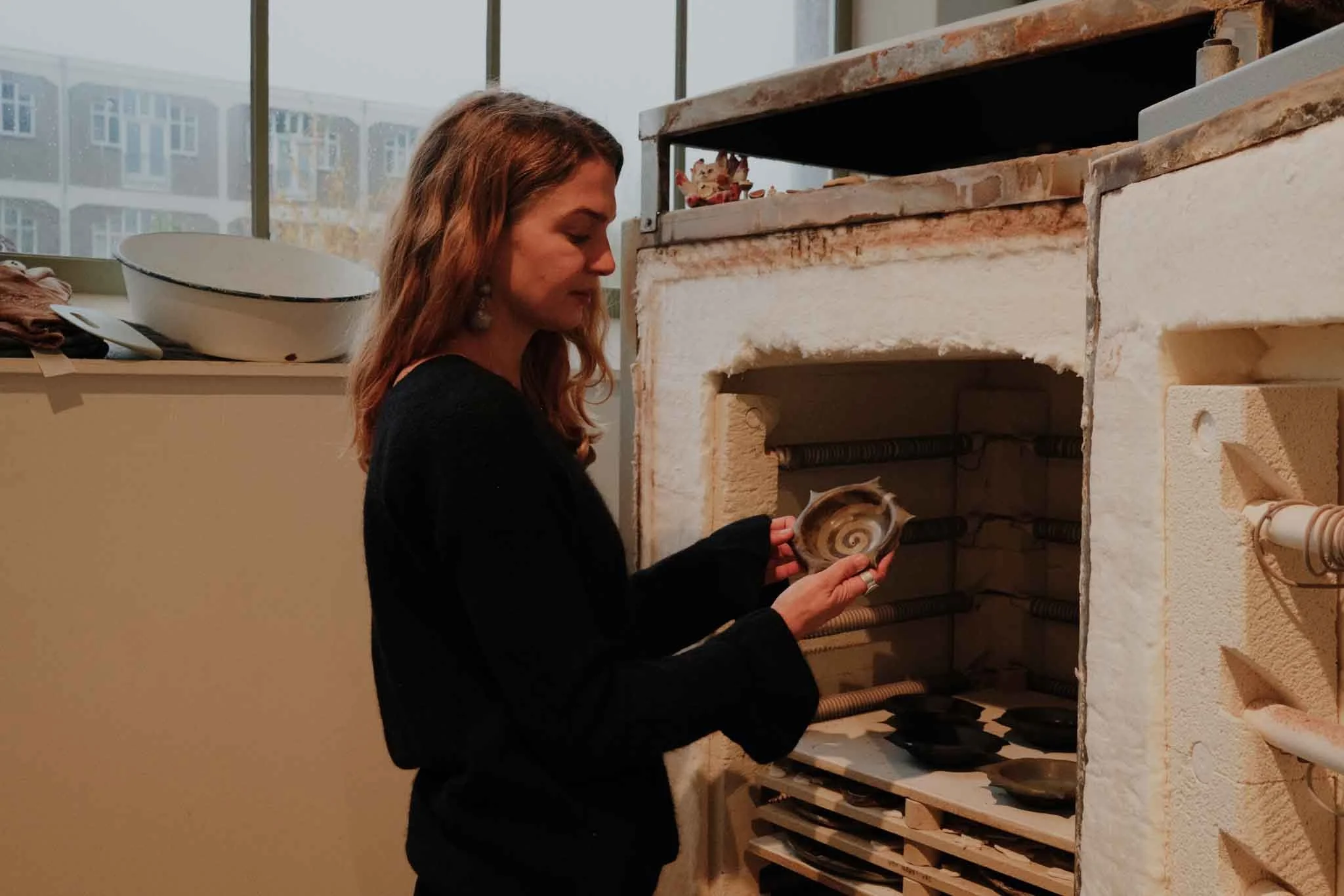
I often combine wheel work with hand built elements. In the beginning I experimented constantly, but repetition now plays an important role. Making similar pieces again and again refines not only the form but also my ability to stay grounded. Sometimes when a form feels completely exhausted something new emerges from it. That happened with my flame mug and with the wider spirals I have been exploring, inspired by the Hamonshū from Yūzan Mori, a 19th century Japanese book on ripples and waves.
These moments of shaping and reshaping calm my mind, help me return to myself and create a sense of well being that I do not access easily elsewhere.
Looking at the contemporary craft landscape, where do you see the greatest opportunities for preserving and reinterpreting important local traditions?
I see a lot of opportunity in the way people are returning to shared making spaces. In Amsterdam many people join workshops or community studios, and it feels hopeful. It shows a quiet shift away from pure consumption and toward connection. When someone tries ceramics even once, they often begin to understand the depth of the craft and develop a new appreciation for professional makers. It becomes easier to recognise the difference between something handmade with intention and something that only imitates that look.
Pottery teaches through repetition. You cannot think your way into skill. You have to feel it through your hands. Working in a community studio has shown me how valuable that shared learning can be. People from different generations and professions come together, support one another and exchange knowledge without competition. It becomes a living space where traditions are preserved, reinterpreted and carried forward through collective practice.
Are there any new projects or directions you’re currently exploring that you feel especially connected to?
I am currently iterating on a new collection of mugs, letting small variations guide the direction of the work. I am also continuing the research I began during a recent residency, where I explored how collage can live within clay. I have been experimenting with three dimensional layers and with mixing different clay bodies, paying attention to how their natural colours interact without relying on glaze. There is a quiet technical side to this exploration, but also something intuitive. These experiments feel close to me at the moment and I am curious to see where they lead.
Where and how can people engage more deeply with your work?
People can follow my work most easily on Instagram @studiomarjo_, where I share recent pieces and updates, and my website studiomarjo.art. I am slowly building a newsletter as well, a place to share news, exhibitions and ongoing projects in a more personal way.
Photo [4, 9] by Daisy Eltenton
Photo [6, 10, 11, 12] by Roana Bilia
The rest of the photos belong to Marjorie
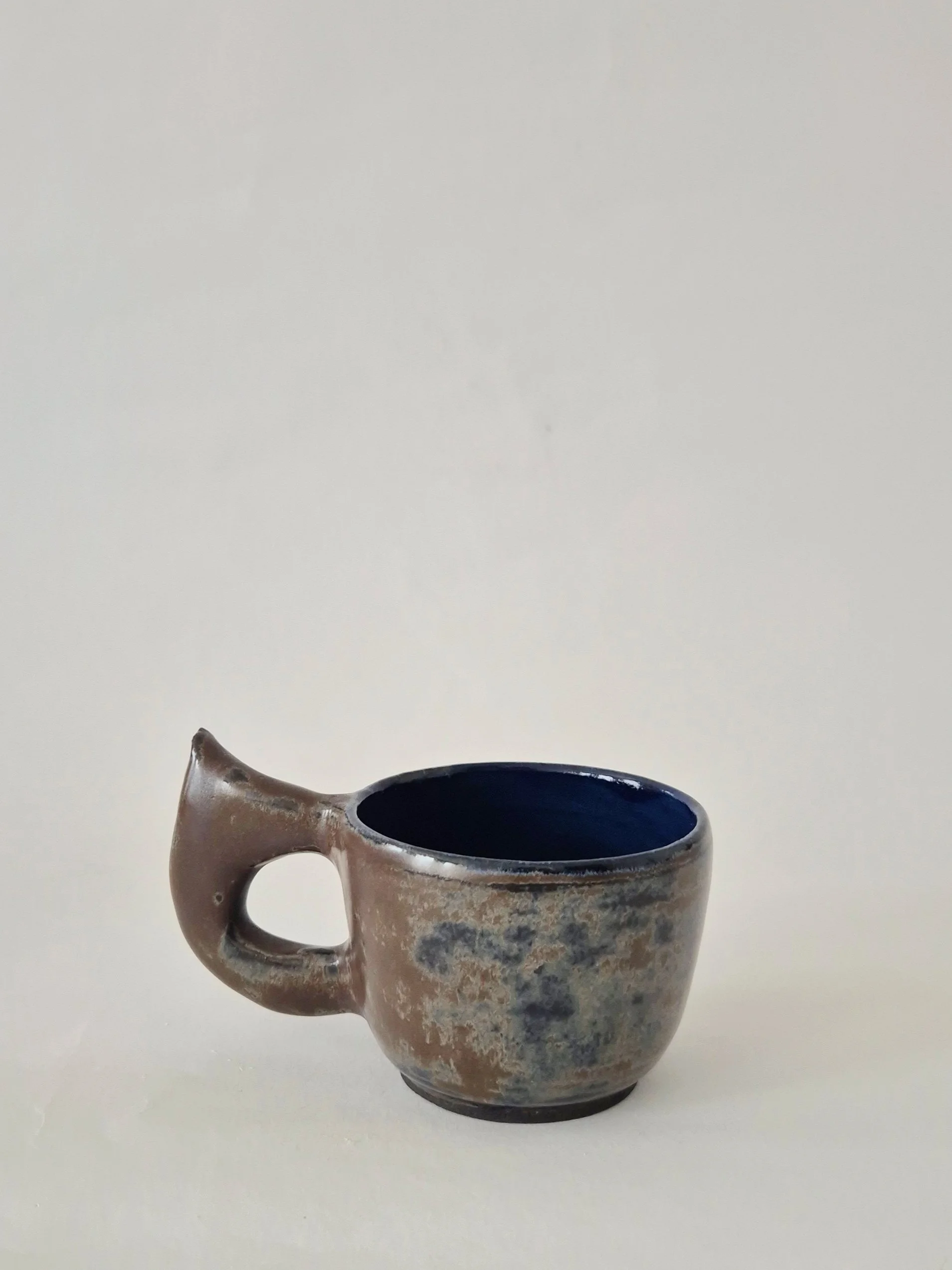
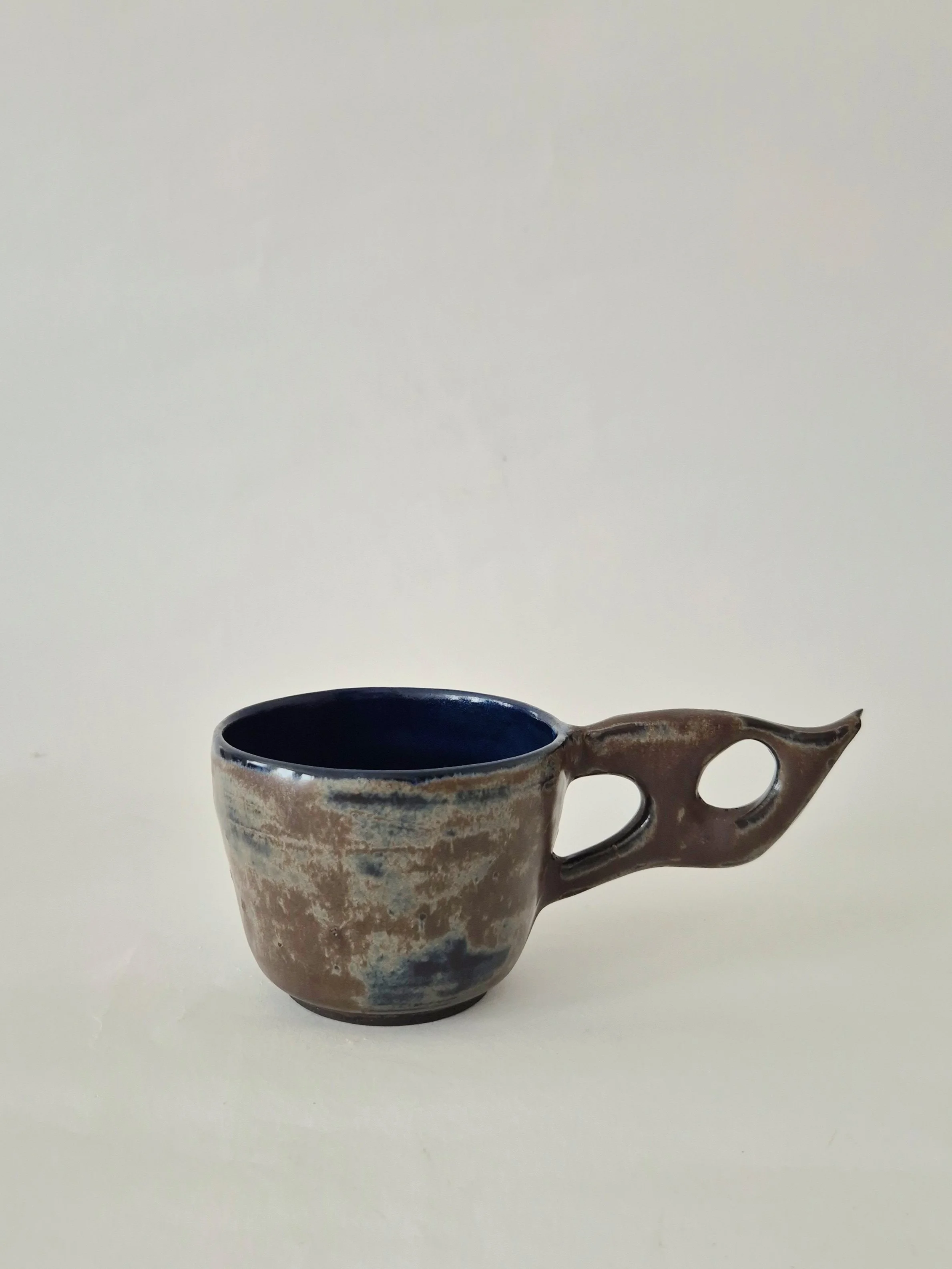
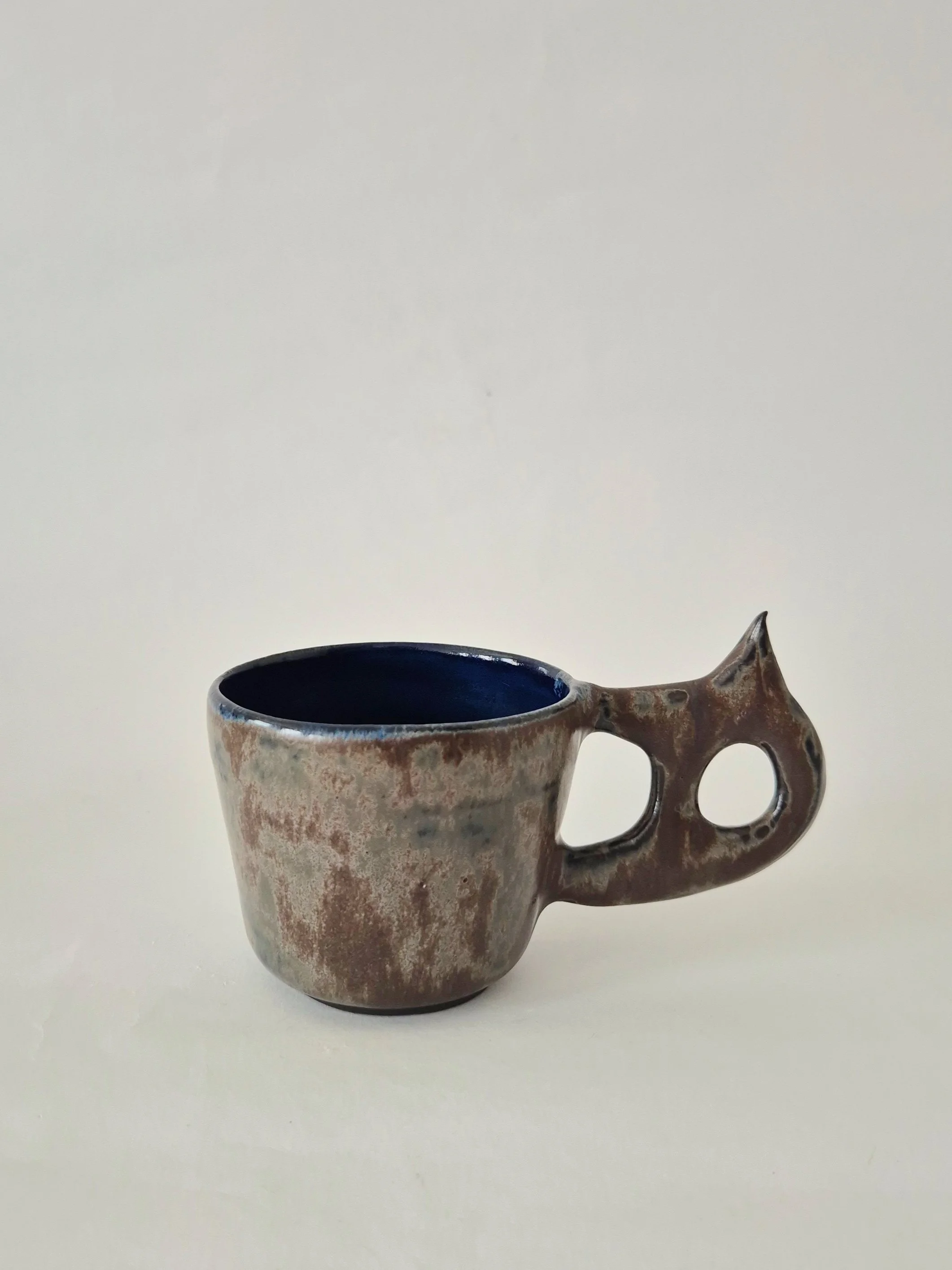
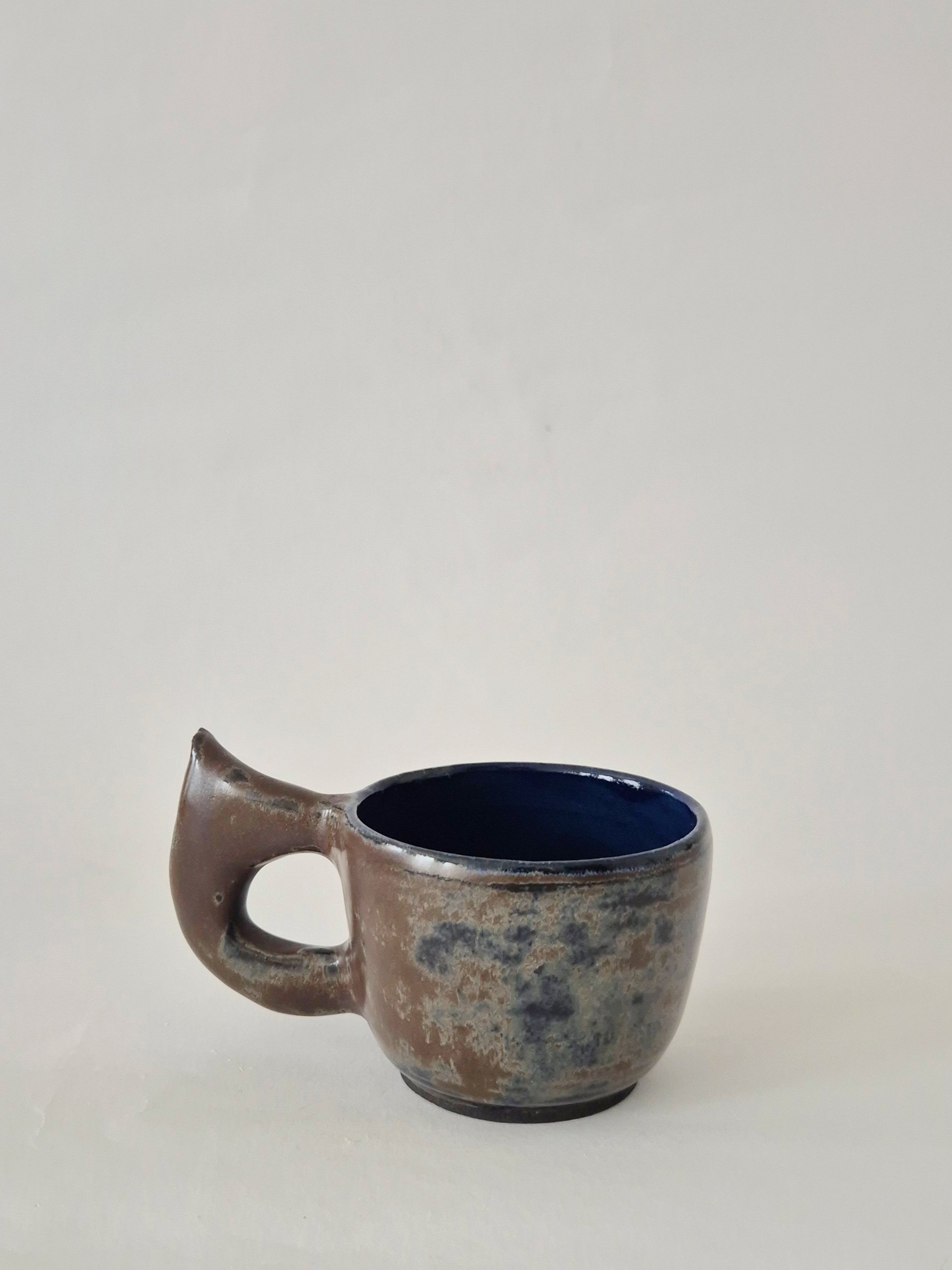
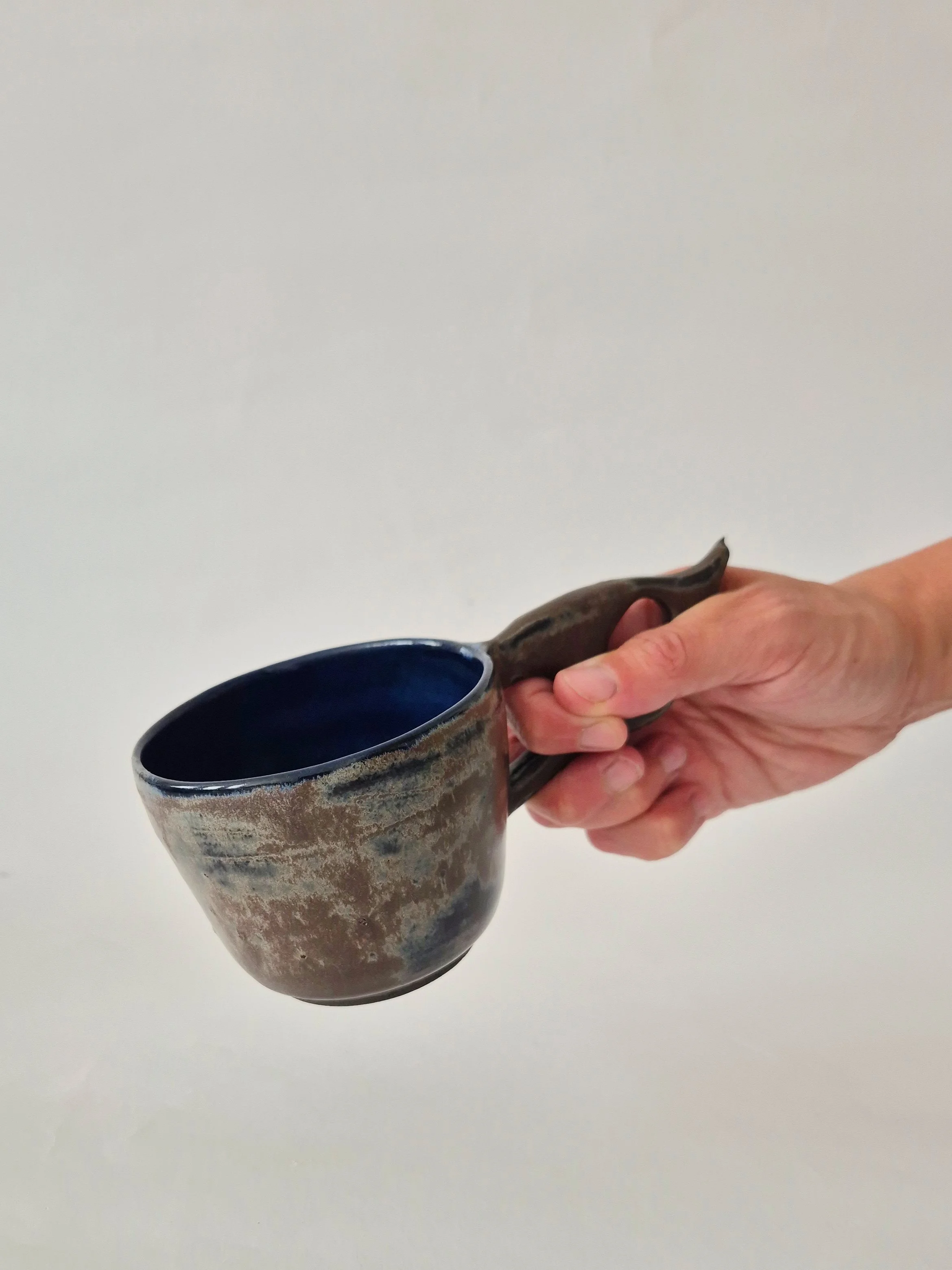
Hand-thrown in stoneware with a hand-built handle, the Flame Mug Nimbus is made by Marjorie Broudieu in Amsterdam. Finished in a textured Nimbus glaze on the exterior and a deep cobalt blue within, the piece features a deliberate, grounded form that balances volume with a tactile, compact presence. The organic silhouette and unique handle are informed by Broudieu’s interest in Surrealist thought, inviting a slower pace where daily ritual bridges the gap between reality and the dream.
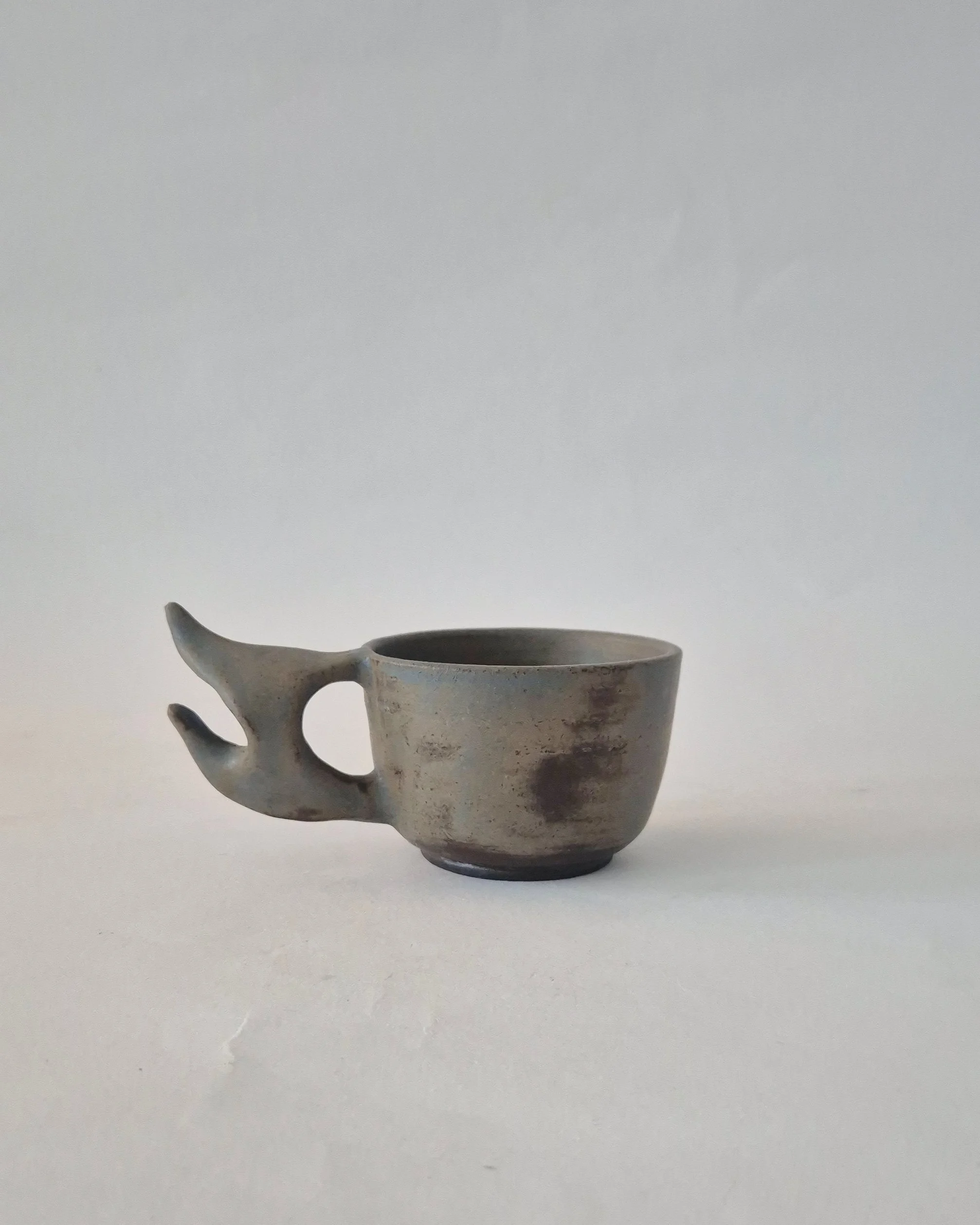
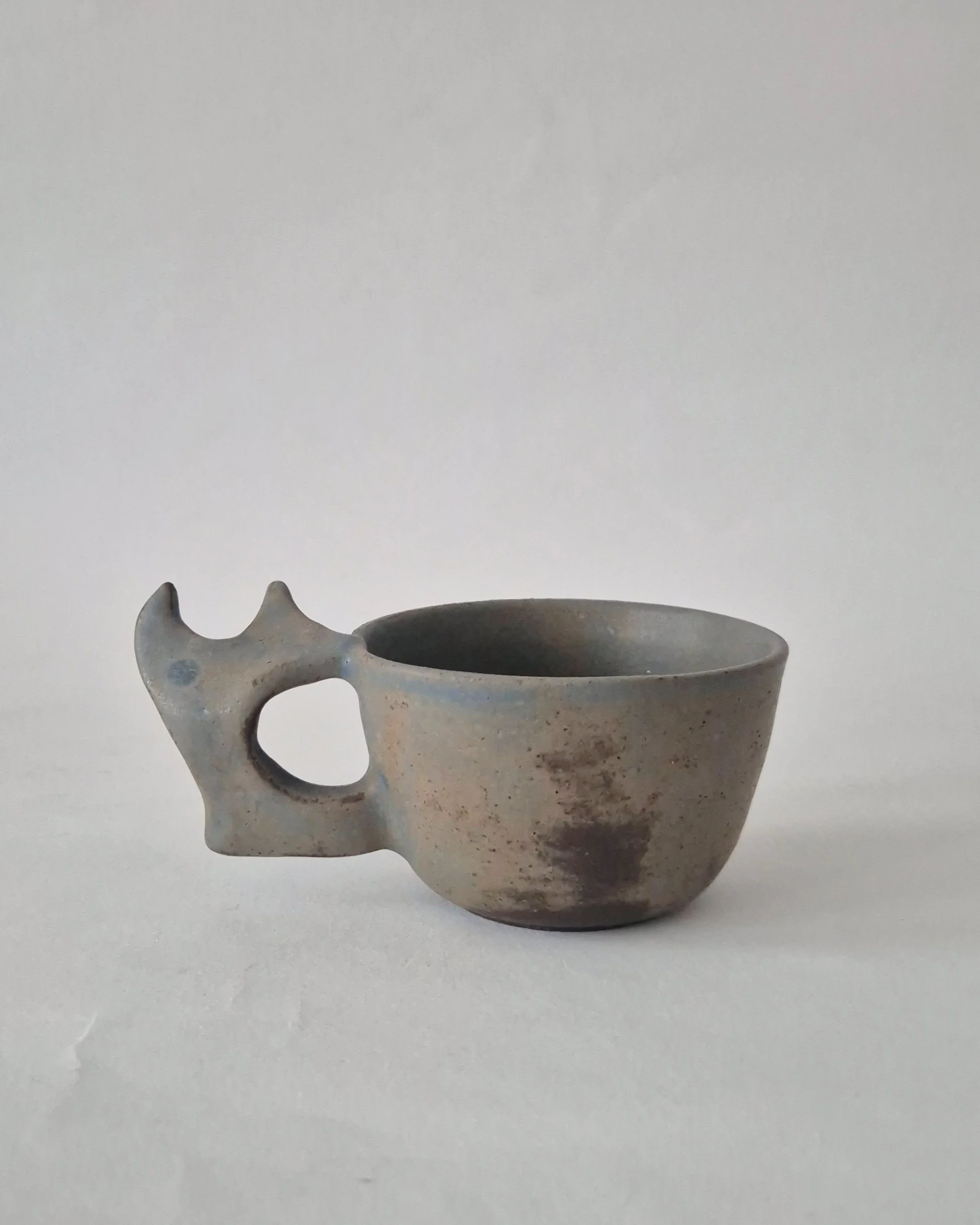
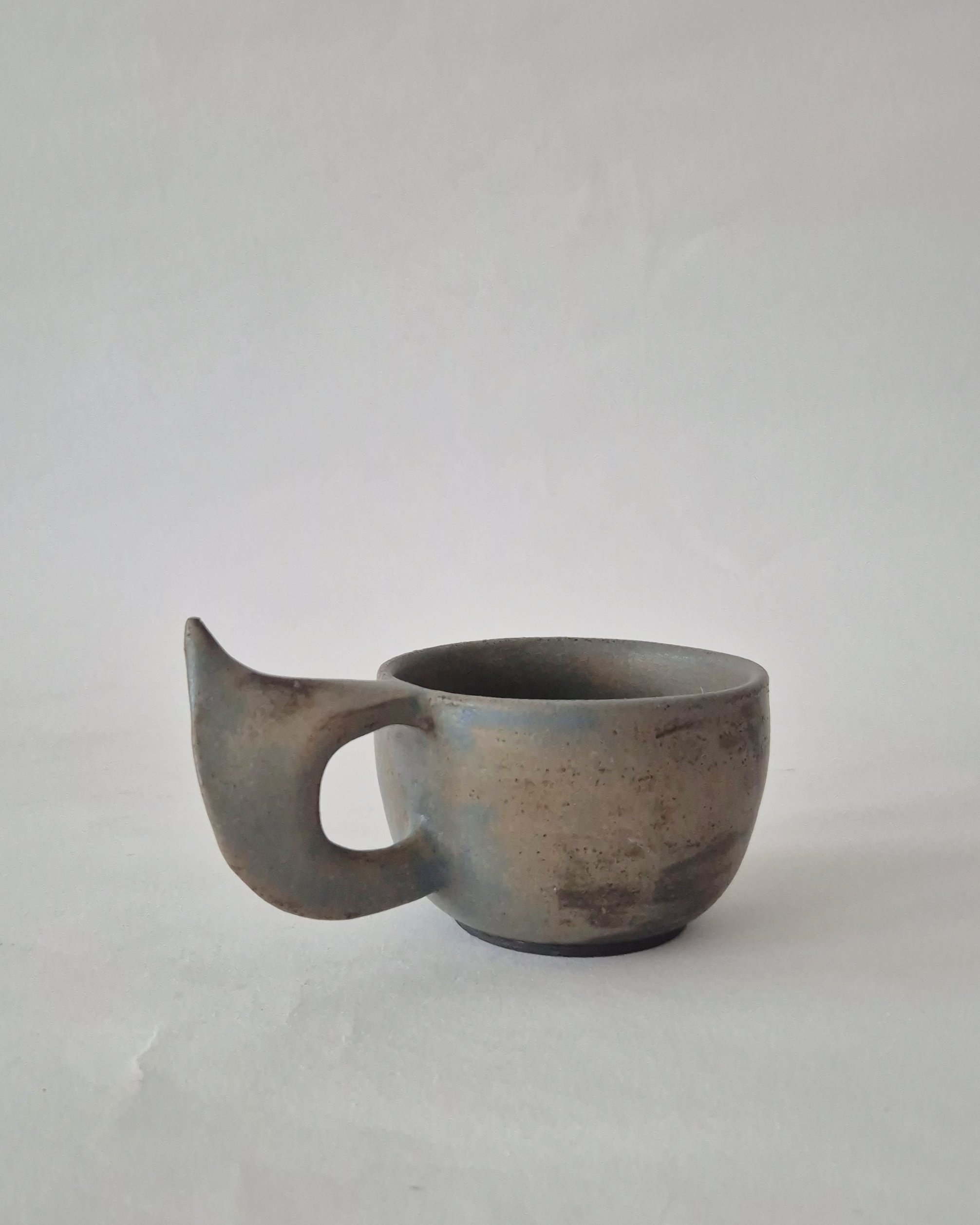
Hand-thrown in stoneware with a hand-built handle, this Flame Mug II is made by Marjorie Broudieu in Amsterdam. Finished in a Whale glaze, this limited series features a deliberate and grounded form with an organic silhouette. Each of the three available mugs has a uniquely sculpted handle, reflecting Broudieu’s intuitive process and interest in Surrealist thought.
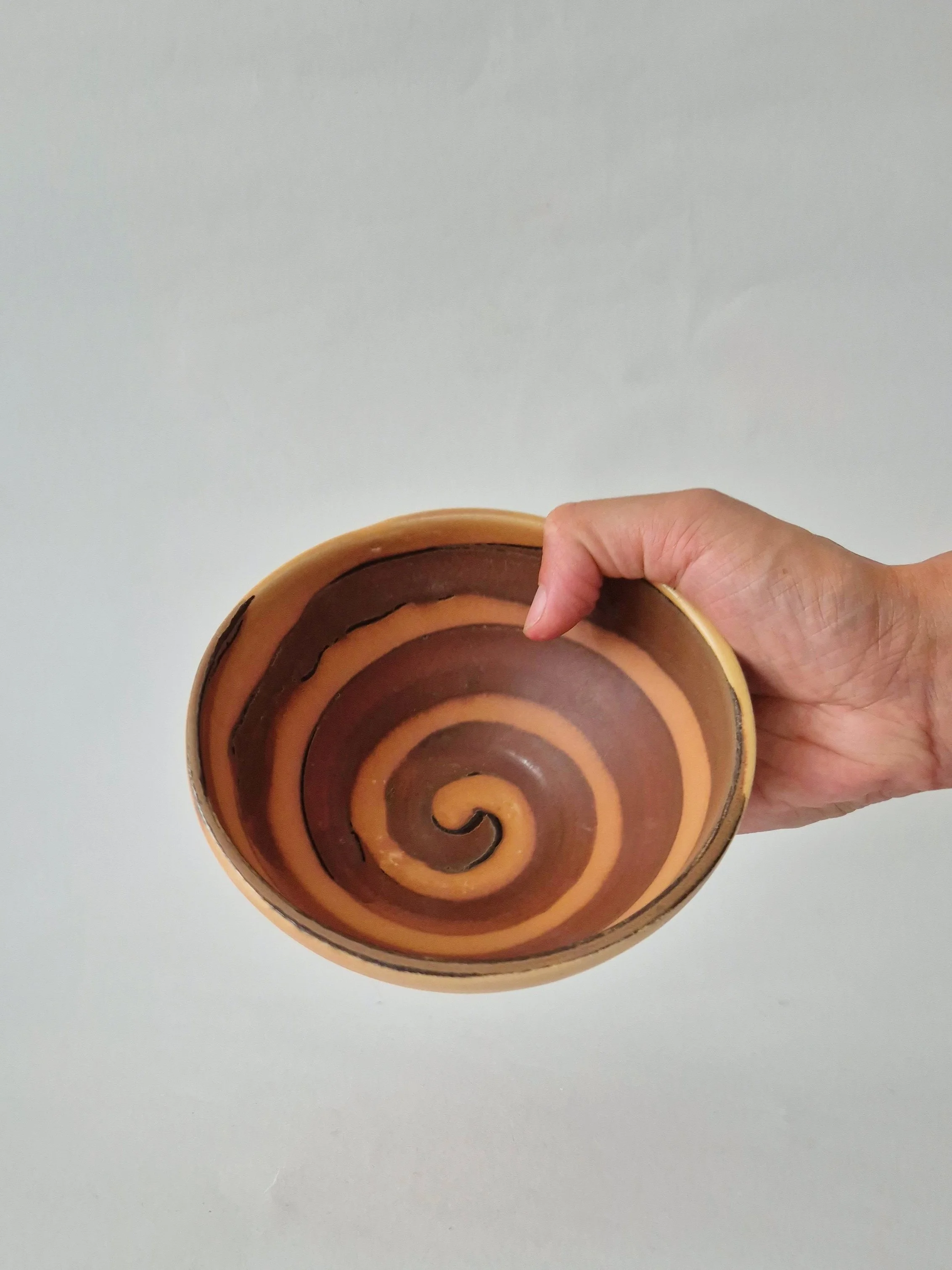
Hand-thrown in stoneware, this Spiral bowl is made by Marjorie Broudieu in Amsterdam. Finished in a warm Dulce de leche glaze, the piece holds a gentle spiral, balancing volume with a tactile, compact presence. The form is informed by Broudieu’s interest in Surrealist thought, inviting a slower pace where daily ritual bridges the gap between reality and the dream.
