Gabriela Bins
Please share a bit about yourself and your background.
I’m Brazilian, but I’ve been living abroad for the past ten years. In Brazil, I worked in the fashion industry as a fashion designer. I studied fashion in Florence when I was 22. Since childhood, I’ve always been fascinated by the world of art and creation. I come from a family of artists—my mother is a multidisciplinary artist, and my father, an engineer, still designs and develops lighting pieces to this day. My paternal grandparents were also involved in the art world, so I grew up in a very inspiring environment.
At home, my father had his workshop, where he worked with wood, iron, and brass to bring his ideas to life. My mother, who often took me to exhibitions, painted, drew, and sculpted in ceramics, and she still does today. I remember her constantly encouraging and nurturing my creativity—she would have me draw, make collages, and work with my hands. I’ve always had a passion for making things, including clay.
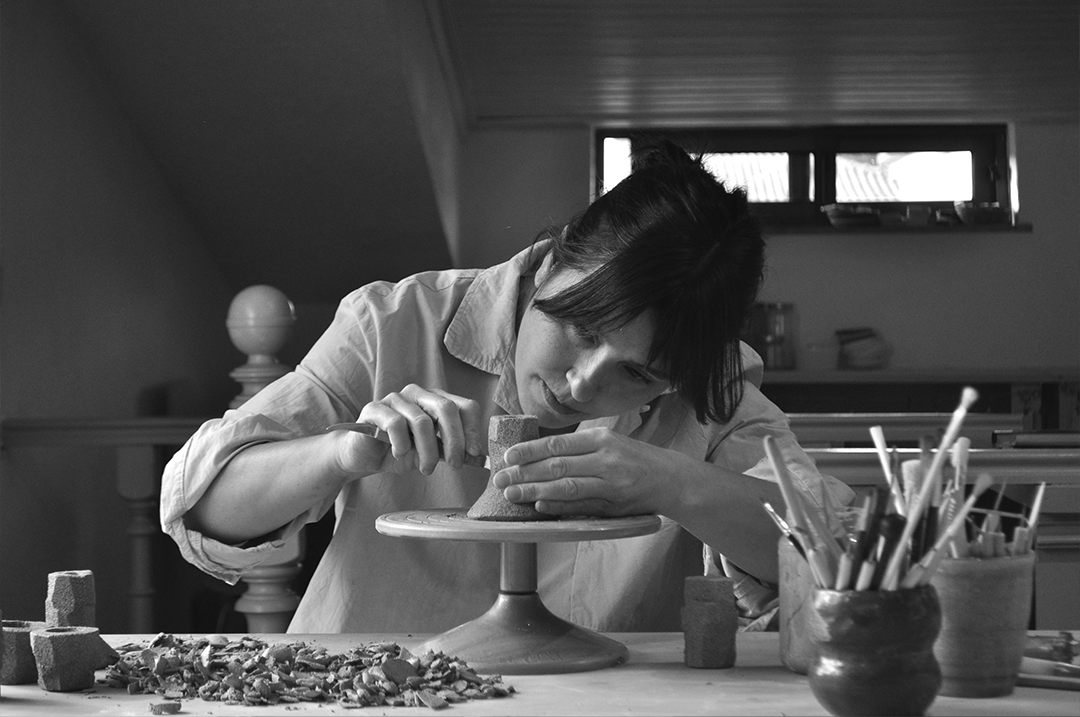
Although I’ve always had a strong connection to the art world, my relationship with ceramics began about seven years ago, when I was living in London. At that time, still wanting to explore a path within fashion, I had the idea of creating a ceramic jewellery brand. But I didn’t want to be involved only in the creative concept—I wanted to work with my hands, to be part of the making process itself, which has always fascinated me. Looking back now, I believe that was what was missing before. The act of creating on its own wasn’t enough; I needed to physically shape the pieces myself, so the objects would have more importance and value for me.
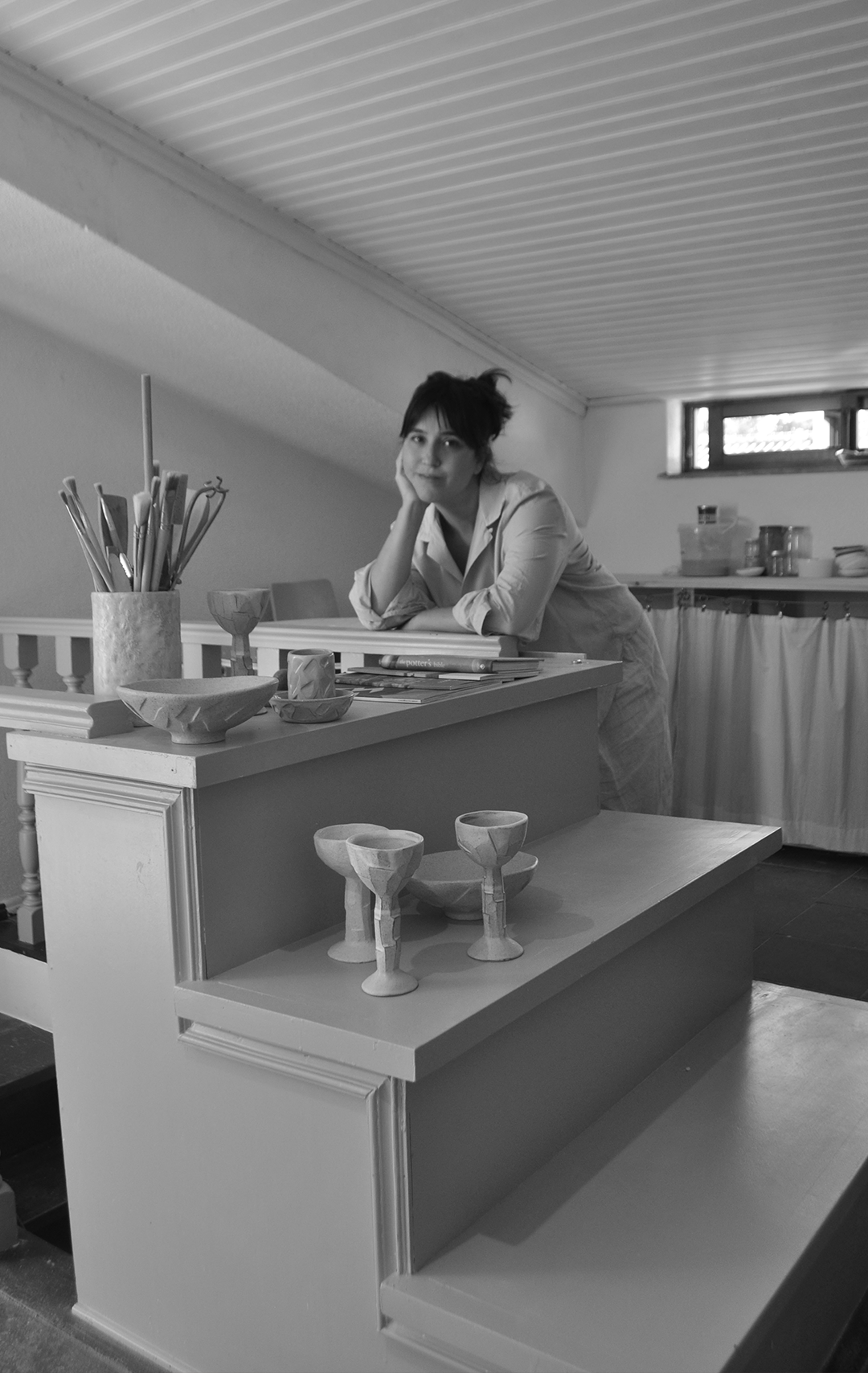
After more than five years in London, I began a new chapter in Portugal, where I’m now based and host workshops in my home studio.
Your journey began with metals inspired by your father’s lighting design before ceramics became central to your work. What first drew you to these materials, and what led you to embrace ceramics as your main language?
I started working with these metals in New York in 2016, right after leaving Brazil. I felt a strong desire to create my own pieces—something truly mine—since in Brazil I had been designing for other brands. It began quite simply: I used hardware materials like brass nuts, copper pipes, and hinges, combining them with ropes to invent necklaces in various shapes and forms. That phase, however, didn’t last very long.
Later, when I moved to London, I felt the urge to start something new—to create from scratch again—but this time using a more organic and versatile material I had loved since childhood: clay. I decided to take a ceramics workshop, initially still with the idea of making jewelry. Ceramics completely opened up my creative horizons. I found myself deeply fascinated, and little by little, I began to explore new directions—starting with homeware, mainly tableware, and over the years moving toward more decorative pieces as well. Since then, I’ve felt completely immersed in this new world.
You grew up surrounded by your mother’s paintings and sculptures and your father’s workshop. How do these early influences continue to connect with and inform the way you create today?
As I mentioned earlier, my childhood was deeply shaped by a creative and artistic world. I believe that who I am today is closely tied to that past, even though my creations don’t necessarily come directly from it. They are born from my experiences as a whole — from everything I see and feel, from the exhibitions I visit, the books I read, the people I meet, the places I pass through, the pictures I take in my daily life.
Could you walk us through your creative process?
I believe my creative process is deeply connected to my emotions, although I don’t always recognize that connection right away. Many times, I only notice it after the work is done—when I begin to make those correlations. It’s a very subjective process.
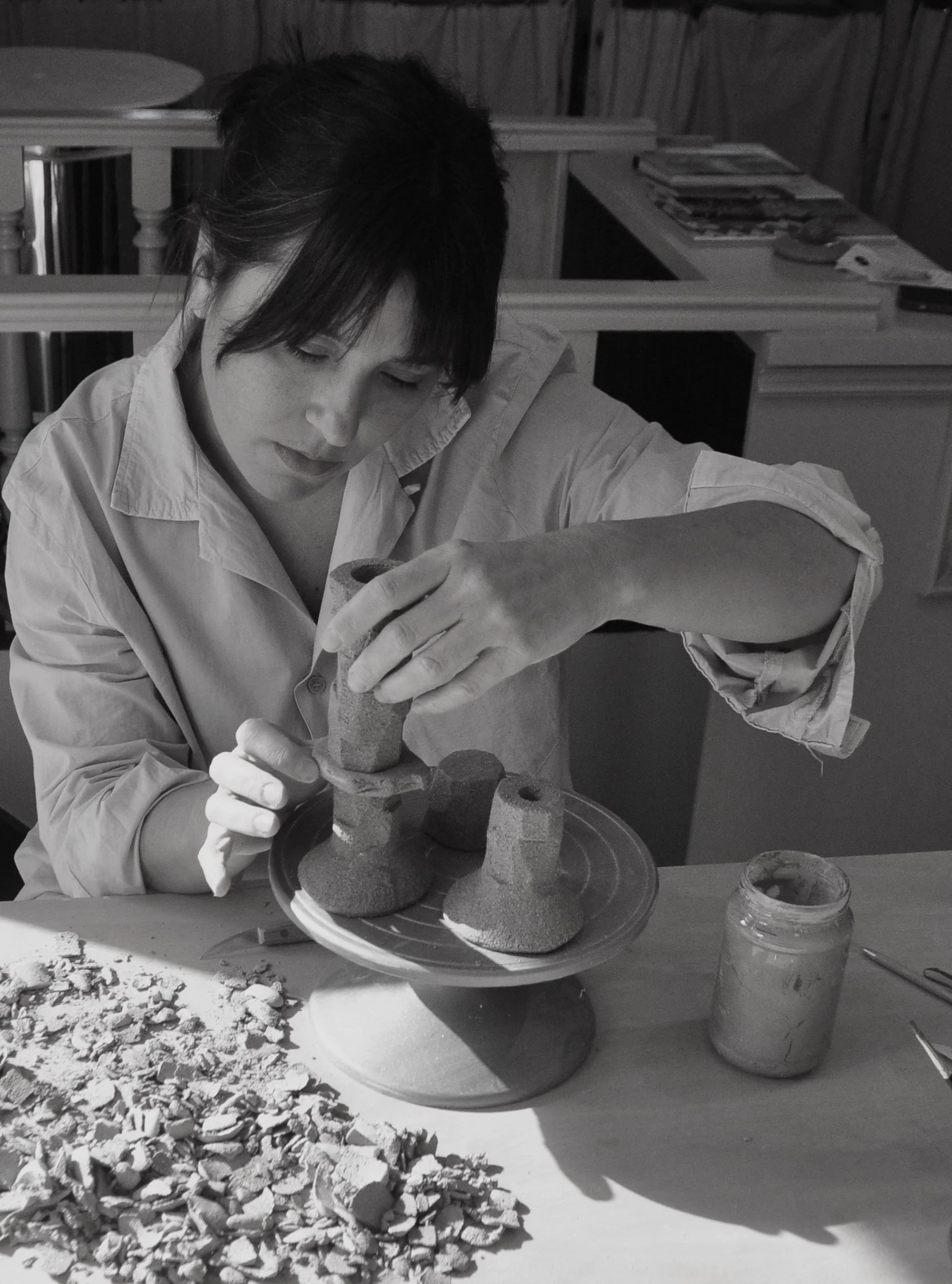
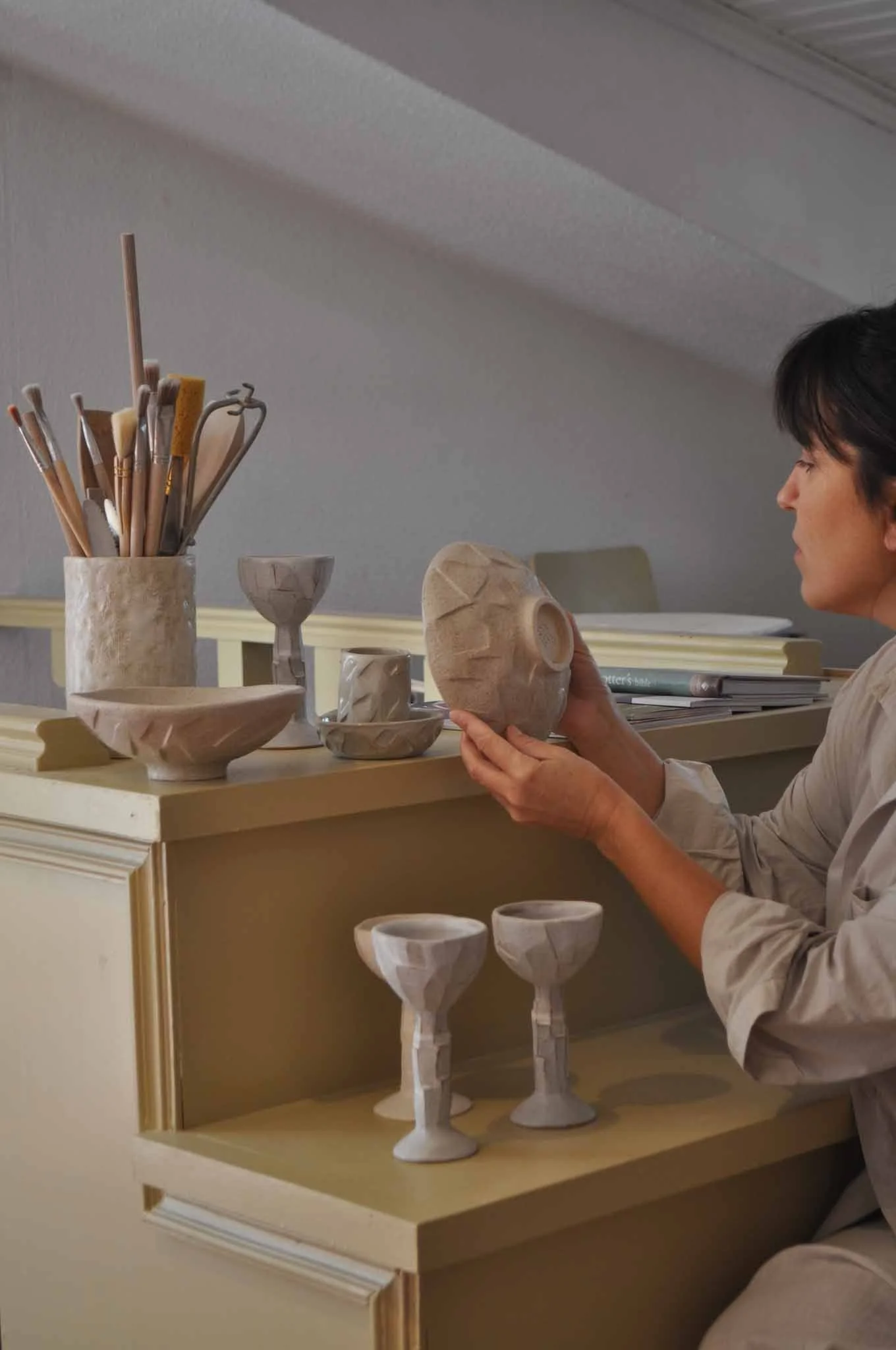
For example, my latest series of pieces began after a year of maternity leave, while I was still in the postpartum period. I was experiencing a time of great vulnerability, facing fears, a certain anxiety, and many emotional ups and downs. These pieces were not planned—they emerged instinctively. The act of cutting and fragmenting the clay block gave rise to structures that felt rawer, more rigid, and unlike anything I had created before.
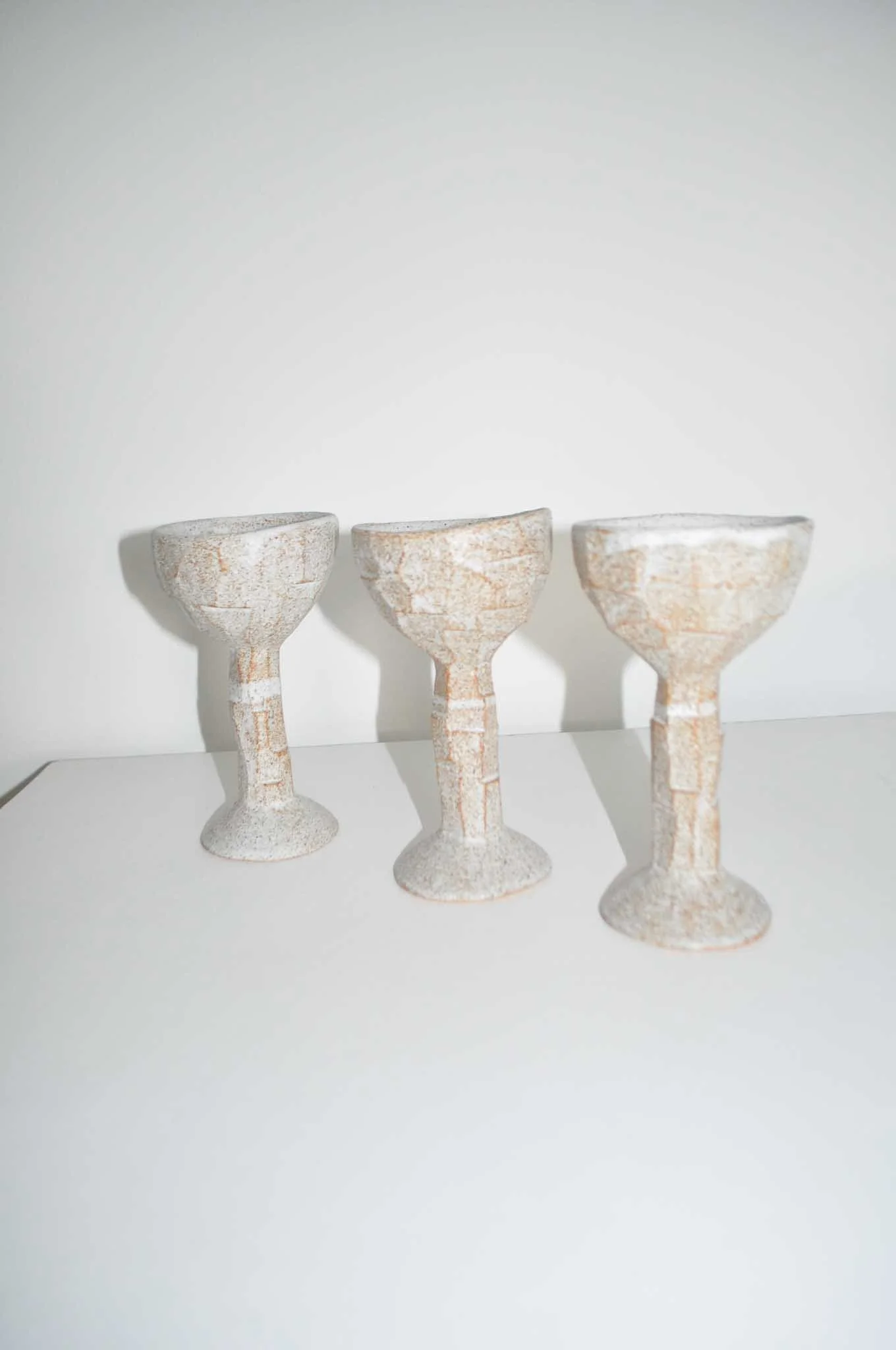
As time passed and the process unfolded, I began to see them as pillars—symbols of strength that grounded me during that transitional stage of motherhood. A kind of raw power. The first piece I made was a chalice. Could it represent the feminine? The object felt like a translation of my own body—born from gesture and cut, from love and pain. Nature also inspires me deeply; it is, in itself, a pure form of art.
Working with clay calls for patience and attentiveness. How do you experience slowness and presence in your making process?
This is one of the most beautiful aspects of working with clay: its presence. Our minds aren’t always calm—some days we feel restless, thinking about a thousand things at once, or more stressed. But when I begin working with clay, almost magically, it calms me and grounds me. It’s like a therapy session, where the conversation is with myself and with my work.
The material also teaches patience and the art of waiting. There is the drying time, and all the processes involved require time. Creating a single piece takes more than a day.
It’s a great privilege to be able to work with something I love, and I am very aware of that.
Materials such as copper, brass, iron, and now ceramic have each carried different meanings in your work. How important is material in the stories you want your objects to tell?
Nowadays, I can say that clay plays the leading role in my life and in my work. Other materials have been more like supporting players—perhaps they were a sort of rehearsal before fully embracing ceramics. But in the future, I might even experiment with combining clay with other materials, such as wood and metal.
Where do you see the greatest potential for preserving and honoring traditional local crafts in today’s world?
In today’s fast-paced world, where hurry rules and the digital realm fills our days, I feel that many of us are yearning—amid all this chaos—to return, in some way, to the past. I believe that craftsmanship and the ancestral art of making by hand, in all its forms—ceramics, weaving, woodworking, embroidery, and beyond—are, in a sense, a kind of salvation for both humanity and the world itself.
This act of returning to the handmade feels deeply important to me. Working with our hands calms us, grounds us, and invites us to be fully present in that one moment of creation—to learn again the value of time, something so rare and precious today.
To value what is handmade is, I think, to honor our ancestors and to imagine a more mindful future. I believe in a future made by hand.
That’s why I find platforms like this so important—ones that promote and support local craftsmanship.
Are there any new projects or directions you’re currently exploring that you feel especially connected to?
Yes, for some time now, I’ve been feeling a strong, almost pulsating desire to expand my work—literally. I started in ceramics with very small pieces, my jewellery, and then gradually moved on to tableware and some decorative objects. But lately, I’ve felt a strong urge to make these pieces larger. Last year, I created my first lamp, and I plan to make more. I feel that now is the time to explore a larger scale in my work, and I have a persistent desire to continue along the path of sculpture, lighting, and even some furniture—although the latter might be something for the more distant future.
Where and how can people engage more deeply with your work?
You can find me on Instagram and also through my website. On Instagram, it’s possible to follow my creative process more closely. I share a bit of everything there — glimpses of my personal life, places I visit, objects that cross my path, and the landscapes that inspire me. I believe that all these impressions shape the way I perceive the world and how I translate it into my work. For those in Portugal, feel free to reach out by email or DM — you’re always welcome to visit my studio or even join one of my workshops.
Photos belong to Gabriela.
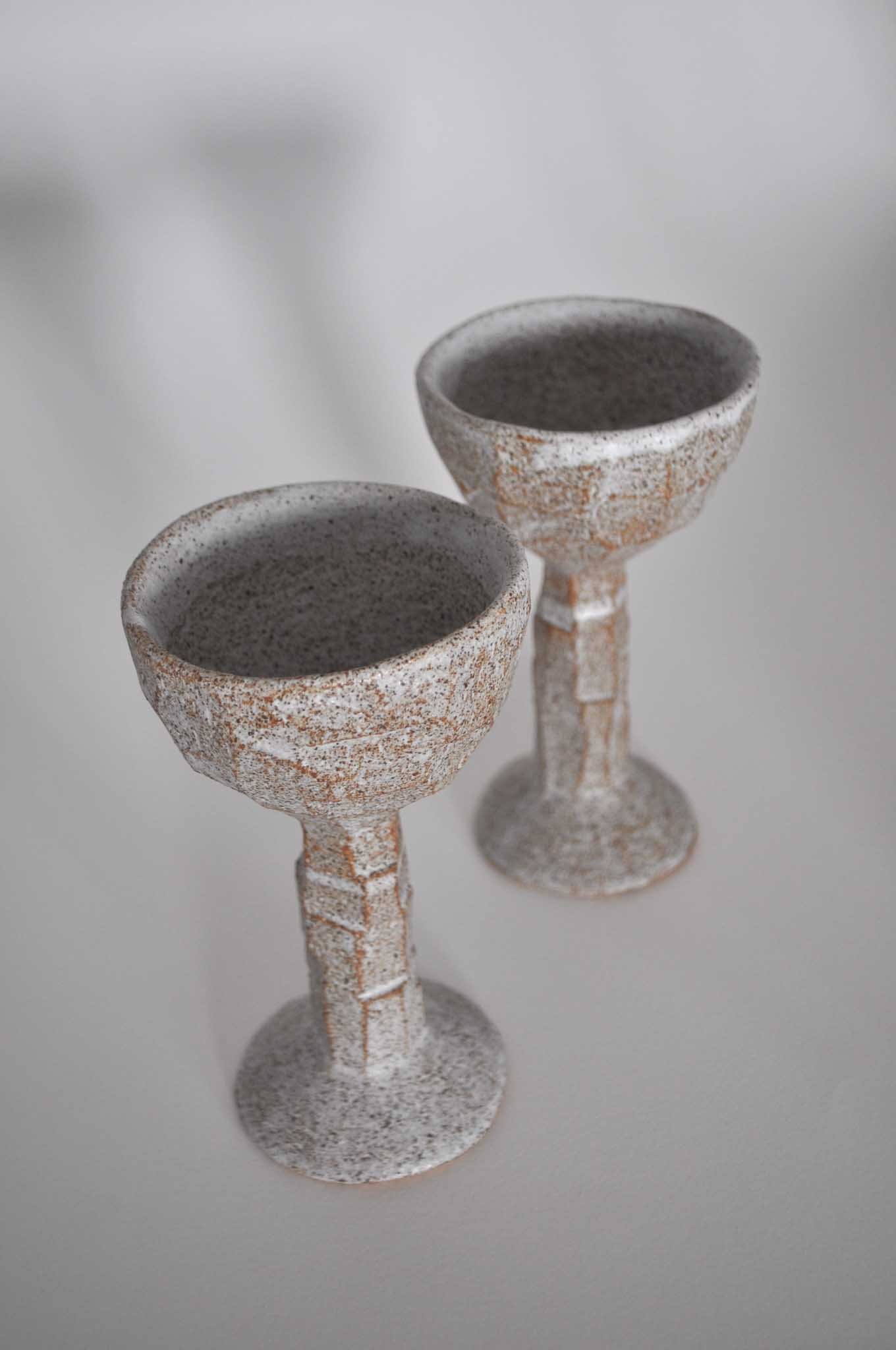
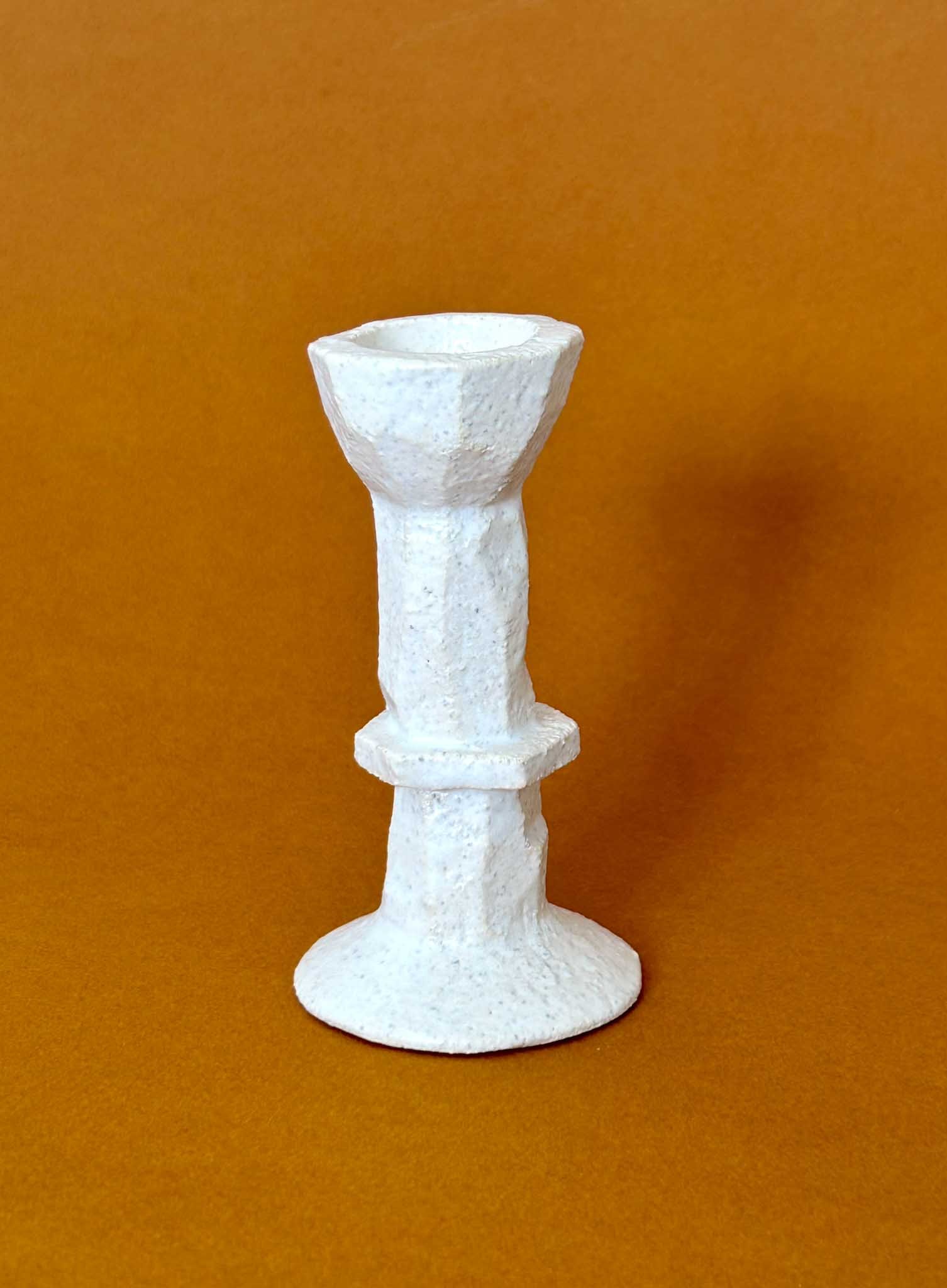
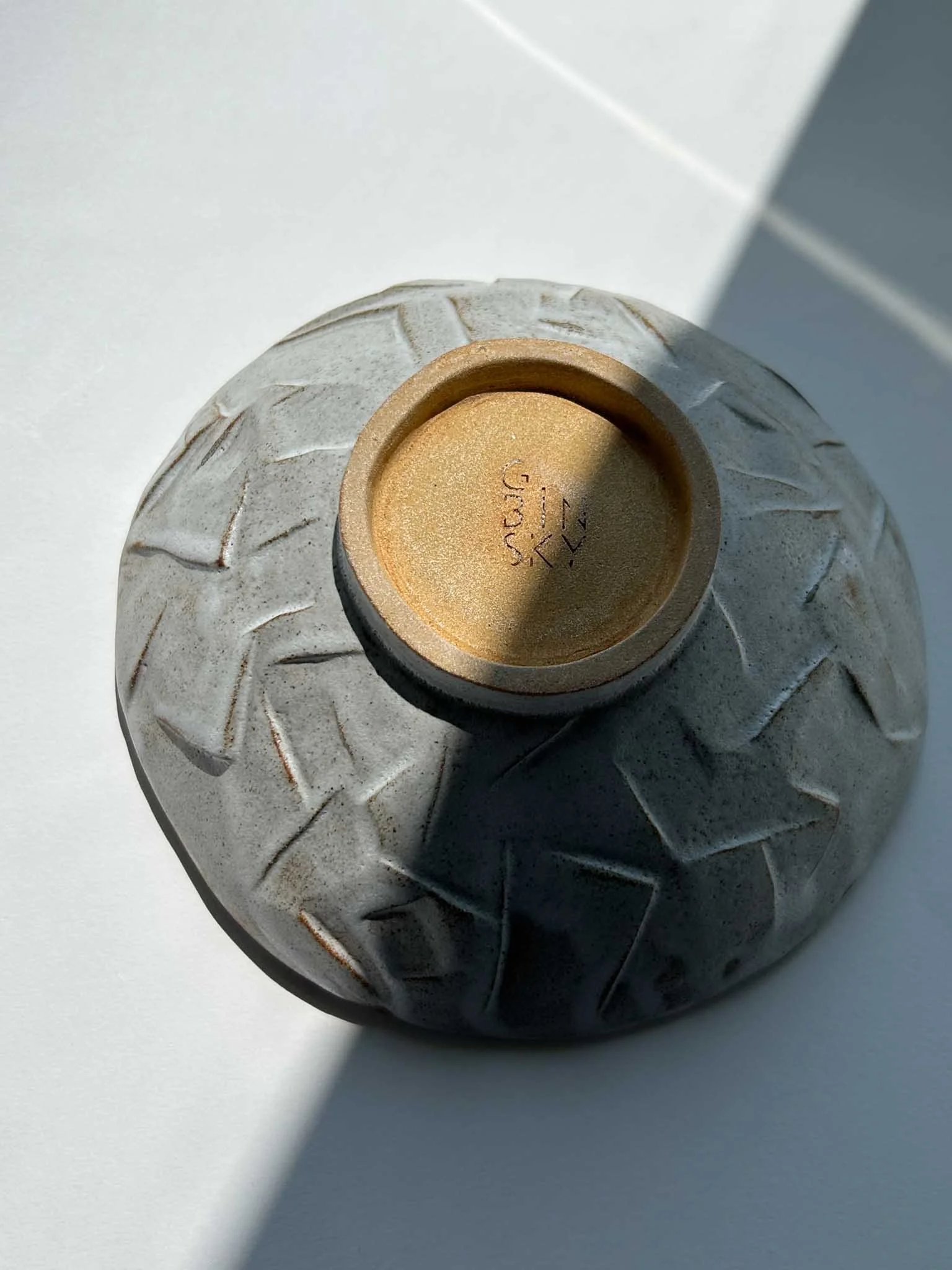
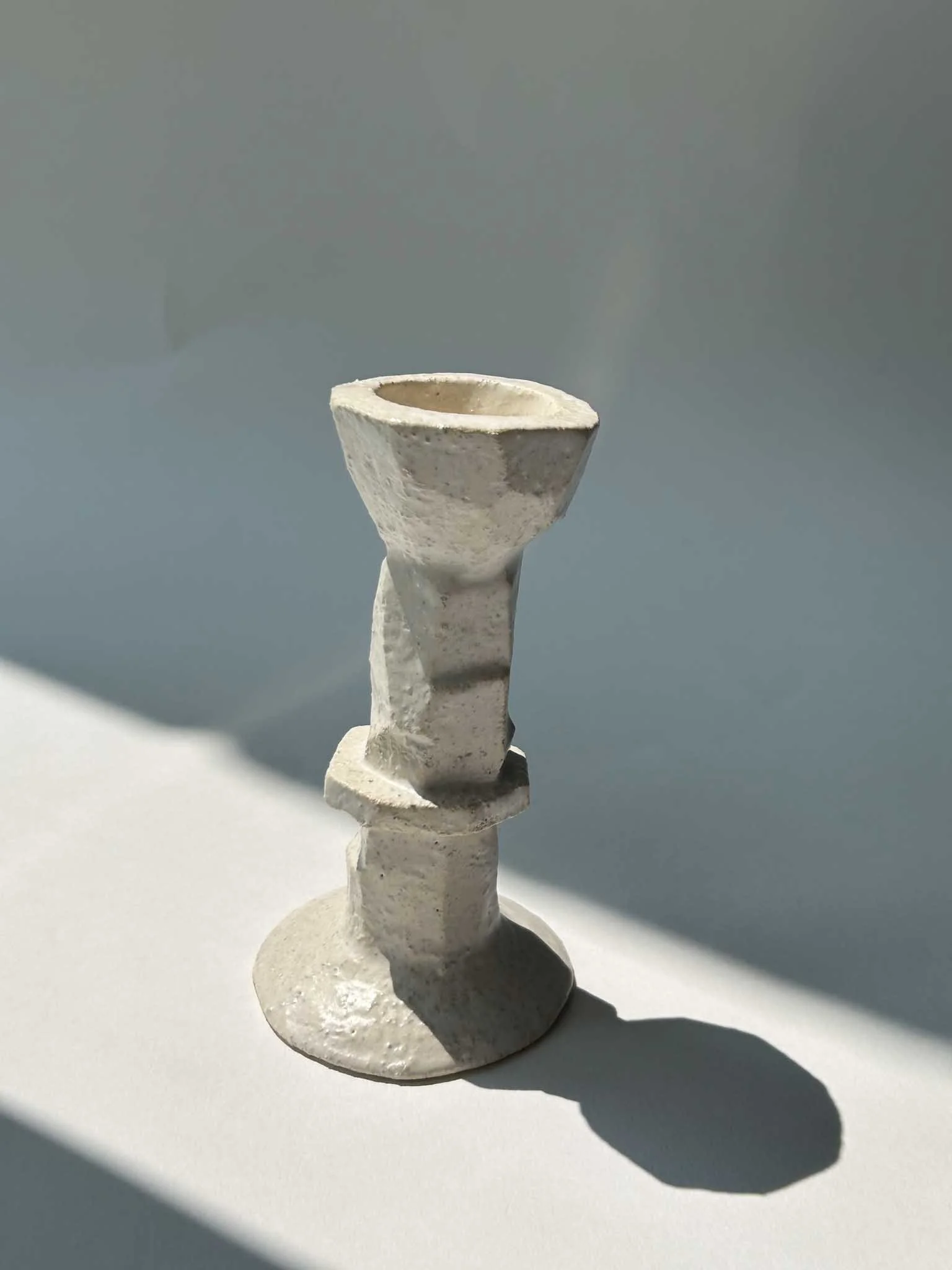
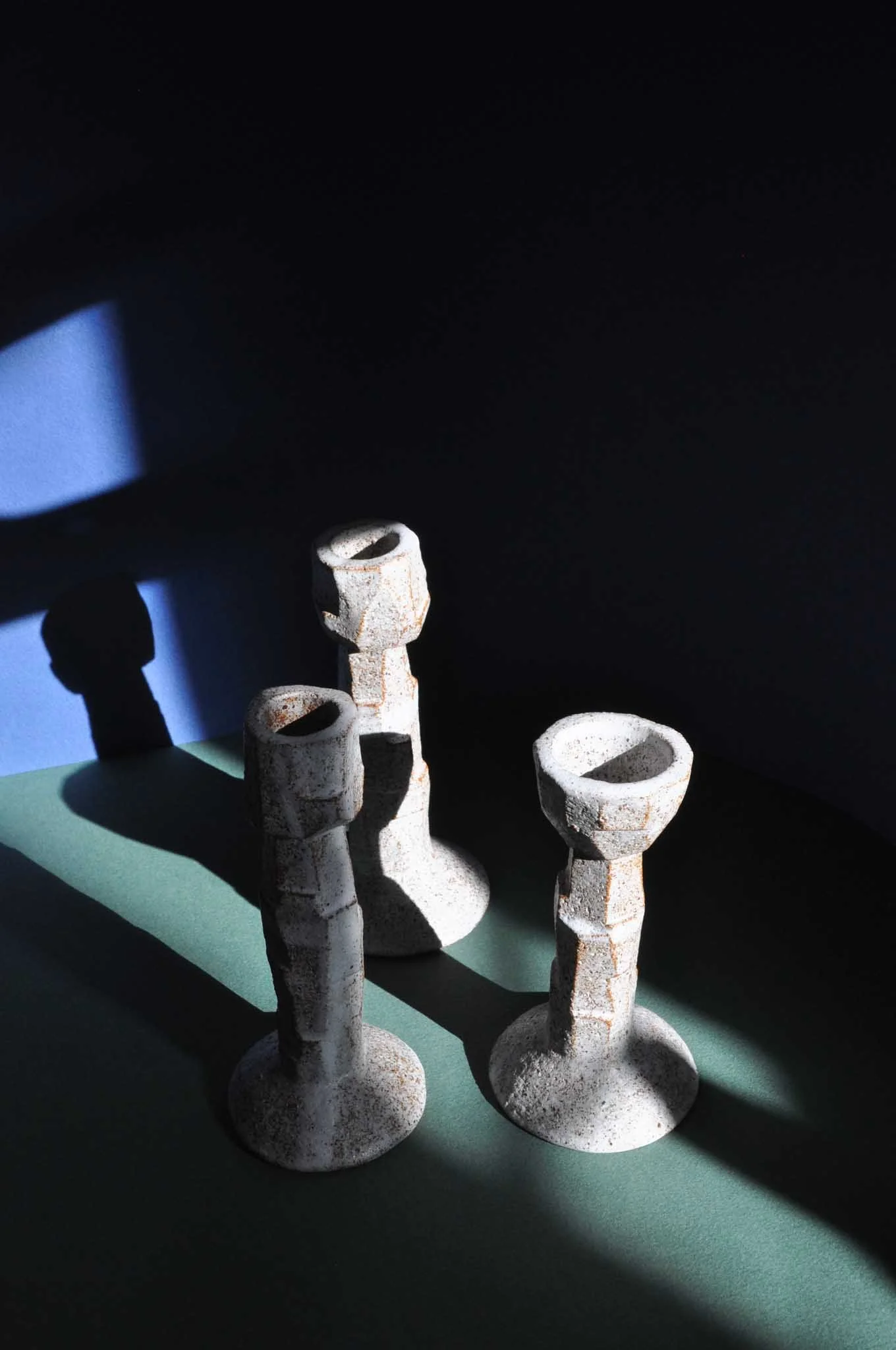
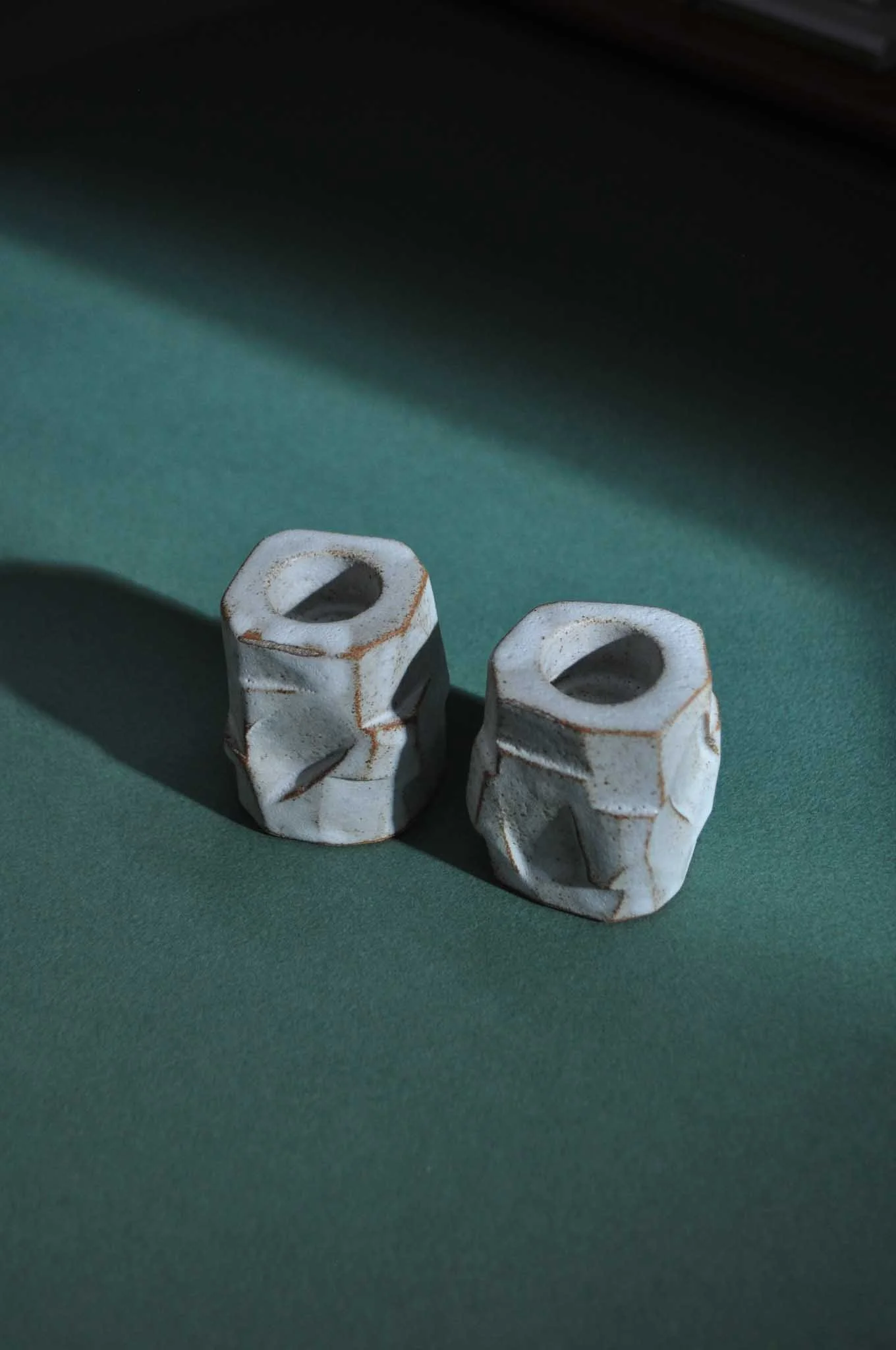
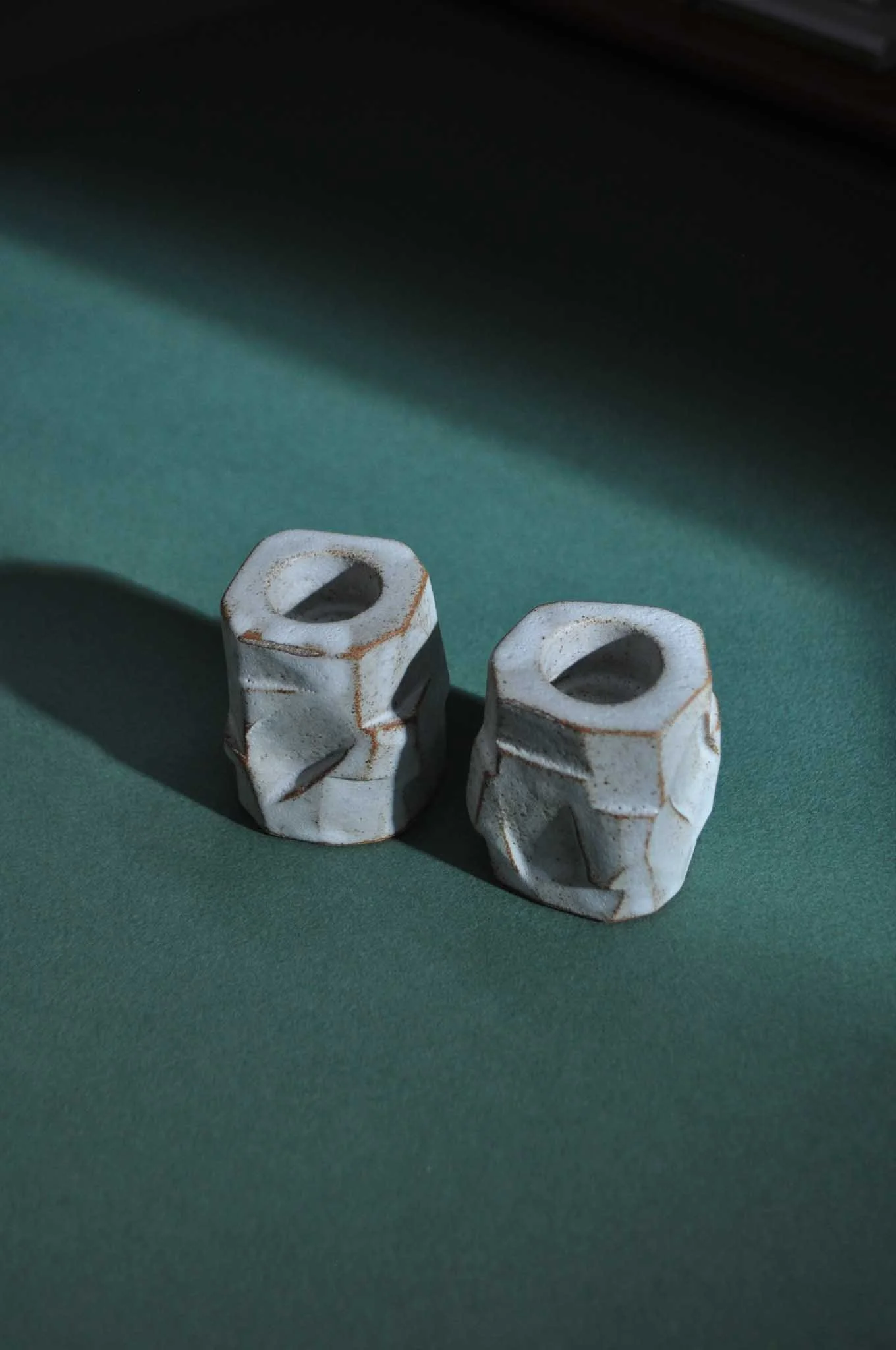
Hand built in sandstone clay, this set of two candle holders is made by Gabriela Bins in Lisbon, Portugal. Finished in an opaque white glaze over a light brown clay body, the pieces show cuts and surface variations shaped by the hand.
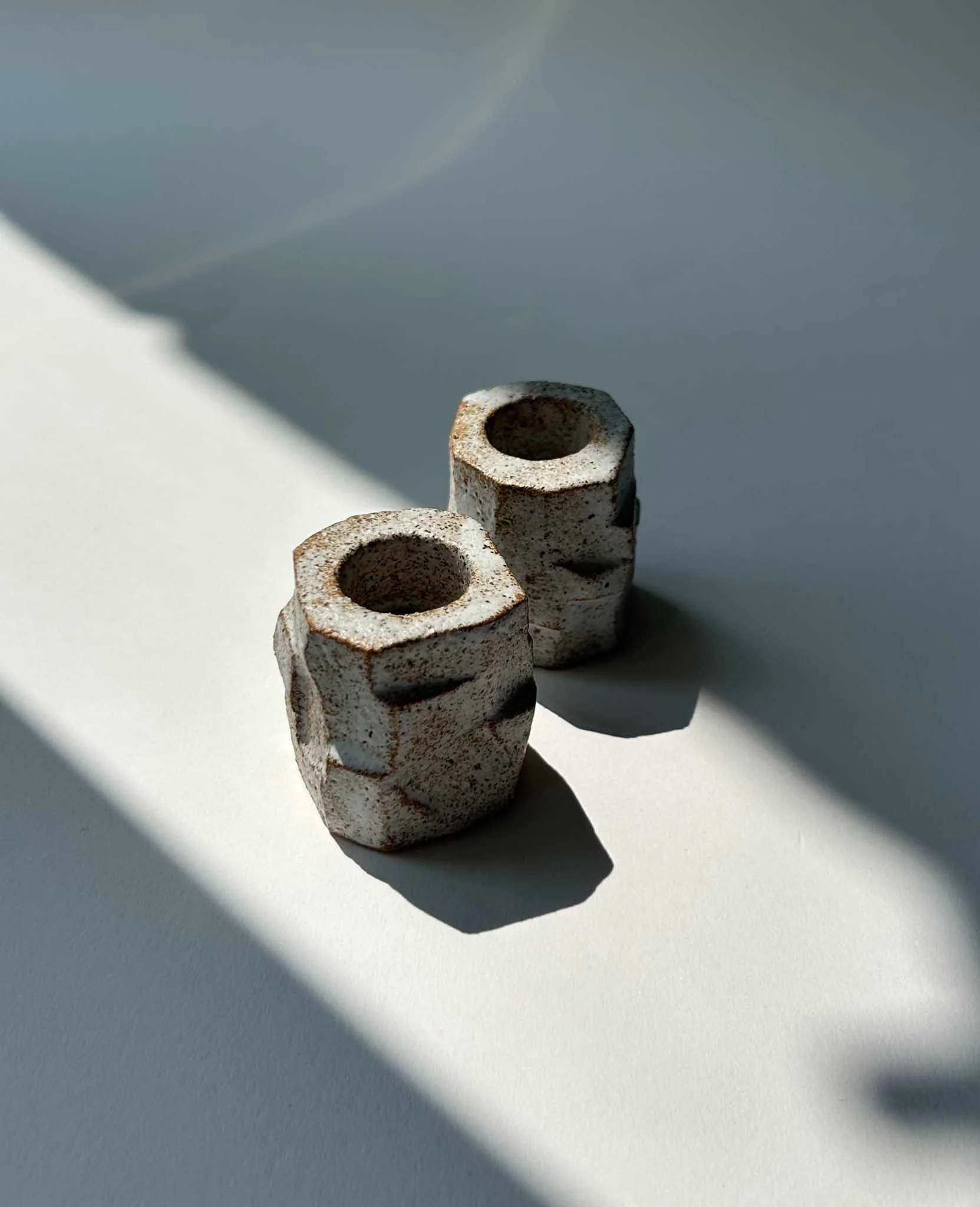
Hand built in chamote light brown sandstone clay, these candle holders are made by Gabriela Bins in Lisbon, Portugal. Finished in a matte white glaze, the surface reveals the rugged texture of the clay and the marks of cutting and shaping. The robust, faceted form gives the pieces a clear, earthy presence.
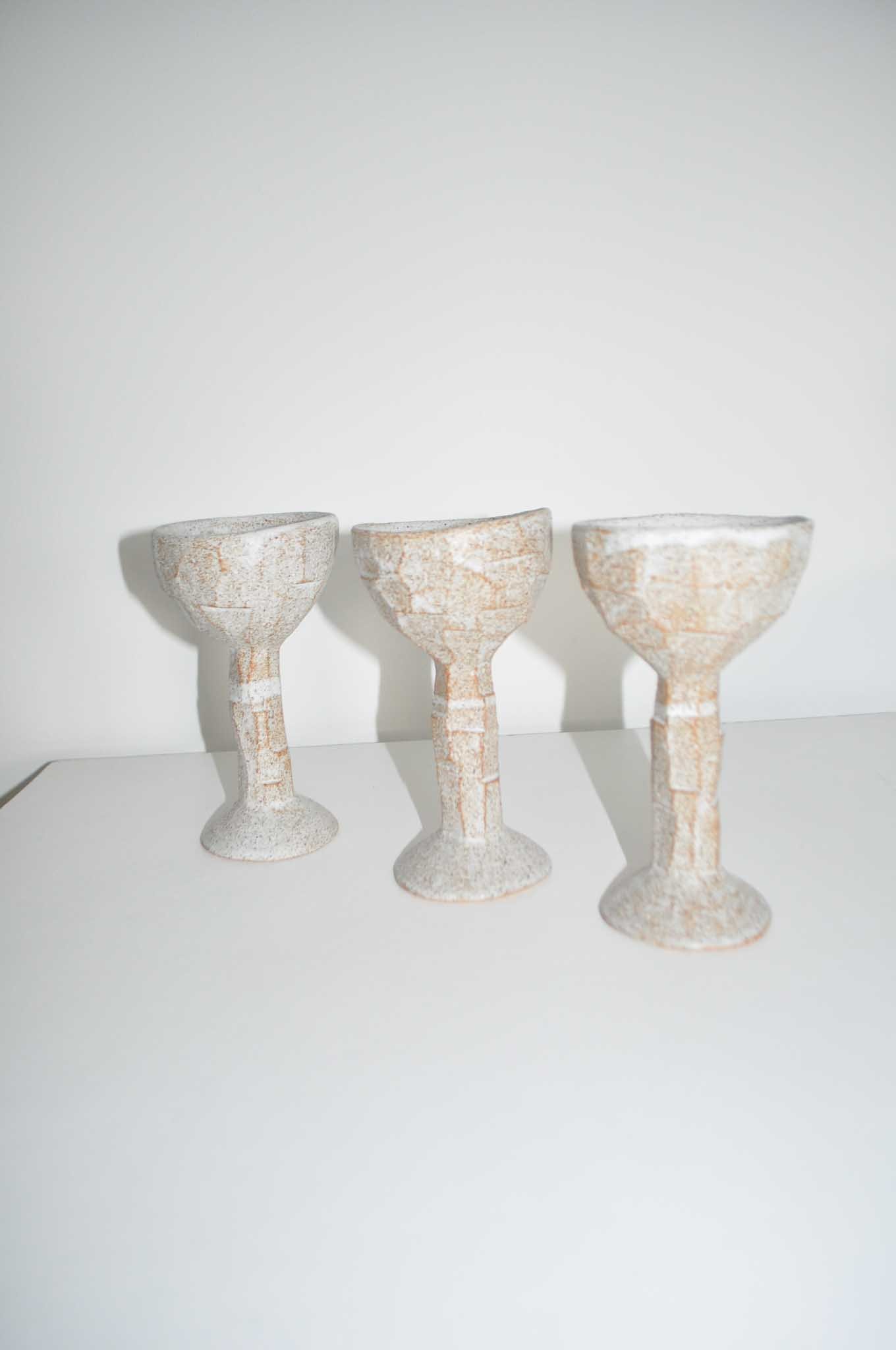
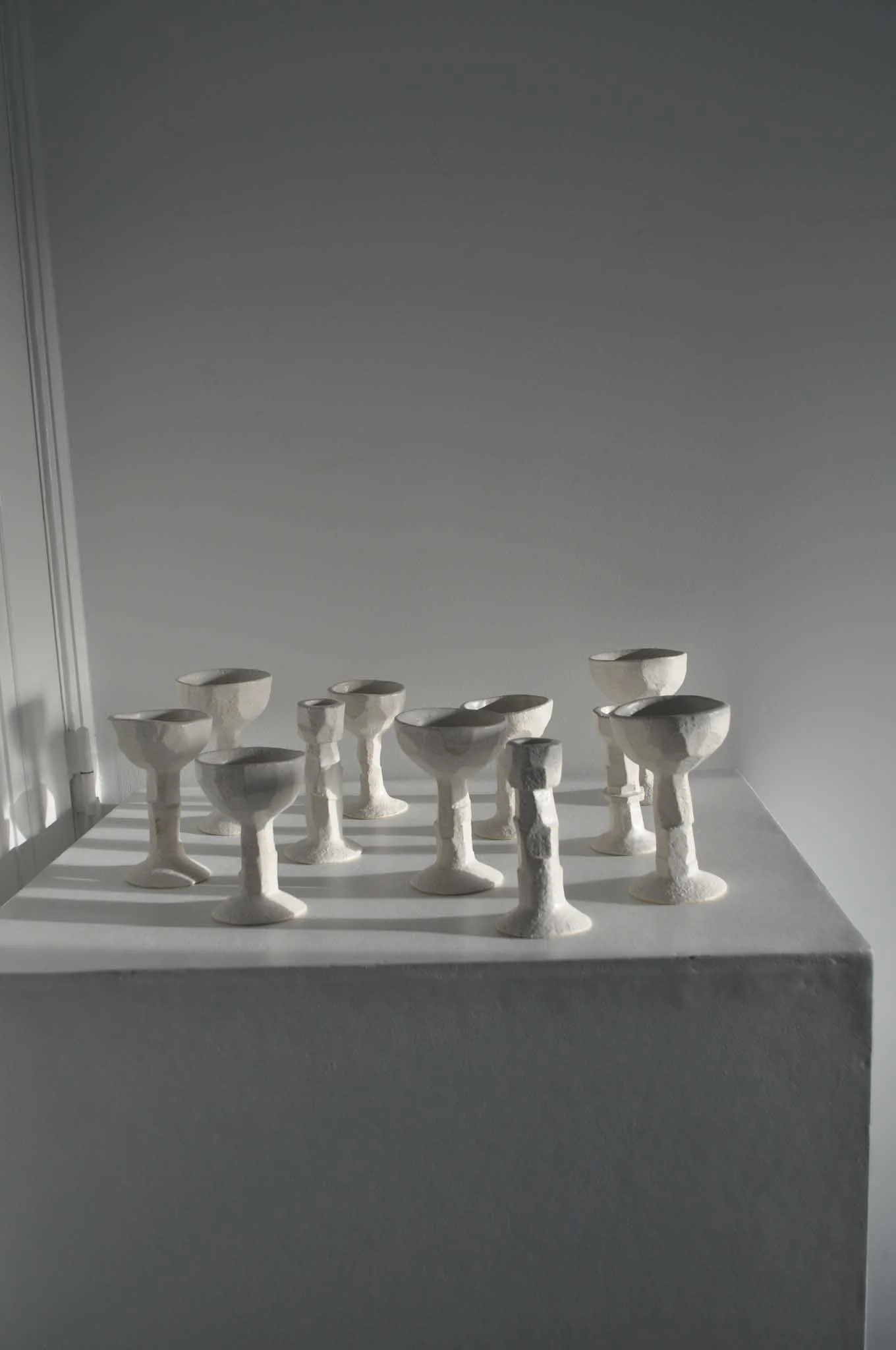
Hand built in chamote light brown sandstone clay, this chalice is made by Gabriela Bins in Lisbon, Portugal. Finished in a matte white glaze, the surface reveals the texture of the clay and the marks of cutting and shaping. The elevated form gives the piece a clear presence and recalls traditional drinking vessels.
