Lena Huber
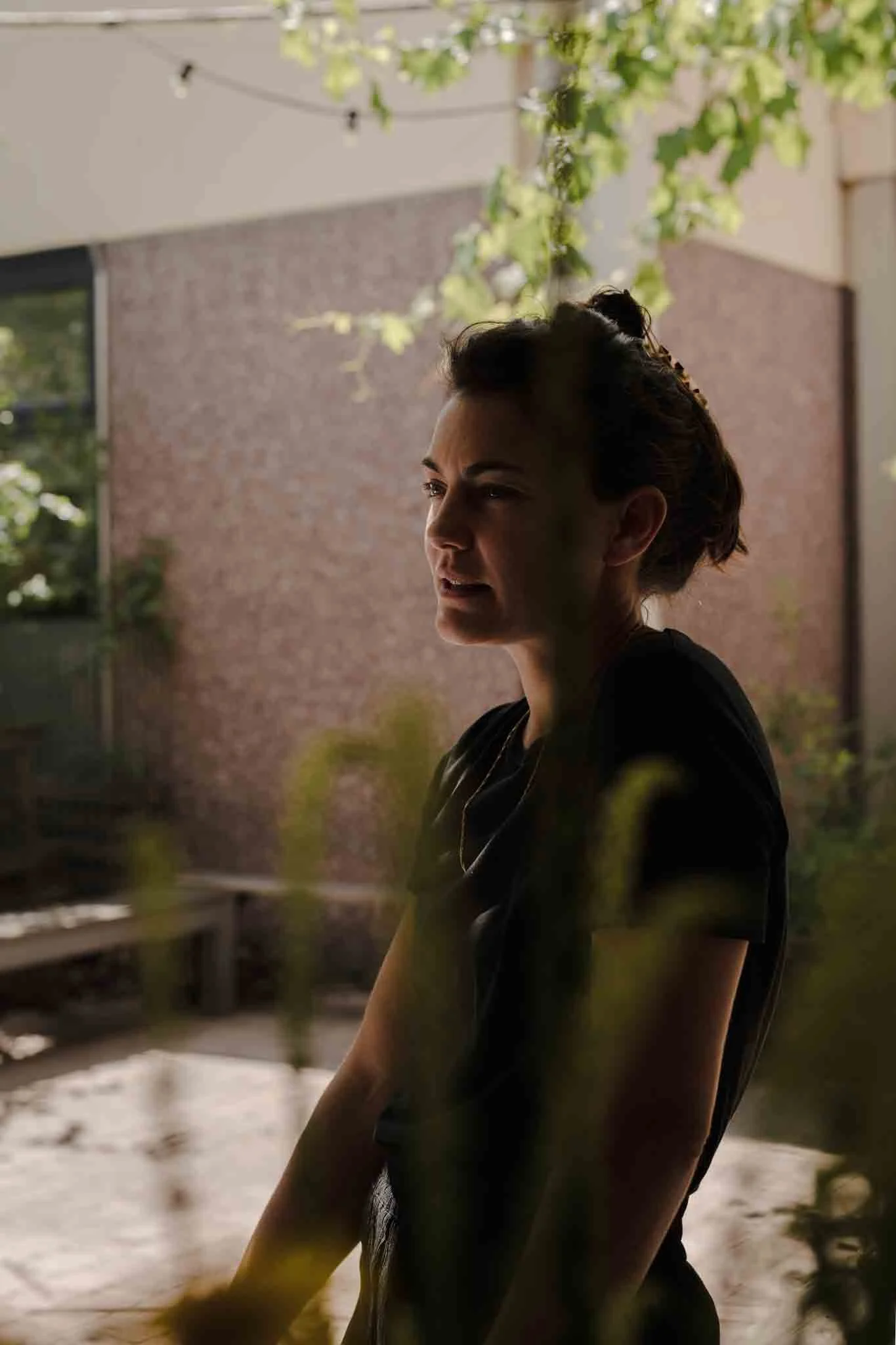
Please share a bit about yourself and your background.
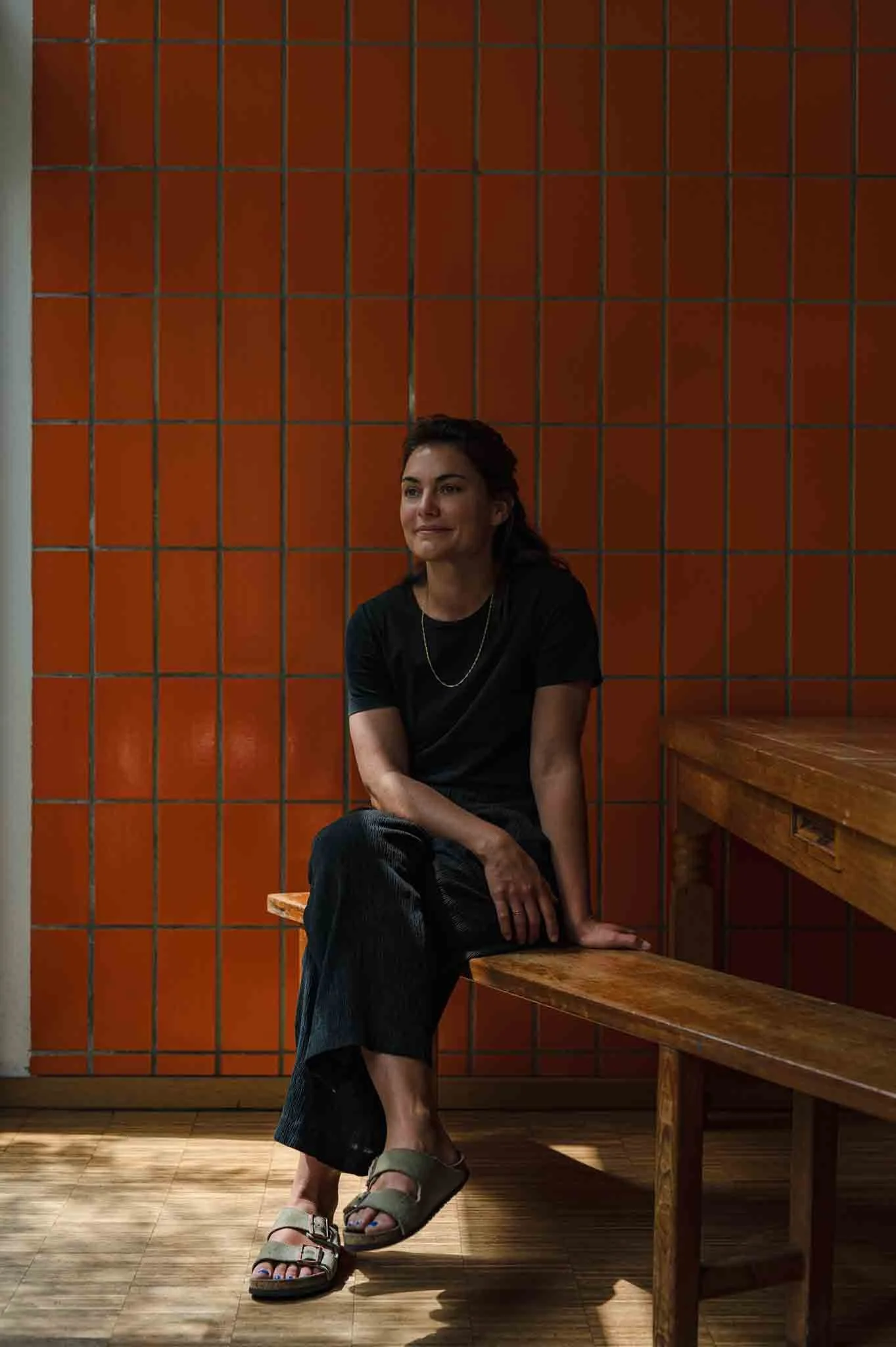
I’m Lena. I currently live and work in a small village near Mainz. I’m a trained goldsmith and studied product design, but my current work focuses on natural dyeing and exploring various techniques within this field.
What first drew you to working with natural materials and traditional textile techniques, and how did it become the foundation of your practice?
I grew up in nature and was always surrounded by people who worked with natural materials, my mother is a florist, my aunt a ceramicist, and my uncle a carpenter. Creating something with my hands feels very natural to me. During my training as a goldsmith, I missed that direct connection to nature. Metal feels like a very technical material, it requires a lot of planning, preparation, and practice before you can really understand it. Later, during my studies, I worked with other materials again. I discovered the world of natural dyes more or less by chance through a project, and it hasn’t let go of me since. The materials and processes are a great fit for my intuitive way of working.
In what ways do the landscapes, seasons, and stories of Rheinhessen influence your work today?
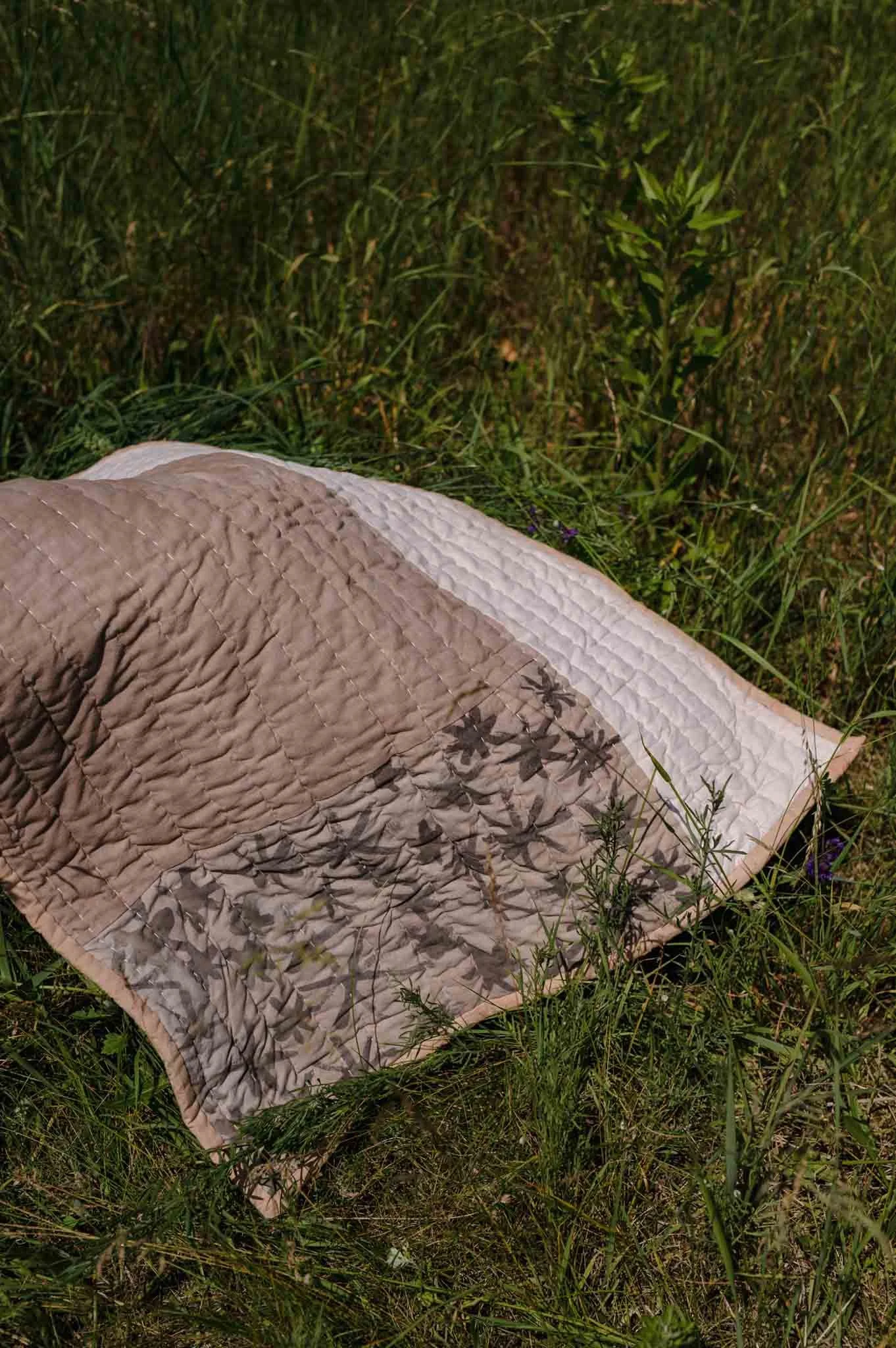
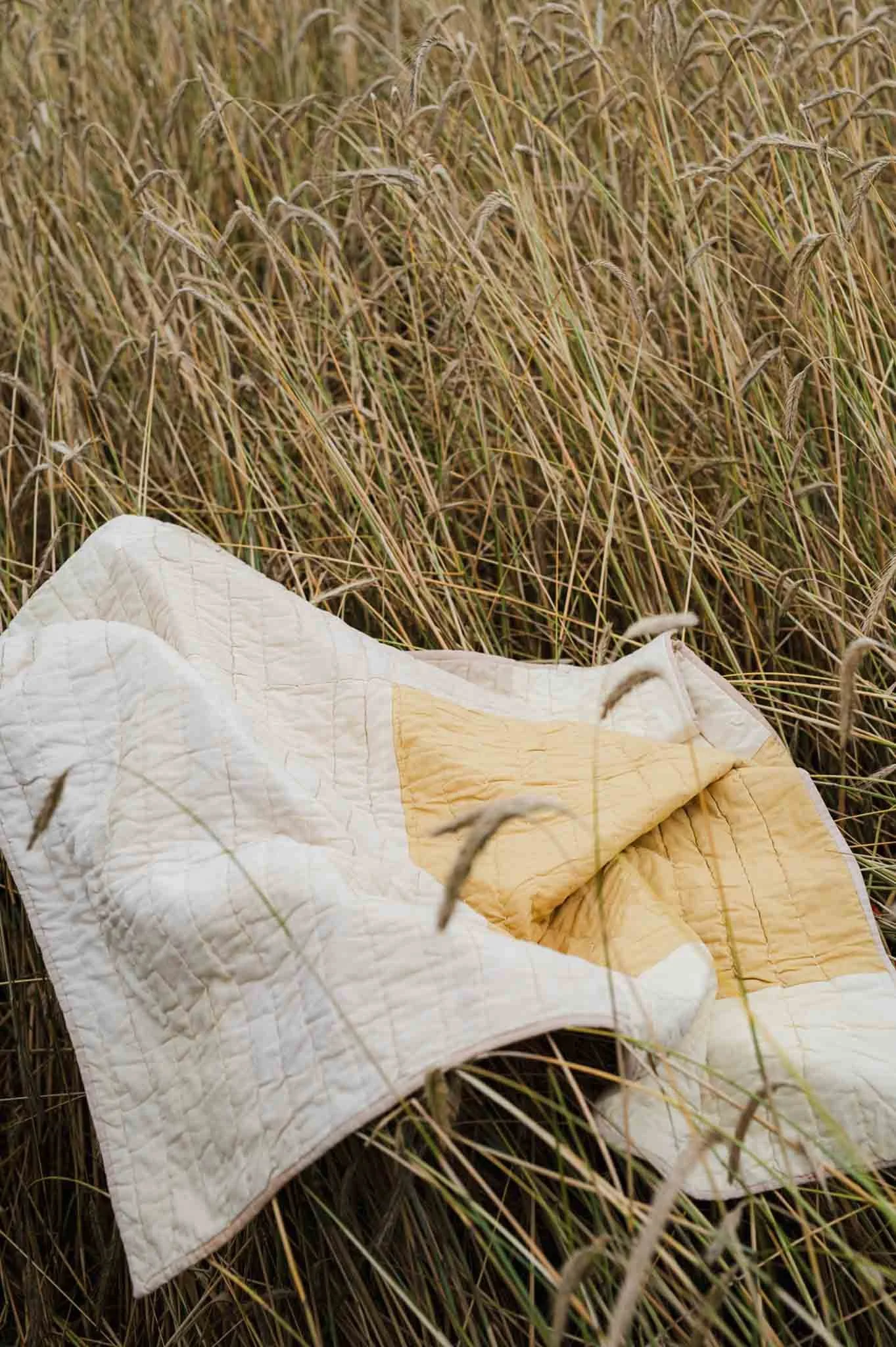
I’m not originally from this region, and when my family and I moved here a few years ago, I was overwhelmed by the colors of the landscape. I had already been working with natural dyes, but the new surroundings and the shifting palette of the seasons became a kind of catalyst for my work. The earth here isn’t simply black, it’s ochre, pink, pale brown. The meadows shimmer in greys, silvers, soft greens, blush tones, and beige. The landscape is raw and restrained and at the same time gentle. It’s a combination that moves me and continues to inspire my practice.
What does your creative process look like? Do you have any rituals that help you enter a state of flow?
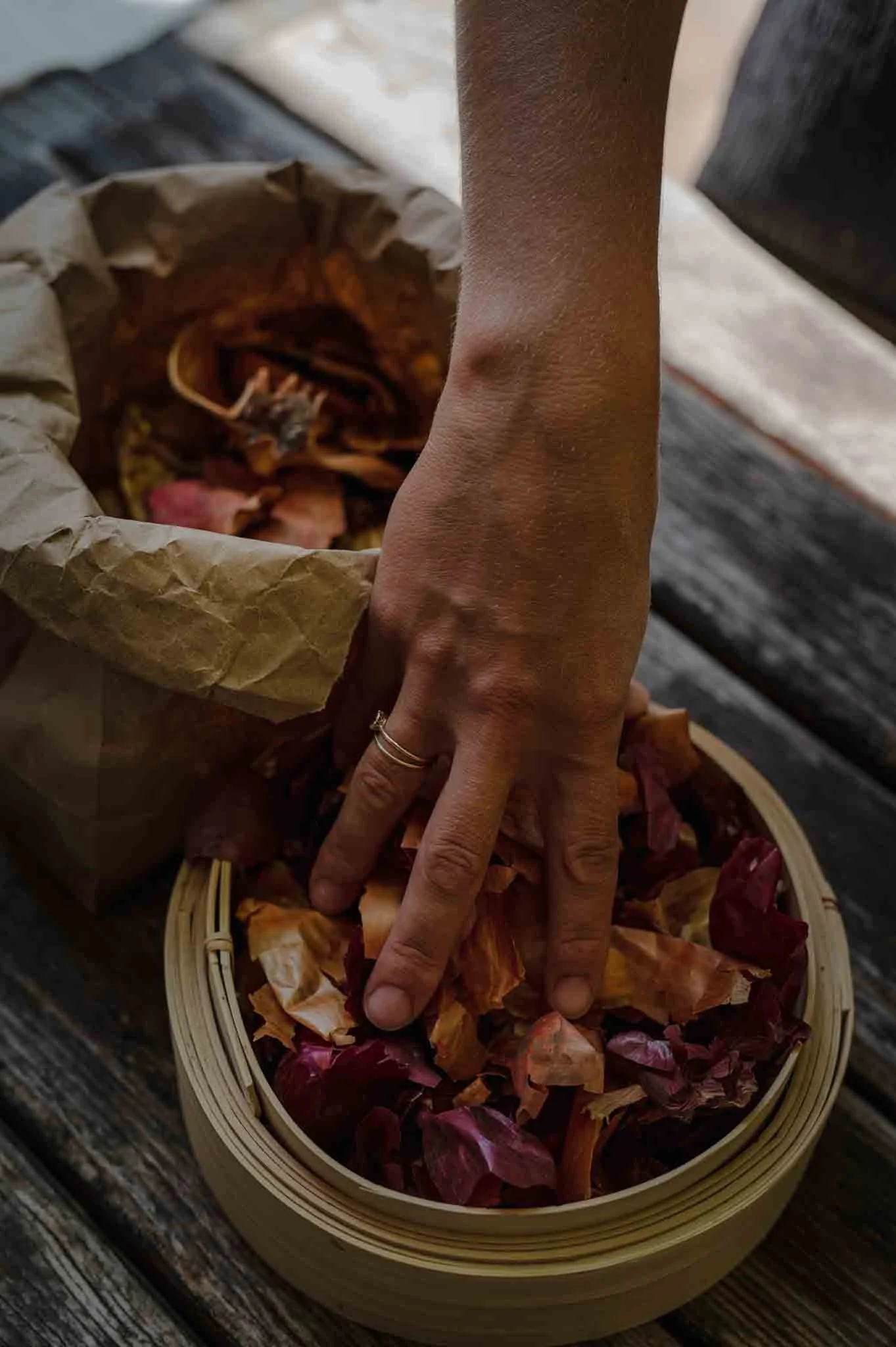
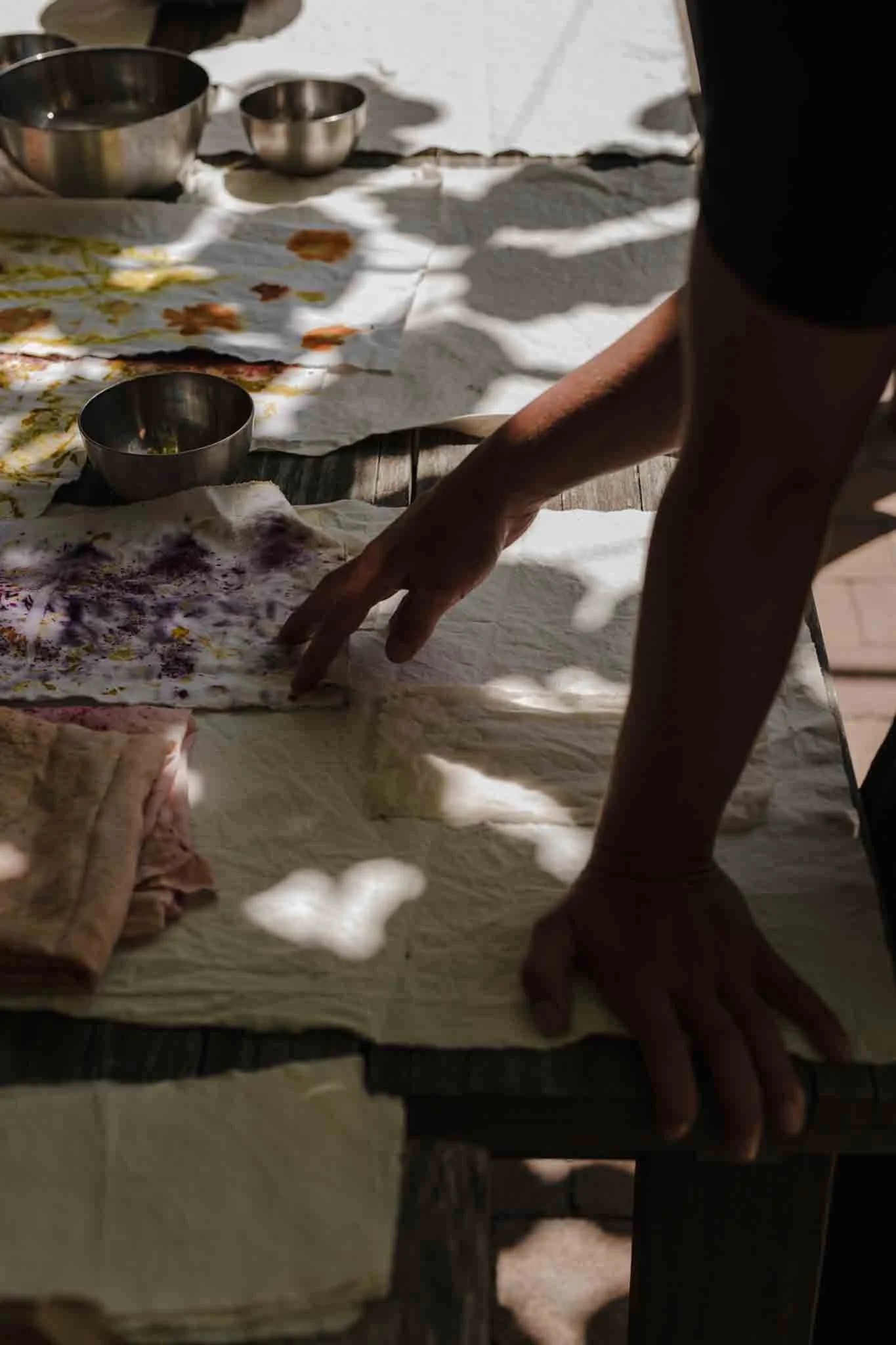
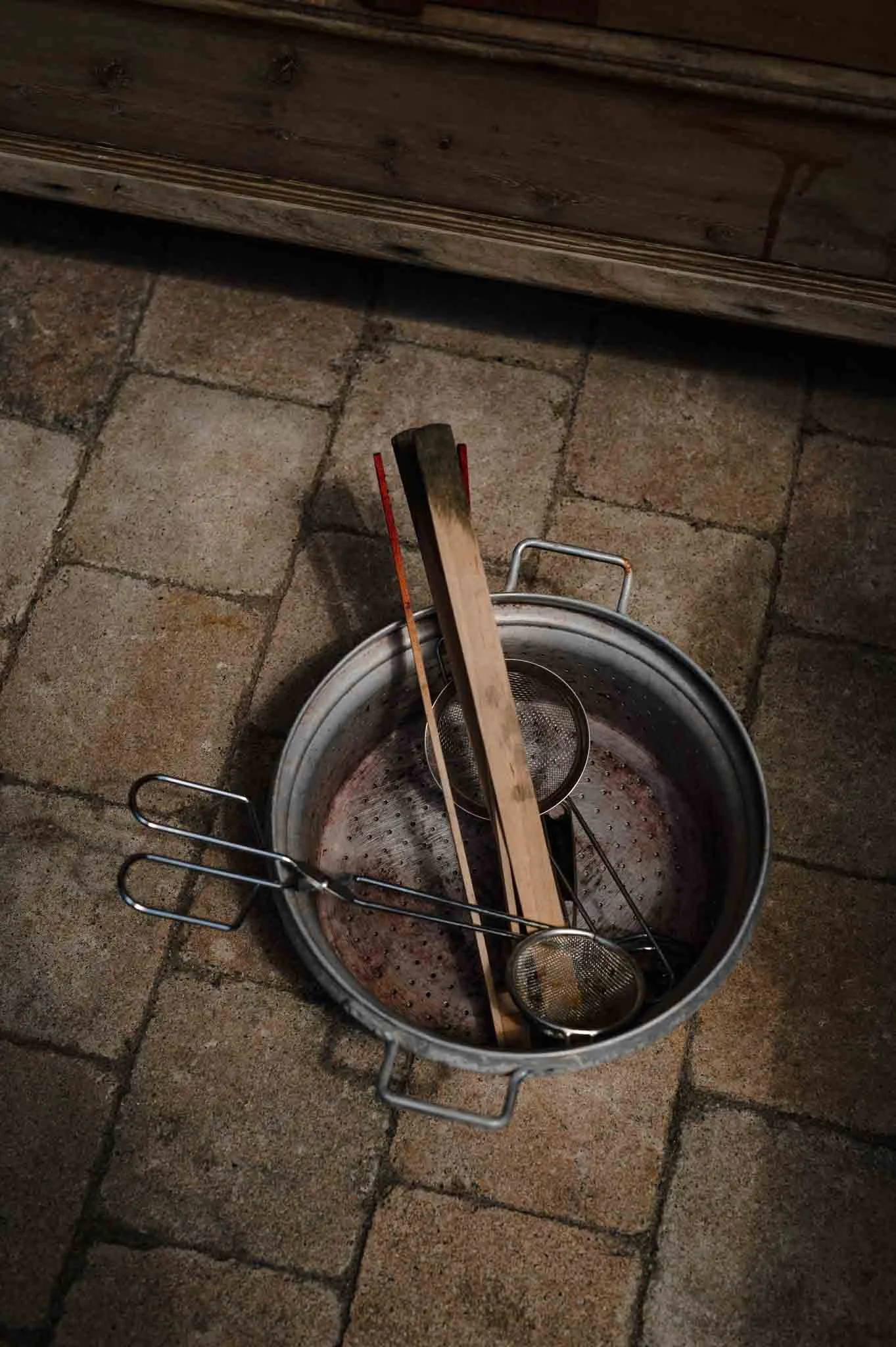
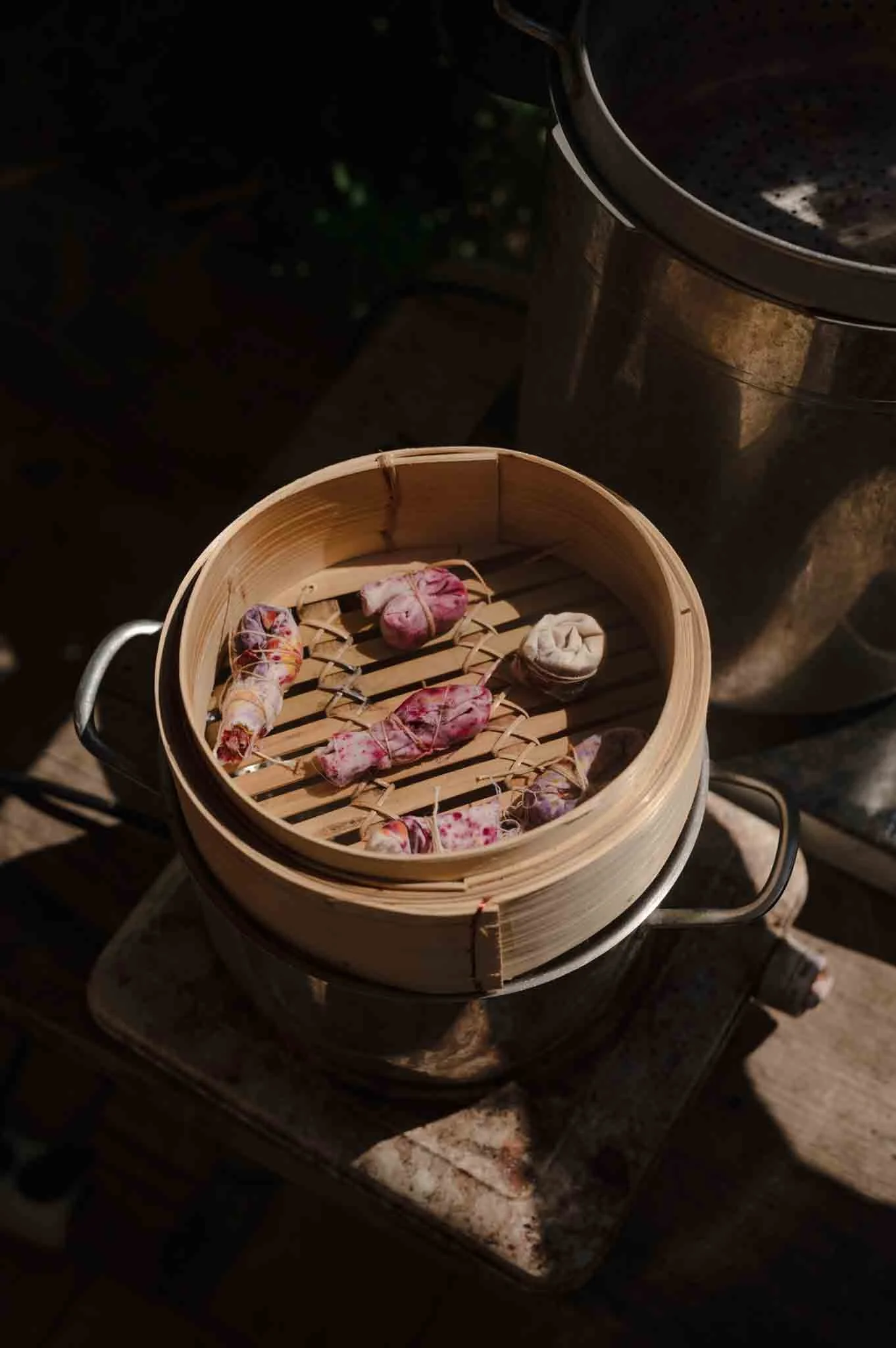
I often begin by jumping right into the process. I’m usually working on several projects at once. Plant dyeing involves many individual steps, each of which must be carried out with care and patience in order to produce vibrant and above all long-lasting colors. This preparatory work is essential and follows a consistent rhythm. These repetitive processes give me the mental space to reflect on other projects, colors, or techniques while I work.
Your pieces often feature rich textures, natural dyes, and subtle patterns. How do you approach the aesthetics of your work, and what guides your choices in materials, color, and form?
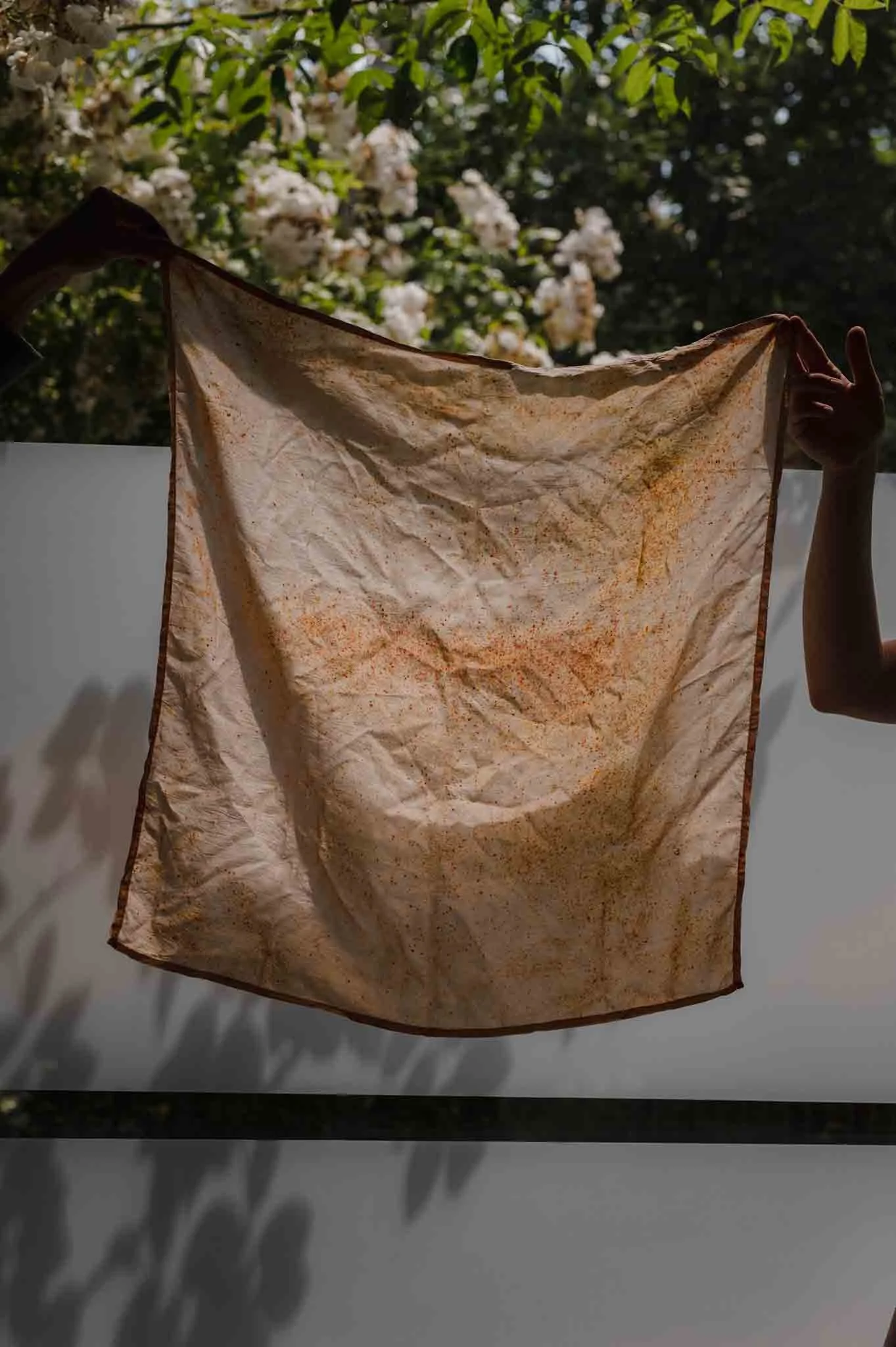
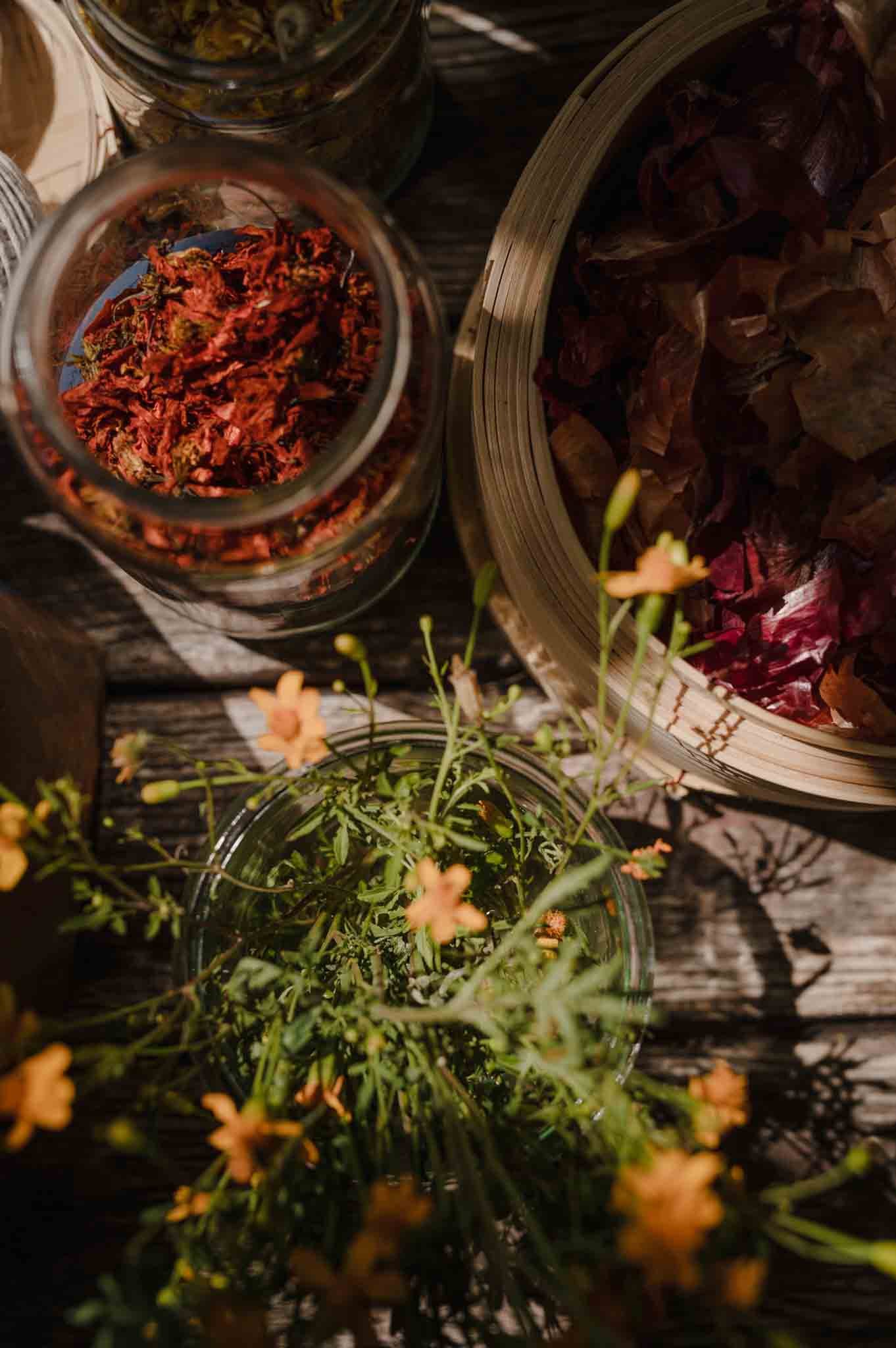
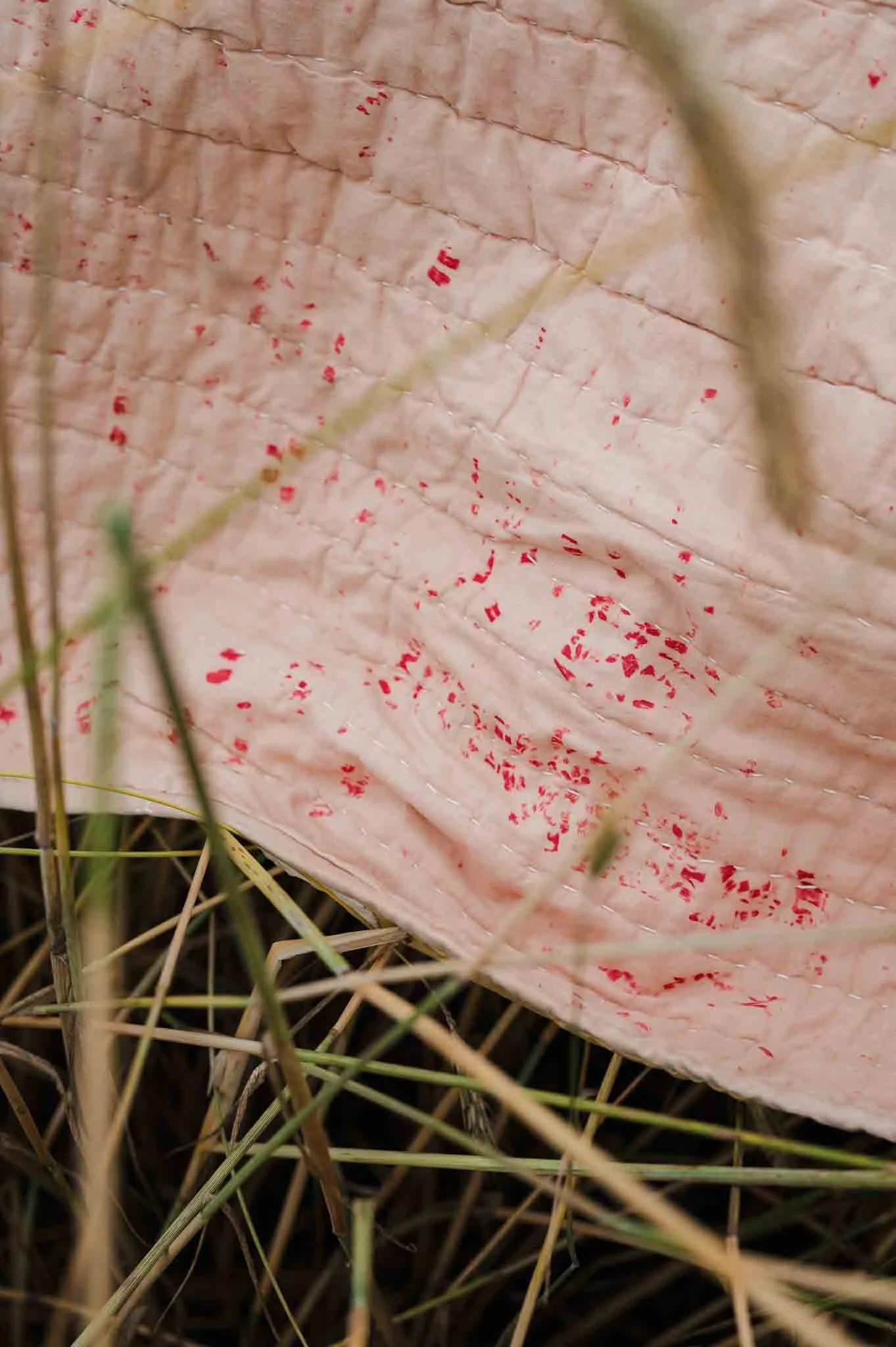
My work is very intuitive, the process often feels more important than the outcome. I mainly use recycled or vintage textiles, which come with their own limitations, as does plant-based dyeing and the techniques I apply. My work exists at the intersection of these constraints. I explore and test different techniques, creating samples to understand them better. I also collect materials, images, and objects related to my themes. The process is rarely linear, I often shift focus when a new plant or technique sparks my interest. Many pieces only come together or gain meaning when combined with others, sometimes after weeks or months. What I love about plant-dyed textiles is the complexity of the colors. A single color is usually made up of multiple plant components. This layered quality makes the colors dynamic and creates a wide range of possible combinations.
We're aware that you run workshops. Could you share more about your approach and what inspired you to pass on this unique knowledge?
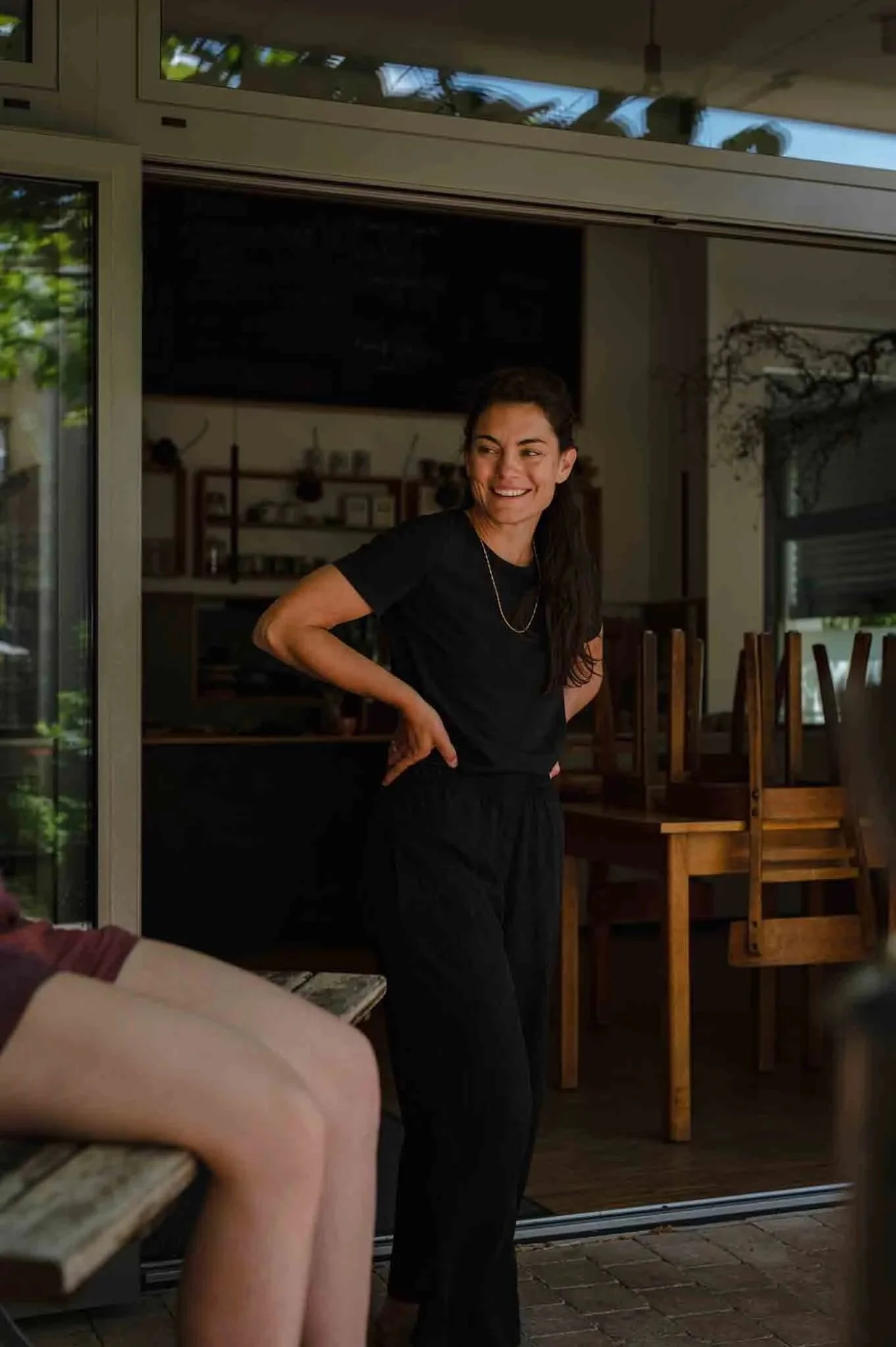
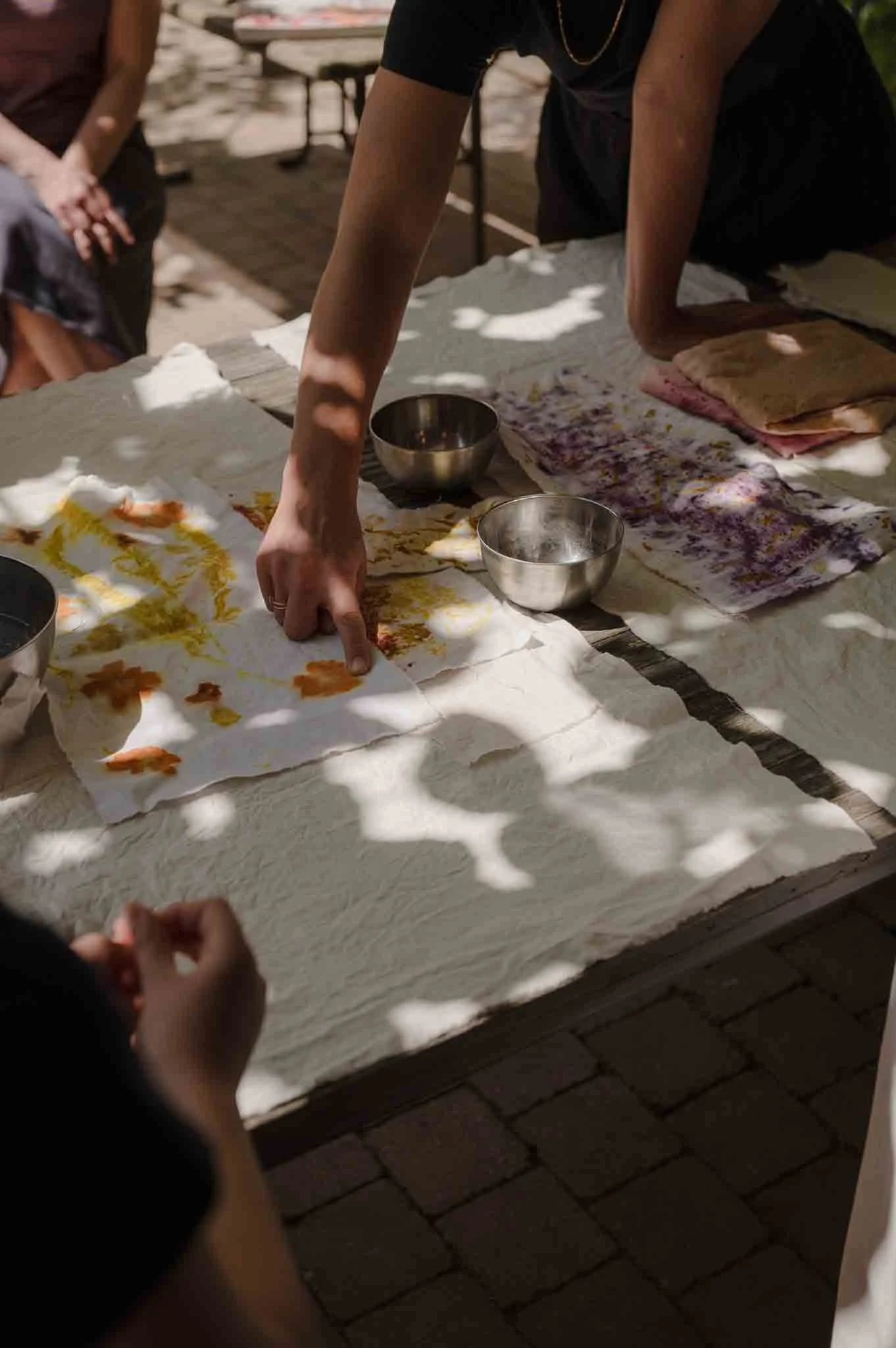
My workshops are very much about doing something together, about exchange and shared experience. Learning something new and engaging with materials, embracing the process. I find the energy in a space where people create together very beautiful and valuable. I’m deeply fascinated by natural dyeing and the techniques behind it, and I want to share my knowledge and fascination.
Where do you see the greatest potential for preserving and honoring traditional local crafts in today’s world?
I think combining traditional crafts with modern design is a great way to keep them alive and relevant.
Are there any new projects, themes, or directions you are currently exploring that feel especially connected to your practice?
I’m currently working on several projects with other women, and I really value the exchange in these collaborations. Working with different materials often leads to unexpected connections and new ideas.
Where and how can people engage more deeply with your work, whether through your pieces, exhibitions, or online presence?
Instagram or my website: @llenahuber, www.lenahuber.de.
All photos are made by Sinah Osner.
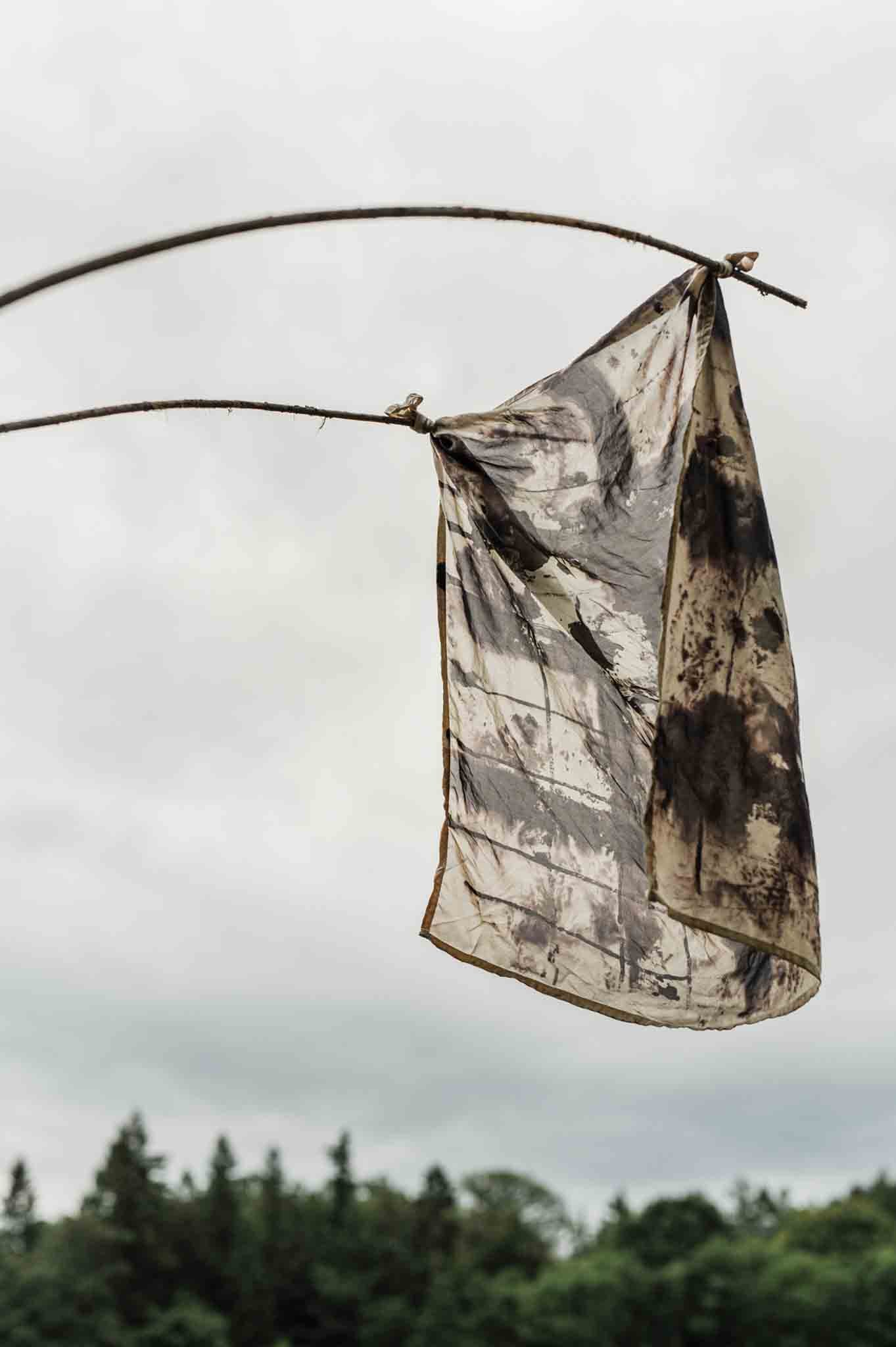
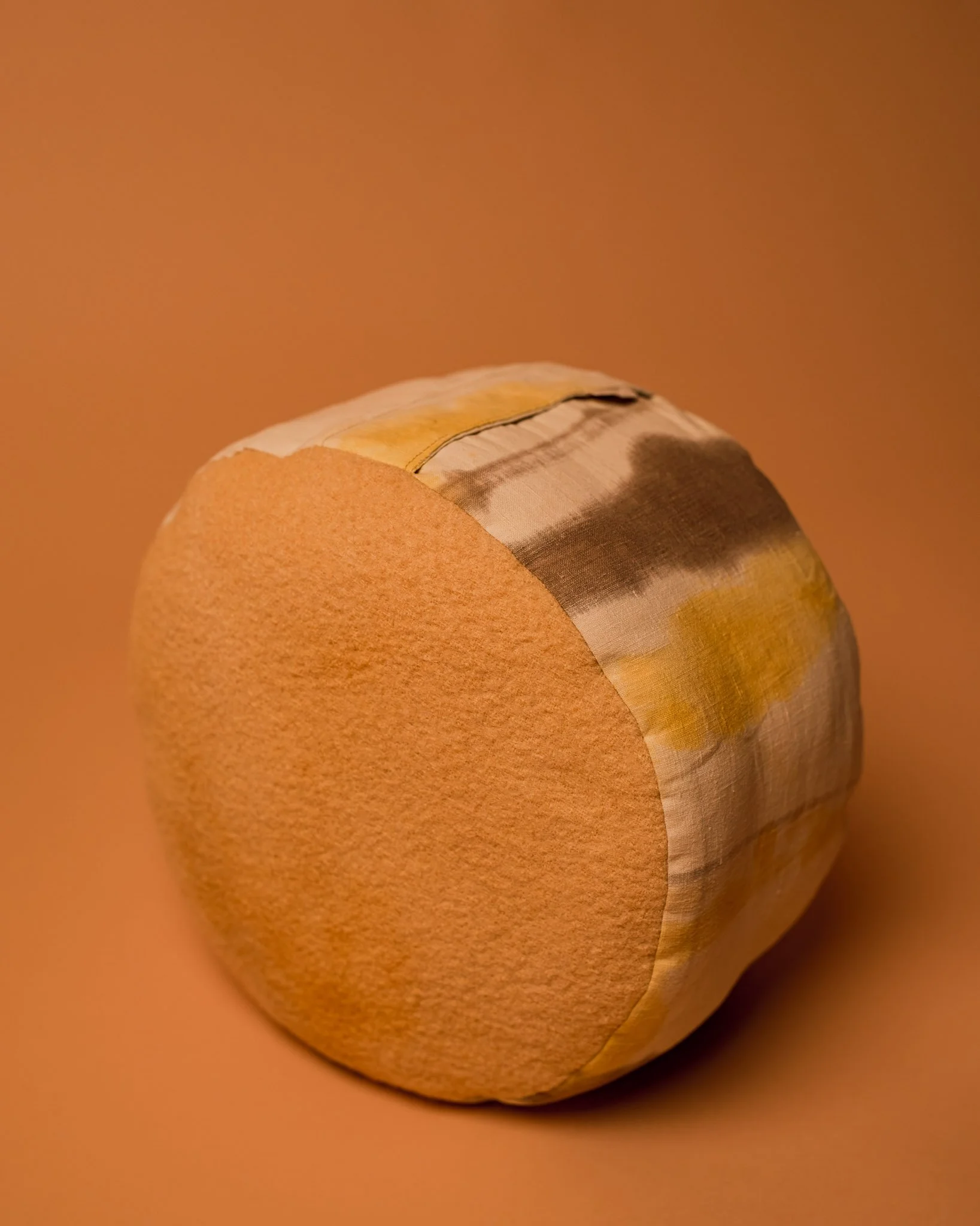
Hand painted and plant dyed with plants, the Pilu Meditation Cushion in yellow is made by Lena Huber near Mainz. Crafted in wool and cotton and filled with organic spelt husks, the piece presents a soft and stable form that supports comfort and presence. The nuanced plant based colors and gentle tonal shifts speak to Huber’s intuitive dyeing process, inviting quiet moments of rest, reflection, and connection to the rhythms of nature.
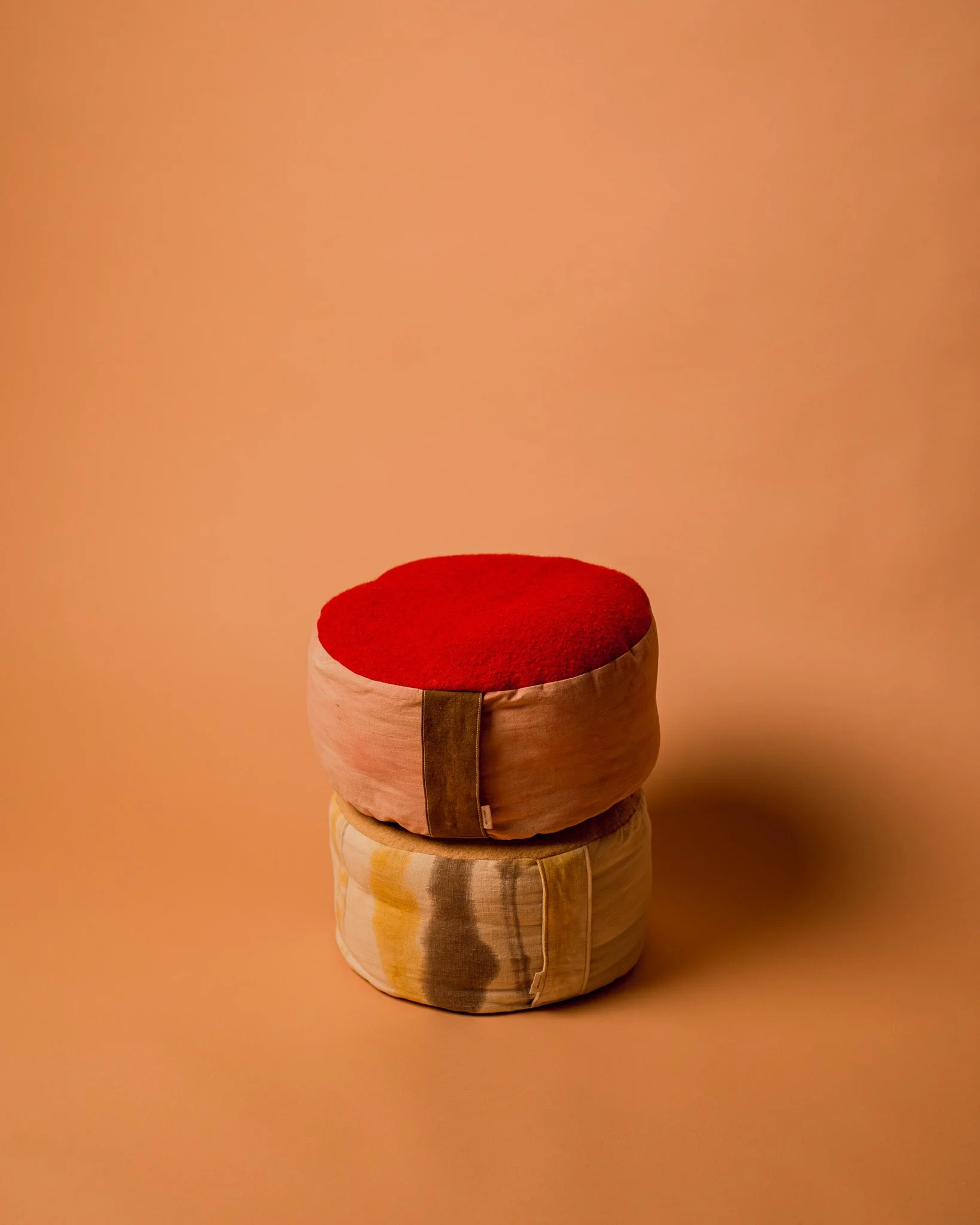
Hand dyed with plants including madder, weld, and walnut, the Pilu Meditation Cushion in red is made by Lena Huber near Mainz. Crafted in wool and cotton and filled with organic spelt husks, the piece offers a grounded and supportive form designed for seated meditation. The layered, plant based colors and subtle variations in tone reflect Huber’s intuitive approach to natural dyeing, inviting moments of stillness, reflection, and a deeper connection to natural materials.
