Kangan Arora
Please share a bit about yourself and your background.
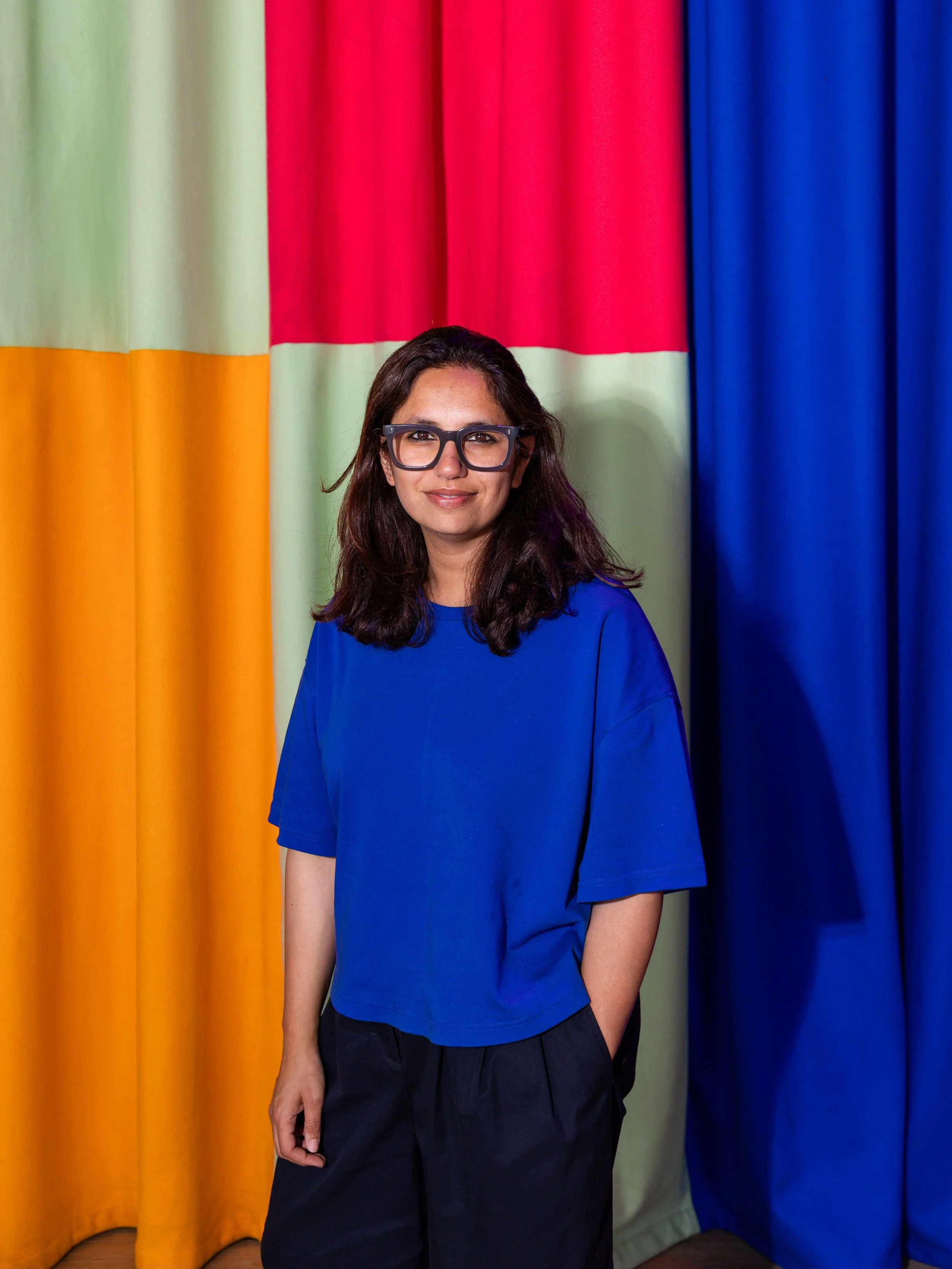
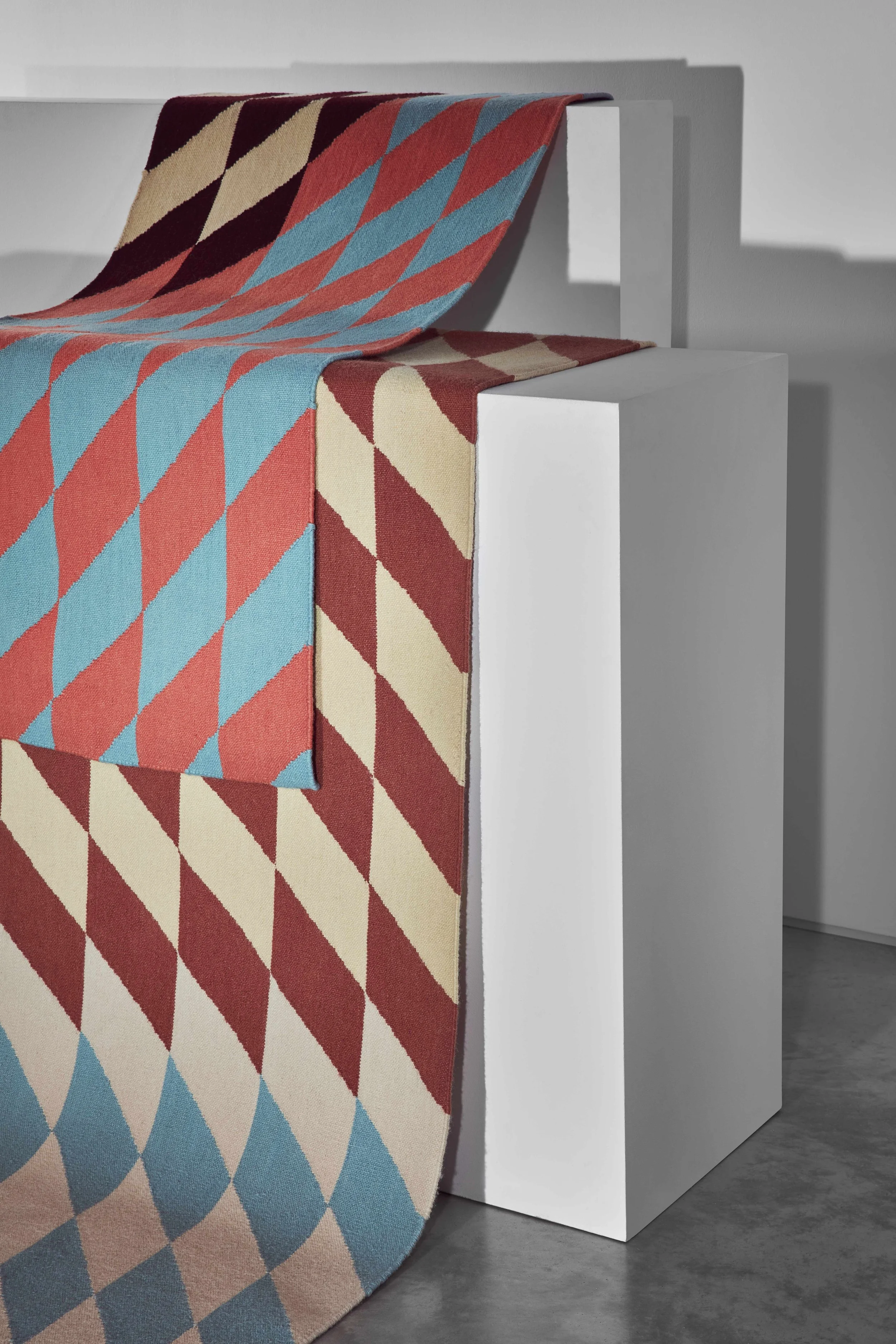
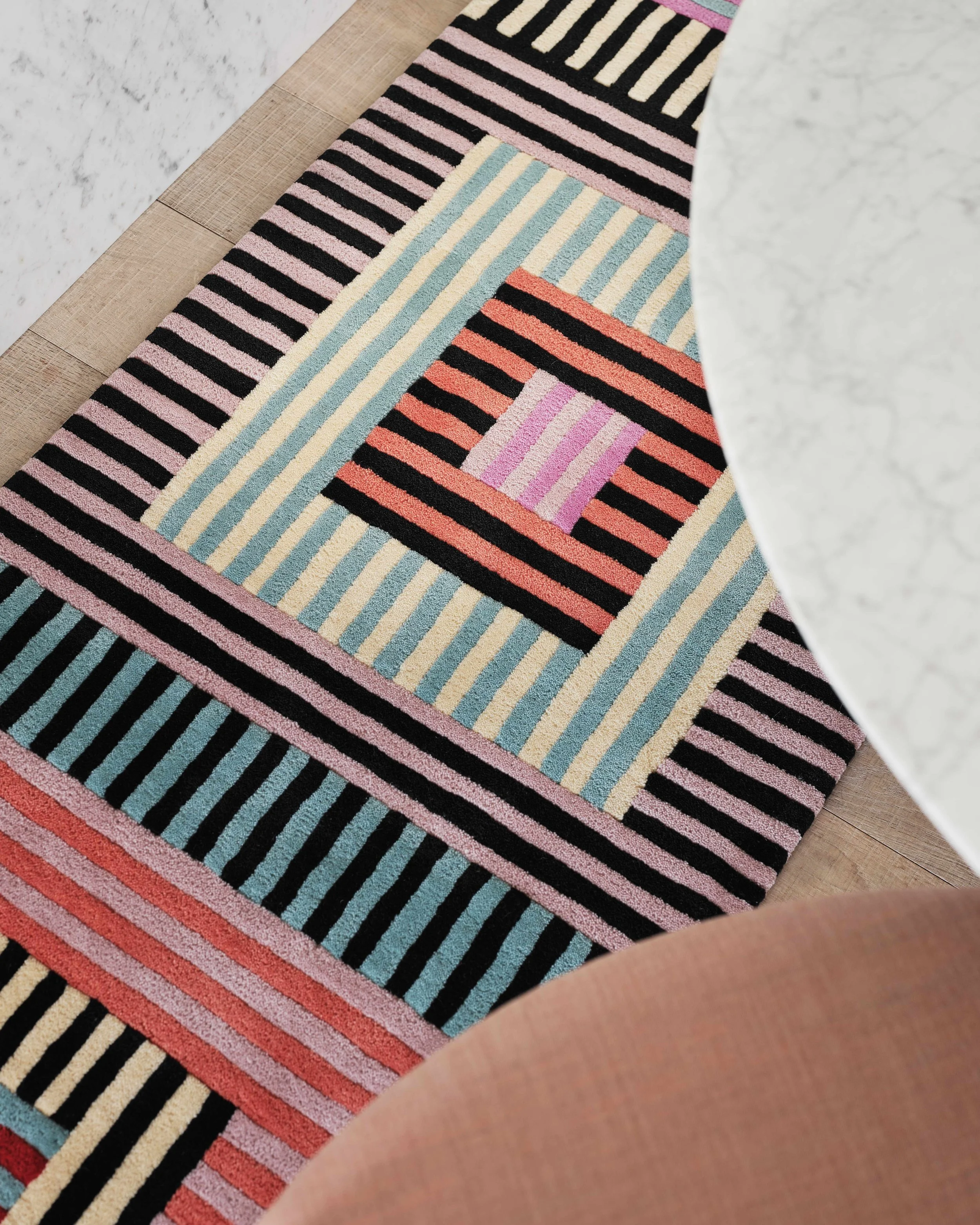
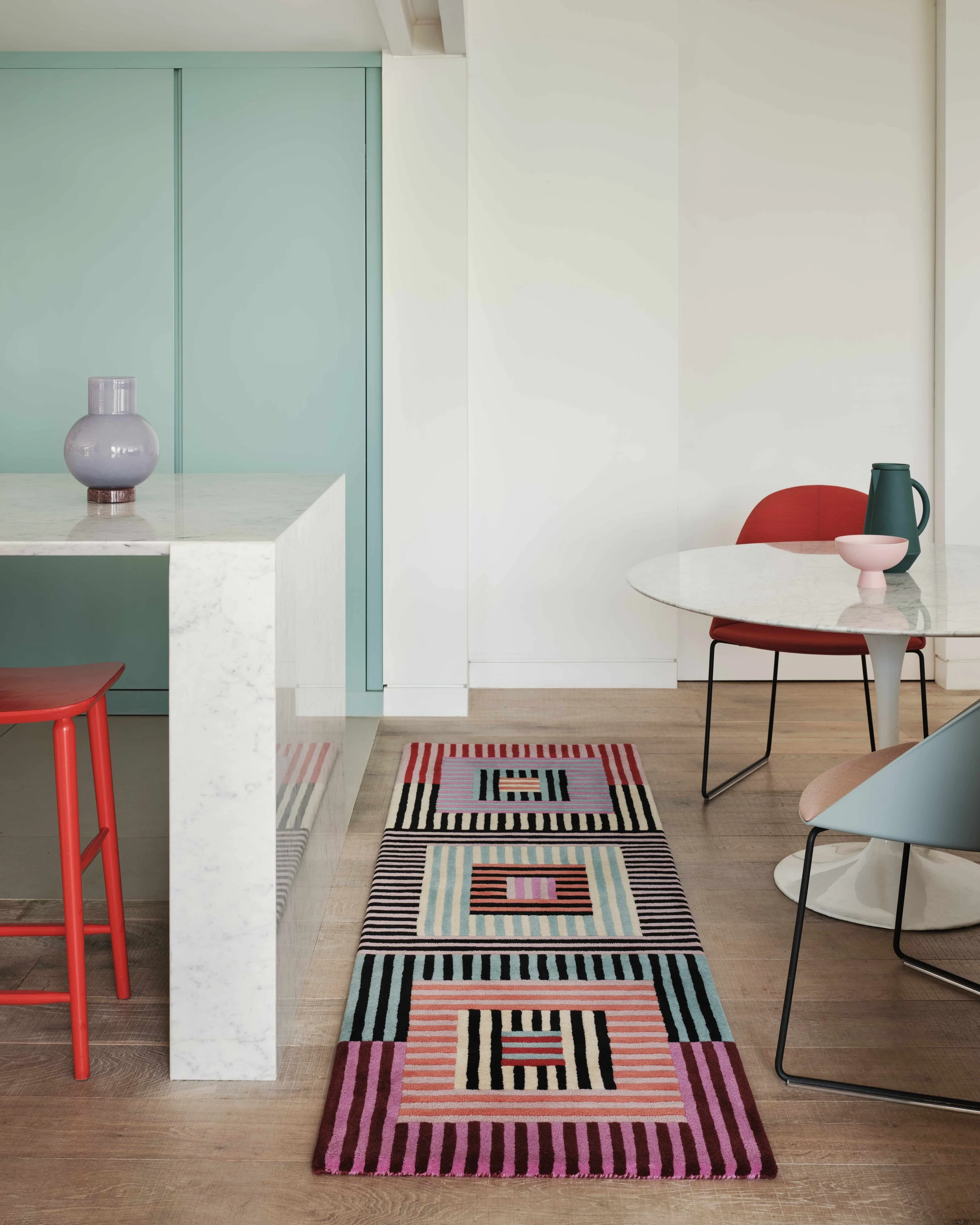
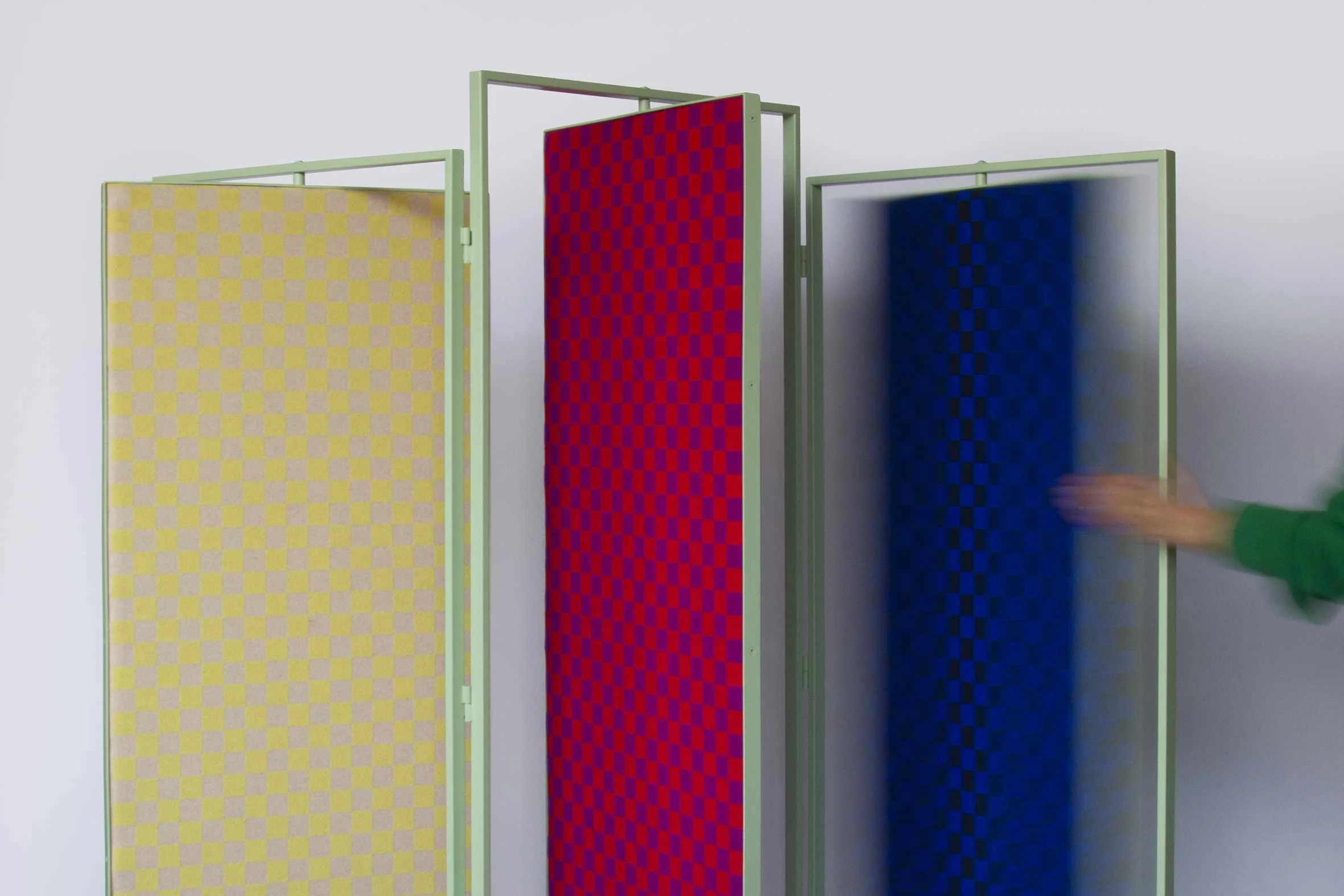
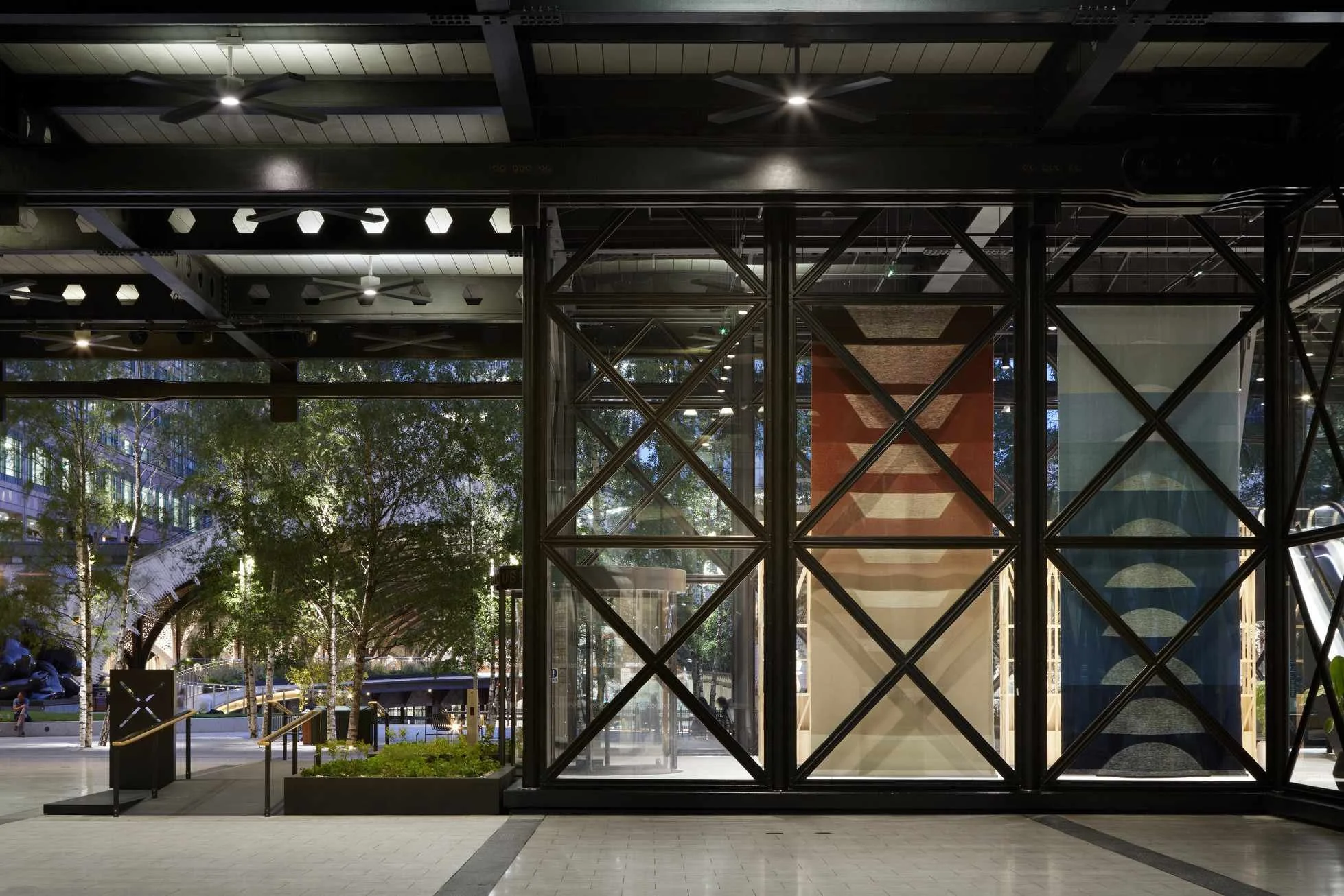
Originally from India, I moved to the UK to study textiles at Central Saint Martins 21 years ago. India’s visual vernacular has always been the driving force behind my work, but London is home, and my experiences here have influenced the directions I’ve taken over the years, creating a cross-cultural dialogue. Exploring the culture of the everyday through contemporary languages of colour and geometry, I work across artistic and commercial projects, from large scale artworks like tapestries for Exchange House and the Beacon Feature curtain for Bradford UK City of Culture to design collaborations with the likes of Tate, IKEA, and Floor_Story.
I trained in Printed textiles, but have since diversified to work with pattern and colour through many different mediums. Working with partners, I design and get to collaborate with many experts to realise my designs through print, weave, stitch, and more.
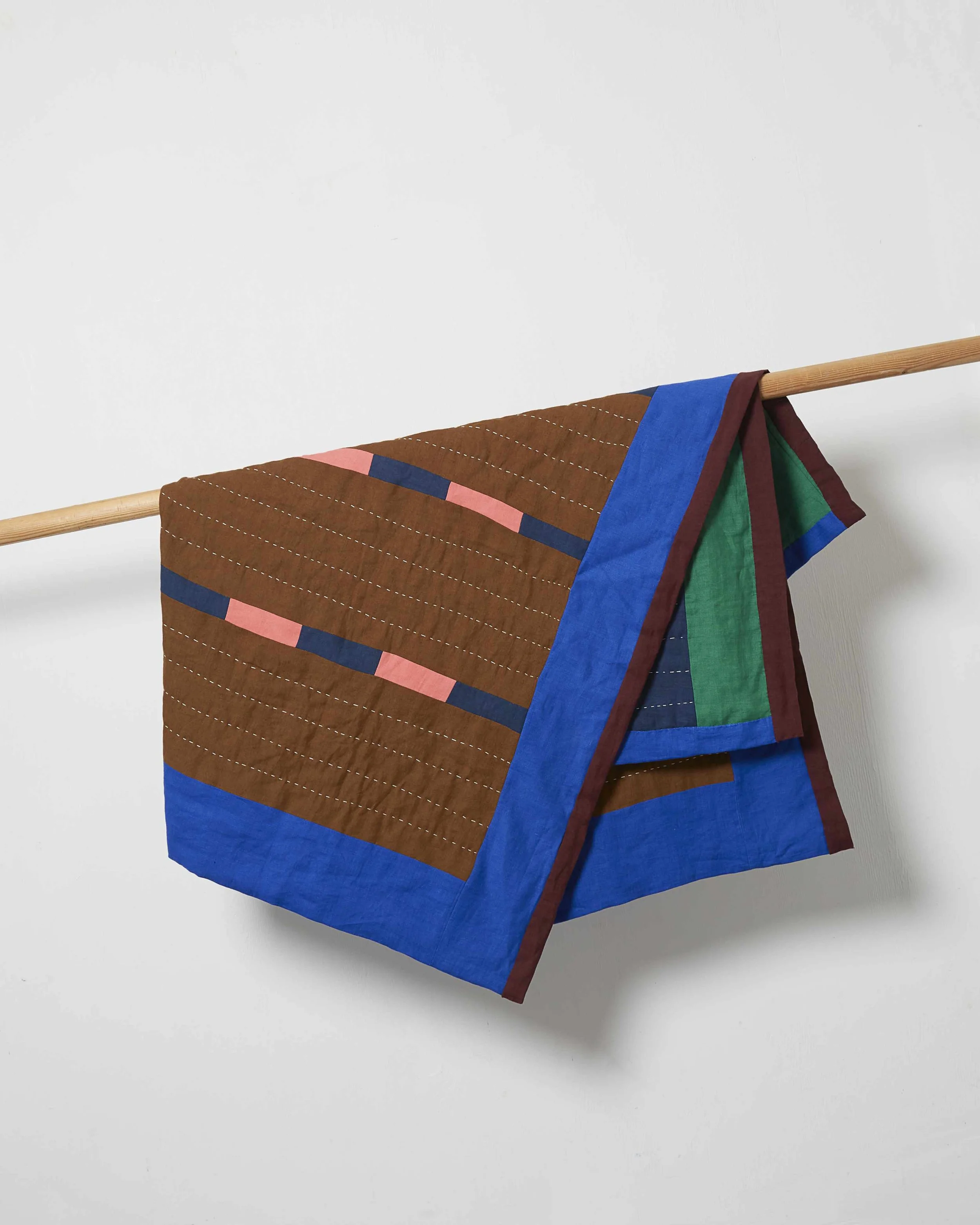
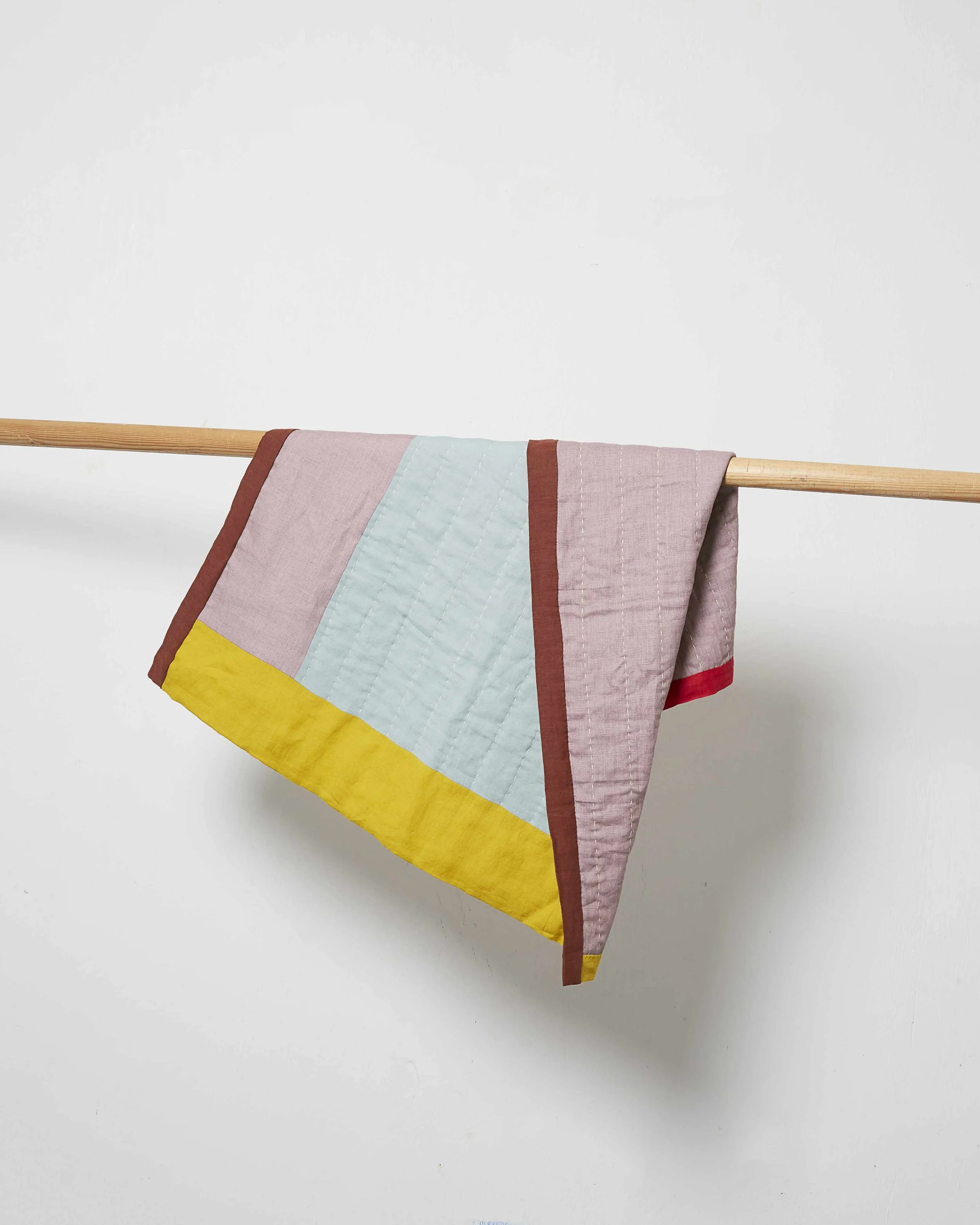
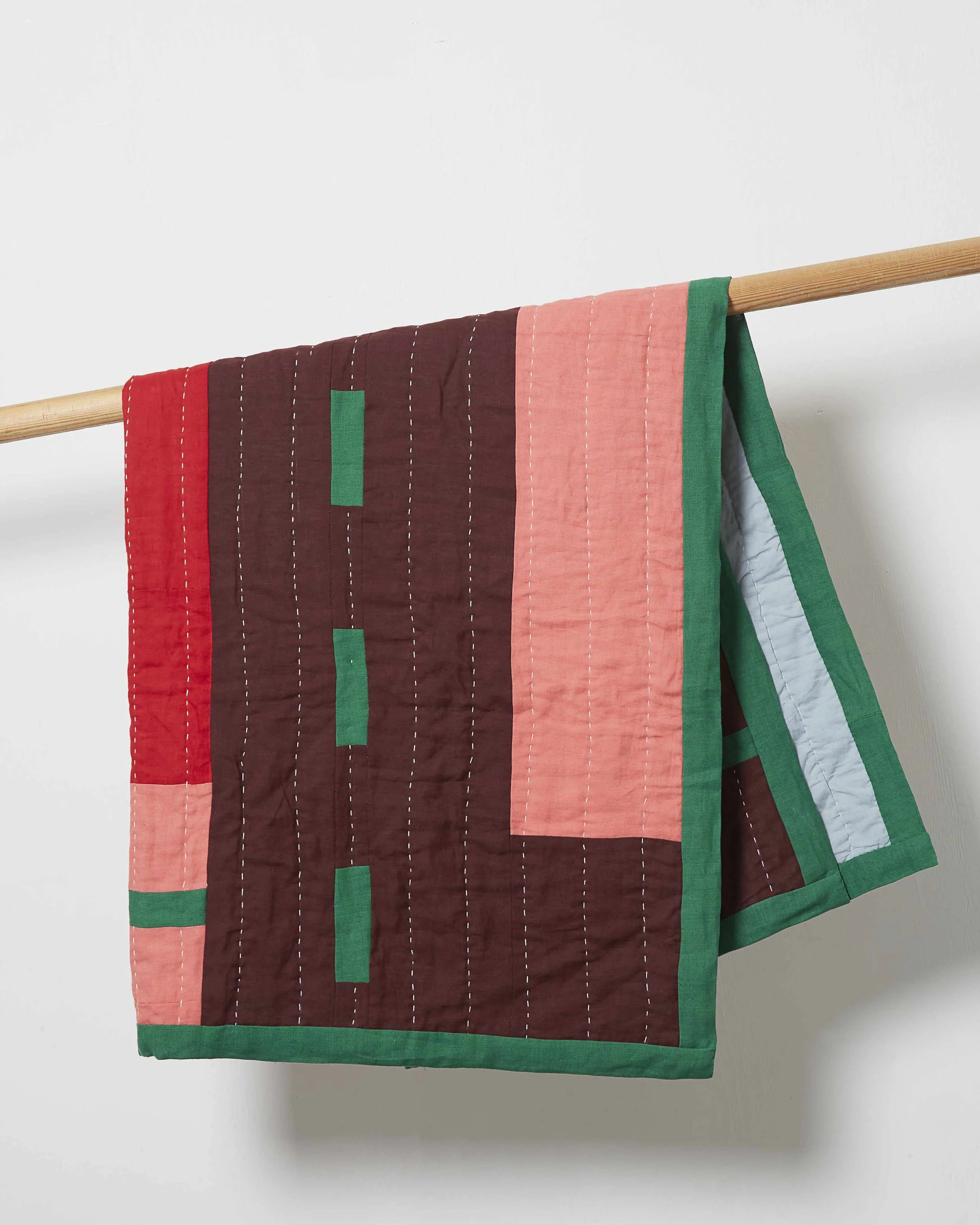
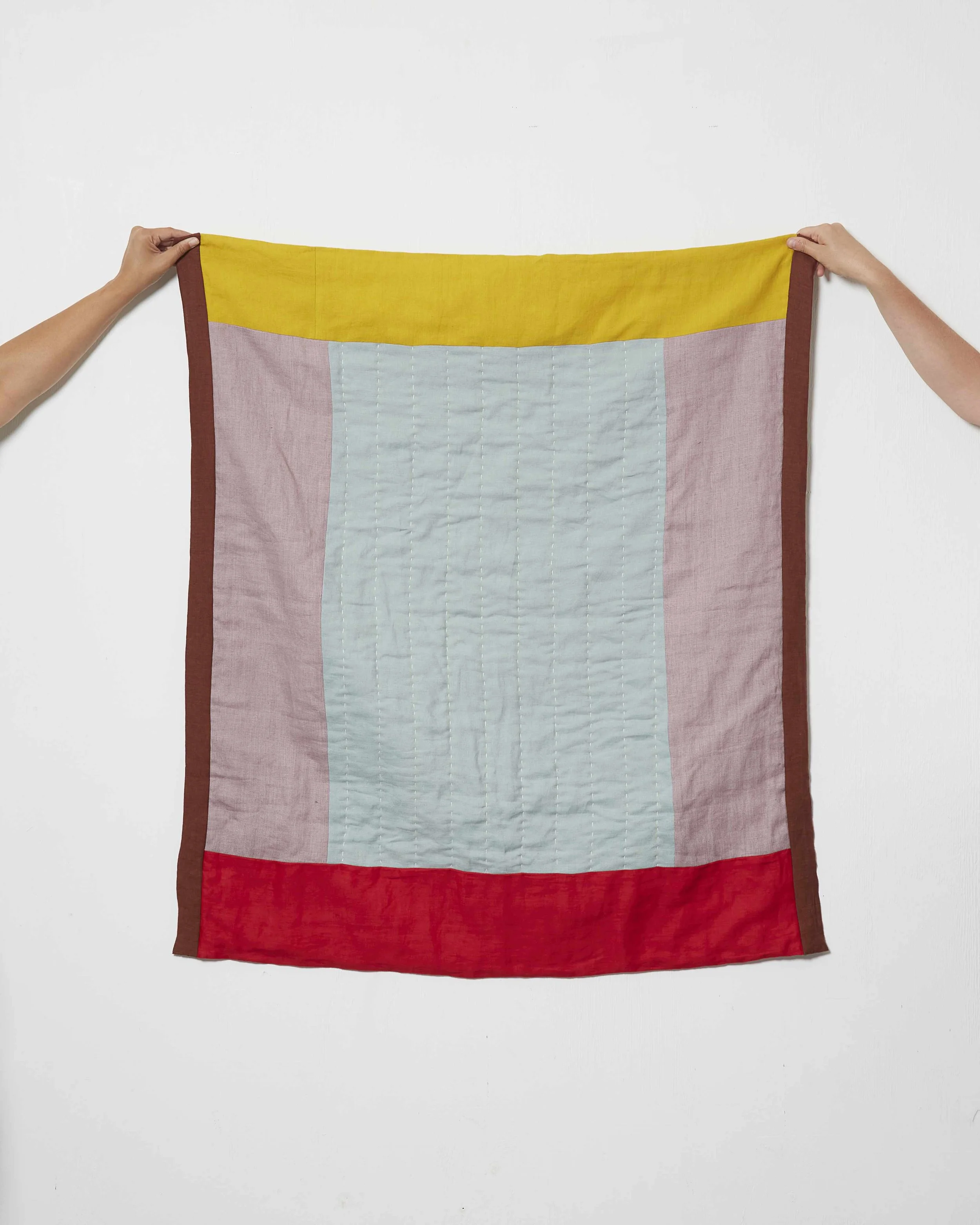
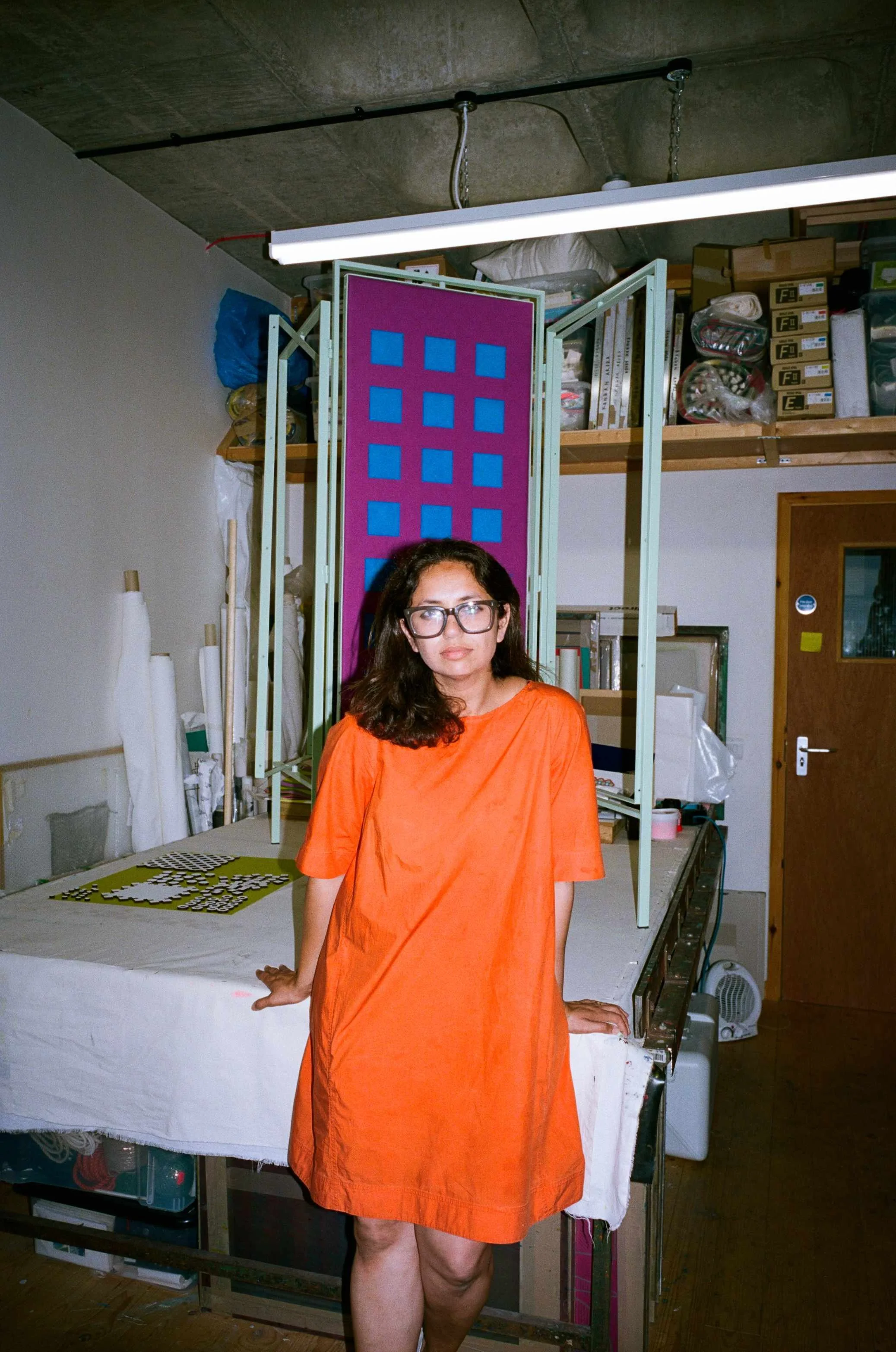
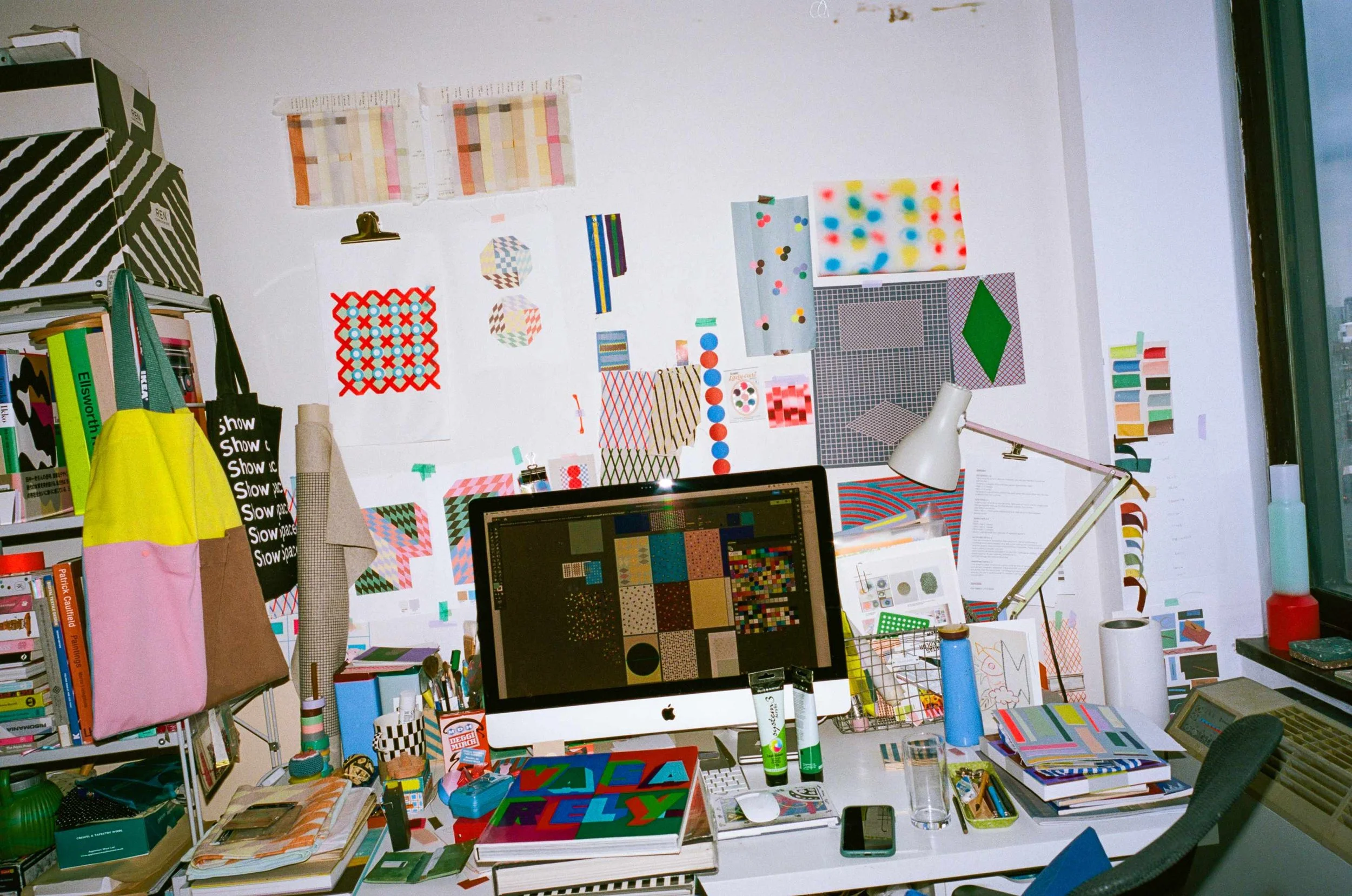
More recently, I have gone back to making myself, exploring colour through patched and hand stitched quilts. Having moved the studio home earlier this year, most of the work happens on the kitchen table.
Alongside my practice, I’m a Senior Lecturer in Textiles at Central Saint Martins.
What first drew you to textiles, and how did this medium become central to your creative expression?
I grew up with textiles. Some of my earliest textile memories are going to source traditional textiles around the country with my father for our family business; from visiting weavers in Varanasi, to block printers in Jaipur. However, my love for textiles solidified when I moved to Gujarat to study Fashion Design at NIFT. A field trip to Kutch, an area in Gujarat which is home to some of the richest textile traditions - Ajrakh Block printing, Ikat weaving, Kala cotton - confirmed that this would be my medium of choice. Not only because textiles are rooted in place and storytelling, but because I was drawn to the tactility and the physicality of making them.
Can you walk us through your process?
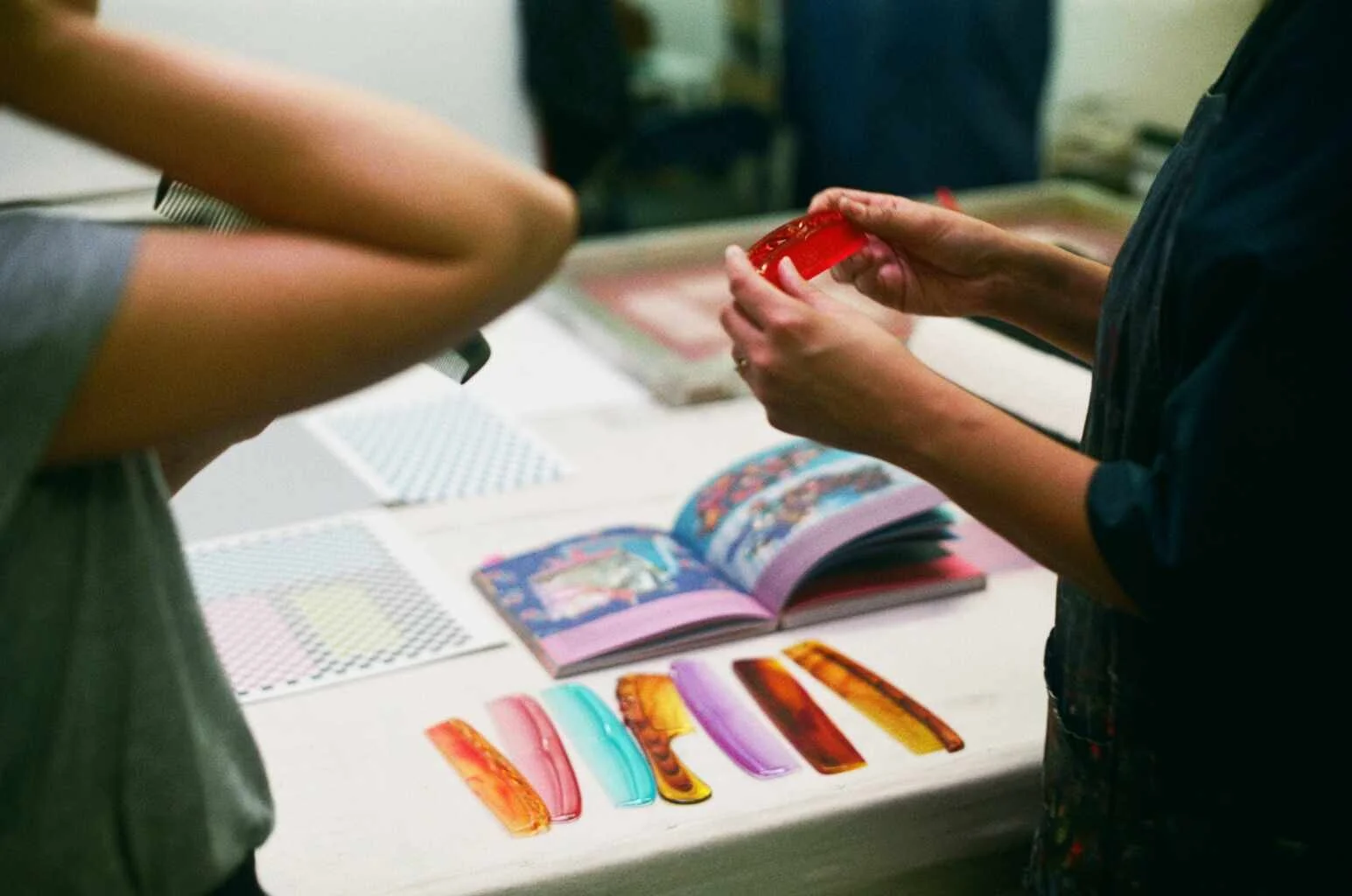
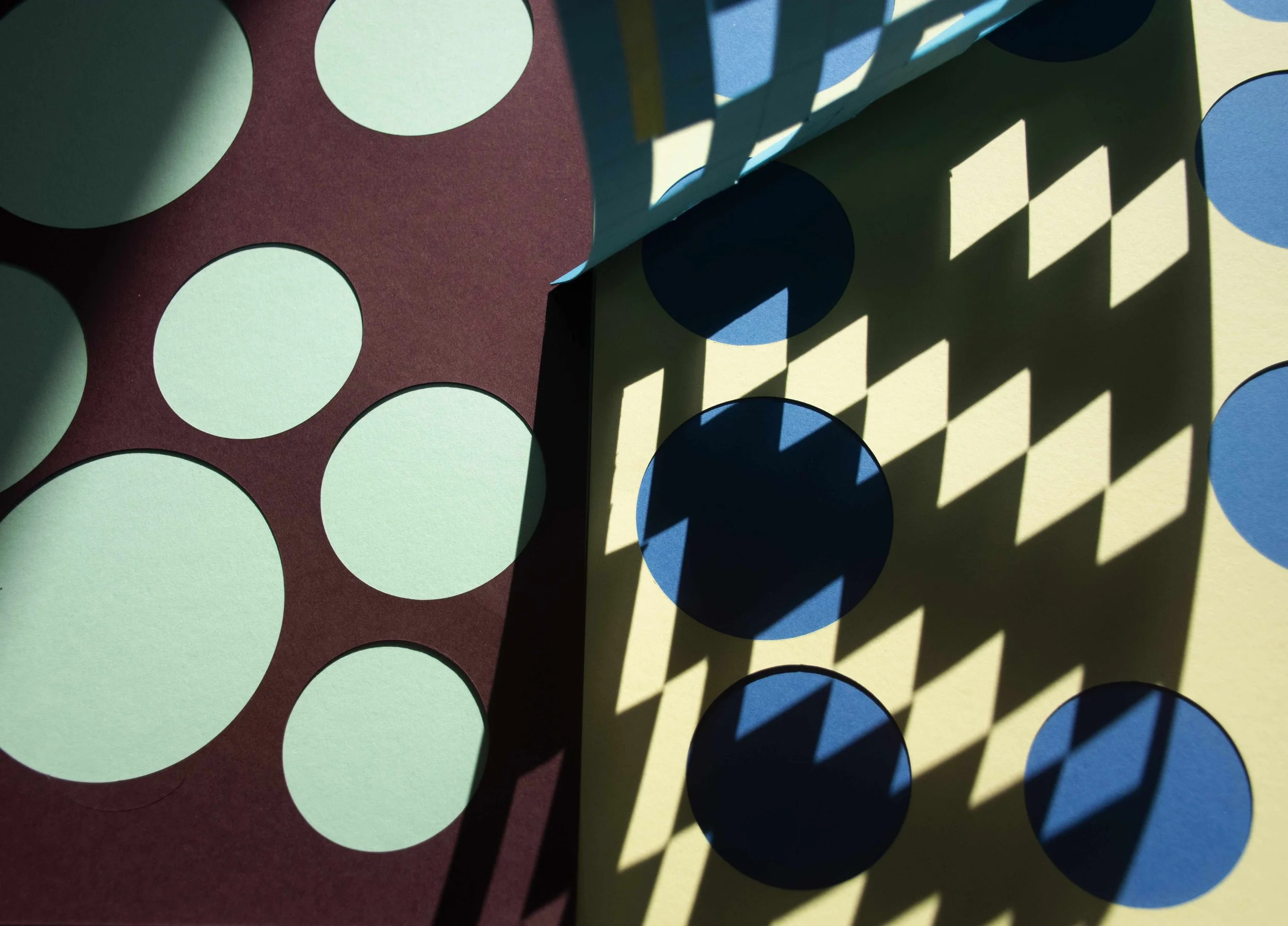
I’m an obsessive documentor, taking hundreds of photos as a daily practice, but especially when I’m in India. An unusual colour combination I’ve spotted, the geometry of a window grill, or the way a shadow falls, these observations are recorded, ready to evolve into designs at some point. At the start of a project, I’ll collect the relevant photos and put together a library of pattern and colour, and take it from there.
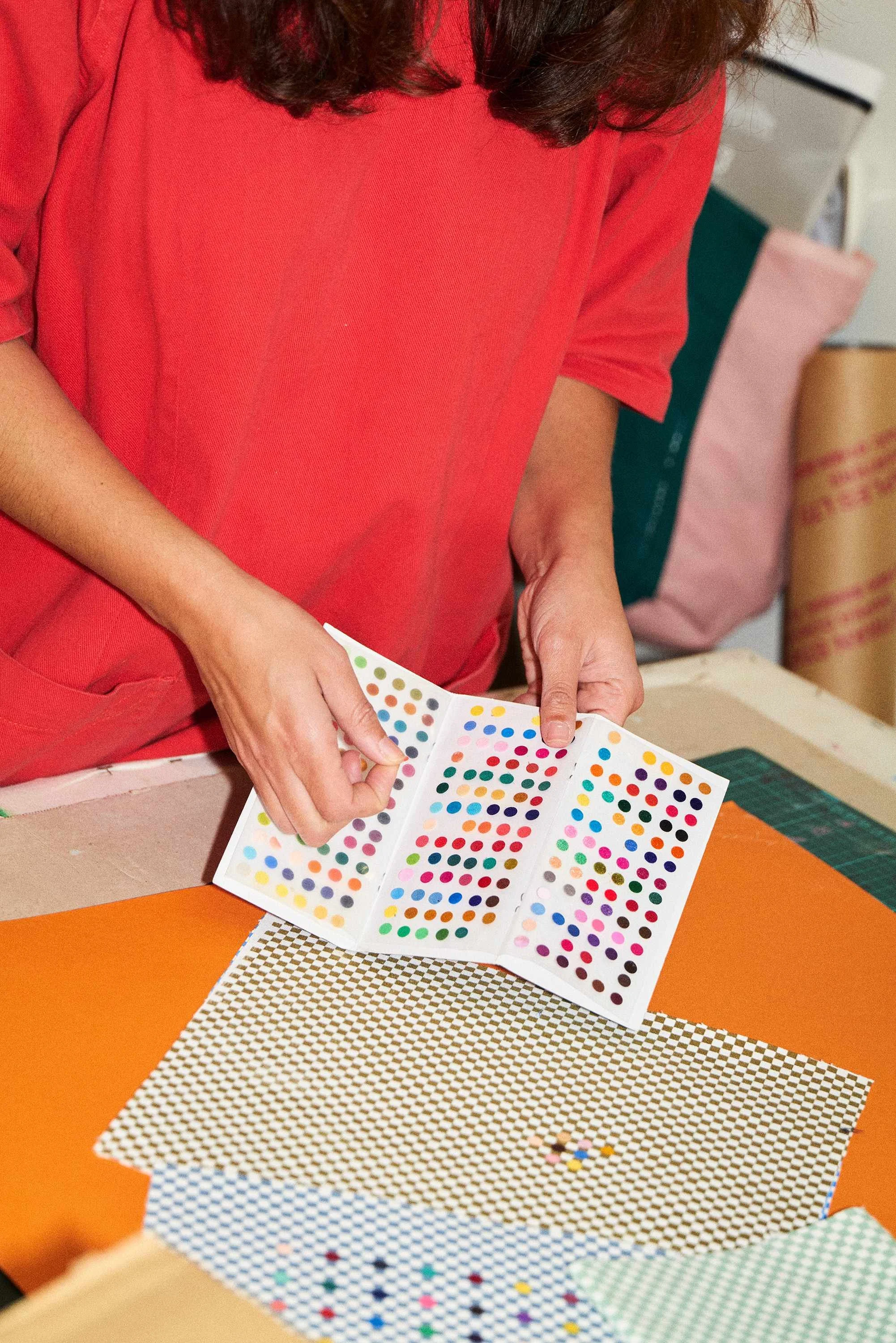
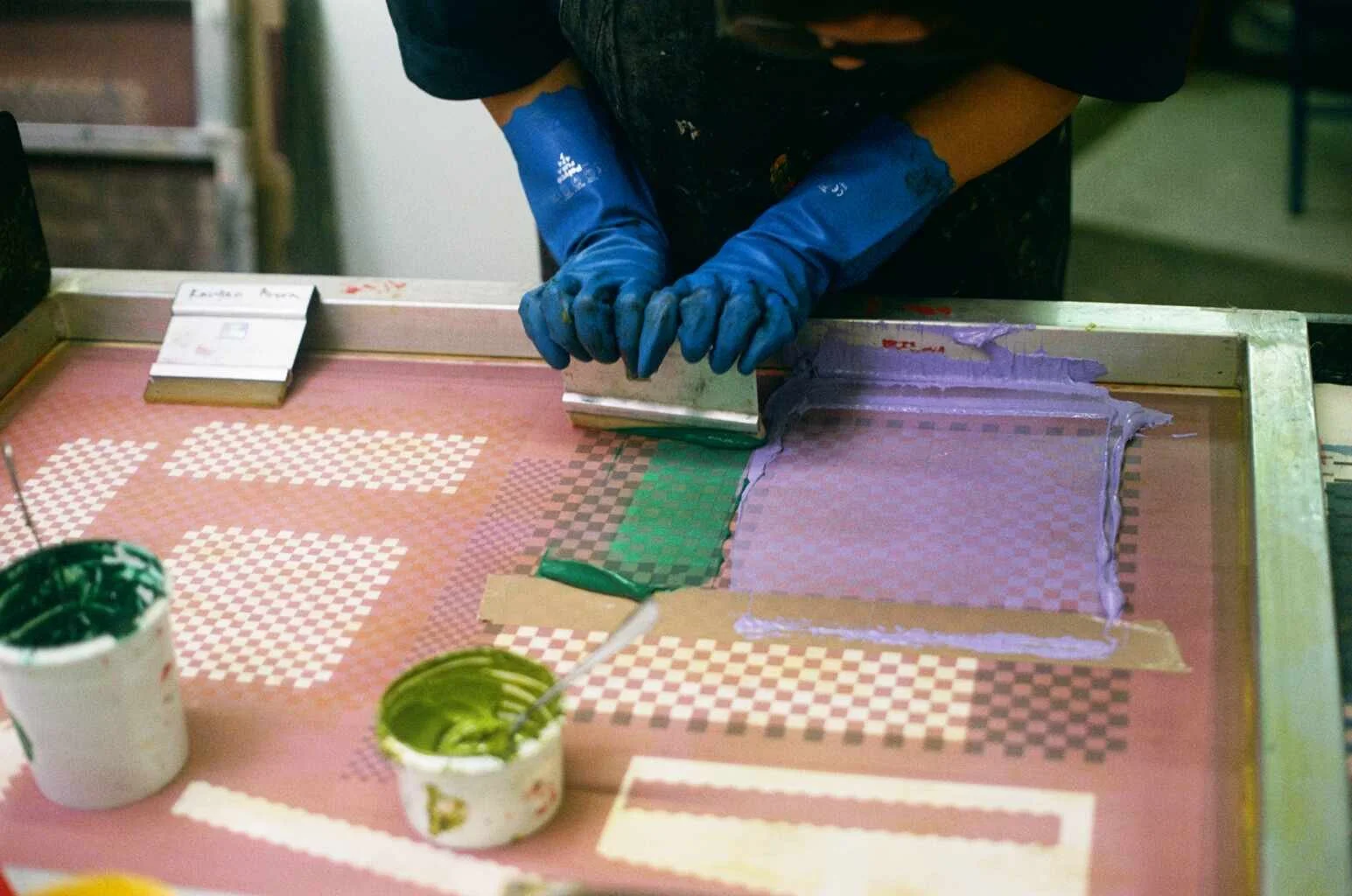
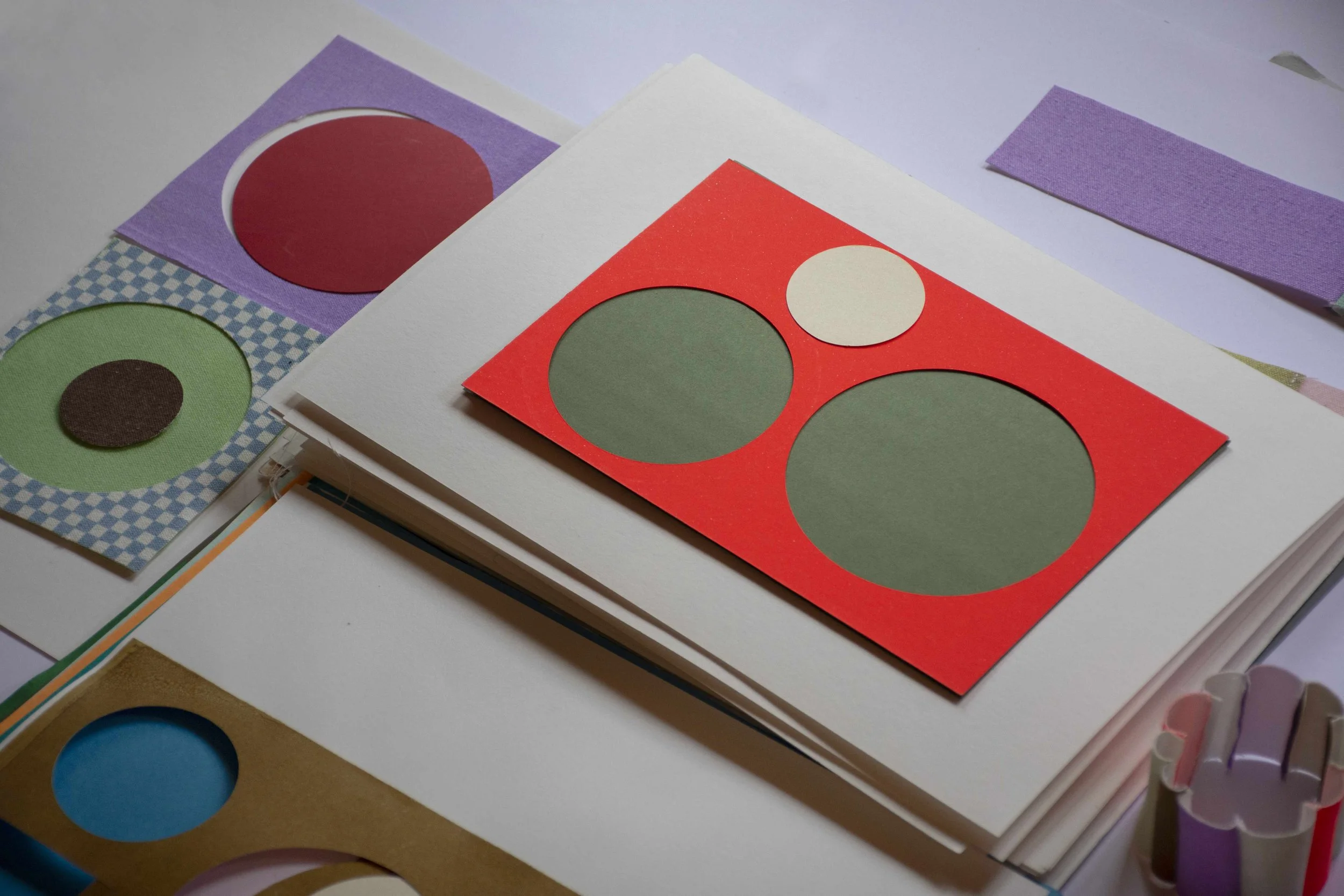
For a long time, I firmly considered myself a screen printer, even if my work would end up being realised through other techniques, as the design process always began on the print table, where I would expose a range of patterns on screen, then experiment with colour and test ideas to make real, tangible maquettes. Ideating in an analogue manner by printing, cutting, collaging, and stitching.
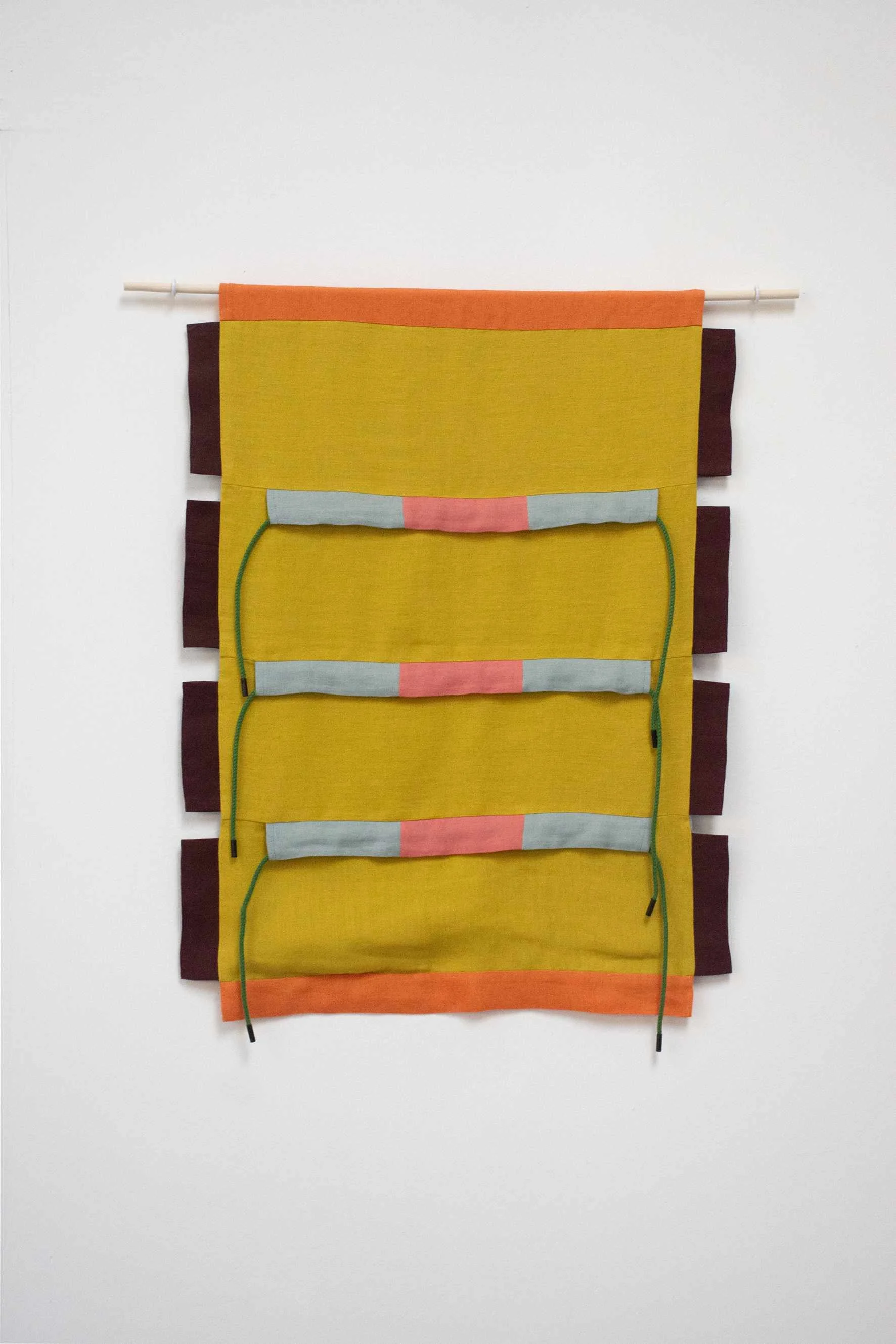
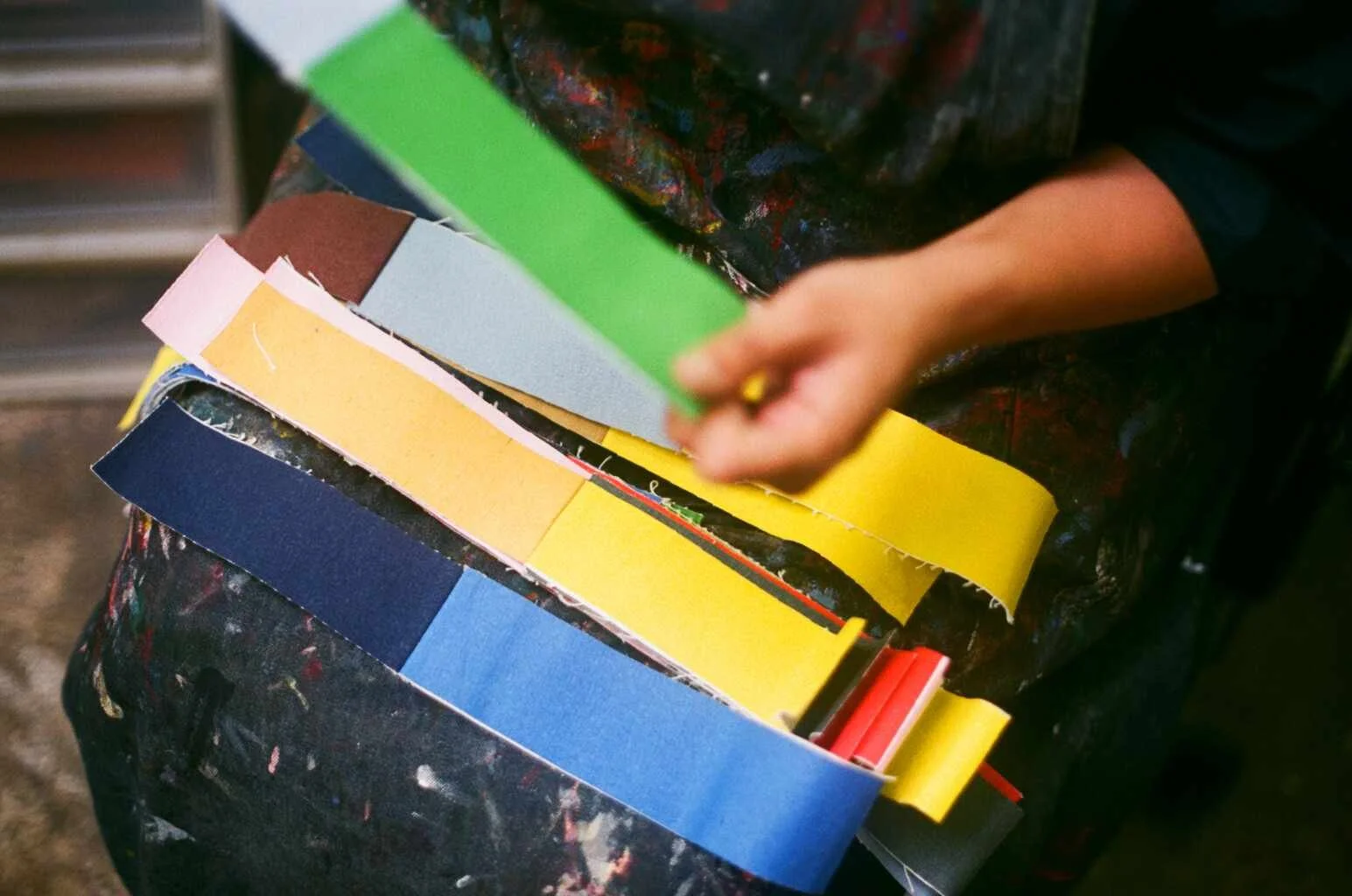
However, recently my process looks a little different. For the past couple of years, I’ve been collecting fabric remnants, piecing them together in an intuitive, playful manner to produce patched and quilted tableaus of colour in the form of hand stitched quilts and kite wall hangings. I love the immediacy of the process, letting the restraints of the material, colours available, sizes available, shape the designs.
Colour plays a central role in your practice. How do you approach colour as both an emotional and structural element within your work?
Despite the diverse references, my work tends to be fairly abstract, simplified even - reduced to the essential elements in the design and so the colour application is key. It dictates whether something works or not. Colour is not something I apply at the end, but something I start with - colour is material. I allow myself to work intuitively with colour, I need the physicality - whether that’s mixing pigment to screen print with or stitch blocks of colour together; I really struggle with digital colour.
When it comes to the tactile aspects of your work and their connection to your body, how does the hands-on nature impact your overall happiness and well-being?
Designing and making textiles has always been about the physicality of the process for me; I think that’s why I became a printer - pulling ink with a squeegee through the mesh was the most thrilling, exhausting and satisfying part of textiles for me. That immediate connection with the material.
I had always taken this as a given, but not considered just how much it contributed to my well being until a couple of years ago. The quilting started as something I would do for myself at the end of a stressful day at work. Using the kitchen floor tiles as a guide to cut straight between the grooves, or the comfort of the blankets on me whilst I hand stitched the layers and hemmed the binding. There’s a comfort in the repetitive nature of quilting, and knowing that people have been doing this for millenia before me.
As both a practicing artist and Senior Lecturer at Central Saint Martins, how does teaching inform your own practice?
Teaching allows dialogue - with colleagues, with students; and is great for anyone who works independently in another context. For example, I had a show called Conversations in Colour last year with my friend and colleague Caitlin Hinshelwood, that was born out of our teaching on the colour project.
Looking at the contemporary textile landscape, where do you see the greatest opportunities for redefining the value of textile art today?
I think there’s a real opportunity to look at textiles beyond the disciplines they get pigeonholed into - rather than art, craft, design as this can be quite limiting. Looking at textiles as material is a much needed rebrand so we can focus on the work, in whatever context it’s presented.
Are there any new directions, research areas, or projects you are currently exploring that feel particularly connected to your evolving practice?
The wall hangings I made for Conversations in Colour have opened a new area of interest for me and I've been refining and pushing the scale of these wall hangings. They feel very playful and immediate and I’m giving myself some time for exploration to see where they take me. Recent projects have maybe pre-empted these where I was interested in ‘textiles that hang’ and transform spaces, like the large tapestries for Exchange House or the textile artwork I designed last year for Bradford City of Culture’s travelling theatre, The Beacon.
How can people engage more closely with your work — through exhibitions, collaborations, or upcoming projects?
There are some exciting developments in my ongoing collaboration with Wrap that will launch later this year and I am continuing to make patched and quilted works that I’ll be showing in May as part of an Open Studios during Dulwich Open House. The best way to keep up with what I’m up to is on Instagram where I post fairly regularly and the feed gives someone a fuller picture of my practice and its evolution.
Photo [1] (Taran Wilkhu), Photo [2, 8, 21, 22] (Kangan Arora), Photo [3, 4, 5, 6] (Esther Bellepoque), Photo [7] (Kane Hulse), Photo [9, 11, 12] (Felix Speller), Photo [10] (Kane Hulse), Photo [13, 14, 15] (Flore Diamant / Flore Diamant for AJOTO), Photo [16] (Matteo Fogale), Photo [17] (Jack Hobhouse), Photo [18] (Kane Hulse), Photo [19, 20] (Matteo Fogale).



For enquiries about Kangan Arora’s pieces, please feel free to contact us.
