Caitlin Hinshelwood

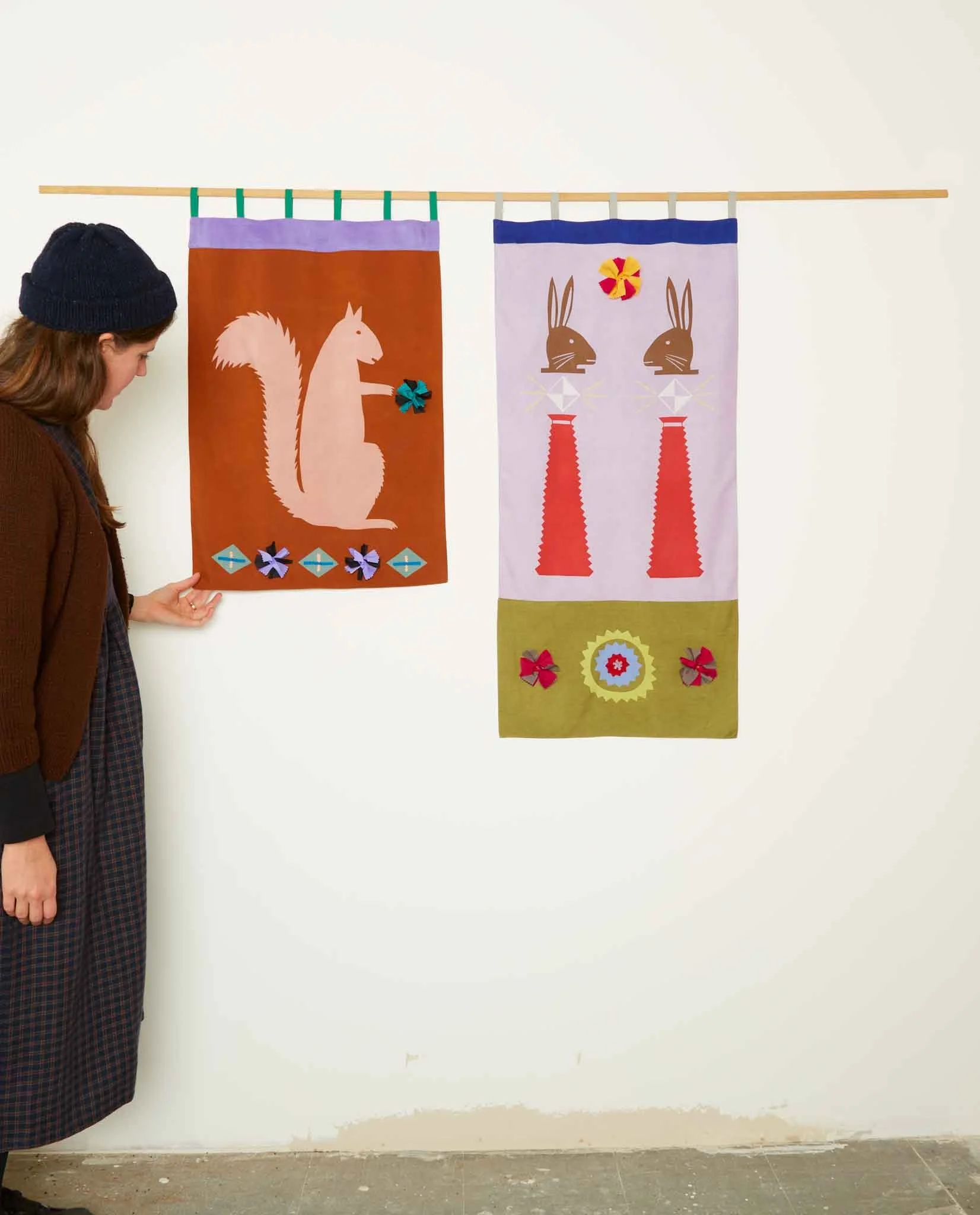
Please share a bit about yourself and your background.
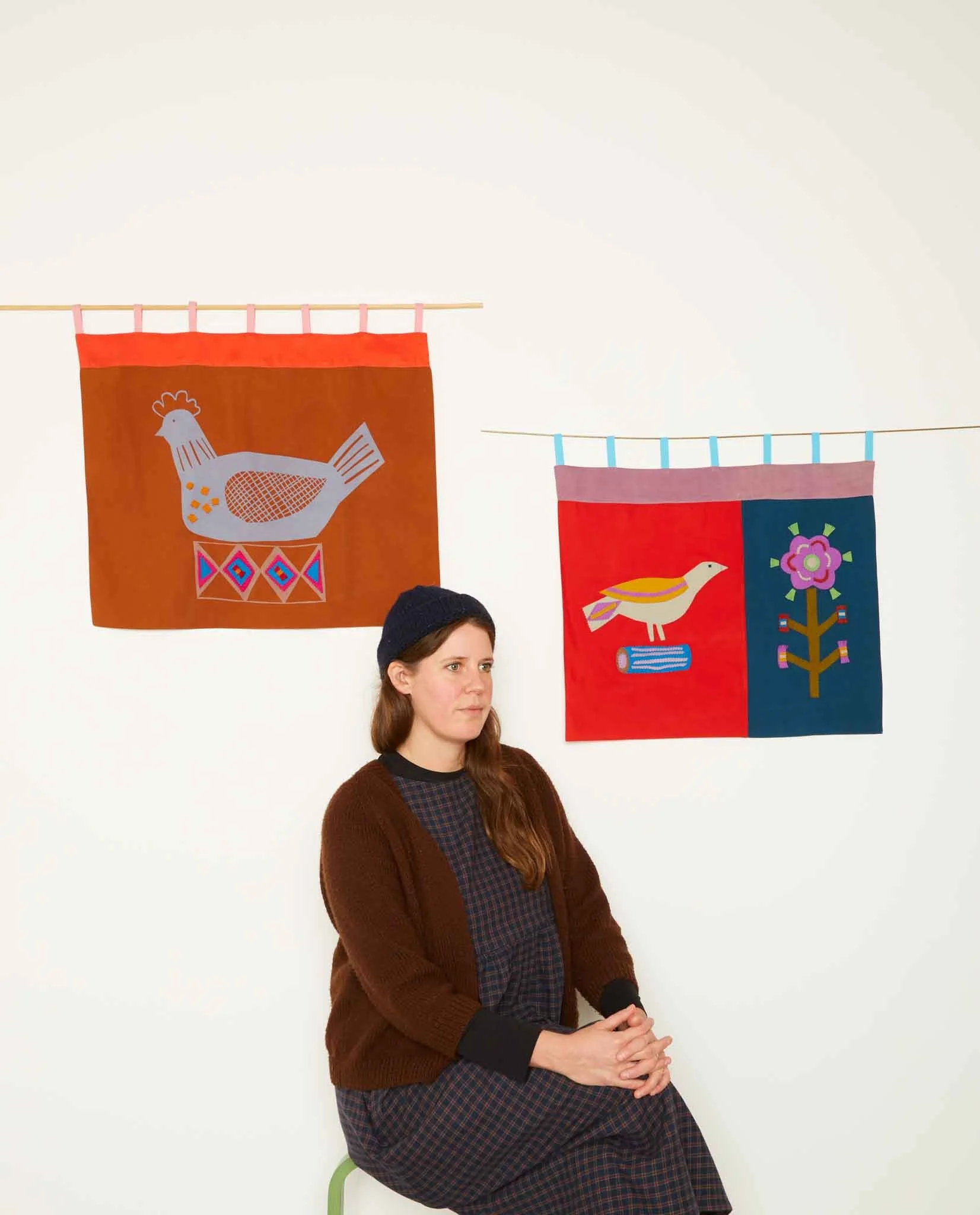
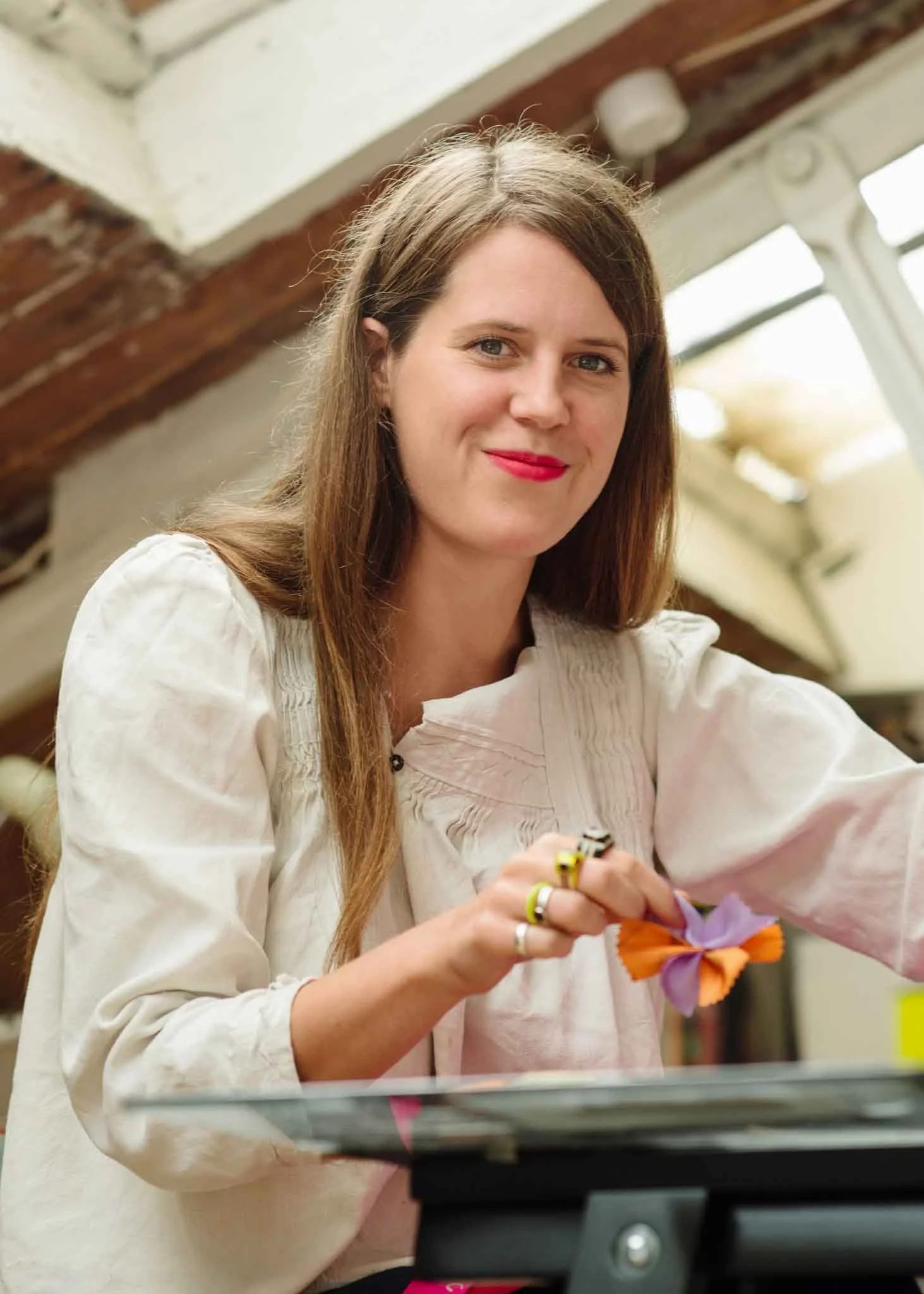
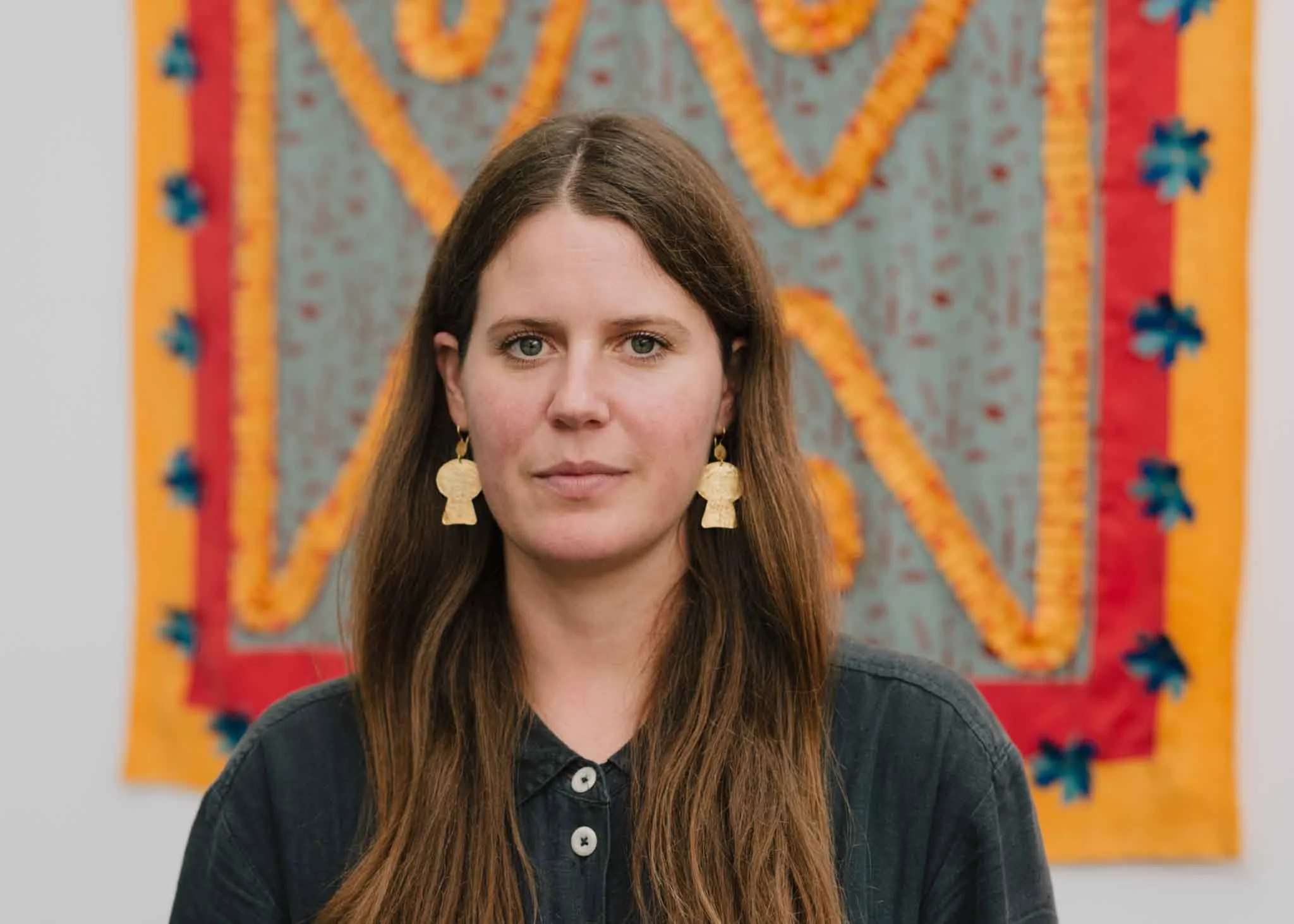
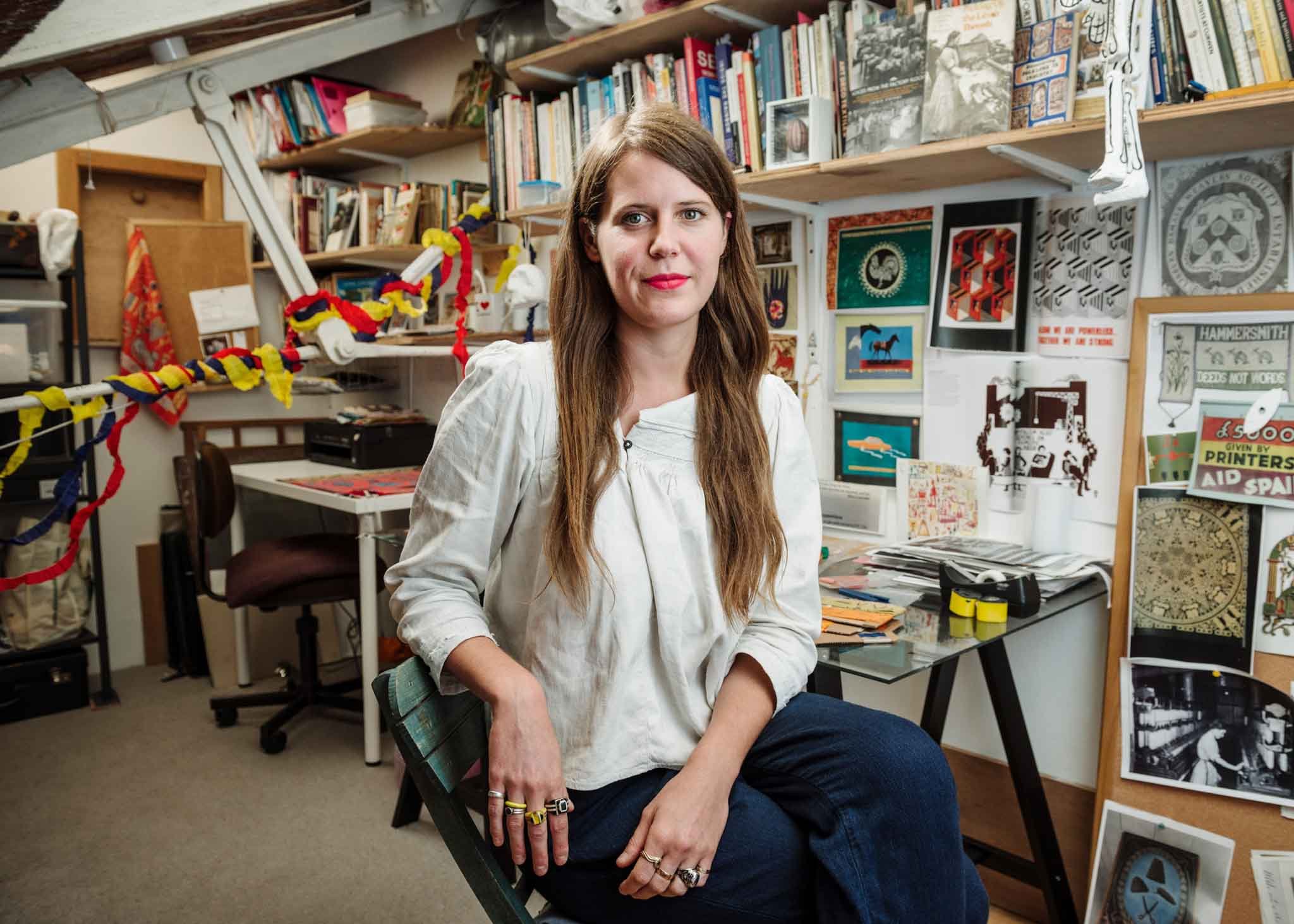
I’m a London based textile artist and designer working primarily with screen-print and stitch. I work between a studio in Stoke Newington, a print workshop in Bromley by Bow and my kitchen for dyeing. Alongside my practice I am Joint Course Leader for BA Textile Design at Central Saint Martins. I studied Printed Textiles at the University of Brighton many moons ago and have been printing and developing my practice ever since with stints working as an artist assistant for Susan Collis and as a gardener, amongst many other things, to support my practice before teaching.
What first drew you to textiles, and how did it become the foundation of your artistic practice?
I can’t say where that first moment comes from, but I guess textiles has always been around me, through my mother and my grandmothers who all could knit and sew. I also had the most amazing textiles teacher at school who was a massive influence on my decision to keep pursuing it.
I love the tactility of textiles, I love the process of working with my hands, I love it’s softness, I love that textiles is so universally embedded in so many cultures as a form of story-telling, which is what I am so interested in, so it makes so much sense for it to be at the foundation of what I do.
Your work combines hand-dyeing, screen-printing, and stitching. How did you discover these techniques, and what keeps you drawn to them today?
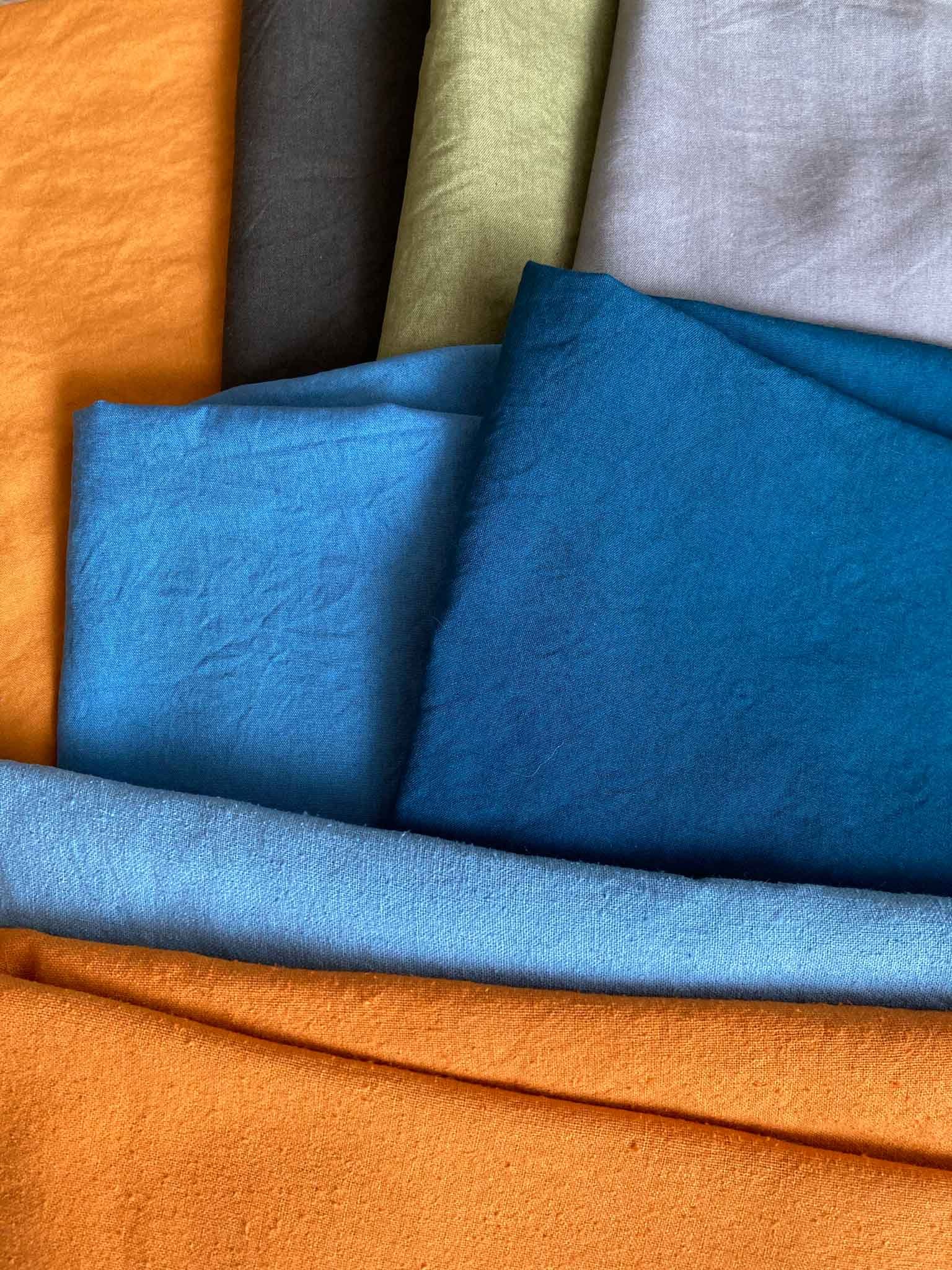
Dyeing and screen-printing I discovered at university – I was resistant to the technicalities of the processes at first but then I finally embraced their magic in my final year and haven’t stopped. I absolutely love working with colour/playing with colour and dyeing allows me to make my own colours. I mainly work with a complex print process called colour discharge printing which also allows amazing things to happen with colour – the mix of control of a process and acceptance of its whims is something that keeps me working with these techniques.
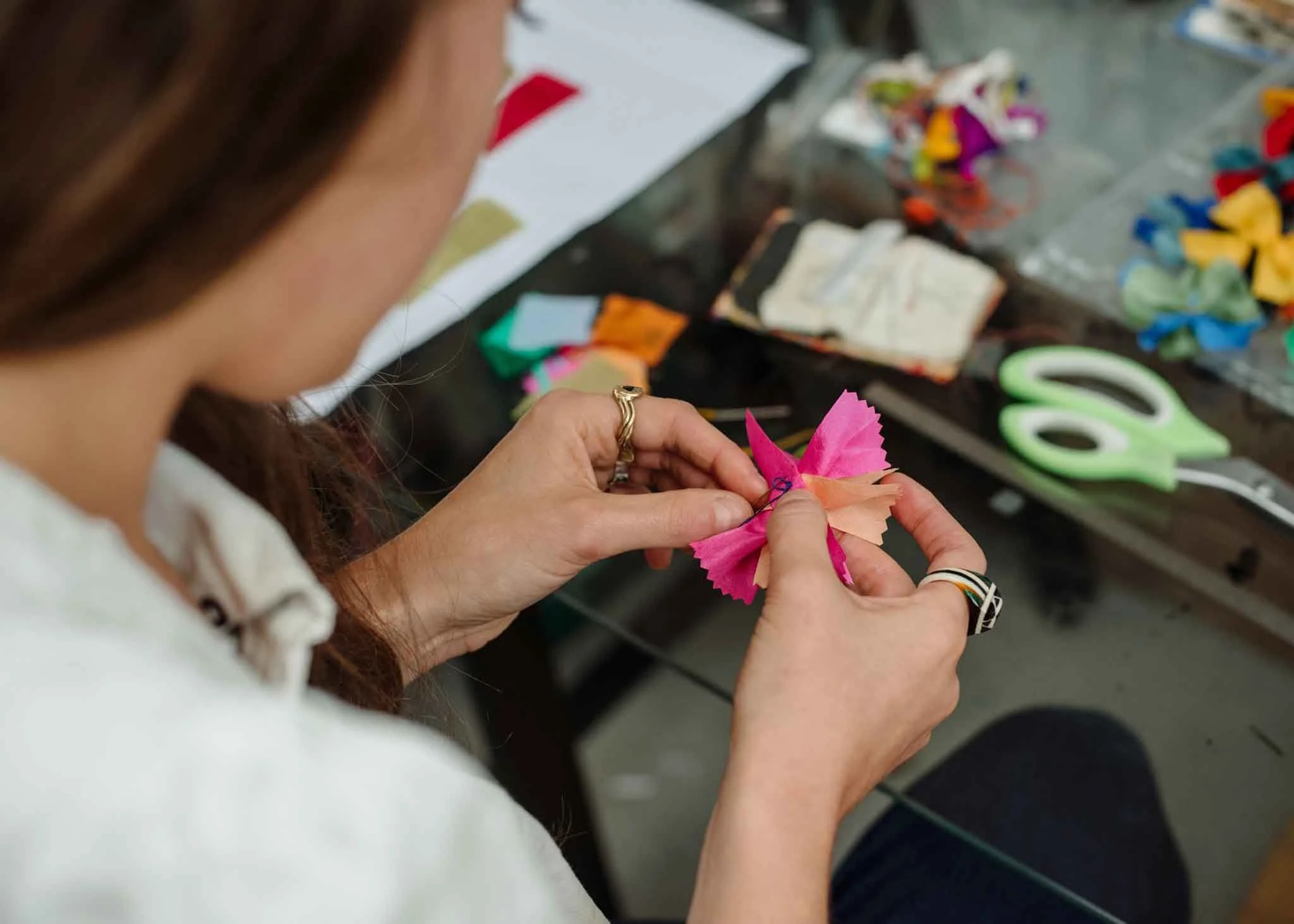
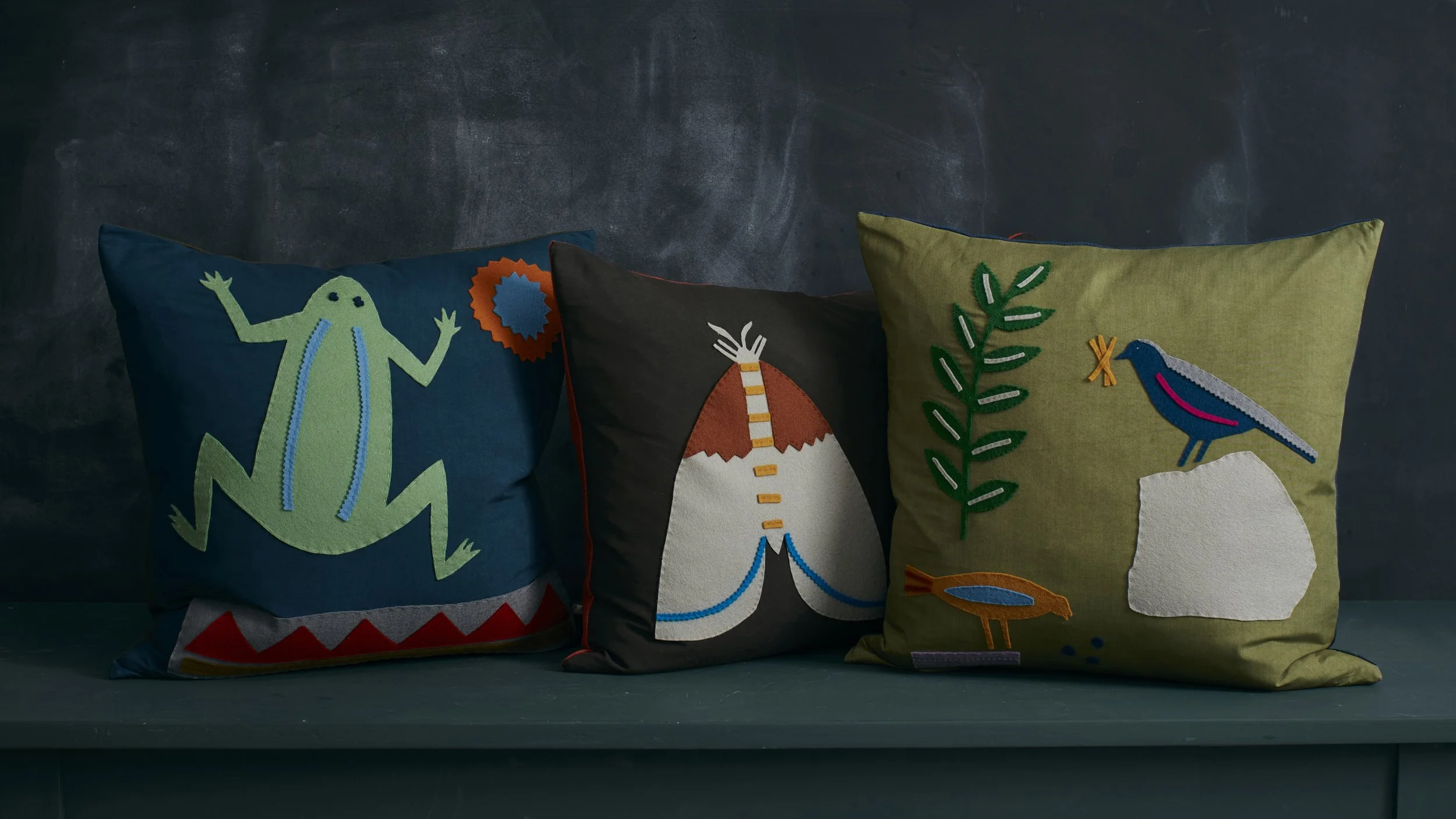
Stitch is something I’m essentially self-taught in (although I did do a workshop with Richard McVetis this year to push my embroidery skills which you can see in more recent work). I started working with stitch and embellishment as a way to create more 3D surfaces on my very flat style of screen print. I was ready for another layer. I find stitch so so soothing, the slowness and connection of hand to cloth is deeply comforting to me.
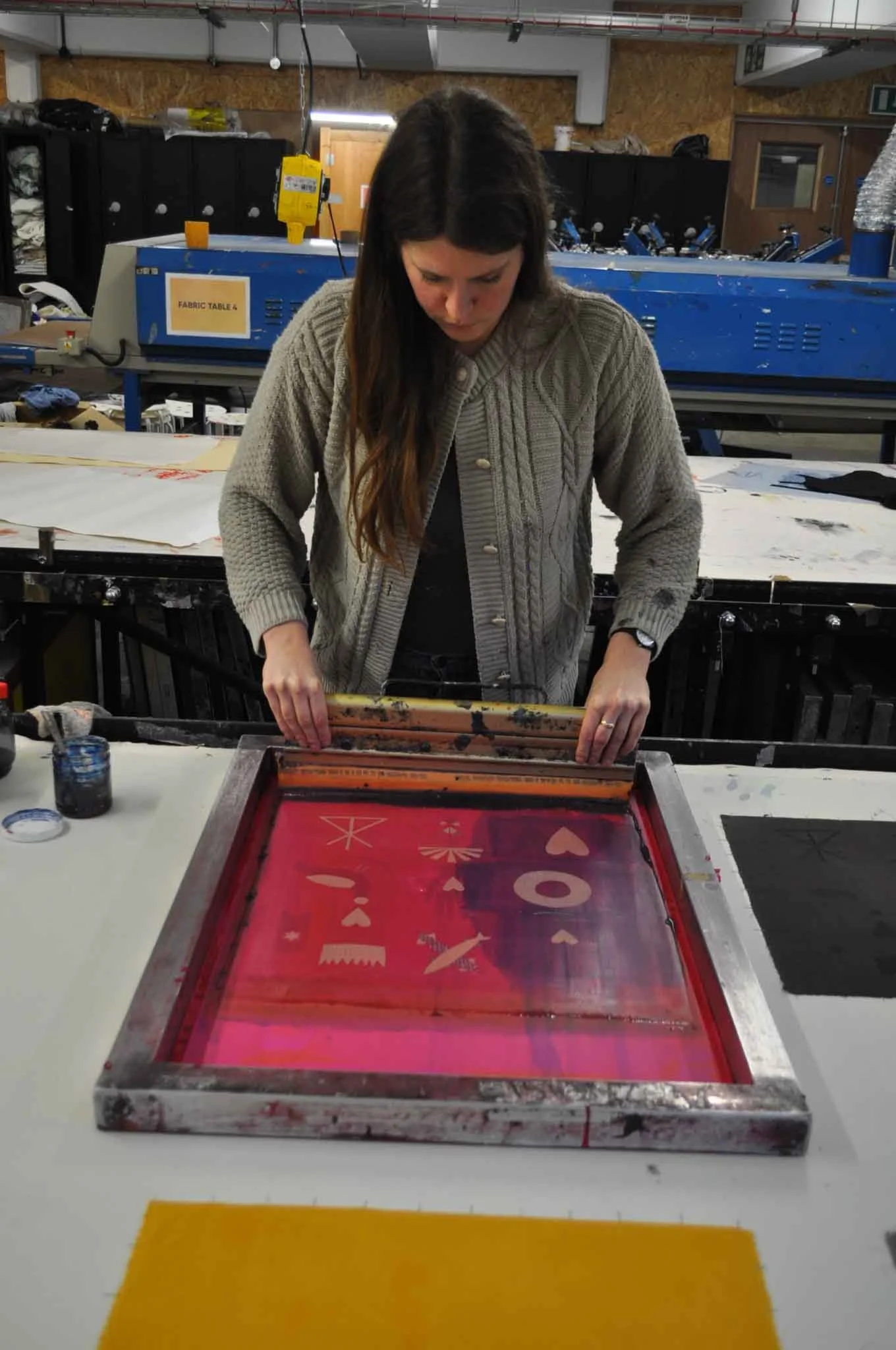
Screen-print has a lot of slow prep but the act of printing is very fast and immediate, I love this contrast with the slow process of stitch.
Nature, animals, objects, and faces appear so beautifully in your pieces. Are there particular stories, memories, or inspirations within these themes that you find yourself returning to in your practice?
I just love figurative textiles. I love the narrative possibilities of textiles. Sometimes I’m trying to tell or suggest a specific kind of narrative, and other times it’s really just about how I want to arrange motifs, but it’s always open to interpretation.
I often return to the idea of ceremony and ritual, of offerings and votives.
I’m often thinking about our relationship to the land, to one another.
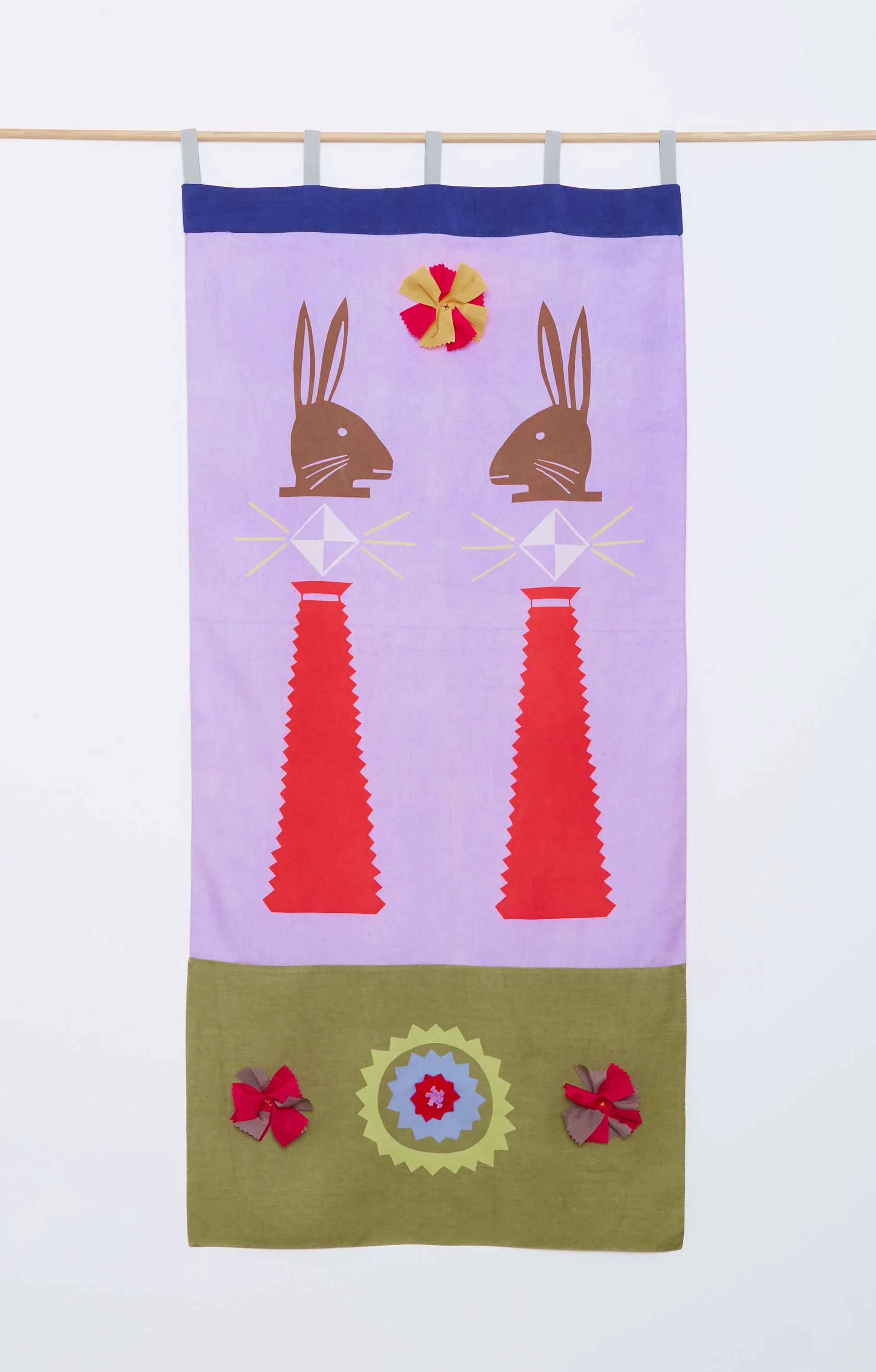
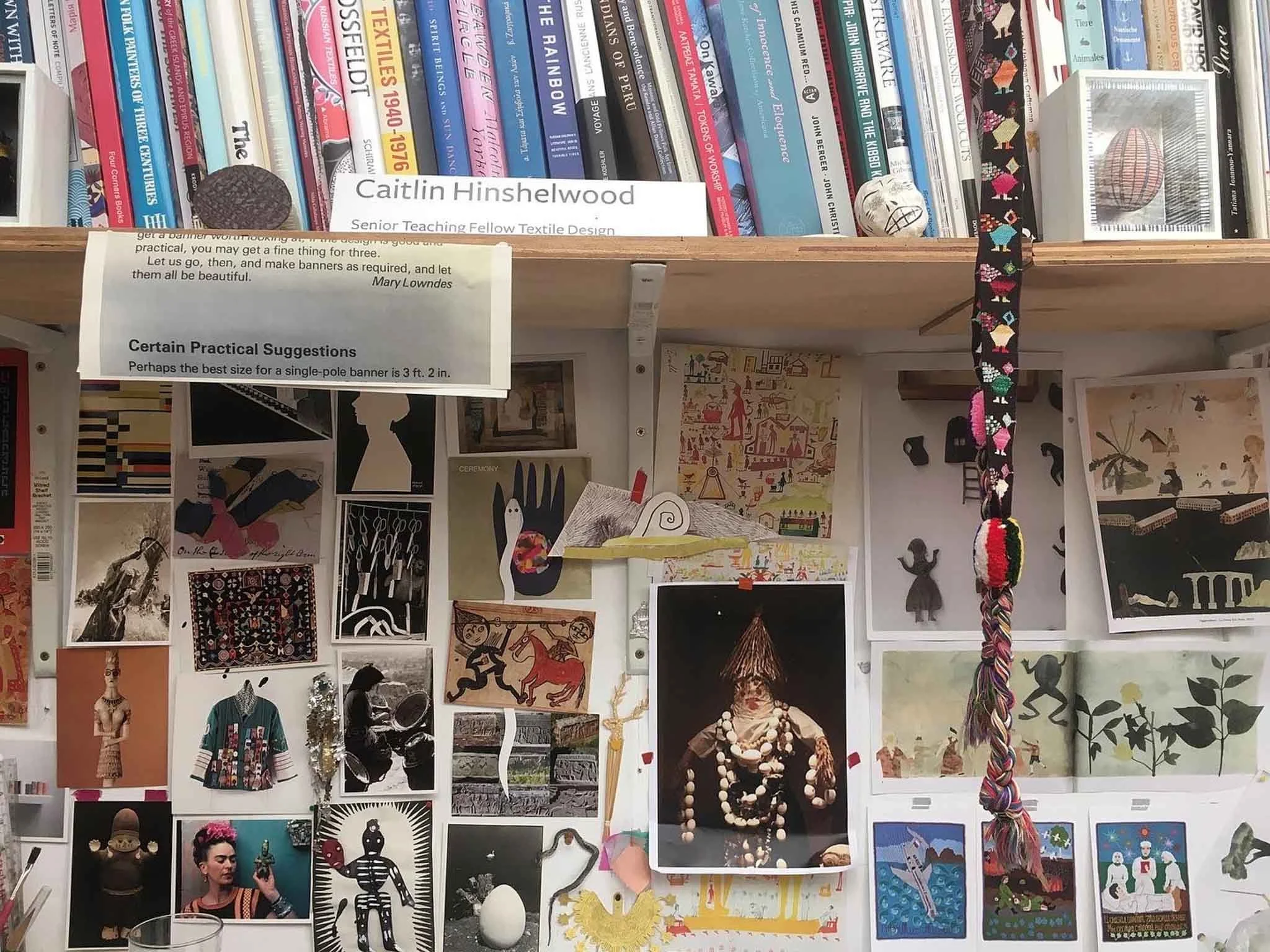
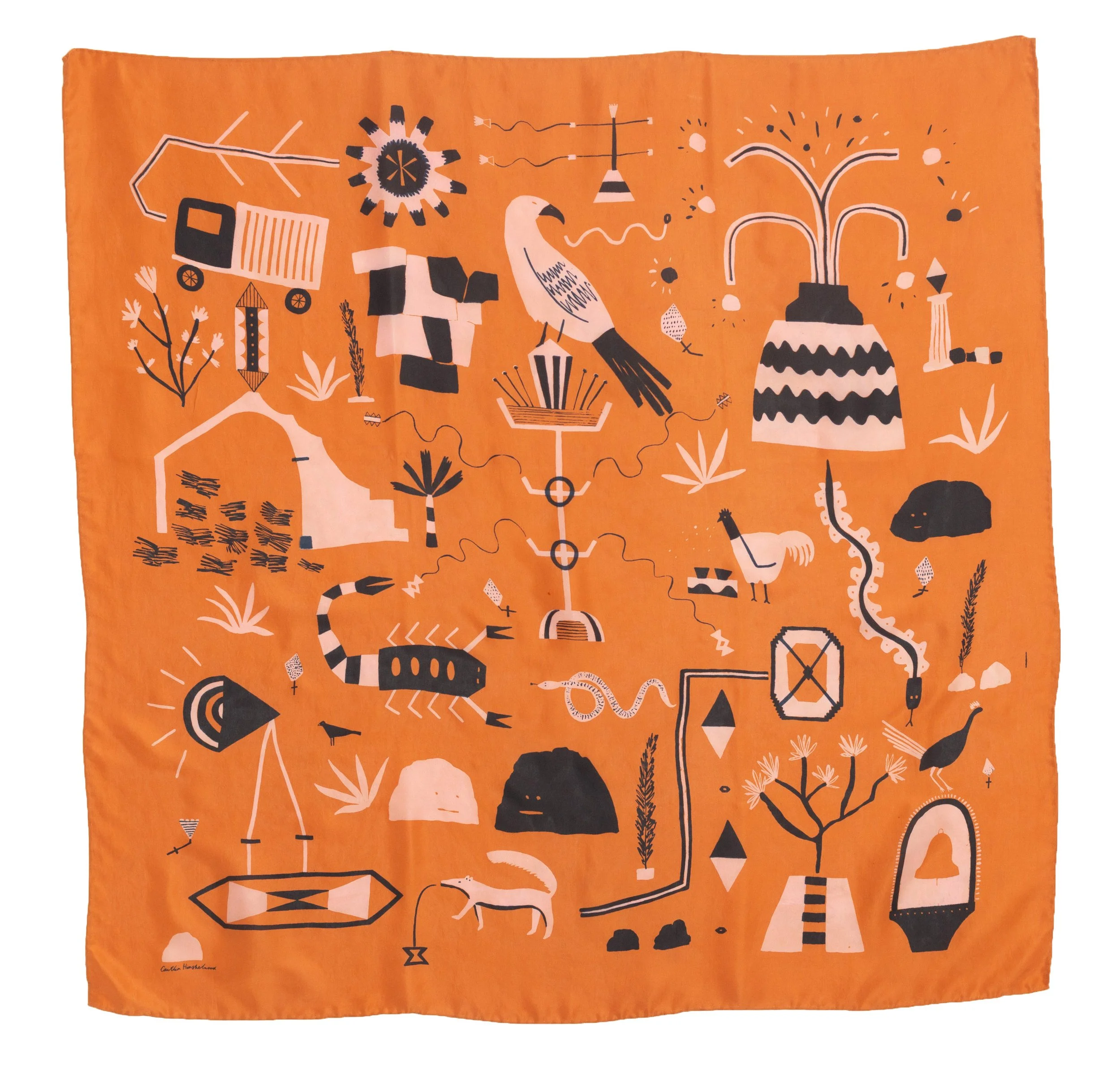
I’m interested in how there are symbols and motifs that speak universally, across countries and cultures, for example, the hand motif or an egg or a snake, and how these can reappear again and again in my own work. I guess I’m trying to develop my own visual language and meaning.
I’m sure it’s very obvious but I deeply inspired by folk art and craft, and I think my love of decoration and storytelling is hugely influenced by that.
Your process involves many careful, time-intensive steps, from dyeing and printing to steaming and washing. Could you walk us through this process?
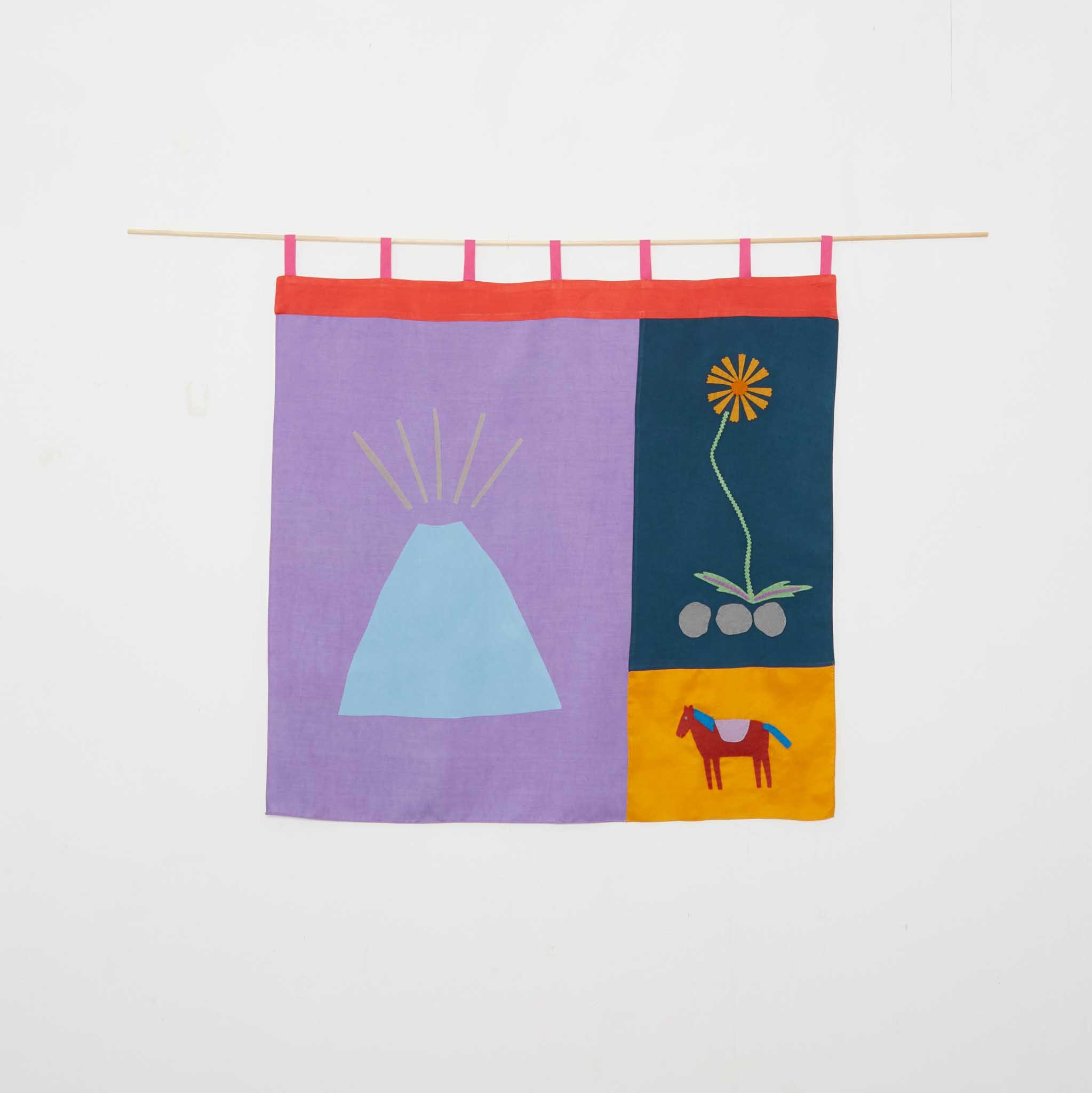
I’m not sure, on first glance of my work, people really appreciate all the different processes that go into the making. I nearly always start with a piece of plain white silk, sometimes I have a very clear idea of what colour it will be dyed, other times I dye a whole range of colourful silks not knowing exactly how I’ll use them. I also hand dye all the ribbons I use in my embellishments, but this stage happens later. Artwork is either hand drawn or made from paper cuts in my studio which is then exposed onto screen. I never really have a fully formed colour palette I’m working from, maybe just an idea in my head, the colour combinations are intuitively developed during the printing process. As mentioned, I work with a process called colour discharge printing which allows you to work on coloured grounds, and the dyes to become part of the fabric rather than sit on top. Essentially within the print dye paste there is a chemical that reacts to steam which effectively bleaches the background colour and replaces it with the dye colour. This means I never really know how a final piece will look until it’s steamed and washed. The steaming and washing are part of the process of fixing the colours and finishing the fabrics. All these stages will happen over a number of days.
Imperfections are embraced as part of the handmade process. How do you approach the balance between control and spontaneity in your work?
I’ve touched a little on this already perhaps. Ultimately, I want my work to look like human hands made it not a machine and all the little imperfections are the clues to that hand work. I want to see signs of the maker in the artworks I admire. This is why I use scissors to draw and don’t mind the wonky lines, it is why I use self-taught embroidery stitches and don’t mind the mistakes, and why I use screen-print and don’t mind if the dye is patchy or doesn’t quite line up.
I’ve chosen to work with a process (colour discharge) that demands I let go of complete control, many times the process chooses the nuance of the end colour, not me, but I like the feeling I’m working with a process, like I want mastery of it but ultimately sometimes I have to let go. My style of printing is quite clean, flat, controlled so these unpredictable processes or the addition of a stitched or applique line, helps disrupt that, even if only subtly.
Looking at the contemporary craft landscape, where do you see the greatest opportunities for preserving and reinterpreting important local traditions?
Are there any new projects, themes, or directions you are currently exploring that feel particularly connected to your practice?
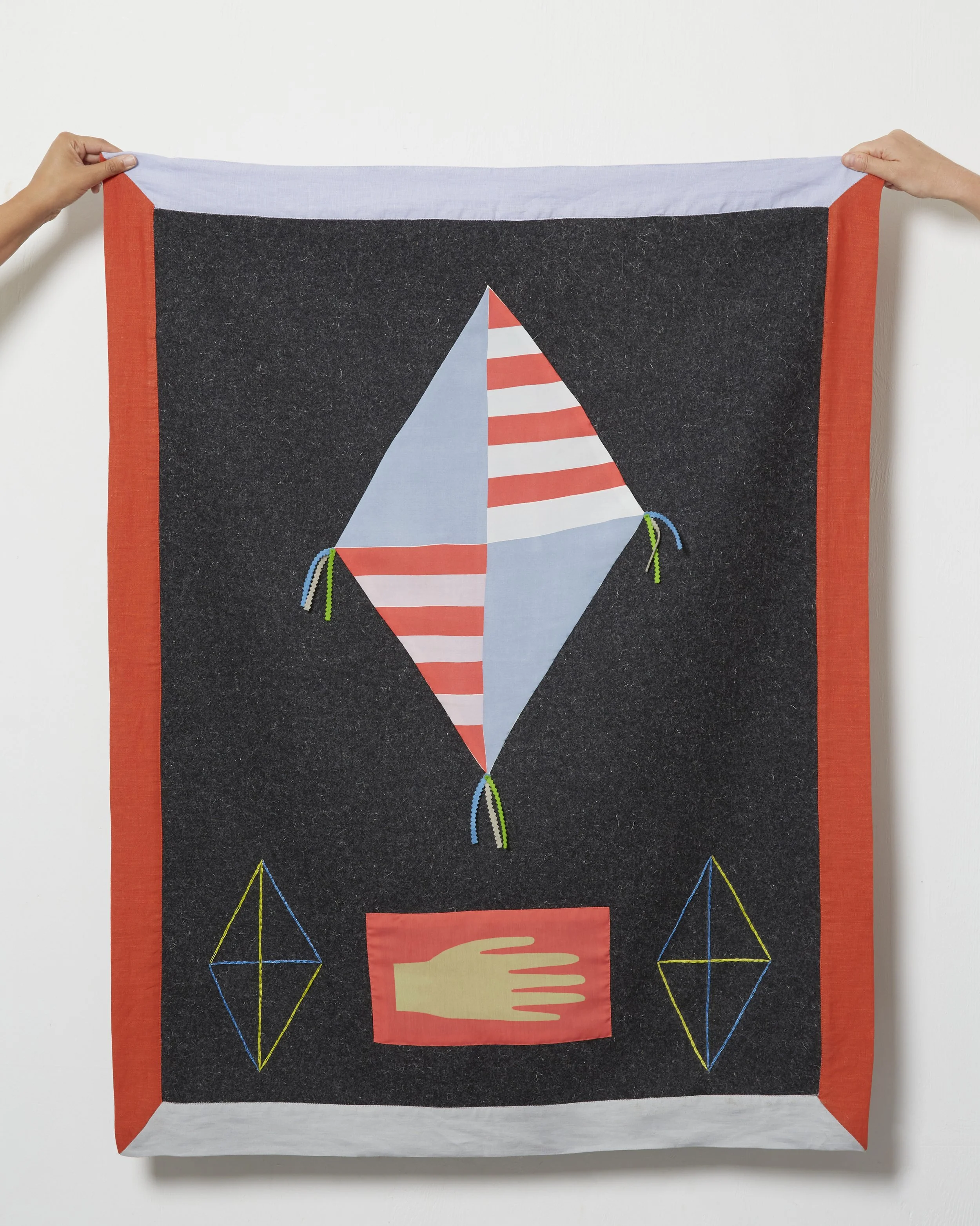
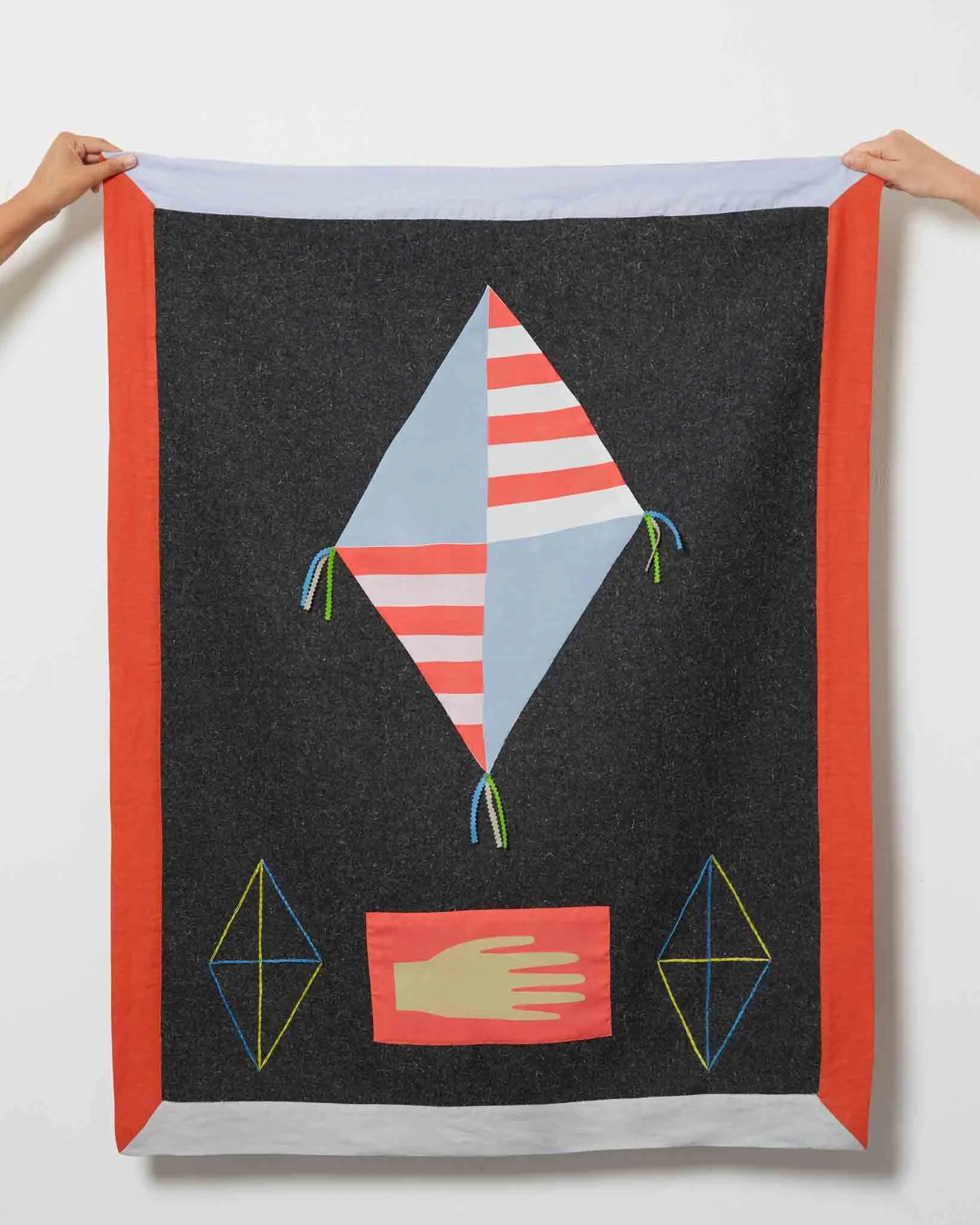
I’m currently exploring combining screen-printed silk, appliqué and stitch on heavy wool felt (as in the Freedom Blanket) as a way to push how I combine different modes of working into one and develop my embroidery skills. I tried this out this summer and what to see where I can take it as I’m enjoying the contrast in materials. It’s also an experiment in using up my scraps of fabrics and re-working screen artwork in different compositions – how to create a new narrative with symbols directly from other pieces. As always, there’s a desire to go bigger but we’ll see.
How can people engage more closely with your work, whether through your pieces, exhibitions, or online presence?
I try to exhibit my work at least once a year so people can see the work in real life – I think it’s hard to appreciate the scale, colour and materiality just through an online screen. I just had an exhibition ‘Conversations in Colour’ with Kangan Arora and we want to see what other iterations of that project we can develop. In December I’ll be part of our Open Studios which is a great way for people to see more of a behind the scenes insight into my practice and I’ll also be selling work at the Birdsmouth Christmas Sale which I organise with my friend Rose de Borman. Otherwise just follow me online I guess – I try to post my inspirations as well as my work so people can get an feel for my whole practice.
Photo [1, 9] by Owen Richards, [2, 4] by Esther Bellepoque, [8, 11] Owen Richards, and the rest by Caitlin.